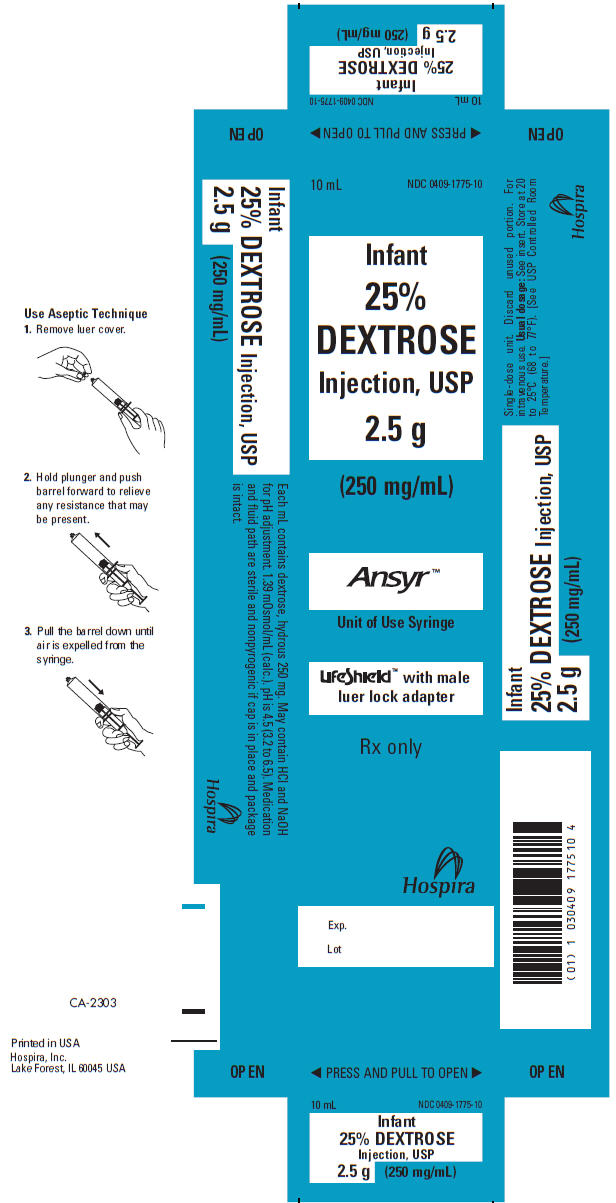
25% Dextrose Infant
Managing this medication for someone you care for? Eleplan keeps diagnoses, medications and appointments in one plan.
Start free with EleplanMedication reference
25% Dextrose Infant
INTRAVENOUS
25% Dextrose Infant. INDICATIONS & USAGE 25% Dextrose Injection is indicated in the treatment of acute symptomatic episodes of hypoglycemia in the neonate or older…
Brand names
25% Dextrose Infant
Active ingredients
DEXTROSE MONOHYDRATE
Indications
INDICATIONS & USAGE 25% Dextrose Injection is indicated in the treatment of acute symptomatic episodes of hypoglycemia in the neonate or older infant to restore depressed blood glucose levels and control symptoms. Other drugs, such as epinephrine and glucagon, should be considered in patients unresponsive or intolerant to dextrose (glucose). Oral feeding of dextrose may be necessary in infants with frequently recurring hypoglycemic episodes or to prevent recurrences due to hyperinsulinemia. 25% Dextrose Injection also provides a minimal source of carbohydrate calories.
Dosage
DOSAGE & ADMINISTRATION When possible, glucose concentrations of greater than 12% should be administered by central vein to reduce the risk for phlebitis and thrombosis. 25% Dextrose Injection, USP is administered only by slow intravenous injection. The dosage and constant infusion rate of intravenous dextrose must be selected with caution, particularly in neonates and low birth weight infants, because of the increased risk of hyperglycemia/ hypoglycemia. In the neonate, an injection of 250 to 500 mg (1 to 2 mL)/kg/dose (5 to 10 mL of 25% dextrose in a 5 kg infant) is recommended to control acute symptomatic hypoglycemia (tremors, convulsions, etc.). Larger or repeated single doses (up to 10 or 12 mL of 25% dextrose) may be required in severe cases or older infants. A specimen for blood glucose determination should be taken before injecting the dextrose. In such emergencies, dextrose should be administered promptly without awaiting pretreatment test results. Subsequent continuous intravenous infusion of 10% dextrose injection may be needed to stabilize blood glucose levels. Further treatment should be guided by evaluation of the underlying disorder. Parenteral drug products should be inspected visually for particulate matter and discoloration prior to administration, whenever solution and container permit. (See PRECAUTIONS ).
Warnings
WARNINGS 25% Dextrose Injection, USP is hypertonic and may cause phlebitis and thrombosis at the site of injection. Significant hyperglycemia and possible hyperosmolar syndrome may result from too rapid administration. The physician should be aware of the symptoms of hyperosmolar syndrome, such as loss of consciousness.
Contraindications
CONTRAINDICATIONS A concentrated dextrose solution should not be used when intracranial or intraspinal hemorrhage is present.
Adverse reactions
ADVERSE REACTIONS Hyperosmolar syndrome, resulting from excessively rapid administration of concentrated dextrose may cause mental confusion and/or loss of consciousness. Reactions which may occur because of the solution or the technique of administration include febrile response, infection at the site of injection, venous thrombosis or phlebitis extending from the site of injection and extravasation. If an adverse reaction does occur, discontinue the infusion, evaluate the patient, institute appropriate therapeutic countermeasures, and save the remainder of the fluid for examination if deemed necessary.
Mechanism of action
CLINICAL PHARMACOLOGY When administered intravenously, this solution restores blood glucose levels in hypoglycemia and provides a source of carbohydrate calories. Carbohydrate in the form of dextrose may aid in minimizing liver glycogen depletion and exerts a protein-sparing action. Dextrose injection undergoes oxidation to carbon dioxide and water. 25% Dextrose Injection, USP provides a concentrated solution sufficiently nonirritating for slow intravenous injection to infants for terminating acute symptomatic episodes of hypoglycemia in the neonate and in older infants (fasting blood glucose below 40 mg/100 mL). Values as low as 20 mg/100 mL are not uncommon in normal asymptomatic infants the first few days of life (longer in premature infants). Symptoms of hypoglycemia in the newborn and small infants may be difficult to evaluate and convulsions often are the first or only recognized manifestation of depressed blood glucose levels. Because of widely varied etiology, the precise cause may be difficult to establish. Hypoglycemia (deficient blood glucose) due to organic or functional hyperinsulinism, may be only temporarily abated by administration of dextrose (glucose) and may rebound to hypoglycemia levels as release of additional insulin is evoked. In addition to various other causes, an idiopathic form of hypoglycemia in infancy has been described, as well as occasional transitory hypoglycemia in the neonatal period which disappears in later infancy. Fetal hyperinsulinism in response to maternal hyperglycemia of diabetic mothers has been observed. Occasionally convulsions associated with severe hypoglycemia are observed in infants of diabetic mothers. Since glucose is the only sugar utilized for metabolic requirements of human neural tissue, it is essential to restore deficient blood glucose levels from any cause in order to prevent or correct central nervous system dysfunction.
NDC examples
51662-1213
Indicated ICD-10 codes
Treats these conditions
Source: openFDA + RxNorm · 2026
Look up another medication