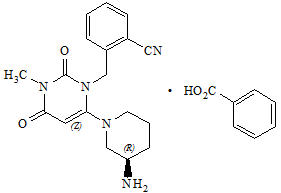
Alogliptin. INDICATIONS AND USAGE Alogliptin and pioglitazone tablets are indicated as an adjunct to diet and exercise to improve glycemic control in adults…
Boxed warning
WARNING: LACTIC ACIDOSIS Postmarketing cases of metformin-associated lactic acidosis have resulted in death, hypothermia, hypotension, and resistant bradyarrhythmias. The onset of metformin-associated lactic acidosis is often subtle, accompanied only by nonspecific symptoms such as malaise, myalgias, respiratory distress, somnolence, and abdominal pain. Metformin-associated lactic acidosis was characterized by elevated blood lactate levels (greater than 5 mmol/L), anion gap acidosis (without evidence of ketonuria or ketonemia), an increased lactate/pyruvate ratio; and metformin plasma levels generally greater than 5 mcg/mL [see Warnings and Precautions (5.1) ] . Risk factors for metformin-associated lactic acidosis include renal impairment, concomitant use of certain drugs (e.g., carbonic anhydrase inhibitors such as topiramate), age 65 years old or greater, having a radiological study with contrast, surgery and other procedures, hypoxic states (e.g., acute congestive heart failure), excessive alcohol intake, and hepatic impairment. Steps to reduce the risk of and manage metformin-associated lactic acidosis in these high risk groups are provided in the Full Prescribing Information [see Dosage and Administration (2.2) , Contraindications (4) , Warnings and Precautions (5.1) , Drug Interactions (7) , and Use in Specific Populations (8.6 , 8.7) ] . If metformin-associated lactic acidosis is suspected, immediately discontinue alogliptin and metformin HCl tablets and institute general supportive measures in a hospital setting. Prompt hemodialysis is recommended [see Warnings and Precautions (5.1) ]. WARNING: LACTIC ACIDOSIS See full prescribing information for complete boxed warning. Postmarketing cases of metformin-associated lactic acidosis have resulted in death, hypothermia, hypotension, and resistant bradyarrhythmias. Symptoms included malaise, myalgias, respiratory distress, somnolence, and abdominal pain. Laboratory abnormalities included elevated blood lactate levels, anion gap acidosis, increased lactate/pyruvate ratio; and metformin plasma levels generally greater than 5 mcg/mL. ( 5.1 ) Risk factors include renal impairment, concomitant use of certain drugs, age ≥65 years old, radiological studies with contrast, surgery and other procedures, hypoxic states, excessive alcohol intake, and hepatic impairment. Steps to reduce the risk of and manage metformin-associated lactic acidosis in these high risk groups are provided in the Full Prescribing Information. ( 5.1 ) If lactic acidosis is suspected, discontinue alogliptin and metformin HCl tablets and institute general supportive measures in a hospital setting. Prompt hemodialysis is recommended. ( 5.1 )
Brand names
alogliptin and metformin hydrochlorideKAZANOAlogliptinNesinaOSENIAlogliptin and Pioglitazone
INDICATIONS AND USAGE Alogliptin and pioglitazone tablets are indicated as an adjunct to diet and exercise to improve glycemic control in adults with type 2 diabetes mellitus . Alogliptin and pioglitazone tablets are a combination of alogliptin, a dipeptidyl peptidase-4 inhibitor, and pioglitazone, a thiazolidinedione agonist of peroxisome proliferator receptor gamma, indicated as an adjunct to diet and exercise to improve glycemic control in adults with type 2 diabetes mellitus. ( 1 ) Limitations of Use: Alogliptin and pioglitazone tablets are not recommended for use in patients with type 1 diabetes mellitus. ( 1 ) Limitations of Use Alogliptin and pioglitazone tablets are not recommended for use in patients with type 1 diabetes mellitus.
Dosage
DOSAGE AND ADMINISTRATION Obtain liver tests prior to initiation. Alogliptin and pioglitazone tablets may be taken with or without food. ( 2.1 ) Individualize the starting dose of alogliptin and pioglitazone tablets based on the patient’s current regimen and concurrent medical condition but do not exceed a daily dose of alogliptin 25 mg and pioglitazone 45 mg. ( 2.2 ) The recommended starting dosage in patients with NYHA Class I or II congestive heart failure is 25 mg of alogliptin and 15 mg of pioglitazone ( 2.4 ) Prior to initiation, assess renal function with creatinine clearance (CrCl) ( 2.3 ) Mild renal impairment (creatinine clearance [CrCl] ≥60 mL/min): same as the recommended dosage in patients with normal renal function. Moderate renal impairment (CrCl ≥30 to <60 mL/min): 12.5 mg of alogliptin and 30 mg of pioglitazone once daily. Severe renal impairment (CrCl ≥15 to <30 mL/min) or ESRD (CrCl <15 mL/min or requiring hemodialysis): not recommended. 2.1 Important Dosage and Administration Information Obtain liver tests (serum alanine and aspartate aminotransferases, alkaline phosphatase, and total bilirubin) prior to initiating alogliptin and pioglitazone tablets [see Warnings and Precautions (5.4) ] . Take alogliptin and pioglitazone tablets orally once daily. Do not split tablets. Alogliptin and pioglitazone tablets may be taken with or without food [see Clinical Pharmacology (12.3) ] . If a dose is missed, do not double the next dose. 2.2 Recommended Dosage and Administration Recommended Starting Dosage Based on Current Regimen Individualize the starting dosage of alogliptin and pioglitazone tablets based on the patient's current regimen and the available strengths of alogliptin and pioglitazone tablets (see Table 1 ). Table 1: Recommended Starting Dosage Based on the Patient’s Current Regimen Current Regimen Starting Dosage of Alogliptin and Pioglitazone Tablets For dosage recommendations for patients with renal impairment and/or congestive heart failure, [see Dosage and Administration (2.3 , 2.4) ] . Not treated with either alogliptin or pioglitazone 25 mg/15 mg or 25 mg/30 mg Alogliptin 25 mg/15 mg or 25 mg/30 mg Pioglitazone 25 mg/15 mg, 25 mg/30 mg, or 25 mg/45 mg Alogliptin and pioglitazone Select a dosage that is as close as possible to the current dosage of alogliptin and pioglitazone Dosage Titration for Additional Glycemic Control Titrate the alogliptin and pioglitazone tablets dosage gradually, as needed, after assessing therapeutic response and tolerability, up to a maximum dosage of 25 mg of alogliptin and 45 mg of pioglitazone once daily. 2.3 Recommended Dosage for Patients with Renal Impairment Assess renal function prior to initiation of alogliptin and pioglitazone tablets and periodically thereafter [see Use in Specific Populations (8.6) ] . The recommended dosage of alogliptin and pioglitazone tablets in patients with mild renal impairment (creatinine clearance [CrCl] ≥60 mL/min) is the same as the recommended dosage in patients with normal renal function [see Dosage and Administration (2.1) ] . The recommended dosage of alogliptin and pioglitazone tablets for patients with moderate renal impairment (CrCl ≥30 to <60 mL/min) is 12.5 mg of alogliptin and 30 mg of pioglitazone once daily. Alogliptin and pioglitazone tablets are not recommended for patients with severe renal impairment (CrCl ≥15 to <30 mL/min) or ESRD (CrCl <15 mL/min or requiring hemodialysis) because these patients require a lower dosage of alogliptin than what is available in the fixed dose combination product, alogliptin and pioglitazone tablets [see Use in Specific Populations (8.6) and Clinical Pharmacology (12.3) ] . 2.4 Recommendations for Congestive Heart Failure Starting Dosage in Patients with NYHA Class I or II Congestive Heart Failure For patients with preexisting NYHA Class I or II congestive heart failure, the recommended starting dosage of alogliptin and pioglitazone tablets is 25 mg of alogliptin and 15 mg of pioglitazone [see Boxed Warning and Warnings and Precautions (5.1) ] . Monitoring for Fluid Retention and Dosage Modifications for Congestive Heart Failure After initiation of alogliptin and pioglitazone tablets or with dosage increase, monitor patients carefully for adverse reactions related to fluid retention as has been seen with pioglitazone (e.g., weight gain, edema and signs and symptoms of congestive heart failure). If congestive heart failure develops while taking alogliptin and pioglitazone tablets, consider discontinuation of alogliptin and pioglitazone tablets or dosage reduction of pioglitazone in alogliptin and pioglitazone tablets [see Boxed Warning and Warnings and Precautions (5.1) ] . 2.5 Coadministration with Strong CYP2C8 Inhibitors The maximum recommended dosage of alogliptin and pioglitazone tablets is 25 mg of alogliptin and 15 mg of pioglitazone once daily when used in combination with gemfibrozil or other strong CYP2C8 inhibitors [see Drug Interactions (7.1) and Clinical Pharmacology (12.3) ] .
Warnings
WARNINGS AND PRECAUTIONS Lactic acidosis: See boxed warning. ( 5.1 ) Pancreatitis: There have been postmarketing reports of acute pancreatitis. If pancreatitis is suspected, promptly discontinue alogliptin and metformin HCl tablets. ( 5.2 ) Heart failure: Consider the risks and benefits of alogliptin and metformin HCl tablets prior to initiating treatment in patients at risk for heart failure. If heart failure develops, evaluate and manage according to current standards of care and consider discontinuation of alogliptin and metformin HCl tablets. ( 5.3 ) Hypersensitivity: There have been postmarketing reports of serious hypersensitivity reactions in patients treated with alogliptin such as anaphylaxis, angioedema and severe cutaneous adverse reactions, including Stevens-Johnson syndrome. If hypersensitivity reactions occur, discontinue alogliptin and metformin HCl tablets, treat promptly and monitor until signs and symptoms resolve. ( 5.4 ) Hepatic effects: Postmarketing reports of hepatic failure, sometimes fatal. Causality cannot be excluded. If liver injury is detected, promptly interrupt alogliptin and metformin HCl tablets and assess patient for probable cause, then treat cause if possible, to resolution or stabilization. Do not restart alogliptin and metformin HCl tablets if liver injury is confirmed and no alternative etiology can be found. ( 5.5 ) Vitamin B 12 deficiency: Metformin may lower vitamin B 12 levels. Measure hematologic parameters annually and B 12 at 2 to 3 year intervals and manage any abnormalties. ( 5.6 ) Hypoglycemia: Consider lowering the dosage of insulin secretagogue or insulin to reduce the risk of hypoglycemia when initiating Alogliptin and metformin HCl tablets. ( 5.7 ) Arthralgia: Severe and disabling arthralgia has been reported in patients taking DPP-4 inhibitors. Consider as a possible cause for severe joint pain and discontinue drug if appropriate. ( 5.8 ) Bullous pemphigoid: There have been postmarketing reports of bullous pemphigoid requiring hospitalization in patients taking DPP-4 inhibitors. Tell patients to report development of blisters or erosions. If bullous pemphigoid is suspected, discontinue alogliptin and metformin HCl tablets. ( 5.9 ) 5.1 Lactic Acidosis Lactic Acidosis There have been postmarketing cases of metformin-associated lactic acidosis, including fatal cases. These cases had a subtle onset and were accompanied by nonspecific symptoms such as malaise, myalgias, abdominal pain, respiratory distress, or increased somnolence; however, hypothermia, hypotension and resistant bradyarrhythmias have occurred with severe acidosis. Metformin-associated lactic acidosis was characterized by elevated blood lactate concentrations (greater than 5 mmol/L), anion gap acidosis (without evidence of ketonuria or ketonemia), and an increased lactate:pyruvate ratio; metformin plasma levels generally greater than 5 mcg/mL. Metformin decreases liver uptake of lactate increasing lactate blood levels which may increase the risk of lactic acidosis, especially in patients at risk. If metformin-associated lactic acidosis is suspected, general supportive measures should be instituted promptly in a hospital setting, along with immediate discontinuation of alogliptin and metformin HCl tablets. In alogliptin and metformin HCl tablets-treated patients with a diagnosis or strong suspicion of lactic acidosis, prompt hemodialysis is recommended to correct the acidosis and remove accumulated metformin (metformin HCl is dialyzable, with a clearance of up to 170 mL/min under good hemodynamic conditions). Hemodialysis has often resulted in reversal of symptoms and recovery. Educate patients and their families about the symptoms of lactic acidosis and if these symptoms occur instruct them to discontinue alogliptin and metformin HCl tablets and report these symptoms to their healthcare provider. For each of the known and possible risk factors for metformin-associated lactic acidosis, recommendations to reduce the risk of and manage metformin-associated lactic acidosis are provided below: Renal Impairment The postmarketing metformin-associated lactic acidosis cases primarily occurred in patients with significant renal impairment. The risk of metformin accumulation and metformin-associated lactic acidosis increases with the severity of renal impairment because metformin is substantially excreted by the kidney. Clinical recommendations based upon the patient's renal function include [see Dosage and Administration (2.2) , Clinical Pharmacology (12.3) ]: Before initiating alogliptin and metformin HCl tablets, obtain an eGFR. Alogliptin and metformin HCl tablets are contraindicated in patients with an eGFR less than 30 mL/min/1.73 m 2 [see Contraindications (4) ] . Alogliptin and metformin HCl tablets are not recommended in patients with an eGFR between 30 and 60 mL/min/1.73 m 2 because these patients require a lower dosage of alogliptin than what is available in the fixed combination alogliptin and metformin HCl tablets product. Obtain an eGFR at least annually in all patients taking alogliptin and metformin HCl tablets. In patients at increased risk for the development of renal impairment (e.g., the elderly), renal function should be assessed more frequently. Drug Interactions The concomitant use of alogliptin and metformin HCl tablets with specific drugs may increase the risk of metformin-associated lactic acidosis: those that impair renal function, result in significant hemodynamic change, interfere with acid-base balance or increase metformin accumulation [see Drug Interactions (7) ]. Therefore, consider more frequent monitoring of patients. Age 65 or Greater The risk of metformin-associated lactic acidosis increases with the patient's age because elderly patients have a greater likelihood of having hepatic, renal, or cardiac impairment than younger patients. Assess renal function more frequently in elderly patients [see Use in Specific Populations (8.5) ]. Radiological Studies with Contrast Administration of intravascular iodinated contrast agents in metformin-treated patients has led to an acute decrease in renal function and the occurrence of lactic acidosis. Stop alogliptin and metformin HCl tablets at the time of, or prior to, an iodinated contrast imaging procedure in patients with an eGFR between 30 and 60 mL/min/1.73 m 2 ; in patients with a history of hepatic impairment, alcoholism, or heart failure; or in patients who will be administered intra-arterial iodinated contrast. Re-evaluate eGFR 48 hours after the imaging procedure, and restart alogliptin and metformin HCl tablets if renal function is stable. Surgery and Other Procedures Withholding of food and fluids during surgical or other procedures may increase the risk for volume depletion, hypotension and renal impairment. Alogliptin and metformin HCl tablets should be temporarily discontinued while patients have restricted food and fluid intake. Hypoxic States Several of the postmarketing cases of metformin-associated lactic acidosis occurred in the setting of acute congestive heart failure (particularly when accompanied by hypoperfusion and hypoxemia). Cardiovascular collapse (shock), acute myocardial infarction, sepsis, and other conditions associated with hypoxemia have been associated with lactic acidosis and may also cause prerenal azotemia. When such events occur, discontinue alogliptin and metformin HCl tablets. Excessive Alcohol Intake Alcohol potentiates the effect of metformin on lactate metabolism and this may increase the risk of metformin-associated lactic acidosis. Warn patients against excessive alcohol intake while receiving alogliptin and metformin HCl tablets. Hepatic Impairment Patients with hepatic impairment have developed with cases of metformin-associated lactic acidosis. This may be due to impaired lactate clearance resulting in higher lactate blood levels. Therefore, avoid use of alogliptin and metformin HCl tablets in patients with clinical or lab
Contraindications
CONTRAINDICATIONS Alogliptin and pioglitazone tablets are contraindicated in patients with: Established NYHA Class III or IV heart failure at the time of alogliptin and pioglitazone tablets initiation [see Boxed Warning ] . A history of serious hypersensitivity reaction to alogliptin, pioglitazone, or any of the excipients in alogliptin and pioglitazone tablets. Reactions such as anaphylaxis, angioedema and severe cutaneous adverse reactions have been reported [see Warnings and Precautions (5.3) , Adverse reactions (6.2) ] . In patients with established NYHA Class III or IV heart failure at the time of alogliptin and pioglitazone tablets initiation. ( 4 ) In patients with a history of serious hypersensitivity reaction to alogliptin, pioglitazone, or any of the excipients in alogliptin and pioglitazone tablets. ( 4 )
Drug interactions
DRUG INTERACTIONS Carbionic anhydrase inhibitors may increase risk of lactic acidosis. Consider more frequent monitoring. ( 7 ) Drugs that reduce metformin clearance (such as ranolazine, vandetanib, dolutegravir, and cimetidine), may increase the accumulation of metformin. Consider the benefits and risks of concomitant use. ( 7 ) Alcohol can potentiate the effect of metformin on lactate metabolism. Warn patients against excessive alcohol intake. ( 7 ) Metformin HCl Carbonic Anhydrase Inhibitors Clinical Impact: Carbonic anhydrase inhibitors frequently cause a decrease in serum bicarbonate and induce non-anion gap, hyperchloremic metabolic acidosis. Concomitant use of these drugs with ALOGLIPTIN WITH METFORMIN HCl TABLETS may increase the risk of lactic acidosis. Intervention: Consider more frequent monitoring of these patients. Examples: Topiramate, zonisamide, acetazolamide or dichlorphenamide Drugs that Reduce Metformin Clearance Clinical Impact: Concomitant use of drugs that interfere with common renal tubular transport systems involved in the renal elimination of metformin (e.g., organic cationic transporter-2 [OCT2]/multidrug and toxin extrusion [MATE] inhibitors) could increase systemic exposure to metformin and may increase the risk for lactic acidosis [see Clinical Pharmacology (12.3) ] . Intervention: Consider the benefits and risks of concomitant use. Examples: Ranolazine, vandetanib, dolutegravir, and cimetidine Alcohol Clinical Impact: Alcohol is known to potentiate the effect of metformin on lactate metabolism. Intervention: Warn patients against excessive alcohol intake while receiving ALOGLIPTIN WITH METFORMIN HCl TABLETS. Insulin Secretagogues and Insulin Clinical Impact: Coadministration of ALOGLIPTIN WITH METFORMIN HCl TABLETS with an insulin secretagogue (e.g., sulfonylurea) or with insulin may increase the risk of hypoglycemia. Intervention: Patients may require a lower dose of the insulin secretagogue or insulin. Drugs Affecting Glycemic Control Clinical Impact: Certain drugs tend to produce hyperglycemia and may lead to loss of glycemic control. Intervention: When such drugs are administered to a patient receiving ALOGLIPTIN WITH METFORMIN HCl TABLETS, the patient should be closely observed for loss of blood glucose control. When such drugs are withdrawn from a patient receiving ALOGLIPTIN WITH METFORMIN HCl TABLETS, the patient should be observed closely for hypoglycemia. Examples: Thiazides and other diuretics, corticosteroids, phenothiazines, thyroid products, estrogens, oral contraceptives, phenytoin, nicotinic acid, sympathomimetics, calcium channel blocking drugs and isoniazid Alogliptin Cytochrome (CYP) P450, CYP-Substrates or Inhibitors Clinical Impact: Insulin Secretagogues and Insulin Insulin and insulin secretagogues are known to cause hypoglycemia. Coadministration of alogliptin and metformin HCl tablets with an insulin secretagogue (e.g., sulfonylurea) or insulin may require lower dosages of the insulin secretagogue or insulin to reduce the risk of hypoglycemia [see Warnings and Precautions (5.7) ].
Adverse reactions
ADVERSE REACTIONS The following serious adverse reactions are described below or elsewhere in the prescribing information: Pancreatitis [see Warnings and Precautions (5.2) ] Heart Failure [see Warnings and Precautions (5.3) ] Hypersensitivity Reactions [see Warnings and Precautions (5.4) ] Hepatic Effects [see Warnings and Precautions (5.5) ] Severe and Disabling Arthralgia [see Warnings and Precautions (5.8) ] Bullous Pemphigoid [see Warnings and Precautions (5.9) ] Most common adverse reactions (incidence ≥4%) are upper respiratory tract infection, nasopharyngitis, diarrhea, hypertension, headache, back pain and urinary tract infection. ( 6.1 ) To report SUSPECTED ADVERSE REACTIONS, contact Takeda Pharmaceuticals at 1-877-TAKEDA-7 or FDA at 1-800-FDA-1088 or www.fda.gov/medwatch . 6.1 Clinical Trials Experience Because clinical trials are conducted under widely varying conditions, adverse reaction rates observed in the clinical trials of a drug cannot be directly compared to rates in the clinical trials of another drug and may not reflect the rates observed in practice. Alogliptin and Metformin HCl Over 2,700 patients with type 2 diabetes mellitus have received alogliptin coadministered with metformin in four large, randomized, double-blind controlled clinical trials. The racial distribution of patients exposed to trial medication was 65% White, 20% Asian, 7% Black or African American, 4% American Indian or Alaska Native, 0% Native Hawaiian/Other Pacific Islander and 4% Multiracial or other racial groups. The ethnic distribution was 23% Hispanic or Latino and 77% was not Hispanic or Latino. The mean exposure to alogliptin and metformin HCl tablets was 58 weeks, with more than 1,400 subjects treated for more than one year. These included two 26 week placebo-controlled trials, one 52 week active control study and an interim analysis of a 104 week active-controlled trial. In the alogliptin and metformin HCl tablets arm, the mean duration of diabetes mellitus was approximately six years, the mean body mass index (BMI) was 31 kg/m 2 (56% of patients had a BMI ≥30 kg/m 2 ) and the mean age was 55 years (18% of patients ≥65 years of age). In a pooled analysis of these four controlled clinical studies, the overall incidence of adverse reactions was 74% in patients treated with alogliptin and metformin HCl tablets compared to 75% treated with placebo. Overall discontinuation of therapy due to adverse reactions was 6.2% with alogliptin and metformin HCl tablets compared to 1.9% in placebo, 6.4% in metformin and 5.0% in alogliptin. Adverse reactions reported in ≥4% of patients treated with alogliptin and metformin HCl tablets and more frequently than in patients who received alogliptin, metformin or placebo are summarized in Table 1. Table 1. Adverse Reactions Reported in ≥4% of Adults with Type 2 Diabetes Mellitus Treated with Alogliptin and Metformin HCl Tablets and More Frequently Than in Patients Receiving Either Alogliptin, Metformin or Placebo Number of Patients (%) Alogliptin and Metformin HCl Tablets Alogliptin and metformin HCl tablets – includes data pooled for patients receiving alogliptin 25 and 12.5 mg combined with various doses of metformin Alogliptin Alogliptin – includes data pooled for patients receiving alogliptin 25 and 12.5 mg Metformin Metformin – includes data pooled for patients receiving various doses of metformin Placebo N=2794 N=222 N=1592 N=106 Upper respiratory tract infection 224 (8) 6 (3) 105 (7) 3 (3) Nasopharyngitis 191 (7) 7 (3) 93 (6) 2 (2) Diarrhea 155 (6) 4 (2) 105 (7) 3 (3) Hypertension 154 (6) 5 (2) 96 (6) 6 (6) Headache 149 (5) 11 (5) 74 (5) 3 (3) Back pain 119 (4) 1 (1) 72 (5) 1 (1) Urinary tract infection 116 (4) 4 (2) 59 (4) 2 (2) Alogliptin A total of 14,778 patients with type 2 diabetes mellitus participated in 14 randomized, double-blind, controlled clinical trials of whom 9,052 subjects were treated with alogliptin, 3,469 subjects were treated with placebo and 2,257 were treated with an active comparator. The racial distribution of patients exposed to trial medication was 71% White, 17% Asian, 6% Black or African American, 2% American Indian or Alaska Native, 0% Native Hawaiian/Other Pacific Islander and 5% Multiracial or other racial groups. The ethnic distribution was 30% Hispanic or Latino and 70% was not Hispanic or Latino. The mean duration of diabetes mellitus was seven years, the mean body mass index (BMI) was 31 kg/m 2 (49% of patients had a BMI ≥30 kg/m 2 ), and the mean age was 58 years (26% of patients ≥65 years of age). The mean exposure to alogliptin was 49 weeks with 3,348 subjects treated for more than one year. In a pooled analysis of these 14 controlled clinical trials, the overall incidence of adverse reactions was 73% in patients treated with alogliptin 25 mg compared to 75% with placebo and 70% with active comparator. Overall discontinuation of therapy due to adverse reactions was 6.8% with alogliptin 25 mg compared to 8.4% with placebo or 6.2% with active comparator. Adverse reactions reported in ≥4% of patients treated with alogliptin 25 mg and more frequently than in patients who received placebo are summarized in Table 2. Table 2. Adverse Reactions Reported in ≥4% Patients Treated with Alogliptin 25 mg and More Frequently Than in Patients Given Placebo in Pooled Studies Number of Patients (%) Alogliptin 25 mg Placebo Active Comparator N=6447 N=3469 N=2257 Nasopharyngitis 309 (5) 152 (4) 113 (5) Upper Respiratory Tract Infection 287 (5) 121 (4) 113 (5) Headache 278 (4) 101 (3) 121 (5) Hypoglycemia Alogliptin and Metformin HCl In a 26 week, double-blind, placebo-controlled trial of alogliptin in combination with metformin, the number of patients reporting hypoglycemia was 1.9% in the alogliptin 12.5 mg with metformin HCl 500 mg, 5.3% in the alogliptin 12.5 mg with metformin HCl 1000 mg, 1.8% in the metformin HCl 500 mg and 6.3% in the metformin HCl 1000 mg treatment groups. In a 26 week placebo-controlled trial of alogliptin 25 mg administered once daily as add-on to metformin regimen, the number of patients reporting hypoglycemic events was 0% in the alogliptin coadministered with metformin HCl and 2.9% in the placebo treatment groups. In a 52 week, active-controlled, double-blind trial of alogliptin once daily as add-on therapy to the combination of pioglitazone 30 mg and metformin compared to the titration of pioglitazone 30 mg to 45 mg and metformin, the number of patients reporting hypoglycemia was 4.5% in the alogliptin 25 mg with pioglitazone 30 mg and metformin group versus 1.5% in the pioglitazone 45 mg with metformin group. In an interim analysis conducted in a 104 week, double-blind, active-controlled trial of alogliptin 25 mg in combination with metformin, the number of patients reporting hypoglycemia was 1.4% in the alogliptin 25 mg with metformin group versus 23.8% in the glipizide with metformin group. Alogliptin Hypoglycemic events were documented based upon a blood glucose value and/or clinical signs and symptoms of hypoglycemia. In the monotherapy trial, the incidence of hypoglycemia was 1.5% in patients treated with alogliptin compared to 1.6% with placebo. The use of alogliptin as add-on therapy to glyburide or insulin did not increase the incidence of hypoglycemia compared to placebo. In a monotherapy trial comparing alogliptin to a sulfonylurea in elderly patients, the incidence of hypoglycemia was 5.4% with alogliptin compared to 26% with glipizide. In the EXAMINE trial, the incidence of investigator reported hypoglycemia was 6.7% in patients receiving alogliptin and 6.5% in patients receiving placebo. Serious adverse reactions of hypoglycemia were reported in 0.8% of patients treated with alogliptin and in 0.6% of patients treated with placebo. Metformin HCl Table 3. Most Common Adverse Reactions (≥5%) in a Placebo-Controlled Clinical Trial of Metformin Monotherapy Reactions that were more common in metformin than placebo-treated patients Adverse Reaction Metformin
Mechanism of action
Mechanism of Action Alogliptin and pioglitazone tablets combine two antihyperglycemic agents: alogliptin and pioglitazone. Alogliptin Increased concentrations of the incretin hormones such as glucagon-like peptide-1 (GLP-1) and glucose-dependent insulinotropic polypeptide (GIP) are released into the bloodstream from the small intestine in response to meals. These hormones cause insulin release from the pancreatic beta cells in a glucose-dependent manner but are inactivated by the dipeptidyl peptidase-4 (DPP-4) enzyme within minutes. GLP-1 also lowers glucagon secretion from pancreatic alpha cells, reducing hepatic glucose production. In patients with type 2 diabetes mellitus, concentrations of GLP-1 are reduced but the insulin response to GLP-1 is preserved. Alogliptin is a DPP-4 inhibitor that slows the inactivation of the incretin hormones, thereby increasing their bloodstream concentrations and reducing fasting and postprandial glucose concentrations in a glucose-dependent manner in patients with type 2 diabetes mellitus. Alogliptin selectively binds to and inhibits DPP-4 but not DPP-8 or DPP-9 activity in vitro at concentrations approximating therapeutic exposures. Pioglitazone Pioglitazone is a thiazolidinedione that depends on the presence of insulin for its mechanism of action. Pioglitazone decreases insulin resistance in the periphery and in the liver resulting in increased insulin-dependent glucose disposal and decreased hepatic glucose output. Pioglitazone is not an insulin secretagogue. Pioglitazone is an agonist for peroxisome proliferator-activated receptor-gamma (PPARγ). PPAR receptors are found in tissues important for insulin action such as adipose tissue, skeletal muscle and liver. Activation of PPARγ nuclear receptors modulates the transcription of a number of insulin- responsive genes involved in the control of glucose and lipid metabolism. In animal models of diabetes, pioglitazone reduces the hyperglycemia, hyperinsulinemia and hypertriglyceridemia characteristic of insulin-resistant states such as type 2 diabetes mellitus. The metabolic changes produced by pioglitazone result in increased responsiveness of insulin-dependent tissues and are observed in numerous animal models of insulin resistance. Because pioglitazone enhances the effects of circulating insulin (by decreasing insulin resistance), it does not lower blood glucose in animal models that lack endogenous insulin.
A drug lookup is just the start. Eleplan keeps the whole care plan in one place.
Medications, diagnoses, documents, appointments, and the whole care team — organized and always in sync, with Ellie, your AI care assistant, on top of it. Free to start.