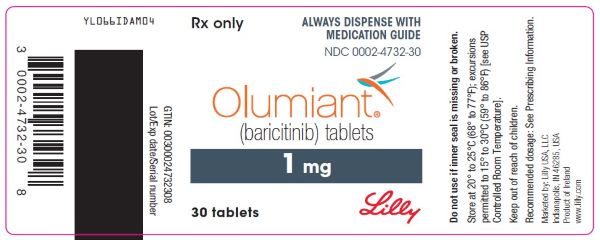
Baricitinib — Janus Kinase Inhibitor [EPC]. INDICATIONS AND USAGE OLUMIANT ® is a Janus kinase (JAK) inhibitor indicated for: the treatment of adult patients with moderately to severely active…
Boxed warning
WARNING: SERIOUS INFECTIONS, MORTALITY, MALIGNANCY, MAJOR ADVERSE CARDIOVASCULAR EVENTS (MACE), and THROMBOSIS WARNING: SERIOUS INFECTIONS, MORTALITY, MALIGNANCY, MAJOR ADVERSE CARDIOVASCULAR EVENTS (MACE), and THROMBOSIS See full prescribing information for complete boxed warning. Increased risk of serious bacterial, fungal, viral and opportunistic infections leading to hospitalization or death, including tuberculosis (TB). Interrupt treatment with OLUMIANT if serious infection occurs until the infection is controlled. OLUMIANT should not be given to patients with active tuberculosis. Test for latent TB before and during therapy, except for COVID-19; treat latent TB prior to use. Monitor all patients for active TB during treatment, even patients with initial negative, latent TB test. ( 5.1 ) Higher rate of all-cause mortality, including sudden cardiovascular death with another Janus kinase inhibitor (JAK) vs. TNF blockers in rheumatoid arthritis (RA) patients. ( 5.2 ) Malignancies have occurred in patients treated with OLUMIANT. Higher rate of lymphomas and lung cancers with another JAK inhibitor vs. TNF blockers in RA patients. ( 5.3 ) Higher rate of MACE (defined as cardiovascular death, myocardial infarction, and stroke) with another JAK inhibitor vs. TNF blockers in RA patients. ( 5.4 ) Thrombosis has occurred in patients treated with OLUMIANT. Increased incidence of pulmonary embolism, venous and arterial thrombosis with another JAK inhibitor vs. TNF blockers. ( 5.5 ) SERIOUS INFECTIONS Patients treated with OLUMIANT are at risk for developing serious infections that may lead to hospitalization or death [see Warnings and Precautions ( 5.1 ) and Adverse Reactions ( 6.1 )] . Most patients with rheumatoid arthritis who developed these infections were taking concomitant immunosuppressants such as methotrexate or corticosteroids. If a serious infection develops, interrupt OLUMIANT until the infection is controlled. Reported infections include: Active tuberculosis, which may present with pulmonary or extrapulmonary disease. OLUMIANT should not be given to patients with active tuberculosis. Patients, except those with COVID-19, should be tested for latent tuberculosis before initiating OLUMIANT and during therapy. If positive, start treatment for latent infection prior to OLUMIANT use. Invasive fungal infections, including candidiasis and pneumocystosis. Patients with invasive fungal infections may present with disseminated, rather than localized, disease. Bacterial, viral, and other infections due to opportunistic pathogens. The risks and benefits of treatment with OLUMIANT should be carefully considered prior to initiating therapy in patients with chronic or recurrent infection. Patients should be closely monitored for the development of signs and symptoms of infection during and after treatment with OLUMIANT including the possible development of tuberculosis in patients who tested negative for latent tuberculosis infection prior to initiating therapy [see Warnings and Precautions ( 5.1 )] . MORTALITY In a large, randomized, postmarketing safety study in rheumatoid arthritis (RA) patients 50 years of age and older with at least one cardiovascular risk factor comparing another Janus kinase (JAK) inhibitor to tumor necrosis factor (TNF) blockers, a higher rate of all-cause mortality, including sudden cardiovascular death, was observed with the JAK inhibitor [see Warnings and Precautions ( 5.2 )] . MALIGNANCIES Lymphoma and other malignancies have been observed in patients treated with OLUMIANT. In RA patients treated with another JAK inhibitor, a higher rate of malignancies (excluding non-melanoma skin cancer (NMSC)) was observed when compared with TNF blockers. Patients who are current or past smokers are at additional increased risk [see Warnings and Precautions ( 5.3 )] . MAJOR ADVERSE CARDIOVASCULAR EVENTS In RA patients 50 years of age and older with at least one cardiovascular risk factor treated with another JAK inhibitor, a higher rate of major adverse cardiovascular events (MACE) (defined as cardiovascular death, myocardial infarction, and stroke) was observed when compared with TNF blockers. Patients who are current or past smokers are at additional increased risk. Discontinue OLUMIANT in patients that have experienced a myocardial infarction or stroke [see Warnings and Precautions ( 5.4 )] . THROMBOSIS Thrombosis, including deep venous thrombosis and pulmonary embolism, has been observed at an increased incidence in patients treated with OLUMIANT compared to placebo. In addition, there were cases of arterial thrombosis. Many of these adverse events were serious and some resulted in death. In RA patients 50 years of age and older with at least one cardiovascular risk factor treated with another JAK inhibitor, a higher rate of thrombosis was observed when compared with TNF blockers. Avoid OLUMIANT in patients at risk. Patients with symptoms of thrombosis should discontinue OLUMIANT and be promptly evaluated. [see Warnings and Precautions ( 5.5 )] .
INDICATIONS AND USAGE OLUMIANT ® is a Janus kinase (JAK) inhibitor indicated for: the treatment of adult patients with moderately to severely active rheumatoid arthritis who have had an inadequate response to one or more TNF blockers. ( 1.1 ) Limitations of Use : Not recommended for use in combination with other JAK inhibitors, biologic DMARDs, or with potent immunosuppressants such as azathioprine and cyclosporine. ( 1.1 ) the treatment of COVID-19 in hospitalized adults requiring supplemental oxygen, non-invasive or invasive mechanical ventilation, or ECMO. ( 1.2 ) the treatment of adult patients with severe alopecia areata. ( 1.3 ) Limitations of Use : Not recommended for use in combination with other JAK inhibitors, biologic immunomodulators, cyclosporine or other potent immunosuppressants. ( 1.3 ) 1.1 Rheumatoid Arthritis OLUMIANT ® (baricitinib) is indicated for the treatment of adult patients with moderately to severely active rheumatoid arthritis who have had an inadequate response to one or more tumor necrosis factor (TNF) blockers. Limitations of Use : Not recommended for use in combination with other JAK inhibitors, biologic disease-modifying antirheumatic drugs (DMARDs), or with potent immunosuppressants such as azathioprine and cyclosporine. 1.2 Coronavirus Disease 2019 (COVID-19) OLUMIANT is indicated for the treatment of coronavirus disease 2019 (COVID-19) in hospitalized adults requiring supplemental oxygen, non-invasive or invasive mechanical ventilation, or extracorporeal membrane oxygenation (ECMO). 1.3 Alopecia Areata OLUMIANT is indicated for the treatment of adult patients with severe alopecia areata. Limitations of Use : Not recommended for use in combination with other JAK inhibitors, biologic immunomodulators, cyclosporine or other potent immunosuppressants.
Dosage
DOSAGE AND ADMINISTRATION Administration Instructions: See the full prescribing information for recommended evaluations and immunizations prior to treatment. ( 2.1 ) Rheumatoid Arthritis and Alopecia Areata: Avoid initiation or interrupt OLUMIANT in patients with anemia (hemoglobin <8 g/dL), lymphopenia (ALC <500 cells/mm 3 ) or neutropenia (ANC <1000 cells/mm 3 ). ( 2.1 , 2.5 , 5.8 ) COVID-19: Avoid initiation or interrupt OLUMIANT in patients with lymphopenia (ALC <200 cells/mm 3 ) or neutropenia (ANC <500 cells/mm 3 ). ( 2.1 , 2.5 , 5.8 ) Recommended Dosage : Rheumatoid Arthritis: 2 mg once daily. ( 2.2 ) OLUMIANT may be used as monotherapy or in combination with methotrexate or other non-biologic DMARDs. ( 2.2 ) COVID-19: 4 mg once daily for up to 14 days. ( 2.3 ) Alopecia Areata: 2 mg once daily. Increase to 4 mg once daily, if the response to treatment is not adequate. ( 2.4 ) For patients with nearly complete or complete scalp hair loss, with or without substantial eyelash or eyebrow hair loss, consider treating with 4 mg once daily. ( 2.4 ) Reduce the dose to 2 mg once daily when an adequate response has been achieved. ( 2.4 ) Dosage Modifications in Patients with Renal or Hepatic Impairment, or Cytopenias See the full prescribing information for dosage modifications by indication. ( 2.5 , 2.6 , 5.8 ) 2.1 Recommended Evaluations and Immunization Prior to Treatment Initiation Prior to OLUMIANT treatment initiation, consider performing the following evaluations: Active and latent tuberculosis (TB) infection evaluation – OLUMIANT should not be given to patients with active tuberculosis (TB). If latent infection is positive in patients with rheumatoid arthritis or alopecia areata, consider treatment for TB prior to OLUMIANT use [see Warnings and Precautions ( 5.1 )] . Viral hepatitis screening in accordance with clinical guidelines [see Warnings and Precautions ( 5.1 )] . Complete blood count – Assess baseline values and verify whether treatment can be initiated: - In patients with rheumatoid arthritis or alopecia areata, OLUMIANT initiation is not recommended in patients with an absolute lymphocyte count (ALC) <500 cells/μl, absolute neutrophil count (ANC) <1000 cells/μl, or hemoglobin level <8 g/dL. - In patients with COVID-19, OLUMIANT initiation is not recommended if the ALC is <200 cells/μl or if the ANC is <500 cells/μl. Monitor complete blood counts during treatment and modify dosage as recommended [see Dosage and Administration ( 2.5 ) and Warnings and Precautions ( 5.7 )] . Baseline hepatic and renal function – Assess baseline values and monitor patients for laboratory changes. Modify dosage based on hepatic and renal impairment, and laboratory abnormalities [see Dosage and Administration ( 2.5 ) and Warnings and Precautions ( 5.7 )] . In patients with rheumatoid arthritis or alopecia areata, update immunizations in agreement with current immunization guidelines [see Warnings and Precautions ( 5.9 )] . 2.2 Dosage Recommendations in Rheumatoid Arthritis The recommended dosage of OLUMIANT is 2 mg once daily orally, with or without food [see Clinical Pharmacology ( 12.3 )] . An alternative administration for patients unable to swallow tablets may be used [see Dosage and Administration ( 2.8 )] . OLUMIANT may be used as monotherapy or in combination with methotrexate or other non-biologic DMARDs. 2.3 Dosage Recommendations in COVID-19 The recommended dosage of OLUMIANT for adults is 4 mg once daily orally, with or without food, for 14 days or until hospital discharge, whichever occurs first. An alternative administration for patients unable to swallow tablets may be used [see Dosage and Administration ( 2.8 )] . 2.4 Dosage Recommendations in Alopecia Areata The recommended dosage of OLUMIANT is 2 mg once daily orally, with or without food. Increase to 4 mg once daily if the response to treatment is not adequate. For patients with nearly complete or complete scalp hair loss, with or without substantial eyelash or eyebrow hair loss, consider treating with 4 mg once daily, with or without food. Once patients achieve an adequate response to treatment with 4 mg, decrease the dosage to 2 mg once daily. 2.5 Dosage Modifications Due to Infections, Cytopenias and Anemia Rheumatoid Arthritis and Alopecia Areata Avoid use of OLUMIANT in patients with active, serious or opportunistic infection, including localized infections. If a patient develops a serious infection hold treatment with OLUMIANT until the infection is controlled [see Warnings and Precautions ( 5.1 )] . Dosage modifications for patients with rheumatoid arthritis or alopecia areata and cytopenias or anemia are described in Table 1 . Table 1: Dosage Modifications for Cytopenias and Anemia in Patients with Rheumatoid Arthritis or Alopecia Areata Laboratory Analyte Laboratory Analyte Value Recommendation Absolute Lymphocyte Count (ALC) ≥500 cells/μL Maintain dosage <500 cells/μL Interrupt OLUMIANT until ALC ≥500 cells/μL Absolute Neutrophil Count (ANC) ≥1000 cells/μL Maintain dosage <1000 cells/μL Interrupt OLUMIANT until ANC ≥1000 cells/μL Hemoglobin ≥8 g/dL Maintain dosage <8 g/dL Interrupt OLUMIANT until hemoglobin ≥8 g/dL COVID-19 Monitor patients for signs and symptoms of new infections during treatment with OLUMIANT. The risks and benefits of treatment with OLUMIANT in COVID-19 patients with other concurrent infections should be considered [see Warnings and Precautions ( 5.1 )] . Dosage modifications for patients with COVID-19 and cytopenias are described in Table 2 . Table 2: Dosage Modifications for Cytopenias in Patients with COVID-19 Laboratory Analyte Laboratory Analyte Value Recommendation Absolute Lymphocyte Count (ALC) ≥200 cells/μL Maintain dosage <200 cells/μL Interrupt OLUMIANT until ALC ≥200 cells/μL Absolute Neutrophil Count (ANC) ≥500 cells/μL Maintain dosage <500 cells/μL Interrupt OLUMIANT until ANC ≥500 cells/μL 2.6 Dosage Modifications for Patients with Renal Impairment or Hepatic Impairment Rheumatoid Arthritis Renal Impairment Dosage modifications for patients with rheumatoid arthritis and renal impairment are described in Table 3 . Table 3: Dosage Modifications for Patients with Rheumatoid Arthritis and Renal Impairment Renal Impairment Stage Estimated Glomerular Filtration Rate (eGFR) Recommendation Mild 60 – <90 mL/minute/1.73 m 2 2 mg once daily Moderate 30 - <60 mL/min/1.73 m 2 1 mg once daily Severe <30 mL/minute/1.73 m 2 Not recommended Hepatic Impairment OLUMIANT is not recommended for use in patients with severe hepatic impairment. Interrupt OLUMIANT, if increases in ALT or AST are observed and drug-induced liver injury (DILI) is suspected, until the diagnosis of DILI is excluded [see Warnings and Precautions ( 5.8 )]. COVID-19 Renal Impairment Dosage modifications for patients with COVID-19 and renal impairment are described in Table 4 . Table 4: Dosage Modifications for Patients with COVID-19 and Renal Impairment Renal Impairment Stage Estimated Glomerular Filtration Rate (eGFR) Recommendation Mild 60 - <90 mL/min/1.73m 2 4 mg once daily Moderate 30 - <60 mL/min/1.73m 2 2 mg once daily Severe 15 - <30 mL/min/1.73m 2 1 mg once daily End Stage Renal Disease, Patients on Dialysis, or Acute Kidney Injury <15 mL/min/1.73m 2 Not recommended Hepatic Impairment It is not known if dosage adjustment is needed in patients with COVID-19 and severe hepatic impairment. OLUMIANT should only be used in patients with COVID-19 and severe hepatic impairment if the potential benefit outweighs the potential risk. Interrupt OLUMIANT, if increases in ALT or AST are observed and DILI is suspected, until the diagnosis of DILI is excluded [see Warnings and Precautions ( 5.8 )] . Alopecia Areata Renal Impairment Dosage modifications for patients with alopecia areata and renal impairment are described in Table 5 . Table 5: Dosage Modifications for Patients with Alopecia Areata and Renal Impairment Renal Impairment Stage Estimated Glomerular Filtration Rate (eGFR) Recommendation If
Warnings
WARNINGS AND PRECAUTIONS Hypersensitivity : Serious reactions have been reported. Discontinue OLUMIANT if a serious hypersensitivity reaction occurs. ( 5.6 ) Gastrointestinal Perforations : Monitor patients who may be at increased risk and evaluate promptly new onset of abdominal symptoms. ( 5.7 ) Laboratory Abnormalities : Monitor for changes in lymphocytes, neutrophils, hemoglobin, liver enzymes, and lipids. ( 5.8 ) Vaccinations : Avoid use with live vaccines. ( 5.9 ) 5.1 Serious Infections Serious and sometimes fatal infections due to bacterial, mycobacterial, invasive fungal, viral, or other opportunistic pathogens have been reported in patients with rheumatoid arthritis receiving OLUMIANT. The most common serious infections reported with OLUMIANT included pneumonia, herpes zoster, and urinary tract infection [see Adverse Reactions ( 6.1 )] . Among opportunistic infections, tuberculosis, multidermatomal herpes zoster, esophageal candidiasis, pneumocystosis, acute histoplasmosis, cryptococcosis, cytomegalovirus, and BK virus were reported with OLUMIANT. Some patients have presented with disseminated rather than localized disease, and were often taking concomitant immunosuppressants such as methotrexate or corticosteroids. Avoid use of OLUMIANT in patients with an active, serious infection, including localized infections. Consider the risks and benefits of treatment prior to initiating OLUMIANT in patients: with chronic or recurrent infection who have been exposed to tuberculosis with a history of a serious or an opportunistic infection who have resided or traveled in areas of endemic tuberculosis or endemic mycoses; or with underlying conditions that may predispose them to infection. In patients with rheumatoid arthritis or alopecia areata, closely monitor for the development of signs and symptoms of infection during and after treatment with OLUMIANT. Interrupt OLUMIANT in patients with rheumatoid arthritis or alopecia areata, if the patient develops a serious infection, an opportunistic infection, or sepsis. A patient who develops a new infection during treatment with OLUMIANT should undergo prompt and complete diagnostic testing appropriate for an immunocompromised patient; appropriate antimicrobial therapy should be initiated, the patient should be closely monitored, and OLUMIANT should be interrupted if the patient is not responding to therapy. Do not resume OLUMIANT until the infection is controlled. In patients with COVID-19, monitor for signs and symptoms of new infections during and after treatment with OLUMIANT. There is limited information regarding the use of OLUMIANT in patients with COVID-19 and concomitant active serious infections. The risks and benefits of treatment with OLUMIANT in COVID-19 patients with other concurrent infections should be considered. Tuberculosis Evaluate patients for active infection prior to administration of OLUMIANT. OLUMIANT should not be given to patients with active TB. Test patients with rheumatoid arthritis or alopecia areata for latent tuberculosis. Patients with rheumatoid arthritis or alopecia areata and latent tuberculosis (TB) should be treated with standard antimycobacterial therapy before initiating OLUMIANT. Consider anti-TB therapy prior to initiation of OLUMIANT in patients with a history of latent or active TB in whom an adequate course of treatment cannot be confirmed, and for patients with a negative test for latent TB but who have risk factors for TB infection. Consultation with a physician with expertise in the treatment of TB is recommended to aid in the decision about whether initiating anti-TB therapy is appropriate for an individual patient. During OLUMIANT use, monitor patients for the development of signs and symptoms of TB, including patients who tested negative for latent TB infection prior to initiating therapy. Viral Reactivation Viral reactivation, including cases of herpes virus reactivation (e.g., herpes zoster), were reported in clinical studies with OLUMIANT. If a patient develops herpes zoster, interrupt OLUMIANT treatment until the episode resolves. The impact of OLUMIANT on chronic viral hepatitis reactivation is unknown. Patients with evidence of active hepatitis B or C infection were excluded from clinical trials. In clinical trials in patients with rheumatoid arthritis or alopecia areata, patients who were positive for hepatitis C antibody but negative for hepatitis C virus RNA were permitted to enroll. Patients with positive hepatitis B surface antibody and hepatitis B core antibody, without hepatitis B surface antigen, were permitted to enroll; such patients should be monitored for expression of hepatitis B virus (HBV) DNA. Should HBV DNA be detected, consult with a hepatologist. Perform screening for viral hepatitis in accordance with clinical guidelines before starting therapy with OLUMIANT. 5.2 Mortality In a large, randomized, postmarketing safety study of another JAK inhibitor in RA patients 50 years of age and older with at least one cardiovascular risk factor, a higher rate of all-cause mortality, including sudden cardiovascular death, was observed in patients treated with the JAK inhibitor compared with TNF blockers. Consider the benefits and risks for the individual patient prior to initiating or continuing therapy with OLUMIANT. 5.3 Malignancy and Lymphoproliferative Disorders Malignancies were observed in clinical studies of OLUMIANT [see Adverse Reactions ( 6.1 )] . In a large, randomized, postmarketing safety study of another JAK inhibitor in RA patients, a higher rate of malignancies (excluding non-melanoma skin cancer (NMSC)) was observed in patients treated with the JAK inhibitor compared to those treated with TNF blockers. A higher rate of lymphomas was observed in patients treated with the JAK inhibitor compared to those treated with TNF blockers. A higher rate of lung cancers was observed in current or past smokers treated with the JAK inhibitor compared to those treated with TNF blockers. In this study, current or past smokers had an additional increased risk of overall malignancies. Consider the benefits and risks for the individual patient prior to initiating or continuing therapy with OLUMIANT, particularly in patients with a known malignancy (other than successfully treated NMSC), patients who develop a malignancy, and patients who are current or past smokers. Non-melanoma skin cancers Non-melanoma skin cancers (NMSCs) have been reported in patients treated with OLUMIANT. Periodic skin examination is recommended for patients who are at increased risk for skin cancer. 5.4 Major Adverse Cardiovascular Events In a large, randomized, postmarketing safety study of another JAK inhibitor in RA patients 50 years of age and older with at least one cardiovascular risk factor, a higher rate of major adverse cardiovascular events (MACE) defined as cardiovascular death, non-fatal myocardial infarction (MI), and non-fatal stroke was observed with the JAK inhibitor compared to those treated with TNF blockers. Patients who are current or past smokers are at additional increased risk. Consider the benefits and risks for the individual patient prior to initiating or continuing therapy with OLUMIANT, particularly in patients who are current or past smokers and patients with other cardiovascular risk factors. Patients should be informed about the symptoms of serious cardiovascular events and the steps to take if they occur. Discontinue OLUMIANT in patients that have experienced a myocardial infarction or stroke. 5.5 Thrombosis Thrombosis, including deep venous thrombosis (DVT) and pulmonary embolism (PE), has been observed at an increased incidence in patients treated with OLUMIANT compared to placebo. In addition, arterial thrombosis events in the extremities have been reported in clinical studies with OLUMIANT. Many of these adverse events were serious and some resulted in death. There was no clear relationship between platelet count elevations and thrombot
Contraindications
CONTRAINDICATIONS None. None.
Drug interactions
DRUG INTERACTIONS In patients taking strong Organic Anion Transporter 3 (OAT3) inhibitors (e.g., probenecid) the recommended dosage should be reduced. ( 2.7 , 7.1 ) 7.1 Strong OAT3 Inhibitors Baricitinib exposure is increased when OLUMIANT is co-administered with strong OAT3 inhibitors (such as probenecid), hence the dosage of baricitinib should be reduced by half the recommended dose [see Dosage and Administration ( 2.2 , 2.3 ) and Clinical Pharmacology ( 12.3 )] . 7.2 Other JAK Inhibitors or Biologic DMARDs OLUMIANT has not been studied in combination with other JAK inhibitors or with biologic DMARDs [see Indications and Usage ( 1.1 , 1.2 )] .
Adverse reactions
ADVERSE REACTIONS The following clinically significant adverse reactions are described elsewhere in the labeling: Serious Infections [see Warnings and Precautions ( 5.1 )] Mortality [see Warnings and Precautions ( 5.2 )] Malignancy and Lymphoproliferative Disorders [see Warnings and Precautions ( 5.3 )] Major Adverse Cardiovascular Events [see Warnings and Precautions ( 5.4 )] Thrombosis [see Warnings and Precautions ( 5.5 )] Hypersensitivity [see Warnings and Precautions ( 5.6 )] Gastrointestinal Perforations [see Warnings and Precautions ( 5.7 )] Laboratory Abnormalities [see Warnings and Precautions ( 5.8 )] Adverse reactions reported in clinical trials (≥1%) are: Rheumatoid Arthritis : upper respiratory tract infections (URTIs), nausea, herpes simplex, and herpes zoster. ( 6.1 ) COVID-19: increases of liver enzymes, thrombocytosis, creatine phosphokinase increases, neutropenia, deep vein thrombosis, pulmonary embolism, and urinary tract infection (UTI) ( 6.1 ) Alopecia Areata : URTIs, headache, acne, hyperlipidemia, creatine phosphokinase increase, UTI, liver enzyme elevations, folliculitis, fatigue, lower respiratory tract infections, nausea, genital Candida infections, anemia, neutropenia, abdominal pain, herpes zoster, and weight increase ( 6.1 ) To report SUSPECTED ADVERSE REACTIONS, contact Eli Lilly and Company at 1-800-LillyRx (1-800-545-5979) or FDA at 1-800-FDA-1088 or www.fda.gov/medwatch. 6.1 Clinical Trials Experience Because clinical studies are conducted under widely varying conditions, adverse reaction rates observed in the clinical studies of a drug cannot be directly compared to rates in the clinical studies of another drug and may not predict the rates observed in a broader patient population in clinical practice. Adverse Reactions in Patients with Rheumatoid Arthritis The safety of OLUMIANT was evaluated in six randomized double-blind placebo-controlled studies (three Phase 2, three Phase 3) and a long-term extension study in patients with moderately to severely active RA. Patients were randomized to placebo (1070 patients), OLUMIANT 2 mg (479 patients), or baricitinib 4 mg (997 patients). Patients could be switched to baricitinib 4 mg from placebo or OLUMIANT 2 mg from as early as Week 12 depending on the study design. All patients initially randomized to placebo were switched to baricitinib 4 mg by Week 24. During the 16-week treatment period, adverse events leading to discontinuation of treatment were reported by 35 patients (11.4 per 100 patient-years) treated with placebo, 17 patients (12.1 per 100 patient-years) with OLUMIANT 2 mg, and 40 patients (13.4 per 100 patient-years) treated with baricitinib 4 mg. During 0 to 52-week exposure, adverse events leading to discontinuation of treatment were reported by 31 patients (9.2 per 100 patient-years) with OLUMIANT 2 mg, and 92 patients (10.2 per 100 patient-years) treated with baricitinib 4 mg. Overall Infections – During the 16-week treatment period, infections were reported by 253 patients (82.1 per 100 patient-years) treated with placebo, 139 patients (99.1 per 100 patient-years) treated with OLUMIANT 2 mg, and 298 patients (100.1 per 100 patient-years) treated with baricitinib 4 mg. During 0 to 52-week exposure, infections were reported by 200 patients (59.6 per 100 patients-years) treated with OLUMIANT 2 mg, and 500 patients (55.3 per 100 patient-years) treated with baricitinib 4 mg. In the 0 to 52-week exposure population, the most commonly reported infections with OLUMIANT were viral upper respiratory tract infection, upper respiratory tract infection, urinary tract infection, and bronchitis. Serious Infections – During the 16-week treatment period, serious infections were reported in 13 patients (4.2 per 100 patient-years) treated with placebo, 5 patients (3.6 per 100 patient-years) treated with OLUMIANT 2 mg, and 11 patients (3.7 per 100 patient-years) treated with baricitinib 4 mg. During 0 to 52-week exposure, serious infections were reported in 14 patients (4.2 per 100 patient-years) treated with OLUMIANT 2 mg and 32 patients (3.5 per 100 patient-years) treated with baricitinib 4 mg. In the 0 to 52-week exposure population, the most commonly reported serious infections with OLUMIANT were pneumonia, herpes zoster, and urinary tract infection [see Warnings and Precautions ( 5.1 )] . Tuberculosis – During the 16-week treatment period, no events of tuberculosis were reported. During 0 to 52-week exposure, events of tuberculosis were reported in 0 patients treated with OLUMIANT 2 mg and 1 patient (0.1 per 100 patient-years) treated with baricitinib 4 mg [see Warnings and Precautions ( 5.1 )] . Cases of disseminated tuberculosis were also reported. Opportunistic Infections (excluding tuberculosis) – During the 16-week treatment period, opportunistic infections were reported in 2 patients (0.6 per 100 patient-years) treated with placebo, 0 patients treated with OLUMIANT 2 mg and 2 patients (0.7 per 100 patient-years) treated with baricitinib 4 mg. During 0 to 52-week exposure, opportunistic infections were reported in 1 patient (0.3 per 100 patient-years) treated with OLUMIANT 2 mg and 5 patients (0.6 per 100 patient-years) treated with baricitinib 4 mg [see Warnings and Precautions ( 5.1 )] . Malignancies During the 16-week treatment period, malignancies excluding non-melanoma skin cancers (NMSC) were reported in 0 patients treated with placebo, 1 patient (0.7 per 100 patient-years) treated with OLUMIANT 2 mg, and 1 patient (0.3 per 100 patient-years) treated with baricitinib 4 mg. During the 0 to 52-week treatment period, malignancies excluding NMSC were reported in 2 patients (0.6 per 100 patient-years) treated with OLUMIANT 2 mg and 6 patients (0.7 per 100 patient-years) treated with baricitinib 4 mg [see Warnings and Precautions ( 5.3 )] . Thrombosis Venous Thrombosis – During the 16-week treatment period, venous thromboses (deep vein thrombosis or pulmonary embolism) were reported in 0 patients treated with placebo, 0 patients treated with OLUMIANT 2 mg, and 5 patients (1.7 per 100 patient-years) treated with baricitinib 4 mg. During the 0 to 52-week treatment period, venous thromboses were reported in 2 patients (0.6 per 100 patient-years) treated with OLUMIANT 2 mg and 7 patients (0.8 per 100 patient-years) treated with baricitinib 4 mg. Arterial Thrombosis – During the 16-week treatment period, arterial thromboses were reported in 1 patient treated with placebo (0.3 per 100 patient-years), 2 patients (1.4 per 100 patient-years) treated with OLUMIANT 2 mg, and 2 patients (0.7 per 100 patient-years) treated with baricitinib 4 mg. During the 0 to 52-week treatment period, arterial thromboses were reported in 3 patients (0.9 per 100 patient-years) treated with OLUMIANT 2 mg and 3 patients (0.3 per 100 patient-years) treated with baricitinib 4 mg. Laboratory Abnormalities Neutropenia – During the 16-week treatment period, neutrophil counts below 1000 cells/mm 3 occurred in 0% of patients treated with placebo, 0.6% of patients treated with OLUMIANT 2 mg, and 0.3% of patients treated with baricitinib 4 mg. There were no neutrophil counts below 500 cells/mm 3 observed in any treatment group [see Warnings and Precautions ( 5.1 , 5.8 )] . Platelet Elevations – During the 16-week treatment period, increases in platelet counts above 600,000 cells/mm 3 occurred in 1.1% of patients treated with placebo, 1.1% of patients treated with OLUMIANT 2 mg, and 2.0% of patients treated with baricitinib 4 mg. Mean platelet count increased by 3000 cells/mm 3 at 16 weeks in patients treated with placebo, by 15,000 cells/mm 3 at 16 weeks in patients treated with OLUMIANT 2 mg and by 23,000 cells/mm 3 in patients treated with baricitinib 4 mg. Liver Enzyme Elevations – Events of increases in liver enzymes ≥3 times the ULN were observed in patients treated with OLUMIANT [see Warnings and Precautions ( 5.8 )] . During the 16-week treatment period, ALT elevations ≥3 times the ULN occurred in
Mechanism of action
Mechanism of Action Baricitinib is a Janus kinase (JAK) inhibitor. JAKs are intracellular enzymes which transmit signals arising from cytokine or growth factor-receptor interactions on the cellular membrane to influence cellular processes of hematopoiesis and immune cell function. Within the signaling pathway, JAKs phosphorylate and activate Signal Transducers and Activators of Transcription (STATs) which modulate intracellular activity including gene expression. Baricitinib modulates the signaling pathway at the point of JAKs, preventing the phosphorylation and activation of STATs. JAK enzymes transmit cytokine signaling through their pairing (e.g., JAK1/JAK2, JAK1/JAK3, JAK1/TYK2, JAK2/JAK2, JAK2/TYK2). In cell-free isolated enzyme assays, baricitinib had greater inhibitory potency at JAK1, JAK2 and TYK2 relative to JAK3. In human leukocytes, baricitinib inhibited cytokine induced STAT phosphorylation mediated by JAK1/JAK2, JAK1/JAK3, JAK1/TYK2, or JAK2/TYK2 with comparable potencies. However, the relevance of inhibition of specific JAK enzymes to therapeutic effectiveness is not currently known.
A drug lookup is just the start. Eleplan keeps the whole care plan in one place.
Medications, diagnoses, documents, appointments, and the whole care team — organized and always in sync, with Ellie, your AI care assistant, on top of it. Free to start.