Betaxolol
Managing this medication for someone you care for? Eleplan keeps diagnoses, medications and appointments in one plan.
Start free with EleplanMedication reference
Betaxolol
OPHTHALMIC
Betaxolol. INDICATIONS AND USAGE Betaxolol Hydrochloride Ophthalmic Solution has been shown to be effective in lowering intraocular pressure and is indicated…
Brand names
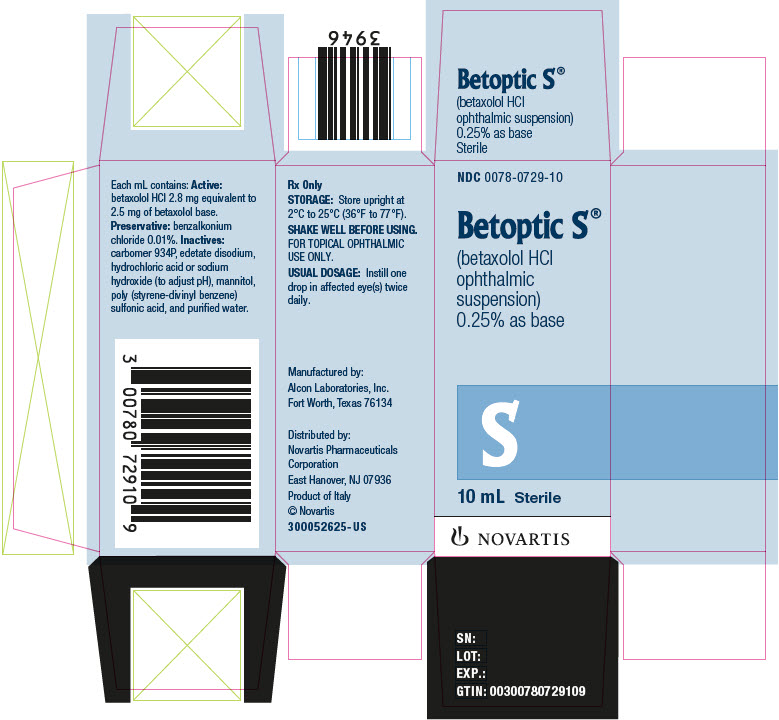
Betoptic SBetaxolol Hydrochloride
Active ingredients
BETAXOLOL HYDROCHLORIDE
Indications
INDICATIONS AND USAGE Betaxolol Hydrochloride Ophthalmic Solution has been shown to be effective in lowering intraocular pressure and is indicated in the treatment of ocular hypertension and chronic open-angle glaucoma. It may be used alone or in combination with other anti-glaucoma drugs. In clinical studies, Betaxolol Hydrochloride Ophthalmic Solution was safely used to lower intraocular pressure in 47 patients with both glaucoma and reactive airway disease who were followed for a mean period of 15 months. However, caution should be used in treating patients with severe reactive airway disease or a history of asthma.
Dosage
DOSAGE AND ADMINISTRATION The recommended dose is one to two drops of Betaxolol Hydrochloride Ophthalmic Solution in the affected eye(s) twice daily. In some patients, the intraocular pressure lowering responses to Betaxolol Hydrochloride Ophthalmic Solution may require a few weeks to stabilize. As with any new medication, careful monitoring of patients is advised. If the intraocular pressure of the patient is not adequately controlled on this regimen, concomitant therapy with pilocarpine and other miotics, and/or epinephrine and/or carbonic anhydrase inhibitors can be instituted.
Warnings
WARNINGS AND PRECAUTIONS Systemic Absorption : Same adverse reactions found with systemic administration of beta-adrenergic receptor inhibitors may occur with topical ophthalmic administration. ( 5.1 ) Cardiac Failure : Discontinue treatment at the first signs of cardiac failure. ( 5.2 ) Diabetes Mellitus : Beta-adrenergic receptor inhibitors may mask the signs and symptoms of acute hypoglycemia. Administer with caution in diabetic patients subject to hypoglycemia. ( 5.3 ) Thyrotoxicosis : Beta-adrenergic receptor inhibitors may mask certain clinical signs (e.g., tachycardia) or hyperthyroidism. ( 5.4 ) 5.1 Systemic Absorption As with many topically applied ophthalmic drugs, this drug is absorbed systemically. The same adverse reactions found with systemic administration of beta-adrenergic receptor inhibitors may occur with topical administration. For example, severe respiratory reactions and cardiac reactions, including death due to bronchospasm in patients with asthma, and death due to cardiac failure, have been reported with topical application of beta-adrenergic receptor inhibitors. 5.2 Cardiac Failure BETOPTIC S has been shown to have a minor effect on heart rate and blood pressure in clinical studies. Caution should be used in treating patients with a history of cardiac failure or heart block. Treatment with BETOPTIC S should be discontinued at the first signs of cardiac failure. 5.3 Diabetes Mellitus Beta-adrenergic receptor inhibitors should be administered with caution in patients subject to hypoglycemia or to diabetic patients (especially those with labile diabetes) who are receiving insulin or oral hypoglycemic agents. Beta-adrenergic receptor inhibitors may mask the signs and symptoms of acute hypoglycemia. 5.4 Thyrotoxicosis Beta-adrenergic receptor inhibitors may mask certain clinical signs (e.g., tachycardia) of hyperthyroidism. Patients suspected of developing thyrotoxicosis should be managed carefully to avoid abrupt withdrawal of beta-adrenergic receptor inhibitors, which might precipitate a thyroid storm. 5.5 Muscle Weakness Beta-adrenergic receptor inhibitors have been reported to potentiate muscle weakness consistent with certain myasthenic symptoms (e.g., diplopia, ptosis, and generalized weakness). 5.6 Surgical Anesthesia The necessity or desirability of withdrawal of beta-adrenergic receptor inhibitors prior to major surgery is controversial. Beta-adrenergic receptor inhibitors impair the ability of the heart to respond to beta adrenergically mediated reflex stimuli. This may augment the risk of general anesthesia in surgical procedures. Some patients receiving beta-adrenergic receptor inhibitors have experienced protracted, severe hypotension during anesthesia. Difficulty in restarting and maintaining the heartbeat has also been reported. In patients undergoing elective surgery, consider gradual withdrawal of beta-adrenergic receptor inhibitors. If necessary during surgery, the effects of beta-adrenergic receptor inhibitors may be reversed by sufficient doses of adrenergic agonists. 5.7 Bronchospasm and Obstructive Pulmonary Disease Caution should be exercised in the treatment of glaucoma patients with excessive restriction of pulmonary function. There have been reports of asthmatic attacks and pulmonary distress during betaxolol treatment. Although rechallenges of some such patients with ophthalmic betaxolol has not adversely affected pulmonary function test results, the possibility of adverse pulmonary effects in patients sensitive to beta-adrenergic receptor inhibitors cannot be ruled out. 5.8 Atopy/Anaphylaxis While taking beta-adrenergic receptor inhibitors, patients with a history of atopy or a history of severe anaphylactic reaction to a variety of allergens may be more reactive to repeated accidental, diagnostic, or therapeutic challenge with such allergens. Such patients may be unresponsive to the usual doses of epinephrine used to treat anaphylactic reactions. 5.9 Angle-Closure Glaucoma In patients with angle-closure glaucoma, the immediate treatment objective is to reopen the angle. This may require constricting the pupil. Betaxolol has little or no effect on the pupil and should not be used alone in the treatment of angle-closure glaucoma. 5.10 Vascular Insufficiency Because of potential effects of beta-adrenergic receptor inhibitors on blood pressure and pulse, these inhibitors should be used with caution in patients with vascular insufficiency. If signs or symptoms suggesting reduced cerebral blood flow or Raynaud’s phenomenon develop following initiation of therapy with BETOPTIC S, alternative therapy should be considered. 5.11 Bacterial Keratitis Bacterial keratitis may occur with use of multiple dose containers of topical ophthalmic products when these containers are inadvertently contaminated by patients who, in most cases, had a concurrent corneal disease or a disruption of the ocular epithelial surface. Instruct patients on appropriate instillation techniques [see Patient Counseling Information (17)] . 5.12 Choroidal Detachment Choroidal detachment after filtration procedures has been reported with the administration of aqueous suppressant therapy. 5.13 Contact Lens Wear The preservative in BETOPTIC S, benzalkonium chloride, may be absorbed by soft contact lenses. Contact lenses should be removed during instillation of BETOPTIC S but may be reinserted 15 minutes after instillation [see Patient Counseling Information (17)] .
Contraindications
CONTRAINDICATIONS BETOPTIC S is contraindicated in patients with: sinus bradycardia greater than a first degree atrioventricular (AV) block cardiogenic shock patients with overt cardiac failure hypersensitivity to any component of this product Hypersensitivity to any component of this product. ( 4 ) Sinus bradycardia, second or third degree atrioventricular (AV) block, overt cardiac failure, and cardiogenic shock. ( 4 )
Drug interactions
DRUG INTERACTIONS Oral beta-adrenergic receptor inhibitors may have additive effects. (7.1 ) Catecholamine-depleting drugs may have additive effects. ( 7.2 ) Concomitant adrenergic psychotropic drugs may have additive effects. ( 7.3 ) 7.1 Oral Beta-Adrenergic Receptor Inhibitors Patients who are receiving a beta-adrenergic receptor inhibitor orally and BETOPTIC S should be observed for a potential additive effect either on the IOP or on the known systemic effects of beta blockade. 7.2 Catecholamine-Depleting Drugs Close observation of the patient is recommended when a beta-adrenergic receptor inhibitor is administered to patients receiving catecholamine-depleting drugs, such as reserpine, because of possible additive effects and the production of hypotension and/or bradycardia, which may result in vertigo, syncope, or postural hypotension. 7.3 Concomitant Adrenergic Psychotropic Drugs Betaxolol is an adrenergic receptor inhibitor; therefore, caution should be exercised in patients using concomitant adrenergic psychotropic drugs. 7.4 Calcium Antagonists, Antiarrhythmics and Digitalis The concomitant use of a beta-adrenergic receptor inhibitor with calcium antagonists, antiarrhythmics (including amiodarone) or digitalis may have additive effects resulting in hypotension and/or marked bradycardia.
Adverse reactions
ADVERSE REACTIONS The most frequent adverse reaction is transient ocular discomfort. ( 6.1 ) To report SUSPECTED ADVERSE REACTIONS, contact Novartis Pharmaceuticals Corporation at 1-888-669-6682 or FDA at 1-800-FDA-1088 or www.fda.gov/medwatch . 6.1 Clinical Trials Experience Because clinical trials are conducted under widely varying conditions, adverse reaction rates observed in the clinical trials of a drug cannot be directly compared to rates in the clinical trials of another drug and may not reflect the rates observed in practice. In clinical trials, the most frequent adverse reaction associated with the use of BETOPTIC S has been transient ocular discomfort. The following other adverse reactions have been reported in small numbers of patients: Ocular: blurred vision, corneal punctate keratitis, foreign body sensation, photophobia, tearing, itching, dryness of eyes, erythema, inflammation, discharge, ocular pain, decreased visual acuity, and crusty lashes. Systemic Adverse Reactions Include : Cardiovascular: Bradycardia, heart block, and congestive failure. Pulmonary: Pulmonary distress characterized by dyspnea, bronchospasm, thickened bronchial secretions, asthma, and respiratory failure. Central Nervous System: Insomnia, dizziness, vertigo, headaches, depression, lethargy, and increase in signs, and symptoms of myasthenia gravis. Other: Hives, toxic epidermal necrolysis, hair loss and glossitis. Perversions of taste and smell have been reported. In a 3-month, double-masked, active-controlled, multicenter study in pediatric patients, the adverse reaction profile of BETOPTIC S was comparable to that seen in adult patients. 6.2 Additional Potential Adverse Reactions Associated With Betaxolol Additional medical events reported with other formulations of betaxolol include allergic reactions, decreased corneal sensitivity, corneal punctate staining which may appear in dendritic formation, edema, and anisocoria.
Mechanism of action
CLINICAL PHARMACOLOGY Betaxolol Hydrochloride, a cardioselective (beta-1-adrenergic) receptor blocking agent, does not have significant membrane-stabilizing (local anesthetic) activity and is devoid of intrinsic sympathomimetic action. Orally administered beta-adrenergic blocking agents reduce cardiac output in healthy subjects and patients with heart disease. In patients with severe impairment of myocardial function, beta-adrenergic receptor antagonists may inhibit the sympathetic stimulatory effect necessary to maintain adequate cardiac function. When instilled in the eye, Betaxolol Hydrochloride Ophthalmic Solution has the action of reducing elevated as well as normal intraocular pressure, whether or not accompanied by glaucoma. Ophthalmic betaxolol has minimal effect on pulmonary and cardiovascular parameters. Ophthalmic betaxolol (one drop in each eye) was compared to timolol and placebo in a three-way crossover study challenging nine patients with reactive airway disease who were selected on the basis of having at least a 15% reduction in the forced expiratory volume in one second (FEV 1 ) after administration of ophthalmic timolol. Betaxolol HCl had no significant effect on pulmonary function as measured by FEV 1 , Forced Vital Capacity (FVC) and FEV 1 /VC. Additionally, the action of isoproterenol, a beta stimulant, administered at the end of the study was not inhibited by ophthalmic betaxolol. In contrast, ophthalmic timolol significantly decreased these pulmonary functions. FEV 1 - Percent Change from Baseline 1 Means Betaxolol 1.0% a Timolol 0.5% Placebo Baseline 1.6 1.4 1.4 60 Minutes 2.3 -25.7* 5.8 120 Minutes 1.6 -27.4* 7.5 240 Minutes -6.4 -26.9* 6.9 Isoproterenol b 36.1 -12.4* 42.8 1 Schoene, R. B. et al. , Am. J. Ophthal. 97:86, 1984. a Twice the clinical concentration. b Inhaled at 240 minutes; measurement at 270 minutes. *Timolol statistically different from betaxolol and placebo (p < 0.05). No evidence of cardiovascular beta-adrenergic blockade during exercise was observed with betaxolol in a double-masked, three-way crossover study in 24 normal subjects comparing ophthalmic betaxolol, timolol and placebo for effect on blood pressure and heart rate. Mean arterial blood pressure was not affected by any treatment; however, ophthalmic timolol produced a significant decrease in the mean heart rate. Mean Heart Rates 1 TREATMENT Bruce Stress Exercise Test Minutes Betaxolol 1% a Timolol 0.5% Placebo 0 79.2 79.3 81.2 2 130.2 126.0 130.4 4 133.4 128.0* 134.3 6 136.4 129.2* 137.9 8 139.8 131.8* 139.4 10 140.8 131.8* 141.3 1 Atkins, J. M. et al. , Am. J. Oph. 99:173-175, Feb., 1985. a Twice the clinical concentration. *Mean pulse rate significantly lower for timolol than betaxolol or placebo (p < 0.05). Clinical Studies Optic nerve head damage and visual field loss are the result of a sustained elevated intraocular pressure and poor ocular perfusion. Betaxolol Hydrochloride Ophthalmic Solution has the action of reducing elevated as well as normal intraocular pressure, and the mechanism of ocular hypotensive action appears to be a reduction of aqueous production as demonstrated by tonography and aqueous fluorophotometry. The onset of action with Betaxolol Hydrochloride Ophthalmic Solution can generally be noted within 30 minutes and the maximal effect can usually be detected 2 hours after topical administration. A single dose provides a 12-hour reduction in intraocular pressure. Clinical observation of glaucoma patients treated with Betaxolol Hydrochloride Ophthalmic Solution for up to three years shows that the intraocular pressure lowering effect is well maintained. Clinical studies show that topical Betaxolol Hydrochloride Ophthalmic Solution reduces mean intraocular pressure 25% from baseline. In trials using 22 mmHg as a generally accepted index of intraocular pressure control, Betaxolol Hydrochloride Ophthalmic Solution was effective in more than 94% of the population studied, of which 73% were treated with the beta blocker alone. In controlled, double-masked studies, the magnitude and duration of the ocular hypotensive effect of Betaxolol Hydrochloride Ophthalmic Solution and ophthalmic timolol solution were clinically equivalent. Betaxolol Hydrochloride Ophthalmic Solution has also been used successfully in glaucoma patients who have undergone a laser trabeculoplasty and have needed additional long-term ocular hypotensive therapy. Betaxolol Hydrochloride Ophthalmic Solution has been well tolerated in glaucoma patients wearing hard or soft contact lenses and in aphakic patients. Betaxolol Hydrochloride Ophthalmic Solution does not produce miosis or accommodative spasm which are frequently seen with miotic agents. The blurred vision and night blindness often associated with standard miotic therapy are not associated with Betaxolol Hydrochloride Ophthalmic Solution. Thus, patients with central lenticular opacities avoid the visual impairment caused by a constricted pupil.
Available forms (5)
NDC examples
0078-072961314-245
Indicated ICD-10 codes
Treats these conditions
Source: openFDA + RxNorm · 2026
Look up another medication