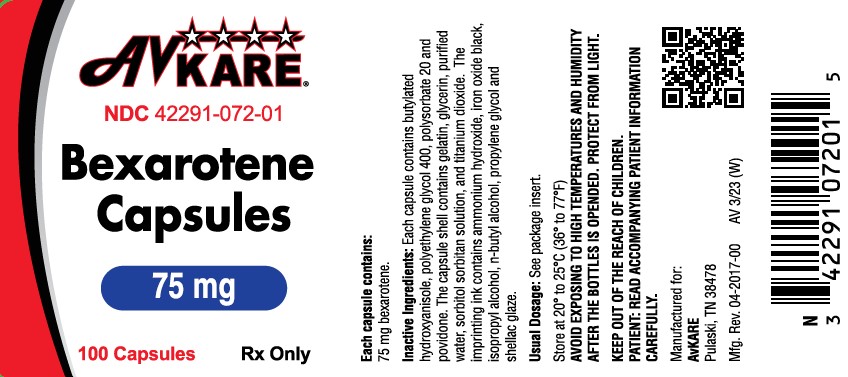
Bexarotene — Retinoid [EPC]. INDICATIONS AND USAGE TARGRETIN ® (bexarotene) Capsules are indicated for the treatment of cutaneous manifestations of cutaneous T-cell lymphoma in…
Boxed warning
WARNING: BIRTH DEFECTS Bexarotene is a member of the retinoid class of drugs that is associated with birth defects in humans. Bexarotene also caused birth defects when administered orally to pregnant rats. Bexarotene capsules must not be administered to a pregnant woman. ( 8.1 ) WARNING: BIRTH DEFECTS See full prescribing information for complete boxed warning. Bexarotene is a member of the retinoid class of drugs that is associated with birth defects in humans. Bexarotene also caused birth defects when administered orally to pregnant rats. Bexarotene must not be administered to a pregnant woman. (8.1 )
INDICATIONS AND USAGE TARGRETIN ® (bexarotene) Capsules are indicated for the treatment of cutaneous manifestations of cutaneous T-cell lymphoma in patients who are refractory to at least one prior systemic therapy. TARGRETIN (bexarotene) is a retinoid indicated for the treatment of cutaneous manifestations of cutaneous T-cell lymphoma in patients who are refractory to at least one prior systemic therapy. ( 1 )
Dosage
DOSAGE AND ADMINISTRATION Bexarotene gel, 1% should be initially applied once every other day for the first week. The application frequency should be increased at weekly intervals to once daily, then twice daily, then three times daily and finally four times daily according to individual lesion tolerance. Generally, patients were able to maintain a dosing frequency of two to four times per day. Most responses were seen at dosing frequencies of two times per day and higher. If application site toxicity occurs, the application frequency can be reduced. Should severe irritation occur, application of drug can be temporarily discontinued for a few days until the symptoms subside. See CONTRAINDICATIONS: Pregnancy . Sufficient gel should be applied to cover the lesion with a generous coating. The gel should be allowed to dry before covering with clothing. Because unaffected skin may become irritated, application of the gel to normal skin surrounding the lesions should be avoided. In addition, do not apply the gel near mucosal surfaces of the body. A response may be seen as soon as four weeks after initiation of therapy but most patients require longer application. With continued application, further benefit may be attained. The longest onset time for the first response among the responders was 392 days based on the Composite Assessment of Index Lesion Severity in the multicenter study. In clinical trials, bexarotene gel, 1% was applied for up to 172 weeks. Bexarotene gel, 1% should be continued as long as the patient is deriving benefit. Occlusive dressings should not be used with bexarotene gel, 1%. BEXAROTENE GEL, 1% IS A TOPICAL THERAPY AND IS NOT INTENDED FOR SYSTEMIC USE. BEXAROTENE GEL, 1% HAS NOT BEEN STUDIED IN COMBINATION WITH OTHER CTCL THERAPIES.
Warnings
WARNINGS AND PRECAUTIONS • Hyperlipidemia: TARGRETIN causes elevations in blood lipids. Obtain baseline values, monitor, and manage elevations during therapy by dose reduction, interruption, discontinuation and/or lipid lowering therapy. ( 5.1 , 5.11 ) • Pancreatitis: Interrupt TARGRETIN and evaluate if suspected. ( 5.2 ) • Hepatotoxicity, Cholestasis, and Hepatic Failure: Interrupt or discontinue TARGRETIN and evaluate if liver chemistry tests exceed three times the upper limit of normal values. ( 5.3 ) • Hypothyroidism: TARGRETIN therapy can cause hypothyroidism. Monitor and replace thyroid hormone if needed. ( 5.5 ) • Neutropenia: Monitor for neutropenia. Reduce TARGRETIN dose or interrupt as indicated. ( 5.6 ) • Photosensitivity: Minimize exposure to sunlight and artificial ultraviolet light during treatment. ( 5.10 ) 5.1 Hyperlipidemia TARGRETIN induces substantial elevations in lipids in most patients. About 70% of patients with CTCL who received an initial dose of > 300 mg/m 2 /day of TARGRETIN had fasting triglyceride levels greater than 2.5 times the upper limit of normal. About 55% had values over 800 mg/dL with a median of about 1200 mg/dL in those patients. Cholesterol elevations above 300 mg/dL occurred in approximately 60% and 75% of patients with CTCL who received an initial dose of 300 mg/m 2 /day or greater than 300 mg/m 2 /day, respectively. Decreases in high density lipoprotein (HDL) cholesterol to less than 25 mg/dL were seen in about 55% and 90% of patients receiving an initial dose of 300 mg/m 2 /day or greater than 300 mg/m 2 /day, respectively, of TARGRETIN. Monitor lipid changes and treat abnormalities during therapy. The effects on triglycerides, HDL cholesterol, and total cholesterol were reversible with cessation of therapy, and could generally be mitigated by dose reduction and/or concomitant antilipemic therapy. Perform fasting blood lipid determinations before TARGRETIN therapy is initiated and weekly until the lipid response to TARGRETIN is established, which usually occurs within 2 to 4 weeks, and monitor at 8-week intervals thereafter. Fasting triglycerides should be normal or normalized with appropriate intervention prior to initiating TARGRETIN therapy. Maintain triglyceride levels below 400 mg/dL to reduce the risk of clinical sequelae [ see Warnings and Precautions (5.2) ]. If fasting triglycerides are elevated or become elevated during treatment, institute antilipemic therapy, and if necessary, reduce or interrupt the dose of TARGRETIN. In the 300 mg/m 2 /day initial dose group, 60% of patients were given lipid lowering drugs. Atorvastatin was used in 48% (73/152) of patients with CTCL. Because of a potential drug-drug interaction, avoid gemfibrozil use with TARGRETIN [ see Drug Interactions (7) ]. 5.2 Pancreatitis Acute pancreatitis, including a fatal case, has been reported in four patients with CTCL and in six patients with non-CTCL cancers treated with TARGRETIN; the cases were associated with marked elevations of fasting serum triglycerides, the lowest being 770 mg/dL in one patient. One patient with advanced non-CTCL cancer died of pancreatitis. Interrupt TARGRETIN and evaluate if pancreatitis is suspected. Patients with CTCL who have risk factors for pancreatitis (e.g., prior pancreatitis, uncontrolled hyperlipidemia, excessive alcohol consumption, uncontrolled diabetes mellitus, biliary tract disease, and medications known to increase triglyceride levels or to be associated with pancreatic toxicity) may be at greater risk for pancreatitis associated with TARGRETIN [ see Warnings and Precautions (5.1) ]. 5.3 Hepatotoxicity, Cholestasis, and Hepatic Failure TARGRETIN caused elevations in liver chemistry tests (LFTs) in 5% (AST), 2% (ALT), and 0% (bilirubin) in patients with CTCL receiving an initial dose of 300 mg/m 2 /day. In contrast, with an initial dose greater than 300 mg/m 2 /day of TARGRETIN, the incidence of LFT elevations was higher at 7% (SGOT/AST), 9% (SGPT/ALT), and 6% (bilirubin). Two patients developed cholestasis, including one patient who died of liver failure. In clinical trials, elevated LFTs resolved within 1 month in 80% of patients following a decrease in dose or discontinuation of therapy. Obtain baseline LFTs and monitor LFTs after 1, 2, and 4 weeks of treatment initiation, and if stable, at least every 8 weeks thereafter during treatment. Interrupt or discontinue TARGRETIN if test results exceed three times the upper limit of normal values for AST, ALT, or bilirubin. 5.4 Hypothyroidism TARGRETIN induces hypothyroidism in about half of all patients treated by causing a reversible reduction in levels of thyroid hormone (total thyroxine [total T4]) and thyroid-stimulating hormone (TSH). The incidence of decreases in TSH and total T4 were about 60% and 45%, respectively, in patients with CTCL receiving an initial dose of 300 mg/m 2 /day. Hypothyroidism was reported as an adverse event in 29% of patients. Consider treatment with thyroid hormone supplementation in patients with hypothyroidism. In the 300 mg/m 2 /day initial dose group, 37% of patients were treated with thyroid hormone replacement. Obtain baseline thyroid function tests and patients monitor during treatment. 5.5 Neutropenia Leukopenia in the range of 1000 to <3000 WBC x 10 6 /L occurred in 18% of patients with CTCL receiving an initial dose of 300 mg/m 2 /day of TARGRETIN. Patients receiving an initial dose greater than 300 mg/m 2 /day of TARGRETIN had an incidence of leukopenia of 43%. No patient with CTCL treated with TARGRETIN developed leukopenia of less than 1000 WBC x 10 6 /L. The usual time to onset of leukopenia was 4 to 8 weeks after initiating TARGRETIN. The leukopenia observed in most patients was predominantly neutropenia. In the 300 mg/m 2 /day initial dose group, the incidence of NCI Grade 3 and Grade 4 neutropenia, respectively, was 12% and 4%. The leukopenia and neutropenia experienced during TARGRETIN therapy resolved after dose reduction or discontinuation of treatment, on average within 30 days in 93% of the patients with CTCL and 82% of patients with non-CTCL cancers. Leukopenia and neutropenia were rarely associated with severe sequelae or serious adverse events. Obtain complete blood counts (CBC) at baseline and periodically during treatment. 5.6 Cataracts Posterior subcapsular cataracts occurred in preclinical toxicity studies in rats and dogs administered bexarotene daily for 6 months. New cataracts or worsening of previous cataracts occurred in 15 of 79 patients who were monitored with serial slit lamp examinations. Because of the high prevalence and rate of cataract formation in older patient populations, the relationship of TARGRETIN and cataracts cannot be determined in the absence of an appropriate control group. Patients treated with TARGRETIN who experience visual difficulties should have an appropriate ophthalmologic evaluation. 5.7 Vitamin A Supplementation Hazard In clinical studies, patients were advised to limit vitamin A intake to ≤15,000 IU/day. Because of the relationship of bexarotene to vitamin A, patients should be advised to limit vitamin A supplements to avoid potential additive toxic effects. 5.8 Hypoglycemia Risk in Patients with Diabetes Mellitus In patients using insulin, agents enhancing insulin secretion (e.g., sulfonylureas), or insulin sensitizers (e.g., thiazolidinedione class), based on the mechanism of action, TARGRETIN could enhance the action of these agents, resulting in hypoglycemia. Hypoglycemia has not been associated with the use of TARGRETIN as monotherapy. 5.9 Photosensitivity Retinoids as a class have been associated with photosensitivity. In vitro assays indicate that bexarotene is a potential photosensitizing agent. Phototoxicity manifested as sunburn and skin sensitivity to sunlight occurred in patients who were exposed to direct sunlight while receiving TARGRETIN. Advise patients to minimize exposure to sunlight and artificial ultraviolet light while re
Contraindications
CONTRAINDICATIONS Bexarotene gel, 1% is contraindicated in patients with a known hypersensitivity to bexarotene or other components of the product. PREGNANCY Bexarotene gel, 1% may cause fetal harm when administered to a pregnant woman. Bexarotene gel must not be given to a pregnant woman or a woman who intends to become pregnant. If a woman becomes pregnant while taking bexarotene gel, bexarotene gel must be stopped immediately and the woman given appropriate counseling. Bexarotene caused malformations when administered orally to pregnant rats during days 7 to 17 of gestation. Developmental abnormalities included incomplete ossification at 4 mg/kg/day and cleft palate, depressed eye bulge/microphthalmia, and small ears at 16 mg/kg/day. At doses greater than 10 mg/kg/day, bexarotene caused developmental mortality. The no-effect oral dose in rats was 1 mg/kg/day. Plasma bexarotene concentrations in patients with CTCL applying bexarotene gel, 1% were generally less than one hundredth the C max associated with dysmorphogenesis in rats, although some patients had C max levels that were approximately one eighth the concentration associated with dysmorphogenesis in rats. Women of child-bearing potential should be advised to avoid becoming pregnant when bexarotene gel is used. The possibility that a woman of child-bearing potential is pregnant at the time therapy is instituted should be considered. A negative pregnancy test (e.g., serum beta-human chorionic gonadotropin, beta-HCG) with a sensitivity of at least 50 mIU/L should be obtained within one week prior to bexarotene gel therapy, and the pregnancy test must be repeated at monthly intervals while the patient remains on bexarotene gel. Effective contraception must be used for one month prior to the initiation of therapy, during therapy and for at least one month following discontinuation of therapy; it is recommended that two reliable forms of contraception be used simultaneously unless abstinence is the chosen method. Male patients with sexual partners who are pregnant, possibly pregnant, or who could become pregnant must use condoms during sexual intercourse while applying bexarotene gel and for at least one month after the last dose of drug. Bexarotene gel therapy should be initiated on the second or third day of a normal menstrual period. No more than a one month supply of bexarotene gel should be given to the patient so that the results of pregnancy testing can be assessed and counseling regarding avoidance of pregnancy and birth defects can be reinforced.
Drug interactions
DRUG INTERACTIONS Effect of Other Drugs on Bexarotene Gemfibrozil: Concomitant administration of bexarotene and gemfibrozil resulted in increases in plasma concentrations of bexarotene. Concomitant administration of gemfibrozil with bexarotene is not recommended. Effect of Bexarotene on Other Drugs Bexarotene may be an inducer for the CYP3A4 enzymes, and may reduce plasma concentrations of other substrates metabolized by CYP3A4. Drug products which may be affected include oral or other systemic hormonal contraceptives. Thus, if treatment with bexarotene is intended for a female with reproductive potential, it is strongly recommended that a non-hormonal contraception be considered. [ see Use in Specific Populations (8.3) , Clinical Pharmacology (12.3) ]. Laboratory Test Interference CA125 assay values in patients with ovarian cancer may be increased by bexarotene therapy. Drug Interactions Effect of Other Drugs on Bexarotene CYP3A4 Inhibitors/Inducers: In a clinical study, concomitant administration of multiple doses of ketoconazole with bexarotene did not alter bexarotene plasma concentrations. This suggests that bexarotene elimination is not dependent on CYP3A4 metabolism. Paclitaxel plus Carboplatin: The co-administration of paclitaxel (200 mg/m 2 IV dose over 3 hours) plus carboplatin (at a dose expected to achieve an AUC of 6 mg●min/mL) with bexarotene (400 mg/m 2 orally once daily) increased the exposure to bexarotene (AUC 0-24 and C max ) by 2-fold compared to bexarotene alone . Atorvastatin: Bexarotene concentrations were not affected by concomitant atorvastatin administration. Effect of Bexarotene on Other Drugs Bexarotene did not significantly inhibit the following enzymes in human liver microsomes: CYP1A2, CYP2A6, CYP2C9, CYP2C19, CYP2D6, CYP2E1 and CYP3A4. In vitro data suggested a potential for bexarotene to inhibit CYP2C8 and induce CYP3A4. Atorvastatin: The exposure (AUC) to atorvastatin (a substrate for CYP3A4) decreased by half when atorvastatin was co-administered with bexarotene (400 mg/m 2 orally once daily). Tamoxifen: Based on interim data, concomitant administration of bexarotene and tamoxifen resulted in approximately a 35% decrease in plasma concentrations of tamoxifen, possibly through induction of CYP3A4 by bexarotene. Paclitaxel: The exposure (AUC) to paclitaxel (a substrate for CYP3A4 and CYP2C8) decreased by 19% when paclitaxel (200 mg/m 2 IV dose over 3 hours) was co-administered with bexarotene (400 mg/m 2 orally once daily). Carboplatin: The co-administration of bexarotene (400 mg/m 2 orally once daily) had no effect on the exposure to free or total carboplatin.
Adverse reactions
ADVERSE REACTIONS The following serious adverse reactions are discussed in greater detail in other sections of the prescribing information: • Hyperlipidemia [ see Warnings and Precautions (5.1) ] • Pancreatitis [ see Warnings and Precautions (5.2) ] • Hepatotoxicity, Cholestasis, and Hepatic Failure [ see Warnings and Precautions (5.3) ] • Hypothyroidism [ see Warnings and Precautions (5.4) ] • Neutropenia [ see Warnings and Precautions (5.5) ] • Cataracts [ see Warnings and Precautions (5.6) ] • Vitamin A Supplementation Hazard [ see Warnings and Precautions (5.7) ] • Hypoglycemia Risk in Patients with Diabetes Mellitus [ see Warnings and Precautions (5.8) ] • Photosensitivity [ see Warnings and Precautions (5.9) ] • Laboratory Tests [ see Warnings and Precautions (5.10) ] • Drug/Laboratory Test Interactions [ see Warnings and Precautions (5.11) ] The most common adverse reactions (greater than 10%) include: hyperlipidemia, hypercholesteremia, headache, hypothyroidism, asthenia, leukopenia, rash, nausea, infection, peripheral edema, abdominal pain, and dry skin. ( 6.1 ) To report SUSPECTED ADVERSE REACTIONS, contact Bausch Health US, LLC at 1-800-321-4576 or FDA at 1-800-FDA-1088 or www.fda.gov/medwatch. 6.1 Clinical Trials Experience Because clinical trials are conducted under widely varying conditions, adverse reaction rates observed in the clinical trials of a drug cannot be directly compared to rates in the clinical trials of another drug and may not reflect the rates observed in practice. The safety of TARGRETIN has been evaluated in two clinical trials of 152 patients with CTCL who received TARGRETIN for up to 97 weeks and in 352 patients in other trials. The mean duration of therapy for the 152 patients with CTCL was 166 days. The most common adverse events reported with an incidence of at least 10% in patients with CTCL treated at an initial dose of 300 mg/m 2 /day of TARGRETIN are shown in Table 2. The events at least possibly related to treatment are lipid abnormalities (elevated triglycerides, elevated total and LDL cholesterol and decreased HDL cholesterol), hypothyroidism, headache, asthenia, rash, leukopenia, anemia, nausea, infection, peripheral edema, abdominal pain, and dry skin. Most adverse events occurred at a greater incidence in patients treated at starting doses of greater than 300 mg/m 2 /day (see Table 2). Adverse reactions leading to TARGRETIN dose reduction or discontinuation in at least two patients were hyperlipemia, neutropenia/leukopenia, diarrhea, fatigue/lethargy, hypothyroidism, headache, liver function test abnormalities, rash, pancreatitis, nausea, anemia, allergic reaction, muscle spasm, pneumonia, and confusion. The NCI Grade 3 and NCI Grade 4 adverse reactions reported in two or more patients with CTCL treated at an initial dose of 300 mg/m 2 /day of TARGRETIN (see Table 3) were hypertriglyceridemia, pruritus, headache, peripheral edema, leukopenia, rash, and hypercholesteremia. Most of these moderately severe or severe adverse events occurred at a higher rate in patients treated at starting doses of greater than 300 mg/m 2 /day than in patients treated at a starting dose of 300 mg/m 2 /day. In patients with CTCL receiving an initial dose of 300 mg/m 2 /day, the incidence of NCI Grade 3 or 4 elevations in triglycerides and total cholesterol was 28% and 25%, respectively (Table 4). In contrast, in patients with CTCL receiving greater than 300 mg/m 2 /day, the incidence of NCI Grade 3 or 4 elevated triglycerides and total cholesterol was 45% and 45%, respectively. Other Grade 3 and 4 laboratory abnormalities are shown in Table 3. In addition to the 152 patients enrolled in the two CTCL trials, 352 patients received TARGRETIN as monotherapy for various advanced malignancies at doses from 5 mg/m 2 /day to 1000 mg/m 2 /day. The common adverse reactions (incidence greater than 10%) were similar to those seen in patients with CTCL. In the 504 patients (CTCL and non-CTCL) who received TARGRETIN as monotherapy, drug-related serious adverse reactions that were fatal, in one patient each, were acute pancreatitis, subdural hematoma, and liver failure. In the patients with CTCL receiving an initial dose of 300 mg/m 2 /day of TARGRETIN, adverse reactions reported at an incidence of less than 10% and not included in Tables 2 through 4 or discussed in other parts of labeling and possibly related to treatment were as follows: Body as a Whole: chills, cellulitis, chest pain, breast pain, sepsis, and monilia infection. Cardiovascular: hemorrhage, hypertension, angina pectoris, right heart failure, syncope, and tachycardia. Digestive: constipation, dry mouth, flatulence, colitis, dyspepsia, cheilitis, gastroenteritis, gingivitis, liver failure, and melena. Hemic and Lymphatic: eosinophilia, thrombocythemia, coagulation time increased, lymphocytosis, and thrombocytopenia. Metabolic and Nutritional: LDH increased, creatinine increased, hypoproteinemia, hyperglycemia, weight decreased, weight increased, and amylase increased. Musculoskeletal: arthralgia, myalgia, bone pain, myasthenia, and arthrosis. Nervous: depression, agitation, ataxia, cerebrovascular accident, confusion, dizziness, hyperesthesia, hypesthesia, and neuropathy. Respiratory: pharyngitis, rhinitis, dyspnea, pleural effusion, bronchitis, cough increased, lung edema, hemoptysis, and hypoxia. Skin and Appendages: skin ulcer, acne, alopecia, skin nodule, macular papular rash, pustular rash, serous drainage, and vesicular bullous rash. Special Senses: dry eyes, conjunctivitis, ear pain, blepharitis, corneal lesion, keratitis, otitis externa, and visual field defect. Urogenital: albuminuria, hematuria, urinary incontinence, urinary tract infection, urinary urgency, dysuria, and kidney function abnormal. Table 2: Adverse Events with Incidence ≥10% in CTCL Trials Initial Assigned Dose Group (mg/m 2 /day) 300 >300 Body System N=84 N=53 Adverse Event (AE) Preferred English term coded according to Ligand-modified COSTART 5 Dictionary. , Patients are counted at most once in each AE category. N (%) N (%) METABOLIC AND NUTRITIONAL DISORDERS Hyperlipemia 66 (79) 42 (79) Hypercholesteremia 27 (32) 33 (62) Lactic dehydrogenase increased 6 (7) 7 (13) BODY AS A WHOLE Headache 25 (30) 22 (42) Asthenia 17 (20) 24 (45) Infection 11 (13) 12 (23) Abdominal pain 9 (11) 2 (4) Chills 8 (10) 7 (13) Fever 4 (5) 9 (17) Flu syndrome 3 (4) 7 (13) Back pain 2 (2) 6 (11) Infection bacterial 1 (1) 7 (13) ENDOCRINE Hypothyroidism 24 (29) 28 (53) SKIN AND APPENDAGES Rash 14 (17) 12 (23) Dry skin 9 (17) 5 (9) Exfoliative dermatitis 8 (10) 15 (28) Alopecia 3 (4) 6 (11) HEMIC AND LYMPHATIC SYSTEM Leukopenia 14 (17) 25 (47) Anemia 5 (6) 13 (25) Hypochromic anemia 3 (4) 7 (13) DIGESTIVE SYSTEM Nausea 13 (16) 4 (8) Diarrhea 6 (7) 22 (42) Vomiting 3 (4) 7 (13) Anorexia 2 (2) 12 (23) CARDIOVASCULAR SYSTEM Peripheral edema 11 (13) 6 (11) NERVOUS SYSTEM Insomnia 4 (5) 6 (11) Table 3 : Incidence of Moderately Severe and Severe Adverse Events Reported in at Least Two Patients (CTCL Trials) Initial Assigned Dose Group (mg/m 2 /day) 300 (N=84) >300 (N=53) Mod Sev Severe Mod Sev Severe Body System Adverse Event (AE) Preferred English term coded according to Ligand-modified COSTART 5 Dictionary. , Patients are counted at most once in each AE category. Patients are classified by the highest severity within each row. N (%) N (%) N (%) N (%) BODY AS A WHOLE Asthenia 1 (1) 0 (0) 11 (21) 0 (0) Headache 3 (4) 0 (0) 5 (9) 1 (2) Infection bacterial 1 (1) 0 (0) 0 (0) 2 (4) CARDIOVASCULAR SYSTEM Peripheral edema 2 (2) 1 (1) 0 (0) 0 (0) DIGESTIVE SYSTEM Anorexia 0 (0) 0 (0) 3 (6) 0 (0) Diarrhea 1 (1) 1 (1) 2 (4) 1 (2) Pancreatitis 1 (1) 0 (0) 3 (6) 0 (0) Vomiting 0 (0) 0 (0) 2 (4) 0 (0) ENDOCRINE Hypothyroidism 1 (1) 1 (1) 2 (4) 0 (0) HEMIC AND LYMPHATIC SYSTEM Leukopenia 3 (4) 0 (0) 6 (11) 1 (2) METABOLIC AND NUTRITIONAL DISORDERS Bilirubinemia 0 (0) 1 (1) 2 (4) 0 (0) Hypercholesteremia 2 (2) 0 (0) 5 (9) 0 (0) Hyperlipemia 16
Mechanism of action
Mechanism of Action Bexarotene selectively binds and activates retinoid X receptor subtypes (RXRα, RXRß, RXRγ). RXRs can form heterodimers with various receptor partners such as retinoic acid receptors (RARs), vitamin D receptor, thyroid receptor, and peroxisome proliferator activator receptors (PPARs). Once activated, these receptors function as transcription factors that regulate the expression of genes that control cellular differentiation and proliferation. Bexarotene inhibits the growth in vitro of some tumor cell lines of hematopoietic and squamous cell origin. It also induces tumor regression in vivo in some animal models. The exact mechanism of action of bexarotene in the treatment of cutaneous T-cell lymphoma (CTCL) is unknown.
A drug lookup is just the start. Eleplan keeps the whole care plan in one place.
Medications, diagnoses, documents, appointments, and the whole care team — organized and always in sync, with Ellie, your AI care assistant, on top of it. Free to start.