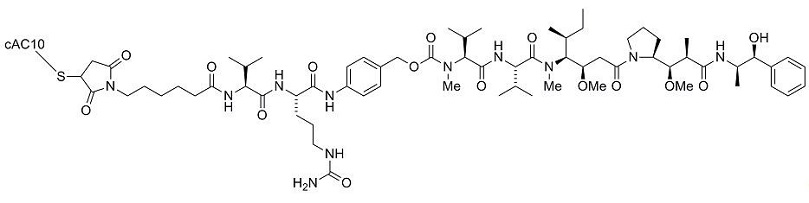
Brentuximab Vedotin — CD30-directed Immunoconjugate [EPC]. INDICATIONS AND USAGE ADCETRIS is a CD30-directed antibody and microtubule inhibitor conjugate indicated for treatment of: • Adult patients with…
Boxed warning
WARNING: PROGRESSIVE MULTIFOCAL LEUKOENCEPHALOPATHY (PML) JC virus infection resulting in PML and death can occur in patients receiving ADCETRIS [see Warnings and Precautions (5.9) , Adverse Reactions (6.1) ] . WARNING: PROGRESSIVE MULTIFOCAL LEUKOENCEPHALOPATHY (PML) See full prescribing information for complete boxed warning. JC virus infection resulting in PML and death can occur in patients receiving ADCETRIS ( 5.9 , 6.1 ).
INDICATIONS AND USAGE ADCETRIS is a CD30-directed antibody and microtubule inhibitor conjugate indicated for treatment of: • Adult patients with previously untreated Stage III or IV classical Hodgkin lymphoma (cHL), in combination with doxorubicin, vinblastine, and dacarbazine ( 1.1 ). • Pediatric patients 2 years and older with previously untreated high risk classical Hodgkin lymphoma (cHL), in combination with doxorubicin, vincristine, etoposide, prednisone, and cyclophosphamide ( 1.2 ). • Adult patients with classical Hodgkin lymphoma (cHL) at high risk of relapse or progression as post-autologous hematopoietic stem cell transplantation (auto-HSCT) consolidation ( 1.3 ). • Adult patients with classical Hodgkin lymphoma (cHL) after failure of auto-HSCT or after failure of at least two prior multi-agent chemotherapy regimens in patients who are not auto-HSCT candidates ( 1.4 ). • Adult patients with previously untreated systemic anaplastic large cell lymphoma (sALCL) or other CD30-expressing peripheral T-cell lymphomas (PTCL), including angioimmunoblastic T-cell lymphoma and PTCL not otherwise specified (NOS), in combination with cyclophosphamide, doxorubicin, and prednisone ( 1.5 ). • Adult patients with systemic anaplastic large cell lymphoma (sALCL) after failure of at least one prior multi-agent chemotherapy regimen ( 1.6 ). • Adult patients with primary cutaneous anaplastic large cell lymphoma (pcALCL) or CD30-expressing mycosis fungoides (MF) who have received prior systemic therapy ( 1.7 ). • Adult patients with relapsed or refractory large B-cell lymphoma (LBCL), including diffuse large B-cell lymphoma (DLBCL) NOS, DLBCL arising from indolent lymphoma, or high-grade B-cell lymphoma (HGBL), after two or more lines of systemic therapy who are not eligible for auto-HSCT or CAR T-cell therapy, in combination with lenalidomide and a rituximab product ( 1.8 ). 1.1 Previously Untreated Stage III or IV Classical Hodgkin Lymphoma (cHL), in Combination with Chemotherapy ADCETRIS is indicated for the treatment of adult patients with previously untreated Stage III or IV cHL, in combination with doxorubicin, vinblastine, and dacarbazine. 1.2 Previously Untreated High Risk Classical Hodgkin Lymphoma (cHL), in Combination with Chemotherapy ADCETRIS is indicated for the treatment of pediatric patients 2 years and older with previously untreated high risk cHL, in combination with doxorubicin, vincristine, etoposide, prednisone, and cyclophosphamide. 1.3 Classical Hodgkin Lymphoma (cHL) Consolidation ADCETRIS is indicated for the treatment of adult patients with cHL at high risk of relapse or progression as post-autologous hematopoietic stem cell transplantation (auto-HSCT) consolidation. 1.4 Relapsed Classical Hodgkin Lymphoma (cHL) ADCETRIS is indicated for the treatment of adult patients with cHL after failure of auto-HSCT or after failure of at least two prior multi-agent chemotherapy regimens in patients who are not auto-HSCT candidates. 1.5 Previously Untreated Systemic Anaplastic Large Cell Lymphoma (sALCL) or Other CD30-Expressing Peripheral T-cell Lymphomas (PTCL), in Combination with Chemotherapy ADCETRIS is indicated for the treatment of adult patients with previously untreated sALCL or other CD30-expressing PTCL, including angioimmunoblastic T-cell lymphoma and PTCL not otherwise specified (NOS), in combination with cyclophosphamide, doxorubicin, and prednisone. 1.6 Relapsed Systemic Anaplastic Large Cell Lymphoma (sALCL) ADCETRIS is indicated for the treatment of adult patients with sALCL after failure of at least one prior multi-agent chemotherapy regimen. 1.7 Relapsed Primary Cutaneous Anaplastic Large Cell Lymphoma (pcALCL) or CD30-Expressing Mycosis Fungoides (MF) ADCETRIS is indicated for the treatment of adult patients with pcALCL or CD30-expressing MF who have received prior systemic therapy. 1.8 Relapsed or Refractory Large B-Cell Lymphoma (LBCL) ADCETRIS in combination with lenalidomide and a rituximab product is indicated for the treatment of adult patients with relapsed or refractory LBCL, including diffuse large B-cell lymphoma (DLBCL) NOS, DLBCL arising from indolent lymphoma, or high-grade B-cell lymphoma (HGBL), after two or more lines of systemic therapy who are not eligible for auto-HSCT or chimeric antigen receptor (CAR) T-cell therapy.
Dosage
DOSAGE AND ADMINISTRATION • Administer only as an intravenous infusion over 30 minutes ( 2.1 ). • The recommended dosage as monotherapy for adult patients is 1.8 mg/kg up to a maximum of 180 mg every 3 weeks ( 2.1 ). • The recommended dosage in combination with chemotherapy for adult patients with previously untreated Stage III or IV cHL is 1.2 mg/kg up to a maximum of 120 mg every 2 weeks for a maximum of 12 doses ( 2.1 ). • The recommended dosage in combination with chemotherapy for pediatric patients 2 years and older with previously untreated high risk cHL is 1.8 mg/kg up to a maximum of 180 mg every 3 weeks for a maximum of 5 doses ( 2.1 ). • The recommended dosage in combination with chemotherapy for adult patients with previously untreated PTCL is 1.8 mg/kg up to a maximum of 180 mg every 3 weeks for 6 to 8 doses ( 2.1 ). • The recommended dosage in combination with lenalidomide and a rituximab product for adult patients with relapsed or refractory LBCL is 1.2 mg/kg up to a maximum of 120 mg every 3 weeks ( 2.1 ). • Avoid use in patients with severe renal impairment ( 2.2 ) • Reduce dose in patients with mild hepatic impairment; avoid use in patients with moderate or severe hepatic impairment ( 2.3 ). 2.1 Recommended Dosage The recommended ADCETRIS dosage is provided in Table 1 . Administer ADCETRIS as a 30-minute intravenous infusion. For recommended dosage for patients with renal or hepatic impairment, see Dosage and Administration (2.2 and 2.3 ) . For dosing instructions of combination agents administered with ADCETRIS, see Clinical Studies (14.1 , 14.2, and 14.5 ) and the manufacturer’s prescribing information. Table 1: Recommended ADCETRIS Dosage Indication Recommended Dose The dose for patients weighing greater than 100 kg should be calculated based on a weight of 100 kg. Frequency and Duration Adult patients with previously untreated Stage III or IV classical Hodgkin lymphoma 1.2 mg/kg up to a maximum of 120 mg in combination with chemotherapy Administer every 2 weeks until a maximum of 12 doses, disease progression, or unacceptable toxicity Pediatric patients with previously untreated high risk classical Hodgkin lymphoma 1.8 mg/kg up to a maximum of 180 mg in combination with chemotherapy Administer every 3 weeks with each cycle of chemotherapy for a maximum of 5 doses Adult patients with classical Hodgkin lymphoma consolidation 1.8 mg/kg up to a maximum of 180 mg Initiate ADCETRIS treatment within 4‑6 weeks post-auto-HSCT or upon recovery from auto-HSCT Administer every 3 weeks until a maximum of 16 cycles, disease progression, or unacceptable toxicity Adult patients with relapsed classical Hodgkin lymphoma 1.8 mg/kg up to a maximum of 180 mg Administer every 3 weeks until disease progression or unacceptable toxicity Adult patients with previously untreated systemic ALCL or other CD30-expressing peripheral T-cell lymphomas 1.8 mg/kg up to a maximum of 180 mg in combination with chemotherapy Administer every 3 weeks with each cycle of chemotherapy for 6 to 8 doses Adult patients with relapsed Systemic ALCL 1.8 mg/kg up to a maximum of 180 mg Administer every 3 weeks until disease progression or unacceptable toxicity Adult patients with relapsed primary cutaneous ALCL or CD30-expressing mycosis fungoides 1.8 mg/kg up to a maximum of 180 mg Administer every 3 weeks until a maximum of 16 cycles, disease progression, or unacceptable toxicity Adult patients with relapsed or refractory LBCL 1.2 mg/kg up to a maximum of 120 mg in combination with lenalidomide and rituximab Starting with cycle 2, rituximab intravenous treatment could be substituted with rituximab and hyaluronidase human via subcutaneous injection every 3 weeks. Administer every 3 weeks until disease progression, or unacceptable toxicity 2.2 Recommended Dosage in Patients with Renal Impairment No dosage adjustment is required for mild renal impairment (CrCL greater than 50‑80 mL/min) and moderate renal impairment (CrCL 30-50 mL/min). Avoid use in patients with severe (CrCL less than 30 mL/min) renal impairment [see Warnings and Precautions (5.6) ] . 2.3 Recommended Dosage in Patients with Hepatic Impairment Adult patients with previously untreated Stage III or IV classical Hodgkin lymphoma Reduce the dosage of ADCETRIS to 0.9 mg/kg up to a maximum of 90 mg every 2 weeks for patients with mild hepatic impairment (Child-Pugh A). Avoid use in patients with moderate (Child-Pugh B) and severe (Child-Pugh C) hepatic impairment [see Warnings and Precautions (5.7) ] . Adult patients with relapsed or refractory LBCL Reduce the dosage of ADCETRIS to 0.9 mg/kg up to a maximum of 90 mg every 3 weeks for patients with mild hepatic impairment (total bilirubin ≤ upper limit of normal [ULN] and aspartate transaminase [AST] > ULN, or total bilirubin >1 to 1.5 × ULN and any AST). Avoid use in patients with moderate and severe hepatic impairment (total bilirubin >1.5 × ULN) [see Warnings and Precautions (5.7) ] . Hepatic impairment is defined per the National Cancer Institute Organ Dysfunction Working Group. All other indications Reduce the dosage of ADCETRIS to 1.2 mg/kg up to a maximum of 120 mg every 3 weeks for patients with mild hepatic impairment (Child-Pugh A). Avoid use in patients with moderate (Child-Pugh B) and severe (Child-Pugh C) hepatic impairment [see Warnings and Precautions (5.7) ] . 2.4 Recommended Prophylactic Medications In adult patients with previously untreated Stage III or IV cHL who are treated with ADCETRIS + doxorubicin, vinblastine, and dacarbazine (AVD), administer G‑CSF beginning with Cycle 1. In pediatric patients with previously untreated high risk cHL who are treated with ADCETRIS + doxorubicin, vincristine, etoposide, prednisone, and cyclophosphamide (AVEPC), administer G-CSF beginning with Cycle 1. In adult patients with previously untreated PTCL who are treated with ADCETRIS + cyclophosphamide, doxorubicin, and prednisone (CHP), administer G-CSF beginning with Cycle 1. In adult patients with relapsed or refractory LBCL who are treated with ADCETRIS + lenalidomide + rituximab, administer G-CSF beginning with Cycle 1. 2.5 Dosage Modifications for Adverse Reactions Table 2: Dosage Modifications for Peripheral Neuropathy or Neutropenia in Adult Patients [see Warnings and Precautions (5.1, 5.3)] Recommended ADCETRIS Dosage from Table 1 The dose for patients weighing greater than 100 kg should be calculated based on a weight of 100 kg. Monotherapy or Combination Therapy Severity Grades based on National Cancer Institute Common Terminology Criteria for Adverse Events (CTCAE) Version 5. Dosage Modification Peripheral Neuropathy 1.2 mg/kg up to a maximum of 120 mg every 2 weeks In combination with chemotherapy Grade 2 Reduce dose to 0.9 mg/kg up to a maximum of 90 mg every 2 weeks. Grade 3 Hold ADCETRIS dosing until improvement to Grade 2 or lower. Restart at 0.9 mg/kg up to a maximum of 90 mg every 2 weeks. Consider modifying the dose of other neurotoxic chemotherapy agents. Grade 4 Discontinue dosing. 1.2 mg/kg up to a maximum of 120 mg every 3 weeks In combination with lenalidomide and rituximab Grade 2 Sensory neuropathy: If resolves to Grade 1 or lower before the next scheduled dose, resume at the same dose level. If Grade 2 persists at the next scheduled dose, reduce one dose level. Motor neuropathy: Reduce dosage to 0.9 mg/kg up to a maximum of 90 mg every 3 weeks. Grade 3 Sensory neuropathy: Hold ADCETRIS dosing until improvement to Grade 2 or lower, then restart treatment at a reduced dosage of 0.9 mg/kg up to a maximum of 90 mg every 3 weeks. Motor neuropathy: Discontinue dosing. Grade 4 Discontinue dosing. 1.8 mg/kg up to a maximum of 180 mg every 3 weeks As monotherapy New or worsening Grade 2 or 3 Hold dosing until improvement to baseline or Grade 1. Restart at 1.2 mg/kg up to a maximum of 120 mg every 3 weeks. Grade 4 Discontinue dosing. In combination with chemotherapy Grade 2 Sensory neuropathy: Continue treatment at same dose. Motor neuropathy: Reduc
Warnings
WARNINGS AND PRECAUTIONS • Peripheral neuropathy : Monitor patients for neuropathy and institute dose modifications accordingly ( 5.1 ). • Anaphylaxis and infusion reactions : If an infusion reaction occurs, interrupt the infusion. If anaphylaxis occurs, immediately discontinue the infusion ( 5.2 ). • Hematologic toxicities : Monitor complete blood counts. Monitor for signs of infection. Manage using dose delays and growth factor support ( 5.3 ). • Serious infections and opportunistic infections : Closely monitor patients for the emergence of bacterial, fungal or viral infections ( 5.4 ). • Tumor lysis syndrome : Closely monitor patients with rapidly proliferating tumor or high tumor burden ( 5.5 ). • Hepatotoxicity : Monitor liver enzymes and bilirubin ( 5.8 ). • Pulmonary toxicity : Monitor patients for new or worsening symptoms ( 5.10 ). • Serious dermatologic reactions : Discontinue if Stevens-Johnson syndrome or toxic epidermal necrolysis occurs ( 5.11 ). • Gastrointestinal complications : Monitor patients for new or worsening symptoms ( 5.12 ). • Hyperglycemia : Monitor patients for new or worsening hyperglycemia. Manage with anti-hyperglycemic medications as clinically indicated ( 5.13 ). • Embryo-Fetal toxicity : Can cause fetal harm. Advise females of reproductive potential and males with female partners of reproductive potential of the potential risk to a fetus and to use effective contraception ( 5.14 , 8.1 , 8.3 ). 5.1 Peripheral Neuropathy ADCETRIS treatment causes a peripheral neuropathy that is predominantly sensory. Cases of peripheral motor neuropathy have also been reported. ADCETRIS-induced peripheral neuropathy is cumulative. In studies of ADCETRIS as monotherapy, 62% of patients experienced any grade of peripheral neuropathy. The median time to onset was 3 months (range, 0–12). Of the patients who experienced neuropathy, 62% had complete resolution, 24% had partial improvement, and 14% had no improvement at their last evaluation. The median time from onset to resolution or improvement was 5 months (range, 0–45). Of the patients with ongoing neuropathy (38%), 71% had Grade 1, 24% had Grade 2, and 4% had Grade 3. In ECHELON-1 (Study 5), 67% of patients treated with ADCETRIS + AVD experienced any grade of peripheral neuropathy. The median time to onset of any grade was 2 months (range, 0–7), of Grade 2 was 3 months (range, 0–6) and of Grade 3 was 4 months (range, <1–7). By the time of the primary analysis, 43% of affected patients had complete resolution, 24% had partial improvement, and 33% had no improvement at their last evaluation. The median time from onset to resolution or improvement of any grade was 2 months (range, 0–32). At the updated analysis of ECHELON-1, 72% of the patients who experienced peripheral neuropathy had complete resolution, 14% had partial improvement, and 14% had no improvement. The median time to partial improvement was 2.9 months (range, <1–50), and the median time to complete resolution was 6.6 months (range, <1–67). Of the patients with ongoing neuropathy (28%), 57% had Grade 1, 30% had Grade 2, 12% had Grade 3, and <1% had Grade 4. In ECHELON-2 (Study 6), 52% of patients treated with ADCETRIS + CHP experienced new or worsening peripheral neuropathy of any grade (by maximum grade, 34% Grade 1, 15% Grade 2, 3% Grade 3, <1% Grade 4). The peripheral neuropathy was predominantly sensory (94% sensory, 16% motor) and had a median onset time of 2 months (range, <1–5). At last evaluation, 50% had complete resolution of neuropathy, 12% had partial improvement, and 38% had no improvement. The median time to resolution or improvement overall was 4 months (range, 0–45). Of patients with ongoing neuropathy (50%), 72% had Grade 1, 25% had Grade 2, and 3% had Grade 3. In AHOD1331 (Study 7), 20% of pediatric patients treated with ADCETRIS + AVEPC experienced peripheral neuropathy of any grade (7% Grade 3, <1% Grade 4). Peripheral neuropathy was predominantly sensory. Of the patients who experienced peripheral neuropathy, 81% experienced sensory neuropathy and 29% experienced motor neuropathy. In ECHELON-3 (Study 8), 27% of patients treated with ADCETRIS + lenalidomide + a rituximab product experienced peripheral neuropathy of any grade (by maximum grade, 14% Grade 1, 7% Grade 2, 5% Grade 3). The peripheral neuropathy was predominantly sensory and had a median onset time of 3 months (range, <1-10). Peripheral neuropathy resulted in ADCETRIS dose reduction in 6% of treated patients, and permanent discontinuation in 4.5%. At last evaluation, 7% of the patients who experienced peripheral neuropathy had complete resolution of neuropathy, 10% had partial improvement, and 83% had no improvement. The median time to resolution was 2 months (range <1-3). The median time to improvement was 4 months (range, 3-4). Of patients who experienced peripheral neuropathy, 93% had ongoing peripheral neuropathy (47% had Grade 1, 33% had Grade 2, and 13% had Grade 3). Monitor patients for symptoms of neuropathy, such as hypoesthesia, hyperesthesia, paresthesia, discomfort, a burning sensation, neuropathic pain, or weakness. Patients experiencing new or worsening peripheral neuropathy may require a delay, change in dose, or discontinuation of ADCETRIS [see Dosage and Administration (2.3) and Adverse Reactions (6.1) ] . 5.2 Anaphylaxis and Infusion Reactions Infusion-related reactions, including anaphylaxis, have occurred with ADCETRIS. Monitor patients during infusion. If anaphylaxis occurs, immediately and permanently discontinue administration of ADCETRIS and administer appropriate medical therapy. If an infusion-related reaction occurs, interrupt the infusion and institute appropriate medical management. Patients who have experienced a prior infusion-related reaction should be premedicated for subsequent infusions. Premedication may include acetaminophen, an antihistamine, and a corticosteroid. 5.3 Hematologic Toxicities Fatal and serious cases of febrile neutropenia have been reported with ADCETRIS. Prolonged (≥1 week) severe neutropenia and Grade 3 or Grade 4 thrombocytopenia or anemia can occur with ADCETRIS. Start primary prophylaxis with G‑CSF beginning with Cycle 1 for adult patients who receive ADCETRIS in combination for previously untreated Stage III or IV cHL or previously untreated PTCL or relapsed or refractory LBCL, and pediatric patients who receive ADCETRIS in combination with chemotherapy for previously untreated high risk cHL [see Dosage and Administration (2.3) and Adverse Reactions (6.1) ] . Monitor complete blood counts prior to each dose of ADCETRIS. Monitor more frequently for patients with Grade 3 or 4 neutropenia. Monitor patients for fever. If Grade 3 or 4 neutropenia develops, consider dose delays, reductions, discontinuation, or G-CSF prophylaxis with subsequent ADCETRIS doses [see Dosage and Administration (2.2 , 2.3) ] . 5.4 Serious Infections and Opportunistic Infections Serious infections and opportunistic infections such as pneumonia, bacteremia, and sepsis or septic shock (including fatal outcomes) have been reported in patients treated with ADCETRIS. Monitor patients closely during treatment for the emergence of possible bacterial, fungal, or viral infections. 5.5 Tumor Lysis Syndrome Patients with rapidly proliferating tumor and high tumor burden may be at increased risk of tumor lysis syndrome. Monitor closely and take appropriate measures. 5.6 Increased Toxicity in the Presence of Severe Renal Impairment The frequency of ≥ Grade 3 adverse reactions and deaths was greater in patients with severe renal impairment compared to patients with normal renal function. Due to higher MMAE exposure, ≥Grade 3 adverse reactions may be more frequent in patients with severe renal impairment compared to patients with normal renal function. Avoid the use of ADCETRIS in patients with severe renal impairment [creatinine clearance (CrCL) <30 mL/min] [see Use in Specific Populations (8.6) ]. 5.7 Increased Toxicity in the P
Contraindications
CONTRAINDICATIONS ADCETRIS is contraindicated with concomitant bleomycin due to pulmonary toxicity (e.g., interstitial infiltration and/or inflammation) [see Adverse Reactions (6.1) ] . Concomitant use with bleomycin due to pulmonary toxicity (4) .
Drug interactions
DRUG INTERACTIONS Concomitant use of strong CYP3A4 inhibitors or inducers has the potential to affect the exposure to monomethyl auristatin E (MMAE) ( 7.1 ). 7.1 Effect of Other Drugs on ADCETRIS CYP3A4 Inhibitors: Co-administration of ADCETRIS with ketoconazole, a potent CYP3A4 inhibitor, increased exposure to MMAE [see Clinical Pharmacology (12.3) ], which may increase the risk of adverse reaction. Closely monitor adverse reactions when ADCETRIS is given concomitantly with strong CYP3A4 inhibitors.
Adverse reactions
ADVERSE REACTIONS The following clinically significant adverse reactions are described elsewhere in the labeling: • Peripheral Neuropathy [see Warnings and Precautions (5.1) ] • Anaphylaxis and Infusion Reactions [see Warnings and Precautions (5.2) ] • Hematologic Toxicities [see Warnings and Precautions (5.3) ] • Serious Infections and Opportunistic Infections [see Warnings and Precautions (5.4) ] • Tumor Lysis Syndrome [see Warnings and Precautions (5.5) ] o Increased Toxicity in the Presence of Severe Renal Impairment [see Warnings and Precautions (5.6) ] • Increased Toxicity in the Presence of Moderate or Severe Hepatic Impairment [see Warnings and Precautions (5.7) ] • Hepatotoxicity [see Warnings and Precautions (5.8) ] • Progressive Multifocal Leukoencephalopathy [see Warnings and Precautions (5.9) ] • Pulmonary Toxicity [see Warnings and Precautions (5.10) ] • Serious Dermatologic Reactions [see Warnings and Precautions (5.11) ] • Gastrointestinal Complications [see Warnings and Precautions (5.12) ] • Hyperglycemia [see Warnings and Precautions (5.13) ] The most common adverse reactions (≥20%) are peripheral neuropathy, nausea, fatigue, musculoskeletal pain, constipation, diarrhea, vomiting, pyrexia, upper respiratory tract infection, mucositis, abdominal pain, and rash. The most common laboratory abnormalities (≥20%) are decreased neutrophils, increased creatinine, decreased hemoglobin, decreased lymphocytes, increased glucose, increased alanine aminotransferase (ALT), and increased aspartate aminotransferase (AST) ( 6.1 ). To report SUSPECTED ADVERSE REACTIONS, contact Seagen Inc. at 1-855-473-2436 or FDA at 1-800-FDA-1088 or www.fda.gov/Safety/MedWatch . 6.1 Clinical Trials Experience Because clinical trials are conducted under widely varying conditions, adverse reaction rates observed in clinical trials of a drug cannot be directly compared to rates in the clinical trials of another drug and may not reflect the rates observed in practice. The data below reflect exposure to ADCETRIS in 931 adult patients with cHL including 662 patients who received ADCETRIS in combination with chemotherapy in a randomized controlled trial, 269 who received ADCETRIS as monotherapy (167 in a randomized controlled trial and 102 in a single arm trial), and 296 pediatric patients with high risk cHL who received ADCETRIS in combination with chemotherapy. Data summarizing ADCETRIS exposure are also provided for 347 patients with T-cell lymphoma, including 223 patients with PTCL who received ADCETRIS in combination with chemotherapy in a randomized, double-blind, controlled trial; 58 patients with sALCL who received ADCETRIS monotherapy in a single-arm trial; and 66 patients with pcALCL or CD30-expressing MF who received ADCETRIS monotherapy in a randomized, controlled trial. ADCETRIS was administered intravenously at a dose of either 1.2 mg/kg every 2 weeks in combination with AVD, 1.8 mg/kg every 3 weeks in combination with AVEPC in pediatric patients, 1.8 mg/kg every 3 weeks in combination with CHP, or 1.8 mg/kg every 3 weeks as monotherapy. The most common adverse reactions (≥20%) with monotherapy in adult patients were peripheral neuropathy, fatigue, upper respiratory tract infection, musculoskeletal pain, nausea, diarrhea, pyrexia, rash, and cough. The most common laboratory abnormalities (≥20%) with monotherapy in adult patients were decreased neutrophils, increased creatinine, increased glucose, increased aspartate aminotransferase (AST), increased alanine aminotransferase (ALT), decreased lymphocytes, decreased hemoglobin, and decreased platelets. The most common adverse reactions (≥20%) with combination therapy in adult patients were peripheral neuropathy, nausea, fatigue, musculoskeletal pain, constipation, diarrhea, mucositis, vomiting, abdominal pain, pyrexia, alopecia, upper respiratory tract infection, and rash. The most common laboratory abnormalities (≥20%) with combination therapy in adult patients were decreased neutrophils, increased creatinine, decreased hemoglobin, decreased lymphocytes, increased ALT, increased AST, increased glucose, and increased uric acid. The most common Grade ≥3 adverse reactions (≥5%) in combination with AVEPC in pediatric patients were neutropenia, anemia, thrombocytopenia, febrile neutropenia, stomatitis, and infection. Previously Untreated Stage III or IV Classical Hodgkin Lymphoma (Study 5: ECHELON-1) ADCETRIS in combination with AVD was evaluated for the treatment of previously untreated patients with Stage III or IV cHL in a randomized, open-label, multicenter clinical trial of 1334 patients. Patients were randomized to receive up to 6 cycles of ADCETRIS + AVD or ABVD on Days 1 and 15 of each 28‑day cycle. The recommended starting dose of ADCETRIS was 1.2 mg/kg intravenously over 30 minutes, administered approximately 1 hour after completion of AVD therapy. A total of 1321 patients received at least one dose of study treatment (662 ADCETRIS + AVD, 659 ABVD). The median number of treatment cycles in each study arm was 6 (range, 1–6); 76% of patients on the ADCETRIS + AVD arm received 12 doses of ADCETRIS [see Clinical Studies (14.1) ] . After 75% of patients had started study treatment, the use of prophylactic G‑CSF was recommended with the initiation of treatment for all ADCETRIS + AVD treated patients, based on the observed rates of neutropenia and febrile neutropenia [see Dosage and Administration (2.2) ] . Among 579 patients on the ADCETRIS + AVD arm who did not receive G‑CSF primary prophylaxis beginning with Cycle 1, 96% experienced neutropenia (21% with Grade 3; 67% with Grade 4), and 21% had febrile neutropenia (14% with Grade 3; 6% with Grade 4). Among 83 patients on the ADCETRIS + AVD arm who received G-CSF primary prophylaxis beginning with Cycle 1, 61% experienced neutropenia (13% with Grade 3; 27% with Grade 4), and 11% experienced febrile neutropenia (8% with Grade 3; 2% with Grade 4). Serious adverse reactions were reported in 43% of ADCETRIS + AVD-treated patients and 27% of ABVD-treated patients. The most common serious adverse reactions in ADCETRIS + AVD-treated patients were febrile neutropenia (17%), pyrexia (7%), neutropenia and pneumonia (3% each). Adverse reactions that led to dose delays of one or more drugs in more than 5% of ADCETRIS + AVD-treated patients were neutropenia (21%) and febrile neutropenia (8%) [see Dosage and Administration (2.2) ] . Adverse reactions led to treatment discontinuation of one or more drugs in 13% of ADCETRIS + AVD-treated patients. Seven percent of patients treated with ADCETRIS + AVD discontinued due to peripheral neuropathy. There were 9 on-study deaths among ADCETRIS + AVD-treated patients; 7 were associated with neutropenia, and none of these patients had received G-CSF prior to developing neutropenia. Table 4: Adverse Reactions Reported in ≥10% of ADCETRIS + AVD-Treated Patients in Previously Untreated Stage III or IV Classical Hodgkin Lymphoma (Study 5: ECHELON‑1) AVD = doxorubicin, vinblastine, and dacarbazine ABVD = doxorubicin, bleomycin, vinblastine, and dacarbazine Events were graded using the NCI CTCAE Version 4.03 Events listed are those having a ≥5% difference in rate between treatment arms ADCETRIS + AVD Total N = 662 % of patients ABVD Total N = 659 % of patients Body System Adverse Reaction Any Grade Grade 3 Grade 4 Any Grade Grade 3 Grade 4 Blood and lymphatic system disorders Anemia Derived from laboratory values and adverse reaction data; data are included for clinical relevance irrespective of rate between arms 98 11 <1 92 6 <1 Neutropenia 91 20 62 89 31 42 Febrile neutropenia 19 13 6 8 6 2 Gastrointestinal disorders Constipation 42 2 - 37 <1 <1 Vomiting 33 3 - 28 1 - Diarrhea 27 3 <1 18 <1 - Stomatitis 21 2 - 16 <1 - Abdominal pain 21 3 - 10 <1 - Nervous system disorders Peripheral sensory neuropathy 65 10 <1 41 2 - Peripheral motor neuropathy 11 2 - 4 <1 - General disorders and administration site conditions Pyrexia 27 3 <1 22 2 - Musc
Mechanism of action
Mechanism of Action CD30 is a member of the tumor necrosis factor receptor family and is expressed on the surface of sALCL cells and on Hodgkin Reed-Sternberg (HRS) cells in cHL. CD30 is variably expressed in other T-cell lymphomas. Expression of CD30 on healthy tissue and cells is limited. In vitro data suggest that signaling through CD30-CD30L binding may affect cell survival and proliferation. Brentuximab vedotin is an antibody-drug conjugate (ADC). The antibody is a chimeric IgG1 directed against CD30. The small molecule, MMAE, is a microtubule-disrupting agent. MMAE is covalently attached to the antibody via a linker. Nonclinical data suggest that the anticancer activity of ADCETRIS is due to the binding of the ADC to CD30-expressing cells, followed by internalization of the ADC‑CD30 complex, and the release of MMAE via proteolytic cleavage. Binding of MMAE to tubulin disrupts the microtubule network within the cell, subsequently inducing cell cycle arrest and apoptotic death of the cells. Additionally, in vitro data provide evidence for antibody-dependent cellular phagocytosis (ADCP).
A drug lookup is just the start. Eleplan keeps the whole care plan in one place.
Medications, diagnoses, documents, appointments, and the whole care team — organized and always in sync, with Ellie, your AI care assistant, on top of it. Free to start.