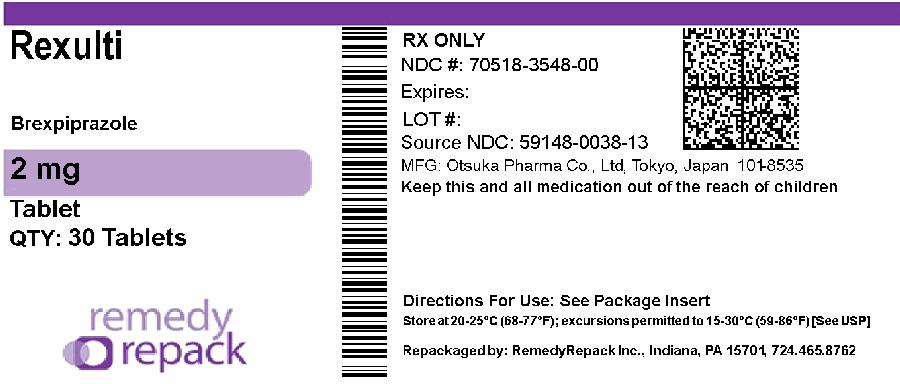
Brexpiprazole — Atypical Antipsychotic [EPC]. INDICATIONS AND USAGE REXULTI is indicated for: Adjunctive treatment to antidepressants for major depressive disorder (MDD) in adults Treatment of…
Boxed warning
WARNING: INCREASED MORTALITY IN ELDERLY PATIENTS WITH DEMENTIA-RELATED PSYCHOSIS and SUICIDAL THOUGHTS AND BEHAVIORS WARNING: INCREASED MORTALITY IN ELDERLY PATIENTS WITH DEMENTIA-RELATED PSYCHOSIS and SUICIDAL THOUGHTS AND BEHAVIORS See full prescribing information for complete boxed warning. Elderly patients with dementia-related psychosis treated with antipsychotic drugs are at increased risk of death. REXULTI is not approved for the treatment of patients with dementia-related psychosis without agitation associated with dementia due to Alzheimer's disease. ( 5.1 ) Antidepressants increased the risk of suicidal thoughts and behaviors in pediatric and young adult patients. Closely monitor all antidepressant-treated patients for clinical worsening and emergence of suicidal thoughts and behaviors. Safety and effectiveness of REXULTI have not been established in pediatric patients with MDD. ( 5.2 , 8.4 ) Increased Mortality in Elderly Patients with Dementia-Related Psychosis Elderly patients with dementia-related psychosis treated with antipsychotic drugs are at an increased risk of death. REXULTI is not approved for the treatment of patients with dementia-related psychosis without agitation associated with dementia due to Alzheimer's disease [see Warnings and Precautions (5.1) ] . Suicidal Thoughts and Behaviors Antidepressants increased the risk of suicidal thoughts and behaviors in pediatric patients and young adult patients in short-term studies. Closely monitor all antidepressant-treated patients for clinical worsening, and for emergence of suicidal thoughts and behaviors [see Warnings and Precautions (5.2) ] . The safety and effectiveness of REXULTI have not been established in pediatric patients with MDD [see Warnings and Precautions (5.2) , Use in Specific Populations (8.4) ] .
INDICATIONS AND USAGE REXULTI is indicated for: Adjunctive treatment to antidepressants for major depressive disorder (MDD) in adults Treatment of schizophrenia in adults and pediatric patients ages 13 years and older Treatment of agitation associated with dementia due to Alzheimer's disease Limitations of Use: REXULTI is not indicated as an as needed ("prn") treatment for agitation associated with dementia due to Alzheimer's disease [see Clinical Studies (14.3) ] . REXULTI is an atypical antipsychotic indicated for: Use as an adjunctive therapy to antidepressants for the treatment of major depressive disorder (MDD) in adults ( 1 , 14.1 ) Treatment of schizophrenia in adults and pediatric patients ages 13 years and older ( 1 , 14.2 ) Treatment of agitation associated with dementia due to Alzheimer's disease ( 1 , 14.3 ) Limitations of Use : REXULTI is not indicated as an as needed ("prn") treatment for agitation associated with dementia due to Alzheimer's disease ( 1 )
Dosage
DOSAGE AND ADMINISTRATION Administer REXULTI orally once daily with or without food. ( 2 , 12.3 ) Indication Starting Dosage Recommended Target Dosage Maximum Dosage MDD Adults ( 2.2 ) 0.5 mg/day or 1 mg/day 2 mg/day 3 mg/day Schizophrenia Adults ( 2.3 ) 1 mg/day 2 to 4 mg/day 4 mg/day Schizophrenia Pediatric (13 - 17 years) ( 2.3 ) 0.5 mg/day 2 to 4 mg/day 4 mg/day Agitation associated with dementia due to Alzheimer's disease ( 2.4 ) 0.5 mg/day 2 mg/day 3 mg/day Moderate to Severe Hepatic Impairment: Maximum recommended dosage is 2 mg once daily for patients with MDD or agitation associated with dementia due to Alzheimer's disease and 3 mg once daily for patients with schizophrenia. ( 2.5 ) CrCl<60 mL/minute: Maximum recommended dosage is 2 mg once daily for patients with MDD or agitation associated with dementia due to Alzheimer's disease and 3 mg once daily for patients with schizophrenia. ( 2.6 ) See Full Prescribing Information for dosage modifications for CYP2D6 poor metabolizers and for concomitant use with CYP inhibitors or inducers. ( 2.7 ) 2.1 Administration Information Administer REXULTI orally, once daily with or without food [see Clinical Pharmacology (12.3) ]. 2.2 Recommended Dosage for Adjunctive Treatment of Major Depressive Disorder (Adults) The recommended starting REXULTI dosage for the adjunctive treatment of MDD in adults is 0.5 mg or 1 mg orally once daily . Titrate to 1 mg once daily, then titrate to the target dosage of 2 mg once daily (based on the patient's clinical response and tolerability, increase the dosage at weekly intervals). The maximum recommended daily dosage is 3 mg. Periodically reassess to determine the continued need and appropriate dosage for treatment. 2.3 Recommended Dosage for Schizophrenia (Adults and Pediatric Patients 13 to 17 Years) Adults The recommended starting REXULTI dosage for the treatment of schizophrenia in adults is 1 mg orally once daily on Days 1 to 4. Titrate to 2 mg once daily on Day 5 through Day 7. On Day 8, the dosage can be increased to the maximum recommended daily dosage of 4 mg based on clinical response and tolerability. The recommended target dosage is 2 mg to 4 mg once daily. Pediatric Patients (13 to 17 years of age) The recommended starting REXULTI dosage for the treatment of schizophrenia in pediatric patients 13 to 17 years of age is 0.5 mg orally once daily on Days 1 to 4. On Days 5 through 7, titrate to 1 mg per day and on Day 8 titrate to 2 mg based on clinical response and tolerability. Weekly dose increases can be made in 1 mg increments. A recommended target dosage is 2 to 4 mg once daily. The maximum recommended daily dosage is 4 mg. 2.4 Recommended Dosage for Agitation Associated with Dementia Due to Alzheimer's Disease The recommended starting REXULTI dosage for the treatment of agitation associated with dementia due to Alzheimer's disease is 0.5 mg orally once daily on Days 1 to 7 . Increase the dosage on Days 8 through 14 to 1 mg once daily, and on Day 15 to 2 mg once daily. The recommended target dose is 2 mg once daily. The dosage can be increased to the maximum recommended daily dosage of 3 mg once daily after at least 14 days, based on clinical response and tolerability. 2.5 Recommended Dosage in Patients with Hepatic Impairment The maximum recommended dosage in patients with moderate to severe hepatic impairment (Child-Pugh score ≥7) is [see Use in Specific Populations (8.7) , Clinical Pharmacology (12.3) ]: 2 mg orally once daily in patients with MDD or agitation associated with dementia due to Alzheimer's disease, and 3 mg orally once daily in patients with schizophrenia 2.6 Recommended Dosage in Patients with Renal Impairment The maximum recommended dosage in patients with creatinine clearance CrCl<60 mL/minute is [see Use in Specific Populations (8.8) , Clinical Pharmacology (12.3) ]: 2 mg orally once daily in patients with MDD or agitation associated with dementia due to Alzheimer's disease and 3 mg orally once daily in patients with schizophrenia 2.7 Dosage Modifications for CYP2D6 Poor Metabolizers and for Concomitant Use with CYP Inhibitors or Inducers Dosage modifications are recommended in patients who are known cytochrome P450 (CYP) 2D6 poor metabolizers and in patients taking concomitant CYP3A4 inhibitors, CYP2D6 inhibitors, or strong CYP3A4 inducers (see Table 1 ). If the concomitant drug is discontinued, adjust the REXULTI dosage to its original level. If the concomitant CYP3A4 inducer is discontinued, reduce the REXULTI dosage to the original level over 1 to 2 weeks [see Drug Interactions (7.1) , Clinical Pharmacology (12.3) ] . Table 1 Dosage Modifications of REXULTI for CYP2D6 Poor Metabolizers and for Concomitant Use with CYP3A4 Inhibitors, CYP2D6 Inhibitors, or CYP3A4 Inducers Factors Adjusted REXULTI Dosage CYP2D6 Poor Metabolizers CYP2D6 poor metabolizers Administer half of the recommended dosage. Known CYP2D6 poor metabolizers taking strong/moderate CYP3A4 inhibitors Administer a quarter of the recommended dosage. Patients Taking CYP2D6 Inhibitors and/or CYP3A4 Inhibitors Strong CYP2D6 inhibitors In the clinical studies examining the use of REXULTI for the adjunctive treatment of MDD, dosage was not adjusted for strong CYP2D6 inhibitors (e.g., paroxetine, fluoxetine). Thus, CYP considerations are already factored into general dosing recommendations, and REXULTI may be administered without dosage adjustment in patients with MDD. Administer half of the recommended dosage. Strong CYP3A4 inhibitors Administer half of the recommended dosage. Strong/moderate CYP2D6 inhibitors with strong/moderate CYP3A4 inhibitors Administer a quarter of the recommended dosage. Patients Taking CYP3A4 Inducers Strong CYP3A4 inducers Double the recommended dosage over 1 to 2 weeks. Dosage and Administration Advise patients that REXULTI can be taken with or without food. Advise patients regarding importance of following dosage escalation instructions [see Dosage and Administration (2) ] .
Warnings
WARNINGS AND PRECAUTIONS Cerebrovascular Adverse Reactions in Elderly Patients with Dementia-Related Psychosis: Increased incidence of cerebrovascular adverse reactions (e.g., stroke, transient ischemic attack) ( 5.3 ) Neuroleptic Malignant Syndrome: Manage with immediate discontinuation and close monitoring. ( 5.4 ) Tardive Dyskinesia: Discontinue if clinically appropriate. ( 5.5 ) Metabolic Changes: Monitor for hyperglycemia/diabetes mellitus, dyslipidemia, and weight gain. ( 5.6 ) Pathological Gambling and Other Compulsive Behaviors: Consider dose reduction or discontinuation. ( 5.7 ) Leukopenia, Neutropenia, and Agranulocytosis: Perform complete blood counts (CBC) in patients with pre-existing low white blood cell count (WBC) or history of leukopenia or neutropenia. Consider discontinuing REXULTI if a clinically significant decline in WBC occurs in absence of other causative factors. ( 5.8 ) Orthostatic Hypotension and Syncope: Monitor heart rate and blood pressure and warn patients with known cardiovascular or cerebrovascular disease, and risk of dehydration or syncope. ( 5.9 ) Seizures: Use cautiously in patients with a history of seizures or with conditions that lower the seizure threshold. ( 5.11 ) Potential for Cognitive and Motor Impairment: Use caution when operating machinery. ( 5.14 ) 5.1 Increased Mortality in Elderly Patients with Dementia-Related Psychosis Elderly patients with dementia-related psychosis treated with antipsychotic drugs are at an increased risk of death. Analyses of 17 placebo-controlled trials (modal duration of 10 weeks), largely in patients taking atypical antipsychotic drugs, revealed a risk of death in drug-treated patients of between 1.6 to 1.7 times the risk of death in placebo-treated patients. Over the course of a typical 10-week controlled trial, the rate of death in the drug-treated patients was about 4.5%, compared to a rate of about 2.6% in the placebo group. Although the causes of death were varied, most of the deaths appeared to be either cardiovascular (e.g., heart failure, sudden death) or infectious (e.g., pneumonia) in nature. REXULTI is not approved for the treatment of patients with dementia-related psychosis without agitation associated with dementia due to Alzheimer's disease [see Boxed Warning , Warnings and Precautions (5.3) ] . 5.2 Suicidal Thoughts and Behaviors in Children, Adolescents, and Young Adults In pooled analyses of placebo-controlled trials of antidepressant drugs (SSRIs and other antidepressant classes) that included approximately 77,000 adult patients and over 4,400 pediatric patients, the incidence of suicidal thoughts and behaviors in patients 24 years of age and younger was greater in antidepressant-treated patients than in placebo-treated patients. The drug-placebo differences in the number of cases of suicidal thoughts and behaviors per 1,000 patients treated are provided in Table 2 . No suicides occurred in any of the pediatric studies. There were suicides in the adult studies, but the number was not sufficient to reach any conclusion about antidepressant drug effect on suicide. Table 2 Risk Differences of the Number of Patients with Suicidal Thoughts or Behaviors in the Pooled Placebo-Controlled Trials of Antidepressants in Pediatric REXULTI is not approved in pediatric patients with MDD. and Adult Patients Age Range (years) Drug-Placebo Difference in Number of Patients with Suicidal Thoughts or Behaviors per 1,000 Patients Treated Increases Compared to Placebo <18 14 additional patients 18 to 24 5 additional patients Decreases Compared to Placebo 25 to 64 1 fewer patient ≥65 6 fewer patients It is unknown whether the risk of suicidal thoughts and behaviors in children, adolescents, and young adults extends to longer-term use, i.e., beyond four months. However, there is substantial evidence from placebo-controlled maintenance studies in adults with MDD that antidepressants delay the recurrence of depression. Monitor all antidepressant-treated patients for clinical worsening and emergence of suicidal thoughts and behaviors, especially during the initial few months of drug therapy and at times of dosage changes. Counsel family members or caregivers of patients to monitor for changes in behavior and to alert the healthcare provider. Consider changing the therapeutic regimen, including possibly discontinuing REXULTI, in patients whose depression is persistently worse or who are experiencing emergent suicidal thoughts or behaviors. 5.3 Cerebrovascular Adverse Reactions Including Stroke in Elderly Patients with Dementia-Related Psychosis In placebo-controlled trials in elderly patients with dementia, patients randomized to risperidone, aripiprazole, and olanzapine had a higher incidence of stroke and transient ischemic attack, including fatal stroke. REXULTI is not approved for the treatment of patients with dementia-related psychosis without agitation associated with dementia due to Alzheimer's disease [see Boxed Warning , Warnings and Precautions (5.1) ]. 5.4 Neuroleptic Malignant Syndrome (NMS) Neuroleptic Malignant Syndrome (NMS), a potentially fatal symptom complex, has been reported in association with administration of antipsychotic drugs, including REXULTI. Clinical manifestations of NMS are hyperpyrexia, muscle rigidity, altered mental status, and evidence of autonomic instability (irregular pulse or blood pressure, tachycardia, diaphoresis and cardiac dysrhythmia). Additional signs may include elevated creatine phosphokinase, myoglobinuria (rhabdomyolysis), and acute renal failure. If NMS is suspected, immediately discontinue REXULTI and provide intensive symptomatic treatment and monitoring. 5.5 Tardive Dyskinesia Tardive dyskinesia, a syndrome consisting of potentially irreversible, involuntary, dyskinetic movements, may develop in patients treated with antipsychotic drugs. The risk appears to be highest among the elderly, especially elderly women, but it is impossible to predict which patients will develop the syndrome. Whether antipsychotic drugs differ in their potential to cause tardive dyskinesia is unknown. The risk of tardive dyskinesia and the likelihood that it will become irreversible appear to increase as the duration of treatment and the cumulative dose increases. The syndrome can develop after relatively brief treatment periods, at low doses. It may also occur after discontinuation of treatment. Tardive dyskinesia may remit, partially or completely, if antipsychotic treatment is discontinued. Antipsychotic treatment itself may suppress (or partially suppress) the signs and symptoms of the syndrome, possibly masking the underlying process. The effect that symptomatic suppression has upon the long-term course of tardive dyskinesia is unknown. Given these considerations, REXULTI should be prescribed in a manner most likely to reduce the occurrence of tardive dyskinesia. Chronic antipsychotic treatment should generally be reserved for patients who suffer from a chronic illness that 1) is known to respond to antipsychotic drugs and 2) for whom alternative, equally effective, but potentially less harmful treatments are not available or appropriate. In patients who do require chronic treatment, use the lowest dose and the shortest duration of treatment needed to produce a satisfactory clinical response. Periodically reassess the need for continued treatment. If signs and symptoms of tardive dyskinesia appear in a patient treated with REXULTI, drug discontinuation should be considered. However, some patients may require treatment with REXULTI despite the presence of the syndrome. 5.6 Metabolic Changes Atypical antipsychotic drugs, including REXULTI, have caused metabolic changes including hyperglycemia, diabetes mellitus, dyslipidemia, and body weight gain. Although all of the drugs in the class to date have been shown to produce some metabolic changes, each drug has its own specific risk profile. Hyperglycemia/Diabetes Mellitus Hyperglycemia and diabetes mel
Contraindications
CONTRAINDICATIONS Brexpiprazole tablets are contraindicated in patients with a known hypersensitivity to brexpiprazole or any of its components. Reactions have included rash, facial swelling, urticaria, and anaphylaxis. Known hypersensitivity to brexpiprazole tablets or any of its components ( 4 )
Drug interactions
DRUG INTERACTIONS * Brexpiprazole tablets may be administered without dosage adjustment in patients with MDD when administered with strong CYP2D6 inhibitors (e.g., paroxetine, fluoxetine). Factors Dosage Adjustments for brexpiprazole tablets ( 2.5 ) Strong CYP2D6* or CYP3A4 inhibitors Administer half of usual dose. Strong/moderate CYP2D6 with Strong/moderate CYP3A4 inhibitors Administer a quarter of usual dose. Known CYP2D6 poor metabolizers taking strong/moderate CYP3A4 inhibitors Administer a quarter of usual dose. Strong CYP3A4 inducers Double the usual dose and further adjust based on clinical response. 7.1 Drugs Having Clinically Important Interactions with Brexpiprazole Tablets Table 9: Clinically Important Drug Interactions with Brexpiprazole Tablets * In the clinical trials examining the adjunctive use of brexpiprazole tablets in the treatment of MDD, dosage was not adjusted for strong CYP2D6 inhibitors (e.g., paroxetine, fluoxetine). Thus, CYP considerations are already factored into general dosing recommendations, and brexpiprazole tablets may be administered without dosage adjustment in patients with MDD. Strong CYP3A4 Inhibitors Clinical Impact: Concomitant use of brexpiprazole tablets with strong CYP3A4 inhibitors increased the exposure of brexpiprazole compared to the use of brexpiprazole tablets alone [see Clinical Pharmacology ( 12.3 )]. Intervention: With concomitant use of brexpiprazole tablets with a strong CYP3A4 inhibitor, reduce the brexpiprazole tablets dosage [see Dosage and Administration ( 2.5 )]. Strong CYP2D6 Inhibitors* Clinical Impact: Concomitant use of brexpiprazole tablets with strong CYP2D6 inhibitors increased the exposure of brexpiprazole compared to the use of brexpiprazole tablets alone [see Clinical Pharmacology ( 12.3 )]. Intervention: With concomitant use of brexpiprazole tablets with a strong CYP2D6 inhibitor, reduce the brexpiprazole tablets dosage [see Dosage and Administration ( 2.5 )]. Both CYP3A4 Inhibitors and CYP2D6 Inhibitors Clinical Impact: Concomitant use of brexpiprazole tablets with 1) a strong CYP3A4 inhibitor and a strong CYP2D6 inhibitor; or 2) a moderate CYP3A4 inhibitor and a strong CYP2D6 inhibitor; or 3) a strong CYP3A4 inhibitor and a moderate CYP2D6 inhibitor; or 4) a moderate CYP3A4 inhibitor and a moderate CYP2D6 inhibitor, increased the exposure of brexpiprazole compared to the use of brexpiprazole tablets alone [see Clinical Pharmacology ( 12.3 )] . Intervention: With concomitant use of brexpiprazole tablets with 1) a strong CYP3A4 inhibitor and a strong CYP2D6 inhibitor; or 2) a moderate CYP3A4 inhibitor and a strong CYP2D6 inhibitor; or 3) a strong CYP3A4 inhibitor and a moderate CYP2D6 inhibitor; or 4) a moderate CYP3A4 inhibitor and a moderate CYP2D6 inhibitor, decrease the brexpiprazole tablets dosage [see Dosage and Administration ( 2.5 )] . Strong CYP3A4 Inducers Clinical Impact: Concomitant use of brexpiprazole tablets and a strong CYP3A4 inducer decreased the exposure of brexpiprazole compared to the use of brexpiprazole tablets alone [see Clinical Pharmacology ( 12.3 )]. Intervention: With concomitant use of brexpiprazole tablets with a strong CYP3A4 inducer, increase the brexpiprazole tablets dosage [see Dosage and Administration ( 2.5 )]. 7.2 Drugs Having No Clinically Important Interactions with Brexpiprazole Tablets Based on pharmacokinetic studies, no dosage adjustment of brexpiprazole tablets is required when administered concomitantly with CYP2B6 inhibitors (e.g., ticlopidine) or gastric pH modifiers (e.g., omeprazole). Additionally, no dosage adjustment for substrates of CYP2D6 (e.g., dextromethorphan), CYP3A4 (e.g., lovastatin), CYP2B6 (e.g., bupropion), BCRP (e.g., rosuvastatin), or P-gp (e.g., fexofenadine) is required when administered concomitantly with brexpiprazole tablets.
Adverse reactions
ADVERSE REACTIONS The following adverse reactions are discussed in more detail in other sections of the labeling: Increased Mortality in Elderly Patients with Dementia-Related Psychosis [see Boxed Warning , Warnings and Precautions (5.1) ] Suicidal Thoughts and Behaviors in Adolescents and Young Adults [see Boxed Warning , Warnings and Precautions (5.2) ] Cerebrovascular Adverse Reactions Including Stroke in Elderly Patients with Dementia-Related Psychosis [see Warnings and Precautions (5.3) ] Neuroleptic Malignant Syndrome (NMS) [see Warnings and Precautions (5.4) ] Tardive Dyskinesia [see Warnings and Precautions (5.5) ] Metabolic Changes [see Warnings and Precautions (5.6) ] Pathological Gambling and Other Compulsive Behaviors [see Warnings and Precautions (5.7) ] Leukopenia, Neutropenia, and Agranulocytosis [see Warnings and Precautions (5.8) ] Orthostatic Hypotension and Syncope [see Warnings and Precautions (5.9) ] Falls [see Warnings and Precautions (5.10) ] Seizures [see Warnings and Precautions (5.11) ] Body Temperature Dysregulation [see Warnings and Precautions (5.12) ] Dysphagia [see Warnings and Precautions (5.13) ] Potential for Cognitive and Motor Impairment [see Warnings and Precautions (5.14) ] Most common adverse reactions in adults were ( 6.1 ): Adult patients with major depressive disorder (adjunctive treatment to antidepressant therapy): Weight increased, somnolence, and akathisia (≥5% and at least twice the rate for placebo) Adult Patients with schizophrenia : Weight increased (≥4% and at least twice the rate for placebo) Pediatric patients (13 to 17 years) with schizophrenia : Extrapyramidal symptoms, excluding akathisia (≥5% and at least twice the rate for placebo) Adult patients with agitation associated with dementia due to Alzheimer's disease: Nasopharyngitis, dizziness (≥4% and at least twice the rate for placebo) To report SUSPECTED ADVERSE REACTIONS, contact Otsuka America Pharmaceutical, Inc. at 1-800-438-9927 or FDA at 1-800-FDA-1088 or www.fda.gov/medwatch. 6.1 Clinical Trials Experience Because clinical trials are conducted under widely varying conditions, adverse reaction rates observed in the clinical trials of a drug cannot be directly compared to rates in the clinical trials of another drug and may not reflect the rates observed in clinical practice. The most common adverse reactions in adult patients in clinical trials (≥5%) were weight increased, akathisia, headache, somnolence, and insomnia. The most common adverse reactions in pediatric patients in clinical trials (≥5%) were weight increased, somnolence, headache, akathisia, and nasopharyngitis. Brexpiprazole has been evaluated for safety in 12,550 adult patients who participated in multiple-dose clinical trials for major depressive disorder, schizophrenia, agitation associated with dementia due to Alzheimer's disease, attention deficit hyperactivity disorder (ADHD), post-traumatic stress disorder (PTSD), bipolar mania, and borderline personality disorder (BPD). Among them, 3,870 patients were treated with brexpiprazole for at least 180 days, and 1,910 patients were treated for at least one year of exposure. Additionally, brexpiprazole has been evaluated for safety in 119 pediatric patients who participated in short-term trials, and 314 patients in long-term multiple-dose clinical trials for pediatric schizophrenia and autism spectrum disorders (ASD). Adjunctive Treatment in Major Depressive Disorder (MDD) The safety of REXULTI was evaluated in 1054 adult patients (18 to 65 years of age) diagnosed with MDD who participated in two 6-week placebo-controlled, fixed-dose clinical studies in patients with major depressive disorder in which REXULTI was administered at doses of 1 mg to 3 mg daily as adjunctive treatment to continued antidepressant therapy; patients in the placebo group continued to receive antidepressant therapy [see Clinical Studies (14.1) ] . Adverse Reactions Reported as Reasons for Discontinuation of Treatment A total of 3% (17/643) of REXULTI-treated patients and 1% (3/411) of placebo-treated patients discontinued due to adverse reactions. Adverse Reactions in REXULTI Studies for Adjunctive MDD in Adults Adverse reactions associated with the adjunctive use of REXULTI (incidence of 2% or greater and adjunctive REXULTI incidence greater than adjunctive placebo) that occurred during acute therapy (up to 6-weeks in patients with MDD) are shown in Table 8. Table 8 Adverse Reactions in ≥2% of REXULTI-Treated Patients and Greater than Placebo in Pooled 6-Week Placebo-Controlled, Fixed-Dose Adjunctive MDD Studies in Adults (Study 1 and Study 2) Placebo (N=411) % REXULTI 1 mg/day (N=226) % 2 mg/day (N=188) % 3 mg/day (N=229) % All REXULTI (N=643) % Gastrointestinal Disorders Constipation 1 3 2 1 2 General Disorders and Administration Site Conditions Fatigue 2 3 2 5 3 Infections and Infestations Nasopharyngitis 2 7 1 3 4 Investigations Weight Increased 2 7 8 6 7 Blood Cortisol Decreased 1 4 0 3 2 Metabolism and Nutrition Increased Appetite 2 3 3 2 3 Nervous System Disorders Akathisia 2 4 7 14 9 Headache 6 9 4 6 7 Somnolence 0.5 4 4 6 5 Tremor 2 4 2 5 4 Dizziness 1 1 5 2 3 Psychiatric Disorders Anxiety 1 2 4 4 3 Restlessness 0 2 3 4 3 Dose-Related Adverse Reactions in the Adjunctive MDD Studies In Studies 1 and 2, among the adverse reactions that occurred at ≥2% incidence in the patients treated with REXULTI plus ADT, the incidences of akathisia and restlessness increased with increases in dose. Schizophrenia Adults The safety of REXULTI was evaluated in 852 adult patients (18 to 65 years of age) diagnosed with schizophrenia who participated in two 6-week placebo-controlled, fixed-dose clinical studies in which REXULTI was administered at daily doses of 1 mg, 2 mg, and 4 mg [see Clinical Studies (14.2) ]. Adverse Reactions Occurring at an Incidence of 2% or More in Patients Treated with REXULTI for Schizophrenia Adverse reactions associated with REXULTI (incidence of 2% or greater and REXULTI incidence greater than placebo) during short-term (up to 6 weeks) studies in adult patients with schizophrenia are shown in Table 9. Table 9 Adverse Reactions in ≥2% of REXULTI-Treated Patients and Greater than Placebo in Pooled 6-Week Placebo-Controlled, Fixed-Dose Schizophrenia Studies in Adult Patients (Study 3 and Study 4) Placebo (N=368) % REXULTI 1 mg/day (N=120) % 2 mg/day (N=368) % 4 mg/day (N=364) % ALL REXULTI (N=852) % Gastrointestinal Disorders Dyspepsia 2 6 2 3 3 Diarrhea 2 1 3 3 3 Investigations Weight Increased 2 3 4 4 4 Blood Creatine Phosphokinase Increased 1 4 2 2 2 Nervous System Disorders Akathisia 5 4 5 7 6 Tremor 1 2 2 3 3 Sedation 1 2 2 3 2 Pediatric Patients (13 to 17 years of age)] The safety of REXULTI was evaluated in 110 pediatric patients (13 to 17 years of age) diagnosed with schizophrenia who participated in a 6-week, placebo-controlled, clinical study in which REXULTI was administered at daily doses of 2 mg to 4 mg [see Clinical Studies (14.2) ]. Adverse Reactions Occurring at an Incidence of 2% or More in Pediatric Patients (13 to 17 years of age) Treated with REXULTI for Schizophrenia Adverse reactions associated with REXULTI (incidence of 2% or greater and REXULTI incidence greater than placebo) during short-term (up to 6 weeks) study in pediatric patients with schizophrenia are shown in Table 10. Table 10 Adverse Reactions in ≥2% of REXULTI-Treated Patients and Greater than Placebo in 6-Week Placebo- and Active Controlled, Schizophrenia Study in Pediatric Patients 13 to 17 years of age (Study 6) Placebo (N=104) % REXULTI (N=110) % Gastrointestinal Disorders Nausea 4 6 Nervous System Disorders Akathisia 3 4 Extrapyramidal Symptoms Extrapyramidal Symptoms includes: blepharospasm, dystonia, extrapyramidal disorder, eye movement disorder, hypokinesia, muscle rigidity, musculoskeletal stiffness, psychomotor hyperactivity, tremor 3 6 Headache 5 6 Agitation Associated with Dementia Due to Alzheimer's Disease The safety of REXULTI was ev
Mechanism of action
CLINICAL PHARMACOLOGY 12.1 Mechanism of Action The mechanism of action of REXULTI in the adjunctive treatment of major depressive disorder, treatment of agitation associated with dementia due to Alzheimer's disease, or treatment of schizophrenia is unknown. However, the efficacy of REXULTI may be mediated through a combination of partial agonist activity at serotonin 5-HT 1A and dopamine D 2 receptors, and antagonist activity at serotonin 5-HT 2A receptors. 12.2 Pharmacodynamics Brexpiprazole has affinity (expressed as K i ) for multiple monoaminergic receptors including serotonin 5-HT 1A (0.12 nM), 5-HT 2A (0.47 nM), 5-HT 2B (1.9 nM), 5-HT 7 (3.7 nM), dopamine D 2 (0.30 nM), D 3 (1.1 nM), and noradrenergic α 1A (3.8 nM), α 1B (0.17 nM), α 1D (2.6 nM), and α 2C (0.59 nM) receptors. Brexpiprazole acts as a partial agonist at the 5-HT 1A , D 2 , and D 3 receptors and as an antagonist at 5-HT 2A , 5-HT 2B , 5-HT 7 , α 1A , α 1B , α 1D , and α 2C receptors. Brexpiprazole also exhibits affinity for histamine H 1 receptor (19 nM) and for muscarinic M 1 receptor (67% inhibition at 10 µM). Cardiac Electrophysiology At a dose 3 times the MRHD for the treatment of schizophrenia and 4 times the MRHD for adjunctive therapy to antidepressants for the treatment of MDD or agitation associated with dementia due to Alzheimer's disease, REXULTI does not prolong the QTc interval to any clinically relevant extent. 12.3 Pharmacokinetics Absorption After single-dose administration of REXULTI tablets, the peak plasma brexpiprazole concentrations occurred within 4 hours after administration, and the absolute oral bioavailability was 95%. Brexpiprazole steady-state concentrations were attained within 10 to 12 days of dosing. REXULTI can be administered with or without food. Administration of a 4 mg REXULTI tablet with a standard high-fat meal did not significantly affect the C max or AUC of brexpiprazole. After single and multiple once daily dose administration, brexpiprazole exposure (C max and AUC) increased in proportion to the dose administered. In vitro studies of brexpiprazole did not indicate that brexpiprazole is a substrate of efflux transporters such as MDRI (P-gp) and BCRP. Distribution The volume of distribution of brexpiprazole following intravenous administration is high (1.56 ± 0.42 L/kg), indicating extravascular distribution. Brexpiprazole is highly protein bound in plasma (greater than 99%) to serum albumin and α1-acid glycoprotein, and its protein binding is not affected by renal or hepatic impairment. Based on results of in vitro studies, brexpiprazole protein binding is not affected by warfarin, diazepam, or digitoxin. Elimination Metabolism Based on in vitro metabolism studies of brexpiprazole using recombinant human cytochrome P450 (CYP1A1, 1A2, 2A6, 2B6, 2C8, 2C9, 2C19, 2D6, 2E1, and 3A4), the metabolism of brexpiprazole was shown to be mainly mediated by CYP3A4 and CYP2D6. In vivo brexpiprazole is metabolized primarily by CYP3A4 and CYP2D6 enzymes. After single- and multiple-dose administrations, brexpiprazole and its major metabolite, DM-3411, were the predominant drug moieties in the systemic circulation. At steady-state, DM-3411 represented 23% to 48% of brexpiprazole exposure (AUC) in plasma. DM-3411 is considered not to contribute to the therapeutic effects of brexpiprazole. Based on in vitro data, brexpiprazole showed little to no inhibition of CYP450 isozymes. Excretion Following a single oral dose of [ 14 C]-labeled brexpiprazole, approximately 25% and 46% of the administered radioactivity was recovered in the urine and feces, respectively. Less than 1% of unchanged brexpiprazole was excreted in the urine, and approximately 14% of the oral dose was recovered unchanged in the feces. Apparent oral clearance of a brexpiprazole oral tablet after once daily administration is 19.8 (±11.4) mL/h/kg. After multiple once-daily administrations of REXULTI, the terminal elimination half-lives of brexpiprazole and its major metabolite, DM-3411, were 91 hours and 86 hours, respectively. Studies in Specific Populations Exposure of brexpiprazole in specific populations are summarized in Figure 1. Population pharmacokinetic (PK) analysis indicated exposure of brexpiprazole in patients with moderate renal impairment was higher compared to patients with normal renal function. Figure 1 The Effect of Intrinsic Factors on Brexpiprazole Pharmacokinetics Figure 1 Pediatric Patients A multiple dose PK study (0.5, 1, 2, 3 or 4 mg/day) has been conducted in 43 pediatric patients aged 13 years to 17 years old. Population PK analysis indicated systemic exposure (C max and AUC) of brexpiprazole in pediatric patients (13 to 17 years of age) was comparable to that in adult patients across the dose range from 0.5 to 4 mg. Drug Interaction Studies Effect of other drugs on the exposures of brexpiprazole are summarized in Figure 2. Based on simulation, a 5.1-fold increase in AUC values at steady-state is expected when extensive metabolizers of CYP2D6 are administered with both strong CYP2D6 and CYP3A4 inhibitors. A 4.8-fold increase in mean AUC values at steady-state is expected in poor metabolizers of CYP2D6 administered with strong CYP3A4 inhibitors [see Drug Interactions (7.1) ]. Figure 2 The Effect of Other Drugs on Brexpiprazole Pharmacokinetics The effect of REXULTI on the exposures of other drugs are summarized in Figure 3 . Figure 3 The Effect of REXULTI on Pharmacokinetics of Other Drugs Figure 2 Figure 3
A drug lookup is just the start. Eleplan keeps the whole care plan in one place.
Medications, diagnoses, documents, appointments, and the whole care team — organized and always in sync, with Ellie, your AI care assistant, on top of it. Free to start.