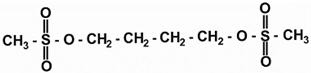
Busulfan — Alkylating Drug [EPC]. INDICATIONS AND USAGE Busulfan injection is indicated for use in combination with cyclophosphamide as a conditioning regimen prior to allogeneic…
Boxed warning
WARNING MYLERAN is a potent drug. It should not be used unless a diagnosis of chronic myelogenous leukemia has been adequately established and the responsible physician is knowledgeable in assessing response to chemotherapy. MYLERAN can induce severe bone marrow hypoplasia. Reduce or discontinue the dosage immediately at the first sign of any unusual depression of bone marrow function as reflected by an abnormal decrease in any of the formed elements of the blood. A bone marrow examination should be performed if the bone marrow status is uncertain. SEE WARNINGS FOR INFORMATION REGARDING BUSULFAN-INDUCED LEUKEMOGENESIS IN HUMANS.
INDICATIONS AND USAGE Busulfan injection is indicated for use in combination with cyclophosphamide as a conditioning regimen prior to allogeneic hematopoietic progenitor cell transplantation for chronic myelogenous leukemia. Busulfan injection is an alkylating drug indicated for: Use in combination with cyclophosphamide as a conditioning regimen prior to allogeneic hematopoietic progenitor cell transplantation for chronic myelogenous leukemia (CML). ( 1 )
Dosage
DOSAGE AND ADMINISTRATION Pre-medicate with anticonvulsants (e.g. benzodiazepines, phenytoin, valproic acid or levetiracetam) and antiemetic. ( 2.1 , 5.2 ) Dilute and administer as intravenous infusion. Do not administer as intravenous push or bolus. ( 2.1 , 2.3 ) Recommended adult dose: 0.8 mg per kg of ideal body weight or actual body weight, whichever is lower, administered intravenously via a central venous catheter as a two-hour infusion every six hours for four consecutive days for a total of 16 doses. ( 2.1 ) 2.1 Initial Dosing Information Administer busulfan injection in combination with cyclophosphamide as a conditioning regimen prior to bone marrow or peripheral blood progenitor cell replacement. For patients weighing more than 12 kg, the recommended doses are: Busulfan Injection 0.8 mg per kg (ideal body weight or actual body weight, whichever is lower) intravenously via a central venous catheter as a two-hour infusion every six hours for four consecutive days for a total of 16 doses (Days -7, -6, -5 and -4). Cyclophosphamide 60 mg per kg intravenously as a one-hour infusion on each of two days beginning no sooner than six hours following the 16 th dose of busulfan injection (Days -3 and -2). Administer hematopoietic progenitor cells on Day 0. Premedicate patients with anticonvulsants (e.g., benzodiazepines, phenytoin, valproic acid or levetiracetam) to prevent seizures reported with the use of high dose busulfan injection. Administer anticonvulsants 12 hours prior to busulfan injection to 24 hours after the last dose of busulfan injection [ see Warnings and Precautions (5.2) ]. Administer antiemetics prior to the first dose of busulfan injection and continue on a fixed schedule through busulfan injection administration. Busulfan injection clearance is best predicted when the busulfan injection dose is administered based on adjusted ideal body weight. Dosing busulfan injection based on actual body weight, ideal body weight or other factors can produce significant differences in busulfan injection clearance among lean, normal and obese patients. Calculate ideal body weight (IBW) as follows (height in cm, and weight in kg): Men: IBW (kg)=50+0.91x (height in cm -152) Women: IBW (kg)=45+0.91x (height in cm -152) For obese or severely obese patients, base busulfan injection dosing on adjusted ideal body weight (AIBW): AIBW= IBW +0.25x (actual weight -IBW). 2.2 Preparation and Administration Precautions Busulfan injection is incompatible with polycarbonate. Do not use any infusion components (syringes, filter needles, intravenous tubing, etc.) containing polycarbonate with busulfan injection. Use an administration set with minimal residual hold-up volume (2mL - 5mL) for product administration. Busulfan injection is a cytotoxic drug. Follow applicable special handling and disposal procedures. Skin reactions may occur with accidental exposure. Use gloves when preparing busulfan injection. If busulfan or diluted busulfan solution contacts the skin or mucosa, wash the skin or mucosa thoroughly with water. Visually inspect parenteral drug products for particulate matter and discoloration prior to administration whenever the solution and container permit. Do not use if particulate matter is seen in the busulfan injection vial. 2.3 Preparation for Intravenous Administration Busulfan injection must be diluted prior to intravenous infusion with either 0.9% Sodium Chloride Injection, USP (normal saline) or 5% Dextrose Injection, USP (D5W). The diluent quantity should be 10 times the volume of busulfan injection, so that the final concentration of busulfan is approximately 0.5 mg per mL. Calculation of the dose for a 70 kg patient would be performed as follows: (70 kg patient) x (0.8 mg per kg) ÷ (6 mg per mL) =9.3 mL busulfan injection (56 mg total dose). To prepare the final solution for infusion, add 9.3 mL of busulfan injection to 93 mL of diluent (normal saline or D5W) as calculated below: (9.3 mL busulfan injection) x (10) =93 mL of either diluent plus the 9.3 mL of busulfan injection to yield a final concentration of busulfan of 0.54 mg per mL (9.3 mL x 6 mg per mL ÷ 102.3 mL =0.54 mg per mL). All transfer procedures require strict adherence to aseptic techniques, preferably employing a vertical laminar flow safety hood while wearing gloves and protective clothing. DO NOT put the busulfan injection into an intravenous bag or large-volume syringe that does not contain normal saline or D5W. Always add the busulfan injection to the diluent, not the diluent to the busulfan injection. Mix thoroughly by inverting several times. Infusion pumps should be used to administer the diluted busulfan injection solution. Set the flow rate of the pump to deliver the entire prescribed busulfan injection dose over two hours. Prior to and following each infusion, flush the indwelling catheter line with approximately 5 mL of 0.9% Sodium Chloride Injection, USP or 5% Dextrose Injection, USP. DO NOT infuse concomitantly with another intravenous solution of unknown compatibility. WARNING: RAPID INFUSION OF BUSULFAN INJECTION HAS NOT BEEN TESTED AND IS NOT RECOMMENDED.
Warnings
WARNINGS The most frequent, serious side effect of treatment with busulfan is the induction of bone marrow failure (which may or may not be anatomically hypoplastic) resulting in severe pancytopenia. The pancytopenia caused by busulfan may be more prolonged than that induced with other alkylating agents. It is generally felt that the usual cause of busulfan-induced pancytopenia is the failure to stop administration of the drug soon enough; individual idiosyncrasy to the drug does not seem to be an important factor. MYLERAN should be used with extreme caution and exceptional vigilance in patients whose bone marrow reserve may have been compromised by prior irradiation or chemotherapy, or whose marrow function is recovering from previous cytotoxic therapy. Although recovery from busulfan-induced pancytopenia may take from 1 month to 2 years, this complication is potentially reversible, and the patient should be vigorously supported through any period of severe pancytopenia. A rare, important complication of busulfan therapy is the development of bronchopulmonary dysplasia with pulmonary fibrosis. Symptoms have been reported to occur within 8 months to 10 years after initiation of therapy—the average duration of therapy being 4 years. The histologic findings associated with “busulfan lung” mimic those seen following pulmonary irradiation. Clinically, patients have reported the insidious onset of cough, dyspnea, and low-grade fever. In some cases, however, onset of symptoms may be acute. Pulmonary function studies have revealed diminished diffusion capacity and decreased pulmonary compliance. It is important to exclude more common conditions (such as opportunistic infections or leukemic infiltration of the lungs) with appropriate diagnostic techniques. If measures such as sputum cultures, virologic studies, and exfoliative cytology fail to establish an etiology for the pulmonary infiltrates, lung biopsy may be necessary to establish the diagnosis. Treatment of established busulfan-induced pulmonary fibrosis is unsatisfactory; in most cases the patients have died within 6 months after the diagnosis was established. There is no specific therapy for this complication. MYLERAN should be discontinued if this lung toxicity develops. The administration of corticosteroids has been suggested, but the results have not been impressive or uniformly successful. Busulfan may cause cellular dysplasia in many organs in addition to the lung. Cytologic abnormalities characterized by giant, hyperchromatic nuclei have been reported in lymph nodes, pancreas, thyroid, adrenal glands, liver, and bone marrow. This cytologic dysplasia may be severe enough to cause difficulty in interpretation of exfoliative cytologic examinations from the lung, bladder, breast, and the uterine cervix. In addition to the widespread epithelial dysplasia that has been observed during busulfan therapy, chromosome aberrations have been reported in cells from patients receiving busulfan. Busulfan is mutagenic in mice and, possibly, in humans. Malignant tumors and acute leukemias have been reported in patients who have received busulfan therapy, and this drug may be a human carcinogen. The World Health Organization has concluded that there is a causal relationship between busulfan exposure and the development of secondary malignancies. Four cases of acute leukemia occurred among 243 patients treated with busulfan as adjuvant chemotherapy following surgical resection of bronchogenic carcinoma. All 4 cases were from a subgroup of 19 of these 243 patients who developed pancytopenia while taking busulfan 5 to 8 years before leukemia became clinically apparent. These findings suggest that busulfan is leukemogenic, although its mode of action is uncertain. Ovarian suppression and amenorrhea with menopausal symptoms commonly occur during busulfan therapy in premenopausal patients. Busulfan has been associated with ovarian failure including failure to achieve puberty in females. Busulfan interferes with spermatogenesis in experimental animals, and there have been clinical reports of sterility, azoospermia, and testicular atrophy in male patients. Hepatic veno-occlusive disease, which may be life threatening, has been reported in patients receiving busulfan, usually in combination with cyclophosphamide or other chemotherapeutic agents prior to bone marrow transplantation. Possible risk factors for the development of hepatic veno-occlusive disease include: total busulfan dose exceeding 16 mg/kg based on ideal body weight, and concurrent use of multiple alkylating agents (see CLINICAL PHARMACOLOGY and Drug Interactions). A clear cause-and-effect relationship with busulfan has not been demonstrated. Periodic measurement of serum transaminases, alkaline phosphatase, and bilirubin is indicated for early detection of hepatotoxicity. A reduced incidence of hepatic veno-occlusive disease and other regimen-related toxicities have been observed in patients treated with high-dose MYLERAN and cyclophosphamide when the first dose of cyclophosphamide has been delayed for >24 hours after the last dose of busulfan (see CLINICAL PHARMACOLOGY and Drug Interactions). Cardiac tamponade has been reported in a small number of patients with thalassemia (2% in one series) who received busulfan and cyclophosphamide as the preparatory regimen for bone marrow transplantation. In this series, the cardiac tamponade was often fatal. Abdominal pain and vomiting preceded the tamponade in most patients. Pregnancy Busulfan may cause fetal harm when administered to a pregnant woman. Although there have been a number of cases reported where apparently normal children have been born after busulfan treatment during pregnancy, one case has been cited where a malformed baby was delivered by a mother treated with busulfan. During the pregnancy that resulted in the malformed infant, the mother received x-ray therapy early in the first trimester, mercaptopurine until the third month, then busulfan until delivery. In pregnant rats, busulfan produces sterility in both male and female offspring due to the absence of germinal cells in testes and ovaries. Germinal cell aplasia or sterility in offspring of mothers receiving busulfan during pregnancy has not been reported in humans. There are no adequate and well-controlled studies in pregnant women. If this drug is used during pregnancy, or if the patient becomes pregnant while taking this drug, the patient should be apprised of the potential hazard to the fetus. Women of childbearing potential should be advised to avoid becoming pregnant.
Contraindications
CONTRAINDICATIONS MYLERAN is contraindicated in patients in whom a definitive diagnosis of chronic myelogenous leukemia has not been firmly established. MYLERAN is contraindicated in patients who have previously suffered a hypersensitivity reaction to busulfan or any other component of the preparation.
Drug interactions
DRUG INTERACTIONS Drugs that Decrease Busulfan Injection Clearance: Metronidazole, itraconazole, iron chelating agents, acetaminophen. ( 7.1 ) Drugs that Increase Busulfan Injection Clearance: Phenytoin. ( 7.2 ) 7.1 Drugs that Decrease Busulfan Injection Clearance Itraconazole decreases busulfan clearance by up to 25%. Metronidazole decreases the clearance of busulfan to a greater extent than does itraconazole; metronidazole coadministration has been associated with increased busulfan toxicity. Fluconazole (200 mg) has been used with Busulfan Injection. Decreased clearance of busulfan was observed with concomitant use with deferasirox. The mechanism of this interaction is not fully elucidated. Discontinue iron chelating agents well in advance of administration of Busulfan Injection to avoid increased exposure to busulfan. Because busulfan is eliminated from the body via conjugation with glutathione, use of acetaminophen prior to (less than 72 hours) or concurrent with Busulfan Injection may result in reduced busulfan clearance based upon the known property of acetaminophen to decrease glutathione levels in the blood and tissues. 7.2 Drugs that Increase Busulfan Injection Clearance Phenytoin increases the clearance of busulfan by 15% or more, possibly due to the induction of glutathione-S-transferase. Since the pharmacokinetics of Busulfan Injection were studied in patients treated with phenytoin, the clearance of Busulfan Injection at the recommended dose may be lower and exposure (AUC) higher in patients not treated with phenytoin.
Adverse reactions
ADVERSE REACTIONS The following adverse reactions are discussed in more detail in other sections of the labeling: Myelosuppression [see Warnings and Precautions ( 5.1 )] Seizures [see Warnings and Precautions ( 5.2 )] Hepatic Veno-Occlusive Disease (HVOD) [see Warnings and Precautions ( 5.3 )] Embryo-fetal Toxicity [see Warnings and Precautions ( 5.4 )] Cardiac Tamponade [see Warnings and Precautions ( 5.5 )] Bronchopulmonary Dysplasia [see Warnings and Precautions ( 5.6 )] Cellular Dysplasia [see Warnings and Precautions ( 5.7 )] Most common adverse reactions (incidence > 60%) were: myelosuppression, nausea, stomatitis, vomiting, anorexia, diarrhea, insomnia, fever, hypomagnesemia, abdominal pain, anxiety, headache, hyperglycemia and hypokalemia ( 6.1 ) To report SUSPECTED ADVERSE REACTIONS, contact Sagent Pharmaceuticals, Inc. at 1-866-625-1618 or FDA at 1-800-FDA-1088 or www.fda.gov/medwatch . 6.1 Clinical Trials Experience Because clinical trials are conducted under widely varying conditions, adverse reaction rates observed in the clinical trials of a drug cannot be directly compared to rates in the clinical trials of another drug and may not reflect the rates observed in practice. Adverse reaction information is primarily derived from the clinical study (N = 61) of Busulfan Injection and the data obtained for high-dose oral busulfan conditioning in the setting of randomized, controlled trials identified through a literature review. In the Busulfan Injection allogeneic stem cell transplantation clinical trial, all patients were treated with Busulfan Injection 0.8 mg per kg as a two-hour infusion every six hours for 16 doses over four days, combined with cyclophosphamide 60 mg per kg x 2 days. Ninety-three percent (93%) of evaluable patients receiving this dose of Busulfan Injection maintained an AUC less than 1,500 μM•min for dose 9, which has generally been considered the level that minimizes the risk of HVOD. Table 1 lists the non-hematologic adverse reactions events through Bone Marrow Transplantation (BMT) Day +28 at a rate greater than or equal to 20% in patients treated with Busulfan Injection prior to allogeneic hematopoietic cell transplantation. Table 1: Summary of the Incidence (greater than or equal to 20%) of Non-Hematologic Adverse Reactions through BMT Day +28 in Patients who Received Busulfan Injection Prior to Allogeneic Hematopoietic Progenitor Cell Transplantation 1. Includes all reported adverse reactions regardless of severity (toxicity grades 1 to 4) Non-Hematological Adverse Reactions 1 Percent Incidence BODY AS A WHOLE Fever Headache Asthenia Chills Pain Edema General Allergic Reaction Chest Pain Inflammation at Injection Site Back Pain 80 69 51 46 44 28 26 26 25 23 CARDIOVASCULAR SYSTEM Tachycardia Hypertension Thrombosis Vasodilation 44 36 33 25 DIGESTIVE SYSTEM Nausea Stomatitis (Mucositis) Vomiting Anorexia Diarrhea Abdominal Pain Dyspepsia Constipation Dry Mouth Rectal Disorder Abdominal Enlargement 98 97 95 85 84 72 44 38 26 25 23 METABOLIC AND NUTRITIONAL SYSTEM Hypomagnesemia Hyperglycemia Hypokalemia Hypocalcemia Hyperbilirubinemia Edema SGPT Elevation Creatinine Increased 77 66 64 49 49 36 31 21 NERVOUS SYSTEM Insomnia Anxiety Dizziness Depression 84 72 30 23 RESPIRATORY SYSTEM Rhinitis Lung Disorder Cough Epistaxis Dyspnea 44 34 28 25 25 SKIN AND APPENDAGES Rash Pruritus 57 28 Additional Adverse Reactions by Body System Hematologic: Prolonged prothrombin time Gastrointestinal: Esophagitis, ileus, hematemesis, pancreatitis, rectal discomfort Hepatic: Alkaline phosphatase increases, jaundice, hepatomegaly Graft-versus-host disease: Graft-versus-host disease. There were 3 deaths (5%) attributed to GVHD. Edema: Hypervolemia, or documented weight increase Infection: Infection, pneumonia (fatal in one patient and life-threatening in 3% of patients) Cardiovascular: Arrhythmia, atrial fibrillation, ventricular extrasystoles, third degree heart block, thrombosis (all episodes were associated with the central venous catheter), hypotension, flushing and hot flashes, cardiomegaly, ECG abnormality, left-sided heart failure, and pericardial effusion Pulmonary: Hyperventilation, alveolar hemorrhage (fatal in 3%), pharyngitis, hiccup, asthma, atelectasis, pleural effusion, hypoxia, hemoptysis, sinusitis, and interstitial fibrosis (fatal in a single case) Neurologic: Cerebral hemorrhage, coma, delirium, agitation, encephalopathy, confusion, hallucinations, lethargy, somnolence Renal: BUN increased, dysuria, oliguria, hematuria, hemorrhagic cystitis Skin: Alopecia, vesicular rash, maculopapular rash, vesiculo-bullous rash, exfoliative dermatitis, erythema nodosum, acne, skin discoloration Metabolic: Hypophosphatemia, hyponatremia Other Events: Injection site pain, myalgia, arthralgia, ear disorder 6.2 Postmarketing Experience Because these reactions are reported voluntarily from a population of uncertain size, it is not always possible to reliably estimate their frequency or establish a causal relationship to drug exposure. The following adverse reactions have been identified during post-approval use of Busulfan Injection: Blood and Lymphatic System Disorders : febrile neutropenia Gastrointestinal Disorders : tooth hypoplasia Metabolism and Nutrition Disorders : tumor lysis syndrome Vascular Disorders : thrombotic microangiopathy (TMA) Infections and Infestations : severe bacterial, viral (e.g., cytomegalovirus viremia) and fungal infections; and sepsis. 6.3 Oral Busulfan Literature Review A literature review identified four randomized, controlled trials that evaluated a high-dose oral busulfan-containing conditioning regimen for allogeneic bone marrow transplantation in the setting of CML [see Clinical Studies ( 14 )] . The safety outcomes reported in those trials are summarized in Table 2 below for a mixed population of hematological malignancies (AML, CML, and ALL). Table 2: Summary of safety analyses from the randomized, controlled trials utilizing a high dose oral busulfan-containing conditioning regimen that were identified in a literature review. 1. TRM = Transplantation Related Mortality 2. VOD = Veno-Occlusive Disease of the liver 3. GVHD = Graft versus Host Disease Clift CML Chronic Phase TRM 1 VOD 2 GVHD 3 Pulmonary Hemorrhagic Cystitis Seizure Death ≤ 100d = 4.1% (3/73) No Report Acute ≥ Grade 2 = 35% Chronic = 41% (30/73) 1 death from Idiopathic Interstitial Pneumonitis And 1 death from Pulmonary Fibrosis No Report No Report Devergie CML Chronic Phase TRM VOD GVHD Pulmonary Hemorrhagic Cystitis Seizure 38% 7.7% (5/65) Deaths = 4.6% (3/65) Acute ≥ Grade 2 = 41% (24/59 at risk) Interstitial Pneumonitis = 16.9% (11/65) 10.8% (7/65) No Report Ringden CML, AML, ALL TRM VOD GVHD Pulmonary Hemorrhagic Cystitis Seizure 28% 12% Acute ≥ Grade 2 GVHD = 26% Chronic GVHD = 45% Interstitial Pneumonitis = 14% 24% 6% Blume CML, AML, ALL TRM VOD GVHD Pulmonary Hemorrhagic Cystitis Seizure No Report Deaths = 4.9% Acute ≥ Grade 2 GVHD = 22% (13/58 at risk) Chronic GVHD = 31% (14/45 at risk) No Report No Report No Report
Mechanism of action
CLINICAL PHARMACOLOGY Busulfan is a small, highly lipophilic molecule that easily crosses the blood brain barrier. Following absorption, 32% and 47% of busulfan are bound to plasma proteins and red blood cells, respectively. Busulfan absorption from the gastrointestinal tract is essentially complete. This has been demonstrated in radioactive studies after both intravenous and oral administration of 35 S-busulfan, 14 C-busulfan, and 3 H-busulfan. Following intravenous administration of a single therapeutic dose of 35 S-busulfan, there was rapid disappearance of radioactivity from the blood and 90% to 95% of the 35 S-label disappeared within 3 to 5 minutes after injection. After either oral or intravenous administration of 35 S-busulfan, 45% to 60% of the radioactivity was recovered in the urine in the 48 hours after administration; the majority of the total urinary excretion occurring in the first 24 hours. Over 95% of the urinary 35 S-label occurs as 35 S-methanesulfonic acid. Oral and intravenous administration of 1,4- 14 C-busulfan showed the same rapid initial disappearance of plasma radioactivity as observed following the administration of 35 S-labeled drug. Cumulative radioactivity in the urine after 48 hours was 25% to 30% of the administered dose (contrasting with 45% to 60% for 35 S-busulfan), and suggests a slower excretion of the alkylating portion of the molecule and its metabolites than for the sulfonoxymethyl moieties. Regardless of the route of administration, 1,4- 14 C-busulfan yielded a complex mixture of at least 12 radiolabeled metabolites in urine; the main metabolite being 3-hydroxytetrahydrothiophene-1,1-dioxide. Pharmacokinetic studies employing 3 H-busulfan labeled on the tetramethylene chain confirmed a rapid initial clearance of the radioactivity from plasma, irrespective of whether the drug was given orally or intravenously. A study compared a 2-mg single IV bolus injection to a single oral dose of a 2-mg tablet of nonradioactive busulfan in 8 adult patients 13 to 60 years of age. The study demonstrated that the mean ± SD absolute bioavailability was 80% ± 20% in adults. However, the absolute bioavailability for 8 children 1.5 to 6 years of age was 68% ± 31%. In another study of 2, 4, and 6 mg of busulfan, given as a single oral dose on consecutive days (starting with the lowest dose) in 5 adult patients, the mean dose-normalized (to 2 mg dose) area under the plasma concentration-time curve (AUC) was about 130 ng•hr/mL, while the mean intra- and inter-patient variability was about 16% and 21%, respectively. Busulfan was eliminated with a plasma terminal elimination half-life (t 1/2 ) of about 2.6 hours, and demonstrated linear kinetics within the range of 2 to 6 mg for both the maximum plasma concentration (C max ) and AUC. The mean C max for the 2-, 4-, and 6-mg doses (after dose normalization to 2 mg) was about 30 ng/mL. A recent study of 4 to 8 mg as single oral doses in 12 patients showed that the mean ± SD C max (after dose normalization to 4 mg) was 68.2 ± 24.4 ng/mL, occurring at about 0.9 hours and the mean ± SD AUC (after dose normalization to 4 mg) was 269 ± 62 ng•hr/mL. These results are consistent with previous results. In addition, the mean ± SD elimination half-life was 2.69 ± 0.49 hours. The elimination of busulfan appears to be independent of renal function. This probably reflects the extensive metabolism of the drug in the liver, since less than 2% of the administered dose is excreted in the urine unchanged within 24 hours. The drug is metabolized by enzymatic activity to at least 12 metabolites, among which tetrahydrothiophene, tetrahydrothiophene 12-oxide, sulfolane, and 3-hydroxysulfolane were identified. These metabolites do not have cytotoxic activity. There is no experience with the use of dialysis in an attempt to modify the clinical toxicity of busulfan. One technical difficulty would derive from the extremely poor water solubility of busulfan. Additionally, all studies of the metabolism of busulfan employing radiolabeled materials indicate rapid chemical reactivity of the parent compound with prolonged retention of some of the metabolites (particularly the metabolites arising from the “alkylating” portion of the molecule). The effectiveness of dialysis at removing significant quantities of unreacted drug would be expected to be minimal in such a situation. Currently, there are no available data on the effect of food on busulfan bioavailability. Pharmacokinetics in Hemodialysis Patients The impact of hemodialysis on the clearance of busulfan was determined in a patient with chronic renal failure undergoing autologous stem cell transplantation. The apparent oral clearance of busulfan during a 4-hour hemodialysis session was increased by 65%, but the 24-hour oral clearance of busulfan was increased by only 11%. The incidence of veno-occlusive disease was higher (33.3% versus 3.0%) in patients with busulfan AUC 0-6hr >1,500 μM.min (C ss >900 mcg/L) compared to patients with busulfan AUC 0-6hr <1,500 μM.min (C ss <900 mcg/L) (see WARNINGS). Drug Interactions Itraconazole reduced busulfan clearance by up to 25% in patients receiving itraconazole compared to patients who did not receive itraconazole. Higher busulfan exposure due to concomitant itraconazole could lead to toxic plasma levels in some patients. Fluconazole had no effect on the clearance of busulfan. Patients treated with concomitant cyclophosphamide and busulfan with phenytoin pretreatment have increased cyclophosphamide and busulfan clearance, which may lead to decreased concentrations of both cyclophosphamide and busulfan. However, busulfan clearance may be reduced in the presence of cyclophosphamide alone, presumably due to competition for glutathione. Diazepam had no effect on the clearance of busulfan. No information is available regarding the penetration of busulfan into brain or cerebrospinal fluid. Biochemical Pharmacology In aqueous media, busulfan undergoes a wide range of nucleophilic substitution reactions. While this chemical reactivity is relatively non-specific, alkylation of the DNA is felt to be an important biological mechanism for its cytotoxic effect. Coliphage T7 exposed to busulfan was found to have the DNA crosslinked by intrastrand crosslinkages, but no interstrand linkages were found. The metabolic fate of busulfan has been studied in rats and humans using 14 C- and 35 S-labeled materials. In humans, as in the rat, almost all of the radioactivity in 35 S-labeled busulfan is excreted in the urine in the form of 35 S-methanesulfonic acid. Roberts and Warwick demonstrated that the formation of methanesulfonic acid in vivo in the rat is not due to a simple hydrolysis of busulfan to 1,4-butanediol, since only about 4% of 2,3- 14 C-busulfan was excreted as carbon dioxide, whereas 2,3- 14 C-1,4-butanediol was converted almost exclusively to carbon dioxide. The predominant reaction of busulfan in the rat is the alkylation of sulfhydryl groups (particularly cysteine and cysteine-containing compounds) to produce a cyclic sulfonium compound which is the precursor of the major urinary metabolite of the 4-carbon portion of the molecule, 3-hydroxytetrahydrothiophene-1,1-dioxide. This has been termed a “sulfur-stripping” action of busulfan and it may modify the function of certain sulfur-containing amino acids, polypeptides, and proteins; whether this action makes an important contribution to the cytotoxicity of busulfan is unknown. The biochemical basis for acquired resistance to busulfan is largely a matter of speculation. Although altered transport of busulfan into the cell is one possibility, increased intracellular inactivation of the drug before it reaches the DNA is also possible. Experiments with other alkylating agents have shown that resistance to this class of compounds may reflect an acquired ability of the resistant cell to repair alkylation damage more effectively. Clinical Studies Although not curative, busulfan redu
A drug lookup is just the start. Eleplan keeps the whole care plan in one place.
Medications, diagnoses, documents, appointments, and the whole care team — organized and always in sync, with Ellie, your AI care assistant, on top of it. Free to start.