C1 esterase inhibitor
Managing this medication for someone you care for? Eleplan keeps diagnoses, medications and appointments in one plan.
Start free with EleplanMedication reference
C1 esterase inhibitor
INTRAVENOUS
C1 esterase inhibitor. INDICATIONS AND USAGE RUCONEST is a C1 esterase inhibitor [recombinant] indicated for the treatment of acute attacks in adult and adolescent…
Brand names
Ruconest
Active ingredients
CONESTAT ALFA
Indications
INDICATIONS AND USAGE RUCONEST is a C1 esterase inhibitor [recombinant] indicated for the treatment of acute attacks in adult and adolescent patients with hereditary angioedema (HAE). Limitation of Use: Effectiveness was not established in HAE patients with laryngeal attacks. RUCONEST is a C1 esterase inhibitor [recombinant] indicated for the treatment of acute attacks in adult and adolescent patients with hereditary angioedema (HAE). ( 1 ) Limitation of Use: Effectiveness was not established in HAE patients with laryngeal attacks.
Dosage
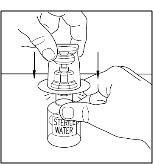
DOSAGE AND ADMINISTRATION For intravenous use after reconstitution only. For Intravenous Use Only. Reconstitute each vial (2100 U) by adding 14 mL sterile Water for Injection per vial to obtain a solution of 150 U per mL. ( 2.3 ) Administer the reconstituted solution at room temperature as a slow intravenous injection over approximately 5 minutes. ( 2.4 ) Appropriately trained patients may self-administer upon recognition of an HAE attack. ( 2.4 ) Recommended dose of RUCONEST for an acute attack Body weight RUCONEST Dose for Intravenous Injection Volume (mL) of Reconstituted Solution (150 U/mL) to be Administered < 84 kg 50 U per kg Body weight in kg divided by 3 ≥ 84 kg 4200 U (2 vials) 28 mL If the attack symptoms persist, an additional (second) dose can be administered at the recommended dose level. Do not exceed 4200 U per dose. No more than two doses should be administered within a 24-hour period. 2.1 Recommended Dosing Training on how to administer RUCONEST should be conducted by a qualified healthcare professional experienced in the treatment of HAE. Appropriately trained patients may self-administer upon recognition of an HAE attack. The recommended dose of RUCONEST is 50 U per kg with a maximum of 4200 U to be administered as a slow intravenous injection over approximately 5 minutes. If the attack symptoms persist, an additional (second) dose can be administered at the recommended dose level. Do not exceed 4200 U per dose. No more than two doses should be administered within a 24-hour period. Table 1. Recommended dose of RUCONEST for an acute attack Body Weight RUCONEST Dose for Intravenous Injection Volume (mL) of Reconstituted Solution (150 U/mL) to be Administered < 84 kg 50 U per kg Body weight in kg divided by 3 ≥ 84 kg 4200 U (2 vials) 28 mL 2.2 Preparation and Handling Store RUCONEST in the original carton and protect from light prior to reconstitution. Do not use after expiration date on the product vial label. Water for Injection is not included in the RUCONEST package. Use aseptic technique to reconstitute, mix the solution, and to combine the reconstituted solution from more than one vial ( see Reconstitution [ 2.3 ] and Administration [ 2.4 ]). Do not mix or administer RUCONEST with other medicinal products or solutions. Discard all partially used vials after treatment. 2.3 Reconstitution Each package contains one single-use vial of RUCONEST. To reconstitute, the following are also required: Sterile Water for Injection (diluent) - At least 14 mL per vial of RUCONEST requiring reconstitution. Antiseptic wipe Syringe Commercially available vial adapter and syringe luer lock or large bore needle. If using a syringe with vial adapter, use a new vial adapter for each vial of RUCONEST and diluent. The procedures below are provided as general guidelines for the reconstitution and administration of RUCONEST. Ensure that the RUCONEST vial and diluent vial are at room temperature. Remove the flip caps from the RUCONEST and diluent vials. Treat the vial stoppers with the antiseptic wipe and allow to dry. Using the syringe/needle or syringe/vial adapter, withdraw 14 mL of sterile water for injection from the diluent vial. Remove the syringe and transfer the diluent to the RUCONEST vial. Add the diluent slowly to avoid forceful impact on the powder. Swirl the vial slowly to mix and avoid foaming. Repeat this procedure using another 14 mL of diluent and a second vial of RUCONEST. If the same patient is to receive more than one vial, the contents of multiple vials may be pooled into a single administration device (i.e., syringe). Inspect RUCONEST visually for particulate matter and discoloration after reconstitution and prior to administration. The reconstituted solution should be colorless, clear, and free from visible particles. Do not use if the solution is cloudy, colored, or contains particulates. RUCONEST vial is for single-use only. Use the reconstituted product immediately, or within 8 hours stored at 36ºF - 46ºF (2º - 8ºC). Discard partially used vials. Do not freeze the reconstituted solution. 2.4 Administration Do not mix RUCONEST with other medicinal products. Administer RUCONEST by a separate infusion line. Use aseptic technique when administering RUCONEST. Follow recommended venipuncture guidelines for initiating intravenous therapy. Administer RUCONEST by slow intravenous injection over approximately 5 minutes. For self-administration, provide the patient with instructions and training for intravenous injection outside of a clinic setting so patients may self-administer RUCONEST upon recognition of symptoms of an HAE attack [see Patient Counseling Information ( 17 )]. After administration, immediately discard any unused product and all used disposable supplies in accordance with local requirements.
Warnings
WARNINGS AND PRECAUTIONS Hypersensitivity reactions, including anaphylaxis may occur. Should symptoms occur, discontinue RUCONEST and administer appropriate treatment. ( 5.1 ) Serious arterial and venous thromboembolic (TE) events have been reported at the recommended dose of plasma derived C1 esterase inhibitor products in patients with risk factors. Monitor patients with known risk factors for TE events during and after RUCONEST administration. ( 5.2 ) 5.1 Hypersensitivity Severe hypersensitivity reactions may occur . The signs and symptoms of hypersensitivity reactions may include hives, generalized urticaria, tightness of the chest, wheezing, hypotension, and/or anaphylaxis during or after injection of RUCONEST. Should symptoms occur, discontinue RUCONEST and institute appropriate treatment. Because hypersensitivity reactions may have symptoms similar to HAE attacks, treatment methods should be carefully considered. [see Patient Counseling Information (17) ] 5.2 Thromboembolic Events Serious arterial and venous thromboembolic (TE) events have been reported at the recommended dose of plasma derived C1 esterase inhibitor products in patients with risk factors. Risk factors may include the presence of an indwelling venous catheter/access device, prior history of thrombosis, underlying atherosclerosis, use of oral contraceptives or certain androgens, morbid obesity, and immobility. Monitor patients with known risk factors for TE events during and after RUCONEST administration.
Contraindications
CONTRAINDICATIONS RUCONEST is contraindicated in patients with a history of allergy to rabbits or rabbit-derived products. RUCONEST is contraindicated in patients with a history of life-threatening immediate hypersensitivity reactions to C1 esterase inhibitor preparations, including anaphylaxis. Known or suspected allergy to rabbits and rabbit-derived products. ( 4 ) History of immediate hypersensitivity reactions, including anaphylaxis, to C1 esterase inhibitor preparations. ( 4 )
Adverse reactions
ADVERSE REACTIONS The serious adverse reaction in clinical studies of RUCONEST was anaphylaxis. The most common adverse reactions (≥ 2%) reported in all clinical trials were headache, nausea, and diarrhea. The serious adverse reaction reported in clinical trials was anaphylactic reaction. ( 6 ) The common adverse reactions (≥ 2%) reported in clinical trials were headache, nausea, and diarrhea. ( 6 ) To report SUSPECTED ADVERSE REACTIONS, contact Pharming Healthcare Inc. at 1-800-930-5221 or FDA at 1-800-FDA-1088 or www.fda.gov/medwatch. 6.1 Clinical Trials Experience Because clinical trials are conducted under widely varying conditions, the adverse reaction rates observed in the clinical trials of a drug cannot be directly compared to rates in the clinical trials of another drug and may not reflect the rates observed in clinical practice. The RUCONEST clinical development program evaluated a combined total of 940 administrations in 236 subjects (symptomatic and non-symptomatic). In clinical studies, a total of 205 symptomatic HAE patients received treatment with RUCONEST for a combined total of 650 acute angioedema attacks. Among these HAE patients, 83 were treated for a single HAE attack and 122 were treated for multiple attacks. Three randomized, placebo-controlled clinical trials (RCTs) were conducted in which 137 patients experiencing acute HAE attacks received RUCONEST (either an initial 50 U/kg or 100 U/kg body weight dose) or placebo (saline solution). Table 2 shows all adverse reactions (ARs) in the RCTs, compared with the placebo group. Table 2. Adverse reactions occurring In ≥ 2% of subjects in the three RCT studies MedDRA Preferred Term RUCONEST 100 U/kg (N=29) n (%) RUCONEST 50 U/kg* (N=66) n (%) Placebo** (N=47) n (%) Total number of patients with adverse reactions 4 (14%) 6 (9%) 13 (28%) Headache 3 (10%) 0 2 (4%) Sneezing 0 1 (2%) 0 Angioedema 1 (3%) 0 0 Erythema marginatum 0 1 (2%) 0 Skin burning sensation 0 1 (2%) 0 Back pain 0 2 (3%) 0 C-reactive protein increased 0 1 (2%) 0 Fibrin D-dimer increased 0 1 (2%) 0 Vertigo 1 (3%) 0 0 Procedural headache 0 1 (2%) 0 Lipoma 0 1 (2%) 0 * Includes 5 patients who received an additional 50 U/kg dose MedDRA: Medical Dictionary for Regulatory Activities, version 15.0. ** Events only occurring in placebo patients are not listed. Integrated RCT and Open-Label Extension (OLE) Studies In a total of seven RCT and OLE studies, 205 patients experiencing acute HAE attacks were treated with RUCONEST for a total of 650 HAE attacks. Included in this population were 124 patients who were treated at the 50 U/kg dosage strength for one or more attacks. Table 3 shows adverse reactions in ≥ 2% of patients in any RUCONEST group for the integrated dataset combining all seven RCT and OLE studies in patients experiencing acute HAE attacks. Table 3. Adverse reactions in the seven RCT and OLE studies occurring ≥ 2% of RUCONEST-treated patients (all doses), irrespective of causality MedDRA Preferred Term All RUCONEST doses* N=205 n (%) Headache 19 (9%) Nausea 5 (2%) Diarrhea 5 (2%) * RUCONEST doses: doses up to 100 U/kg MedDRA: Medical Dictionary for Regulatory Activities, version 15.0. Immunogenicity As with all therapeutic proteins, there is potential for immunogenicity. Pre- and post-exposure samples from 205 HAE patients treated for 650 acute attacks with RUCONEST were tested for the antibodies against plasma-derived C1INH or rhC1INH and for antibodies against host-related impurities (HRI). Testing was performed prior to and after treatment of a first attack and subsequent repeated attacks at 7, 22 or 28, and 90 days after RUCONEST treatment. Prior to the first exposure to RUCONEST, the frequency of anti-C1INH antibodies varied from 1.2% to 1.6% of samples. After the first exposure, the frequency of anti-C1INH antibodies varied from 0.6% to 1.0% of samples tested. After repeated exposures, the frequency of anti-C1INH antibodies varied from 0.5 to 2.2% of samples tested. The frequency of anti-HRI antibodies was 1.0% in pre-exposure samples, and after the first exposure varied from 3.5% to 4.6%. After repeated exposure, the frequency of anti-HRI antibodies varied from 5.7% to 17% of samples. At least 10% of subjects formed a specific antibody response to RUCONEST after five treated HAE attacks. No anti-C1INH neutralizing antibodies were detected. Observed anti-C1INH and anti-HRI antibodies were not associated with adverse clinical findings. The detection of antibody formation is highly dependent on the sensitivity and specificity of the assay. Additionally, the observed incidence of antibody (including neutralizing antibody) positivity in an assay may be influenced by several factors including assay methodology, sample handling, timing of sample collection, concomitant medications, and underlying disease. For these reasons, comparison of the incidence of antibodies to RUCONEST with the incidence of antibodies to other products may be misleading. Postmarketing Experience Because postmarketing reporting of adverse reactions is voluntary and from a population of uncertain size, it is not always possible to reliably estimate the frequency of these reactions or establish a causal relationship to product exposure. Adverse reactions in HAE patients receiving RUCONEST include abdominal pain and rash.
Mechanism of action
CLINICAL PHARMACOLOGY 12.1 Mechanism of Action C1 esterase inhibitor (C1INH) is a normal constituent of human blood and is one of the serine protease inhibitors (serpins). The primary function of C1INH is to regulate the activation of the complement and contact system pathways. Regulation of these systems is performed through the formation of complexes between the protease and the inhibitor, resulting in inactivation of both and consumption of the C1INH. C1INH exerts its inhibitory effect by irreversibly binding several proteases (target proteases) of the contact and complement systems. The effect of RUCONEST on the following target proteases was assessed in vitro : activated C1s, kallikrein, factor XIIa and factor XIa. Inhibition kinetics were found to be comparable with those observed for plasma-derived human C1INH. HAE patients have low levels of endogenous or functional C1INH. Although the events that induce attacks of angioedema in HAE patients are not well defined, it is thought that contact system activation, and resulting increased vascular permeability lead to the clinical manifestation of HAE attacks. Suppression of contact system activation by C1INH through the inactivation of plasma kallikrein and factor XIIa is thought to modulate vascular permeability by preventing the generation of bradykinin. 3 Administration of RUCONEST increases plasma levels of functional C1INH activity. 12.2 Pharmacodynamics The complement component (protein) C4 is a substrate for activated C1. Patients with HAE have low levels of C4 in the circulation; RUCONEST shows a dose-dependent restoration of complement homeostasis of C4 in HAE patients. A dose of 50 U/kg of RUCONEST increases plasma C1INH activity levels to greater than 0.7 U/mL (the lower limit of normal) in HAE patients. 12.3 Pharmacokinetics The pharmacokinetics of RUCONEST was evaluated in a study of 12 asymptomatic HAE patients (dose ranged from 6.25 U/kg to 100 U/kg). Pharmacokinetics evaluation was performed by non-compartmental analysis, using functional C1INH levels. Following administration of RUCONEST (50 U/kg) in asymptomatic HAE patients ( Table 5 ), the mean Cmax was 1.2 U/mL, and the elimination half-life was approximately 2.5 hours. The clearance of RUCONEST was nonlinear (clearance decreased with increasing dose) over the dose range of 25-100 U/kg. Table 5. Baseline corrected pharmacokinetic parameters (Mean ± SD) of functional C1INH following administration of 50 U/kg and 100 U/kg RUCONEST to asymptomatic HAE patients Parameters 50 U/kg 100 U/kg C baseline (U/mL) 0.18 ± 0.12 0.14 ± 0.08 C max (U/mL) 1.2 ± 0.2 2.3 ± 0.2 T max (hours) 0.31 ± 0.10 0.31 ± 0.10 AUC (U x hr/mL) 3.3 ± 1.0 10.6 ± 2.5 CL (mL/hr) 1207 ± 414 781 ± 147 Half-life (hours) 2.4 ± 0.6 2.7 ± 0.3 V ss (L) 3.0 ± 0.9 2.4 ± 0.5 Studies have not been conducted to evaluate the PK of RUCONEST in special patient populations, identified by race, age (pediatric or geriatric), or the presence of renal or hepatic impairment.
NDC examples
71274-350
Indicated ICD-10 codes
Source: openFDA + RxNorm · 2026
Look up another medication