Carglumic Acid
Managing this medication for someone you care for? Eleplan keeps diagnoses, medications and appointments in one plan.
Start free with EleplanMedication reference
Carglumic Acid
Carbamoyl Phosphate Synthetase 1 Activator [EPC] — ORAL
Carglumic Acid — Carbamoyl Phosphate Synthetase 1 Activator [EPC]. 1. INDICATIONS AND USAGE CARBAGLU is a carbamoyl phosphate synthetase 1 (CPS 1) activator indicated in pediatric and adult patients as: Adjunctive…
Brand names
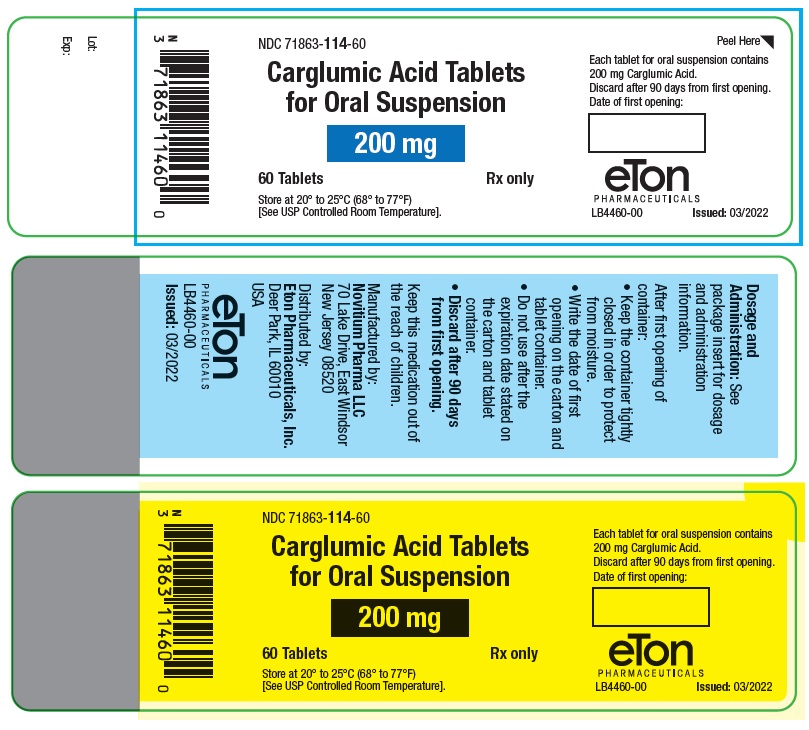
CarbagluCarglumic acidCarglumic Acid
Active ingredients
CARGLUMIC ACID
Indications
1. INDICATIONS AND USAGE CARBAGLU is a carbamoyl phosphate synthetase 1 (CPS 1) activator indicated in pediatric and adult patients as: Adjunctive therapy to standard of care for the treatment of acute hyperammonemia due to N-acetylglutamate synthase (NAGS) deficiency. ( 1.1 ) Maintenance therapy for the treatment of chronic hyperammonemia due to NAGS deficiency. ( 1.1 ) Adjunctive therapy to standard of care for the treatment of acute hyperammonemia due to propionic acidemia (PA) or methylmalonic acidemia (MMA). ( 1.2 ) 1.1 Acute and Chronic Hyperammonemia due to N‑acetylglutamate Synthase (NAGS) Deficiency CARBAGLU is indicated in adult and pediatric patients as: Adjunctive therapy to standard of care for the treatment of acute hyperammonemia due to NAGS deficiency. Maintenance therapy for the treatment of chronic hyperammonemia due to NAGS deficiency. 1.2 Acute Hyperammonemia due to Propionic Acidemia (PA) or Methylmalonic Acidemia (MMA) CARBAGLU is indicated in adult and pediatric patients as adjunctive therapy to standard of care for the treatment of acute hyperammonemia due to PA or MMA.
Dosage
2. DOSAGE AND ADMINISTRATION Acute Hyperammonemia due to NAGS deficiency ( 2.2 ) The recommended dosage in adult and pediatric patients is 100 mg/kg to 250 mg/kg orally daily. Divide the daily dosage into 2 to 4 doses. Chronic Hyperammonemia due to NAGS deficiency ( 2.2 ) The recommended dosage in adult and pediatric patients is 10 mg/kg to 100 mg/kg orally daily. Divide the daily dosage into 2 to 4 doses. Therapeutic Monitoring for NAGS Deficiency ( 2.2 ) Closely monitor plasma ammonia and titrate dosage to maintain the ammonia level within normal range for the patient's age, taking into consideration their clinical condition. Acute Hyperammonemia due to PA or MMA ( 2.3 ) The recommended dosage in adult and pediatric patients is: 150 mg/kg orally daily for patients less than or equal to 15 kg 3.3 g/m 2 orally daily for patients greater than 15 kg Divide the daily dosage into 2 doses. Continue treatment until ammonia level is less than 50 micromol/L and for a maximum duration of 7 days. Patients with Renal Impairment ( 2.4 ) See Full Prescribing Information for Instructions on Dosage Adjustment. Preparation and Administration ( 2.5 ) Disperse CARBAGLU tablets in water. Do not swallow whole or crushed. Take immediately before meals or feedings. For additional instructions on preparation and administration orally or through a nasogastric tube or gastrostomy tube, see Full Prescribing Information. 2.1 Important Administration Instructions Disperse CARBAGLU tablets in water. Do not swallow whole or crush [see Dosage and Administration (2.5) ] . CARBAGLU may be administered by mouth or via a nasogastric or gastrostomy tube [see Dosage and Administration (2.5) ] . 2.2 Recommended Dosage for Acute or Chronic Hyperammonemia due to NAGS Deficiency Treatment Initiation Initiate CARBAGLU treatment as soon as the diagnosis of NAGS deficiency is suspected, which may be as soon as at birth, and supervised by a healthcare provider experienced in the treatment of metabolic disorders. Dosage for Acute Hyperammonemia due to NAGS Deficiency The recommended dosage of CARBAGLU in adult and pediatric patients for acute hyperammonemia due to NAGS deficiency is (based on actual body weight) 100 mg/kg to 250 mg/kg orally daily. Divide the daily dosage into 2 to 4 doses and round to the nearest 100 mg (i.e., half of a CARBAGLU tablet). During acute hyperammonemic episodes, administer CARBAGLU with other ammonia lowering therapies, such as alternate pathway medications, hemodialysis, and protein restriction. Dosage for Chronic Hyperammonemia due to NAGS Deficiency The recommended dosage of CARBAGLU in adult and pediatric patients for chronic hyperammonemia due to NAGS deficiency is (based on actual body weight) 10 mg/kg to 100 mg/kg orally daily. Divide the daily dosage into 2 to 4 doses and round to the nearest 100 mg (i.e., half of a CARBAGLU tablet). During maintenance therapy, the concomitant use of other ammonia lowering therapies and protein restriction may be needed based on plasma ammonia levels. Therapeutic Monitoring Closely monitor plasma ammonia levels. Titrate the CARBAGLU dosage to maintain the plasma ammonia level within the normal range for the patient's age, taking into consideration their clinical condition (e.g., nutritional requirements, protein intake, growth parameters, etc.). Adjust the recommended dosage in patients with moderate or severe renal impairment [see Dosage and Administration (2.4) ] . 2.3 Recommended Dosage for Acute Hyperammonemia due to PA or MMA Treatment Initiation Initiate CARBAGLU for the treatment of acute hyperammonemia in patients with a suspected or confirmed diagnosis of PA or MMA. Dosage for Acute Hyperammonemia due to PA or MMA The recommended dosage of CARBAGLU in adult and pediatric patients with acute hyperammonemia due to PA or MMA is (based on actual body weight): 150 mg/kg orally daily for patients less than or equal to 15 kg 3.3 g/m 2 orally daily for patients greater than 15 kg Divide the daily dosage into 2 equal doses and round up to the nearest 50 mg (i.e., one-quarter of a CARBAGLU tablet). Administer doses 12 hours apart. Continue CARBAGLU treatment until the patient's ammonia level is less than 50 micromol/L and for a maximum duration of 7 days. During acute hyperammonemic episodes, administer CARBAGLU with other ammonia lowering therapies, such as intravenous glucose, insulin, L-carnitine, protein restriction, and dialysis. Adjust the recommended dosage in patients with moderate or severe renal impairment [see Dosage and Administration (2.4) ] . 2.4 Dosage Adjustment in Patients with Renal Impairment No dosage adjustment is warranted in patients with mild renal impairment (eGFR 60-89 mL/min/1.73 m 2 ). The recommended dosage of CARBAGLU in patients with moderate or severe renal impairment is shown below. Moderate Renal Impairment (eGFR 30-59 mL/min/1.73 m 2 ) Severe Renal Impairment (eGFR 15-29 mL/min/1.73 m 2 ) Acute Hyperammonemia due to NAGS Deficiency 50 mg/kg/day to 125 mg/kg/day divided into 2 to 4 doses and rounded to the nearest 50 mg (i.e., one-quarter of a CARBAGLU tablet) 15 mg/kg/day to 60 mg/kg/day divided into 2 to 4 doses and rounded to the nearest 50 mg (i.e., one-quarter of a CARBAGLU tablet) Chronic Hyperammonemia due to NAGS Deficiency 5 mg/kg/day to 50 mg/kg/day divided into 2 to 4 doses and rounded to the nearest 50 mg (i.e., one-quarter of a CARBAGLU tablet) 2 mg/kg/day to 25 mg/kg/day divided into 2 to 4 doses and rounded to the nearest 50 mg (i.e., one-quarter of a CARBAGLU tablet) Acute Hyperammonemia due to PA or MMA 75 mg/kg/day for patients weighing ≤ 15 kg 1.7 g/m 2 /day for patients weighting > 15 kg Divide daily dosage into 2 equal doses and round up to the nearest 50 mg (i.e., one-quarter of a CARBAGLU tablet); administer each dose 12 hours apart. 25 mg/kg/day for patients weighing ≤ 15 kg 0.55 g/m 2 /day for patients weighting > 15 kg Divide daily dosage into 2 equal doses and round up to the nearest 50 mg (i.e., one-quarter of a CARBAGLU tablet); administer each dose 12 hours apart. 2.5 Preparation and Administration Overview Disperse CARBAGLU tablets in water. Do not swallow whole or crush. CARBAGLU tablets do not dissolve completely in water, and undissolved particles of the tablet may remain in the mixing container. Take CARBAGLU immediately before meals or feedings. The CARBAGLU suspension has a slightly acidic taste. For all preparations, use in foods or liquids other than water has not been studied and is not recommended. Oral Administration For oral administration, administer CARBAGLU as follows: Add a minimum of 2.5 mL of water into a small cup for each CARBAGLU tablet or each ½ or ¼ CARBAGLU tablet needed for the prescribed dose. Add the CARBAGLU tablets to the water in the cup. Carefully stir the tablet and water mixture. Swallow the mixture immediately. Pieces of the tablet may remain in the cup. Rinse the cup with additional water and swallow the mixture immediately. Repeat as needed until no pieces of the tablet are left in the cup. U s e of an O r al Sy ri nge for Oral Administration For administration via an oral syringe, administer CARBAGLU as follows: Add a minimum of 2.5 mL of water into a small cup for each CARBAGLU tablet or each ½ or ¼ CARBAGLU tablet needed for the prescribed dose. Add the CARBAGLU tablets to the water in the cup. Carefully stir the tablet and water mixture. Draw up the mixture in an oral syringe and administer immediately. Pieces of the tablet may remain in the oral syringe. Refill the oral syringe with a minimum volume of water (1 mL to 2 mL) and administer immediately. Flush the oral syringe again, as needed, until no pieces of the tablet are left in the syringe. Use of Nasogastric Tube (NG Tube) or Gastrostomy Tube (G-Tube) for Feeding Tube Administration For patients who have a NG tube or G-tube in place, administer CARBAGLU as follows: Add a minimum of 2.5 mL of water into a small cup for each CARBAGLU tablet or each ½ or ¼ CARBAGLU t
Contraindications
4. CONTRAINDICATIONS None None. ( 4 )
Adverse reactions
6. ADVERSE REACTIONS NAGS deficiency : Most common adverse reactions (≥13%) are vomiting, abdominal pain, pyrexia, tonsillitis, anemia, diarrhea, ear infection, infections, nasopharyngitis, hemoglobin decreased, and headache. ( 6.1 ) PA and MMA : Most common adverse reactions (≥5%) are neutropenia, anemia, vomiting, electrolyte imbalance, decreased appetite, hypoglycemia, lethargy/stupor, encephalopathy and pancreatitis/lipase increased. ( 6.1 ) To report SUSPECTED ADVERSE REACTIONS, contact Recordati Rare Diseases Inc. at 1-888-575-8344, or FDA at 1-800-FDA-1088 or www.fda.gov/medwatch. 6.1 Clinical Trials Experience Because clinical trials are conducted under widely varying conditions, adverse reaction rates observed in the clinical trials of a drug cannot be directly compared to rates in the clinical trials of another drug and may not reflect the rates observed in practice. Acute and Chronic Hyperammonemia due to NAGS Deficiency In a retrospective case series of 23 NAGS deficiency patients treated with CARBAGLU, 17 of the 23 patients reported an adverse reaction. The most common adverse reactions (occurring in ≥ 13% of patients) were vomiting, abdominal pain, pyrexia, tonsillitis, anemia, diarrhea, ear infection, infections, nasopharyngitis, hemoglobin decreased, and headache. Table 1 summarizes adverse reactions occurring in 2 or more patients treated with CARBAGLU. Table 1: Adverse Reactions Reported in ≥ 2 Patients with NAGS deficiency Treated with CARBAGLU in the Retrospective Case Series Adverse Reaction Number of Patients (N) (%) Vomiting 6 (26) Abdominal pain 4 (17) Pyrexia 4 (17) Tonsillitis 4 (17) Anemia 3 (13) Diarrhea 3 (13) Ear infection 3 (13) Infections 3 (13) Nasopharyngitis 3 (13) Hemoglobin decreased 3 (13) Headache 3 (13) Dysgeusia 2 (9) Asthenia 2 (9) Hyperhidrosis 2 (9) Influenza 2 (9) Pneumonia 2 (9) Weight decreased 2 (9) Anorexia 2 (9) Somnolence 2 (9) Rash 2 (9) Acute Hyperammonemia due to PA and MMA In a randomized, double-blind, placebo-controlled clinical trial, 24 patients (15 with PA and 9 with MMA) experienced a total of 90 hyperammonemic episodes which were randomized 1:1 to be treated with either CARBAGLU or placebo, each in addition to standard-of-care therapy, with randomization based on each hyperammonemic episode. The average patient age (SD) was 9.2 years (7.7) and 12 (50 %) were males. CARBAGLU was administered at a dosage of 150 mg/kg/day for patients ≤15 kg or 3.3 g/m 2 /day for patients >15 kg, divided into 2 doses, for a median duration of 4.14 days. At least 1 adverse reaction was reported during the course of hyperammonemic episodes in 42% of hyperammonemic episodes. The most common adverse reactions (≥5%) during hyperammonemic episodes were neutropenia, anemia, vomiting, electrolyte imbalance, decreased appetite, hypoglycemia, lethargy/stupor, encephalopathy and pancreatitis/lipase increased. Table 2 summarizes adverse reactions (≥2%) during hyperammonemic episodes in patients with PA or MMA treated with CARBAGLU or placebo. Table 2: Adverse Reactions (≥ 2%) During Hyperammonemic Episodes in Patients with PA or MMA Treated with CARBAGLU or Placebo Adverse Reaction Treatment Arm CARBAGLU N=42 episodes PLACEBO N=48 episodes N (%) N (%) Neutropenia 6 (14) 4 (8) Anemia 5 (12) 4 (8) Vomiting 3 (7) 1 (2) Electrolyte imbalance 3 (7) 2 (4) Decreased appetite 2 (5) 1 (2) Hypoglycemia 2 (5) 1 (2) Lethargy/Stupor 2 (5) 1 (2) Encephalopathy 2 (5) 0 (0) Pancreatitis/Lipase increased 2 (5) 0 (0) Cardiomyopathy 1 (2) 0 (0) Alanine aminotransferase increased 1 (2) 0 (0) Aspartate aminotransferase increased 1 (2) 0 (0) Infusion site extravasation 1 (2) 0 (0) White blood cell count increased 1 (2) 0 (0) Behavior disorder 1 (2) 0 (0) Sleep disorder 1 (2) 0 (0) Apnea 1 (2) 0 (0) Hyperventilation 1 (2) 0 (0) 6.2 Postmarketing Experience The following adverse reactions have been identified during postapproval use of CARBAGLU. Because these reactions are reported voluntarily from a population of uncertain size, it is not always possible to reliably estimate their frequency or to establish a causal relationship to drug exposure. Psychiatric disorders : mania Skin and subcutaneous tissue disorders : pruritus, rash including rash erythematous, rash maculopapular, rash pustular
Mechanism of action
Mechanism of Action Carglumic acid is a synthetic structural analogue of N-acetylglutamate (NAG) which is produced from glutamate and acetyl-CoA in a reaction catalyzed by N‑acetylglutamate synthase (NAGS), a mitochondrial liver enzyme. NAG acts as the essential allosteric activator of carbamoyl phosphate synthetase 1 (CPS 1), a mitochondrial liver enzyme which catalyzes the first reaction of the urea cycle. The urea cycle, whose role is the disposition of ammonia, includes a series of biochemical reactions in the liver resulting in the conversion of ammonia into urea, which is then excreted through the urine. Carglumic acid acts as a CPS1 activator, improves or restores the function of the urea cycle, and facilitates ammonia detoxification and urea production.
Available forms (2)
NDC examples
52276-31235573-45971863-11468475-006
Indicated ICD-10 codes
Treats these conditions
Common side effects
Source: openFDA + RxNorm · 2026
Look up another medication