Desloratadine
Managing this medication for someone you care for? Eleplan keeps diagnoses, medications and appointments in one plan.
Start free with EleplanMedication reference
Desloratadine
Histamine-1 Receptor Antagonist [EPC] — ORAL
Desloratadine — Histamine-1 Receptor Antagonist [EPC]. INDICATIONS AND USAGE Desloratadine Oral Solution is a histamine-1 (H1) receptor antagonist indicated for: Seasonal Allergic Rhinitis: relief of…
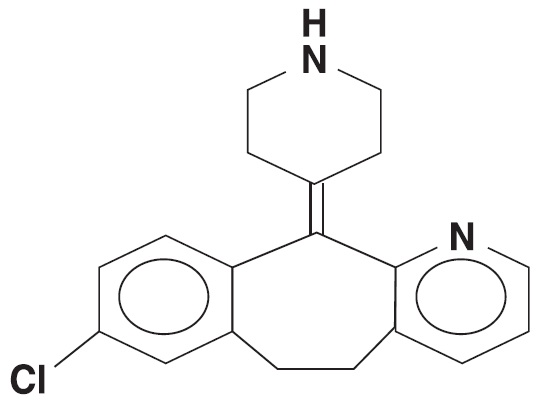
Brand names
DesloratadineDESLORATADINEDesloratadine Oral Solution
Active ingredients
DESLORATADINE
Indications
INDICATIONS AND USAGE Desloratadine Oral Solution is a histamine-1 (H1) receptor antagonist indicated for: Seasonal Allergic Rhinitis: relief of nasal and non-nasal symptoms in patients 2 years of age and older. (1.1) Perennial Allergic Rhinitis: relief of nasal and non-nasal symptoms in patients 6 months of age and older. (1.2) Chronic Idiopathic Urticaria: symptomatic relief of pruritus, reduction in the number of hives, and size of hives in patients 6 months of age and older. (1.3) 1.1 Seasonal Allergic Rhinitis Desloratadine oral solution is indicated for the relief of the nasal and non-nasal symptoms of seasonal allergic rhinitis in patients 2 years of age and older. 1.2 Perennial Allergic Rhinitis Desloratadine oral solution is indicated for the relief of the nasal and non-nasal symptoms of perennial allergic rhinitis in patients 6 months of age and older. 1.3 Chronic Idiopathic Urticaria Desloratadine oral solution is indicated for the symptomatic relief of pruritus, reduction in the number of hives, and size of hives, in patients with chronic idiopathic urticaria 6 months of age and older. 1.1 Seasonal Allergic Rhinitis Desloratadine oral solution is indicated for the relief of the nasal and non-nasal symptoms of seasonal allergic rhinitis in patients 2 years of age and older. 1.2 Perennial Allergic Rhinitis Desloratadine oral solution is indicated for the relief of the nasal and non-nasal symptoms of perennial allergic rhinitis in patients 6 months of age and older. 1.3 Chronic Idiopathic Urticaria Desloratadine oral solution is indicated for the symptomatic relief of pruritus, reduction in the number of hives, and size of hives, in patients with chronic idiopathic urticaria 6 months of age and older.
Dosage
DOSAGE AND ADMINISTRATION Desloratadine oral solution may be taken without regard to meals. The age-appropriate dose of desloratadine oral solution should be administered with a commercially available measuring dropper or syringe that is calibrated to deliver 2 mL and 2.5 mL (½ teaspoon). Dosage (by age): Adults and Adolescents 12 Years of Age and Over: 2 teaspoonfuls (5 mg in 10 mL) once daily (2) Children 6 to 11 Years of Age: 1 teaspoonful (2.5 mg in 5 mL) once daily Children 12 Months to 5 Years of Age: ½ teaspoonful (1.25 mg in 2.5 mL) once daily (2) 2.1 Adults and Adolescents 12 Years of Age and Over The recommended dose of desloratadine oral solution is 2 teaspoonfuls (5 mg in 10 mL) once daily. 2.2 Children 6 to 11 Years of Age The recommended dose of desloratadine oral solution is 1 teaspoonful (2.5 mg in 5 mL) once daily. 2.3 Children 12 Months to 5 Years of Age The recommended dose of desloratadine oral solution is ½ teaspoonful (1.25 mg in 2.5 mL) once daily. 2.4 Children 6 to 11 Months of Age The recommended dose of desloratadine oral solution is 2 mL (1 mg) once daily. 2.5 Adults with Hepatic or Renal Impairment Dosing recommendation for children with liver or renal impairment cannot be made due to lack of data [see Clinical Pharmacology (12.3)]. 2.1 Adults and Adolescents 12 Years of Age and Over The recommended dose of desloratadine oral solution is 2 teaspoonfuls (5 mg in 10 mL) once daily. 2.2 Children 6 to 11 Years of Age The recommended dose of desloratadine oral solution is 1 teaspoonful (2.5 mg in 5 mL) once daily. 2.3 Children 12 Months to 5 Years of Age The recommended dose of desloratadine oral solution is ½ teaspoonful (1.25 mg in 2.5 mL) once daily. 2.4 Children 6 to 11 Months of Age The recommended dose of desloratadine oral solution is 2 mL (1 mg) once daily. 2.5 Adults with Hepatic or Renal Impairment Dosing recommendation for children with liver or renal impairment cannot be made due to lack of data [see Clinical Pharmacology (12.3)].
Warnings
WARNINGS AND PRECAUTIONS Hypersensitivity reactions including rash, pruritus, urticaria, edema, dyspnea, and anaphylaxis have been reported. In such cases, stop desloratadine at once and consider alternative treatments. (5.1) 5.1 Hypersensitivity Reactions Hypersensitivity reactions including rash, pruritus, urticaria, edema, dyspnea, and anaphylaxis have been reported after administration of desloratadine. If such a reaction occurs, therapy with desloratadine should be stopped and alternative treatment should be considered. [See Adverse Reactions (6.2).] 5.1 Hypersensitivity Reactions Hypersensitivity reactions including rash, pruritus, urticaria, edema, dyspnea, and anaphylaxis have been reported after administration of desloratadine. If such a reaction occurs, therapy with desloratadine should be stopped and alternative treatment should be considered. [See Adverse Reactions (6.2).]
Contraindications
CONTRAINDICATIONS Desloratadine Tablets are contraindicated in patients who are hypersensitive to this medication or to any of its ingredients or to loratadine [ see Warnings and Precautions (5.1) and Adverse Reactions (6.2) ]. • Hypersensitivity ( 4 , 6.2 )
Drug interactions
DRUG INTERACTIONS 7.1 Inhibitors of Cytochrome P450 3A4 In controlled clinical studies co-administration of desloratadine with ketoconazole, erythromycin, or azithromycin resulted in increased plasma concentrations of desloratadine and 3 hydroxydesloratadine, but there were no clinically relevant changes in the safety profile of desloratadine. [See Clinical Pharmacology (12.3).] 7.2 Fluoxetine In controlled clinical studies co-administration of desloratadine with fluoxetine, a selective serotonin reuptake inhibitor (SSRI), resulted in increased plasma concentrations of desloratadine and 3 hydroxydesloratadine, but there were no clinically relevant changes in the safety profile of desloratadine. [See Clinical Pharmacology (12.3).] 7.3 Cimetidine In controlled clinical studies co-administration of desloratadine with cimetidine, a histamine H2-receptor antagonist, resulted in increased plasma concentrations of desloratadine and 3 hydroxydesloratadine, but there were no clinically relevant changes in the safety profile of desloratadine. [See Clinical Pharmacology (12.3).] 7.1 Inhibitors of Cytochrome P450 3A4 In controlled clinical studies co-administration of desloratadine with ketoconazole, erythromycin, or azithromycin resulted in increased plasma concentrations of desloratadine and 3 hydroxydesloratadine, but there were no clinically relevant changes in the safety profile of desloratadine. [See Clinical Pharmacology (12.3).] 7.2 Fluoxetine In controlled clinical studies co-administration of desloratadine with fluoxetine, a selective serotonin reuptake inhibitor (SSRI), resulted in increased plasma concentrations of desloratadine and 3 hydroxydesloratadine, but there were no clinically relevant changes in the safety profile of desloratadine. [See Clinical Pharmacology (12.3).] 7.3 Cimetidine In controlled clinical studies co-administration of desloratadine with cimetidine, a histamine H2-receptor antagonist, resulted in increased plasma concentrations of desloratadine and 3 hydroxydesloratadine, but there were no clinically relevant changes in the safety profile of desloratadine. [See Clinical Pharmacology (12.3).]
Adverse reactions
ADVERSE REACTIONS The following adverse reactions are discussed in greater detail in other sections of the label: Hypersensitivity reactions. [See Warnings and Precautions (5.1).] The most common adverse reactions (reported in ≥ 2% of adult and adolescent patients with allergic rhinitis and greater than placebo) were pharyngitis, dry mouth, myalgia, fatigue, somnolence, dysmenorrhea. (6.1) To report SUSPECTED ADVERSE REACTIONS, contact Sun Pharmaceutical Industries, Inc., at 1-866-923-4914 or FDA at 1-800-FDA-1088 or www.fda.gov/medwatch. 6.1 Clinical Trials Experience Because clinical trials are conducted under widely varying conditions, adverse reaction rates observed in the clinical trials of a drug cannot be directly compared to rates in the clinical trials of another drug and may not reflect the rates observed in clinical practice. Adults and Adolescents Allergic Rhinitis: In multiple-dose placebo-controlled trials, 2,834 patients ages 12 years or older received desloratadine tablets at doses of 2.5 mg to 20 mg daily, of whom 1,655 patients received the recommended daily dose of 5 mg. In patients receiving 5 mg daily, the rate of adverse events was similar between desloratadine and placebo-treated patients. The percent of patients who withdrew prematurely due to adverse events was 2.4% in the desloratadine group and 2.6% in the placebo group. There were no serious adverse events in these trials in patients receiving desloratadine. All adverse events that were reported by greater than or equal to 2% of patients who received the recommended daily dose of desloratadine tablets (5 mg once daily), and that were more common with desloratadine tablets than placebo, are listed in Table 1. Table 1: Incidence of Adverse Events Reported by ≥ 2% of Adult and Adolescent Allergic Rhinitis Patients Receiving Desloratadine Tablets Adverse Event Desloratadine Tablets 5 mg (n = 1,655) Placebo (n = 1,652) Infections and Infestations Pharyngitis 4.1% 2% Nervous System Disorders Somnolence 2.1% 1.8% Gastrointestinal Disorders Dry Mouth 3% 1.9% Musculoskeletal and Connective Tissue Disorders Myalgia 2.1% 1.8% Reproductive System and Breast Disorders Dysmenorrhea 2.1% 1.6% General Disorders and Administration Site Conditions Fatigue 2.1% 1.2% The frequency and magnitude of laboratory and electrocardiographic abnormalities were similar in desloratadine and placebo-treated patients. There were no differences in adverse events for subgroups of patients as defined by gender, age, or race. Chronic Idiopathic Urticaria: In multiple-dose, placebo-controlled trials of chronic idiopathic urticaria, 211 patients ages 12 years or older received desloratadine tablets and 205 received placebo. Adverse events that were reported by greater than or equal to 2% of patients who received desloratadine tablets and that were more common with desloratadine than placebo were (rates for desloratadine and placebo, respectively): headache (14%, 13%), nausea (5%, 2%), fatigue (5%, 1%), dizziness (4%, 3%), pharyngitis (3%, 2%), dyspepsia (3%, 1%), and myalgia (3%, 1%). Pediatrics Two hundred and forty-six pediatric subjects 6 months to 11 years of age received desloratadine oral solution for 15 days in three placebo-controlled clinical trials. Pediatric subjects aged 6 to 11 years received 2.5 mg once a day, subjects aged 1 to 5 years received 1.25 mg once a day, and subjects 6 to 11 months of age received 1.0 mg once a day. In subjects 6 to 11 years of age, no individual adverse event was reported by 2 percent or more of the subjects. In subjects 2 to 5 years of age, adverse events reported for desloratadine and placebo in at least 2 percent of subjects receiving desloratadine oral solution and at a frequency greater than placebo were fever (5.5%, 5.4%), urinary tract infection (3.6%, 0%) and varicella (3.6%, 0%). In subjects 12 months to 23 months of age, adverse events reported for the desloratadine product and placebo in at least 2 percent of subjects receiving desloratadine oral solution and at a frequency greater than placebo were fever (16.9%, 12.9%), diarrhea (15.4%, 11.3%), upper respiratory tract infections (10.8%, 9.7%), coughing (10.8%, 6.5%), appetite increased (3.1%, 1.6%), emotional lability (3.1%, 0%), epistaxis (3.1%, 0%), parasitic infection (3.1%, 0%), pharyngitis (3.1%, 0%), rash maculopapular (3.1%, 0%). In subjects 6 months to 11 months of age, adverse events reported for desloratadine and placebo in at least 2 percent of subjects receiving desloratadine oral solution and at a frequency greater than placebo were upper respiratory tract infections (21.2%, 12.9%), diarrhea (19.7%, 8.1%), fever (12.1%, 1.6%), irritability (12.1%, 11.3%), coughing (10.6%, 9.7%), somnolence (9.1%, 8.1%), bronchitis (6.1%, 0%), otitis media (6.1%, 1.6%), vomiting (6.1%, 3.2%), anorexia (4.5%, 1.6%), pharyngitis (4.5%, 1.6%), insomnia (4.5%, 0%), rhinorrhea (4.5%, 3.2%), erythema (3%, 1.6%), and nausea (3%, 0%). There were no clinically meaningful changes in any electrocardiographic parameter, including the QTc interval. Only one of the 246 pediatric subjects receiving desloratadine oral solution in the clinical trials discontinued treatment because of an adverse event. 6.2 Post-Marketing Experience Because adverse events are reported voluntarily from a population of uncertain size, it is not always possible to reliably estimate their frequency or establish a causal relationship to drug exposure. The following spontaneous adverse events have been reported during the marketing of desloratadine: Cardiac disorders: tachycardia, palpitations Respiratory, thoracic and mediastinal disorders: dyspnea Skin and subcutaneous tissue disorders: rash, pruritus Nervous system disorders: psychomotor hyperactivity, movement disorders (including dystonia, tics, and extrapyramidal symptoms), seizures (reported in patients with and without a known seizure disorder) Immune system disorders: hypersensitivity reactions (such as urticaria, edema and anaphylaxis) Investigations: elevated liver enzymes including bilirubin Hepatobiliary disorders: hepatitis Metabolism and nutrition disorders: increased appetite
Mechanism of action
CLINICAL PHARMACOLOGY 12.1 Mechanism of Action Desloratadine is a long-acting tricyclic histamine antagonist with selective H 1 -receptor histamine antagonist activity. Receptor binding data indicates that at a concentration of 2 to 3 ng/mL (7 nanomolar), desloratadine shows significant interaction with the human histamine H 1 -receptor. Desloratadine inhibited histamine release from human mast cells in vitro . Results of a radiolabeled tissue distribution study in rats and a radioligand H 1 -receptor binding study in guinea pigs showed that desloratadine did not readily cross the blood brain barrier. The clinical significance of this finding is unknown. 12.2 Pharmacodynamics Wheal and Flare: Human histamine skin wheal studies following single and repeated 5 mg doses of desloratadine have shown that the drug exhibits an antihistaminic effect by one hour; this activity may persist for as long as 24 hours. There was no evidence of histamine-induced skin wheal tachyphylaxis within the desloratadine 5 mg group over the 28 day treatment period. The clinical relevance of histamine wheal skin testing is unknown. Effects on QT c : Single daily doses of 45 mg were given to normal male and female volunteers for 10 days. All ECGs obtained in this study were manually read in a blinded fashion by a cardiologist. In desloratadine-treated subjects, there was an increase in mean heart rate of 9.2 bpm relative to placebo. The QT interval was corrected for heart rate (QT c ) by both the Bazett and Fridericia methods. Using the QT c (Bazett) there was a mean increase of 8.1 msec in desloratadine-treated subjects relative to placebo. Using QT c (Fridericia) there was a mean increase of 0.4 msec in desloratadine-treated subjects relative to placebo. No clinically relevant adverse events were reported. 12.3 Pharmacokinetics Absorption Following oral administration of a desloratadine 5 mg tablet once daily for 10 days to normal healthy volunteers, the mean time to maximum plasma concentrations (T max ) occurred at approximately 3 hours post dose and mean steady state peak plasma concentrations (C max ) and AUC of 4 ng/mL and 56.9 ng·hr/mL were observed, respectively. Neither food nor grapefruit juice had an effect on the bioavailability (C max and AUC) of desloratadine. The pharmacokinetic profile of desloratadine oral solution was evaluated in a three-way crossover study in 30 adult volunteers. A single dose of 10 mL of desloratadine oral solution containing 5 mg of desloratadine was bioequivalent to a single dose of 5 mg desloratadine tablets. Food had no effect on the bioavailability (AUC and C max ) of desloratadine oral solution. Distribution Desloratadine and 3-hydroxydesloratadine are approximately 82% to 87% and 85% to 89% bound to plasma proteins, respectively. Protein binding of desloratadine and 3-hydroxydesloratadine was unaltered in subjects with impaired renal function. Metabolism Desloratadine (a major metabolite of loratadine) is extensively metabolized to 3-hydroxydesloratadine, an active metabolite, which is subsequently glucuronidated. The enzyme(s) responsible for the formation of 3-hydroxydesloratadine have not been identified. Data from clinical trials indicate that a subset of the general population has a decreased ability to form 3-hydroxydesloratadine, and are poor metabolizers of desloratadine. In pharmacokinetic studies (n=3748), approximately 6% of subjects were poor metabolizers of desloratadine (defined as a subject with an AUC ratio of 3-hydroxydesloratadine to desloratadine less than 0.1, or a subject with a desloratadine half-life exceeding 50 hours). These pharmacokinetic studies included subjects between the ages of 2 and 70 years, including 977 subjects aged 2 to 5 years, 1575 subjects aged 6 to 11 years, and 1,196 subjects aged 12 to 70 years. There was no difference in the prevalence of poor metabolizers across age groups. The frequency of poor metabolizers was higher in Blacks (17%, n=988) as compared to Caucasians (2%, n=1,462) and Hispanics (2%, n=1,063). The median exposure (AUC) to desloratadine in the poor metabolizers was approximately 6 fold greater than in the subjects who are not poor metabolizers. Subjects who are poor metabolizers of desloratadine cannot be prospectively identified and will be exposed to higher levels of desloratadine following dosing with the recommended dose of desloratadine. In multidose clinical safety studies, where metabolizer status was identified, a total of 94 poor metabolizers and 123 normal metabolizers were enrolled and treated with desloratadine oral solution for 15 to 35 days. In these studies, no overall differences in safety were observed between poor metabolizers and normal metabolizers. Although not seen in these studies, an increased risk of exposure-related adverse events in patients who are poor metabolizers cannot be ruled out. Elimination The mean plasma elimination half-life of desloratadine was approximately 27 hours. C max and AUC values increased in a dose proportional manner following single oral doses between 5 and 20 mg. The degree of accumulation after 14 days of dosing was consistent with the half-life and dosing frequency. A human mass balance study documented a recovery of approximately 87% of the 14 C-desloratadine dose, which was equally distributed in urine and feces as metabolic products. Analysis of plasma 3-hydroxydesloratadine showed similar T max and half-life values compared to desloratadine. Special Populations Geriatric Subjects: In older subjects (≥65 years old; n=17) following multiple-dose administration of desloratadine tablets, the mean C max and AUC values for desloratadine were 20% greater than in younger subjects (<65 years old). The oral total body clearance (CL/F) when normalized for body weight was similar between the two age groups. The mean plasma elimination half-life of desloratadine was 33.7 hrs in subjects ≥65 years old. The pharmacokinetics for 3-hydroxydesloratadine appeared unchanged in older versus younger subjects. These age-related differences are unlikely to be clinically relevant and no dosage adjustment is recommended in elderly subjects. Pediatric Subjects: In subjects 6 to 11 years old, a single dose of 5 mL of desloratadine oral solution containing 2.5 mg of desloratadine, resulted in desloratadine plasma concentrations similar to those achieved in adults administered a single 5 mg desloratadine tablet. In subjects 2 to 5 years old, a single dose of 2.5 mL of desloratadine oral solution containing 1.25 mg of desloratadine, resulted in desloratadine plasma concentrations similar to those achieved in adults administered a single 5 mg desloratadine tablet. However, the C max and AUC of the metabolite (3-hydroxydesloratadine) were 1.27 and 1.61 times higher for the 5 mg dose of oral solution administered in adults compared to the C max and AUC obtained in children 2 to 11 years of age receiving 1.25 to 2.5 mg of desloratadine oral solution. A single dose of either 2.5 mL or 1.25 mL of desloratadine oral solution containing 1.25 mg or 0.625 mg, respectively, of desloratadine was administered to subjects 6 to 11 months of age and 12 to 23 months of age. The results of a population pharmacokinetic analysis indicated that a dose of 1 mg for subjects aged 6 to 11 months and 1.25 mg for subjects 12 to 23 months of age is required to obtain desloratadine plasma concentrations similar to those achieved in adults administered a single 5 mg dose of desloratadine oral solution. Renally Impaired: Desloratadine pharmacokinetics following a single dose of 7.5 mg were characterized in patients with mild (n=7; creatinine clearance 51 to 69 mL/min/1.73 m 2 ), moderate (n=6; creatinine clearance 34 to 43 mL/min/1.73 m 2 ), and severe (n=6; creatinine clearance 5 to 29 mL/min/1.73 m 2 ) renal impairment or hemodialysis dependent (n=6) patients. In patients with mild and moderate renal impairment, median C max and AUC values increased by approximately 1.2
Available forms (5)
NDC examples
69543-10768180-15350090-397574157-01169452-36350090-479450090-6724
Treats these conditions
Assistance programs
AIDS Drug Assistance Program (ADAP)Coordinated Services and Access to Research for Women, Infants, Children, and YouthEnding the HIV Epidemic: A Plan for America — Ryan White HIV/AIDS Program Parts A and BGrants to Provide Outpatient Early Intervention Services with Respect to HIV DiseaseHIV Care Formula GrantsHIV Emergency Relief Project GrantsHIV-Related Training and Technical AssistanceSpecial Projects of National Significance
Source: openFDA + RxNorm · 2026
Look up another medication