Doxylamine Succinate and Pyridoxine Hydrochloride
Managing this medication for someone you care for? Eleplan keeps diagnoses, medications and appointments in one plan.
Start free with EleplanMedication reference
Doxylamine Succinate and Pyridoxine Hydrochloride
ORAL
Doxylamine Succinate and Pyridoxine Hydrochloride. INDICATIONS AND USAGE Doxylamine succinate and pyridoxine hydrochloride delayed-release tablets are indicated for the treatment of nausea and…
Brand names
Doxylamine succinate and Pyridoxine hydrochlorideDoxylamine succinate and pyridoxine hydrochlorideDICLEGIS
Active ingredients
DOXYLAMINE SUCCINATEPYRIDOXINE HYDROCHLORIDE
Indications
INDICATIONS AND USAGE Doxylamine succinate and pyridoxine hydrochloride delayed-release tablets are indicated for the treatment of nausea and vomiting of pregnancy in women who do not respond to conservative management. Limitations of Use Doxylamine succinate and pyridoxine hydrochloride delayed-release tablets havenot been studied in women with hyperemesis gravidarum. Doxylamine succinate and pyridoxine hydrochloride delayed-release tablets are a fixed dose combination drug product of doxylamine succinate, an antihistamine, and pyridoxine hydrochloride, a Vitamin B 6 analog, indicated for the treatment of nausea and vomiting of pregnancy in women who do not respond to conservative management. ( 1 )
Dosage
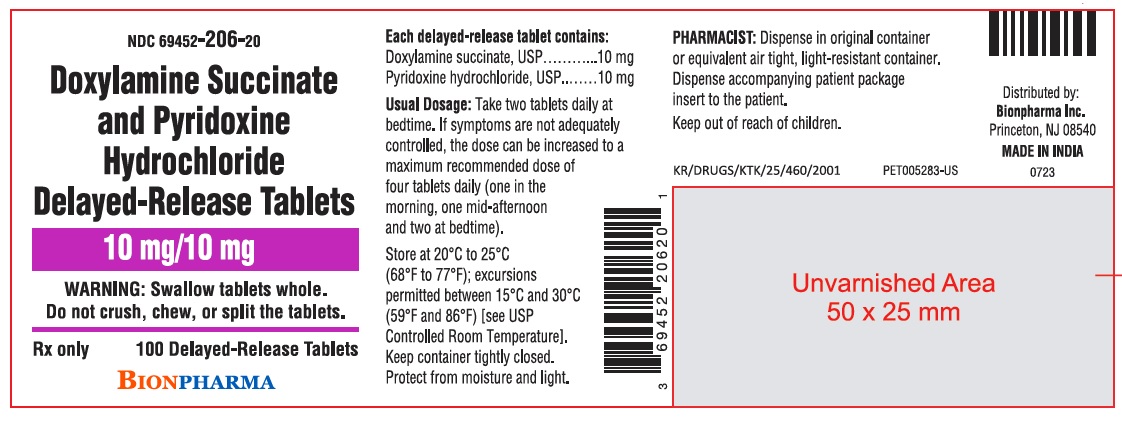
DOSAGE AND ADMINISTRATION Take two tablets daily at bedtime. If symptoms are not adequately controlled, the dose can be increased to a maximum recommended dose of four tablets daily (one in the morning, one mid-afternoon and two at bedtime) as described in the full prescribing information. ( 2 ) 2.1 Dosage Information Initially, take two doxylamine succinate and pyridoxine hydrochloride delayed-release tablets orally at bedtime (Day 1). If this dose adequately controls symptoms the next day, continue taking two tablets daily at bedtime. However, if symptoms persist into the afternoon of Day 2, take the usual dose of two tablets at bedtime that night then take three tablets starting on Day 3 (one tablet in the morning and two tablets at bedtime). If these three tablets adequately control symptoms on Day 4, continue taking three tablets daily. Otherwise take four tablets starting on Day 4 (one tablet in the morning, one tablet mid-afternoon and two tablets at bedtime). The maximum recommended dose is four tablets (one in the morning, one in the mid-afternoon and two at bedtime) daily. Take on an empty stomach with a glass of water [see Clinical Pharmacology (12.3) ] . Swallow tablets whole. Do not crush, chew, or split doxylamine succinate and pyridoxine hydrochloride delayed-release tablets. Take as a daily prescription and not on an as needed basis. Reassess the woman for continued need for doxylamine succinate and pyridoxine hydrochloride delayed-release tablets as her pregnancy progresses.
Warnings
WARNINGS AND PRECAUTIONS Activities requiring mental alertness: Avoid engaging in activities requiring complete mental alertness, such as driving or operating heavy machinery, while using doxylamine succinate and pyridoxine hydrochloride delayed-release tablets until cleared to do so by a healthcare provider ( 5.1 ) Central nervous system (CNS) depressants: Concurrent use with alcohol or other CNS depressants is not recommended ( 5.1 ) Anticholinergic actions: Use with caution in patients with increased intraocular pressure, narrow angle glaucoma, stenosing peptic ulcer, pyloroduodenal obstruction and urinary bladder-neck obstruction ( 5.2 ) Interference with urine drug screen: doxylamine succinate and pyridoxine hydrochloride delayed-release tablets may interfere with urine screening for methadone, opiates and PCP ( 5.3 ) 5.1 Activities Requiring Mental Alertness Doxylamine succinate and pyridoxine hydrochloride delayed-release tablets may cause somnolence due to the anticholinergic properties of doxylamine succinate, an antihistamine. Women should avoid engaging in activities requiring complete mental alertness, such as driving or operating heavy machinery, while using doxylamine succinate and pyridoxine hydrochloride delayed-release tablets until cleared to do so by their healthcare provider. Doxylamine succinate and pyridoxine hydrochloride delayed-release tablets use is not recommended if a woman is concurrently using central nervous system (CNS) depressants including alcohol. The combination may result in severe drowsiness leading to falls or accidents [see Drug Interactions (7.1) ] . 5.2 Concomitant Medical Conditions Doxylamine succinate and pyridoxine hydrochloride delayed-release tablets have anticholinergic properties and, therefore, should be used with caution in women with: increased intraocular pressure, narrow angle glaucoma, stenosing peptic ulcer, pyloroduodenal obstruction and urinary bladder-neck obstruction. 5.3 Interference with Urine Screen for Methadone, Opiates and Phencyclidine Phosphate (PCP) There have been reports of false positive urine screening tests for methadone, opiates, and PCP with doxylamine succinate/pyridoxine hydrochloride use [see Drug Interactions ( 7.3 )].
Contraindications
CONTRAINDICATIONS Doxylamine succinate and pyridoxine hydrochloride delayed-release tablets are contraindicated in women with any of the following conditions: Known hypersensitivity to doxylamine succinate, other ethanolamine derivative antihistamines, pyridoxine hydrochloride or any inactive ingredient in the formulation Monoamine oxidase (MAO) inhibitors intensify and prolong the adverse central nervous system effects of doxylamine succinate and pyridoxine hydrochloride delayed-release tablets [ see Drug Interactions (7.1) ] . Known hypersensitivity to doxylamine succinate, other ethanolamine derivative antihistamines, pyridoxine hydrochloride or any inactive ingredient in the formulation ( 4 ) Monoamine oxidase (MAO) inhibitors ( 4 , 7 )
Drug interactions
DRUG INTERACTIONS Severe drowsiness can occur when used in combination with alcohol or other sedating medications. ( 7 ) 7.1 Drug Interactions Use of doxylamine succinate and pyridoxine hydrochloride delayed-release tablets is contraindicated in women who are taking monoamine oxidase inhibitors (MAOIs), which prolong and intensify the anticholinergic (drying) effects of antihistamines. Concurrent use of alcohol and other CNS depressants (such as hypnotic sedatives and tranquilizers) with doxylamine succinate and pyridoxine hydrochloride delayed-release tablets is not recommended. 7.2 Drug-Food Interactions A food-effect study demonstrated that the delay in the onset of action of doxylamine succinate and pyridoxine hydrochloride delayed-release tablets may be further delayed, and a reduction in absorption may occur when tablets are taken with food [see Dosage and Administration (2) , Clinical Pharmacology (12.3) ] . Therefore, doxylamine succinate and pyridoxine hydrochloride delayed-release tablets should be taken on an empty stomach with a glass of water [see Dosage and Administration (2) ] . 7.3 False Positive Urine Tests for Methadone, Opiates and PCP False positive drug screens for methadone, opiates, and PCP can occur with doxylamine succinate/pyridoxine hydrochloride use. Confirmatory tests, such as Gas Chromatography Mass Spectrometry (GC-MS), should be used to confirm the identity of the substance in the event of a positive immunoassay result. 7.1 Drug Interactions Use of doxylamine succinate and pyridoxine hydrochloride delayed-release tablets is contraindicated in women who are taking monoamine oxidase inhibitors (MAOIs), which prolong and intensify the anticholinergic (drying) effects of antihistamines. Concurrent use of alcohol and other CNS depressants (such as hypnotic sedatives and tranquilizers) with doxylamine succinate and pyridoxine hydrochloride delayed-release tablets is not recommended.
Adverse reactions
ADVERSE REACTIONS The following adverse reactions are discussed elsewhere in the labeling: Somnolence [ see Warnings and Precautions (5.1) ] Falls or other accidents resulting from the effect of the combined use of doxylamine succinate and pyridoxine hydrochloride delayed-release tablets with CNS depressants including alcohol [ see Warnings and Precautions (5.1) ] The most common adverse reaction with doxylamine succinate and pyridoxine hydrochloride delayed-release tablets (≥5 percent and exceeding the rate in placebo) is somnolence. ( 6 ) To report SUSPECTED ADVERSE REACTIONS, contact Analog Pharma Inc. at 1-844-884-5505 or medicalinfo@analogpharma.com or FDA at 1-800-FDA-1088 or www.fda.gov/medwatch. 6.1 Clinical Trial Experience Because clinical trials are conducted under widely varying conditions, adverse reaction rates observed in the clinical trials of a drug cannot be directly compared to rates in the clinical trials of another drug and may not reflect the rates observed in clinical practice. The safety and efficacy of doxylamine succinate and pyridoxine hydrochloride delayed-release tablets were compared to placebo in a double-blind, randomized, multi-center trial in 261 women with nausea and vomiting of pregnancy. The mean gestational age at enrollment was 9.3 weeks, range 7 to 14 weeks gestation [ see Clinical Studies (14) ] . Adverse reactions for doxylamine succinate and pyridoxine hydrochloride delayed-release tablets that occurred at an incidence ≥5 percent and exceeded the incidence for placebo are summarized in Table 1. Table 1: Number (Percent) of Subjects with ≥ 5 Percent Adverse Reactions in a 15-Day Placebo-Controlled Study of Doxylamine Succinate and Pyridoxine Hydrochloride Delayed-Release Tablets (Only Those Adverse Reactions Occurring at an Incidence ≥ 5 Percent and at a Higher Incidence with Doxylamine Succinate and Pyridoxine Hydrochloride Delayed-Release Tablets than Placebo are Shown) Doxylamine succinate and pyridoxine hydrochloride delayed-release tablets (N = 133) Placebo (n = 128) Somnolence 19 (14.3%) 15 (11.7%) 6.2 Postmarketing Experience The following adverse events, listed alphabetically, have been identified during post-approval use of the combination of 10 mg doxylamine succinate and 10 mg pyridoxine hydrochloride. Because these reactions are reported voluntarily from a population of uncertain size, it is not always possible to reliably estimate their frequency or establish a causal relationship to drug exposure. Cardiac disorders : dyspnea, palpitation, tachycardia Ear and labyrinth disorders : vertigo Eye disorders : vision blurred, visual disturbances Gastrointestinal disorders : abdominal distension, abdominal pain, constipation, diarrhea General disorders and administration site conditions : chest discomfort, fatigue, irritability, malaise Immune system disorders : hypersensitivity Nervous system disorders : dizziness, headache, migraines, paresthesia, psychomotor hyperactivity Psychiatric disorders : anxiety, disorientation, insomnia, nightmares Renal and urinary disorders : dysuria, urinary retention Skin and subcutaneous tissue disorders : hyperhidrosis, pruritus, rash, rash maculo-papular
Mechanism of action
Mechanism of Action The mechanism of action of doxylamine succinate and pyridoxine hydrochloride delayed-release tablets is unknown.
NDC examples
69452-2060591-213270505-10055494-100
Indicated ICD-10 codes
Source: openFDA + RxNorm · 2026
Look up another medication