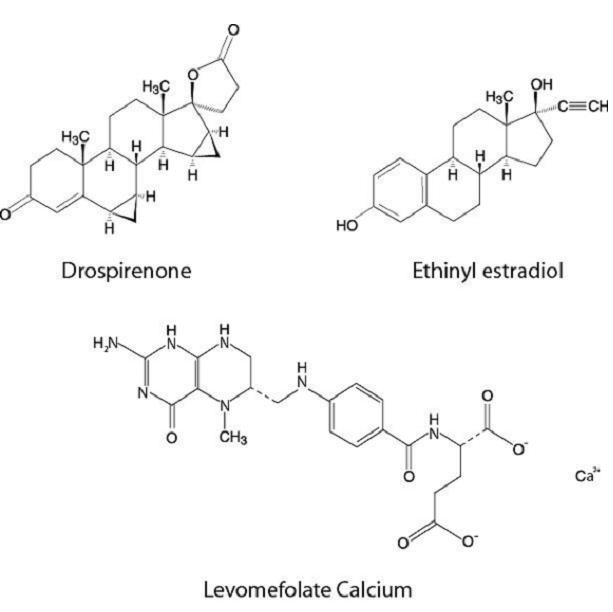
Drospirenone, Ethinyl Estradiol and Levomefolate Calcium and Levomefolate Calcium
Drospirenone, Ethinyl Estradiol and Levomefolate Calcium and Levomefolate Calcium. INDICATIONS AND USAGE Drospirenone, ethinyl estradiol and levomefolate calcium tablet and levomefolate calcium tablet is a combination of…
Boxed warning
WARNING: CIGARETTE SMOKING AND SERIOUS CARDIOVASCULAR EVENTS Cigarette smoking increases the risk of serious cardiovascular events from combination oral contraceptives (COC) use. This risk increases with age, particularly in women over 35 years of age, and with the number of cigarettes smoked. For this reason, COCs should not be used by women who are over 35 years of age and smoke [see Contraindications ( 4 )]. WARNING: CIGARETTE SMOKING AND SERIOUS CARDIOVASCULAR EVENTS See full prescribing information for complete boxed warning Women over 35 years old who smoke should not use drospirenone, ethinyl estradiol and levomefolate calcium tablets and levomefolate calcium tablets. ( 4 ) Cigarette smoking increases the risk of serious cardiovascular events from combination oral contraceptive (COC) use. ( 4 )
Brand names
drospirenone, ethinyl estradiol and levomefolate calcium and levomefolate calcium
INDICATIONS AND USAGE Drospirenone, ethinyl estradiol and levomefolate calcium tablet and levomefolate calcium tablet is a combination of drospirenone, a progestin and ethinyl estradiol, an estrogen containing a folate, indicated for use by females of reproductive potential to: Prevent pregnancy. ( 1.1 ) Treat symptoms of premenstrual dysphoric disorder (PMDD) for females of reproductive potential who choose to use an oral contraceptive for contraception. ( 1.2 ) Treat moderate acne for females of reproductive potential at least 14 years old only if the patient desires an oral contraceptive for birth control. ( 1.3 ) Raise folate levels in females of reproductive potential who choose to use an oral contraceptive for contraception. ( 1.4 ) 1.1 Oral Contraceptive Drospirenone, ethinyl estradiol and levomefolate calcium tablets and levomefolate calcium tablets are indicated for use by females of reproductive potential to prevent pregnancy. 1.2 Premenstrual Dysphoric Disorder (PMDD) Drospirenone, ethinyl estradiol and levomefolate calcium tablets and levomefolate calcium tablets are also indicated for the treatment of symptoms of premenstrual dysphoric disorder (PMDD) in females of reproductive potential who choose to use an oral contraceptive as their method of contraception. The effectiveness of drospirenone, ethinyl estradiol and levomefolate calcium tablets and levomefolate calcium tablets for PMDD when used for more than three menstrual cycles has not been evaluated. The essential features of PMDD according to the Diagnostic and Statistical Manual-4th edition (DSM-IV) include markedly depressed mood, anxiety or tension, affective lability, and persistent anger or irritability. Other features include decreased interest in usual activities, difficulty concentrating, lack of energy, change in appetite or sleep, and feeling out of control. Physical symptoms associated with PMDD include breast tenderness, headache, joint and muscle pain, bloating and weight gain. In this disorder, these symptoms occur regularly during the luteal phase and remit within a few days following onset of menses; the disturbance markedly interferes with work or school, or with usual social activities and relationships with others. Diagnosis is made by healthcare providers according to DSM-IV criteria, with symptomatology assessed prospectively over at least two menstrual cycles. In making the diagnosis, care should be taken to rule out other cyclical mood disorders. Drospirenone, ethinyl estradiol and levomefolate calcium tablets and levomefolate calcium tablets has not been evaluated for the treatment of premenstrual syndrome (PMS). 1.3 Acne Drospirenone, ethinyl estradiol and levomefolate calcium tablets and levomefolate calcium tablets are indicated for the treatment of moderate acne vulgaris in females of reproductive potential at least 14 years of age, who have no known contraindications to oral contraceptive therapy and have achieved menarche. Drospirenone, ethinyl estradiol and levomefolate calcium tablets and levomefolate calcium tablets should be used for the treatment of acne only if the patient desires an oral contraceptive for birth control. 1.4 Folate Supplementation Drospirenone, ethinyl estradiol and levomefolate calcium tablets and levomefolate calcium tablets are indicated in females of reproductive potential who choose to use an oral contraceptive as their method of contraception, to raise folate levels for the purpose of reducing the risk of a neural tube defect in a pregnancy conceived while taking the product or shortly after discontinuing the product.
Dosage
DOSAGE AND ADMINISTRATION Take one tablet daily by mouth at the same time every day. ( 2.1 ) Tablets must be taken in the order directed on the blister. ( 2.1 ) 2.1 How to Take Drospirenone, Ethinyl Estradiol and Levomefolate Calcium Tablets and Levomefolate Calcium Tablets Take one tablet by mouth at the same time every day. The failure rate may increase when pills are missed or taken incorrectly. To achieve maximum contraceptive and PMDD effectiveness, drospirenone, ethinyl estradiol and levomefolate calcium tablets and levomefolate calcium tablets must be taken as directed, in the order directed on the blister. Single missed pills should be taken as soon as remembered. 2.2 How to Start Drospirenone, Ethinyl Estradiol and Levomefolate Calcium Tablets and Levomefolate Calcium Tablets Instruct the patient to begin taking drospirenone, ethinyl estradiol and levomefolate calcium tablets either on the first day of her menstrual period (Day 1 Start) or on the first Sunday after the onset of her menstrual period (Sunday Start). Day 1 Start During the first cycle of drospirenone, ethinyl estradiol and levomefolate calcium tablets use, instruct the patient to take one pink drospirenone, ethinyl estradiol and levomefolate calcium tablet daily, beginning on Day 1 of her menstrual cycle. (The first day of menstruation is Day 1.) She should take one pink drospirenone, ethinyl estradiol and levomefolate calcium tablet daily for 24 consecutive days, followed by one light orange tablet daily on Days 25 through 28. Drospirenone, ethinyl estradiol and levomefolate calcium tablets and levomefolate calcium tablets should be taken in the order directed on the package at the same time each day, preferably after the evening meal or at bedtime with some liquid, as needed. Drospirenone, ethinyl estradiol and levomefolate calcium tablets and levomefolate calcium tablets can be taken without regard to meals. If drospirenone, ethinyl estradiol and levomefolate calcium tablet and levomefolate calcium tablet is first taken later than the first day of the menstrual cycle, drospirenone, ethinyl estradiol and levomefolate calcium tablets and levomefolate calcium tablets should not be considered effective as a contraceptive until after the first 7 consecutive days of product administration. Instruct the patient to use a non-hormonal contraceptive as back-up during the first 7 days. The possibility of ovulation and conception prior to initiation of medication should be considered. Sunday Start During the first cycle of drospirenone, ethinyl estradiol and levomefolate calcium tablets and levomefolate calcium tablets use, instruct the patient to take one pink drospirenone, ethinyl estradiol and levomefolate calcium tablet daily, beginning on the first Sunday after the onset of her menstrual period. She should take one pink drospirenone, ethinyl estradiol and levomefolate calcium tablet daily for 24 consecutive days, followed by one light orange tablet daily on Days 25 through 28. Drospirenone, ethinyl estradiol and levomefolate calcium tablets and levomefolate calcium tablets should be taken in the order directed on the package at the same time each day, preferably after the evening meal or at bedtime with some liquid, as needed. Drospirenone, ethinyl estradiol and levomefolate calcium tablets and levomefolate calcium tablets can be taken without regard to meals. Drospirenone, ethinyl estradiol and levomefolate calcium tablets and levomefolate calcium tablets should not be considered effective as a contraceptive until after the first 7 consecutive days of product administration. Instruct the patient to use a non-hormonal contraceptive as back-up during the first 7 days. The possibility of ovulation and conception prior to initiation of medication should be considered. The patient should begin her next and all subsequent 28-day regimens of drospirenone, ethinyl estradiol and levomefolate calcium tablets and levomefolate calcium tablets on the same day of the week that she began her first regimen, following the same schedule. She should begin taking her pink tablets on the next day after ingestion of the last light orange folate tablet, regardless of whether or not a menstrual period has occurred or is still in progress. Anytime a subsequent cycle of drospirenone, ethinyl estradiol and levomefolate calcium tablets and levomefolate calcium tablets is started later than the day following administration of the last light orange tablet, the patient should use another method of contraception until she has taken a pink drospirenone, ethinyl estradiol and levomefolate calcium tablet daily for seven consecutive days. When Switching from a Different Birth Control Pill When switching from another birth control pill, drospirenone, ethinyl estradiol and levomefolate calcium tablets and levomefolate calcium tablets should be started on the same day that a new pack of the previous oral contraceptive would have been started. When Switching from a Method Other than a Birth Control Pill When switching from a transdermal patch or vaginal ring, drospirenone, ethinyl estradiol and levomefolate calcium tablets and levomefolate calcium tablets should be started when the next application would have been due. When switching from an injection, drospirenone, ethinyl estradiol and levomefolate calcium tablets and levomefolate calcium tablets should be started when the next dose would have been due. When switching from an intrauterine contraceptive or an implant, drospirenone, ethinyl estradiol and levomefolate calcium tablets and levomefolate calcium tablets should be started on the day of removal. Withdrawal bleeding usually occurs within 3 days following the last pink tablet. If spotting or breakthrough bleeding occurs while taking drospirenone, ethinyl estradiol and levomefolate calcium tablets instruct the patient to continue taking drospirenone, ethinyl estradiol and levomefolate calcium tablets and levomefolate calcium tablets by the regimen described above. Counsel her that this type of bleeding is usually transient and without significance; however, advise her that if the bleeding is persistent or prolonged, she should consult her healthcare provider. Although the occurrence of pregnancy is low if drospirenone, ethinyl estradiol and levomefolate calcium tablets and levomefolate calcium tablets are taken according to directions, if withdrawal bleeding does not occur, consider the possibility of pregnancy. If the patient has not adhered to the prescribed dosing schedule (missed one or more active tablets or started taking them on a day later than she should have), consider the possibility of pregnancy at the time of the first missed period and take appropriate diagnostic measures. If the patient has adhered to the prescribed regimen and misses two consecutive periods, rule out pregnancy. Discontinue drospirenone, ethinyl estradiol and levomefolate calcium tablets and levomefolate calcium tablets if pregnancy is confirmed. The risk of pregnancy increases with each active pink tablet missed. If breakthrough bleeding occurs following missed tablets, it will usually be transient and of no consequence. If the patient misses one or more light orange tablets, she should still be protected against pregnancy provided she begins taking a new cycle of pink tablets on the proper day. For postpartum women who do not breastfeed or after a second trimester abortion, start drospirenone, ethinyl estradiol and levomefolate calcium tablets and levomefolate calcium tablets no earlier than 4 weeks postpartum due to the increased risk of thromboembolism. If the patient starts on drospirenone, ethinyl estradiol and levomefolate calcium tablets and levomefolate calcium tablets postpartum and has not yet had a period, evaluate for possible pregnancy, and instruct her to use an additional method of contraception until she has taken drospirenone, ethinyl estradiol and levomefolate calcium tablets and levomefolate calcium tablets fo
Warnings
WARNINGS AND PRECAUTIONS Vascular risks : Stop drospirenone, ethinyl estradiol and levomefolate calcium tablets and levomefolate calcium tablets if a thrombotic event occurs. Stop at least 4 weeks before and through 2 weeks after major surgery. Start no earlier than 4 weeks after delivery, in women who are not breastfeeding. ( 5.1 ) COCs containing DRSP may be associated with a higher risk of venous thromboembolism (VTE) than COCs containing levonorgestrel or some other progestins. Before initiating drospirenone, ethinyl estradiol and levomefolate calcium tablets and levomefolate calcium tablets in a new COC user or a woman who is switching from a contraceptive that does not contain DRSP, consider the risks and benefits of a DRSP-containing COC in light of her risk of a VTE. ( 5.1 ) Hyperkalemia : DRSP has anti-mineralocorticoid activity. Do not use in patients predisposed to hyperkalemia. Check serum potassium concentration during the first treatment cycle in women on long-term treatment with medications that may increase serum potassium concentration. ( 5.2 , 7.1 , 7.2 ) Liver disease : Discontinue Drospirenone, ethinyl estradiol and levomefolate calcium tablets and levomefolate calcium tablets if jaundice occurs. ( 5.4 ) High blood pressure : Do not prescribe drospirenone, ethinyl estradiol and levomefolate calcium tablets and levomefolate calcium tablets for women with uncontrolled hypertension or hypertension with vascular disease. ( 5.6 ) Carbohydrate and lipid metabolic effects : Monitor prediabetic and diabetic women taking drospirenone, ethinyl estradiol and levomefolate calcium tablets and levomefolate calcium tablets. Consider an alternate contraceptive method for women with uncontrolled dyslipidemia. ( 5.8 ) Headache : Evaluate significant change in headaches and discontinue drospirenone, ethinyl estradiol and levomefolate calcium tablets and levomefolate calcium tablets if indicated. ( 5.9 ) Uterine bleeding : Evaluate irregular bleeding or amenorrhea. ( 5.10 ) 5.1 Thromboembolic Disorders and Other Vascular Problems Stop drospirenone, ethinyl estradiol and levomefolate calcium tablets and levomefolate calcium tablets if an arterial or venous thrombotic (VTE) event occurs. Based on presently available information on DRSP-containing COCs with 0.03 mg ethinyl estradiol (that is, Yasmin ® ), DRSP-containing COCs may be associated with a higher risk of venous thromboembolism (VTE) than COCs containing the progestin levonorgestrel or some other progestins. Epidemiologic studies that compared the risk of VTE reported that the risk ranged from no increase to a three-fold increase. Before initiating use of drospirenone, ethinyl estradiol and levomefolate calcium tablets and levomefolate calcium tablets in a new COC user or a woman who is switching from a contraceptive that does not contain DRSP, consider the risks and benefits of a DRSP-containing COC in light of her risk of a VTE. Known risk factors for VTE include smoking, obesity, and family history of VTE, in addition to other factors that contraindicate use of COCs [see Contraindications ( 4 )]. A number of studies have compared the risk of VTE for users of Yasmin ® (which contains 0.03 mg of EE and 3 mg of DRSP) to the risk for users of other COCs, including COCs containing levonorgestrel. Those that were required or sponsored by regulatory agencies are summarized in Table 2 Table 2: Estimates (Hazard Ratios) of Venous Thromboembolism Risk in Current Users of Yasmin ® Compared to Users of Oral Contraceptives that Contain Other Progestins Epidemiologic Study (Author, Year of Publication) Population Studied Comparator Product (all are low-dose COCs; with ≤ 0.04 mg of EE) Hazard Ratio (HR) (95% CI) i3 Ingenix (Seeger 2007) Initiators, including new users "New users" - no use of combination hormonal contraception for at least the prior 6 months All COCs available in the US during the conduct of the study Includes low-dose COCs containing the following progestins: norgestimate, norethindrone, levonorgestrel, desogestrel, norgestrel, medroxyprogesterone, or ethynodiol diacetate HR: 0.9 (0.5 to 1.6) EURAS (Dinger 2007) Initiators, including new users All COCs available in Europe during the conduct of the study Includes low-dose COCs containing the following progestins: levonorgestrel, desogestrel, dienogest, chlormadinone acetate, gestodene, cyproterone acetate, norgestimate, or norethindrone Levonorgestrel/EE HR: 0.9 (0.6 to 1.4) HR: 1.0 (0.6 to 1.8) "FDA-funded study" (2011) New users Other COCs available during the course of the study Includes low-dose COCs containing the following progestins: norgestimate, norethindrone, or levonorgestrel HR: 1.8 (1.3 to 2.4) Levonorgestrel/0.03 mg EE HR: 1.6 (1.1 to 2.2) All users (i.e. initiation and continuing use of study combination hormonal contraception) Other COCs available during the course of the study HR: 1.7 (1.4 to 2.1) Levonorgestrel/0.03 mg EE HR: 1.5 (1.2 to 1.8) In addition to these "regulatory studies," other studies of various designs have been conducted. Overall, there are two prospective cohort studies (see Table 2): the US post-approval safety study Ingenix [Seeger 2007], the European post-approval safety study EURAS (European Active Surveillance Study) [Dinger 2007]. An extension of the EURAS study, the Long-Term Active Surveillance Study (LASS), did not enroll additional subjects, but continued to assess VTE risk. There are three retrospective cohort studies: one study in the US funded by the FDA (see Table 2), and two from Denmark [Lidegaard 2009, Lidegaard 2011]. There are two case-control studies: the Dutch MEGA study analysis [van Hylckama Vlieg 2009] and the German case-control study [Dinger 2010]. There are two nested case-control studies that evaluated the risk of non-fatal idiopathic VTE: the PharMetrics study [Jick 2011] and the GPRD study [Parkin 2011]. The results of all of these studies are presented in Figure 1. Figure 1: VTE Risk with Yasmin ® Relative to LNG-Containing COCs (adjusted risk # ) Risk ratios displayed on logarithmic scale; risk ratio < 1 indicates a lower risk of VTE for DRSP, > 1 indicates an increased risk of VTE for DRSP. *Comparator "Other COCs", including LNG-containing COCs † LASS is an extension of the EURAS study # Some adjustment factors are indicated by superscript letters: a) Current heavy smoking, b) hypertension, c) obesity, d) family history, e) age, f) BMI, g) duration of use, h) VTE history, i) period of inclusion, j) calendar year, k) education, l) length of use, m) parity, n) chronic disease, o) concomitant medication, p) smoking, q) duration of exposure, r) site (References: Ingenix [Seeger 2007]2, EURAS (European Active Surveillance Study) [Dinger 2007]3, LASS (Long-Term Active Surveillance Study) [Dinger, unpublished document on file], FDA-funded study [Sidney 2011]4, Danish [Lidegaard 2009]5, Danish re-analysis [ Lidegaard 2011]6, MEGA study [van Hylckama Vlieg 2009]7, German Case-Control study [Dinger 2010]8, PharMetrics [Jick 2011]9, GPRD study [Parkin 2011]10) Although the absolute VTE rates are increased for users of hormonal contraceptives compared to non-users, the rates during pregnancy are even greater, especially during the post-partum period (see Figure 2). The risk of VTE in women using COCs has been estimated to be 3 to 9 per 10,000 woman-years. The risk of VTE is highest during the first year of use. Data from a large, prospective cohort safety study of various COCs suggest that this increased risk, as compared to that in non-COC users, is greatest during the first 6 months of COC use. Data from this safety study indicate that the greatest risk of VTE is present after initially starting a COC or restarting (following a 4 week or greater pill-free interval) the same or a different COC. The risk of thromboembolic disease due to oral contraceptives gradually disappears after COC use is discontinued. Figure 2 shows the risk of developing a VTE for women who are not pregnant a
Contraindications
CONTRAINDICATIONS Drospirenone, ethinyl estradiol and levomefolate calcium tablet and levomefolate calcium tablet is contraindicated in females who are known to have or develop the following conditions: Renal impairment Adrenal insufficiency A high risk of arterial or venous thrombotic diseases. Examples include women who are known to: Smoke, if over age 35 [see Boxed Warning and Warnings And Precautions ( 5.1 )] Have deep vein thrombosis or pulmonary embolism, now or in the past [see Warnings And Precautions ( 5.1 )] Have cerebrovascular disease [see Warnings And Precautions ( 5.1 )] Have coronary artery disease [see Warnings And Precautions ( 5.1 )] Have thrombogenic valvular or thrombogenic rhythm diseases of the heart (for example, subacute bacterial endocarditis with valvular disease, or atrial fibrillation) [see Warnings And Precautions ( 5.1 )] Have inherited or acquired hypercoagulopathies [see Warnings And Precautions ( 5.1 )] Have uncontrolled hypertension [see Warnings And Precautions ( 5.6 )] Have diabetes mellitus with vascular disease [see Warnings And Precautions ( 5.8 )] Have headaches with focal neurological symptoms or have migraine headaches with or without aura if over age 35 [see Warnings And Precautions ( 5.9 )] Undiagnosed abnormal uterine bleeding [see Warnings And Precautions ( 5.10 )] Current diagnosis of, or history of, breast cancer, which may be hormone-sensitive [see Warnings And Precautions ( 5.3 )] Liver tumors, benign or malignant, or liver disease [see Warnings And Precautions ( 5.4 ) and Use In Specific Populations ( 8.7 )] Use of Hepatitis C drug combinations containing ombitasvir/paritaprevir/ritonavir, with or without dasabuvir due to the potential for ALT elevations [see Warnings And Precautions ( 5.5 ) and Drug Interactions ( 7.3 )]. Renal impairment ( 4 ) Adrenal insufficiency ( 4 ) A high risk of arterial or venous thrombotic diseases ( 4 ) Undiagnosed abnormal uterine bleeding ( 4 ) Breast cancer ( 4 ) Liver tumors or liver disease ( 4 ) Co-administration with Hepatitis C drug combinations containing ombitasvir, paritaprevir/ritonavir, with or without dasabuvir ( 4 )
Drug interactions
DRUG INTERACTIONS Consult the labeling of all concurrently-used drugs to obtain further information about interactions with hormonal contraceptives or the potential for enzyme alterations. Drugs or herbal products that induce certain enzymes (for example, CYP3A4) may decrease the effectiveness of COCs or increase breakthrough bleeding. Counsel patients to use a back-up or alternative method of contraception when enzyme inducers are used with COCs. ( 7.1 ) 7.1 Effects of Other Drugs on Combined Oral Contraceptives Substances Diminishing the Efficacy of COCs Drugs or herbal products that induce certain enzymes, including cytochrome P450 3A4 (CYP3A4), may decrease the effectiveness of COCs or increase breakthrough bleeding. Some drugs or herbal products that may decrease the effectiveness of hormonal contraceptives include phenytoin, barbiturates, carbamazepine, bosentan, felbamate, griseofulvin, oxcarbazepine, rifampin, topiramate and products containing St. John's wort. Interactions between oral contraceptives and other drugs may lead to breakthrough bleeding and/or contraceptive failure. Counsel women to use an alternative method of contraception or a back-up method when enzyme inducers are used with COCs, and to continue back-up contraception for 28 days after discontinuing the enzyme inducer to ensure contraceptive reliability. Substances Increasing the Plasma Concentrations of COCs Co-administration of atorvastatin and certain COCs containing EE increase AUC values for EE by approximately 20%. Ascorbic acid and acetaminophen may increase plasma EE concentrations, possibly by inhibition of conjugation. Concomitant administration of moderate or strong CYP3A4 inhibitors such as azole antifungals (e.g., ketoconazole, itraconazole, voriconazole, fluconazole), verapamil, macrolides (e.g., clarithromycin, erythromycin), diltiazem, and grapefruit juice can increase the plasma concentrations of the estrogen or the progestin or both. In a clinical drug-drug interaction study conducted in premenopausal women, once daily co-administration of DRSP 3 mg/EE 0.02 mg containing tablets with strong CYP3A4 inhibitor, ketoconazole 200 mg twice daily for 10 days resulted in a moderate increase of DRSP systemic exposure. The exposure of EE was increased mildly [see Warnings And Precautions ( 5.2 ) And Clinical Pharmacology ( 12.3 )]. Human Immunodeficiency Virus (HIV)/ Hepatitis C Virus (HCV) Protease Inhibitors and Non-Nucleoside Reverse Transcriptase Inhibitors Significant changes (increase or decrease) in the plasma concentrations of estrogen and progestin have been noted in some cases of co-administration with HIV/HCV protease inhibitors or with non-nucleoside reverse transcriptase inhibitors. Antibiotics There have been reports of pregnancy while taking hormonal contraceptives and antibiotics, but clinical pharmacokinetic studies have not shown consistent effects of antibiotics on plasma concentrations of synthetic steroids. 7.2 Effects of Combined Oral Contraceptives on Other Drugs COCs containing EE may inhibit the metabolism of other compounds. COCs have been shown to significantly decrease plasma concentrations of lamotrigine, likely due to induction of lamotrigine glucuronidation. This may reduce seizure control; therefore, dosage adjustments of lamotrigine may be necessary. Consult the labeling of the concurrently-used drug to obtain further information about interactions with COCs or the potential for enzyme alterations. COCs Increasing the Plasma Concentrations of CYP450 Enzymes In clinical studies, administration of a hormonal contraceptive containing EE did not lead to any increase or only to a weak increase in plasma concentrations of CYP3A4 substrates (e.g., midazolam) while plasma concentrations of CYP2C19 substrates (e.g., omeprazole and voriconazole) and CYP1A2 substrates (e.g., theophylline and tizanidine) can have a weak or moderate increase. Clinical studies did not indicate an inhibitory potential of DRSP towards human CYP enzymes at clinically relevant concentrations [see And Clinical Pharmacology ( 12.3 )] . Women on thyroid hormone replacement therapy may need increased doses of thyroid hormone because serum concentration of thyroid-binding globulin increases with use of COCs. Potential to Increase Serum Potassium Concentration There is a potential for an increase in serum potassium concentration in women taking drospirenone, ethinyl estradiol and levomefolate calcium tablets and levomefolate calcium tablets with other drugs that may increase serum potassium concentration [see Warnings And Precautions ( 5.2 ) and And Clinical Pharmacology ( 12.3 )]. 7.3 Concomitant Use with HCV Combination Therapy – Liver Enzyme Elevation Do not co-administer drospirenone, ethinyl estradiol and levomefolate calcium tablets and levomefolate calcium tablets with HCV drug combinations containing ombitasvir/paritaprevir/ritonavir, with or without dasabuvir, due to potential for ALT elevations [see Warnings and Precautions ( 5.5 )]. 7.4 Effects of Folates on Other Drugs Folates may modify the pharmacokinetics or pharmacodynamics of certain antifolate drugs, e.g., antiepileptics (such as phenytoin), methotrexate or pyrimethamine, and may result in a decreased pharmacological effect of the antifolate drug. 7.5 Effects of Other Drugs on Folates Several drugs have been reported to reduce folate concentrations by inhibition of the dihydrofolate reductase enzyme (e.g., methotrexate and sulfasalazine) or by reducing folate absorption (e.g., cholestyramine), or via unknown mechanisms (e.g., antiepileptics such as carbamazepine, phenytoin, phenobarbital, primidone and valproic acid). 7.6 Interference with Laboratory Tests The use of contraceptive steroids may influence the results of certain laboratory tests, such as coagulation factors, lipids, glucose tolerance, and binding proteins. DRSP causes an increase in plasma renin activity and plasma aldosterone induced by its mild anti-mineralocorticoid activity. Folates may mask vitamin B12 deficiency. [see Warnings And Precautions ( 5.12 ) and Drug Interactions ( 7.2 ).]
Adverse reactions
ADVERSE REACTIONS The following serious adverse reactions with the use of COCs are discussed elsewhere in the labeling: Serious cardiovascular events and stroke [see Boxed Warning and Warnings And Precautions ( 5.1 )] Vascular events [see Warnings And Precautions ( 5.1 )] Liver disease [see Warnings And Precautions ( 5.4 )] The most frequent adverse reactions (≥2%) in contraception, acne and folate clinical trials are headache/migraine (5.9%), menstrual irregularities (4.1%), nausea/vomiting (3.5%) and breast pain/tenderness (3.2%). ( 6.1 ) The most frequent adverse reactions (≥2%) in PMDD clinical trials are menstrual irregularities (24.9%), nausea (15.8%), headache (13.0%), breast tenderness (10.5%), fatigue (4.2%), irritability (2.8%), decreased libido (2.8%), increased weight (2.5%), and affect lability (2.1%). ( 6.1 ) To report SUSPECTED ADVERSE REACTIONS, contact Lupin Pharmaceuticals, Inc. at 1-800-399-2561 or FDA at 1-800-FDA-1088 or www.fda.gov/medwatch. 6.1 Clinical Trials Experience Because clinical trials are conducted under widely varying conditions, the adverse reaction rates observed cannot be directly compared to rates in other clinical trials and may not reflect the rates observed in practice. Contraception, Acne and Folate Supplementation Clinical Trials The data provided reflect the experience with the use of YAZ ® (3 mg DRSP/0.02 mg EE), in the adequate and well-controlled studies for contraception (N=1,056), for moderate acne vulgaris (N=536) and folate supplementation (N=379). For contraception, a Phase 3, multicenter, multinational, open-label study was conducted to evaluate safety and efficacy up to one year in 1,027 women aged 17 to 36 who took at least one dose of YAZ ® . A second Phase 3 study was a single center, open-label, active-controlled study to evaluate the effect of 7 28-day cycles of YAZ ® on carbohydrate metabolism, lipids and hemostasis in 29 women aged 18 to 35. For acne, two multicenter, double-blind, randomized, placebo-controlled studies, in 536 women aged 14 to 45 with moderate acne vulgaris who took at least one dose of YAZ ® , evaluated the safety and efficacy during up to 6 cycles. For folate supplementation, the primary efficacy study using drospirenone, ethinyl estradiol and levomefolate calcium tablets and levomefolate calcium tablets was a multicenter, double-blind, randomized, active-controlled US trial in 379 healthy women aged 18 to 40 who were treated with drospirenone, ethinyl estradiol and levomefolate calcium tablets and levomefolate calcium tablets or YAZ ® for up to 24 weeks. The adverse reactions seen across the 3 indications overlapped, and are reported using the frequencies from the pooled dataset. The most common adverse reactions (≥2% of users) were: headache/migraine (5.9%), menstrual irregularities (including vaginal hemorrhage [primarily spotting], metrorrhagia and menorrhagia) (4.1%), nausea/vomiting (3.5%), and breast pain/tenderness (3.2%). PMDD Clinical Trials Safety data from trials for the indication of PMDD are reported separately due to differences in study design and setting in the OC, Acne and Folate Supplementation studies as compared to the PMDD clinical program. Two (one parallel and one crossover designed) multicenter, double-blind, randomized, placebo-controlled trials for the secondary indication of treating the symptoms of PMDD evaluated safety and efficacy of YAZ ® during up to 3 cycles among 285 women aged 18 to 42, diagnosed with PMDD and who took at least one dose of YAZ ® . Common adverse reactions (≥2% of users) were: menstrual irregularities (including vaginal hemorrhage [primarily spotting] and metrorrhagia) (24.9%), nausea (15.8%), headache (13.0%), breast tenderness (10.5%), fatigue (4.2%), irritability (2.8%), decreased libido (2.8%), increased weight (2.5%), and affect lability (2.1%). Adverse Reactions (≥1%) Leading to Study Discontinuation Contraception Clinical Trials: Of 1,056 women, 6.6% discontinued from the clinical trials due to an adverse reaction; the most frequent adverse reactions leading to discontinuation were headache/migraine (1.6%) and nausea/vomiting (1.0%). Acne Clinical Trials: Of 536 women, 5.4% discontinued from the clinical trials due to an adverse reaction; the most frequent adverse reaction leading to discontinuation was menstrual irregularities (including menometrorrhagia, menorrhagia, metrorrhagia and vaginal hemorrhage) (2.2%). Folate Clinical Trial: Of 285 women, 4.6% who used drospirenone, ethinyl estradiol and levomefolate calcium tablets and levomefolate calcium tablets or YAZ ® discontinued from the clinical trials due to an adverse reaction; no reaction leading to discontinuation occurred in ≥ 1% of women. PMDD Clinical Trials: Of 285 women, 11.6% discontinued from the clinical trials due to an adverse reaction; the most frequent adverse reactions leading to discontinuation were: nausea/vomiting (4.6%), menstrual irregularity (including vaginal hemorrhage, menorrhagia, menstrual disorder, menstruation irregular and metrorrhagia) (4.2%), fatigue (1.8%), breast tenderness (1.4%), depression (1.4%), headache (1.1%), and irritability (1.1%). Serious Adverse Reactions Contraception Clinical Trials: Migraine and cervical dysplasia Acne Clinical Trials: None reported in the clinical trials Folate Supplementation Clinical Trial: Cervix carcinoma stage 0 PMDD Clinical Trials: Cervical dysplasia 6.2 Postmarketing Experience Five studies that compared breast cancer risk between ever-users (current or past use) of COCs and never-users of COCs reported no association between ever use of COCs and breast cancer risk, with effect estimates ranging from 0.90 - 1.12 (Figure 3). Three studies compared breast cancer risk between current or recent COC users (<6 months since last use) and never users of COCs (Figure 3). One of these studies reported no association between breast cancer risk and COC use. The other two studies found an increased relative risk of 1.19 - 1.33 with current or recent use. Both of these studies found an increased risk of breast cancer with current use of longer duration, with relative risks ranging from 1.03 with less than one year of COC use to approximately 1.4 with more than 8-10 years of COC use. Figure 3: Relative Studies of Risk of Breast Cancer with Combined Oral Contraceptives RR = relative risk; OR = odds ratio; HR = hazard ratio. "ever COC" are females with current or past COC use; "never COC use" are females that never used COCs. The following adverse reactions have been identified during post approval use of YAZ ® . Because these reactions are reported voluntarily from a population of uncertain size, it is not always possible to reliably estimate their frequency or establish a causal relationship to drug exposure. Adverse reactions are grouped into System Organ Classes, and ordered by frequency. Vascular Disorders Venous and arterial thromboembolic events (including pulmonary emboli, deep vein thrombosis, cerebral thrombosis, retinal thrombosis, myocardial infarction and stroke), hypertension (including hypertensive crisis) Hepatobiliary Disorders Gallbladder disease, liver function disturbances, liver tumors Immune System Disorders Hypersensitivity (including anaphylactic reaction) Metabolism and Nutrition Disorders Hyperkalemia, hypertriglyceridemia, changes in glucose tolerance or effect on peripheral insulin resistance (including diabetes mellitus) Skin and Subcutaneous Tissue Disorders Chloasma, angioedema, erythema nodosum, erythema multiforme Gastrointestinal Disorders Inflammatory bowel disease Musculoskeletal and Connective Tissue Disorders Systemic lupus erythematosus Image
Mechanism of action
MECHANISM OF ACTION COCs lower the risk of becoming pregnant primarily by suppressing ovulation.
A drug lookup is just the start. Eleplan keeps the whole care plan in one place.
Medications, diagnoses, documents, appointments, and the whole care team — organized and always in sync, with Ellie, your AI care assistant, on top of it. Free to start.