Epinephrine in Sodium Chloride
Managing this medication for someone you care for? Eleplan keeps diagnoses, medications and appointments in one plan.
Start free with EleplanMedication reference
Epinephrine in Sodium Chloride
alpha-Adrenergic Agonist [EPC] — INTRAVENOUS
Epinephrine in Sodium Chloride — alpha-Adrenergic Agonist [EPC]. 1. INDICATIONS AND USAGE Adrenalin ® is a non-selective alpha and beta adrenergic agonist indicated to: Increase mean arterial blood pressure in…
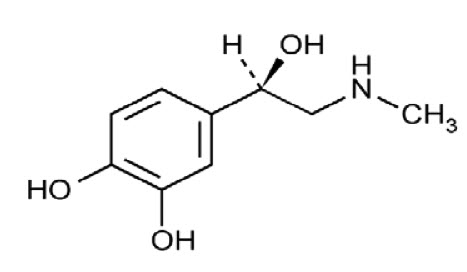
Brand names
Adrenalin (epinephrine in sodium chloride)
Active ingredients
EPINEPHRINE
Indications
1. INDICATIONS AND USAGE Adrenalin ® is a non-selective alpha and beta adrenergic agonist indicated to: Increase mean arterial blood pressure in adult patients with hypotension associated with septic shock ( 1.1 ) 1.1. Hypotension associated with Septic Shock Adrenalin is indicated to increase mean arterial blood pressure in adult patients with hypotension associated with septic shock.
Dosage
2. DOSAGE AND ADMINISTRATION No further dilution prior to infusion is required ( 2.1 ) Infuse epinephrine into a large vein ( 2.2 ) Titrate 0.05 mcg/kg/min to 2 mcg/kg/min to achieve desired blood pressure ( 2.2 ) Wean gradually ( 2.2 ) See Full Prescribing Information for instructions on administration of the injection. 2.1. General Considerations Administration Adrenalin is a ready to administer product that requires no further dilution prior to infusion. Inspect visually for particulate matter and discoloration prior to administration; solution should be clear and colorless. Do not use if the solution is colored or cloudy, or if it contains particulate matter. Do not open the aluminum overwrap until time of use. The premixed, ready-to-use infusion bag has a single port for insertion of the infusion set only. This port should not be used to remove content from the bag or add another medication. Once the infusion bag has been connected to the infusion set, it is stable for 24 hours, as long as the bag stays connected to the infusion set. Single dose only. Discontinuation When discontinuing the infusion, reduce the flow rate gradually. Avoid abrupt withdrawal. Discard unused portion. 2.2. Hypotension associated with Septic Shock Whenever possible, give infusions of epinephrine into a large vein. Avoid using a catheter tie-in technique, because the obstruction to blood flow around the tubing may cause stasis and increased local concentration of the drug. Avoid the veins of the leg in elderly patients or in those suffering from occlusive vascular diseases. To provide hemodynamic support in septic shock associated hypotension in adult patients, the suggested dosing infusion rate of intravenously administered epinephrine is 0.05 mcg/kg/min to 2 mcg/kg/min and is titrated to achieve a desired mean arterial pressure (MAP). The dosage may be adjusted periodically, such as every 10 to 15 minutes, in increments of 0.05 mcg/kg/min to 0.2 mcg/kg/min, to achieve the desired blood pressure goal. After hemodynamic stabilization, wean incrementally over time, such as by decreasing doses of epinephrine every 10 minutes to determine if the patient can tolerate gradual withdrawal.
Warnings
5. WARNINGS AND PRECAUTIONS Monitor blood pressure frequently ( 5.1 ) Increases cardiac output and causes peripheral vasoconstriction ( 5.2 ) May induce cardiac arrhythmias and myocardial ischemia. ( 5.3 ) Avoid extravasation into tissues, which can cause local necrosis ( 5.4 ) May aggravate angina pectoris or produce ventricular arrhythmias ( 5.5 ) Constricts Renal blood vessels which may result in oliguria or renal impairment ( 5.5 ) 5.1. Hypertension Because individual response to epinephrine may vary significantly, monitor blood pressure frequently and titrate to avoid excessive increases in blood pressure. Patients receiving monoamine oxidase inhibitors (MAOI) or antidepressants of the triptyline or imipramine types may experience severe, prolonged hypertension when given epinephrine. 5.2. Pulmonary Edema Epinephrine increases cardiac output and causes peripheral vasoconstriction, which may result in pulmonary edema. 5.3. Cardiac Arrhythmias and Ischemia Epinephrine may induce cardiac arrhythmias and myocardial ischemia in patients, especially patients suffering from coronary artery disease, or cardiomyopathy. 5.4. Extravasation and Tissue Necrosis with Intravenous Infusion Avoid extravasation of epinephrine into the tissues, to prevent local necrosis. When Adrenalin is administered intravenously, check the infusion site frequently for free flow. Blanching along the course of the infused vein, sometimes without obvious extravasation, may be attributed to vasa vasorum constriction with increased permeability of the vein wall, permitting some leakage. This also may progress on rare occasions to superficial slough. Hence, if blanching occurs, consider changing the infusion site at intervals to allow the effects of local vasoconstriction to subside. There is potential for gangrene in a lower extremity when infusions of catecholamine are given in an ankle vein. Antidote for Extravasation Ischemia : To prevent sloughing and necrosis in areas in which extravasation has taken place, infiltrate the area with 10 mL to 15 mL of saline solution containing from 5 mg to 10 mg of phentolamine , an adrenergic blocking agent. Use a syringe with a fine hypodermic needle, with the solution being infiltrated liberally throughout the area, which is easily identified by its cold, hard, and pallid appearance. Sympathetic blockade with phentolamine causes immediate and conspicuous local hyperemic changes if the area is infiltrated within 12 hours. 5.5. Renal Impairment Epinephrine constricts renal blood vessels, which may result in oliguria or renal impairment.
Contraindications
4. CONTRAINDICATIONS None. None ( 4 )
Drug interactions
7. DRUG INTERACTIONS Drugs that counter the pressor effects of epinephrine include alpha blockers, vasodilators such as nitrates, diuretics, antihypertensives and ergot alkaloids. ( 7.1 ) Drugs that potentiate the effects of epinephrine include sympathomimetics, beta blockers, tricyclic antidepressants, MAO inhibitors, COMT inhibitors, clonidine, doxapram, oxytocin, levothyroxine sodium, and certain antihistamines. ( 7.2 ) Drugs that increase the arrhythmogenic potential of epinephrine include beta blockers, cyclopropane and halogenated hydrocarbon anesthetics, antihistamines, exogenous thyroid hormones, diuretics, cardiac glycosides and quinidine. Observe for development of cardiac arrhythmias. ( 7.3 ) Potassium-depleting drugs, including corticosteroids, diuretics, and theophylline, potentiate the hypokalemic effects of epinephrine. ( 7.4 ) 7.1. Drugs Antagonizing Pressor Effects of Epinephrine α-blockers, such as phentolamine Vasodilators, such as nitrates Diuretics Antihypertensives Ergot alkaloids Phenothiazine antipsychotics 7.2. Drugs Potentiating Pressor Effects of Epinephrine Sympathomimetics β-blockers, such as propranolol Tricyclic anti-depressants Monoamine oxidase (MAO) inhibitors Catechol-O-methyl transferase (COMT) inhibitors, such as entacapone Clonidine Doxapram Oxytocin 7.3. Drugs Potentiating Arrhythmogenic Effects of Epinephrine Patients who are concomitantly receiving any of the following drugs should be observed carefully for the development of cardiac arrhythmias [see Warnings and Precautions ( 5.5 ) and Adverse Reactions ( 6 )]. β-blockers, such as propranolol Cyclopropane or halogenated hydrocarbon anesthetics, such as halothane Antihistamines Thyroid hormones Diuretics Cardiac glycosides, such as digitalis glycosides Quinidine 7.4. Drugs Potentiating Hypokalemic Effects of Epinephrine Potassium depleting diuretics Corticosteroids Theophylline
Adverse reactions
6. ADVERSE REACTIONS The following adverse reactions are discussed elsewhere in labeling: Hypertension [see Warnings and Precautions ( 5.1 )] Pulmonary Edema [see Warnings and Precautions ( 5.2 )] Cardiac Arrhythmias and Ischemia [see Warnings and Precautions ( 5.3 )] Extravasation and Tissue Necrosis with Intravenous Infusion [see Warnings and Precautions ( 5.4 )] Renal Impairment [see Warnings and Precautions ( 5.5 )] The following adverse reactions associated with the infusion of epinephrine were identified in the literature. Because these reactions are reported voluntarily from a population of uncertain size, it is not always possible to estimate their frequency reliably or to establish a causal relationship to drug exposure. Cardiovascular disorders : tachycardia, supraventricular tachycardia, ventricular arrhythmias, myocardial ischemia, myocardial infarction, limb ischemia, pulmonary edema Gastrointestinal disorders : Nausea, vomiting General disorders and administrative site conditions : Chest pain, extravasation Metabolic : hypoglycemia, hyperglycemia, insulin resistance, hypokalemia, lactic acidosis Nervous system disorders : Headache, nervousness, paresthesia, tremor, stroke, central nervous system bleeding Psychiatric disorders : Excitability Renal disorders : Renal insufficiency Respiratory : Pulmonary edema, rales Skin and subcutaneous tissue disorders : Diaphoresis, pallor, piloerection, skin blanching, skin necrosis with extravasation Most common adverse reactions to systemically administered epinephrine are headache; anxiety; apprehensiveness; restlessness; tremor; weakness; dizziness; sweating; palpitations; pallor; peripheral coldness; nausea/vomiting; and/or respiratory difficulties. Arrhythmias, including fatal ventricular fibrillation, rapid rises in blood pressure producing cerebral hemorrhage, and angina have occurred. ( 6 ) To report SUSPECTED ADVERSE REACTIONS, contact Par Health at 1-800-828-9393 or FDA at 1-800-FDA-1088 or www.fda.gov/medwatch .
Mechanism of action
12.1. Mechanism of Action Epinephrine acts on both alpha and beta-adrenergic receptors. The mechanism of the rise in blood pressure is 3-fold: a direct myocardial stimulation that increases the strength of ventricular contraction (positive inotropic action), an increased heart rate (positive chronotropic action), and peripheral vasoconstriction.
NDC examples
42023-27342023-31542023-500
Indicated ICD-10 codes
Source: openFDA + RxNorm · 2026
Look up another medication