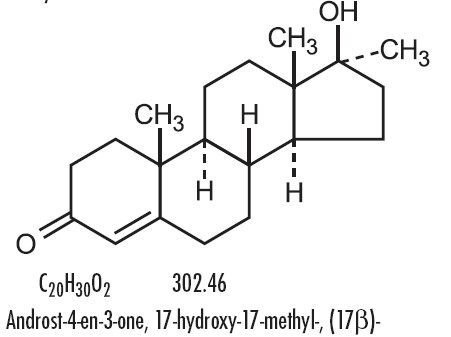
Esterified Estrogens and Methyltestosterone — Androgen [EPC]. INDICATIONS AND USAGE Esterified Estrogens and Methyltestosterone Tablets F.S. and Esterified Estrogens and Methyltestosterone Tablets H.S. are…
Boxed warning
WARNINGS 1. ESTROGENS HAVE BEEN REPORTED TO INCREASE THE RISK OF ENDOMETRIAL CARCINOMA Three independent case control studies have reported an increased risk of endometrial cancer in postmenopausal women exposed to exogenous estrogens for prolonged periods. 1-3 This risk was independent of the other known risk factors for endometrial cancer. These studies are further supported by the finding that incidence rates of endometrial cancer have increased sharply since 1969 in eight different areas of the United States with population-based cancer reporting systems, an increase which may be related to the rapidly expanding use of estrogens during the last decade. 4 The three case control studies reported that the risk of endometrial cancer in estrogen users was about 4.5 to 13.9 times greater than in nonusers. The risk appears to depend on both duration of treatment1 and on estrogen dose. 3 In view of these findings, when estrogens are used for the treatment of menopausal symptoms, the lowest dose that will control symptoms should be utilized and medication should be discontinued as soon as possible. When prolonged treatment is medically indicated, the patient should be reassessed on at least a semiannual basis to determine the need for continued therapy. Although the evidence must be considered preliminary, one study suggests that cyclic administration of low doses of estrogen may carry less risk than continuous administration, 3 it therefore appears prudent to utilize such a regimen. Close clinical surveillance of all women taking estrogens is important. In all cases of undiagnosed persistent or recurring abnormal vaginal bleeding, adequate diagnostic measures should be undertaken to rule out malignancy. There is no evidence at present that "natural" estrogens are more or less hazardous than "synthetic" estrogens at equiestrogenic doses. 2. ESTROGENS SHOULD NOT BE USED DURING PREGNANCY The use of female sex hormones, both estrogens and progestogens, during early pregnancy may seriously damage the offspring. It has been shown that females exposed in utero to diethylstilbestrol, a non-steroidal estrogen, have an increased risk of developing in later life a form of vaginal or cervical cancer that is ordinarily extremely rare. 5,6 This risk has been estimated as not greater than 4 per 1000 exposures.7 Furthermore, a high percentage of such exposed women (from 30 to 90 percent) have been found to have vaginal adenosis, 8-12 epithelial changes of the vagina and cervix. Although these changes are histologically benign, it is not known whether they are precursors of malignancy. Although similar data are not available with the use of other estrogens, it cannot be presumed they would not induce similar changes. Several reports suggest an association between intrauterine exposure to female sex hormones and congenital anomalies, including congenital heart defects and limb reduction defects. 13-16 One case control study16 estimated a 4.7 fold increased risk of limb reduction defects in infants exposed in utero to sex hormones (oral contraceptives, hormone withdrawal tests for pregnancy, or attempted treatment for threatened abortion). Some of these exposures were very short and involved only a few days of treatment. The data suggest that the risk of limb reduction defects in exposed fetuses is somewhat less than 1 per 1000. In the past, female sex hormones have been used during pregnancy in an attempt to treat threatened or habitual abortion. There is considerable evidence that estrogens are ineffective for these indications, and there is no evidence from well controlled studies that progesterones are effective for these uses. IF ESTRATEST H.S. AND ESTRATEST F.S. is used during pregnancy, or if the patient becomes pregnant while taking this drug, she should be apprised of the potential risks to the fetus, and the advisability of pregnancy continuation.
Brand names
Esterified Estrogens and MethyltestosteroneEstratest HSEstratest FSESTERIFIED ESTROGENS AND METHYLTESTOSTERONE
INDICATIONS AND USAGE Esterified Estrogens and Methyltestosterone Tablets F.S. and Esterified Estrogens and Methyltestosterone Tablets H.S. are indicated in the: • Treatment of moderate to severe vasomotor symptoms associated with the menopause in those patients not improved by estrogens alone. (There is no evidence that estrogens are effective for nervous symptoms or depression without associated vasomotor symptoms, and they should not be used to treat such conditions.) Esterified Estrogens and Methyltestosterone Tablets F.S. and Esterified Estrogens and Methyltestosterone Tablets H.S. have not been shown to be effective for any purpose during pregnancy and its use may cause severe harm to the fetus.
Dosage
DOSAGE AND ADMINISTRATION When estrogen is prescribed for a postmenopausal woman with a uterus, a progestin should also be initiated to reduce the risk of endometrial cancer. A woman without a uterus does not need progestin. Use of estrogen, alone or in combination with a progestin, should be with the lowest effective dose and for the shortest duration consistent with treatment goals and risks for the individual woman. Patients should be reevaluated periodically as clinically appropriate (e.g., 3-month to 6-month intervals) to determine if treatment is still necessary. (See BOXED WARNINGS and WARNINGS .) For women who have a uterus, adequate diagnostic measures, such as endometrial sampling, when indicated, should be undertaken to rule out malignancy in cases of undiagnosed persistent or recurring abnormal vaginal bleeding. Given cyclically for short-term use only: For treatment of moderate to severe vasomotor symptoms associated with the menopause in patients not improved by estrogen alone. The lowest dose that will control symptoms should be chosen and medication should be discontinued as promptly as possible. Administration should be cyclic (e.g., three weeks on and one week off). Attempts to discontinue or taper medication should be made at three- to six month intervals. Usual Dosage Range: 1 tablet of Esterified Estrogens and Methyltestosterone Tablets F.S or 1 to 2 tablets of Esterified Estrogens and Methyltestosterone Tablets H.S. daily as recommended by the physician. Treated patients with an intact uterus should be monitored closely for signs of endometrial cancer and appropriate diagnostic measures should be taken to rule out malignancy in the event of persistent or recurring abnormal vaginal bleeding.
Warnings
WARNINGS See BOXED WARNINGS . Warnings Associated with Estrogens Cardiovascular Disorders Estrogen and estrogen/progestin therapy has been associated with an increased risk of cardiovascular events such as myocardial infarction and stroke, as well as venous thrombosis and pulmonary embolism (venous thromboembolism or VTE). Should any of these occur or be suspected, estrogens should be discontinued immediately. Risk factors for arterial vascular disease (e.g., hypertension, diabetes mellitus, tobacco use, hypercholesterolemia, and obesity) and/or venous thromboembolism (e.g., personal history or family history of VTE, obesity, and systemic lupus erythematosus) should be managed appropriately. Coronary Heart Disease and Stroke: In the Women’s Health Initiative (WHI) study, an increase in the number of myocardial infarctions and strokes was observed in women receiving CE compared to placebo. The CE-only substudy has concluded. The impact of those results are under review. (See CLINICAL PHARMACOLOGY, Clinical Studies . ) In the CE/MPA substudy of WHI, an increased risk of coronary heart disease (CHD) events (defined as nonfatal myocardial infarction and CHD death) was observed in women receiving CE/MPA compared to women receiving placebo (37 versus 30 per 10,000 women-years). The increase in risk was observed in year 1 and persisted. In the same substudy of WHI, an increased risk of stroke was observed in women receiving CE/MPA compared to women receiving placebo (29 versus 21 per 10,000 women-years). The increase in risk was observed after the first year and persisted. In postmenopausal women with documented heart disease (n = 2,763, average age 66.7 years) a controlled clinical trial of secondary prevention of cardiovascular disease (Heart and Estrogen/Progestin Replacement Study; HERS) treatment with CE/MPA (0.625 mg/2.5 mg per day) demonstrated no cardiovascular benefit. During an average follow-up of 4.1 years, treatment with CE/MPA did not reduce the overall rate of CHD events in postmenopausal women with established coronary heart disease. There were more CHD events in the CE/MPA-treated group than in the placebo group in year 1, but not during the subsequent years. Two thousand three hundred and twenty one women from the original HERS trial agreed to participate in an open-label extension of HERS, HERS II. Average follow-up in HERS II was an additional 2.7 years, for a total of 6.8 years overall. Rates of CHD events were comparable among women in the CE/MPA group and the placebo group in HERS, HERS II, and overall. Large doses of estrogen (5 mg conjugated estrogens per day), comparable to those used to treat cancer of the prostate and breast, have been shown in a large prospective clinical trial in men to increase the risks of nonfatal myocardial infarction, pulmonary embolism, and thrombophlebitis. Venous Thromboembolism (VTE.): In the Women’s Health Initiative (WHI) study, an increase in VTE was observed in women receiving CE compared to placebo. The CE-only substudy has concluded. The impact of those results are under review. (See CLINICAL PHARMACOLOGY, Clinical Studies . ) In the CE/MPA substudy of WHI, a 2-fold greater rate of VTE, including deep venous thrombosis and pulmonary embolism, was observed in women receiving CE/MPA compared to women receiving placebo. The rate of VTE was 34 per 10,000 women-years in the CE/MPA group compared to 16 per 10,000 women-years in the placebo group. The increase in VTE risk was observed during the first year and persisted. If feasible, estrogens should be discontinued at least 4 to 6 weeks before surgery of the type associated with an increased risk of thromboembolism, or during periods of prolonged immobilization. Malignant Neoplasms Endometrial Cancer: The use of unopposed estrogens in women with intact uteri has been associated with an increased risk of endometrial cancer. The reported endometrial cancer risk among unopposed estrogen users is about 2- to 12-fold greater than in non-users, and appears dependent on duration of treatment and on estrogen dose. Most studies show no significant increased risk associated with use of estrogens for less than one year. The greatest risk appears associated with prolonged use, with increased risks of 15- to 24-fold for 5 to 10 years or more and this risk has been shown to persist for at least 8 to 15 years after estrogen therapy is discontinued. Clinical surveillance of all women taking estrogen/progestin combinations is important. Adequate diagnostic measures, including endometrial sampling when indicated, should be undertaken to rule out malignancy in all cases of undiagnosed persistent or recurring abnormal vaginal bleeding. There is no evidence that the use of natural estrogens results in a different endometrial risk profile than synthetic estrogens of equivalent estrogen dose. Adding a progestin to estrogen therapy has been shown to reduce the risk of endometrial hyperplasia, which may be a precursor to endometrial cancer. Breast Cancer: The use of estrogens and progestins by postmenopausal women has been reported to increase the risk of breast cancer. The most important randomized clinical trial providing information about this issue is the Women’s Health Initiative (WHI) substudy of CE/MPA. (See CLINICAL PHARMACOLOGY, Clinical Studies . ) The results from observational studies are generally consistent with those of the WHI clinical trial and report no significant variation in the risk of breast cancer among different estrogens or progestins, doses, or routes of administration. The CE/MPA substudy of WHI reported an increased risk of breast cancer in women who took CE/MPA for a mean follow-up of 5.6 years. Observational studies have also reported an increased risk for estrogen/progestin combination therapy, and a smaller increased risk for estrogen alone therapy, after several years of use. In the WHI trial and from observational studies, the excess risk increased with duration of use. From observational studies, the risk appeared to return to baseline in about five years after stopping treatment. In addition, observational studies suggest that the risk of breast cancer was greater, and became apparent earlier, with estrogen/progestin combination therapy as compared to estrogen alone therapy. In the CE/MPA substudy, 26% of the women reported prior use of estrogen alone and/or estrogen/progestin combination hormone therapy. After a mean follow-up of 5.6 years during the clinical trial, the overall relative risk of invasive breast cancer was 1.24 (95% confidence interval 1.01-1.54), and the overall absolute risk was 41 versus 33 cases per 10,000 women-years, for CE/MPA compared with placebo. Among women who reported prior use of hormone therapy, the relative risk of invasive breast cancer was 1.86, and the absolute risk was 46 versus 25 cases per 10,000 women-years, for CE/MPA compared with placebo. Among women who reported no prior use of hormone therapy, the relative risk of invasive breast cancer was 1.09, and the absolute risk was 40 versus 36 cases per 10,000 women-years for CE/MPA compared with placebo. In the same substudy, invasive breast cancers were larger and diagnosed at a more advanced stage in the CE/MPA group compared with the placebo group. Metastatic disease was rare with no apparent difference between the two groups. Other prognostic factors such as histologic subtype, grade and hormone receptor status did not differ between the groups. The use of estrogen plus progestin has been reported to result in an increase in abnormal mammograms requiring further evaluation. All women should receive yearly breast examinations by a healthcare provider and perform monthly breast self-examinations. In addition, mammography examinations should be scheduled based on patient age, risk factors, and prior mammogram results. Dementia In the Women’s Health Initiative Memory Study (WHIMS), 4,532 generally healthy postmenopausal women 65 years of age and older w
Contraindications
CONTRAINDICATIONS Esterified Estrogens and Methyltestosterone Tablets F.S. and Esterified Estrogens and Methyltestosterone Tablets H.S. should not be used in women with any of the following conditions: 1. Undiagnosed abnormal genital bleeding. 2. Known, suspected, or history of cancer of the breast. 3. Known or suspected estrogen-dependent neoplasia. 4. Active deep vein thrombosis, pulmonary embolism or history of these conditions. 5. Active or recent (e.g., within the past year) arterial thromboembolic disease (e.g., stroke, myocardial infarction). 6. Liver dysfunction or disease. 7. Esterified Estrogens and Methyltestosterone Tablets F.S. and Esterified Estrogens and Methyltestosterone Tablets H.S. should not be used in patients with known hypersensitivity to its ingredients. 8. Known or suspected pregnancy. There is no indication for Esterified Estrogens and Methyltestosterone Tablets F.S. and Esterified Estrogens and Methyltestosterone Tablets H.S. in pregnancy. There appears to be little or no increased risk of birth defects in children born to women who have used estrogens and progestins from oral contraceptives inadvertently during early pregnancy. (See PRECAUTIONS . ) Methyltestosterone should not be used in: 1. The presence of severe liver damage. 2. Pregnancy and in breast-feeding mothers because of the possibility of masculinization of the female fetus or breast-fed infant.
Drug interactions
Drug Interactions (Androgens) Anticoagulants: C-17 substituted derivatives of testosterone, such as methandrostenolone, have been reported to decrease the anticoagulant requirements of patients receiving oral anticoagulants. Patients receiving oral anticoagulant therapy require close monitoring, especially when androgens are started or stopped. Oxyphenbutazone: Concurrent administration of oxyphenbutazone and androgens may result in elevated serum levels of oxyphenbutazone. Insulin: In diabetic patients, the metabolic effects of androgens may decrease blood glucose and insulin requirements.
Adverse reactions
ADVERSE REACTIONS See BOXED WARNINGS , WARNINGS and PRECAUTIONS . Because clinical trials are conducted under widely varying conditions, adverse reaction rates observed in the clinical trials of a drug cannot be directly compared to rates in the clinical trials of another drug and may not reflect the rates observed in practice. The adverse reaction information from clinical trials does, however, provide a basis for identifying the adverse events that appear to be related to drug use and for approximating rates. Associated with Estrogens (See WARNINGS regarding induction of neoplasia, adverse effects on the fetus, increased incidence of gallbladder disease, and adverse effects similar to those of oral contraceptives, including thromboembolism). The following additional adverse reactions have been reported with estrogen and/or progestin therapy. Genitourinary System: Changes in vaginal bleeding pattern and abnormal withdrawal bleeding or flow; breakthrough bleeding; spotting; dysmenorrhea, increase in size of uterine leiomyomata; vaginitis, including vaginal candidiasis; change in amount of cervical secretion; changes in cervical ectropion; ovarian cancer; endometrial hyperplasia; endometrial cancer; cystitis-like syndrome. Breasts: Tenderness; enlargement; pain, nipple discharge, galactorrhea; fibrocystic breast changes; breast cancer. Cardiovascular: Deep and superficial venous thrombosis; pulmonary embolism; thrombophlebitis; myocardial infarction; stroke; increase in blood pressure. Gastrointestinal: Nausea; vomiting; abdominal cramps; bloating; cholestatic jaundice; increased incidence of gallbladder disease; pancreatitis, enlargement of hepatic hemangiomas. Skin: Chloasma or melasma that may persist when drug is discontinued; erythema multiforme; erythema nodosum; hemorrhagic eruption; loss of scalp hair; hirsutism; pruritus, rash. Eyes: Retinal vascular thrombosis, steepening of corneal curvature, intolerance to contact lenses. Central Nervous System: Headache, migraine, dizziness; mental depression; chorea; nervousness; mood disturbances; irritability; exacerbation of epilepsy, dementia. Miscellaneous: Increase or decrease in weight; reduced carbohydrate tolerance; aggravation of porphyria; edema; arthralgias; leg cramps; changes in libido; urticaria, angioedema, anaphylactoid/anaphylactic reactions; hypocalcemia; exacerbation of asthma; increased triglycerides. Associated with Methyltestosterone Endocrine and Urogenital Female: The most common side effects of androgen therapy are amenorrhea and other menstrual irregularities, inhibition of gonadotropin secretion, and virilization, including deepening of the voice and clitoral enlargement. The latter usually is not reversible after androgens are discontinued. When administered to a pregnant woman, androgens cause virilization of external genitalia of the female fetus. Skin and Appendages: Hirsutism, male pattern of baldness, and acne. Fluid and Electrolyte Disturbances: Retention of sodium, chloride, water, potassium, calcium, and inorganic phosphates. Gastrointestinal: Nausea, cholestatic jaundice, alterations in liver function test, rarely hepatocellular neoplasms, and peliosis hepatis. (See WARNINGS . ) Hematologic: Suppression of clotting factors II, V, VII, and X, bleeding in patients on concomitant anticoagulant therapy, and polycythemia. Central Nervous System: Increased or decreased libido, headache, anxiety, depression, and generalized paresthesia. Metabolic: Increased serum cholesterol. Miscellaneous: Inflammation and pain at the site of intramuscular injection or subcutaneous implantation of testosterone containing pellets, stomatitis with buccal preparations, and rarely anaphylactoid reactions.
Mechanism of action
CLINICAL PHARMACOLOGY Estrogens: Endogenous estrogens are largely responsible for the development and maintenance of the female reproductive system and secondary sexual characteristics. Although circulating estrogens exist in a dynamic equilibrium of metabolic interconversions, estradiol is the principal intracellular human estrogen and is substantially more potent than its metabolites, estrone and estriol at the receptor level. The primary source of estrogen in normally cycling adult women is the ovarian follicle, which secretes 70 to 500 mcg of estradiol daily, depending on the phase of the menstrual cycle. After menopause, most endogenous estrogen is produced by conversion of androstenedione, secreted by the adrenal cortex, to estrone by peripheral tissues. Thus, estrone and the sulfate conjugated form, estrone sulfate, are the most abundant circulating estrogens in postmenopausal women. Estrogens act through binding to nuclear receptors in estrogen-responsive tissues. To date, two estrogen receptors have been identified. These vary in proportion from tissue to tissue. Circulating estrogens modulate the pituitary secretion of the gonadotropins, luteinizing hormone (LH) and follicle stimulating hormone (FSH), through a negative feedback mechanism. Estrogens act to reduce the elevated levels of these hormones seen in postmenopausal women. Estrogen Pharmacokinetics Distribution The distribution of exogenous estrogens is similar to that of endogenous estrogens. Estrogens are widely distributed in the body and are generally found in higher concentrations in the sex hormone target organs. Estrogens circulate in the blood largely bound to sex hormone binding globulin (SHBG) and albumin. Metabolism Exogenous estrogens are metabolized in the same manner as endogenous estrogens. Circulating estrogens exist in a dynamic equilibrium of metabolic interconversions. These transformations take place mainly in the liver. Estradiol is converted reversibly to estrone, and both can be converted to estriol, which is the major urinary metabolite. Estrogens also undergo enterohepatic recirculation via sulfate and glucuronide conjugation in the liver, biliary secretion of conjugates into the intestine, and hydrolysis in the gut followed by reabsorption. In postmenopausal women, a significant proportion of the circulating estrogens exist as sulfate conjugates, especially estrone sulfate, which serves as a circulating reservoir for the formation of more active estrogens. Excretion Estradiol, estrone, and estriol are excreted in the urine along with glucuronide and sulfate conjugates. Drug Interactions In vitro and in vivo studies have shown that estrogens are metabolized partially by cytochrome P450 3A4 (CYP3A4). Therefore, inducers or inhibitors of CYP3A4 may affect estrogen drug metabolism. Inducers of CYP3A4 such as St. John’s Wort preparations (Hypericum perforatum), phenobarbital, carbamazepine, and rifampin may reduce plasma concentrations of estrogens, possibly resulting in a decrease in therapeutic effects and/or changes in the uterine bleeding profile. Inhibitors of CYP3A4 such as erythromycin, clarithromycin, ketoconazole, itraconazole, ritonavir and grapefruit juice may increase plasma concentrations of estrogens and may result in side effects. Clinical Studies Women’s Health Initiative Studies The Women’s Health Initiative (WHI) enrolled a total of 27,000 predominantly healthy postmenopausal women to assess the risks and benefits of either the use of oral 0.625 mg conjugated estrogens (CE) per day alone or the use of oral 0.625 mg conjugated estrogens plus 2.5 mg medroxyprogesterone acetate (MPA) per day compared to placebo in the prevention of certain chronic diseases. The primary endpoint was the incidence of coronary heart disease (CHD) (nonfatal myocardial infarction and CHD death), with invasive breast cancer as the primary adverse outcome studied. A “global index” included the earliest occurrence of CHD, invasive breast cancer, stroke, pulmonary embolism (PE), endometrial cancer, colorectal cancer, hip fracture, or death due to other cause. The study did not evaluate the effects of CE or CE/MPA on menopausal symptoms. The CE-only substudy has concluded. The impact of those results are under review. The CE/MPA substudy was stopped early because, according to the predefined stopping rule, the increased risk of breast cancer and cardiovascular events exceeded the specified benefits included in the “global index.” Results of the CE/MPA substudy, which included 16,608 women (average age of 63 years, range 50 to 79; 83.9% White, 6.5% Black, 5.5% Hispanic), after an average follow-up of 5.2 years are presented in Table 1 below. a adapted from JAMA , 2002; 288:321-333 b includes metastatic and non-metastatic breast cancer with the exception of in situ breast cancer c a subset of the events was combined in a “global index,” defined as the earliest occurrence of CHD events, invasive breast cancer, stroke, pulmonary embolism, endometrial cancer, colorectal cancer, hip fracture, or death due to other causes d not included in Global Index * nominal confidence intervals unadjusted for multiple looks and multiple comparisons For those outcomes included in the “global index,” the absolute excess risks per 10,000 women-years in the group treated with CE/MPA were 7 more CHD events, 8 more strokes, 8 more PEs, and 8 more invasive breast cancers, while the absolute risk reductions per 10,000 women-years were 6 fewer colorectal cancers and 5 fewer hip fractures. The absolute excess risk of events included in the “global index” was 19 per 10,000 women-years. There was no difference between the groups in terms of all-cause mortality. (See BOXED WARNINGS , WARNINGS , and PRECAUTIONS . ) Women’s Health Initiative Memory Study The Women’s Health Initiative Memory Study (WHIMS), a substudy of WHI, enrolled 4,532 predominantly healthy postmenopausal women 65 years of age and older (47% were age 65 to 69 years, 35% were 70 to 74 years, and 18% were 75 years of age and older) to evaluate the effects of CE/MPA (0.625 mg conjugated estrogens plus 2.5 mg medroxyprogesterone acetate) on the incidence of probable dementia (primary outcome) compared with placebo. After an average follow-up of 4 years, 40 women in the estrogen/progestin group (45 per 10,000 women-years) and 21 in the placebo group (22 per 10,000 women-years) were diagnosed with probable dementia. The relative risk of probable dementia in the hormone therapy group was 2.05 (95% CI, 1.21 to 3.48) compared to placebo. Differences between groups became apparent in the first year of treatment. It is unknown whether these findings apply to younger postmenopausal women. (See BOXED WARNINGS and WARNINGS, Dementia . ) Androgens: Endogenous androgens are responsible for the normal growth and development of the male sex organs and for maintenance of secondary sex characteristics. These effects include the growth and maturation of prostate, seminal vesicles, penis, and scrotum; the development of male hair distribution, such as beard, pubic, chest, and axillary hair, laryngeal enlargement, vocal cord thickening, alterations in body musculature, and fat distribution. Drugs in this class also cause retention of nitrogen, sodium, potassium, phosphorus, and decreased urinary excretion of calcium. Androgens have been reported to increase protein anabolism and decrease protein catabolism. Nitrogen balance is improved only when there is sufficient intake of calories and protein. Androgens are responsible for the growth spurt of adolescence and for the eventual termination of linear growth which is brought about by fusion of the epiphyseal growth centers. In children, exogenous androgens accelerate linear growth rates, but may cause a disproportionate advancement in bone maturation. Use over long periods may result in fusion of the epiphyseal growth centers and termination of growth process. Androgens have been reported to stimulate the produ
A drug lookup is just the start. Eleplan keeps the whole care plan in one place.
Medications, diagnoses, documents, appointments, and the whole care team — organized and always in sync, with Ellie, your AI care assistant, on top of it. Free to start.