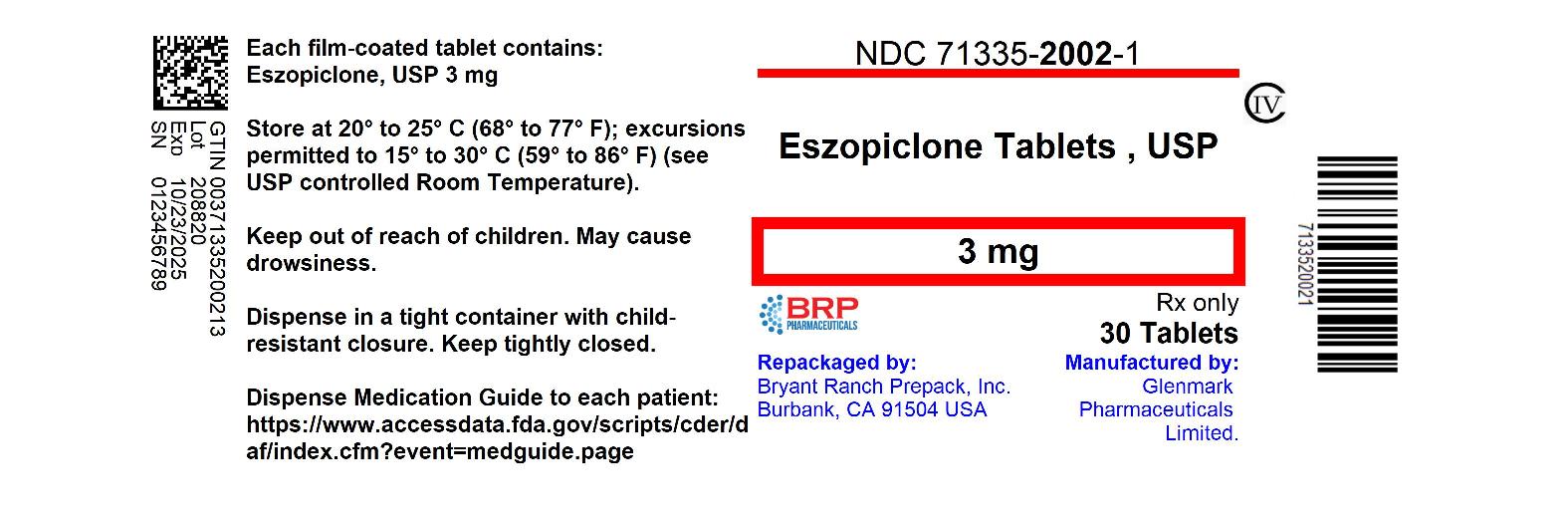
Eszopiclone. INDICATIONS AND USAGE Eszopiclone tablets are indicated for the treatment of insomnia. In controlled outpatient and sleep laboratory studies…
Boxed warning
WARNING: COMPLEX SLEEP BEHAVIORS Complex sleep behaviors including sleep-walking, sleep-driving, and engaging in other activities while not fully awake may occur following use of eszopiclone tablets. Some of these events may result in serious injuries, including death. Discontinue eszopiclone tablets immediately if a patient experiences a complex sleep behavior [see CONTRAINDICATIONS ( 4 ) and WARNINGS AND PRECAUTIONS ( 5.1 )]. WARNING: COMPLEX SLEEP BEHAVIORS See full prescribing information for complete boxed warning. Complex sleep behaviors including sleep-walking, sleep-driving, and engaging in other activities while not fully awake may occur following use of eszopiclone tablets. Some of these events may result in serious injuries, including death. Discontinue eszopiclone tablets immediately if a patient experiences a complex sleep behavior ( 4 , 5.1 ). Eszopiclone tablet is a federally controlled substance (C-IV) because it can be abused or lead to dependence. Keep eszopiclone tablets in a safe place to prevent misuse and abuse. Selling or giving away eszopiclone tablets may harm others, and is against the law. Tell your doctor if you have ever abused or been dependent on alcohol, prescription medicines or street drugs.
INDICATIONS AND USAGE Eszopiclone tablets are indicated for the treatment of insomnia. In controlled outpatient and sleep laboratory studies, eszopiclone tablets administered at bedtime decreased sleep latency and improved sleep maintenance. The clinical trials performed in support of efficacy were up to 6 months in duration. The final formal assessments of sleep latency and maintenance were performed at 4 weeks in the 6-week study (adults only), at the end of both 2-week studies (elderly only) and at the end of the 6-month study (adults only). Eszopiclone tablets are indicated for the treatment of insomnia. Eszopiclone tablets have been shown to decrease sleep latency and improve sleep maintenance ( Error! Hyperlink reference not valid. ).
Dosage
DOSAGE AND ADMINISTRATION Use the lowest effective dose for the patient. • Use the lowest dose effective for the patient ( Error! Hyperlink reference not valid. ) • Recommended initial dose is 1 mg, immediately before bedtime, with at least 7 to 8 hours remaining before the planned time of awakening. May increase dose if clinically indicated, to a maximum of 3 mg ( Error! Hyperlink reference not valid. ) • Geriatric or debilitated patients: Dose should not exceed 2 mg ( Error! Hyperlink reference not valid. ) • Patients with severe hepatic impairment, or taking potent CYP3A4 inhibitors: Dose should not exceed 2 mg ( Error! Hyperlink reference not valid. ) • Do not take with or immediately after a meal ( Error! Hyperlink reference not valid. ) 2.1 Dosage in Adults The recommended starting dose is 1 mg. Dosing can be raised to 2 mg or 3 mg if clinically indicated. In some patients, the higher morning blood levels of eszopiclone tablets following use of the 2 mg or 3 mg dose increase the risk of next day impairment of driving and other activities that require full alertness [see Warnings and Precautions ( Error! Hyperlink reference not valid. ) ]. The total dose of eszopiclone tablets should not exceed 3 mg, once daily immediately before bedtime [see Warnings and Precautions ( Error! Hyperlink reference not valid. ) ]. 2.2 Geriatric or Debilitated Patients The total dose of eszopiclone tablets should not exceed 2 mg in elderly or debilitated patients. 2.3 Patients with Severe Hepatic Impairment, or Taking Potent CYP3A4 Inhibitors In patients with severe hepatic impairment, or in patients coadministered eszopiclone tablets with potent CYP3A4 inhibitors, the total dose of eszopiclone tablets should not exceed 2 mg [see Warnings and Precautions ( Error! Hyperlink reference not valid. ) ]. 2.4 Use with CNS Depressants Dosage adjustments may be necessary when eszopiclone tablets are combined with other central nervous system (CNS) depressant drugs because of the potentially additive effects [see Warnings and Precautions ( Error! Hyperlink reference not valid. ) ]. 2.5 Administration with Food Taking eszopiclone tablets with or immediately after a heavy, high-fat meal results in slower absorption and would be expected to reduce the effect of eszopiclone tablets on sleep latency [see Clinical Pharmacology ( Error! Hyperlink reference not valid. ) ].
Warnings
WARNINGS AND PRECAUTIONS • CNS Depressant Effects Impaired alertness and motor coordination, including risk of morning impairment. Risk increases with dose and use with other CNS depressants and alcohol. Caution patients taking 3 mg dose against driving and against activities requiring complete mental alertness during the morning after use. ( 5.2 ) • Evaluate for Comborbid Diagnoses Reevaluate if insomnia persists after 7 to 10 days of use ( 5.3 ) • Severe Anaphylactic/Anaphylactoid Reactions (angioedema and anaphylaxis have been reported): Do not rechallenge if such reactions occur ( 5.4 ) • Abnormal Thinking amd Behavioral Changes including decreased inhibition, bizarre behavior, agitation and depersonalization have been reported. Immediately evaluate any new onset of behavioral changes ( 5.5 ) • Worsening of Depression or Suicidal Thinking may occur: Prescribe the least number of tablets feasible to avoid intentional overdose ( 5.5 , 5.8 ) • Withdrawal Effects Symptoms may occur with rapid dose reduction or discontinuation ( 5.6 , 9.3 ) • Elderly Patients Use lower dose due to impaired motor, cognitive performance and increased sensitivity ( 2.2 , 5.8 ) • Patients with Hepatic Impairment, Impaired Respiratory Function, Impaired Drug Metabolism or Hemodynamic Responses Use with caution ( 5.8 ) 5.1 Complex Sleep Behaviours Complex sleepbehaviors including sleep-walking, sleep-driving, and engaging in other activities while not fully awake may occur following the first or any subsequent use of eszopiclone tablet. Patients can be seriously injured or injure others during complex sleep behaviors. Such injuries may result in a fatal outcome. Other complex sleep behaviors (e.g., preparing and eating food, making phone calls, or having sex) have also been reported. Patients usually do not remember these events. Post-marketing reports have shown that complex sleep behaviors may occur with eszopiclone alone at recommended dosages, with or without the concomitant use of alcohol or other CNS depressants [see Drug Interactions (7.1) ]. Discontinue eszopiclone immediately if a patient experiences a complex sleep behavior. 5.2 CNS Depressant Effects and Next-Day Impairment Eszopiclone tablet is a CNS depressant and can impair daytime function in some patients at the higher doses (2 mg or 3 mg), even when used as prescribed. Prescribers should monitor for excess depressant effects, but impairment can occur in the absence of symptoms (or even with subjective improvement), and impairment may not be reliably detected by ordinary clinical exam (i.e., less than formal psychomotor testing). While pharmacodynamic tolerance or adaptation to some adverse depressant effects of eszopiclone tablets may develop, patients using 3 mg eszopiclone tablets should be cautioned against driving or engaging in other hazardous activities or activities requiring complete mental alertness the day after use. Additive effects occur with concomitant use of other CNS depressants (e.g., benzodiazepines, opioids, tricyclic antidepressants, alcohol), including daytime use. Downward dose adjustment of eszopiclone tablets and concomitant CNS depressants should be considered [see Dosage and Administration (2.4) ]. The use of eszopiclone tablets with other sedative-hypnotics at bedtime or the middle of the night is not recommended. The risk of next-day psychomotor impairment is increased if eszopiclone tablets are taken with less than a full night of sleep remaining (7- to 8 hours); if higher than the recommended dose is taken; if co-administered with other CNS depressants; or coadministered with other drugs that increase the blood levels of eszopiclone [see Dosage and Administration (2.3) and Clinical Studies (14.3) ]. Becauseeszopiclone tablets can cause drowsiness and a decreased level of consciousness, patients, particularly the elderly, are at higher risk of falls. 5.3 Need to Evaluate for Comborbid Diagnoses Because sleep disturbances may be the presenting manifestation of a physical and/or psychiatric disorder, symptomatic treatment of insomnia should be initiated only after a careful evaluation of the patient. The failure of insomnia to remit after 7 to 10 days of treatment may indicate the presence of a primary psychiatric and/or medical illness that should be evaluated. Worsening of insomnia or the emergence of new thinking or behavior abnormalities may be the consequence of an unrecognized psychiatric or physical disorder. Such findings have emerged during the course of treatment with sedative/hypnotic drugs, including eszopiclone tablets. Because some of the important adverse effects of eszopiclone tablets appear to be dose related, it is important to use the lowest possible effective dose, especially in the elderly [see Dosage and Administration (2.1) ]. 5.4 Severe Anaphylactic and Anaphylactoid Reactions Rare cases of angioedema involving the tongue, glottis or larynx have been reported in patients after taking the first or subsequent doses of sedative-hypnotics, including eszopiclone tablets. Some patients have had additional symptoms such as dyspnea, throat closing, or nausea and vomiting that suggest anaphylaxis. Some patients have required medical therapy in the emergency department. If angioedema involves the tongue, glottis or larynx, airway obstruction may occur and be fatal. Patients who develop angioedema after treatment with eszopiclone tablets should not be rechallenged with the drug. 5.5 Abnormal Thinking and Behavioral Changes A variety of abnormal thinking and behavior changes have been reported to occur in association with the use of sedative/hypnotics. Some of these changes may be characterized by decreased inhibition (e.g., aggressiveness and extroversion that seem out of character), similar to effects produced by alcohol and other CNS depressants. Other reported behavioral changes have included bizarre behavior, agitation, hallucinations, and depersonalization. Amnesia and other neuropsychiatric symptoms may occur unpredictably. It can rarely be determined with certainty whether a particular instance of the abnormal behaviors listed above is drug induced, spontaneous in origin, or a result of an underlying psychiatric or physical disorder. Nonetheless, the emergence of any new behavioral sign or symptom of concern requires careful and immediate evaluation. 5.6 Withdrawal Effects Following rapid dose decrease or abrupt discontinuation of the use of sedative/hypnotics, there have been reports of signs and symptoms similar to those associated with withdrawal from other CNS-depressant drugs [see Drug Abuse and Dependence (9) ]. 5.7 Timing of Drug Administration Eszopiclone tablets should be taken immediately before bedtime. Taking a sedative/hypnotic while still up and about may result in short-term memory impairment, hallucinations, impaired coordination, dizziness, and lightheadedness. 5.8 Special Populations Use in Elderly and/or Debilitated Patients Impaired motor and/or cognitive performance after repeated exposure or unusual sensitivity to sedative/hypnotic drugs is a concern in the treatment of elderly and/or debilitated patients. The dose should not exceed 2 mg in elderly or debilitated patients [see Dosage and Administration (2.2) ]. Use in Patients with Concomitant Illness Clinical experience with eszopiclone in patients with concomitant illness is limited. Eszopiclone tablets should be used with caution in patients with diseases or conditions that could affect metabolism or hemodynamic responses. A study in healthy volunteers did not reveal respiratory-depressant effects at doses 2.5-fold higher (7 mg) than the recommended dose of eszopiclone. Caution is advised, however, if eszopiclone tablets are prescribed to patients with compromised respiratory function. The dose of eszopiclone tablets should not exceed 2 mg in patients with severe hepatic impairment, because systemic exposure is doubled in such subjects. No dose adjustment appears necessary for subject
Contraindications
CONTRAINDICATIONS • tablets are contraindicated in patients who have experienced complex sleep behaviors after taking eszopiclone tablets [ ]. • Eszopiclone tablets are contraindicated in patients with known hypersensitivity to eszopiclone. Hypersensitivity reactions include anaphylaxis and angioedema [ ]. • Eszopiclone tablets are contraindicated in patients who have experienced complex sleep behaviors after taking eszopiclone tablets [ see Warnings and Precautions (5.1) ]. • Eszopiclone tablets are contraindicated in patients with known hypersensitivity to eszopiclone. Hypersensitivity reactions include anaphylaxis and angioedema [ see Warnings and Precautions ( 5.3 ) ]. • Patients who have experienced complex sleep behaviors after taking eszopiclone ( 4 ) • Known hypersensitivity to eszopiclone ( 4 )
Drug interactions
DRUG INTERACTIONS • CNS Depressants: Additive CNS-depressant effects with combination use. Use with ethanol causes additive psychomotor impairment ( Error! Hyperlink reference not valid. ) • Rifampicin: Combination use may decrease exposure and effects of eszopiclone ( Error! Hyperlink reference not valid. ) • Ketoconazole: Combination use increases exposure and effect of eszopiclone. Dose reduction of eszopiclone is needed ( Error! Hyperlink reference not valid. ) 7.1 CNS Active Drugs Ethanol: An additive effect on psychomotor performance was seen with coadministration of eszopiclone and ethanol [see Warnings and Precautions ( 5.1 , 5.2 )] . Olanzapine: Coadministration of eszopiclone and olanzapine produced a decrease in DSST scores. The interaction was pharmacodynamic; there was no alteration in the pharmacokinetics of either drug. 7.2 Drugs that Inhibit or Induce CYP3A4 Drugs that Inhibit CYP3A4 (Ketoconazole) CYP3A4 is a major metabolic pathway for elimination of eszopiclone. The exposure of eszopiclone was increased by coadministration of ketoconazole, a potent inhibitor of CYP3A4. Other strong inhibitors of CYP3A4 (e.g., itraconazole, clarithromycin, nefazodone, troleandomycin, ritonavir, nelfinavir) would be expected to behave similarly. Dose reduction of eszopiclone is needed for patients co administered eszopiclone with potent CYP3A4 inhibitors [see Dosage and Administration ( Error! Hyperlink reference not valid. )]. Drugs that Induce CYP3A4 (Rifampicin) Racemic zopiclone exposure was decreased 80% by concomitant use of rifampicin, a potent inducer of CYP3A4. A similar effect would be expected with eszopiclone. Combination use with CYP3A4 inducer may decrease the exposure and effects of eszopiclone. Drug Interactions Eszopiclone is metabolized by CYP3A4 and CYP2E1 via demethylation and oxidation. There were no pharmacokinetic or pharmacodynamic interactions between eszopiclone and paroxetine. When eszopiclone was coadministered with olanzapine, no pharmacokinetic interaction was detected in levels of eszopiclone or olanzapine, but a pharmacodynamic interaction was seen on a measure of psychomotor function. Eszopiclone and lorazepam decreased each other’s C max by 22%. Coadministration of eszopiclone 3 mg to subjects receiving ketoconazole, a potent inhibitor of CYP3A4, 400 mg daily for 5 days, resulted in a 2.2-fold increase in exposure to eszopiclone. C max and t 1/2 were increased 1.4-fold and 1.3-fold, respectively. Eszopiclone would not be expected to alter the clearance of drugs metabolized by common CYP450 enzymes [see Warnings and Precautions ( Error! Hyperlink reference not valid. ), Dosage and Administration ( Error! Hyperlink reference not valid. )] . Paroxetine: Coadministration of single dose of eszopiclone and paroxetine produced no pharmacokinetic or pharmacodynamic interaction. The lack of a drug interaction following single-dose administration does not predict the complete absence of a pharmacodynamic effect following chronic administration. Lorazepam: Coadministration of single doses of eszopiclone and lorazepam did not have clinically relevant effects on the pharmacodynamics or pharmacokinetics of either drug. The lack of a drug interaction following single-dose administration does not predict the complete absence of a pharmacodynamic effect following chronic administration.
Adverse reactions
ADVERSE REACTIONS The following are described in more detail in the Warnings and Precautions section of the label: • Complex Sleep Behaviors [see Boxed Warning and Warnings and Precautions (5.1) ] • CNS Depressant Effects and Next-Day Impairment [see Warnings and Precautions (5.2) ] • Need to Evaluate for Comorbid Diagnoses [see Warnings and Precautions (5.3) ] • Severe Anaphylactic and Anaphylactoid Reactions [see Warnings and Precautions (5.4) ] • Abnormal Thinking and Behavioral Changes [see Warnings and Precautions (5.5) ] • Withdrawal Effects [see Warnings and Precautions (5.6) ] • Timing of Drug Administration [see Warnings and Precautions (5.7) ] • Special Populations [see Warnings and Precautions (5.8) ] Because clinical trials are conducted under widely varying conditions, adverse reaction rates observed in the clinical trials of a drug cannot be directly compared to rates in the clinical trials of another drug and may not reflect the rates observed in clinical practice. The premarketing development program for eszopiclone tablets included eszopiclone exposures in patients and/or normal subjects from two different groups of studies: approximately 400 normal subjects in clinical pharmacology/pharmacokinetic studies, and approximately 1550 patients in placebo-controlled clinical effectiveness studies, corresponding to approximately 263 patient-exposure years. The conditions and duration of treatment with eszopiclone tablets varied greatly and included (in overlapping categories) open-label and double-blind phases of studies, inpatients and outpatients, and short-term and longer-term exposure. Adverse reactions were assessed by collecting adverse events, results of physical examinations, vital signs, weights, laboratory analyses, and ECGs. The stated frequencies of adverse reactions represent the proportion of individuals who experienced, at least once, adverse reaction of the type listed. A reaction was considered treatment-emergent if it occurred for the first time or worsened while the patient was receiving therapy following baseline evaluation. Most commonly observed adverse reactions (incidence ≥2%) were unpleasant taste, headache, somnolence, respiratory infection, dizziness, dry mouth, rash, anxiety, hallucinations, and viral infections ( 6.1 ) To report SUSPECTED ADVERSE REACTIONS, contact Annora Pharma Private Limited at 1-866-495-1995 or FDA at 1-800-FDA-1088 or ww.fda.gov/medwatch. 6.1 Clinical Trials Experience Adverse Reactions Resulting in Discontinuation of Treatment In placebo-controlled, parallel-group clinical trials in the elderly, 3.8% of 208 patients who received placebo, 2.3% of 215 patients who received 2 mg eszopiclone tablets, and 1.4% of 72 patients who received 1 mg eszopiclone tablets discontinued treatment due to an adverse reaction. In the 6-week parallel-group study in adults, no patients in the 3 mg arm discontinued because of an adverse reaction. In the long-term 6-month study in adult insomnia patients, 7.2% of 195 patients who received placebo and 12.8% of 593 patients who received 3 mg eszopiclone tablets discontinued due to an adverse reaction. No reaction that resulted in discontinuation occurred at a rate of greater than 2%. Adverse Reactions Observed at an Incidence of ≥2% in Controlled Trials Table 1 shows the incidence of adverse reactions from a Phase 3 placebo-controlled study of eszopiclone tablets at doses of 2 or 3 mg in nonelderly adults. Treatment duration in this trial was 44 days. The table includes only reactions that occurred in 2% or more of patients treated with eszopiclone tablets 2 mg or 3 mg in which the incidence in patients treated with eszopiclone was greater than the incidence in placebo-treated patients. Table 1: Incidence (%) of Adverse Reactions in a 6-Week Placebo-Controlled Study in Nonelderly Adults with Eszopiclone Tablets 1 Adverse Reaction Placebo (n=99) Eszopiclone tablets 2 mg (n=104) Eszopiclone tablets 3 mg (n=105) Body as a Whole Headache 13 21 17 Viral Infection 1 3 3 Digestive System Dry Mouth 3 5 7 Dyspepsia 4 4 5 Nausea 4 5 4 Vomiting 1 3 0 Nervous System Anxiety 0 3 1 Confusion 0 0 3 Depression 0 4 1 Dizziness 4 5 7 Hallucinations 0 1 3 Libido Decreased 0 0 3 Nervousness 3 5 0 Somnolence 3 10 8 Respiratory System Infection 3 5 10 Skin and Appendages Rash 1 3 4 Special Senses Unpleasant Taste 3 17 34 Urogenital System Dysmenorrhea * 0 3 0 Gynecomastia ** 0 3 0 1 Reactions for which the eszopiclone tablets incidence was equal to or less than placebo are not listed on the table, but included the following: abnormal dreams, accidental injury, back pain, diarrhea, flu syndrome, myalgia, pain, pharyngitis, and rhinitis. * Gender-specific adverse reaction in females ** Gender-specific adverse reaction in males Adverse reactions from Table 1 that suggest a dose-response relationship in adults include viral infection, dry mouth, dizziness, hallucinations, infection, rash, and unpleasant taste, with this relationship clearest for unpleasant taste. Table 2 shows the incidence of adverse reactions from combined Phase 3 placebo-controlled studies of eszopiclone tablets at doses of 1 or 2 mg in elderly adults (ages 65 to 86). Treatment duration in these trials was 14 days. The table includes only reactions that occurred in 2% or more of patients treated with eszopiclone tablets 1 mg or 2 mg in which the incidence in patients treated with eszopiclone tablets was greater than the incidence in placebo-treated patients. Table 2: Incidence (%) of Adverse Reactions in Elderly Adults (Ages 65 to 86 Years) in 2-Week Placebo-Controlled Trials with Eszopiclone Tablets 1 Adverse Reactions Placebo (n=208) Eszopiclone tablets 1 mg (n=72) Eszopiclone tablets 2 mg (n=215) Body as a Whole Accidental Injury 1 0 3 Headache 14 15 13 Pain 2 4 5 Digestive System Diarrhea 2 4 2 Dry Mouth 2 3 7 Dyspepsia 2 6 2 Nervous System Abnormal Dreams 0 3 1 Dizziness 2 1 6 Nervousness 1 0 2 Neuralgia 0 3 0 Skin and Appendages Pruritus 1 4 1 Special Senses Unpleasant Taste 0 8 12 Urogenital System Urinary Tract Infection 0 3 0 1 Reactions for which the eszopiclone tablets incidence was equal to or less than placebo are not listed on the table, but included the following: abdominal pain, asthenia, nausea, rash, and somnolence. Adverse reactions from Table 2 that suggest a dose-response relationship in elderly adults include pain, dry mouth, and unpleasant taste, with this relationship again clearest for unpleasant taste. These figures cannot be used to predict the incidence of adverse reactions in the course of usual medical practice because patient characteristics and other factors may differ from those that prevailed in the clinical trials. Similarly, the cited frequencies cannot be compared with figures obtained from other clinical investigations involving different treatments, uses, and investigators. The cited figures, however, do provide the prescribing physician with some basis for estimating the relative contributions of drug and nondrug factors to the adverse reaction incidence rate in the population studied. Other Reactions Observed During the Premarketing Evaluation of Eszopiclone Tablets Following is a list of modified COSTART terms that reflect adverse reactions as defined in the introduction to the Adverse Reactions section and reported by approximately 1550 subjects treated with eszopiclone tablets at doses in the range of 1 to 3.5 mg/day during Phase 2 and 3 clinical trials throughout the United States and Canada. All reported reactions are included except those already listed in Tables 1 and 2 or elsewhere in labeling, minor reactions common in the general population, and reactions unlikely to be drug-related. Although the reactions reported occurred during treatment with eszopiclone tablets, they were not necessarily caused by it. Reactions are further categorized by body system and listed in order of decreasing frequency according to the following definitions: frequent adverse reactions are th
Mechanism of action
Mechanism of Action The precise mechanism of action of eszopiclone as a hypnotic is unknown, but its effect is believed to result from its interaction with GABA-receptor complexes at binding domains located close to or allosterically coupled to benzodiazepine receptors. Eszopiclone is a nonbenzodiazepine hypnotic that is a pyrrolopyrazine derivative of the cyclopyrrolone class with a chemical structure unrelated to pyrazolopyrimidines, imidazopyridines, benzodiazepines, barbiturates, or other drugs with known hypnotic properties. 12.3 Pharmacokinetics The pharmacokinetics of eszopiclone have been investigated in healthy subjects (adult and elderly) and in patients with hepatic disease or renal disease. In healthy subjects, the pharmacokinetic profile was examined after single doses of up to 7.5 mg and after once-daily administration of 1, 3, and 6 mg for 7 days. Eszopiclone is rapidly absorbed, with a time to peak concentration (tmax) of approximately 1 hour and a terminal-phase elimination half-life (t1/2) of approximately 6 hours. In healthy adults, eszopiclone does not accumulate with once-daily administration, and its exposure is dose-proportional over the range of 1 to 6 mg. Absorption and Distribution Eszopiclone is rapidly absorbed following oral administration. Peak plasma concentrations are achieved within approximately 1 hour after oral administration. Eszopiclone is weakly bound to plasma protein (52-59%). The large free fraction suggests that eszopiclone disposition should not be affected by drug-drug interactions caused by protein binding. The blood-to-plasma ratio for eszopiclone is less than one, indicating no selective uptake by red blood cells. Metabolism Following oral administration, eszopiclone is extensively metabolized by oxidation and demethylation. The primary plasma metabolites are (S)-zopiclone-N-oxide and (S)-N-desmethyl zopiclone; the latter compound binds to GABA receptors with substantially lower potency than eszopiclone, and the former compound shows no significant binding to this receptor. In vitro studies have shown that CYP3A4 and CYP2E1 enzymes are involved in the metabolism of eszopiclone. Eszopiclone did not show any inhibitory potential on CYP450 1A2, 2A6, 2C9, 2C19, 2D6, 2E1, and 3A4 in cryopreserved human hepatocytes. Elimination After oral administration, eszopiclone is eliminated with a mean t1/2 of approximately 6 hours. Up to 75% of an oral dose of racemic zopiclone is excreted in the urine, primarily as metabolites. A similar excretion profile would be expected for eszopiclone, the S-isomer of racemic zopiclone. Less than 10% of the orally administered eszopiclone dose is excreted in the urine as parent drug. Effect of Food In healthy adults, administration of a 3 mg dose of eszopiclone after a high-fat meal resulted in no change in AUC, a reduction in mean Cmax of 21%, and delayed tmax by approximately 1 hour. The half-life remained unchanged, approximately 6 hours. The effects of eszopiclone on sleep onset may be reduced if it is taken with or immediately after a high-fat/heavy meal. Specific Populations Age Compared with non-elderly adults, subjects 65 years and older had an increase of 41% in total exposure (AUC) and a slightly prolonged elimination of eszopiclone (t1/2 approximately 9 hours). Cmaxwas unchanged. Therefore, in elderly patients the starting dose of eszopiclone should be decreased to 1 mg and the dose should not exceed 2 mg. Gender The pharmacokinetics of eszopiclone in men and women are similar. Race In an analysis of data on all subjects participating in Phase 1 studies of eszopiclone, the pharmacokinetics for all races studied appeared similar. Hepatic impairment Pharmacokinetics of a 2 mg eszopiclone dose were assessed in 16 healthy volunteers and in 8 subjects with mild, moderate, and severe liver disease. Exposure was increased 2-fold in severely impaired patients compared with the healthy volunteers. Cmax and tmax were unchanged. No dose adjustment is necessary for patients with mild-to-moderate hepatic impairment. Dose reduction is recommended for patients with severe hepatic impairment. Eszopiclone should be used with caution in patients with hepatic impairment [see Dosage and Administration (2.3)]. Renal Impairment The pharmacokinetics of eszopiclone were studied in 24 patients with mild, moderate, or severe renal impairment. AUC and Cmax were similar in the patients compared with demographically matched healthy control subjects. No dose adjustment is necessary in patients with renal impairment, since less than 10% of the orally administered eszopiclone dose is excreted in the urine as parent drug. Drug Interactions Eszopiclone is metabolized by CYP3A4 and CYP2E1 via demethylation and oxidation. There were no pharmacokinetic or pharmacodynamic interactions between eszopiclone and paroxetine. When eszopiclone was coadministered with olanzapine, no pharmacokinetic interaction was detected in levels of eszopiclone or olanzapine, but a pharmacodynamic interaction was seen on a measure of psychomotor function. Eszopiclone and lorazepam decreased each other’s Cmax by 22%. Coadministration of eszopiclone 3 mg to subjects receiving ketoconazole, a potent inhibitor of CYP3A4, 400 mg daily for 5 days, resulted in a 2.2-fold increase in exposure to eszopiclone. Cmax and t1/2 were increased 1.4-fold and 1.3-fold, respectively. Eszopiclone would not be expected to alter the clearance of drugs metabolized by common CYP450 enzymes [see Warnings and Precautions (5.7), Dosage and Administration (2.3)]. Paroxetine: Coadministration of single dose of eszopiclone and paroxetine produced no pharmacokinetic or pharmacodynamic interaction. The lack of a drug interaction following single-dose administration does not predict the complete absence of a pharmacodynamic effect following chronic administration. Lorazepam: Coadministration of single doses of eszopiclone and lorazepam did not have clinically relevant effects on the pharmacodynamics or pharmacokinetics of either drug. The lack of a drug interaction following single-dose administration does not predict the complete absence of a pharmacodynamic effect following chronic administration. Drugs with a Narrow Therapeutic Index Digoxin: A single dose of eszopiclone 3 mg did not affect the pharmacokinetics of digoxin measured at steady state following dosing of 0.5 mg twice daily for one day and 0.25 mg daily for the next 6 days. Warfarin: Eszopiclone 3 mg administered daily for 5 days did not affect the pharmacokinetics of (R)- or (S)-warfarin, nor were there any changes in the pharmacodynamic profile (prothrombin time) following a single 25 mg oral dose of warfarin. Drugs Highly Bound to Plasma Protein Eszopiclone is not highly bound to plasma proteins (52 to 59% bound); therefore, the disposition of eszopiclone is not expected to be sensitive to alterations in protein binding. Administration of eszopiclone 3 mg to a patient taking another drug that is highly protein-bound would not be expected to cause an alteration in the free concentration of either drug.
A drug lookup is just the start. Eleplan keeps the whole care plan in one place.
Medications, diagnoses, documents, appointments, and the whole care team — organized and always in sync, with Ellie, your AI care assistant, on top of it. Free to start.