Givosiran
Managing this medication for someone you care for? Eleplan keeps diagnoses, medications and appointments in one plan.
Start free with EleplanMedication reference
Givosiran
SUBCUTANEOUS
Givosiran. INDICATIONS AND USAGE GIVLAARI is indicated for the treatment of adults with acute hepatic porphyria (AHP). GIVLAARI is an aminolevulinate synthase…
Brand names
GIVLAARI
Active ingredients
GIVOSIRAN SODIUM
Indications
INDICATIONS AND USAGE GIVLAARI is indicated for the treatment of adults with acute hepatic porphyria (AHP). GIVLAARI is an aminolevulinate synthase 1-directed small interfering RNA indicated for the treatment of adults with acute hepatic porphyria (AHP). ( 1 )
Dosage
DOSAGE AND ADMINISTRATION The recommended dose of GIVLAARI is 2.5 mg/kg once monthly by subcutaneous injection. ( 2.1 ) 2.1 Recommended Dosage The recommended dose of GIVLAARI is 2.5 mg/kg administered via subcutaneous injection once monthly. Dosing is based on actual body weight. Missed Dose Administer GIVLAARI as soon as possible after a missed dose. Resume dosing at monthly intervals following administration of the missed dose. Dose Modification for Adverse Reactions In patients with severe or clinically significant transaminase elevations, who have dose interruption and subsequent improvement, reduce the dose to 1.25 mg/kg once monthly [see Warnings and Precautions (5.2) ] . In patients who resume dosing at 1.25 mg/kg once monthly without recurrence of severe or clinically significant transaminase elevations, the dose may be increased to the recommended dose of 2.5 mg/kg once monthly. 2.2 Administration Instructions Ensure that medical support is available to appropriately manage anaphylactic reactions when administering GIVLAARI [see Warnings and Precautions (5.1) ]. GIVLAARI is intended for subcutaneous use by a healthcare professional only. Parenteral drug products should be inspected visually for particulate matter and discoloration prior to administration, whenever solution and container permit. GIVLAARI is a sterile, preservative-free, clear, colorless-to-yellow solution. It is supplied in a single-dose vial, as a ready-to-use solution that does not require additional reconstitution or dilution prior to administration. Use aseptic technique. Calculate the required volume of GIVLAARI based on the recommended weight-based dosage [see Dosage and Administration (2.1) ] . Withdraw the indicated injection volume of GIVLAARI using a 21-gauge or larger needle. Divide doses requiring volumes greater than 1.5 mL equally into multiple syringes. Replace the 21-gauge or larger needle with either a 25-gauge or 27-gauge needle with 1/2" or 5/8" needle length. Avoid having GIVLAARI on the needle tip until the needle is in the subcutaneous space. Administer injection into the abdomen, the back or side of the upper arms, or the thighs. Rotate injection sites. An injection should never be given into scar tissue or areas that are reddened, inflamed, or swollen. If injecting into the abdomen, avoid a 5 cm diameter circle around the navel. If more than one injection is needed for a single dose of GIVLAARI, the injection sites should be at least 2 cm apart from previous injection locations. Discard unused portion of the drug.
Warnings
WARNINGS AND PRECAUTIONS Anaphylactic Reaction: Ensure that medical support is available to appropriately manage anaphylactic reactions when administering GIVLAARI. Monitor for signs and symptoms. If anaphylaxis occurs, discontinue GIVLAARI and administer appropriate medical treatment. ( 5.1 ) Hepatic Toxicity: Measure liver function at baseline and periodically during treatment with GIVLAARI. Interrupt or discontinue treatment with GIVLAARI for severe or clinically significant transaminase elevations. ( 2.1 , 5.2 ) Renal Toxicity: Monitor renal function during treatment with GIVLAARI as clinically indicated. ( 5.3 ) Injection Site Reactions: May occur, including recall reactions. Monitor for reactions and manage clinically as needed. ( 5.4 ) Blood Homocysteine Increased: Measure blood homocysteine at baseline and monitor for changes during treatment with GIVLAARI. In patients with elevated blood homocysteine, consider supplementation with vitamin B6 (as monotherapy or multivitamin). ( 5.5 ) Pancreatitis: Consider acute pancreatitis as a potential diagnosis in GIVLAARI-treated patients with acute upper abdominal pain, clinically significant elevation of pancreatic enzymes and/or imaging findings of acute pancreatitis, to ensure appropriate management. ( 5.6 ) 5.1 Anaphylactic Reaction Anaphylaxis has occurred with GIVLAARI treatment (<1% of patients in clinical trials) [see Adverse Reactions (6.1) ] . Ensure that medical support is available to appropriately manage anaphylactic reactions when administering GIVLAARI. Monitor for signs and symptoms of anaphylaxis. If anaphylaxis occurs, immediately discontinue administration of GIVLAARI and institute appropriate medical treatment. 5.2 Hepatic Toxicity Transaminase elevations (ALT) of at least 3 times the upper limit of normal (ULN) were observed in 15% of patients treated with GIVLAARI in the placebo-controlled trial [see Adverse Reactions (6.1) ] . Transaminase elevations primarily occurred between 3 to 5 months following initiation of treatment. Measure liver function tests prior to initiating treatment with GIVLAARI, repeat every month during the first 6 months of treatment, and as clinically indicated thereafter. Interrupt or discontinue treatment with GIVLAARI for severe or clinically significant transaminase elevations. For resumption of dosing after interruption, see Dosage and Administration (2.1) . 5.3 Renal Toxicity Increases in serum creatinine levels and decreases in estimated glomerular filtration rate (eGFR) have been reported during treatment with GIVLAARI [see Adverse Reactions (6.1) ] . In the placebo-controlled study, 15% of the patients in the GIVLAARI arm experienced a renally-related adverse reaction. The median increase in creatinine at Month 3 was 0.07 mg/dL. Monitor renal function during treatment with GIVLAARI as clinically indicated. 5.4 Injection Site Reactions Injection site reactions have been reported in 25% of patients receiving GIVLAARI in the placebo-controlled trial. Symptoms included erythema, pain, pruritus, rash, discoloration, or swelling around the injection site. Among 12 patients with reactions, the highest severity of the reaction was mild among 11 (92%) patients and moderate in one (8%) patient. One (2%) patient experienced a single, transient, recall reaction of erythema at a prior injection site with a subsequent dose administration [see Adverse Reactions (6.1) ] . 5.5 Blood Homocysteine Increased Increases in blood homocysteine levels have occurred in patients receiving GIVLAARI [see Adverse Reactions (6.1) ] . In the ENVISION study, during the open label extension, adverse reactions of blood homocysteine increased were reported in 15 of 93 (16%) patients treated with GIVLAARI. The clinical relevance of the elevations in blood homocysteine during treatment with GIVLAARI is unknown. Measure blood homocysteine levels prior to initiating treatment and monitor for changes during treatment with GIVLAARI. In patients with elevated blood homocysteine levels, assess folate, vitamins B12 and B6. Consider treatment with a supplement containing vitamin B6 (as monotherapy or a multivitamin preparation). 5.6 Pancreatitis Cases of acute pancreatitis, some severe, have been reported in GIVLAARI-treated patients. Consider acute pancreatitis as a potential diagnosis in GIVLAARI-treated patients with signs/symptoms of acute pancreatitis including acute upper abdominal pain, clinically significant elevation of pancreatic enzymes, and/or imaging findings of acute pancreatitis, to ensure appropriate management. Consider interruption and/or discontinuation of GIVLAARI treatment for severe cases.
Contraindications
CONTRAINDICATIONS GIVLAARI is contraindicated in patients with known severe hypersensitivity to givosiran. Reactions have included anaphylaxis [see Warnings and Precautions (5.1) ]. Severe hypersensitivity to givosiran. ( 4 )
Drug interactions
DRUG INTERACTIONS Sensitive CYP1A2 and CYP2D6 Substrates: Avoid concomitant use with CYP1A2 and CYP2D6 substrates for which minimal concentration changes may lead to serious or life-threatening toxicities. ( 7.1 ) 7.1 Effect of GIVLAARI on Other Drugs Sensitive CYP1A2 and CYP2D6 Substrates Concomitant use of GIVLAARI increases the concentration of CYP1A2 or CYP2D6 substrates [see Clinical Pharmacology (12.3) ] , which may increase adverse reactions of these substrates. Avoid concomitant use of GIVLAARI with CYP1A2 or CYP2D6 substrates, for which minimal concentration changes may lead to serious or life-threatening toxicities. If concomitant use is unavoidable, decrease the CYP1A2 or CYP2D6 substrate dosage in accordance with approved product labeling.
Adverse reactions
ADVERSE REACTIONS The following clinically significant adverse reactions are discussed in greater detail in other sections of the labeling: Anaphylactic Reaction [see Warnings and Precautions (5.1) ] Transaminase Elevations [see Warnings and Precautions (5.2) ] Serum Creatinine Increase [see Warnings and Precautions (5.3) ] Injection Site Reactions [see Warnings and Precautions (5.4) ] Blood Homocysteine Increased [see Warnings and Precautions (5.5) ] Pancreatitis [see Warnings and Precautions (5.6) ] The most common adverse reactions (≥20% of patients) included nausea and injection site reactions. ( 6.1 ) To report SUSPECTED ADVERSE REACTIONS, contact Alnylam Pharmaceuticals at 1-877-256-9526 or FDA at 1-800-FDA-1088 or www.fda.gov/medwatch . 6.1 Clinical Trial Experience Because clinical trials are conducted under widely varying conditions, adverse reaction rates observed in the clinical trials of a drug cannot be directly compared to rates in the clinical trials of another drug and may not reflect the rates observed in practice. In the pivotal placebo-controlled, double-blind study (ENVISION), 48 patients received 2.5 mg/kg GIVLAARI and 46 patients received placebo, administered once monthly via subcutaneous injection for up to 6 months. Patients received GIVLAARI for a median of 5.5 months (range 2.7-6.4 months). Of these, 47 patients received ≥5 months of treatment. The most frequently occurring (≥20% incidence) adverse reactions reported in patients treated with GIVLAARI were nausea (27%) and injection site reactions (25%). Permanent discontinuation occurred in one patient due to elevated transaminases. Table 1: Adverse Reactions that Occurred at Least 5% More Frequently in Patients Treated with GIVLAARI Compared to Patients Treated with Placebo Adverse Reaction GIVLAARI N=48 N (%) Placebo N=46 N (%) Nausea 13 (27) 5 (11) Injection site reactions 12 (25) 0 Rash Grouped term includes pruritus, eczema, erythema, rash, rash pruritic, urticaria 8 (17) 2 (4) Serum creatinine increase Grouped term includes blood creatinine increased, glomerular filtration rate decreased, chronic kidney disease (decreased eGFR) 7 (15) 2 (4) Transaminase elevations 6 (13) 1 (2) Fatigue 5 (10) 2 (4) Adverse reactions observed at a lower frequency occurring in placebo-controlled and open-label clinical studies included anaphylactic reaction (one patient, 0.9%) and hypersensitivity (one patient, 0.9%). In the ENVISION study, during the open label extension, adverse reactions of blood homocysteine increased were reported in 15 of 93 (16%) patients treated with GIVLAARI [see Warnings and Precautions (5.5) ]. 6.2 Immunogenicity As with all oligonucleotides, there is a potential for immunogenicity. The detection of antibody formation is highly dependent on the sensitivity and specificity of the assay. Additionally, the observed incidence of antibody (including neutralizing antibody) positivity in an assay may be influenced by several factors, including assay methodology, sample handling, timing of sample collection, concomitant medications, and underlying disease. For these reasons, comparison of the incidence of antibodies in the studies described below with the incidence of antibodies in other studies or to other products may be misleading. In placebo-controlled and open-label clinical studies, 1 of 111 patients with AHP (0.9%) developed treatment-emergent anti-drug antibodies (ADA) during treatment with GIVLAARI. No clinically significant differences in the clinical efficacy, safety, pharmacokinetic, or pharmacodynamic profiles of GIVLAARI were observed in the patient who tested positive for anti-givosiran antibodies. 6.3 Postmarketing Experience The following additional adverse reactions have been reported during post-approval use. Because these events are reported voluntarily from a population of uncertain size, it is generally not possible to reliably estimate their frequency or establish a causal relationship to drug exposure. Gastrointestinal Disorders: Acute pancreatitis
Mechanism of action
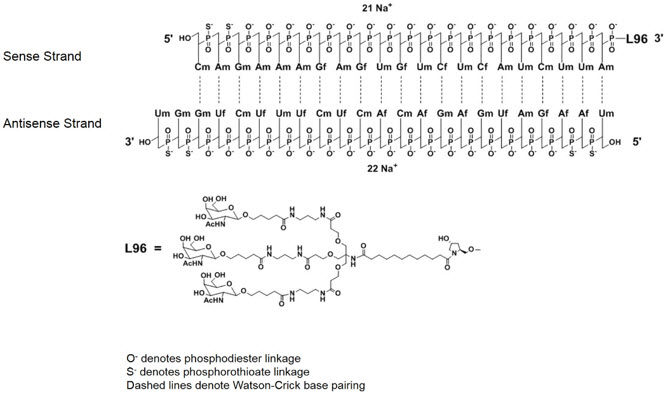
Mechanism of Action Givosiran is a double-stranded small interfering RNA that causes degradation of aminolevulinate synthase 1 ( ALAS1 ) mRNA in hepatocytes through RNA interference, reducing the elevated levels of liver ALAS1 mRNA. This leads to reduced circulating levels of neurotoxic intermediates aminolevulinic acid (ALA) and porphobilinogen (PBG), factors associated with attacks and other disease manifestations of AHP.
Available forms (2)
NDC examples
71336-1001
Indicated ICD-10 codes
Treats these conditions
Source: openFDA + RxNorm · 2026
Look up another medication