Glycopyrronium
Managing this medication for someone you care for? Eleplan keeps diagnoses, medications and appointments in one plan.
Start free with EleplanMedication reference
Glycopyrronium
INTRAMUSCULAR · INTRAVENOUS · ORAL · TOPICAL
Glycopyrronium. INDICATIONS AND USAGE Glycopyrrolate injection is an anticholinergic indicated: in anesthesia (adult and pediatric patients) for reduction of…
Brand names
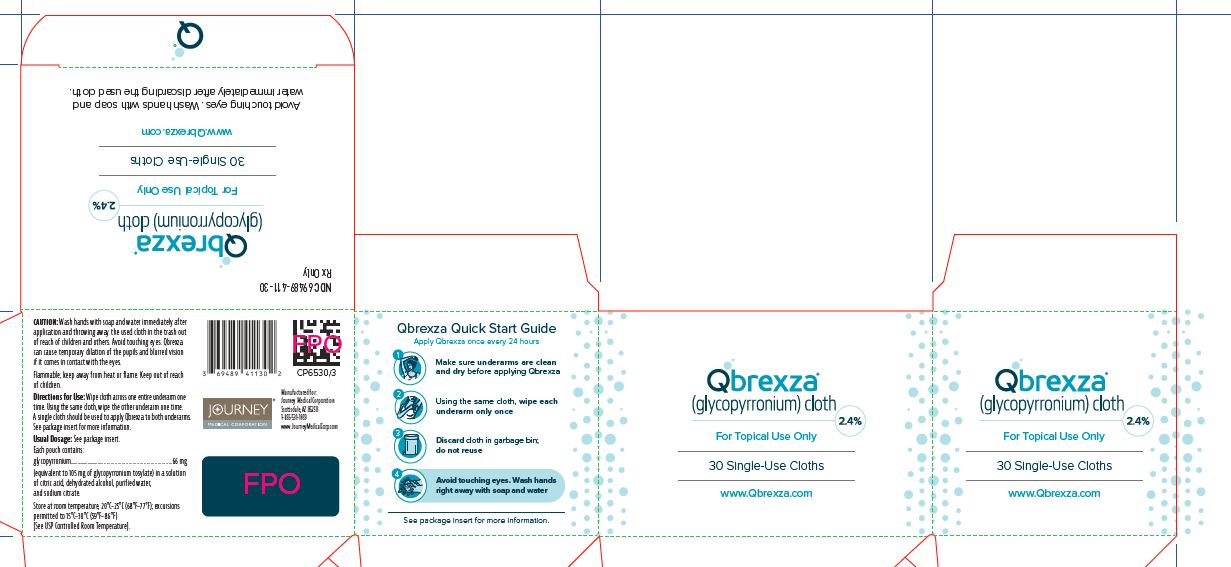
GlycopyrrolateGLYCOPYRROLATEGlycopyrrolate Oral SolutionGLYCOPYRROLATE 1MLGLYRX-PFglycopyrrolateGlycateQbrexza
Active ingredients
GLYCOPYRROLATEGLYCOPYRRONIUM TOSYLATE
Indications
INDICATIONS AND USAGE Glycopyrrolate injection is an anticholinergic indicated: in anesthesia (adult and pediatric patients) for reduction of salivary, tracheobronchial, and pharyngeal secretions, reduction of volume and acidity of gastric secretions, and blockade of cardiac inhibitory reflexes during induction of anesthesia and intubation. intraoperatively to counteract surgically or drug-induced or vagal reflex- associated arrhythmias. for protection against peripheral muscarinic effects of cholinergic agents. ( 1 ) in peptic ulcer (adults) To reduce symptoms of a peptic ulcer as an adjunct to treatment of peptic ulcer when rapid anticholinergic effect is desired or oral medication is not tolerated. Limitations of Use Glycopyrrolate injection is not indicated as monotherapy for the treatment of peptic ulcer because effectiveness in peptic ulcer healing has not been established. ( 1 ) 1.1 Preanesthetic Glycopyrrolate injection is indicated in adults and pediatric patients for reduction of salivary, tracheobronchial, and pharyngeal secretions, reduction of volume and acidity of gastric secretions, and blockade of cardiac inhibitory reflexes during induction of anesthesia and intubation. 1.2 Intraoperative Glycopyrrolate injection is indicated in adults and pediatric patients to counteract surgically or drug-induced or vagal reflex-associated arrhythmias. 1.3 Reversal of Neuromuscular Blockade Glycopyrrolate injection is indicated in adults and pediatric patients for protection against peripheral muscarinic effects of cholinergic agents such as neostigmine and pyridostigmine given to reverse the neuromuscular blockade due to non- depolarizing agents. 1.4 Peptic Ulcer Glycopyrrolate injection is indicated in adults to reduce symptoms of a peptic ulcer as an adjunct to treatment of peptic ulcer when rapid anticholinergic effect is desired or when oral medication is not tolerated. Limitations of Use Glycopyrrolate injection is not indicated as monotherapy for the treatment of peptic ulcer because effectiveness in peptic ulcer healing has not been established. 1.1 Preanesthetic Glycopyrrolate injection is indicated in adults and pediatric patients for reduction of salivary, tracheobronchial, and pharyngeal secretions, reduction of volume and acidity of gastric secretions, and blockade of cardiac inhibitory reflexes during induction of anesthesia and intubation. 1.2 Intraoperative Glycopyrrolate injection is indicated in adults and pediatric patients to counteract surgically or drug-induced or vagal reflex-associated arrhythmias. 1.3 Reversal of Neuromuscular Blockade Glycopyrrolate injection is indicated in adults and pediatric patients for protection against peripheral muscarinic effects of cholinergic agents such as neostigmine and pyridostigmine given to reverse the neuromuscular blockade due to non- depolarizing agents. 1.4 Peptic Ulcer Glycopyrrolate injection is indicated in adults to reduce symptoms of a peptic ulcer as an adjunct to treatment of peptic ulcer when rapid anticholinergic effect is desired or when oral medication is not tolerated. Limitations of Use Glycopyrrolate injection is not indicated as monotherapy for the treatment of peptic ulcer because effectiveness in peptic ulcer healing has not been established.
Dosage
DOSAGE AND ADMINISTRATION Glycopyrrolate injection may be administered intramuscularly (IM), or intravenously (IV) without dilution, in the following indications. ( 2.1 ): Adults ( 2.2 , 2.3 , 2.4 , 2.5 ) Preanesthetic Medication: 0.004 mg/kg IM, given 30 to 60 minutes prior to the anticipated time of induction of anesthesia Intraoperative Medication: single doses of 0.1 mg IV and repeated, as needed, at intervals of 2 to 3 minutes Reversal of Neuromuscular Blockade: 0.2 mg for each 1 mg of neostigmine or 5 mg of pyridostigmine Peptic Ulcer: 0.1 mg IV or IM at 4-hour intervals, 3 or 4 times daily Pediatric patients ( 2.2 , 2.3 , 2.4 ) Preanesthetic Medication: 0.004 mg/kg IM, given 30 to 60 minutes prior to the anticipated time of induction of anesthesia. Patients under 2 years of age may require up to 0.009 mg/kg Intraoperative Medication: 0.004 mg/kg IV, not to exceed 0.1 mg in a single dose and repeated, as needed, at intervals of 2 to 3 minutes Reversal of Neuromuscular Blockade: 0.2 mg IV for each 1 mg of neostigmine or 5 mg of pyridostigmine Peptic Ulcer: Glycopyrrolate injection is not indicated for the treatment of peptic ulcer in pediatric patients Do not use this prefilled syringe to administer a dose of less than 0.1 mg (0.5 mL). ( 2.2 , 2.3 , 2.4 ) 2.1 Important Dosage and Administration Instructions Dosing of this glycopyrrolate injection product is not possible in patients who require doses less than 0.1 mg because the recommended dose cannot be achieved with the supplied pre-filled syringe. For patients who require doses less than 0.1 mg, use another glycopyrrolate injection product that allows dosing of less than 0.1 mg. Parenteral drug products should be inspected visually for particulate matter and discoloration prior to administration whenever solution and container permit. Glycopyrrolate injection may be administered intramuscularly or intravenously, without dilution. Do not introduce any other fluid into the syringe at any time. Do not dilute for IV push. Do not re-sterilize the syringe. Do not use this product on a sterile field. This product is for single dose only. 2.2 Recommended Dosage of Preanesthetic Medication in Adults and Pediatric Patients The recommended dose of glycopyrrolate injection is 0.004 mg/kg by intramuscular injection, given 30 to 60 minutes prior to the anticipated time of induction of anesthesia or at the time the preanesthetic narcotic and/or sedative are administered. Patients less than 2 years of age may require up to 0.009 mg/kg. Do not use this prefilled syringe to administer a dose of less than 0.1 mg (0.5 mL). 2.3 Recommended Dosage as Intraoperative Medication to Counteract Drug-induced or Vagal Reflexes and Their Associated Arrhythmias (e.g., bradycardia) in Adults and Pediatric Patients The recommended adult dose of glycopyrrolate injection is 0.1 mg intravenously. Repeat this dose, as needed, at intervals of 2 to 3 minutes. The recommended pediatric dosage is 0.004 mg/kg intravenously, not to exceed 0.1 mg in a single dose, repeated every 2 to 3 minutes. Attempt to determine the etiology of the arrhythmia, and perform the surgical or anesthetic manipulations necessary to correct parasympathetic imbalance. Because of the long duration of action of glycopyrrolate injection if used as preanesthetic medication, additional glycopyrrolate injection for anticholinergic effect intraoperatively is rarely needed. Do not use this prefilled syringe to administer a dose of less than 0.1 mg (0.5 mL). 2.4 Recommended Dosage for Reversal of Neuromuscular Blockade in Adults and Pediatric Patients The recommended dose of glycopyrrolate injection is 0.2 mg intravenous for each 1 mg of neostigmine or 5 mg of pyridostigmine. In order to minimize the appearance of cardiac side effects, the drugs may be administered simultaneously by intravenous injection. Do not use this prefilled syringe to administer a dose of less than 0.1 mg (0.5 mL). 2.5 Recommended Dosage for Peptic Ulcer in Adults The recommended dosage of glycopyrrolate injection is 0.1 mg administered at 4-hour intervals, 3 or 4 times daily, intravenously or intramuscularly. Where more profound effect is required, 0.2 mg may be given. Some patients may need only a single dose. Frequency of administration should be dictated by patient response up to a maximum of four times daily. 2.6 Preparation and Handling Diluent Compatibilities Dextrose 5% and 10% in water, or saline, dextrose 5% in sodium chloride 0.45%, sodium chloride 0.9%, and Ringer’s Injection. Diluent Incompatibilities Lactated Ringer’s solution. Admixture Compatibilities Physical Compatibility This list does not constitute an endorsement of the clinical utility or safety of co-administration of glycopyrrolate injection with these drugs. Glycopyrrolate injection is compatible for mixing and injection with the following injectable dosage forms: atropine sulfate, USP; physostigmine salicylate; diphenhydramine HCl; codeine phosphate, USP; benz-quinamide HCl; hydromorphone HCl, USP; droperidol; levorphanol tartrate; lidocaine, USP; meperidine HCl, USP; pyridostigmine bromide; morphine sulfate, USP; nalbuphine HCl; oxymorphone HCl; procaine HCl, USP; promethazine HCl, USP; neostigmine methylsulfate, USP; scopolamine HBr, USP; butorphanol tartrate; fentanyl citrate; trimethobenzamide HCl; and hydroxyzine HCl. Glycopyrrolate injection may be administered via the tubing of a running infusion of normal saline. Admixture Incompatibilities Physical Incompatibility Because the stability of glycopyrrolate is questionable above a pH of 6.0 do not combine glycopyrrolate injection in the same syringe with methohexital Na; chloramphenicol Na succinate; dimenhydrinate; pentobarbital Na; thiopental Na; secobarbital Na; sodium bicarbonate (Abbott); Valium ® (diazepam; dexamethasone Na phosphate; or pentazocine lactate. These mixtures will result in a pH higher than 6.0 and may result in gas production or precipitation. 2.7 Instructions for Use of Prefilled Syringe INSTRUCTIONS FOR USE (1 mL and 2 mL Single-Dose Prefilled Disposable Syringes) Outer Packaging - 0.2 mg/mL Prefilled Syringe Outer Packaging - 0.4 mg/2 mL Prefilled Syringe Figure 1: Outer Packaging and Prefilled Syringe NOTES: - Do not introduce any other fluid into the syringe at any time. - Do not dilute for IV push. - Do not re-sterilize the syringe. - Do not use this product on a sterile field. - This product is for single dose only. Inspect the outer packaging to confirm the integrity of the packaging. Do not use if the outer packaging or the prefilled syringe has been damaged. Take out tray from Carton. Open the tray by peeling away the transparent cover (see Figure 2a ). Remove the syringe from the tray (see Figure 2b ). Figure 2a Figure 2b 3. Visually inspect the syringe. Parenteral drug products should be inspected visually for particulate matter and discoloration prior to administration, whenever solution and container permit. 4. Tilt the syringe tip cap back and forth (DO NOT TWIST CAP) until the cap disconnects for removal (see Figure 3a ). Figure 3a 5. Pull the cap off in a straight upward direction (see Figure 3 b ). Figure 3b 6. Expel air bubble(s). Adjust the dose (if applicable). 7. Administer the dose ensuring that pressure is maintained on the plunger rod during the entire administration. 8. Discard the used syringe into an appropriate receptacle. 1 2 1 1 1 1 1 1 2.1 Important Dosage and Administration Instructions Dosing of this glycopyrrolate injection product is not possible in patients who require doses less than 0.1 mg because the recommended dose cannot be achieved with the supplied pre-filled syringe. For patients who require doses less than 0.1 mg, use another glycopyrrolate injection product that allows dosing of less than 0.1 mg. Parenteral drug products should be inspected visually for particulate matter and discoloration prior to administration whenever solution and container permit. Glycopyrrolate injection may be administe
Warnings
WARNINGS AND PRECAUTIONS Precipitation of Acute Glaucoma: May increase intraocular pressure; if symptoms occur, discontinue use and promptly seek medical care. (4, 5.1) Partial or Complete Mechanical Intestinal Obstruction : Diarrhea may be an early symptom, especially in patients with ileostomy or colostomy. If the obstruction is suspected, discontinue use and evaluate the patient for obstruction. (4, 5.2) GI Adverse Reactions Due to Decreased GI Motility: Delayed gastric emptying, constipation, and intestinal pseudo-obstruction may occur and precipitate or aggravate paralytic ileus and toxic megacolon; not recommended for use with anticholinergics or other medications that decrease GI peristalsis. (4, 5.3, 7.1) Cognitive and Visual Adverse Reactions : May impair mental and/or physical function. Inform patients not to operate motor vehicles or perform other hazardous tasks until reasonably certain they are not adversely affected; discontinue use if signs or symptoms develop. (5.4, 7.1) Heat Prostration at High Environmental Temperatures : Heat prostration resulting in fever and heatstroke can occur, especially in geriatric patients. Avoid exposure to hot or very warm environmental temperatures. (5.5, 5.7) Other Conditions Exacerbated by Anticholinergic Adverse Reactions : Use is not recommended in patients with autonomic neuropathy, hyperthyroidism, cardiac disease, hiatal hernia, etc. (5.6, 7.1) Increased Risk of Anticholinergic Adverse Reactions in Geriatric Patients: Complications include urinary retention, bowel obstruction, heat prostration, arrhythmias, delirium, and falls or fractures. Not recommended in geriatric patients and may be contraindicated in some patients with underlying medical conditions. (4, 5.7, 8.5) 5.1 Precipitation of Acute Glaucoma Glycopyrrolate may cause increased intraocular pressure in patients with glaucoma and reduce the effects of antiglaucoma agents. Instruct patients to discontinue glycopyrrolate tablets, USP and promptly seek medical care if they experience symptoms of acute angle-closure glaucoma (pain and reddening of the eyes accompanied by dilated pupils) [see Contraindications (4) ] . 5.2 Partial or Complete Mechanical Intestinal Obstruction Glycopyrrolate may worsen intestinal mechanical obstruction, and diarrhea may be an early symptom of incomplete intestinal obstruction, especially in patients with ileostomy or colostomy. If partial or complete intestinal obstruction is suspected, discontinue the use of glycopyrrolate and evaluate for potential intestinal obstruction [see Contraindications (4) ] . 5.3 Gastrointestinal Adverse Reactions Due to Decreased Gastrointestinal Motility Glycopyrrolate reduces gastrointestinal motility and may result in delayed gastric emptying, constipation, and intestinal pseudo-obstruction and may precipitate or aggravate paralytic ileus and toxic megacolon [see Contraindications (4) ] . The risk of gastrointestinal adverse reactions is further increased with the use of other anticholinergics and other medications that decrease gastrointestinal peristalsis. Monitor patients for symptoms of decreased gastrointestinal motility. Concomitant use of Glycopyrrolate tablets, USP and other anticholinergics or other medications that decrease GI peristalsis is not recommended [see Drug Interactions (7.2) ] . 5.4 Cognitive and Visual Adverse Reactions Glycopyrrolate may produce drowsiness and blurred vision and impair the mental and/or physical abilities required for the performance of hazardous tasks such as driving a motor vehicle, operating machinery, or performing other hazardous work [see Adverse Reactions (6) ] . Concomitant use of other drugs that have anticholinergic properties may increase these effects [see Drug Interactions (7.1) ] . Inform patients not to operate motor vehicles or other dangerous machinery or perform other hazardous tasks until they are reasonably certain that glycopyrrolate tablets, USP does not affect them adversely. Discontinue Glycopyrrolate tablets, USP if signs or symptoms of cognitive or visual impairment develop. 5.5 Heat Prostration at High Environmental Temperatures In the presence of a high environmental temperature, heat prostration resulting in fever and heatstroke can occur with the use of glycopyrrolate tablets, USP due to decreased sweating, particularly in geriatric patients [see Adverse Reactions (6) ] . Advise patients to avoid exposure to hot or very warm environmental temperatures when taking glycopyrrolate tablets, USP. Glycopyrrolate tablets, USP are not recommended in geriatric patients [see Warnings and Precautions (5.7) ] . 5.6 Other Conditions Exacerbated by Anticholinergic Adverse Reactions Glycopyrrolate tablets, USP are not recommended in patients with other conditions exacerbated by anticholinergic adverse reactions (e.g., autonomic neuropathy, hyperthyroidism, cardiac disease, and hiatal hernia associated with reflux esophagitis) and in patients taking other anticholinergic medications [see Drug Interactions (7.1) ] . 5.7 Increased Risk of Anticholinergic Adverse Reactions in Geriatric Patients Geriatric patients 65 years of age and older are at increased risk of anticholinergic adverse reactions that may lead to complications of urinary retention, bowel obstruction, heat prostration, arrhythmias, delirium, and falls or fractures. Glycopyrrolate tablets USP, are not recommended in geriatric patients and may be contraindicated in some geriatric patients with underlying medical conditions [see Contraindications (4) , Warnings and Precautions (5.2, 5.5) , Adverse Reactions (6) and Use in Specific Populations (8.5) ]. 5.1 Precipitation of Acute Glaucoma Glycopyrrolate may cause increased intraocular pressure in patients with glaucoma and reduce the effects of antiglaucoma agents. Instruct patients to discontinue glycopyrrolate tablets, USP and promptly seek medical care if they experience symptoms of acute angle-closure glaucoma (pain and reddening of the eyes accompanied by dilated pupils) [see Contraindications (4) ] . 5.2 Partial or Complete Mechanical Intestinal Obstruction Glycopyrrolate may worsen intestinal mechanical obstruction, and diarrhea may be an early symptom of incomplete intestinal obstruction, especially in patients with ileostomy or colostomy. If partial or complete intestinal obstruction is suspected, discontinue the use of glycopyrrolate and evaluate for potential intestinal obstruction [see Contraindications (4) ] . 5.3 Gastrointestinal Adverse Reactions Due to Decreased Gastrointestinal Motility Glycopyrrolate reduces gastrointestinal motility and may result in delayed gastric emptying, constipation, and intestinal pseudo-obstruction and may precipitate or aggravate paralytic ileus and toxic megacolon [see Contraindications (4) ] . The risk of gastrointestinal adverse reactions is further increased with the use of other anticholinergics and other medications that decrease gastrointestinal peristalsis. Monitor patients for symptoms of decreased gastrointestinal motility. Concomitant use of Glycopyrrolate tablets, USP and other anticholinergics or other medications that decrease GI peristalsis is not recommended [see Drug Interactions (7.2) ] . 5.4 Cognitive and Visual Adverse Reactions Glycopyrrolate may produce drowsiness and blurred vision and impair the mental and/or physical abilities required for the performance of hazardous tasks such as driving a motor vehicle, operating machinery, or performing other hazardous work [see Adverse Reactions (6) ] . Concomitant use of other drugs that have anticholinergic properties may increase these effects [see Drug Interactions (7.1) ] . Inform patients not to operate motor vehicles or other dangerous machinery or perform other hazardous tasks until they are reasonably certain that glycopyrrolate tablets, USP does not affect them adversely. Discontinue Glycopyrrolate tablets, USP if signs or symptoms of cognitive or visual impairment develop. 5.5 Heat Prostration at Hi
Contraindications
CONTRAINDICATIONS Glycopyrrolate tablets are contraindicated in: Patients at risk for anticholinergic toxicity due to an underlying medical condition, including: Glaucoma [see Warnings and Precautions (5.1) ] Obstructive uropathies, including prostatic hypertrophy Mechanical obstructive diseases of the gastrointestinal tract (e.g., pyloroduodenal stenosis, strictures) [see Warnings and Precautions (5.2) ] Gastrointestinal motility disorders (e.g., achalasia, paralytic ileus, intestinal atony) [see Warnings and Precautions (5.3) ] Bleeding gastrointestinal ulcer Active inflammatory or infectious colitis which can lead to toxic megacolon History of or current toxic megacolon Myasthenia gravis Patients with a hypersensitivity to glycopyrrolate or any of the inactive ingredients in Glycopyrrolate tablet 1 mg and Glycopyrrolate tablet 2 mg [ see Adverse Reactions (6) and Description (11) ] Patients at risk for anticholinergic toxicity due to various underlying medical conditions. (4, 5.1, 5.2, 5.3) Hypersensitivity to glycopyrrolate or the inactive ingredients. (4)
Drug interactions
DRUG INTERACTIONS Other Anticholinergic Drugs: Concomitant use is not recommended. (5.3, 5.4, 5.6, 7.1) Drugs with Altered Absorption due to Decreased GI Motility : Concomitant use is not recommended. (7.2) GI Toxicity with Solid Oral Dosage Forms of Potassium Chloride : Concomitant use is not recommended. (7.3) 7.1 Other Anticholinergic Drugs There is potential for an additive interaction between glycopyrrolate and concomitantly used anticholinergic drugs (e.g., tricyclic antidepressants, anti-epileptics, class I antiarrhythmics, anti-spasmodics, amantadine) resulting in increased anticholinergic adverse reactions. Co- administration of antipsychotics with glycopyrrolate may lead to worsening of tardive dyskinesia. Glycopyrrolate tablets, USP are not recommended in patients taking other anticholinergic drugs [see Warnings and Precautions (5.3, 5.4, 5.6) ] . 7.2 Drugs with Altered Absorption due to Decreased Gastrointestinal Motility and Increased Transit Time Decreased gastrointestinal motility by glycopyrrolate may impact absorption of other drugs leading to increased or decreased drug exposure. Glycopyrrolate tablets, USP are not recommended in patients taking other drugs that are affected by altered gastrointestinal motility [see Warnings and Precautions (5.3) ] . 7.3 Gastrointestinal Toxicity with Solid Oral Dosage Forms of Potassium Chloride Oral glycopyrrolate may worsen gastrointestinal mucosal injury reported with solid oral dosage forms of potassium chloride due to decreased gastric motility and increased transit time, leading to prolonged contact with the gastrointestinal mucosa. Glycopyrrolate tablets, USP are not recommended in patients taking solid oral dosage forms of potassium chloride. 7.1 Other Anticholinergic Drugs There is potential for an additive interaction between glycopyrrolate and concomitantly used anticholinergic drugs (e.g., tricyclic antidepressants, anti-epileptics, class I antiarrhythmics, anti-spasmodics, amantadine) resulting in increased anticholinergic adverse reactions. Co- administration of antipsychotics with glycopyrrolate may lead to worsening of tardive dyskinesia. Glycopyrrolate tablets, USP are not recommended in patients taking other anticholinergic drugs [see Warnings and Precautions (5.3, 5.4, 5.6) ] . 7.2 Drugs with Altered Absorption due to Decreased Gastrointestinal Motility and Increased Transit Time Decreased gastrointestinal motility by glycopyrrolate may impact absorption of other drugs leading to increased or decreased drug exposure. Glycopyrrolate tablets, USP are not recommended in patients taking other drugs that are affected by altered gastrointestinal motility [see Warnings and Precautions (5.3) ] . 7.3 Gastrointestinal Toxicity with Solid Oral Dosage Forms of Potassium Chloride Oral glycopyrrolate may worsen gastrointestinal mucosal injury reported with solid oral dosage forms of potassium chloride due to decreased gastric motility and increased transit time, leading to prolonged contact with the gastrointestinal mucosa. Glycopyrrolate tablets, USP are not recommended in patients taking solid oral dosage forms of potassium chloride.
Adverse reactions
ADVERSE REACTIONS The following serious adverse reactions are described elsewhere in the labeling: ● Constipation or intestinal pseudo-obstruction [see Warnings and Precautions ( 5.1 )] ● Incomplete mechanical intestinal obstruction [see Warnings and Precautions ( 5.2)] The most common adverse reactions reported with glycopyrrolate oral solution are dry mouth, vomiting, constipation, flushing, and nasal congestion. The most common adverse reactions (incidence ≥30%) are dry mouth, vomiting, constipation, flushing, and nasal congestion. (6) To report SUSPECTED ADVERSE REACTIONS, contact Par Pharmaceutical Drug Safety Department at 1-800-828-9393 or FDA at 1-800-FDA-1088 or www.fda.gov/medwatch 6.1 Clinical Trials Experience Because clinical trials are conducted under widely varying conditions, adverse reaction rates observed in the clinical trials of a drug cannot be directly compared to rates in the clinical trials of another drug and may not reflect the rates observed in practice. The data described below reflect exposure to glycopyrrolate oral solution in 151 subjects, including 20 subjects who participated in an 8-week placebo-controlled study (Study 1) and 137 subjects who participated in a 24-week open-label study (six subjects who received glycopyrrolate oral solution in the placebo-controlled study and 131 new subjects). Table 2 presents adverse reactions reported by ≥ 15% of glycopyrrolate oral solution-treated subjects from the placebo-controlled clinical trial. Table 2: Adverse Reactions Occurring in ≥ 15% of Glycopyrrolate oral solution-Treated Subjects and at a Greater Frequency than Placebo in Study 1 Glycopyrrolate oral solution (N=20) n (%) Placebo (N=18) n (%) Dry Mouth 8 (40%) 2 (11%) Vomiting 8 (40%) 2 (11%) Constipation 7 (35%) 4 (22%) Flushing 6 (30%) 3 (17%) Nasal Congestion 6 (30%) 2 (11%) Headache 3 (15%) 1 (6%) Sinusitis 3 (15%) 1 (6%) Upper Respiratory Tract Infection 3 (15%) 0 Urinary Retention 3 (15%) 0 The following adverse reactions occurred at a rate of <2% of patients receiving glycopyrrolate oral solution in the open-label study. Gastrointestinal: Abdominal distention, abdominal pain, stomach discomfort, chapped lips, flatulence, retching, dry tongue General Disorders: Irritability, pain Infections: Pneumonia, sinusitis, tracheostomy infection, upper respiratory tract infection, urinary tract infection Investigations: Heart rate increase Metabolism and Nutrition: Dehydration Nervous System: Headache, convulsion, dysgeusia, nystagmus Psychiatric: Agitation, restlessness, abnormal behavior, aggression, crying, impulse control disorder, moaning, mood altered Respiratory: Increased viscosity of bronchial secretion, nasal congestion, nasal dryness Skin: Dry skin, pruritus, rash Vascular: Pallor 6.2 Postmarketing Expereince The following adverse reactions have been identified during postapproval use of other formulations of glycopyrrolate for other indications. Because these reactions are reported voluntarily from a population of uncertain size, it is not always possible to reliably estimate their frequency or establish a causal relationship to drug exposure. Additional adverse reactions identified during postapproval use of glycopyrrolate tablets include: loss of taste and suppression of lactation.
Mechanism of action
CLINICAL PHARMACOLOGY 12.1 Mechanism of Action Glycopyrrolate is a competitive inhibitor of acetylcholine receptors that are located on certain peripheral tissues, including salivary glands. Glycopyrrolate indirectly reduces the rate of salivation by preventing the stimulation of these receptors. 12.2 Pharmacodynamics Glycopyrrolate inhibits the action of acetylcholine on salivary glands thereby reducing the extent of salivation. 12.3 Pharmacokinetics Absorption In a parallel study of children (n=6 per group) aged 7 to 14 years undergoing intraocular surgery, subjects received either intravenous (IV) or oral glycopyrrolate as a premedication. The mean absolute bioavailability of oral glycopyrrolate tablets was low (approximately 3%) and highly variable among subjects (range 1.3 to 13.3%). A similar pattern of low and variable relative bioavailability is seen in adults. Analysis of population pharmacokinetic data from normal adults and children with cerebral palsy associated chronic moderate to severe drooling failed to demonstrate linear pharmacokinetics across the dose range. In the same analysis, population estimates of the apparent oral clearance (scaled by weight in children and adults) ranged from 5.28 to 38.95 L/hr/kg for healthy adults and 8.07 to 25.65 L/hr/kg for patients with cerebral palsy, a reflection of the low and highly variable oral bioavailability of glycopyrrolate. Absorption of glycopyrrolate oral solution (fasting) was compared to that of a marketed glycopyrrolate oral tablet. The C max after oral solution administration was 23% lower compared to tablet administration and AUC 0-inf was 28% lower after oral solution administration. Mean C max after oral solution administration in the fasting state was 0.318 ng/mL, and mean AUC 0-24 was 1.74 ng·hr/mL. Mean time to maximum plasma concentration for glycopyrrolate was 3.1 hours, and mean plasma half-life was 3.0 hours. In healthy adults, a high fat meal was shown to significantly affect the absorption of glycopyrrolate oral solution (10 mL, 1 mg/5 mL). The mean C max under fed high fat meal conditions was approximately 74% lower than the C max observed under fasting conditions. Similarly, mean AUC 0-T was reduced by about 78% by the high fat meal compared with the fasting AUC 0-T . A high fat meal markedly reduces the oral bioavailability of glycopyrrolate oral solution. Therefore, glycopyrrolate oral solution should be dosed at least one hour before or two hours after meals. Pharmacokinetic results (mean ± SD) are described in Table 3. Table 3: Pharmacokinetic Parameters (mean±SD) for Glycopyrrolate Oral Solution, Fasting and Fed, in Healthy Adults C max (ng/mL) T max (hrs) AUC 0-T (ng·hr/mL) AUC 0-Inf (ng·hr/mL) T 1/2 (hrs) Fasting (n=37) 0.318 ± 0.190 3.10 ± 1.08 1.74 ± 1.07 1.81 ± 1.09 3.0 ± 1.2 Fed (n=36) 0.084 ± 0.081 2.60 ± 1.12 0.38 ± 0.14 0.46 ± 0.13 * 3.2 ± 1.1 * * n=35 Distribution After IV administration, glycopyrrolate has a mean volume of distribution in children aged 1 to 14 years of approximately 1.3 to 1.8 L/kg, with a range from 0.7 to 3.9 L/kg. In adults aged 60 to 75 years, the volume of distribution was lower (0.42 L/kg +/- 0.22). Metabolism In adult patients who underwent surgery for cholelithiasis and were given a single IV dose of tritiated glycopyrrolate, approximately 85% of total radioactivity was excreted in urine and <5% was present in T-tube drainage of bile. In both urine and bile, >80% of the radioactivity corresponded to unchanged drug. These data suggest a small proportion of IV glycopyrrolate is excreted as one or more metabolites. Elimination Approximately 65 to 80% of an IV glycopyrrolate dose was eliminated unchanged in urine in adults. In two studies, after IV administration to pediatric patients ages 1 to 14 years, mean clearance values ranged from 1.01 to 1.41 L/kg/hr (range 0.32 to 2.22 L/kg/hr). In adults, IV clearance values were 0.54 ± 0.14 L/kg/hr. Pediatrics The estimated apparent clearance of glycopyrrolate from a population pharmacokinetic analysis (scaled by weight in children and adults) of oral and IV data was found to be 13.2 L/hr/kg or 92.7 L/hr for a typical 70 kg subject. In the same population based analysis, gender was not identified as having an effect on either glycopyrrolate clearance or systemic exposure. Gender Population pharmacokinetic evaluation of adults and children administered IV or oral glycopyrrolate identified no effect of gender on glycopyrrolate clearance or systemic exposure. Race The pharmacokinetics of glycopyrrolate by race has not been characterized. Elderly Glycopyrrolate pharmacokinetics have not been characterized in the elderly. Renal Impairment In one study, glycopyrrolate 4 mcg/kg was administered intravenously in uremic patients undergoing renal transplantation surgery. Mean AUC (10.6 mcg·h/L), mean plasma clearance (0.43 L/hr/kg) and mean 3-hour urinary excretion (0.7%) for glycopyrrolate were significantly different than those of control patients (3.73 µg·h/L, 1.14 L/hr/kg, and 50%, respectively). These results suggest that elimination of glycopyrrolate is severely impaired in patients with renal failure. Hepatic Impairment Glycopyrrolate is largely renally eliminated. The pharmacokinetics of glycopyrrolate have not been evaluated in patients with hepatic impairment.
Available forms (2)
NDC examples
71288-41471288-41571872-730771335-272070010-10670756-63170756-63270756-63371335-309072887-16070700-26449884-065
Indicated ICD-10 codes
Treats these conditions
Source: openFDA + RxNorm · 2026
Look up another medication