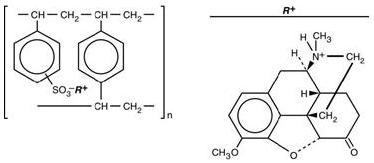
Hydrocodone Polistirex and Chlorpheniramine Polistirex
ORAL
Hydrocodone Polistirex and Chlorpheniramine Polistirex. INDICATIONS AND USAGE Hydrocodone Polistirex and Chlorpheniramine Polistirex Extended-Release Suspension is indicated for the temporary relief of…
Boxed warning
WARNING: ADDICTION, ABUSE, AND MISUSE; LIFE-THREATENING RESPIRATORY DEPRESSION; ACCIDENTAL INGESTION; MEDICATION ERRORS; CYTOCHROME P450 3A4 INTERACTION; CONCOMITANT USE WITH BENZODIAZEPINES OR OTHER CNS DEPRESSANTS; INTERACTION WITH ALCOHOL; NEONATAL OPIOID WITHDRAWAL SYNDROME WARNING: ADDICTION, ABUSE, AND MISUSE; LIFE-THREATENING RESPIRATORY DEPRESSION; ACCIDENTAL INGESTION; MEDICATION ERRORS; CYTOCHROME P450 3A4 INTERACTION; CONCOMITANT USE WITH BENZODIAZEPINES OR OTHER CNS DEPRESSANTS; INTERACTION WITH ALCOHOL; NEONATAL OPIOID WITHDRAWAL SYNDROME Addiction, Abuse, and Misuse Hydrocodone Polistirex and Chlorpheniramine Polistirex exposes patients and other users to the risks of opioid addiction, abuse, and misuse, which can lead to overdose and death. Reserve Hydrocodone Polistirex and Chlorpheniramine Polistirex for use in adult patients for whom the benefits of cough suppression are expected to outweigh the risks, and in whom an adequate assessment of the etiology of the cough has been made. Assess each patient’s risk prior to prescribing Hydrocodone Polistirex and Chlorpheniramine Polistirex, prescribe Hydrocodone Polistirex and Chlorpheniramine Polistirex for the shortest duration that is consistent with individual patient treatment goals, monitor all patients regularly for the development of addition or abuse, and refill only after reevaluation of the need for continued treatment. [ see Warnings and Precautions (5.1) ] Life-Threatening Respiratory Depression Serious, life-threatening, or fatal respiratory depression may occur with use of Hydrocodone Polistirex and Chlorpheniramine Polistirex. Monitor for respiratory depression, especially during initiation of Hydrocodone Polistirex and Chlorpheniramine Polistirex therapy or when used in patients at higher risk [ see Warnings and Precautions (5.2 ) ]. Accidental Ingestion Accidental ingestion of even one dose of Hydrocodone Polistirex and Chlorpheniramine Polistirex, especially by children, can result in a fatal overdose of hydrocodone [ see Warnings and Precautions (5.2 ) ]. Risk of Medication Errors Ensure accuracy when prescribing, dispensing, and administering Hydrocodone Polistirex and Chlorpheniramine Polistirex. Dosing errors can result in accidental overdose and death. Always use an accurate milliliter measuring device when measuring and administering Hydrocodone Polistirex and Chlorpheniramine Polistirex [ see Dosage and Administration (2.1) , Warnings and Precautions (5.5 ) ]. Cytochrome P450 3A4 Interaction The concomitant use of Hydrocodone Polistirex and Chlorpheniramine Polistirex with all cytochrome P450 3A4 inhibitors may result in an increase in hydrocodone plasma concentrations, which could increase or prolong adverse drug effects and may cause potentially fatal respiratory depression. In addition, discontinuation of a concomitantly used cytochrome P450 3A4 inducer may result in an increase in hydrocodone plasma concentration. Avoid the use of Hydrocodone Polistirex and Chlorpheniramine Polistirex in patients taking a CYP3A4 inhibitor or inducer [ see Warnings and Precautions (5.7) , Drug Interactions (7.2 , 7.3) ]. Risks from Concomitant Use with Benzodiazepines or Other CNS Depressants Concomitant use of opioids with benzodiazepines or other central nervous system (CNS) depressants, including alcohol, may result in profound sedation, respiratory depression, coma, and death. Avoid the use of Hydrocodone Polistirex and Chlorpheniramine Polistirex in patients taking benzodiazepines, other CNS depressants, or alcohol [ see Warning and Precautions (5.8) , Drug Interactions (7.5) ]. Interaction with Alcohol Instruct patients not to consume alcoholic beverages or use prescription or non-prescription products that contain alcohol while taking Hydrocodone Polistirex and Chlorpheniramine Polistirex. The co-ingestion of alcohol with Hydrocodone Polistirex and Chlorpheniramine Polistirex may result in increased plasma levels and a potentially fatal overdose of hydrocodone [ see Warnings and Precautions (5.8 ) and Drug Interactions (7.1) ]. Neonatal Opioid Withdrawal Syndrome Hydrocodone Polistirex and Chlorpheniramine Polistirex is not recommended for use in pregnant women [ see Use in Specific Populations (8.1) ]. Prolonged use of Hydrocodone Polistirex and Chlorpheniramine Polistirex during pregnancy can result in neonatal opioid withdrawal syndrome, which may be life-threatening if not recognized and treated, and requires management according to protocols developed by neonatology experts. If Hydrocodone Polistirex and Chlorpheniramine Polistirex is used for a prolonged period in a pregnant woman, advise the patient of the risk of neonatal opioid withdrawal syndrome and ensure that appropriate treatment will be available [ see Warnings and Precautions (5.13 ) ]. WARNING: ADDICTION, ABUSE, AND MISUSE; LIFE-THREATENING RESPIRATORY DEPRESSION; ACCIDENTAL INGESTION; MEDICATION ERRORS; CYTOCHROME P450 3A4 INTERACTION; CONCOMITANT USE WITH BENZODIAZEPINES OR OTHER CNS DEPRESSANTS; INTERACTION WITH ALCOHOL; NEONATAL OPIOID WITHDRAWAL SYNDROME See full prescribing information for complete boxed warning. Hydrocodone Polistirex and Chlorpheniramine Polistirex exposes users to risks of addiction, abuse, and misuse, which can lead to overdose and death. Assess patient’s risk before prescribing and monitor closely for these behaviors and conditions. ( 5.1 ) Serious, life-threatening, or fatal respiratory depression may occur. Monitor closely, especially upon initiation or when used in patients at higher risk. ( 5.2 ) Accidental ingestion of Hydrocodone Polistirex and Chlorpheniramine Polistirex, especially by children, can result in a fatal overdose of hydrocodone. ( 5.2 ) Ensure accuracy when prescribing, dispensing, and administering Hydrocodone Polistirex and Chlorpheniramine Polistirex. Dosing errors can result in accidental overdose and death. ( 2.1 , 5.5 ) Concomitant use with CYP3A4 inhibitors (or discontinuation of CYP3A4 inducers) can result in a fatal overdose of hydrocodone. Avoid the use of Hydrocodone Polistirex and Chlorpheniramine Polistirex in patients taking CYP3A4 inhibitors or inducers. ( 5.7 , 7.2 , 7.3 ) Concomitant use of opioids with benzodiazepines or other central nervous system (CNS) depressants, including alcohol, may result in profound sedation, respiratory depression, coma, and death. Avoid the use of Hydrocodone Polistirex and Chlorpheniramine Polistirex in patients taking benzodiazepines, other CNS depressants, or alcohol. ( 5.8 , 7.5 ) Instruct patients not to consume alcohol or any products containing alcohol while taking Hydrocodone Polistirex and Chlorpheniramine Polistirex because co-ingestion can result in fatal plasma hydrocodone levels. ( 5.8 , 7.1) Hydrocodone Polistirex and Chlorpheniramine Polistirex is not recommended for use in pregnant women. Prolonged use of Hydrocodone Polistirex and Chlorpheniramine Polistirex during pregnancy can result in neonatal opioid withdrawal syndrome, which may be life-threatening if not recognized and treated. If Hydrocodone Polistirex and Chlorpheniramine Polistirex is used for a prolonged period in a pregnant woman, advise the patient of the risk of neonatal opioid withdrawal syndrome and ensure that appropriate treatment will be available. ( 5.13 , 8.1 )
Brand names
Hydrocodone Polistirex and Chlorpheniramine Polistirex extended-release
INDICATIONS AND USAGE Hydrocodone Polistirex and Chlorpheniramine Polistirex Extended-Release Suspension is indicated for the temporary relief of cough and upper respiratory symptoms associated with allergy or the common cold in patients 18 years of age and older. Important Limitations of Use : • Not indicated for pediatric patients under 18 years of age [ see Use in Specific Populations (8.4 ) ]. • Contraindicated in pediatric patients less than 6 years of age [ see Contraindications (4) ]. • Because of the risks of addiction, abuse, and misuse with opioids, even at recommended doses [ see Warnings and Precautions (5.1) ], reserve Hydrocodone Polistirex and Chlorpheniramine Polistirex for use in adult patients for whomthe benefits of cough suppression are expected to outweigh the risks, and in whom an adequateassessment of the etiology of the cough has been made. Hydrocodone Polistirex and Chlorpheniramine Polistirex is a combination of hydrocodone, an opioid agonist; and chlorpheniramine, a histamine-1 (H1) receptor antagonist, indicated for the temporary relief of cough and upper respiratory symptoms associated with allergy or the common cold in patients 18 years of age and older. ( 1 ) Important Limitations of Use ( 1 ) Not indicated for pediatric patients under 18 years of age. Because of the risks of addiction, abuse, and misuse with opioids, even at recommended doses, reserve Hydrocodone Polistirex and Chlorpheniramine Polistirex for use in adult patients for whom the benefits of cough suppression are expected to outweigh the risks, and in whom an adequate assessment of the etiology of the cough has been made.
Dosage
DOSAGE AND ADMINISTRATION Adults 18 years of age and older : 5 mL every 12 hours as needed, not to exceed 2 doses (10 mL) in 24 hours. ( 2.2 ) Measure Hydrocodone Polistirex and Chlorpheniramine Polistirex with an accurate milliliter measuring device. ( 2.1 , 5.5 ) Do not increase the dose or dosing frequency. ( 2.1 ) Prescribe for the shortest duration consistent with treatment goals. (2.3 ) Reevaluate patients with unresponsive cough in 5 days or sooner for possible underlying pathology. ( 2.3 ) Reevaluate patient prior to refilling. ( 2.3 ) 2.1 Important Dosage and Administration Instructions Administer Hydrocodone Polistirex and Chlorpheniramine Polistirex Extended-Release Suspension by the oral route only. Hydrocodone Polistirex and Chlorpheniramine Polistirex Extended-Release Suspension can be taken with or without food. Shake well before using. Do not mix Hydrocodone Polistirex and Chlorpheniramine Polistirex Extended-Release Suspension with other liquids or medicines. Mixing may change how Hydrocodone Polistirex and Chlorpheniramine Polistirex Extended-Release Suspension works. Always use an accurate milliliter measuring device when administering Hydrocodone Polistirex and Chlorpheniramine Polistirex Extended-Release Suspension to ensure that the dose is measured and administered accurately. A household teaspoon is not an accurate measuring device and could lead to overdosage [ see Warnings and Precautions (5.5) ]. The dosing cup is provided with the 3 oz (70 mL) and 4 oz (115 mL) packaged product. The dosing cup fills for 2.5 mL dose and for 5 mL dose. Instruct the patient to fill to the line that the dose has been prescribed. Do not fill over the dose prescribed. Rinse the measuring cup with water after each use. For prescriptions where a measuring device is not provided, a pharmacist can provide an appropriate measuring device and can provide instructions for measuring the correct dose. Do not overfill. Rinse the measuring device with water after each use. Advise patients not to increase the dose or dosing frequency of Hydrocodone Polistirex and Chlorpheniramine Polistirex Extended-Release Suspension because serious adverse events such as respiratory depression may occur with overdosage [ see Warnings and Precautions (5.2 ) and Overdosage (10 ) ]. The dosage of Hydrocodone Polistirex and Chlorpheniramine Polistirex Extended-Release Suspension should not be increased if cough fails to respond; an unresponsive cough should be reevaluated for possible underlying pathology [ see Dosage and Administration (2.3 ) and Warnings and Precautions (5.4) ] . 2.2 Recommended Dosage Adults 18 years of age and older : 5 mL every 12 hours as needed, not to exceed 2 doses (10 mL) in 24 hours 2.3 Monitoring, Maintenance, and Discontinuation of Therapy Prescribe Hydrocodone Polistirex and Chlorpheniramine Polistirex Extended-Release Suspension for the shortest duration that is consistent with individual patient treatment goals [ see Warnings and Precautions (5.1) ]. Monitor patients closely for respiratory depression, especially within the first 24 to 72 hours of initiating therapy [ see Warnings and Precautions (5.2 ) ]. Reevaluate patients with unresponsive cough in 5 days or sooner for possible underlying pathology, such as foreign body or lower respiratory tract disease [ see Warnings and Precautions (5.4) ]. If a patient requires a refill, reevaluate the cause of the cough and assess the need for continued treatment with Hydrocodone Polistirex and Chlorpheniramine Polistirex Extended-Release Suspension, the relative incidence of adverse reactions, and the development of addiction, abuse, or misuse [ see Warnings and Precautions (5.1) ]. Do not abruptly discontinue Hydrocodone Polistirex and Chlorpheniramine Polistirex Extended-Release Suspension in a physically-dependent patient [ see Drug Abuse and Dependence (9.3 ) ]. When a patient who has been taking Hydrocodone Polistirex and Chlorpheniramine Polistirex Extended-Release Suspension regularly and may bephysically dependent no longer requires therapy with Hydrocodone Polistirex and Chlorpheniramine Polistirex Extended-Release Suspension, taper the dose gradually, by25% to 50% every 2 to 4 days, while monitoring carefully for signs and symptoms of withdrawal. If the patientdevelops these signs or symptoms, raise the dose to the previous level and taper more slowly, either byincreasing the interval between decreases, decreasing the amount of change in dose, or both.
Warnings
WARNINGS AND PRECAUTIONS See Boxed WARNINGS Life-threatening respiratory depression in patients with chronic pulmonary disease or in elderly, cachectic, or debilitated patients : Monitor closely, particularly during initiation of therapy. ( 5.4 ) Activities requiring mental alertness : Avoid engaging in hazardous tasks requiring mental alertness such as driving or operating machinery. ( 5.6 ) Risks of use in patients with head injury, impaired consciousness, increased intracranial pressure, or brain tumors : Avoid use. May increase intracranial pressure and obscure the clinical course of head injuries. ( 5.10 ) Seizures in patients with seizure disorders: Monitor during therapy. ( 5.11 ) Severe hypotension : Monitor during initiation of therapy. Avoid use in patients with circulatory shock. ( 5.12 ) Adrenal insufficiency : If diagnosed, treat with physiologic replacement of corticosteroids, and wean patient off of the opioid. ( 5.14 ) 5.1 Addiction, Abuse, and Misuse Hydrocodone Polistirex and Chlorpheniramine Polistirex contains hydrocodone, a Schedule II controlled substance. As an opioid, Hydrocodone Polistirex and Chlorpheniramine Polistirex exposes users to the risks of addiction, abuse, and misuse [ see Drug Abuse and Dependence (9 ) ], which can lead to overdose and death [ see Overdosage (10) ]. Reserve Hydrocodone Polistirex and Chlorpheniramine Polistirex Extended-Release Suspension for use in adult patients for whom the benefits of cough suppression are expected to outweigh the risks, and in whom an adequate assessment of the etiology of the cough has been made. Assess each patient’s risk prior to prescribing Hydrocodone Polistirex and Chlorpheniramine Polistirex Extended-Release Suspension, prescribe Hydrocodone Polistirex and Chlorpheniramine Polistirex Extended-Release Suspension for the shortest duration that is consistent with individual patient treatment goals, monitor all patients regularly for the development of addiction or abuse, and refill only after reevaluation of the need for continued treatment. Although the risk of addiction in any individual is unknown, it can occur in patients appropriately prescribed Hydrocodone Polistirex and Chlorpheniramine Polistirex. Addiction can occur at recommended dosages and if the drug is misused or abused. Risks are increased in patients with a personal or family history of substance abuse (including drug or alcohol abuse or addiction) or mental illness (e.g., major depression). Opioids are sought by drug abusers and people with addiction disorders and are subject to criminal diversion. Consider these risks when prescribing or dispensing Hydrocodone Polistirex and Chlorpheniramine Polistirex. Strategies to reduce these risks include prescribing the drug in the smallest appropriate quantity and advising the patient on the proper disposal of unused drug [ see Patient Counseling Information (17 ) ]. Contact local state professional licensing board or state controlled substances authority for information on how to prevent and detect abuse or diversion of this product. 5.2 Life-Threatening Respiratory Depression Serious, life-threatening, or fatal respiratory depression has been reported with the use of opioids, including hydrocodone, one of the active ingredients in Hydrocodone Polistirex and Chlorpheniramine Polistirex. Hydrocodone produces dose-related respiratory depression by directly acting on the brain stem respiratory center that controls respiratory rhythm and may produce irregular and periodic breathing. Respiratory depression, if not immediately recognized and treated, may lead to respiratory arrest and death. Management of respiratory depression includes discontinuation of Hydrocodone Polistirex and Chlorpheniramine Polistirex, close observation, supportive measures, and use of opioid antagonists (e.g. naloxone), depending on the patient’s clinical status [ see Overdosage (10) ]. Carbon dioxide (CO 2 ) retention from opioid-induced respiratory depression can exacerbate the sedating effects of opioids. While serious, life-threatening, or fatal respiratory depression can occur at any time during the use of Hydrocodone Polistirex and Chlorpheniramine Polistirex, the risk is greatest during the initiation of therapy, when Hydrocodone Polistirex and Chlorpheniramine Polistirex is used concomitantly with other drugs that may cause respiratory depression [ see Warnings and Precautions (5.8) ], in patients with chronic pulmonary disease or decreased respiratory reserve, and in patients with altered pharmacokinetics or altered clearance (e.g. elderly, cachectic, or debilitated patients) [ see Warnings and Precautions (5.4) ]. To reduce the risk of respiratory depression, proper dosing of Hydrocodone Polistirex and Chlorpheniramine Polistirex is essential [ see Dosage and Administration (2.1 ) , Warnings and Precautions (5.5 ) ]. Monitor patients closely, especially within the first 24 to 72 hours of initiating therapy or when used in patients at higher risk. Overdose of hydrocodone in adults has been associated with fatal respiratory depression, and the use of hydrocodone in children younger than 6 years of age has been associated with fatal respiratory depression when used as recommended. Accidental ingestion of even one dose of Hydrocodone Polistirex and Chlorpheniramine Polistirex, especially by children, can result in respiratory depression and death. 5.3 Risks of Use in Pediatric Populations Children are particularly sensitive to the respiratory depressant effects of hydrocodone [ see Warnings and Precautions (5.2 ) ]. Because of the risk of life-threatening respiratory depression and death, Hydrocodone Polistirex and Chlorpheniramine Polistirex is contraindicated in children less than 6 years of age [ see Contraindications (4 ) ]. Use of Hydrocodone Polistirex and Chlorpheniramine Polistirex in children also exposes them to the risks of addiction, abuse, and misuse [ see Drug Abuse and Dependence (9) ], which can lead to overdose and death [ see Warnings and Precautions (5.1 ) , Overdosage (10) ]. Because the benefits of symptomatic treatment of cough associated with allergies or thecommon cold do not outweigh the risks of use of hydrocodone in pediatric patients, Hydrocodone Polistirex and Chlorpheniramine Polistirexis not indicated for use in patients younger than 18 years of age [ see Indications (1) , Use in Specific Populations (8.4 ) ]. 5.4 Risks of Use in Other At-Risk Populations Unresponsive Cough The dosage of Hydrocodone Polistirex and Chlorpheniramine Polistirex should not be increased if cough fails to respond; an unresponsive cough should be reevaluated in 5 days or sooner for possible underlying pathology, such as foreign body or lower respiratory tract disease [ see Dosage and Administration (2.3) ]. Asthma and Other Pulmonary Disease The use of Hydrocodone Polistirex and Chlorpheniramine Polistirex in patients with acute or severe bronchial asthma in an unmonitored setting or in the absence of resuscitative equipment is contraindicated [ see Contraindications (4) ]. Opioid analgesics and antitussives, including hydrocodone, one of the active ingredients in Hydrocodone Polistirex and Chlorpheniramine Polistirex, should not be used in patients with acute febrile illness associated with productive cough or in patients with chronic respiratory disease where interference with ability to clear the tracheobronchial tree of secretions would have a deleterious effect on the patient’s respiratory function. Hydrocodone Polistirex and Chlorpheniramine Polistirex-treated patients with significant chronic obstructive pulmonary disease or corpulmonale, and those with a substantially decreased respiratory reserve, hypoxia, hypercapnia, or pre-existing respiratory depression are at increased risk of decreased respiratory drive including apnea, even at recommended dosages of Hydrocodone Polistirex and Chlorpheniramine Polistirex [ see Warnings and Precautions (5.2) ] . Elderly, Cachectic
Contraindications
CONTRAINDICATIONS Hydrocodone Polistirex and Chlorpheniramine Polistirex is contraindicated for: All children younger than 6 years of age [ see Warnings and Precautions (5.2 , 5.3 ), Use in Specific Populations (8.4) ]. Hydrocodone Polistirex and Chlorpheniramine Polistirex is also contraindicated in patients with: Significant respiratory depression [ see Warnings and Precautions (5.2) ]. Acute or severe bronchial asthma in an unmonitored setting or in the absence of resuscitative equipment[ see Warnings and Precautions (5.4) ]. Known or suspected gastrointestinal obstruction, including paralytic ileus [ see Warnings and Precautions (5.9) ]. Hypersensitivity to hydrocodone, chlorpheniramine, or any of the inactive ingredients in Hydrocodone Polistirex and Chlorpheniramine Polistirex [ see Adverse Reactions (6) ]. Children younger than 6 years of age. ( 4 ) Significant respiratory depression. ( 4 ) Acute or severe bronchial asthma in an unmonitored setting or in absence of resuscitative equipment. ( 4 ) Known or suspected gastrointestinal obstruction, including paralytic ileus.( 4 ) Hypersensitivity to hydrocodone, chlorpheniramine, or any of the inactive ingredients in Hydrocodone Polistirex and Chlorpheniramine Polistirex. ( 4 )
Drug interactions
DRUG INTERACTIONS No specific drug interaction studies have been conducted with Hydrocodone Polistirex and Chlorpheniramine Polistirex. Phenytoin : Avoid concomitant use; may increase phenytoin levels. ( 7.4 ) Serotonergic drugs : Concomitant use may result in serotonin syndrome. Discontinue if serotonin syndrome is suspected. ( 7.6 ) Monoamine Oxidase Inhibitors (MAOIs): Can potentiate the effects of hydrocodone. Avoid concomitant use in patients receiving MAOIs or within 14 days of stopping an MAOI. ( 7.7 ) Muscle relaxants : Avoid concomitant use. ( 7.8 ) Diuretics : Hydrocodone may reduce the efficacy of diuretics. Monitor for reduced effect. ( 7.9 ) Anticholinergic drugs : Concomitant use may cause paralytic ileus. ( 5.9 , 7.10 ) 7.1 Alcohol Concomitant use of alcohol with Hydrocodone Polistirex and Chlorpheniramine Polistirex can result in an increase of hydrocodone plasma levels and potentially fatal overdose of hydrocodone. Instruct patients not to consume alcoholic beverages or use prescription or nonprescription products containing alcohol while on Hydrocodone Polistirex and Chlorpheniramine Polistirex therapy [ see Warnings and Precautions (5.8) , Clinical Pharmacology (12.3) ]. 7.2 Inhibitors of CYP3A4 and CYP2D6 The concomitant use of Hydrocodone Polistirex and Chlorpheniramine Polistirex and CYP3A4 inhibitors, such as macrolide antibiotics (e.g., erythromycin), azole-antifungal agents (e.g. ketoconazole), or protease inhibitors (e.g., ritonavir), can increase the plasma concentration of hydrocodone, resulting in increased or prolonged opioid effects. These effects could be more pronounced with concomitant use of Hydrocodone Polistirex and Chlorpheniramine Polistirex and CYP2D6 and CYP3A4 inhibitors, particularly when an inhibitor is added after a stable dose of Hydrocodone Polistirex and Chlorpheniramine Polistirex is achieved [ see Warnings and Precautions (5.7 ) ]. After stopping a CYP3A4 inhibitor, as the effects of the inhibitor decline, the hydrocodone plasma concentration will decrease [ see Clinical Pharmacology (12.3 ) ], resulting in decreased opioid efficacy or a withdrawal syndrome in patients who had developed physical dependence to hydrocodone. Avoid the use of Hydrocodone Polistirex and Chlorpheniramine Polistirex while taking a CYP3A4 or CYP2D6 inhibitor. If concomitant use is necessary, monitor patients for respiratory depression and sedation at frequent intervals. 7.3 CYP3A4 Inducers The concomitant use of Hydrocodone Polistirex and Chlorpheniramine Polistirex and CYP3A4 inducers such as rifampin, carbamazepine, or phenytoin, can decrease the plasma concentration of hydrocodone [ see Clinical Pharmacology (12.3) ], resulting in decreased efficacy or onset of a withdrawal syndrome in patients who have developed physical dependence to hydrocodone [ see Warnings and Precautions (5.7) ]. After stopping a CYP3A4 inducer, as the effects of the inducer decline, the hydrocodone plasma concentration will increase [ see Clinical Pharmacology (12.3) ], which could increase or prolong both the therapeutic effects and adverse reactions, and may cause serious respiratory depression. Avoid the use of Hydrocodone Polistirex and Chlorpheniramine Polistirex in patients who are taking CYP3A4 inducers. If concomitant use of a CYP3A4 inducer is necessary, follow the patient for reduced efficacy. 7.4 Phenytoin Adverse event reports in the literature suggest a possible drug interaction involving increased serum phenytoin levels and phenytoin toxicity when chlorpheniramine and phenytoin are co-administered. The exact mechanism for this interaction is not known, however it is believed that chlorpheniramine may inhibit the hepatic metabolism of phenytoin. Avoid the use of Hydrocodone Polistirex and Chlorpheniramine Polistirex in patients who are taking phenytoin. 7.5 Benzodiazepines, and Other CNS Depressants Due to additive pharmacologic effect, the concomitant use of benzodiazepines or other CNS depressants, including alcohol, other sedatives/hypnotics, anxiolytics, tranquilizers, muscle relaxants, general anesthetics, antipsychotics, and other opioids, can increase the risk of hypotension, respiratory depression, profound sedation, coma, and death. Avoid the use of Hydrocodone Polistirex and Chlorpheniramine Polistirex in patients who are taking benzodiazepines or other CNS depressants [ see Warnings and Precautions (5.8) ], and instruct patients to avoid consumption of alcohol while on Hydrocodone Polistirex and Chlorpheniramine Polistirex [ see Drug Interactions (7.1 ) , Patient Counseling Information (17) ]. 7.6 Serotonergic Drugs The concomitant use of opioids with other drugs that affect the serotonergic neurotransmitter system has resulted in serotonin syndrome. If concomitant use is warranted, carefully observe the patient, particularly during treatment initiation. Discontinue Hydrocodone Polistirex and Chlorpheniramine Polistirex if serotonin syndrome is suspected. 7.7 Monoamine Oxidase Inhibitors (MAOIs) Avoid the use of Hydrocodone Polistirex and Chlorpheniramine Polistirex in patients who are taking monoamine oxidase inhibitors (MAOIs) or have taken MAOIs within 14 days. The use of MAOIs or tricyclic antidepressants with hydrocodone, one of the active ingredients in Hydrocodone Polistirex and Chlorpheniramine Polistirex, may increase the effect of either the antidepressant or hydrocodone. MAOI interactions with opioids may manifest as serotonin syndrome or opioid toxicity (e.g., respiratory depression, coma). 7.8 Muscle Relaxants Hydrocodone may enhance the neuromuscular blocking action of skeletal muscle relaxants and produce an increased degree of respiratory depression. Avoid the use of Hydrocodone Polistirex and Chlorpheniramine Polistirex in patients taking muscle relaxants. If concomitant use is necessary, monitor patients for signs of respiratory depression that may be greater than otherwise expected. 7.9 Diuretics Opioids can reduce the efficacy of diuretics by inducing the release of antidiuretic hormone. Monitor patients for signs of diminished diuresis and/or effects on blood pressure and increase the dosage of the diuretic as needed. 7.10 Anticholinergic Drugs The concomitant use of anticholinergic drugs with Hydrocodone Polistirex and Chlorpheniramine Polistirex may increase risk of urinary retention and/or severe constipation, which may lead to paralytic ileus [ see Warnings and Precautions (5.9) ].Monitor patients for signs of urinary retention or reduced gastric motility when Hydrocodone Polistirex and Chlorpheniramine Polistirex is used concomitantly with anticholinergic drugs. Additive adverse effects resulting from cholinergic blockade (e.g., xerostomia, blurred vision, or constipation) may occur when anticholinergic drugs are administered with chlorpheniramine.
Adverse reactions
ADVERSE REACTIONS The following serious adverse reactions are described, or described in greater detail, in other sections: • Addiction, abuse, and misuse [ see Warnings and Precautions (5.1) , Drug Abuse and Dependence (9.3) ] • Life-threatening respiratory depression [ see Warnings and Precautions (5.2 , 5.3 , 5.4 , 5.8 ), Overdosage (10) ] • Accidental overdose and death due to medication errors [ see Warnings and Precautions (5.5) ] • Decreased mental alertness with impaired mental and/or physical abilities [ see Warnings and Precautions (5.6) ] • Interactions with benzodiazepines and other CNS depressants [ see Warnings and Precautions (5.8) , Drug Interactions (7.1 , 7.5 ) ] • Paralytic ileus, gastrointestinal adverse reactions [ see Warnings and Precautions (5.9) ] • Increased intracranial pressure [ see Warnings and Precautions (5.10 ) ] • Obscured clinical course in patients with head injuries [ see Warnings and Precautions (5.10) ] • Seizures [ see Warnings and Precautions (5.11) ] • Severe hypotension [ see Warnings and Precautions (5.12) ] • Neonatal Opioid Withdrawal Syndrome [ see Warnings and Precautions (5.13) ] • Adrenal insufficiency [ see Warnings and Precautions (5.14) ] The following adverse reactions have been identified during clinical studies, in the literature, or during post-approval use of hydrocodone and/or chlorpheniramine. Because these reactions may be reported voluntarily from a population of uncertain size, it is not always possible to reliably estimate their frequency or establish a causal relationship to drug exposure. The most common adverse reactions to Hydrocodone Polistirex and Chlorpheniramine Polistirex include: Sedation (somnolence, mental clouding, lethargy), impaired mental and physical performance, lightheadedness, dizziness, headache, dry mouth, nausea, vomiting, and constipation. Other reactions include: Anaphylaxis : Anaphylaxis has been reported with hydrocodone, one of the ingredients in Hydrocodone Polistirex and Chlorpheniramine Polistirex. Body as a whole : Coma, death, fatigue, falling injuries, lethargy. Cardiovascular : Peripheral edema, increased blood pressure, decreased blood pressure, tachycardia, chest pain, palpitation, syncope, orthostatic hypotension, prolonged QT interval, hot flush. Central Nervous System : Ataxia, facial dyskinesia, insomnia, migraine, increased intracranial pressure, seizure, tremor, tinnitus, vertigo. Dermatologic : Flushing, hyperhidrosis, pruritus, rash. Endocrine/Metabolic : Cases of serotonin syndrome, a potentially life-threatening condition, have been reported during concomitant use of opioids with serotonergic drugs. Cases of adrenal insufficiency have been reported with opioid use, more often following greater than one month of use. Cases of androgen deficiency have occurred with chronic use of opioids [ see Clinical Pharmacology (12.2) ]. Gastrointestinal : Abdominal pain, bowel obstruction, decreased appetite, diarrhea, difficulty swallowing, GERD, indigestion, pancreatitis, paralytic ileus, biliary tract spasm (spasm of the sphincter of Oddi). Genitourinary : Urinary tract infection, ureteral spasm, spasm of vesicle sphincters, urinary retention. Hematologic : Agranulocytosis, aplastic anemia, and thrombocytopenia have been reported. Laboratory : Increases in serum amylase. Musculoskeletal : Arthralgia, backache, muscle spasm. Ophthalmic : Blurred vision, diplopia, miosis (constricted pupils), visual disturbances. Psychiatric : Agitation, anxiety, confusion, fear, dysphoria, depression, hallucinations. Reproductive : Hypogonadism, infertility. Respiratory : Bronchitis, cough, dyspnea, nasal congestion, nasopharyngitis, respiratory depression, sinusitis, upper respiratory tract infection, thickening of bronchial secretions, tightness of chest and wheezing, dry nose, dry throat. Other : Drug abuse, drug dependence, opioid withdrawal syndrome. Common adverse reactions include: Sedation (somnolence, mental clouding, lethargy), impaired mental and physical performance, lightheadedness, dizziness, headache, dry mouth, nausea, vomiting, and constipation (6) To report SUSPECTED ADVERSE REACTIONS, contact Cranbury Pharmaceuticals, LLC at 1-732-940-0358 or FDA at 1-800-FDA-1088 or www.fda.gov/medwatch .
Mechanism of action
Mechanism of Action Hydrocodone Hydrocodone is an opioid agonist with relative selectivity for the mu-opioid receptor, although it can interact with other opioid receptors at higher doses. The precise mechanism of action of hydrocodone and other opiates is not known; however, hydrocodone is believed to act centrally on the cough center. In excessive doses, hydrocodone will depress respiration. Chlorpheniramine Chlorpheniramine is a propylamine derivative antihistamine (H 1 -receptor antagonist) of the alkylamine class that also possesses anticholinergic and sedative activity. It prevents released histamine from dilating capillaries and causing edema of the respiratory mucosa.
A drug lookup is just the start. Eleplan keeps the whole care plan in one place.
Medications, diagnoses, documents, appointments, and the whole care team — organized and always in sync, with Ellie, your AI care assistant, on top of it. Free to start.