Ibandronate
Managing this medication for someone you care for? Eleplan keeps diagnoses, medications and appointments in one plan.
Start free with EleplanMedication reference
Ibandronate
ORAL · INTRAVENOUS
Ibandronate. INDICATIONS AND USAGE Ibandronate sodium injection is a bisphosphonate indicated for the treatment of osteoporosis in postmenopausal women. ( 1.1 )…
Brand names
IBANDRONATE SODIUMIbandronate Sodium
Active ingredients
IBANDRONATE SODIUM
Indications
INDICATIONS AND USAGE Ibandronate sodium injection is a bisphosphonate indicated for the treatment of osteoporosis in postmenopausal women. ( 1.1 ) Limitations of Use Optimal duration of use has not been determined. For patients at low-risk for fracture, consider drug discontinuation after 3 to 5 years of use ( 1.2 ) 1.1 Treatment of Postmenopausal Osteoporosis Ibandronate sodium Injection is indicated for the treatment of osteoporosis in postmenopausal women. In postmenopausal women with osteoporosis, ibandronate sodium injection increases bone mineral density (BMD) and reduces the incidence of vertebral fractures [see Clinical Studies (14) ] . 1.2 Important Limitations of Use The safety and effectiveness of ibandronate sodium injection for the treatment of osteoporosis are based on clinical data of one year duration. The optimal duration of use has not been determined. All patients on bisphosphonate therapy should have the need for continued therapy re-evaluated on a periodic basis. Patients at low-risk for fracture should be considered for drug discontinuation after 3 to 5 years of use. Patients who discontinue therapy should have their risk for fracture re-evaluated periodically.
Dosage
DOSAGE AND ADMINISTRATION 3 mg every 3 months administered intravenously over a period of 15 to 30 seconds ( 2.2 ) Dosing Instructions: Only administer intravenously by a health care professional. ( 2.1 ) Do not mix with calcium-containing solutions or other intravenously administered drugs. ( 2.1 ) Do not administer more frequently than once every 3 months. ( 2.2 ) Instruct patients to take supplemental calcium and vitamin D if dietary intake is inadequate. 2.1 Important Administration Instructions Ibandronate sodium Injection must be administered intravenously only by a health care professional. Care must be taken not to administer intra-arterially or paravenously as this could lead to tissue damage [see Warnings and Precautions (5.4) ] . Appropriate medical support and monitoring measures should be readily available when ibandronate sodium injection is administered. If anaphylactic or other severe hypersensitivity/allergic reactions occur, immediately discontinue the injection and initiate appropriate treatment [see Warnings and Precautions (5.2) ]. Visually inspect the liquid in the prefilled syringe for particulate matter and discoloration before administration. Do not use prefilled syringes with particulate matter or discoloration. Administer only with the enclosed needle. Discard any unused portion. Do not mix with calcium-containing solutions or other intravenously administered drugs. Prefilled syringes are for single-dose only. 2.2 Dosage Information The recommended dose of ibandronate sodium injection for the treatment of postmenopausal osteoporosis is 3 mg every 3 months administered intravenously over a period of 15 to 30 seconds. Do not administer more frequently than once every 3 months. 2.3 Laboratory Testing and Oral Examination Prior to Administration Prior to administration of each dose obtain a serum creatinine [see Warnings and Precautions (5.3) ] . Given that bisphosphonates have been associated with osteonecrosis of the jaw (ONJ), perform a routine oral examination prior to administration of ibandronate sodium injection. 2.4 Calcium and Vitamin D Supplementation Instruct patients to take supplemental calcium and vitamin D if their dietary intake is inadequate. [see Warnings and Precautions (5.1) ] . 2.5 Dosing After Missed Dose If the dose is missed, administer as soon as it can be re-scheduled. Thereafter, ibandronate sodium injection should be scheduled every 3 months from the date of the last injection. 2.6 Dosage Modifications in Patients with Renal Impairment Do not administer to patients with severe renal impairment (creatinine clearance less than 30 mL/minute) [see Warnings and Precautions (5.3) and Clinical Pharmacology (12.3) ] . No dose adjustment is necessary for patients with mild or moderate renal impairment (creatinine clearance greater than or equal to 30 mL/min) [see Clinical Pharmacology (12.3) ] .
Warnings
WARNINGS AND PRECAUTIONS Upper gastrointestinal Adverse Reactions can occur. Instruct patients to follow dosing instructions and discontinue use if new or worsening symptoms occur. ( 5.1 ) Hypocalcemia may worsen during treatment. Correct hypocalcemia before use. ( 5.2 ) Severe Bone, Joint, and Muscle Pain may occur. Consider discontinuing use if symptoms develop. ( 5.3 ) Osteonecrosis of the Jaw has been reported. ( 5.4 ) Atypical Fractures including Femoral Fractures have been reported. Patients with new thigh or groin pain should be evaluated to rule out a femoral fracture. Risk/benefit of continuing bisphosphonate therapy should be re-evaluated in these patients and interruption of bisphosphonate therapy should be considered. ( 5.5 ) 5.1 Upper Gastrointestinal Adverse Reactions Ibandronate sodium tablets, like other bisphosphonates administered orally, may cause local irritation of the upper gastrointestinal mucosa. Because of these possible irritant effects and a potential for worsening of the underlying disease, caution should be used when ibandronate sodium tablets are given to patients with active upper gastrointestinal problems (such as known Barrett's esophagus, dysphagia, other esophageal diseases, gastritis, duodenitis or ulcers). Esophageal adverse experiences, such as esophagitis, esophageal ulcers and esophageal erosions, occasionally with bleeding and rarely followed by esophageal stricture or perforation, have been reported in patients receiving treatment with oral bisphosphonates. In some cases, these have been severe and required hospitalization. Physicians should therefore be alert to any signs or symptoms signaling a possible esophageal reaction and patients should be instructed to discontinue ibandronate sodium tablets and seek medical attention if they develop dysphagia, odynophagia, retrosternal pain or new or worsening heartburn. The risk of severe esophageal adverse experiences appears to be greater in patients who lie down after taking oral bisphosphonates and/or who fail to swallow it with the recommended full glass (6 to 8 oz) of water, and/or who continue to take oral bisphosphonates after developing symptoms suggestive of esophageal irritation. Therefore, it is very important that the full dosing instructions are provided to, and understood by, the patient (see Dosage and Administration [2.2] ) . In patients who cannot comply with dosing instructions due to mental disability, therapy with ibandronate sodium tablets should be used under appropriate supervision. There have been post-marketing reports of gastric and duodenal ulcers with oral bisphosphonate use, some severe and with complications, although no increased risk was observed in controlled clinical trials. 5.2 Hypocalcemia and Mineral Metabolism Hypocalcemia has been reported in patients taking ibandronate sodium tablets. Treat hypocalcemia and other disturbances of bone and mineral metabolism before starting ibandronate sodium tablets therapy. Instruct patients to take supplemental calcium and vitamin D if their dietary intake is inadequate (see Dosage and Administration [2.3] ) . 5.3 Musculoskeletal Pain Severe and occasionally incapacitating bone, joint, and/or muscle pain has been reported in patients taking ibandronate sodium tablets and other bisphosphonates (see Adverse Reactions [6] ) . The time to onset of symptoms varied from one day to several months after starting the drug. Most patients had relief of symptoms after stopping. A subset had recurrence of symptoms when rechallenged with the same drug or another bisphosphonate. Consider discontinuing use if severe symptoms develop. 5.4 Jaw Osteonecrosis Osteonecrosis of the jaw (ONJ), which can occur spontaneously, is generally associated with tooth extraction and/or local infection with delayed healing, and has been reported in patients taking bisphosphonates, including ibandronate sodium. Known risk factors for osteonecrosis of the jaw include invasive dental procedures (e.g., tooth extraction, dental implants, boney surgery), diagnosis of cancer, concomitant therapies (e.g., chemotherapy, corticosteroids, angiogenesis inhibitors), poor oral hygiene, and co-morbid disorders (e.g., periodontal and/or other pre-existing dental disease, anemia, coagulopathy, infection, ill-fitting dentures). The risk of ONJ may increase with duration of exposure to bisphosphonates. For patients requiring invasive dental procedures, discontinuation of bisphosphonate treatment may reduce the risk for ONJ. Clinical judgment of the treating physician and/or oral surgeon should guide the management plan of each patient based on individual benefit/risk assessment. Patients who develop osteonecrosis of the jaw while on bisphosphonate therapy should receive care by an oral surgeon. In these patients, extensive dental surgery to treat ONJ may exacerbate the condition. Discontinuation of bisphosphonate therapy should be considered based on individual benefit/risk assessment. 5.5 Atypical Fractures Including Femoral Fractures Atypical, low-energy, or low-trauma fractures of the femoral shaft have been reported during treatment with bisphosphonates including ibandronate in patients with osteoporosis. Atypical femur and other fractures most commonly occur with minimal or no trauma to the affected area. These fractures occurred anywhere in the femoral shaft from just below the lesser trochanter to above the supracondylar flare and are traverse or short oblique in orientation without evidence of comminution. Atypical fractures of other bones have also been reported. They may be bilateral. These fractures can also occur in osteoporotic patients who have not been treated with bisphosphonates. Concomitant treatment with glucocorticoids may also induce these fractures. Prodromal pain in the affected area, usually presenting as dull, aching thigh pain, weeks to months before a complete fracture occurs was reported by patients. Any patient with a history of bisphosphonate exposure who presents with thigh or groin pain should be suspected of having an atypical fracture and should be evaluated to rule out an incomplete femur fracture. Bony pain in other locations should also be considered for evaluation of atypical fracture. Patients presenting with an atypical fracture should also be assessed for symptoms and signs of fracture in the contralateral limb. Risk/benefit of continuing bisphosphonate therapy should be re-evaluated in these patients and interruption of bisphosphonate therapy should be considered. 5.6 Severe Renal Impairment Ibandronate sodium tablets are not recommended for use in patients with severe renal impairment (creatinine clearance of less than 30 mL/min). 5.5 Atypical Fractures Including Femoral Fractures Atypical, low-energy, or low-trauma fractures of the femoral shaft have been reported during treatment with bisphosphonates including ibandronate in patients with osteoporosis. Atypical femur and other fractures most commonly occur with minimal or no trauma to the affected area. These fractures occurred anywhere in the femoral shaft from just below the lesser trochanter to above the supracondylar flare and are traverse or short oblique in orientation without evidence of comminution. Atypical fractures of other bones have also been reported. They may be bilateral. These fractures can also occur in osteoporotic patients who have not been treated with bisphosphonates. Concomitant treatment with glucocorticoids may also induce these fractures. Prodromal pain in the affected area, usually presenting as dull, aching thigh pain, weeks to months before a complete fracture occurs was reported by patients. Any patient with a history of bisphosphonate exposure who presents with thigh or groin pain should be suspected of having an atypical fracture and should be evaluated to rule out an incomplete femur fracture. Bony pain in other locations should also be considered for evaluation of atypical fracture. Patients presenting with an aty
Contraindications
CONTRAINDICATIONS Ibandronate sodium tablets are contraindicated in patients with the following conditions: o Abnormalities of the esophagus which delay esophageal emptying such as stricture or achalasia (see Warnings and Precautions [ 5.1 ] ) o Inability to stand or sit upright for at least 60 minutes (see Dosage and Administration [ 2.2] , and Warnings and Precautions [ 5.1 ] ) o Hypocalcemia (see Warnings and Precautions [ 5.2] ) o Known hypersensitivity to ibandronate sodium tablets or to any of its excipients. Cases of anaphylaxis have been reported (see Adverse Reactions [ 6.2] ). • Abnormalities of the esophagus which delay esophageal emptying such as stricture or achalasia ( 4 , 5.1 ) • Inability to stand or sit upright for at least 60 minutes ( 4, 5.1 ) • Hypocalcemia ( 4) • Hypersensitivity to ibandronate sodium tablets ( 4 )
Drug interactions
DRUG INTERACTIONS Calcium supplements, antacids and some oral medications may interfere with absorption of ibandronate. Do not take within 60 minutes of dosing ( 7.1 ) Use caution when co-prescribing aspirin/nonsteroidal anti-inflammatory drugs that may worsen gastrointestinal irritation. ( 7.2 ) 7.1 Calcium Supplements/Antacids Products containing calcium and other multivalent cations (such as aluminum, magnesium, iron) are likely to interfere with absorption of ibandronate sodium tablets. Therefore, instruct patients to take ibandronate sodium tablets at least 60 minutes before any oral medications, including medications containing multivalent cations (such as antacids, supplements or vitamins). Also, patients should wait at least 60 minutes after dosing before taking any other oral medications ( see DOSAGE AND ADMINISTRATION [2.3] ). 7.2 Aspirin/Nonsteroidal Anti-Inflammatory Drugs (NSAIDs) Because aspirin, NSAIDs, and bisphosphonates are all associated with gastrointestinal irritation, caution should be exercised in the concomitant use of aspirin or NSAIDs with ibandronate sodium tablets. 7.3 H2 Blockers In healthy volunteers, co-administration with ranitidine resulted in a 20% increased bioavailability of ibandronate, which was not considered to be clinically relevant (see CLINICAL PHARMACOLOGY [12.3] ) . 7.4 Drug/Laboratory Test Interactions Bisphosphonates are known to interfere with the use of bone-imaging agents. Specific studies with ibandronate have not been performed. 7.3 H2 Blockers In healthy volunteers, co-administration with ranitidine resulted in a 20% increased bioavailability of ibandronate, which was not considered to be clinically relevant (see CLINICAL PHARMACOLOGY [12.3] ) .
Adverse reactions
ADVERSE REACTIONS The following clinically significant adverse drug reactions are described elsewhere in the labeling: Upper Gastrointestinal Adverse Reactions [see Warnings and Precautions ( 5.1 )] Hypocalcemia and Mineral Metabolism [see Warnings and Precautions ( 5.2 )] Musculoskeletal [see Warnings and Precautions ( 5.3 )] Jaw Osteonecrosis [see Warnings and Precautions ( 5.4 )] Atypical Fractures Including Femoral Fractures [see Warnings and Precautions ( 5.5 )] Severe Renal Impairment [see Warnings and Precautions ( 5.6 )] The most common adverse reactions (greater than 5%) are back pain, dyspepsia, pain in extremity, diarrhea, headache, and myalgia. ( 6 ) To report SUSPECTED ADVERSE REACTIONS, contact Apotex Corp. at 1-800-706-5575 or FDA at 1-800-FDA-1088 or www.fda.gov/medwatch. 6.1 Clinical Trials Experience Because clinical trials are conducted under widely varying conditions, adverse reaction rates observed in the clinical trials of a drug cannot be directly compared to rates in the clinical trials of another drug and may not reflect the rates observed in practice. Treatment and Prevention of Postmenopausal Osteoporosis Daily Dosing The safety of ibandronate sodium tablets 2.5 mg once daily in the treatment and prevention of postmenopausal osteoporosis was assessed in 3577 patients aged 41 – 82 years. The duration of the trials was 2 to 3 years, with 1134 patients exposed to placebo and 1140 exposed to ibandronate sodium tablets 2.5 mg. Patients with pre-existing gastrointestinal disease and concomitant use of non-steroidal anti-inflammatory drugs, proton pump inhibitors and H2 antagonists were included in these clinical trials. All patients received 500 mg calcium plus 400 international units vitamin D supplementation daily. The incidence of all-cause mortality was 1% in the placebo group and 1.2% in the ibandronate sodium tablets 2.5 mg daily group. The incidence of serious adverse reactions was 20% in the placebo group and 23% in the ibandronate sodium tablets 2.5 mg daily group. The percentage of patients who withdrew from treatment due to adverse reactions was approximately 17% in both the ibandronate sodium tablets 2.5 mg daily group and the placebo group. Table 1 lists adverse reactions from the treatment and prevention studies reported in greater than or equal to 2% of patients and more frequently in patients treated daily with ibandronate sodium tablets than patients treated with placebo. Table 1 Adverse Reactions Occurring at an Incidence Greater Than or Equal to 2% and in More Patients Treated with Ibandronate Sodium Tablets Than in Patients Treated with Placebo Daily in the Osteoporosis Treatment and Prevention Studies Body System Placebo % (n=1134) Ibandronate Sodium Tablets 2.5 mg % (n=1140) Body as a Whole Back Pain 12 14 Pain in Extremity 6 8 Asthenia 2 4 Allergic Reaction 2 3 Digestive System Dyspepsia 10 12 Diarrhea 5 7 Tooth Disorder 2 4 Vomiting 2 3 Gastritis 2 2 Musculoskeletal System Myalgia 5 6 Joint Disorder 3 4 Arthritis 3 3 Nervous System Headache 6 7 Dizziness 3 4 Vertigo 3 3 Respiratory System Upper Respiratory Infection 33 34 Bronchitis 7 10 Pneumonia 4 6 Pharyngitis 2 3 Urogenital System Urinary Tract Infection 4 6 Gastrointestinal Adverse Reactions The incidence of selected gastrointestinal adverse reactions in the placebo and ibandronate sodium tablets 2.5 mg daily groups were: dyspepsia (10% vs. 12%), diarrhea (5% vs. 7%), and abdominal pain (5% vs. 6%). Musculoskeletal Adverse Reactions The incidence of selected musculoskeletal adverse reactions in the placebo and ibandronate sodium tablets 2.5 mg daily groups were: back pain (12% vs. 14%), arthralgia (14% vs. 14%) and myalgia (5% vs. 6%). Ocular Adverse Events Reports in the medical literature indicate that bisphosphonates may be associated with ocular inflammation such as iritis and scleritis. In some cases, these events did not resolve until the bisphosphonate was discontinued. There were no reports of ocular inflammation in studies with ibandronate sodium tablets 2.5 mg daily. Monthly Dosing The safety of ibandronate sodium tablets 150 mg once monthly in the treatment of postmenopausal osteoporosis was assessed in a two year trial which enrolled 1583 patients aged 54 to 81 years, with 395 patients exposed to ibandronate sodium tablets 2.5 mg daily and 396 exposed to ibandronate sodium tablets 150 mg monthly. Patients with active or significant pre-existing gastrointestinal disease were excluded from this trial. Patients with dyspepsia or concomitant use of non-steroidal anti-inflammatory drugs, proton pump inhibitors and H2 antagonists were included in this study. All patients received 500 mg calcium plus 400 international units vitamin D supplementation daily. After one year, the incidence of all-cause mortality was 0.3% in both the ibandronate sodium tablets 2.5 mg daily group and the ibandronate sodium tablets 150 mg monthly group. The incidence of serious adverse events was 5% in the ibandronate sodium tablets 2.5 mg daily group and 7% in the ibandronate sodium tablets 150 mg monthly group. The percentage of patients who withdrew from treatment due to adverse events was 9% in the ibandronate sodium tablets 2.5 mg daily group and 8% in the ibandronate sodium tablets 150 mg monthly group. Table 2 lists the adverse events reported in greater than or equal to 2% of patients. Table 2 Adverse Events with an Incidence of at Least 2% in Patients Treated with Ibandronate Sodium Tablets 2.5 mg Daily or 150 mg Once-Monthly for Treatment of Postmenopausal Osteoporosis Body System/Adverse Event Ibandronate sodium tablets 2.5 mg Daily % (n=395) Ibandronate sodium tablets 150 mg Monthly % (n=396) Vascular Disorders Hypertension 7.3 6.3 Gastrointestinal Disorders Dyspepsia 7.1 5.6 Nausea 4.8 5.1 Diarrhea 4.1 5.1 Constipation 2.5 4.0 Abdominal Pain a 5.3 7.8 Musculoskeletal and Connective Tissue Disorders Arthralgia 3.5 5.6 Back Pain 4.3 4.5 Pain in Extremity 1.3 4.0 Localized Osteoarthritis 1.3 3.0 Myalgia 0.8 2.0 Muscle Cramp 2.0 1.8 Infections and Infestations Influenza 3.8 4.0 Nasopharyngitis 4.3 3.5 Bronchitis 3.5 2.5 Urinary Tract Infection 1.8 2.3 Upper Respiratory Tract Infection 2.0 2.0 Nervous System Disorders Headache 4.1 3.3 Dizziness 1.0 2.3 General Disorders and Administration Site Conditions Influenza-like Illness b 0.8 3.3 Skin and Subcutaneous Tissue Disorders Rash c 1.3 2.3 Psychiatric Disorders Insomnia 0.8 2.0 a Combination of abdominal pain and abdominal pain upper b Combination of influenza-like illness and acute phase reaction c Combination of rash pruritic, rash macular, rash papular, rash generalized, rash erythematous, dermatitis, dermatitis allergic, dermatitis medicamentosa, erythema and exanthema Gastrointestinal Adverse Events The incidence of adverse events in the ibandronate sodium tablets 2.5 mg daily and ibandronate sodium tablets 150 mg monthly groups were: dyspepsia (7% vs. 6%), diarrhea (4% vs. 5%), and abdominal pain (5% vs. 8%). Musculoskeletal Adverse Events The incidence of adverse events in the ibandronate sodium tablets 2.5 mg daily and ibandronate sodium tablets 150 mg monthly groups were: back pain (4% vs. 5%), arthralgia (4% vs. 6%) and myalgia (1% vs. 2%). Acute Phase Reactions Symptoms consistent with acute phase reactions have been reported with bisphosphonate use. Over the two years of the study, the overall incidence of acute phase reaction symptoms was 3% in the ibandronate sodium tablets 2.5 mg daily group and 9% in the ibandronate sodium tablets 150 mg monthly group. These incidence rates are based on the reporting of any of 33 acute-phase reaction like symptoms within 3 days of the monthly dosing and lasting 7 days or less. Influenza like illness was reported in no patients in the ibandronate sodium tablets 2.5 mg daily group and 2% in the ibandronate sodium tablets 150 mg monthly group. Ocular Adverse Events Two patients who received ibandronate sodium tablets 150 mg once-monthly experienced ocular inflamma
Mechanism of action
Mechanism of Action The action of ibandronate on bone tissue is based on its affinity for hydroxyapatite, which is part of the mineral matrix of bone. Ibandronate inhibits osteoclast activity and reduces bone resorption and turnover. In postmenopausal women, it reduces the elevated rate of bone turnover, leading to, on average, a net gain in bone mass.
NDC examples
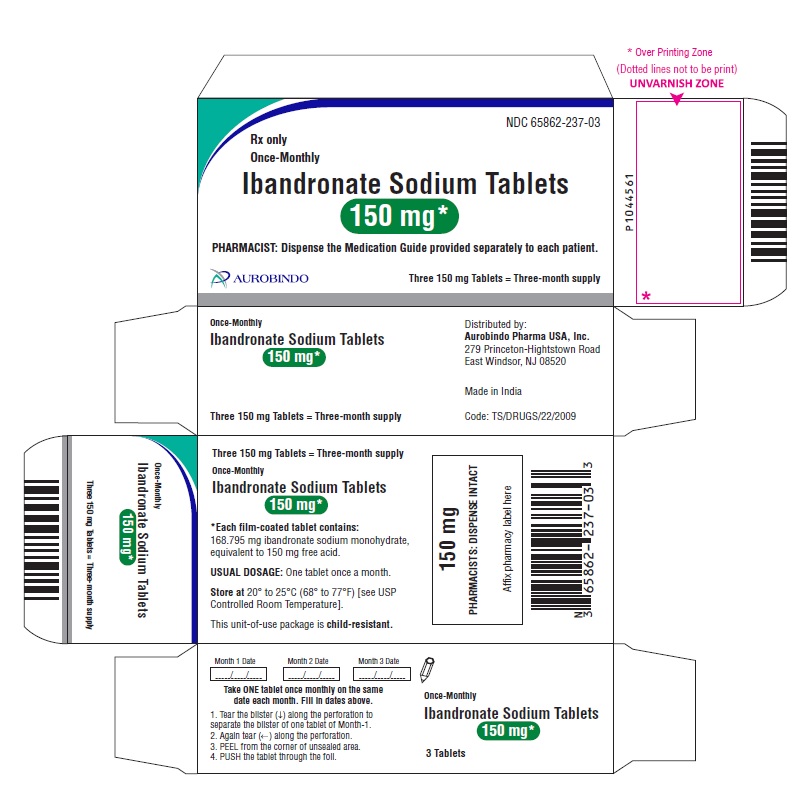
60429-64369452-37865862-23760505-609733342-150
Indicated ICD-10 codes
Treats these conditions
Source: openFDA + RxNorm · 2026
Look up another medication