Ibrutinib
Managing this medication for someone you care for? Eleplan keeps diagnoses, medications and appointments in one plan.
Start free with EleplanMedication reference
Ibrutinib
Kinase Inhibitor [EPC] — ORAL
Ibrutinib — Kinase Inhibitor [EPC]. INDICATIONS AND USAGE IMBRUVICA is a kinase inhibitor indicated for the treatment of: Adult patients with chronic lymphocytic leukemia (CLL)/Small…
Brand names
Imbruvica
Active ingredients
IBRUTINIB
Indications
INDICATIONS AND USAGE IMBRUVICA is a kinase inhibitor indicated for the treatment of: Adult patients with chronic lymphocytic leukemia (CLL)/Small lymphocytic lymphoma (SLL) ( 1.1 ). Adult patients with chronic lymphocytic leukemia (CLL)/Small lymphocytic lymphoma (SLL) with 17p deletion ( 1.2 ). Adult patients with Waldenström’s macroglobulinemia (WM) ( 1.3 ). Adult and pediatric patients age 1 year and older with chronic graft versus host disease (cGVHD) after failure of one or more lines of systemic therapy ( 1.4 ). 1.1 Chronic Lymphocytic Leukemia/Small Lymphocytic Lymphoma IMBRUVICA is indicated for the treatment of adult patients with chronic lymphocytic leukemia (CLL)/small lymphocytic lymphoma (SLL). 1. 2 Chronic Lymphocytic Leukemia/Small Lymphocytic Lymphoma with 17p deletion IMBRUVICA is indicated for the treatment of adult patients with chronic lymphocytic leukemia (CLL)/small lymphocytic lymphoma (SLL) with 17p deletion. 1. 3 Waldenström’s Macroglobulinemia IMBRUVICA is indicated for the treatment of adult patients with Waldenström’s macroglobulinemia (WM). 1. 4 Chronic Graft versus Host Disease IMBRUVICA is indicated for the treatment of adult and pediatric patients age 1 year and older with chronic graft-versus-host disease (cGVHD) after failure of one or more lines of systemic therapy.
Dosage
DOSAGE AND ADMINISTRATION CLL/SLL and WM : 420 mg taken orally once daily ( 2.1 ). cGVHD : ◦ Patients 12 years and older: 420 mg taken orally once daily ( 2.1 ). ◦ Patients 1 to less than 12 years of age: 240 mg/m 2 taken orally once daily (up to a dose of 420 mg) ( 2.1 ). Tablets or capsules should be taken orally with a glass of water. Do not open, break, or chew the capsules. Do not cut, crush, or chew the tablets. See full prescribing information for oral suspension administration instructions ( 2.1 ). 2.1 Recommended Dosage Chronic Lymphocytic Leukemia/Small Lymphocytic Lymphoma and Waldenström’s Macroglobulinemia The recommended dosage of IMBRUVICA for CLL/SLL and WM is 420 mg orally once daily until disease progression or unacceptable toxicity. For CLL/SLL, IMBRUVICA can be administered as a single agent, in combination with rituximab or obinutuzumab, or in combination with bendamustine and rituximab (BR). For WM, IMBRUVICA can be administered as a single agent or in combination with rituximab. When administering IMBRUVICA in combination with rituximab or obinutuzumab, consider administering IMBRUVICA prior to rituximab or obinutuzumab when given on the same day. Chronic Graft versus Host Disease The recommended dosage of IMBRUVICA for patients age 12 years and older with cGVHD is 420 mg orally once daily, and for patients 1 to less than 12 years of age with cGVHD is 240 mg/m 2 orally once daily (up to a dose of 420 mg), until cGVHD progression, recurrence of an underlying malignancy, or unacceptable toxicity. When a patient no longer requires therapy for the treatment of cGVHD, IMBRUVICA should be discontinued considering the medical assessment of the individual patient. Table 1: Recommended dosage based on body surface area (BSA) for patients 1 to less than 12 years of age using either IMBRUVICA capsules/tablets or oral suspension Recommended dose to achieve 240 mg/m 2 BSA* (m 2 ) Range Dose (mg) of IMBRUVICA Capsules/Tablets to Administer Volume (mL) of IMBRUVICA Oral Suspension (70 mg/mL) to Administer > 0.3 to 0.4 - 1.2 mL > 0.4 to 0.5 - 1.5 mL > 0.5 to 0.6 - 1.9 mL > 0.6 to 0.7 - 2.2 mL > 0.7 to 0.8 210 mg 2.6 mL > 0.8 to 0.9 210 mg 2.9 mL > 0.9 to 1 210 mg 3.3 mL > 1 to 1.1 280 mg 3.6 mL > 1.1 to 1.2 280 mg 4 mL > 1.2 to 1.3 280 mg 4.3 mL > 1.3 to 1.4 350 mg 4.6 mL > 1.4 to 1.5 350 mg 5 mL > 1.5 to 1.6 350 mg 5.3 mL > 1.6 420 mg 6 mL *BSA = body surface area. Administration Administer IMBRUVICA at approximately the same time each day. Swallow tablets or capsules whole with a glass of water. Do not open, break, or chew the capsules. Do not cut, crush, or chew the tablets. Follow Instructions for Use for further administration details of IMBRUVICA oral suspension. If a dose of IMBRUVICA is not taken at the scheduled time, it can be taken as soon as possible on the same day with a return to the normal schedule the following day. Do not take extra doses of IMBRUVICA to make up for the missed dose. 2.2 Dosage Modifications for Adverse Reactions For adverse reactions listed in Table 2 , interrupt IMBRUVICA therapy. Once the adverse reaction has improved to Grade 1 or baseline (recovery), follow the recommended dosage modifications (see Table 2 ). Table 2: Recommended Dosage Modifications for Adverse Reactions Adverse Reaction a,b Occurrence Dose Modification for CLL/SLL, WM, and Patients 12 Years or older with cGVHD After Recovery Starting Dose = 420 mg Dose Modification for Patients 1 Year to less than 12 Years with cGVHD After Recovery Starting Dose = 240 mg/m 2 Grade 2 cardiac failure First Restart at 280 mg daily c Restart at 160 mg/m 2 daily c Second Restart at 140 mg daily c Restart at 80 mg/m 2 daily c Third Discontinue IMBRUVICA Discontinue IMBRUVICA Grade 3 cardiac arrhythmias First Restart at 280 mg daily c Restart at 160 mg/m 2 daily c Second Discontinue IMBRUVICA Discontinue IMBRUVICA Grade 3 or 4 cardiac failure Grade 4 cardiac arrhythmias First Discontinue IMBRUVICA Discontinue IMBRUVICA Other Grade 3 or 4 non-hematological toxicities d Grade 3 or 4 neutropenia with infection or fever Grade 4 hematological toxicities First Restart at 280 mg daily Restart at 160 mg/m 2 daily c Second Restart at 140 mg daily Restart at 80 mg/m 2 daily c Third Discontinue IMBRUVICA Discontinue IMBRUVICA a [see Warnings and Precautions ( 5 ) ] . b Grading based on National Cancer Institute-Common Terminology Criteria for Adverse Events (NCI-CTCAE) criteria, or International Workshop on Chronic Lymphocytic Leukemia (iwCLL) criteria for hematologic toxicities in CLL/SLL. c Evaluate the benefit-risk before resuming treatment. d For Grade 4 non-hematologic toxicities, evaluate the benefit-risk before resuming treatment. Table 3: Recommended dosage modifications based on BSA using either IMBRUVICA capsules/tablets or oral suspension Recommended dose to achieve 160 mg/m 2 Recommended dose to achieve 80 mg/m 2 BSA* (m 2 ) Range Dose (mg) of IMBRUVICA Capsules/Tablets to Administer Volume (mL) of IMBRUVICA Oral Suspension (70 mg/mL) to Administer Dose (mg) of IMBRUVICA Capsules/Tablets to Administer Volume (mL) of IMBRUVICA Oral Suspension (70 mg/mL) to Administer > 0.3 to 0.4 - 0.8 mL - 0.4 mL > 0.4 to 0.5 - 1 mL - 0.5 mL > 0.5 to 0.6 - 1.3 mL - 0.6 mL > 0.6 to 0.7 - 1.5 mL - 0.7 mL > 0.7 to 0.8 140 mg 1.7 mL 70 mg 0.9 mL > 0.8 to 0.9 140 mg 1.9 mL 70 mg 1 mL > 0.9 to 1 140 mg 2.2 mL 70 mg 1.1 mL > 1 to 1.1 140 mg 2.4 mL 70 mg 1.2 mL > 1.1 to 1.2 210 mg 2.6 mL - 1.3 mL > 1.2 to 1.3 210 mg 2.9 mL - 1.4 mL > 1.3 to 1.4 210 mg 3.1 mL - 1.5 mL > 1.4 to 1.5 210 mg 3.3 mL 140 mg 1.7 mL > 1.5 to 1.6 280 mg 3.5 mL 140 mg 1.8 mL > 1.6 280 mg 4 mL 140 mg 2 mL *BSA = body surface area. 2.3 Dosage Modifications for Use with CYP3A Inhibitors Recommended dosage modifications are described below [see Drug Interactions ( 7.1 )] : Table 4: Recommended Dosage Modifications for Use with CYP3A Inhibitors Patient Population Coadministered Drug Recommended IMBRUVICA Dosage B-cell Malignancies Moderate CYP3A inhibitor 280 mg once daily Modify dose as recommended [see Dosage and Administration ( 2.2 )]. Voriconazole 200 mg twice daily Posaconazole suspension 100 mg once daily, 100 mg twice daily, or 200 mg twice daily 140 mg once daily Modify dose as recommended [see Dosage and Administration ( 2.2 )]. Posaconazole suspension 200 mg three times daily or 400 mg twice daily Posaconazole intravenously 300 mg once daily Posaconazole delayed-release tablets 300 mg once daily 70 mg once daily Interrupt dose as recommended [see Dosage and Administration ( 2.2 )]. Other strong CYP3A inhibitors Avoid concomitant use. If these inhibitors will be used short-term (such as anti-infectives for seven days or less), interrupt IMBRUVICA. Patients 12 years and older with cGVHD Moderate CYP3A inhibitor 420 mg once daily Modify dose as recommended [see Dosage and Administration ( 2.2 )]. Voriconazole 200 mg twice daily Posaconazole suspension 100 mg once daily, 100 mg twice daily, or 200 mg twice daily 280 mg once daily Modify dose as recommended [see Dosage and Administration ( 2.2 )]. Posaconazole suspension 200 mg three times daily or 400 mg twice daily Posaconazole intravenously 300 mg once daily Posaconazole delayed-release tablets 300 mg once daily 140 mg once daily Interrupt dose as recommended [see Dosage and Administration ( 2.2 )]. Other strong CYP3A inhibitors Avoid concomitant use. If these inhibitors will be used short-term (such as anti-infectives for seven days or less), interrupt IMBRUVICA. Patients 1 year to less than 12 years of age with cGVHD Moderate CYP3A inhibitors 240 mg/m 2 once daily Modify dose as recommended [see Dosage and Administration ( 2.2 )]. Voriconazole for suspension 9 mg/kg (maximum dose: 350 mg) twice daily 160 mg/m 2 once daily Posaconazole at any dosage 80 mg/m 2 once daily Other strong CYP3A inhibitors Avoid concomitant use. If these inhibitors will be used short-term (such as anti-infectives for seven days or less), interrupt IMBRUVICA. After discontinuati
Warnings
WARNINGS AND PRECAUTIONS Hemorrhage : Monitor for bleeding and manage ( 5.1 ). Infections : Monitor patients for fever and infections, evaluate promptly, and treat ( 5.2 ). Cardiac Arrhythmias , Cardiac Failure , and Sudden Death : Monitor for symptoms of arrhythmias and cardiac failure and manage ( 5.3 ). Hypertension : Monitor blood pressure and treat ( 5.4 ). Cytopenias : Check complete blood counts monthly ( 5.5 ). Second Primary Malignancies : Other malignancies have occurred in patients, including skin cancers, and other carcinomas ( 5.6 ). Hepatotoxicity, Including Drug- Induced Liver Injury : Monitor hepatic function throughout treatment ( 5.7 ). Tumor Lysis Syndrome (TLS) : Assess baseline risk and take precautions. Monitor and treat for TLS ( 5.8 ). Embryo-Fetal Toxicity : Can cause fetal harm. Advise females of reproductive potential of the potential risk to a fetus and to use effective contraception ( 5.9 , 8.1 , 8.3 ). 5.1 Hemorrhage Fatal bleeding events have occurred in patients who received IMBRUVICA. Major hemorrhage (≥ Grade 3, serious, or any central nervous system events; e.g., intracranial hemorrhage [including subdural hematoma], gastrointestinal bleeding, hematuria, and post procedural hemorrhage) occurred in 4.2% of patients, with fatalities occurring in 0.4% of 2,838 patients who received IMBRUVICA in 27 clinical trials. Bleeding events of any grade including bruising and petechiae occurred in 39%, and excluding bruising and petechiae occurred in 23% of patients who received IMBRUVICA, respectively [see Adverse Reactions ( 6.1 )] . The mechanism for the bleeding events is not well understood. Use of either anticoagulant or antiplatelet agents concomitantly with IMBRUVICA increases the risk of major hemorrhage. Across clinical trials, 3.1% of 2,838 patients who received IMBRUVICA without antiplatelet or anticoagulant therapy experienced major hemorrhage. The addition of antiplatelet therapy with or without anticoagulant therapy increased this percentage to 4.4%, and the addition of anticoagulant therapy with or without antiplatelet therapy increased this percentage to 6.1%. Consider the risks and benefits of anticoagulant or antiplatelet therapy when co-administered with IMBRUVICA. Monitor for signs and symptoms of bleeding. Consider the benefit-risk of withholding IMBRUVICA for at least 3 to 7 days pre- and post-surgery depending upon the type of surgery and the risk of bleeding [see Clinical Studies ( 14 )]. 5.2 Infections Fatal and non-fatal infections (including bacterial, viral, or fungal) have occurred with IMBRUVICA therapy. Grade 3 or greater infections occurred in 21% of 1,476 patients with B-cell malignancies who received IMBRUVICA in clinical trials [see Adverse Reactions ( 6.1 , 6.2 )] . Cases of progressive multifocal leukoencephalopathy (PML) and Pneumocystis jirovecii pneumonia (PJP) have occurred in patients treated with IMBRUVICA. Consider prophylaxis according to standard of care in patients who are at increased risk for opportunistic infections. Monitor and evaluate patients for fever and infections and treat appropriately. 5.3 Cardiac Arrhythmias, Cardiac Failure, and Sudden Death Fatal and serious cardiac arrhythmias and cardiac failure have occurred with IMBRUVICA. Deaths due to cardiac causes or sudden deaths occurred in 1% of 4,896 patients who received IMBRUVICA in clinical trials, including in patients who received IMBRUVICA in unapproved monotherapy or combination regimens. These adverse reactions occurred in patients with and without preexisting hypertension or cardiac comorbidities. Patients with cardiac comorbidities may be at greater risk of these events. Grade 3 or greater ventricular tachyarrhythmias were reported in 0.2%, Grade 3 or greater atrial fibrillation and atrial flutter were reported in 3.7%, and Grade 3 or greater cardiac failure was reported in 1.3% of 4,896 patients who received IMBRUVICA in clinical trials, including in patients who received IMBRUVICA in unapproved monotherapy or combination regimens. These events have occurred particularly in patients with cardiac risk factors including hypertension and diabetes mellitus, a previous history of cardiac arrhythmias, and in patients with acute infections [see Adverse Reactions ( 6.1 )] . Evaluate cardiac history and function at baseline, and monitor patients for cardiac arrhythmias and cardiac function. Obtain further evaluation (e.g., ECG, echocardiogram) as indicated for patients who develop symptoms of arrhythmia (e.g., palpitations, lightheadedness, syncope, chest pain), new onset dyspnea, or other cardiovascular concerns. Manage cardiac arrhythmias and cardiac failure appropriately, follow dose modification guidelines [see Dosage and Administration ( 2.2 )] , and consider the risks and benefits of continued IMBRUVICA treatment. 5.4 Hypertension Hypertension occurred in 19% of 1,476 patients with B-cell malignancies who received IMBRUVICA in clinical trials. Grade 3 or greater hypertension occurred in 8% of patients [see Adverse Reactions ( 6.1 )] . Based on data from a subset of these patients (N=1,124), the median time to onset was 5.9 months (range, 0 to 24 months). In a long-term safety analysis over 5 years of 1,284 patients with B-cell malignancies treated for a median of 36 months (range, 0 to 98 months), the cumulative rate of hypertension increased over time. The prevalence for Grade 3 or greater hypertension was 4% (year 0-1), 7% (year 1-2), 9% (year 2-3), 9% (year 3-4), and 9% (year 4-5); the overall incidence for the 5-year period was 11%. Monitor blood pressure in patients treated with IMBRUVICA, initiate or adjust anti-hypertensive medication throughout treatment with IMBRUVICA as appropriate, and follow dosage modification guidelines for Grade 3 or higher hypertension [see Dosage and Administration ( 2.2 )] . 5.5 Cytopenias In 645 patients with B-cell malignancies who received IMBRUVICA as a single agent, grade 3 or 4 neutropenia occurred in 23% of patients, grade 3 or 4 thrombocytopenia in 8% and grade 3 or 4 anemia in 2.8%, based on laboratory measurements [see Adverse Reactions ( 6.1 )] . Monitor complete blood counts monthly. 5.6 Second Primary Malignancies Other malignancies (10%), including non-skin carcinomas (3.9%), occurred among the 1,476 patients with B-cell malignancies who received IMBRUVICA in clinical trials [see Adverse Reactions ( 6.1 )] . The most frequent second primary malignancy was non-melanoma skin cancer (6%). 5.7 Hepatotoxicity, Including Drug-Induced Liver Injury Hepatotoxicity, including severe, life-threatening, and potentially fatal cases of drug-induced liver injury (DILI), has occurred in patients treated with Bruton tyrosine kinase inhibitors, including IMBRUVICA. Evaluate bilirubin and transaminases at baseline and throughout treatment with IMBRUVICA. For patients who develop abnormal liver tests after IMBRUVICA, monitor more frequently for liver test abnormalities and clinical signs and symptoms of hepatic toxicity. If DILI is suspected, withhold IMBRUVICA. Upon confirmation of DILI, discontinue IMBRUVICA. 5. 8 Tumor Lysis Syndrome Tumor lysis syndrome has been infrequently reported with IMBRUVICA [see Adverse Reactions ( 6.2 )] . Assess the baseline risk (e.g., high tumor burden) and take appropriate precautions. Monitor patients closely and treat as appropriate. 5. 9 Embryo-Fetal Toxicity Based on findings in animals, IMBRUVICA can cause fetal harm when administered to a pregnant woman. Administration of ibrutinib to pregnant rats and rabbits during the period of organogenesis caused embryo-fetal toxicity including malformations at exposures that were 3-20 times higher than those reported in patients with hematologic malignancies. Advise pregnant women of the potential risk to a fetus. Advise females of reproductive potential to use effective contraception during treatment with IMBRUVICA and for 1 month after the last dose. [see Use in Specific Populations ( 8.1 )] .
Contraindications
CONTRAINDICATIONS None None ( 4 )
Drug interactions
DRUG INTERACTIONS CYP3A Inhibitors: Modify IMBRUVICA dose as described ( 2.3 , 7.1 ). CYP3A Inducers: Avoid coadministration with strong CYP3A inducers ( 7.2 ). 7.1 Effect of CYP3A Inhibitors on Ibrutinib The coadministration of IMBRUVICA with a strong or moderate CYP3A inhibitor may increase ibrutinib plasma concentrations [see Clinical Pharmacology ( 12.3 )] . Increased ibrutinib concentrations may increase the risk of drug-related toxicity. Dose modifications of IMBRUVICA are recommended when used concomitantly with posaconazole, voriconazole and moderate CYP3A inhibitors [see Dosage and Administration ( 2.3 )]. Avoid concomitant use of other strong CYP3A inhibitors. Interrupt IMBRUVICA if these inhibitors will be used short-term (such as anti-infectives for seven days or less) [see Dosage and Administration ( 2.3 ) ] . Avoid grapefruit and Seville oranges during IMBRUVICA treatment, as these contain strong or moderate inhibitors of CYP3A. 7.2 Effect of CYP3A Inducers on Ibrutinib The coadministration of IMBRUVICA with strong CYP3A inducers may decrease ibrutinib concentrations. Avoid coadministration with strong CYP3A inducers [see Clinical Pharmacology ( 12.3 ) ] .
Adverse reactions
ADVERSE REACTIONS The following clinically significant adverse reactions are described elsewhere in the labeling: Hemorrhage [see Warnings and Precautions ( 5.1 )] Infections [see Warnings and Precautions ( 5.2 )] Cardiac Arrhythmias, Cardiac Failure, and Sudden Death [see Warnings and Precautions ( 5.3 )] Hypertension [see Warnings and Precautions ( 5.4 )] Cytopenias [see Warnings and Precautions ( 5.5 )] Second Primary Malignancies [see Warnings and Precautions ( 5.6 )] Hepatotoxicity, including DILI [see Warning s and Precautions ( 5.7 )] Tumor Lysis Syndrome [see Warnings and Precautions ( 5.8 )] The most common (≥30%) adverse reactions in patients with B-cell malignancies are thrombocytopenia, diarrhea, fatigue, musculoskeletal pain, neutropenia, rash, anemia, bruising, and nausea ( 6 ). The most common (≥20%) adverse reactions in adult or pediatric patients with cGVHD are fatigue, anemia, bruising, diarrhea, thrombocytopenia, musculoskeletal pain, pyrexia, muscle spasms, stomatitis, hemorrhage, nausea, abdominal pain, pneumonia, and headache ( 6 ). To report SUSPECTED ADVERSE REACTIONS, contact AbbVie at 1-800-633-9110 or FDA at 1-800-FDA-1088 or www.fda.gov/medwatch. 6.1 Clinical Trials Experience Because clinical trials are conducted under widely variable conditions, adverse reaction rates observed in clinical trials of a drug cannot be directly compared with rates of clinical trials of another drug and may not reflect the rates observed in practice. Unless otherwise specified, the pooled safety population described in the WARNINGS AND PRECAUTIONS reflects exposure to IMBRUVICA in 6 trials. IMBRUVICA was administered as a single agent at 420 mg orally once daily (475 patients), as a single agent at 560 mg orally once daily [1.3 times the recommended adult dosage (174 patients)], and in combination with other drugs at 420 mg orally once daily (827 patients) in patients with B-cell malignancies. In this pooled safety population of 1,476 patients, 87% were exposed for 6 months or longer and 68% were exposed for greater than one year. The most common adverse reactions (≥ 30%) were thrombocytopenia, diarrhea, fatigue, musculoskeletal pain, neutropenia, rash, anemia, bruising, and nausea. Certain subsections in the WARNINGS AND PRECAUTIONS include patients who received IMBRUVICA in unapproved monotherapy or combination regimens. Chronic Lymphocytic Leukemia/Small Lymphocytic Lymphoma The data described below reflect exposure to IMBRUVICA in one single-arm, open-label clinical trial (Study 1102) and five randomized controlled clinical trials (RESONATE, RESONATE-2, HELIOS, iLLUMINATE, and E1912) in patients with CLL/SLL (n=2,016 total, including n=1,133 patients exposed to IMBRUVICA). In general, patients with creatinine clearance (CLcr) ≤ 30 mL/min, AST or ALT ≥ 2.5 x ULN, or total bilirubin ≥ 1.5 x ULN (unless of non-hepatic origin) were excluded from these trials. In Study E1912, patients with AST or ALT > 3 x ULN or total bilirubin > 2.5 x ULN were excluded. Study 1102 included 51 patients with previously treated CLL/SLL. RESONATE included 386 randomized patients with previously treated CLL or SLL who received single agent IMBRUVICA or ofatumumab. RESONATE-2 included 267 randomized patients with treatment naïve CLL or SLL who were 65 years or older and received single agent IMBRUVICA or chlorambucil. HELIOS included 574 randomized patients with previously treated CLL or SLL who received IMBRUVICA in combination with BR or placebo in combination with BR. iLLUMINATE included 228 randomized patients with treatment naïve CLL/SLL who were 65 years or older or with coexisting medical conditions and received IMBRUVICA in combination with obinutuzumab or chlorambucil in combination with obinutuzumab. E1912 included 510 patients with previously untreated CLL/SLL who were 70 years or younger and received IMBRUVICA in combination with rituximab or received fludarabine, cyclophosphamide, and rituximab (FCR). The most common adverse reactions in patients with CLL/SLL receiving IMBRUVICA (≥ 30%) were thrombocytopenia, diarrhea, fatigue, musculoskeletal pain, neutropenia, rash, anemia, bruising, and nausea. Four to 10 percent of patients with CLL/SLL receiving IMBRUVICA discontinued treatment due to adverse reactions. These included pneumonia, hemorrhage, atrial fibrillation, neutropenia, arthralgia, rash, and thrombocytopenia. Adverse reactions leading to dose reduction occurred in approximately 9% of patients. Study 1102 Adverse reactions and laboratory abnormalities from Study 1102 (N=51) using single agent IMBRUVICA 420 mg daily in patients with previously treated CLL/SLL occurring at a rate of ≥ 10% with a median duration of treatment of 15.6 months are presented in Table 5 and Table 6 . Table 5: Non-Hematologic Adverse Reactions in ≥ 10% of Patients with CLL/SLL (N=51) in Study 1102 Body System Adverse Reaction All Grades (%) Grade 3 or Higher (%) Gastrointestinal disorders Diarrhea Constipation Nausea Stomatitis Vomiting Abdominal pain Dyspepsia 59 22 20 20 18 14 12 4 2 2 0 2 0 0 Skin and subcutaneous tissue disorders Bruising Rash Petechiae 51 25 16 2 0 0 Infections and infestations Upper respiratory tract infection Sinusitis Skin infection Pneumonia Urinary tract infection 47 22 16 12 12 2 6 6 10 2 General disorders and administration site conditions Fatigue Pyrexia Peripheral edema Asthenia Chills 33 24 22 14 12 6 2 0 6 0 Musculoskeletal and connective tissue disorders Musculoskeletal pain Arthralgia Muscle spasms 25 24 18 6 0 2 Respiratory, thoracic and mediastinal disorders Cough Oropharyngeal pain Dyspnea 22 14 12 0 0 0 Nervous system disorders Dizziness Headache 20 18 0 2 Vascular disorders Hypertension 16 8 Metabolism and nutrition disorders Decreased appetite 16 2 Neoplasms benign, malignant, unspecified Second malignancies 10 2 † † One patient death due to histiocytic sarcoma. Table 6: Treatment-Emergent* Hematologic Laboratory Abnormalities in Patients with CLL/SLL (N=51) in Study 1102 Percent of Patients (N=51) All Grades (%) Grade 3 or 4 (%) Platelets decreased 69 12 Neutrophils decreased 53 26 Hemoglobin decreased 43 0 * Based on laboratory measurements per IWCLL criteria and adverse reactions. Treatment-emergent Grade 4 thrombocytopenia (8%) and neutropenia (12%) occurred in patients. RESONATE Adverse reactions and laboratory abnormalities described below in Table 7 and Table 8 reflect exposure to IMBRUVICA with a median duration of 8.6 months and exposure to ofatumumab with a median of 5.3 months in RESONATE in patients with previously treated CLL/SLL. Table 7: Adverse Reactions Reported in ≥ 10% of Patients in the IMBRUVICA Treated Arm in Patients with CLL/SLL in RESONATE Body System Adverse Reaction IMBRUVICA (N=195) Ofatumumab (N=191) All Grades (%) Grade 3 or Higher (%) All Grades (%) Grade 3 or Higher (%) Gastrointestinal disorders Diarrhea 48 4 18 2 Nausea 26 2 18 0 Stomatitis* 17 1 6 1 Constipation 15 0 9 0 Vomiting 14 0 6 1 Musculoskeletal and connective tissue disorders Musculoskeletal pain* 28 2 18 1 Arthralgia 17 1 7 0 Muscle spasms 13 0 8 0 Skin and subcutaneous tissue disorders Rash* 24 3 13 0 Petechiae 14 0 1 0 Bruising* 12 0 1 0 General disorders and administration site conditions Pyrexia 24 2 15 2 † Respiratory, thoracic and mediastinal disorders Cough 19 0 23 1 Dyspnea 12 2 10 1 Infections and infestations Upper respiratory tract infection 16 1 11 2 † Pneumonia* 15 12 † 13 10 † Sinusitis* 11 1 6 0 Urinary tract infection 10 4 5 1 Nervous system disorders Headache 14 1 6 0 Dizziness 11 0 5 0 Injury, poisoning and procedural complications Contusion 11 0 3 0 Eye disorders Vision blurred 10 0 3 0 The body system and individual ADR terms are sorted in descending frequency order in the IMBRUVICA arm. * Includes multiple ADR terms. † Includes 3 events of pneumonia with fatal outcome in each arm, and 1 event of pyrexia and upper respiratory tract infection with a fatal outcome in the ofatumumab arm. Table 8: Treatment-Emergent
Mechanism of action
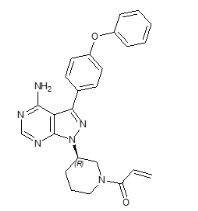
Mechanism of Action Ibrutinib is a small-molecule inhibitor of Bruton’s tyrosine kinase (BTK). Ibrutinib forms a covalent bond with a cysteine residue in the BTK active site, leading to inhibition of BTK enzymatic activity. BTK is a signaling molecule of the B-cell antigen receptor (BCR) and cytokine receptor pathways. BTK’s role in signaling through the B-cell surface receptors results in activation of pathways necessary for B-cell trafficking, chemotaxis, and adhesion. Nonclinical studies show that ibrutinib inhibits malignant B-cell proliferation and survival in vivo as well as cell migration and substrate adhesion in vitro .
Available forms (13)
ibrutinib 140 MG Oral Capsuleibrutinib 140 MG Oral Tabletibrutinib 280 MG Oral Tabletibrutinib 420 MG Oral Tabletibrutinib 560 MG Oral Tabletibrutinib 70 MG/ML Oral Suspensionibrutinib 70 MG Oral Capsuleibrutinib 140 MG Oral Capsule [Imbruvica]brandibrutinib 140 MG Oral Tablet [Imbruvica]brandibrutinib 280 MG Oral Tablet [Imbruvica]brandibrutinib 420 MG Oral Tablet [Imbruvica]brandibrutinib 70 MG/ML Oral Suspension [Imbruvica]brandibrutinib 70 MG Oral Capsule [Imbruvica]brand
NDC examples
57962-00757962-07057962-140
Treats these conditions
Common side effects
Source: openFDA + RxNorm · 2026
Look up another medication