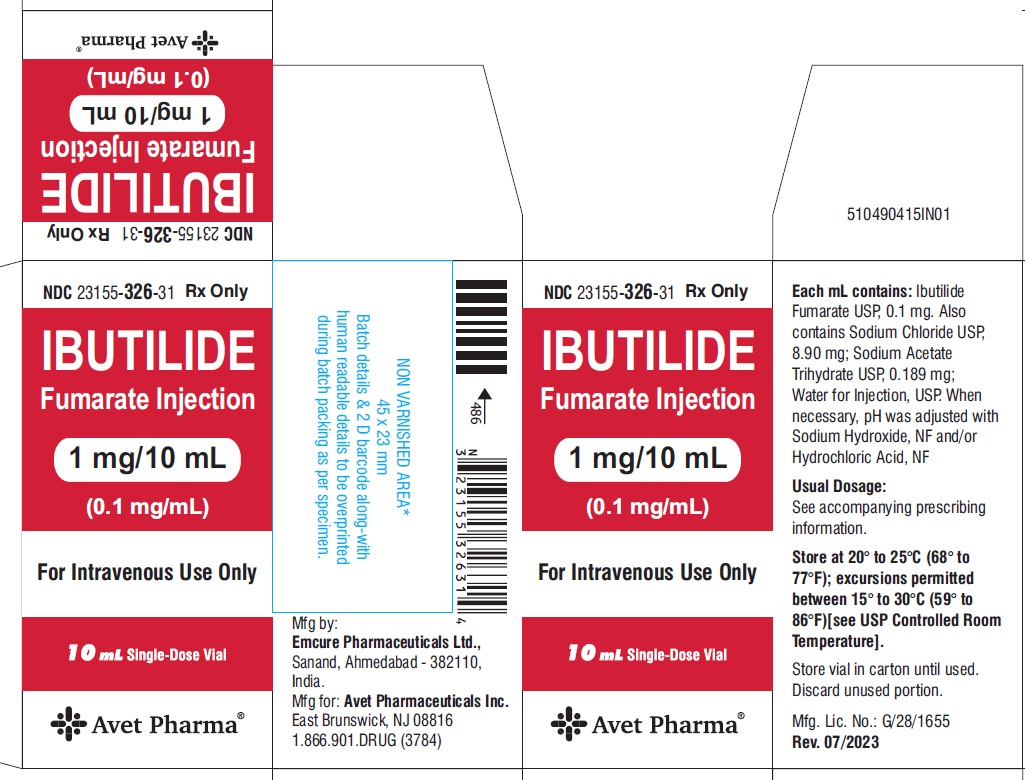
Ibutilide. INDICATIONS AND USAGE Ibutilide fumarate injection is indicated for the rapid conversion of atrial fibrillation or atrial flutter of recent onset to…
Boxed warning
LIFE-THREATENING ARRHYTHMIAS—APPROPRIATE TREATMENT ENVIRONMENT CORVERT can cause potentially fatal arrhythmias, particularly sustained polymorphic ventricular tachycardia, usually in association with QT prolongation (torsades de pointes), but sometimes without documented QT prolongation. In registration studies, these arrhythmias, which require cardioversion, occurred in 1.7% of treated patients during, or within a number of hours of, use of CORVERT. These arrhythmias can be reversed if treated promptly (see WARNINGS, Proarrhythmia ). It is essential that CORVERT be administered in a setting of continuous ECG monitoring and by personnel trained in identification and treatment of acute ventricular arrhythmias, particularly polymorphic ventricular tachycardia. Patients with atrial fibrillation of more than 2 to 3 days' duration must be adequately anticoagulated, generally for at least 2 weeks. CHOICE OF PATIENTS Patients with chronic atrial fibrillation have a strong tendency to revert after conversion to sinus rhythm (see CLINICAL STUDIES ) and treatments to maintain sinus rhythm carry risks. Patients to be treated with CORVERT, therefore, should be carefully selected such that the expected benefits of maintaining sinus rhythm outweigh the immediate risks of CORVERT, and the risks of maintenance therapy, and are likely to offer an advantage compared with alternative management.
INDICATIONS AND USAGE Ibutilide fumarate injection is indicated for the rapid conversion of atrial fibrillation or atrial flutter of recent onset to sinus rhythm. Patients with atrial arrhythmias of longer duration are less likely to respond to ibutilide fumarate. The effectiveness of ibutilide has not been determined in patients with arrhythmias of more than 90 days in duration. LIFE-THREATENING ARRHYTHMIAS—APPROPRIATE TREATMENT ENVIRONMENT Ibutilide fumarate can cause potentially fatal arrhythmias, particularly sustained polymorphic ventricular tachycardia, usually in association with QT prolongation (torsades de pointes), but sometimes without documented QT prolongation. In registration studies, these arrhythmias, which require cardioversion, occurred in 1.7% of treated patients during, or within a number of hours of, use of Ibutilide fumarate. These arrhythmias can be reversed if treated promptly (see WARNINGS, Proarrhythmia ). It is essential that Ibutilide fumarate be administered in a setting of continuous ECG monitoring and by personnel trained in identification and treatment of acute ventricular arrhythmias, particularly polymorphic ventricular tachycardia. Patients with atrial fibrillation of more than 2 to 3 days’ duration must be adequately anticoagulated, generally for at least 2 weeks. CHOICE OF PATIENTS Patients with chronic atrial fibrillation have a strong tendency to revert after conversion to sinus rhythm (see CLINICAL STUDIES ) and treatments to maintain sinus rhythm carry risks. Patients to be treated with Ibutilide fumarate , therefore, should be carefully selected such that the expected benefits of maintaining sinus rhythm outweigh the immediate risks of Ibutilide fumarate , and the risks of maintenance therapy, and are likely to offer an advantage compared with alternative management.
Dosage
DOSAGE AND ADMINISTRATION The recommended dose based on controlled trials (see CLINICAL STUDIES ) is outlined in the Table below. Ibutilide infusion should be stopped as soon as the presenting arrhythmia is terminated or in the event of sustained or nonsustained ventricular tachycardia, or marked prolongation of QT or QTc. Recommended Dose of Ibutilide Fumarate Injection Patient Weight Initial Infusion (over 10 minutes) Second Infusion 60 kg (132 lb) or more One vial (1 mg ibutilide fumarate) If the arrhythmia does not terminate within 10 minutes after the end of the initial infusion, a second 10-minute infusion of equal strength may be administered 10 minutes after completion of the first infusion. Less than 60 kg (132 lb) 0.1 mL/kg (0.01 mg/kg ibutilide fumarate) In a trial comparing ibutilide and sotalol (see CLINICAL STUDIES ), 2 mg ibutilide fumarate administered as a single infusion to patients weighing more than 60 kg was also effective in terminating atrial fibrillation or atrial flutter. In the post-cardiac surgery study (see CLINICAL STUDIES ), one or two intravenous infusions of 0.5 mg (0.005 mg/kg per dose for patients weighing less than 60 kg) was effective in terminating atrial fibrillation or atrial flutter. Patients should be observed with continuous ECG monitoring for at least 4 hours following infusion or until QTc has returned to baseline. Longer monitoring is required if any arrhythmic activity is noted. Skilled personnel and proper equipment (see WARNINGS, Proarrhythmia ), such as a cardioverter/defibrillator, and medication for treatment of sustained ventricular tachycardia, including polymorphic ventricular tachycardia, must be available during administration of ibutilide fumarate and subsequent monitoring of the patient. Dilution Ibutilide fumarate injection may be administered undiluted or diluted in 50 mL of diluent. Ibutilide fumarate may be added to 0.9% Sodium Chloride Injection or 5% Dextrose Injection before infusion. The contents of one 10 mL vial (0.1 mg/mL) may be added to a 50 mL infusion bag to form an admixture of approximately 0.017 mg/mL ibutilide fumarate. Parenteral drug products should be inspected visually for particulate matter and discoloration prior to administration whenever solution and container permit. Compatibility and Stability The following diluents are compatible with ibutilide fumarate injection (0.1 mg/mL): 5% Dextrose Injection 0.9% Sodium Chloride Injection The following intravenous solution containers are compatible with admixtures of ibutilide fumarate injection (0.1 mg/mL): polyvinyl chloride plastic bags polyolefin bags Admixtures of the product, with approved diluents, are chemically and physically stable for 24 hours at room temperature (15° to 30° C or 59° to 86° F) and for 48 hours at refrigerated temperatures (2° to 8°C or 36° to 46°F). Strict adherence to the use of aseptic technique during the preparation of the admixture is recommended in order to maintain sterility.
Warnings
WARNINGS Proarrhythmia Like other antiarrhythmic agents, ibutilide fumarate injection can induce or worsen ventricular arrhythmias in some patients. This may have potentially fatal consequences. Torsades de pointes, a polymorphic ventricular tachycardia that develops in the setting of a prolonged QT interval, may occur because of the effect ibutilide fumarate has on cardiac repolarization, but ibutilide fumarate can also cause polymorphic VT in the absence of excessive prolongation of the QT interval. In general, with drugs that prolong the QT interval, the risk of torsades de pointes is thought to increase progressively as the QT interval is prolonged and may be worsened with bradycardia, a varying heart rate, and hypokalemia. In clinical trials conducted in patients with atrial fibrillation and atrial flutter, those with QTc intervals greater than 440 msec were not usually allowed to participate, and serum potassium had to be above 4 mEq/L. Although change in QTc was dose dependent for ibutilide, there was no clear relationship between risk of serious proarrhythmia and dose in clinical studies, possibly due to the small number of events. In clinical trials of intravenous ibutilide, patients with a history of congestive heart failure (CHF) or low left ventricular ejection fraction appeared to have a higher incidence of sustained polymorphic ventricular tachycardia (VT), than those without such underlying conditions; for sustained polymorphic VT the rate was 5.4% in patients with a history of CHF and 0.8% without it. There was also a suggestion that women had a higher risk of proarrhythmia, but the sex difference was not observed in all studies and was most prominent for nonsustained ventricular tachycardia. The incidence of sustained ventricular arrhythmias was similar in male (1.8%) and female (1.5%) patients, possibly due to the small number of events. Ibutilide fumarate is not recommended in patients who have previously demonstrated polymorphic ventricular tachycardia (eg, torsades de pointes). During registration trials, 1.7% of patients with atrial flutter or atrial fibrillation treated with Ibutilide fumarate developed sustained polymorphic ventricular tachycardia requiring cardioversion. In these clinical trials, many initial episodes of polymorphic ventricular tachycardia occurred after the infusion of ibutilide fumarate was stopped but generally not more than 40 minutes after the start of the first infusion. There were, however, instances of recurrent polymorphic VT that occurred about 3 hours after the initial infusion. In two cases, the VT degenerated into ventricular fibrillation, requiring immediate defibrillation. Other cases were managed with cardiac pacing and magnesium sulfate infusions. Nonsustained polymorphic ventricular tachycardia occurred in 2.7% of patients and nonsustained monomorphic ventricular tachycardias occurred in 4.9% of the patients (see ADVERSE REACTIONS ). Proarrhythmic events must be anticipated. Skilled personnel and proper equipment, including cardiac monitoring equipment, intracardiac pacing facilities, a cardioverter/defibrillator, and medication for treatment of sustained ventricular tachycardia, including polymorphic ventricular tachycardia, must be available during and after administration of ibutilide fumarate. Before treatment with ibutilide fumarate, hypokalemia and hypomagnesemia should be corrected to reduce the potential for proarrhythmia. Patients should be observed with continuous ECG monitoring for at least 4 hours following infusion or until QTc has returned to baseline. Longer monitoring is required if any arrhythmic activity is noted. Management of polymorphic ventricular tachycardia includes discontinuation of ibutilide, correction of electrolyte abnormalities, especially potassium and magnesium, and overdrive cardiac pacing, electrical cardioversion, or defibrillation. Pharmacologic therapies include magnesium sulfate infusions. Treatment with antiarrhythmics should generally be avoided.
Contraindications
CONTRAINDICATIONS Ibutilide fumarate injection is contraindicated in patients who have previously demonstrated hypersensitivity to ibutilide fumarate or any of the other product components.
Drug interactions
Drug Interactions: No specific pharmacokinetic or other formal drug interaction studies were conducted. Digoxin: Supraventricular arrhythmias may mask the cardiotoxicity associated with excessive digoxin levels. Therefore, it is advisable to be particularly cautious in patients whose plasma digoxin levels are above or suspected to be above the usual therapeutic range. Coadministration of digoxin did not have effects on either the safety or efficacy of ibutilide in the clinical trials. Calcium channel blocking agents: Coadministration of calcium channel blockers did not have any effect on either the safety or efficacy of ibutilide in the clinical trials. Beta-adrenergic blocking agents: Coadministration of beta-adrenergic blocking agents did not have any effect on either the safety or efficacy of ibutilide in the clinical trials.
Adverse reactions
ADVERSE REACTIONS Ibutilide fumarate injection was generally well tolerated in clinical trials. Of the 586 patients with atrial fibrillation or atrial flutter who received ibutilide fumarate in phase II/III studies, 149 (25%) reported medical events related to the cardiovascular system, including sustained polymorphic ventricular tachycardia (1.7%) and nonsustained polymorphic ventricular tachycardia (2.7%). Other clinically important adverse events with an uncertain relationship to ibutilide fumarate include the following (0.2% represents one patient): sustained monomorphic ventricular tachycardia (0.2%), nonsustained monomorphic ventricular tachycardia (4.9%), AV block (1.5%), bundle branch block (1.9%), ventricular extrasystoles (5.1%), supraventricular extrasystoles (0.9%), hypotension/postural hypotension (2%), bradycardia/sinus bradycardia (1.2%), nodal arrhythmia (0.7%), congestive heart failure (0.5%), tachycardia/sinus tachycardia/supraventricular tachycardia (2.7%), idioventricular rhythm (0.2%), syncope (0.3%), and renal failure (0.3%). The incidence of these events, except for syncope, was greater in the group treated with ibutilide fumarate than in the placebo group. Another adverse reaction that may be associated with the administration of ibutilide fumarate was nausea, which occurred with a frequency greater than 1% more in ibutilide-treated patients than those treated with placebo. The medical events reported for more than 1% of the placebo- and ibutilide-treated patients are shown in the following Table. Treatment-Emergent Medical Events With Frequency of More Than 1% and Higher Than That of Placebo Event Placebo N=127 All Ibutilide N=586 Patients Patients n % n % CARDIOVASCULAR Ventricular extrasystoles 1 0.8 30 5.1 Nonsustained monomorphic VT 1 0.8 29 4.9 Nonsustained polymorphic VT — — 16 2.7 Hypotension 2 1.6 12 2.0 Bundle branch block — — 11 1.9 Sustained polymorphic VT — — 10 1.7 AV block 1 0.8 9 1.5 Hypertension — — 7 1.2 QT segment prolonged — — 7 1.2 Bradycardia 1 0.8 7 1.2 Palpitation 1 0.8 6 1.0 Tachycardia 1 0.8 16 2.7 GASTROINTESTINAL Nausea 1 0.8 11 1.9 CENTRAL NERVOUS SYSTEM Headache 4 3.1 21 3.6 In the post-cardiac surgery study (see CLINICAL STUDIES ), similar types of medical events were reported. In the 1 mg ibutilide fumarate treatment group (N=70), 2 patients (2.9%) developed sustained polymorphic ventricular tachycardia and 2 other patients (2.9%) developed nonsustained polymorphic ventricular tachycardia. Polymorphic ventricular tachycardia was not reported in the 73 patients in the 0.5 mg dose group or in the 75 patients in the 0.25 mg dose group.
Mechanism of action
CLINICAL PHARMACOLOGY Mechanism of Action Ibutilide fumarate injection prolongs action potential duration in isolated adult cardiac myocytes and increases both atrial and ventricular refractoriness in vivo , ie, class III electrophysiologic effects. Voltage clamp studies indicate that ibutilide fumarate, at nanomolar concentrations, delays repolarization by activation of a slow, inward current (predominantly sodium), rather than by blocking outward potassium currents, which is the mechanism by which most other class III antiarrhythmics act. These effects lead to prolongation of atrial and ventricular action potential duration and refractoriness, the predominant electrophysiologic properties of ibutilide fumarate in humans that are thought to be the basis for its antiarrhythmic effect. Electrophysiologic Effects Ibutilide fumarate produces mild slowing of the sinus rate and atrioventricular conduction. Ibutilide fumarate produces no clinically significant effect on QRS duration at intravenous doses up to 0.03 mg/kg administered over a 10-minute period. Although there is no established relationship between plasma concentration and antiarrhythmic effect, ibutilide fumarate produces dose-related prolongation of the QT interval, which is thought to be associated with its antiarrhythmic activity. (see WARNINGS for relationship between QTc prolongation and torsades de pointes-type arrhythmias.) In a study in healthy volunteers, intravenous infusions of ibutilide fumarate resulted in prolongation of the QT interval that was directly correlated with ibutilide plasma concentration during and after 10-minute and 8-hour infusions. A steep ibutilide concentration/response (QT prolongation) relationship was shown. The maximum effect was a function of both the dose of ibutilide fumarate and the infusion rate. Hemodynamic Effects A study of hemodynamic function in patients with ejection fractions both above and below 35% showed no clinically significant effects on cardiac output, mean pulmonary arterial pressure, or pulmonary capillary wedge pressure at doses of ibutilide fumarate up to 0.03 mg/kg. Pharmacokinetics After intravenous infusion, ibutilide plasma concentrations rapidly decrease in a multiexponential fashion. The pharmacokinetics of ibutilide are highly variable among subjects. Ibutilide has a high systemic plasma clearance that approximates liver blood flow (about 29 mL/min/kg), a large steady-state volume of distribution (about 11 L/kg) in healthy volunteers, and minimal (about 40%) protein binding. Ibutilide is also cleared rapidly and highly distributed in patients being treated for atrial flutter or atrial fibrillation. The elimination half-life averages about 6 hours (range from 2 to 12 hours). The pharmacokinetics of ibutilide are linear with respect to the dose of ibutilide fumarate over the dose range of 0.01 mg/kg to 0.10 mg/kg. The enantiomers of ibutilide fumarate have pharmacokinetic properties similar to each other and to ibutilide fumarate. The pharmacokinetics of ibutilide fumarate injection in patients with atrial flutter or atrial fibrillation are similar regardless of the type of arrhythmia, patient age, sex, or the concomitant use of digoxin, calcium channel blockers, or beta blockers. Metabolism and elimination In healthy male volunteers, about 82% of a 0.01 mg/kg dose of [ 14 C] ibutilide fumarate was excreted in the urine (about 7% of the dose as unchanged ibutilide) and the remainder (about 19%) was recovered in the feces. Eight metabolites of ibutilide were detected in metabolic profiling of urine. These metabolites are thought to be formed primarily by ω-oxidation followed by sequential β-oxidation of the heptyl side chain of ibutilide. Of the eight metabolites, only the ω-hydroxy metabolite possesses class III electrophysiologic properties similar to that of ibutilide in an in vitro isolated rabbit myocardium model. The plasma concentrations of this active metabolite, however, are less than 10% of that of ibutilide. Clinical Studies Treatment with intravenous ibutilide fumarate for acute termination of recent onset atrial flutter/fibrillation was evaluated in 466 patients participating in two randomized, double-blind, placebo-controlled clinical trials. Patients had their arrhythmias for 3 hours to 90 days, were anticoagulated for at least 2 weeks if atrial fibrillation was present more than 3 days, had serum potassium of at least 4 mEq/L and QTc below 440 msec, and were monitored by telemetry for at least 24 hours. Patients could not be on class I or other class III antiarrhythmics (these had to be discontinued at least 5 half-lives prior to infusion) but could be on calcium channel blockers, beta blockers, or digoxin. In one trial, single 10-minute infusions of 0.005 to 0.025 mg/kg were tested in parallel groups (0.3 to 1.5 mg in a 60 kg person). In the second trial, up to two infusions of ibutilide fumarate were evaluated—the first 1.0 mg, the second given 10 minutes after completion of the first infusion, either 0.5 or 1 mg. In a third double-blind study, 319 patients with atrial fibrillation or atrial flutter of 3 hours to 45 days duration were randomized to receive single, 10-minute intravenous infusions of either sotalol (1.5 mg/kg) or ibutilide fumarate (1 mg or 2 mg). Among patients with atrial flutter, 53% receiving 1 mg ibutilide fumarate and 70%receiving 2 mg ibutilide fumarate converted, compared to 18% of those receiving sotalol. In patients with atrial fibrillation, 22% receiving 1 mg ibutilide fumarate and 43% receiving 2 mg ibutilide fumarate converted compared to 10% of patients receiving sotalol. Patients in registration trials were hemodynamically stable. Patients with specific cardiovascular conditions such as symptomatic heart failure, recent acute myocardial infarction, and angina were excluded. About two thirds had cardiovascular symptoms, and the majority of patients had left atrial enlargement, decreased left ventricular ejection fraction, a history of valvular disease, or previous history of atrial fibrillation or flutter. Electrical cardioversion was allowed 90 minutes after the infusion was complete. Patients could be given other antiarrhythmic drugs 4 hours postinfusion. Results of the first two studies are shown in the tables below. Conversion of atrial flutter/ fibrillation usually (70% of those who converted) occurred within 30 minutes of the start of infusion and was dose related. The latest conversion seen was at 90 minutes after the start of the infusion. Most converted patients remained in normal sinus rhythm for 24 hours. Overall responses in these patients, defined as termination of arrhythmias for any length of time during or within 1 hour following completed infusion of randomized dose, were in the range of 43% to 48% at doses above 0.0125 mg/kg (vs 2% for placebo). Twenty-four hour responses were similar. For these atrial arrhythmias, ibutilide was more effective in patients with flutter than fibrillation (≥ 48% vs ≤ 40%). PERCENT OF PATIENTS WHO CONVERTED (First Trial) Ibutilide Placebo 0.005 mg/kg 0.01 mg/kg 0.015 mg/kg 0.025 mg/kg n 41 41 40 38 40 Both Initially* 2 12 33 45 48 At 24 hours† 2 12 28 42 43 Atrial flutter Initially* 0 14 30 58 55 At 24 hours* 0 14 30 58 50 Atrial fibrillation Initially* 5 10 35 32 40 At 24 hours† 5 10 25 26 35 *Percent of patients who converted within 70 minutes after the start of infusion. †Percent of patients who remained in sinus rhythm 24 hours after dosing. PERCENT OF PATIENTS WHO CONVERTED (Second Trial) Ibutilide Placebo 1.0 mg/0.5 mg 1.0 mg/1.0 mg n 86 86 94 Both Initially* 2 43 44 At 24 hours† 2 34 37 Atrial flutter Initially* 2 48 63 At 24 hours† 2 45 59 Atrial fibrillation Initially* 2 38 25 At 24 hours† 2 21 17 *Percent of patients who converted within 90 minutes after the start of infusion. †Percent of patients who remained in sinus rhythm 24 hours after dosing. The numbers of patients who remained in the converted rhythm at the end of 24
A drug lookup is just the start. Eleplan keeps the whole care plan in one place.
Medications, diagnoses, documents, appointments, and the whole care team — organized and always in sync, with Ellie, your AI care assistant, on top of it. Free to start.