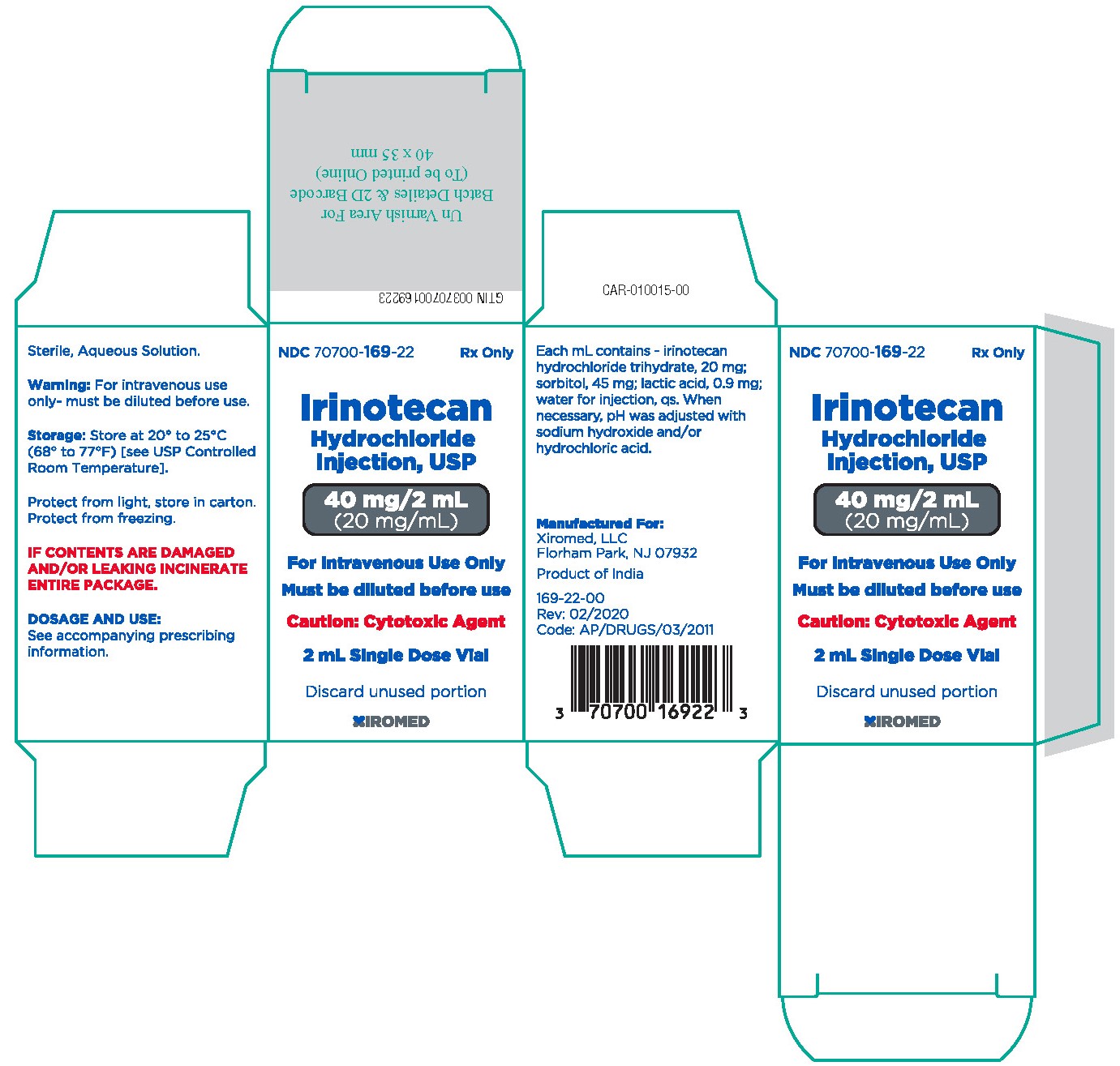
Irinotecan Hydrochloide. INDICATIONS AND USAGE Irinotecan hydrochloride injection is indicated as a component of first-line therapy in combination with 5-fluorouracil (5-FU)…
Boxed warning
WARNING: DIARRHEA and MYELOSUPPRESSION • Early and late forms of diarrhea can occur. Early diarrhea may be accompanied by cholinergic symptoms which may be prevented or ameliorated by atropine. Late diarrhea can be life threatening and should be treated promptly with loperamide. Monitor patients with diarrhea and give fluid and electrolytes as needed. Institute antibiotic therapy if patients develop ileus, fever, or severe neutropenia. Interrupt irinotecan hydrochloride injection and reduce subsequent doses if severe diarrhea occurs. (2.2, 5.1) • Severe myelosuppression may occur. (5.2) WARNING: DIARRHEA and MYELOSUPPRESSION See full prescribing information for complete boxed warning. Early and late forms of diarrhea can occur. Early diarrhea may be accompanied by cholinergic symptoms which may be prevented or ameliorated by atropine. Late diarrhea can be life threatening and should be treated promptly with loperamide. Monitor patients with diarrhea and give fluid and electrolytes as needed. Institute antibiotic therapy if patients develop ileus, fever, or severe neutropenia. Interrupt irinotecan hydrochloride injection and reduce subsequent doses if severe diarrhea occurs [see Dosage and Administration ( 2.2) and Warnings and Precautions (5.1)]. Severe myelosuppression may occur [see Warnings and Precautions ( 5.2 )].
INDICATIONS AND USAGE Irinotecan hydrochloride injection is indicated as a component of first-line therapy in combination with 5-fluorouracil (5-FU) and leucovorin (LV) for patients with metastatic carcinoma of the colon or rectum. Irinotecan hydrochloride injection is indicated for patients with metastatic carcinoma of the colon or rectum whose disease has recurred or progressed following initial fluorouracil-based therapy. Irinotecan hydrochloride injection is a topoisomerase inhibitor indicated for: First-line therapy in combination with 5-fluorouracil and leucovorin for patients with metastatic carcinoma of the colon or rectum. ( 1 ) Patients with metastatic carcinoma of the colon or rectum whose disease has recurred or progressed following initial fluorouracil-based therapy. ( 1 )
Dosage
DOSAGE AND ADMINISTRATION Colorectal cancer combination regimen 1: Irinotecan hydrochloride injection 125 mg/m 2 intravenous infusion over 90 minutes on days 1, 8, 15, 22 with LV 20 mg/m 2 intravenous bolus infusion on days 1, 8, 15, 22 followed by 5-FU intravenous bolus infusion on days 1, 8, 15, 22 every 6 weeks. ( 2.1 ) Colorectal cancer combination regimen 2: Irinotecan hydrochloride injection 180 mg/m 2 intravenous infusion over 90 minutes on days 1, 15, 29 with LV 200 mg/m 2 intravenous infusion over 2 hours on days 1, 2, 15, 16, 29, 30 followed by 5-FU 400 mg/m 2 intravenous bolus infusion on days 1, 2, 15, 16, 29, 30 and 5-FU 600 mg/m 2 intavenous infusion over 22 hours on days 1, 2, 15, 16, 29, 30. ( 2.1 ) Colorectal cancer single agent regimen 1: Irinotecan hydrochloride injection 125 mg/ m 2 intravenous infusion over 90 minutes on days 1, 8, 15, 22 then 2-week rest. ( 2.2 ) Colorectal cancer single agent regimen 2: Irinotecan hydrochloride injection 350 mg/ m 2 intravenous infusion over 90 minutes on day 1 every 3 weeks. ( 2.2 ) 2.1 Colorectal Cancer Combination Regimens 1 and 2 Administer irinotecan hydrochloride injection as a 90-minute intravenous infusion followed by LV and 5-FU. The currently recommended regimens are shown in Table 1. A reduction in the starting dose by one dose level of irinotecan hydrochloride injection may be considered for patients with any of the following conditions: prior pelvic/abdominal radiotherapy, performance status of 2, or increased bilirubin levels. Dosing for patients with bilirubin >2 mg/dL cannot be recommended because there is insufficient information to recommend a dose in these patients. Table 1: Combination-Agent Dosage Regimens and Dose Modifications a Regimen 1 6-wk cycle with bolus 5-FU/LV (next cycle begins on day 43) Irinotecan Hydrochloride Injection LV 5-FU 125 mg/m 2 intravenous infusion over 90 minutes, days 1,8,15,22 20 mg/m 2 intravenous injection bolus, days 1,8,15,22 500 mg/m 2 intravenous injection bolus, days 1,8,15,22 Starting Dose & Modified Dose Levels (mg/m 2 ) Starting Dose Dose Level -1 Dose Level -2 Irinotecan Hydrochloride Injection LV 5-FU 125 20 500 100 20 400 75 20 300 Regimen 2 6-wk cycle with infusional 5-FU/LV (next cycle begins on day 43) Irinotecan Hydrochloride Injection LV 5-FU Bolus 5-FU Infusion b 180 mg/m 2 intravenous infusion over 90 minutes, days 1,15,29 200 mg/m 2 intravenous infusion over 2 hours, days 1,2,15,16,29,30 400 mg/m 2 intravenous injection bolus, days 1,2,15,16,29,30 600 mg/m 2 intravenous infusion over 22 hours, days 1,2,15,16,29,30 Starting Dose & Modified Dose Levels (mg/m 2 ) Starting Dose Dose Level -1 Dose Level -2 Irinotecan Hydrochloride Injection LV 5-FU Bolus 5-FU Infusion b 180 200 400 600 150 200 320 480 120 200 240 360 a Dose reductions beyond Dose Level –2 by decrements of ≈ 20% may be warranted for patients continuing to experience toxicity. Provided intolerable toxicity does not develop, treatment with additional cycles may be continued indefinitely as long as patients continue to experience clinical benefit. b Infusion follows bolus administration. Dosing for patients with bilirubin >2 mg/dL cannot be recommended because there is insufficient information to recommend a dose in these patients [see Warnings and Precautions (5.10) , Use in Specific Populations (8.7 ) and Clinical Pharmacology (12.3) ] . Dose Modifications Based on recommended dose levels described in Table 1, Combination Regimens of irinotecan hydrochloride injection and Dose Modifications, subsequent doses should be adjusted as suggested in Table 2, Recommended Dose Modifications for Combination Regimens. All dose modifications should be based on the worst preceding toxicity. Table 2: Recommended Dose Modifications for Irinotecan Hydrochloride Injection/5-Fluorouracil (5-FU)/Leucovorin (LV) Combination Schedules Patients should return to pre-treatment bowel function without requiring antidiarrhea medications for at least 24 hours before the next chemotherapy administration. A new cycle of therapy should not begin until the granulocyte count has recovered to ≥1500/mm 3 , and the platelet count has recovered to ≥100,000/mm 3 , and treatment-related diarrhea is fully resolved. Treatment should be delayed 1 to 2 weeks to allow for recovery from treatment-related toxicities. If the patient has not recovered after a 2-week delay, consideration should be given to discontinuing therapy. Toxicity NCI CTC Grade a (Value) During a Cycle of Therapy At the Start of Subsequent Cycles of Therapy b No toxicity Maintain dose level Maintain dose level Neutropenia 1 (1500 to 1999/mm 3 ) 2 (1000 to 1499/mm 3 ) 3 (500 to 999/mm 3 ) 4 (<500/mm 3 ) Maintain dose level ↓ 1 dose level Omit dose until resolved to ≤ grade 2, then ↓ 1 dose level Omit dose until resolved to ≤ grade 2, then ↓ 2 dose levels Maintain dose level Maintain dose level ↓ 1 dose level ↓ 2 dose levels Neutropenic fever Omit dose until resolved, then ↓ 2 dose levels Other hematologic toxicities Dose modifications for leukopenia or thrombocytopenia during a cycle of therapy and at the start of subsequent cycles of therapy are also based on NCI toxicity criteria and are the same as recommended for neutropenia above. Diarrhea 1 (2 to 3 stools/day > pretx c ) 2 (4 to 6 stools/day > pretx) 3 (7 to 9 stools/day > pretx) 4 (≥10 stools/day > pretx) Delay dose until resolved to baseline, then give same dose Omit dose until resolved to baseline, then ↓ 1 dose level Omit dose until resolved to baseline, then ↓ 1 dose level Omit dose until resolved to baseline, then ↓ 2 dose levels Maintain dose level Maintain dose level ↓ 1 dose level ↓ 2 dose levels Other nonhematologic toxicities d 1 2 3 4 Maintain dose level Omit dose until resolved to ≤ grade 1, then ↓ 1 dose level Omit dose until resolved to ≤ grade 2, then ↓ 1 dose level Omit dose until resolved to ≤ grade 2, then ↓ 2 dose levels For mucositis/stomatitis decrease only5-FU, not irinotecan hydrochloride injection Maintain dose level Maintain dose level ↓ 1 dose level ↓ 2 dose levels For mucositis/stomatitis decrease only 5-FU, not irinotecan hydrochloride injection. a National Cancer Institute Common Toxicity Criteria (version 1.0) b Relative to the starting dose used in the previous cycle c Pretreatment d Excludes alopecia, anorexia, asthenia 2.2 Colorectal Single Agent Regimens 1 and 2 Administer irinotecan hydrochloride injection as a 90-minute intravenous infusion. The currently recommended regimens are shown in Table 3. A reduction in the starting dose by one dose level of irinotecan hydrochloride injection may be considered for patients with any of the following conditions: prior pelvic/abdominal radiotherapy, performance status of 2, or increased bilirubin levels. Dosing for patients with bilirubin >2 mg/dL cannot be recommended because there is insufficient information to recommend a dose in these patients. a Subsequent doses may be adjusted as high as 150 mg/m 2 or to as low as 50 mg/m 2 in 25 to 50 mg/m 2 decrements depending upon individual patient tolerance. b Subsequent doses may be adjusted as low as 200 mg/m 2 in 50 mg/m 2 decrements depending upon individual patient tolerance. c Provided intolerable toxicity does not develop, treatment with additional cycles may be continued indefinitely as long as patients continue to experience clinical benefit. Dose Modifications Based on recommended dose-levels described in Table 3, Single-Agent Regimens of irinotecan hydrochloride injection and Dose Modifications, subsequent doses should be adjusted as suggested in Table 4, Recommended Dose Modifications for Single-Agent Schedules. All dose modifications should be based on the worst preceding toxicity. a All dose modifications should be based on the worst preceding toxicity b National Cancer Institute Common Toxicity Criteria (version 1.0) c Pretreatment d Excludes alopecia, anorexia, asthenia table3 table4 2.3 Dosage in Patients With Reduced UGT1A1 Activity When adminis
Warnings
WARNINGS AND PRECAUTIONS • Diarrhea and Cholinergic Reactions: Early diarrhea (occurring during or shortly after infusion of irinotecan hydrochloride injection) is usually transient and may be accompanied by cholinergic symptoms. Consider prophylactic or therapeutic administration of 0.25 mg to 1 mg of intravenous or subcutaneous atropine (unless clinically contraindicated). Late diarrhea (generally occurring more than 24 hours after administration of irinotecan hydrochloride injection) can occur. Monitor and replace fluid and electrolytes. Treat with loperamide. Use antibiotic support for ileus and fever. Interrupt irinotecan hydrochloride injection and reduce subsequent doses if severe diarrhea occurs. ( 5.1 ) • Myelosuppression: Manage promptly with antibiotic support. Interrupt irinotecan hydrochloride injection and reduce subsequent doses if necessary. ( 5.2 ) • Increased Risk of Neutropenia in Patients with Reduced UGT1A1 Activity: Individuals with UGT1A1 *28/*28, or *6/*6, or *6/*28 genotypes are at increased risk for severe neutropenia during irinotecan hydrochloride injection treatment. ( 5.3 ) • Hypersensitivity: Hypersensitivity reactions including severe anaphylactic or anaphylactoid reactions have been observed. Discontinue irinotecan hydrochloride injection if this occurs. ( 5.4 ) • Renal Impairment/Renal Failure: Rare cases of renal impairment and acute renal failure have been identified, usually in patients who became volume depleted from severe vomiting and/or diarrhea. ( 5.5 ) • Pulmonary Toxicity : Interstitial Pulmonary Disease (IPD)-like events, including fatalities, have occurred. Interrupt for new or progressive dyspnea, cough, and fever pending evaluation. If IPD diagnosed, discontinue and institute appropriate treatment as needed. ( 5.6 ) • Toxicity of the 5 Day Regimen: Irinotecan hydrochloride injection should not be used in combination with a regimen of 5-FU/LV administered for 4-5 consecutive days every 4 weeks outside of a clinical study. ( 5.7 ) • Embryo-Fetal Toxicity: Irinotecan hydrochloride injection can cause fetal harm. Advise females of reproductive potential of the potential risk to a fetus and to use effective contraception. Advise male patients with female partners of reproductive potential to use condoms. ( 5.9 , 8.1 , 8.3 ) • Patients With Hepatic Impairment: In clinical trials, irinotecan hydrochloride injection has not been administered to patients with serum bilirubin > 2.0 mg/dL, or transaminases > 3 times ULN if no liver metastases, or transaminases > 5 times ULN if liver metastases. With the weekly dosage schedule, patients with total bilirubin levels 1.0-2.0 mg/dL had greater likelihood of grade 3-4 neutropenia. ( 5.10 ) 5.1 Diarrhea and Cholinergic Reactions Early diarrhea (occurring during or shortly after infusion of irinotecan hydrochloride injection) is usually transient and infrequently severe. It may be accompanied by cholinergic symptoms of rhinitis, increased salivation, miosis, lacrimation, diaphoresis, flushing, and intestinal hyperperistalsis that can cause abdominal cramping. Bradycardia may also occur. Early diarrhea and other cholinergic symptoms may be prevented or treated. Consider prophylactic or therapeutic administration of 0.25 mg to 1 mg of intravenous or subcutaneous atropine (unless clinically contraindicated). These symptoms are expected to occur more frequently with higher irinotecan doses. Late diarrhea (generally occurring more than 24 hours after administration of irinotecan hydrochloride injection) can be life threatening since it may be prolonged and may lead to dehydration, electrolyte imbalance, or sepsis. Grade 3 to 4 late diarrhea occurred in 23 to 31% of patients receiving weekly dosing. In the clinical studies, the median time to the onset of late diarrhea was 5 days with 3-week dosing and 11 days with weekly dosing. Late diarrhea can be complicated by colitis, ulceration, bleeding, ileus, obstruction, and infection. Cases of megacolon and intestinal perforation have been reported. Patients should have loperamide readily available to begin treatment for late diarrhea. Begin loperamide at the first episode of poorly formed or loose stools or the earliest onset of bowel movements more frequent than normal. One dosage regimen for loperamide is 4 mg at the first onset of late diarrhea and then 2 mg every 2 hours until the patient is diarrhea-free for at least 12 hours. Loperamide is not recommended to be used for more than 48 consecutive hours at these doses, because of the risk of paralytic ileus. During the night, the patient may take 4 mg of loperamide every 4 hours. Monitor and replace fluid and electrolytes. Use antibiotic support for ileus, fever, or severe neutropenia. Subsequent weekly chemotherapy treatments should be delayed in patients until return of pretreatment bowel function for at least 24 hours without anti-diarrhea medication. Patients must not be treated with irinotecan hydrochloride injection until resolution of the bowel obstruction. If grade 2, 3, or 4 late diarrhea recurs, subsequent doses of irinotecan hydrochloride injection should be decreased [see Dosage and Administration (2) ]. Avoid diuretics or laxatives in patients with diarrhea. 5.2 Myelosuppression Irinotecan hydrochloride injection can cause severe myelosuppression. Bacterial, viral and fungal infections have occurred in patients treated with irinotecan hydrochloride injection. Deaths due to sepsis following severe neutropenia have been reported in patients treated with irinotecan hydrochloride injection. In the clinical studies evaluating the weekly dosage schedule, neutropenic fever (concurrent NCI grade 4 neutropenia and fever of grade 2 or greater) occurred in 3% of the patients; 6% of patients received G-CSF for the treatment of neutropenia. Manage febrile neutropenia promptly with antibiotic support [see Warnings and Precautions (5.2) ]. Hold irinotecan hydrochloride injection if neutropenic fever occurs or if the absolute neutrophil count drops <1000/mm 3 . After recovery to an absolute neutrophil count ≥1000/mm 3 , subsequent doses of irinotecan hydrochloride injection should be reduced [see Dosage and Administration (2) ]. When evaluated in the trials of weekly administration, the frequency of grade 3 and 4 neutropenia was higher in patients who received previous pelvic/abdominal irradiation than in those who had not received such irradiation (48% [13/27] versus 24% [67/277]; p=0.04). Patients who have previously received pelvic/abdominal irradiation are at increased risk of severe myelosuppression following the administration of irinotecan hydrochloride injection. Based on sparse available data, the concurrent administration of irinotecan hydrochloride injection with irradiation is not recommended. Patients with baseline serum total bilirubin levels of 1.0 mg/dL or more also had a greater likelihood of experiencing first-cycle grade 3 or 4 neutropenia than those with bilirubin levels that were less than 1.0 mg/dL (50% [19/38] versus 18% [47/266]; p<0.001). Patients with deficient glucuronidation of bilirubin, such as those with Gilbert’s syndrome, may be at greater risk of myelosuppression when receiving therapy with irinotecan hydrochloride injection [see Warnings and Precautions ( 5.3 )] . 5.3 Increased Risk of Neutropenia in Patients With Reduced UGT1A1 Activity Published studies have shown that individuals who are homozygous for either the UGT1A1*28 or *6 alleles (*28/*28, *6/*6) or who are compound or double heterozygous for the UGT1A1*28 and *6 alleles (*6/*28) are at increased risk for severe or life-threatening neutropenia during treatment with irinotecan hydrochloride injection. These individuals are UGT1A1 poor metabolizers and experience increased systemic exposure to SN-38, an active metabolite of irinotecan. Individuals who are heterozygous for either the UGT1A1*28 or *6 alleles (*1/*28, *1/*6) are intermediate metabolizers and may also have an increased risk
Contraindications
CONTRAINDICATIONS • Irinotecan hydrochloride injection is contraindicated in patients with a known hypersensitivity to the drug or its excipients. • Hypersensitivity to irinotecan hydrochloride injection or its excipients ( 4 )
Drug interactions
DRUG INTERACTIONS • Strong CYP3A4 Inducers: Do not administer strong CYP3A4 inducers with irinotecan hydrochloride injection. ( 7.2 ) • Strong CYP3A4 Inhibitors: Do not administer strong CYP3A4 inhibitors with irinotecan hydrochloride injection. ( 7.3 ) 7.1 5-Fluorouracil (5-FU) and Leucovorin (LV) In a phase 1 clinical study involving irinotecan, 5-fluorouracil (5-FU), and leucovorin (LV) in 26 patients with solid tumors, the disposition of irinotecan was not substantially altered when the drugs were co-administered. Although the C max and AUC 0 to 24 of SN-38, the active metabolite, were reduced (by 14% and 8%, respectively) when irinotecan was followed by 5-FU and LV administration compared with when irinotecan was given alone, this sequence of administration was used in the combination trials and is recommended [see Dosage and Administration ( 2 )] . Formal i n vivo or in vitro drug interaction studies to evaluate the influence of irinotecan on the disposition of 5-FU and LV have not been conducted 7.2 Strong CYP3A4 Inducers Exposure to irinotecan or its active metabolite SN-38 is substantially reduced in adult and pediatric patients concomitantly receiving the CYP3A4 enzyme-inducing anticonvulsants phenytoin, phenobarbital, carbamazepine, or St. John's wort. The appropriate starting dose for patients taking these or other strong inducers such as rifampin and rifabutin has not been defined. Consider substituting non-enzyme inducing therapies at least 2 weeks prior to initiation of irinotecan hydrochloride injection therapy. Do not administer strong CYP3A4 inducers with irinotecan hydrochloride injection unless there are no therapeutic alternatives. 7.3 Strong CYP3A4 or UGT1A1 Inhibitors Irinotecan and its active metabolite, SN-38, are metabolized via the human cytochrome P450 3A4 isoenzyme (CYP3A4) and uridine diphosphate-glucuronosyl transferase 1A1 (UGT1A1), respectively, [see Clinical Pharmacology (12.3) ]. Patients receiving concomitant ketoconazole, a CYP3A4 and UGT1A1 inhibitor, have increased exposure to irinotecan and its active metabolite SN-38. Coadministration of irinotecan hydrochloride injection with other inhibitors of CYP3A4 (e.g., clarithromycin, indinavir, itraconazole, lopinavir, nefazodone, nelfinavir, ritonavir, saquinavir, telaprevir, voriconazole) or UGT1A1 (e.g., atazanavir, gemfibrozil, indinavir) may increase systemic exposure to irinotecan or SN-38. Discontinue strong CYP3A4 inhibitors at least 1 week prior to starting irinotecan hydrochloride injection therapy. Do not administer strong CYP3A4 or UGT1A1 inhibitors with irinotecan hydrochloride injection unless there are no therapeutic alternatives.
Adverse reactions
ADVERSE REACTIONS Common adverse reactions (≥30%) observed in single agent therapy clinical studies are: nausea, vomiting, abdominal pain, diarrhea, constipation, anorexia, mucositis, neutropenia, leukopenia (including lymphocytopenia), anemia, thrombocytopenia, asthenia, pain, fever, infection, abnormal bilirubin, alopecia. ( 6.1 ) Common adverse reactions (≥30%) observed in single agent therapy clinical studies are: nausea, vomiting, abdominal pain, diarrhea, constipation, anorexia, neutropenia, leukopenia (including lymphocytopenia), anemia, asthenia, fever, body weight decreasing, alopecia. ( 6.1 ) To report SUSPECTED ADVERSE REACTIONS, contact Xiromed LLC at 844-XIROMED (1-844-947-6633) or FDA at 1-800-FDA-1088 or www.fda.gov/medwatch. 6.1 Clinical Studies Experience Because clinical trials are conducted under widely varying conditions, adverse reaction rates observed in the clinical trials of a drug cannot be directly compared to rates in the clinical trials of another drug and may not reflect the rates observed in clinical practice. Common adverse reactions (≥30%) observed in combination therapy clinical studies are: nausea, vomiting, abdominal pain, diarrhea, constipation, anorexia, mucositis, neutropenia, leukopenia (including lymphocytopenia), anemia, thrombocytopenia, asthenia, pain, fever, infection, abnormal bilirubin, and alopecia. Common adverse reactions (≥30%) observed in single agent therapy clinical studies are: nausea, vomiting, abdominal pain, diarrhea, constipation, anorexia, neutropenia, leukopenia (including lymphocytopenia), anemia, asthenia, fever, body weight decreasing, and alopecia. First-Line Combination Therapy A total of 955 patients with metastatic colorectal cancer received the recommended regimens of irinotecan in combination with 5-FU/LV, 5-FU/LV alone, or irinotecan alone. In the two phase 3 studies, 370 patients received irinotecan in combination with 5-FU/LV, 362 patients received 5-FU/LV alone, and 223 patients received irinotecan alone [see Dosage and Administration (2) ] . In Study 1, 49 (7.3%) patients died within 30 days of last study treatment: 21 (9.3%) received irinotecan in combination with 5-FU/LV, 15 (6.8%) received 5-FU/LV alone, and 13 (5.8%) received irinotecan alone. Deaths potentially related to treatment occurred in 2 (0.9%) patients who received irinotecan in combination with 5-FU/LV (2 neutropenic fever/sepsis), 3 (1.4%) patients who received 5-FU/LV alone (1 neutropenic fever/sepsis, 1 CNS bleeding during thrombocytopenia, 1 unknown) and 2 (0.9%) patients who received irinotecan alone (2 neutropenic fever). Deaths from any cause within 60 days of first study treatment were reported for 15 (6.7%) patients who received irinotecan in combination with 5-FU/LV, 16 (7.3%) patients who received 5-FU/LV alone, and 15 (6.7%) patients who received irinotecan alone. Discontinuations due to adverse events were reported for 17 (7.6%) patients who received irinotecan in combination with 5FU/LV, 14 (6.4%) patients who received 5-FU/LV alone, and 26 (11.7%) patients who received irinotecan alone. In Study 2, 10 (3.5%) patients died within 30 days of last study treatment: 6 (4.1%) received irinotecan in combination with 5-FU/LV and 4 (2.8%) received 5-FU/LV alone. There was one potentially treatment-related death, which occurred in a patient who received irinotecan in combination with 5-FU/LV (0.7%, neutropenic sepsis). Deaths from any cause within 60 days of first study treatment were reported for 3 (2.1%) patients who received irinotecan in combination with 5-FU/LV and 2 (1.4%) patients who received 5-FU/LV alone. Discontinuations due to adverse events were reported for 9 (6.2%) patients who received irinotecan in combination with 5FU/LV and 1 (0.7%) patient who received 5-FU/LV alone. The most clinically significant adverse events for patients receiving irinotecan-based therapy were diarrhea, nausea, vomiting, neutropenia, and alopecia. The most clinically significant adverse events for patients receiving 5-FU/LV therapy were diarrhea, neutropenia, neutropenic fever, and mucositis. In Study 1, grade 4 neutropenia, neutropenic fever (defined as grade 2 fever and grade 4 neutropenia), and mucositis were observed less often with weekly irinotecan/5-FU/LV than with monthly administration of 5-FU/LV. Tables 5 and 6 list the clinically relevant adverse events reported in Studies 1 and 2, respectively. Table 5: Study 1: Percent (%) of Patients Experiencing Clinically Relevant Adverse Events in Combination Therapies a Adverse Event Study 1 Irinotecan + Bolus 5- FU/LV weekly x 4 every 6 weeks N=225 Bolus 5-FU/LV daily x 5 every 4 weeks N=219 Irinotecan weekly x 4 every 6 weeks N=223 Grade 1 to 4 Grade 3&4 Grade 1 to 4 Grade 3&4 Grade 1 to 4 Grade 3&4 TOTAL Adverse Events 100 53.3 100 45.7 99.6 45.7 GASTROINTESTINAL Diarrhea Late grade 3 grade 4 Early Nausea Abdominal pain Vomiting Anorexia Constipation Mucositis 84.9 -- -- 45.8 79.1 63.1 60.4 34.2 41.3 32.4 22.7 15.1 7.6 4.9 15.6 14.6 9.7 5.8 3.1 2.2 69.4 -- -- 31.5 67.6 50.2 46.1 42.0 31.5 76.3 13.2 5.9 7.3 1.4 8.2 11.5 4.1 3.7 1.8 16.9 83.0 -- -- 43.0 81.6 67.7 62.8 43.9 32.3 29.6 31.0 18.4 12.6 6.7 16.1 13.0 12.1 7.2 0.4 2.2 HEMATOLOGIC Neutropenia grade 3 grade 4 Leukopenia Anemia Neutropenic fever Thrombocytopenia Neutropenic infection 96.9 -- -- 96.9 96.9 -- 96.0 -- 53.8 29.8 24.0 37.8 8.4 7.1 2.6 1.8 98.6 -- -- 98.6 98.6 -- 98.6 -- 66.7 23.7 42.5 23.3 5.5 14.6 2.7 0 96.4 -- --‑ 96.4 96.9 -- 96.0 -- 31.4 19.3 12.1 21.5 4.5 5.8 1.7 2.2 BODY AS A WHOLE Asthenia Pain Fever Infection 70.2 30.7 42.2 22.2 19.5 3.1 1.7 0 64.4 26.9 32.4 16.0 11.9 3.6 3.6 1.4 69.1 22.9 43.5 13.9 13.9 2.2 0.4 0.4 METABOLIC & NUTRITIONAL Bilirubin 87.6 7.1 92.2 8.2 83.9 7.2 DERMATOLOGIC Exfoliative dermatitis Rash Alopecia b 0.9 19.1 43.1 0 0 -- 3.2 26.5 26.5 0.5 0.9 -- 0 14.3 46.1 0 0.4 -- RESPIRATORY Dyspnea Cough Pneumonia 27.6 26.7 6.2 6.3 1.3 2.7 16.0 18.3 1.4 0.5 0 1.0 22.0 20.2 3.6 2.2 0.4 1.3 NEUROLOGIC Dizziness Somnolence Confusion 23.1 12.4 7.1 1.3 1.8 1.8 16.4 4.6 4.1 0 1.8 0 21.1 9.4 2.7 1.8 1.3 0 CARDIOVASCULAR Vasodilatation Hypotension Thromboembolic events c 9.3 5.8 9.3 0.9 1.3 -- 5.0 2.3 11.4 0 0.5 -- 9.0 5.8 5.4 0 1.7 -- a Severity of adverse events based on NCI CTC (version 1.0) b Complete hair loss = Grade 2 c Includes angina pectoris, arterial thrombosis, cerebral infarct, cerebrovascular accident, deep thrombophlebitis, embolus lower extremity, heart arrest, myocardial infarct, myocardial ischemia, peripheral vascular disorder, pulmonary embolus, sudden death, thrombophlebitis, thrombosis, vascular disorder. Table 6: Study 2: Percent (%) of Patients Experiencing Clinically Relevant Adverse Events in Combination Therapies a Adverse Event Study 2 Irinotecan + 5-FU/LV infusional days 1&2 every 2 weeks N= 145 5-FU/LV infusional days 1&2 every 2 weeks N= 143 Grades 1 to 4 Grades 3&4 Grades 1 to 4 Grades 3&4 TOTAL Adverse Events 100 72.4 100 39.2 GASTROINTESTINAL Diarrhea late grade 3 grade 4 Cholinergic syndrome b Nausea Abdominal pain Vomiting Anorexia Constipation Mucositis 72.4 -- -- 28.3 66.9 17.2 44.8 35.2 30.3 40.0 14.4 10.3 4.1 1.4 2.1 2.1 3.5 2.1 0.7 4.1 44.8 -- -- 0.7 55.2 16.8 32.2 18.9 25.2 28.7 6.3 4.2 2.1 0 3.5 0.7 2.8 0.7 1.4 2.8 HEMATOLOGIC Neutropenia grade 3 grade 4 Leukopenia Anemia Neutropenic fever Thrombocytopenia Neutropenic infection 82.5 -- -‑- 81.3 97.2 -‑- 32.6 -‑- 46.2 36.4 9.8 17.4 2.1 3.4 0 2.1 47.9 -- -‑- 42.0 90.9 -‑- 32.2 -‑- 13.4 12.7 0.7 3.5 2.1 0.7 0 0 BODY AS A WHOLE Asthenia Pain Fever Infection 57.9 64.1 22.1 35.9 9.0 9.7 0.7 7.6 48.3 61.5 25.9 33.6 4.2 8.4 0.7 3.5 METABOLIC AND NUTRITIONAL Bilirubin 19.1 3.5 35.9 10.6 DERMATOLOGIC Hand and foot syndrome Cutaneous signs Alopecia c 10.3 17.2 56.6 0.7 0.7 -- 12.6 20.3 16.8 0.7 0 -- RESPIRATORY Dyspnea 9.7 1.4 4.9 0 CARDIOVASCULAR Hypotension Thromboembolic events d 3.4 11.7 1.4 -- 0.7 5.6 0 -- a Severity of adverse events based on NCI CTC (version 1.0) b Includes rhinitis, increase
Mechanism of action
Mechanism of Action Irinotecan is a derivative of camptothecin. Camptothecins interact specifically with the enzyme topoisomerase I, which relieves torsional strain in DNA by inducing reversible single-strand breaks. Irinotecan and its active metabolite SN-38 bind to the topoisomerase I-DNA complex and prevent religation of these single-strand breaks. Current research suggests that the cytotoxicity of irinotecan is due to double-strand DNA damage produced during DNA synthesis when replication enzymes interact with the ternary complex formed by topoisomerase I, DNA, and either irinotecan or SN-38. Mammalian cells cannot efficiently repair these double-strand breaks.
A drug lookup is just the start. Eleplan keeps the whole care plan in one place.
Medications, diagnoses, documents, appointments, and the whole care team — organized and always in sync, with Ellie, your AI care assistant, on top of it. Free to start.