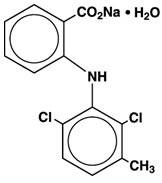
Meclofenamate. INDICATIONS AND USAGE Carefully consider the potential benefits and risks of meclofenamate sodium capsules and other treatment options before…
Boxed warning
Cardiovascular Thrombotic Events • Nonsteroidal anti-inflammatory drugs (NSAIDs) cause an increased risk of serious cardiovascular thrombotic events, including myocardial infarction and stroke, which can be fatal. This risk may occur early in treatment and may increase with duration of use (see WARNINGS and PRECAUTIONS ). • Meclofenamate sodium capsules are contraindicated in the setting of coronary artery bypass graft (CABG) surgery (see CONTRAINDICATIONS and WARNINGS ). Gastrointestinal Risk • NSAIDs cause an increased risk of serious gastrointestinal adverse events including bleeding, ulceration, and perforation of the stomach or intestines, which can be fatal. These events can occur at any time during use and without warning symptoms. Elderly patients are at greater risk for serious gastrointestinal events. (See WARNINGS ).
INDICATIONS AND USAGE Carefully consider the potential benefits and risks of meclofenamate sodium capsules and other treatment options before deciding to use meclofenamate sodium capsules. Use the lowest effective dose for the shortest duration consistent with individual patient treatment goals (see WARNINGS ). Meclofenamate sodium capsules are indicated: • For reduction of fever in adults • For relief of mild to moderate pain in adults • For relief of signs and symptoms of juvenile arthritis. • For relief of the signs and symptoms of rheumatoid arthritis • For relief of the signs and symptoms of osteoarthritis. • For treatment of primary dysmenorrhea. • For acute or long-term use in the relief of signs and symptoms of the following: 1. Ankylosing spondylitis 2. Acute painful shoulder (Acute subacromial bursitis/supraspinatus tendinitis) 3. Acute gouty arthritis Meclofenamate sodium capsules are also indicated for the treatment of idiopathic heavy menstrual blood loss (see CLINICAL PHARMACOLOGY and PRECAUTIONS ). As with all nonsteroidal anti-inflammatory drugs, selection of meclofenamate sodium capsules require a careful assessment of the benefit/risk ratio (see WARNINGS , PRECAUTIONS and ADVERSE REACTIONS ). Meclofenamate sodium capsules are not recommended in children because adequate studies to demonstrate safety and efficacy have not been carried out.
Dosage
DOSAGE AND ADMINISTRATION Carefully consider the potential benefits and risks of meclofenamate sodium capsules and other treatment options before deciding to use meclofenamate sodium capsules. Use the lowest effective dose for the shortest duration consistent with individual patient treatment goals (see WARNINGS ). After observing the response to initial therapy with meclofenamate sodium capsules, the dose and frequency should be adjusted to suit an individual patient's needs. Usual Dosage For Mild to Moderate Pain The recommended dose is 50 mg every 4 to 6 hours. Doses of 100 mg may be needed in some patients for optimal pain relief (see CLINICAL PHARMACOLOGY ). However, the daily dose should not exceed 400 mg (see ADVERSE REACTIONS ). For excessive menstrual blood loss and primary dysmenorrheal The recommended dose of meclofenamate sodium is 100 mg 3 times a day, for up to 6 days, starting at the onset of menstrual flow. For rheumatoid arthritis and osteoarthritis (including acute exacerbations of chronic disease) The dosage is 200 mg to 400 mg per day, administered in three or four equal doses. Therapy should be initiated at the lower dosage, then increased as necessary to improve clinical response. The dosage should be individually adjusted for each patient, depending on the severity of the symptoms and the clinical response. The daily dosage should not exceed 400 mg per day. The smallest dosage of meclofenamate sodium that yields clinical control should be employed. Although improvement may be seen in some patients in a few days, 2 to 3 weeks of treatment may be required to obtain the optimum therapeutic benefit. After a satisfactory response has been achieved, the dosage should be adjusted as required. A lower dosage may suffice for long-term administration. If gastrointestinal complaints occur (see WARNINGS and PRECAUTIONS ), meclofenamate sodium may be administered with meals or with milk (see CLINICAL PHARMACOLOGY for a description of food effects). If intolerance occurs, the dosage may need to be reduced. Therapy should be terminated if any severe adverse reactions occur.
Warnings
WARNINGS Cardiovascular Effects Cardiovascular Thrombotic Events Clinical trials of several COX-2 selective and nonselective NSAIDs of up to 3 years duration have shown an increased risk of serious cardiovascular (CV) thrombotic events, including myocardial infarction (MI) and stroke, which can be fatal. Based on available data, it is unclear that the risk for CV thrombotic events is similar for all NSAIDs. The relative increase in serious CV thrombotic events over baseline conferred by NSAID use appears to be similar in those with and without known CV disease or risk factors for CV disease. However, patients with known CV disease or risk factors had a higher absolute incidence of excess serious CV thrombotic events, due to their increased baseline rate. Some observational studies found that this increased risk of serious CV thrombotic events began as early as the first weeks of treatment. The increase in CV thrombotic risk has been observed most consistently at higher doses. To minimize the potential risk for an adverse CV event in NSAID-treated patients, use the lowest effective dose for the shortest duration possible. Physicians and patients should remain alert for the development of such events, throughout the entire treatment course, even in the absence of previous CV symptoms. Patients should be informed about the symptoms of serious CV events and the steps to take if they occur. There is no consistent evidence that concurrent use of aspirin mitigates the increased risk of serious CV thrombotic events associated with NSAID use. The concurrent use of aspirin and an NSAID, such as meclofenamate sodium, increases the risk of serious gastrointestinal (GI) events (see WARNINGS ). Status Post Coronary Artery Bypass Graft (CABG) Surgery Two large, controlled clinical trials of a COX-2 selective NSAID for the treatment of pain in the first 10 to 14 days following CABG surgery found an increased incidence of myocardial infarction and stroke. NSAIDs are contraindicated in the setting of CABG (see CONTRAINDICATIONS ). Post-MI Patients Observational studies conducted in the Danish National Registry have demonstrated that patients treated with NSAIDs in the post-MI period were at increased risk of reinfarction, CV-related death, and all-cause mortality beginning in the first week of treatment. In this same cohort, the incidence of death in the first year post MI was 20 per 100 person years in NSAID-treated patients compared to 12 per 100 person years in non-NSAID exposed patients. Although the absolute rate of death declined somewhat after the first year post-MI, the increased relative risk of death in NSAID users persisted over at least the next 4 years of follow-up. Avoid the use of meclofenamate sodium capsules in patients with a recent MI unless the benefits are expected to outweigh the risk of recurrent CV thrombotic events. If meclofenamate sodium capsules are used in patients with a recent MI, monitor patients for signs of cardiac ischemia. Hypertension NSAIDs, including meclofenamate sodium, can lead to onset of new hypertension or worsening of preexisting hypertension, either of which may contribute to the increased incidence of CV events. Patients taking thiazides or loop diuretics may have impaired response to these therapies when taking NSAIDs. NSAIDs, including meclofenamate sodium, should be used with caution in patients with hypertension. Blood pressure (BP) should be monitored closely during the initiation of NSAID treatment and throughout the course of therapy. Heart Failure and Edema The Coxib and traditional NSAID Trialists’ Collaboration meta-analysis of randomized controlled trials demonstrated an approximately 2-fold increase in hospitalizations for heart failure in COX-2 selective-treated patients and nonselective NSAID-treated patients compared to placebo-treated patients. In a Danish National Registry study of patients with heart failure, NSAID use increased the risk of MI, hospitalization for heart failure, and death. Additionally, fluid retention and edema have been observed in some patients treated with NSAIDs. Use of meclofenamate sodium may blunt the CV effects of several therapeutic agents used to treat these medical conditions [e.g., diuretics, ACE inhibitors, or angiotensin receptor blockers (ARBs)] (see Drug Interactions ). Avoid the use of meclofenamate sodium capsules in patients with severe heart failure unless the benefits are expected to outweigh the risk of worsening heart failure. If meclofenamate sodium capsules are used in patients with severe heart failure, monitor patients for signs of worsening heart failure. Gastrointestinal Effects Risk of Ulceration, Bleeding, and Perforation NSAIDs, including meclofenamate sodium, can cause serious gastrointestinal (GI) adverse events including inflammation, bleeding, ulceration, and perforation of the stomach, small intestine, or large intestine, which can be fatal. These serious adverse events can occur at any time, with or without warning symptoms, in patients treated with NSAIDs. Only one in five patients, who develop a serious upper GI adverse event on NSAID therapy, is symptomatic. Upper GI ulcers, gross bleeding, or perforation caused by NSAIDs occur in approximately 1% of patients treated for 3 to 6 months, and in about 2% to 4% of patients treated for one year. These trends continue with longer duration of use, increasing the likelihood of developing a serious GI event at some time during the course of therapy. However, even short-term therapy is not without risk. NSAIDs should be prescribed with extreme caution in those with a prior history of ulcer disease or gastrointestinal bleeding. Patients with a prior history of peptic ulcer disease and/or gastrointestinal bleeding who use NSAIDs have a greater than 10-fold increased risk for developing a GI bleed compared to patients with neither of these risk factors. Other factors that increase the risk for GI bleeding in patients treated with NSAIDs include concomitant use of oral corticosteroids or anticoagulants, longer duration of NSAID therapy, smoking, use of alcohol, older age, and poor general health status. Most spontaneous reports of fatal GI events are in elderly or debilitated patients and therefore, special care should be taken in treating this population. To minimize the potential risk for an adverse GI event in patients treated with an NSAID, the lowest effective dose should be used for the shortest possible duration. Patients and physicians should remain alert for signs and symptoms of GI ulceration and bleeding during NSAID therapy and promptly initiate additional evaluation and treatment if a serious GI adverse event is suspected. This should include discontinuation of the NSAID until a serious GI adverse event is ruled out. For high risk patients, alternate therapies that do not involve NSAIDs should be considered. Renal Effects Long-term administration of NSAIDs has resulted in renal papillary necrosis and other renal injury. Renal toxicity has also been seen in patients in whom renal prostaglandins have a compensatory role in the maintenance of renal perfusion. In these patients, administration of a nonsteroidal anti-inflammatory drug may cause a dose dependent reduction in prostaglandin formation and, secondarily, in renal blood flow, which may precipitate overt renal decompensation. Patients at greatest risk of this reaction are those with impaired renal function, heart failure, liver dysfunction, those taking diuretics and ACE inhibitors, and the elderly. Discontinuation of NSAID therapy is usually followed by recovery to the pretreatment state. Advanced Renal Disease No information is available from controlled clinical studies regarding the use of meclofenamate sodium in patients with advanced renal disease. Therefore, treatment with meclofenamate sodium is not recommended in these patients with advanced renal disease. If meclofenamate sodium therapy must be initiated, close monitoring of the pa
Contraindications
CONTRAINDICATIONS Meclofenamate sodium capsules are contraindicated in patients with known hypersensitivity to meclofenamate sodium. Meclofenamate sodium capsules should not be given to patients who have experienced asthma, urticaria, or allergic-type reactions after taking aspirin or other NSAIDs. Severe, rarely fatal, anaphylactic-like reactions to NSAIDs have been reported in such patients (see WARNINGS: Anaphylactoid Reactions and PRECAUTIONS: Preexisting Asthma ). Meclofenamate sodium capsules are contraindicated in the setting of coronary artery bypass graft (CABG) surgery (see WARNINGS ).
Drug interactions
Drug Interactions ACE-inhibitors Reports suggest that NSAIDs may diminish the antihypertensive effect of ACE-inhibitors. This interaction should be given consideration in patients taking NSAIDs concomitantly with ACE-inhibitors. Aspirin When meclofenamate sodium in administered with aspirin, its protein binding is reduced, although the clearance of free meclofenamate sodium is not altered. The clinical significance of this interaction is not known; however, as with other NSAIDs, concomitant administration of meclofenamate sodium capsules and aspirin is not generally recommended because of the potential of increased adverse effects. Furosemide Clinical studies, as well as post-marketing observations, have shown that meclofenamate sodium can reduce the natriuretic effect-of furosemide and thiazides in some patients. This response has been attributed to inhibition of renal prostaglandin synthesis. During concomitant therapy with NSAIDs, the patient should be observed closely for signs of renal failure (see PRECAUTIONS: Renal Effects ), as well as to assure diuretic efficacy. Lithium NSAIDs have produced an elevation of plasma lithium levels and a reduction in renal lithium clearance. The mean minimum lithium concentration increased 15% and the renal clearance was decreased by approximately 20%. These effects have been attributed to inhibition of renal prostaglandin synthesis by the NSAID. Thus, when NSAIDs and lithium are administered concurrently, subjects should be observed carefully for signs of lithium toxicity. Methotrexate NSAIDs have been reported to competitively inhibit methotrexate accumulation in rabbit kidney slices. This may indicate that they could enhance the toxicity of methotrexate. Caution should be used when NSAIDs are administered concomitantly with methotrexate. Warfarin The effects of warfarin and NSAIDs on GI bleeding are synergistic, such that users of both drugs together have a risk of serious GI bleeding higher than users of either drug alone.
Adverse reactions
ADVERSE REACTIONS Incidence Greater Than 1% The following adverse reactions were observed in clinical trials and included observations from more than 2,700 patients, 594 of whom were treated for one year and 248 for at least 2 years. Gastrointestinal The most frequently reported adverse reactions associated with meclofenamate sodium involve the gastrointestinal system. In controlled studies of up to 6 months duration, these disturbances occurred in the following decreasing order of frequency with the approximate incidences in parentheses: diarrhea (10% to 33%), nausea with or without vomiting (11%), other gastrointestinal disorders (10%), and abdominal pain * . In long-term uncontrolled studies of up to 4 years duration, one third of the patients had at least one episode of diarrhea some time during meclofenamate sodium therapy. In approximately 4% of the patients in controlled studies, diarrhea was severe enough to require discontinuation of meclofenamate sodium. The occurrence of diarrhea is dose related, generally subsides with dose reduction, and clears with termination of therapy. The incidence of diarrhea in patients with osteoarthritis is generally lower than that reported in patients with rheumatoid arthritis. Other reactions less frequently reported were pyrosis * , flatulence * , anorexia, constipation, stomatitis, and peptic ulcer. The majority of the patients with peptic ulcer had either a history of ulcer disease or were receiving concomitant anti-inflammatory drugs, including corticosteroids which are known to produce peptic ulceration. Cardiovascular: edema Dermatologic: rash * , urticaria, pruritus Central Nervous System: headache * , dizziness * Special Senses: tinnitus * Incidence between 3% and 9%. Those reactions occurring in 1% to 3% of patients are not marked with an asterisk. Incidence Less Than 1%—Probably Causally Related The following adverse reactions were reported less frequently than 1% during controlled clinical trials and through voluntary reports since marketing. The probability of a causal relationship exists between the drug and these adverse reactions. Gastrointestinal: bleeding and/or perforation with or without obvious ulcer formation, colitis, cholestatic jaundice Renal: renal failure Hematologic: neutropenia, thrombocytopenic purpura, leukopenia, agranulocytosis, hemolytic anemia, eosinophilia, decrease in hemoglobin and/or hematocrit Dermatologic: erythema multiforme, Stevens-Johnson Syndrome, exfoliative dermatitis, toxic epidermal necrolysis (TEN), and fixed drug eruption (FDE) Hepatic: alteration of liver function tests Allergic: lupus and serum sickness-like symptoms Incidence Less Than 1%—Causal Relationship Unknown Other reactions have been reported but under conditions where a causal relationship could not be established. However, in these rarely reported events, that possibility cannot be excluded. Therefore, these observations are listed to alert physicians. Cardiovascular: palpitations Central Nervous System: malaise, fatigue, paresthesia, insomnia, depression Special Senses: blurred vision, taste disturbances, decreased visual acuity, temporary loss of vision, reversible loss of color vision, retinal changes including macular fibrosis, macular and perimacular edema, conjunctivitis, iritis Renal: nocturia Gastrointestinal: paralytic ileus Dermatologic: erythema nodosum, hair loss
Mechanism of action
CLINICAL PHARMACOLOGY Pharmacodynamics Meclofenamate sodium is a nonsteroidal agent which has demonstrated anti-inflammatory, analgesic, and antipyretic activity in laboratory animals. The mode of action, like that of other nonsteroidal anti-inflammatory agents, is not known. Therapeutic action does not result from pituitary-adrenal stimulation. In animal studies, meclofenamate sodium was found to inhibit prostaglandin synthesis and to compete for binding at the prostaglandin receptor site. In vitro, meclofenamate sodium was found to be an inhibitor of human leukocyte 5-lipoxygenase activity. These properties may be responsible for the anti-inflammatory action of meclofenamate sodium. There is no evidence that meclofenamate sodium alters the course of the underlying disease. In several human isotope studies, meclofenamate sodium, at a dosage of 300 mg/day, produced a fecal blood loss of 1 to 2 mL per day, and 2 to 3 mL per day at 400 mg/day. Aspirin, at a dosage of 3.6 g/day, caused a fecal blood loss of 6 mL per day. In a multiple-dose, 1-week study in normal human volunteers, meclofenamate sodium had little or no effect on collagen-induced platelet aggregation, platelet count, or bleeding time. In comparison, aspirin suppressed collagen-induced platelet aggregation and increased bleeding time. The concomitant administration of antacids (aluminum and magnesium hydroxides) does not interfere with absorption of meclofenamate sodium. Pharmacokinetics Meclofenamate sodium is rapidly absorbed in man following single and multiple oral doses with peak plasma concentrations occurring in 0.5 to 2 hours. Based on a comparison to a suspension of meclofenamic acid, meclofenamate sodium is completely bioavailable. The plasma concentrations of meclofenamic acid decline monoexponentially following oral administration. In a study in ten healthy subjects following a single oral dose the apparent elimination half-life ranged from 0.8 to 5.3 hours. After the administration of meclofenamate sodium for 14 days every 8 hours, the apparent elimination half-life ranged from 0.8 to 2.1 hours with no evidence of accumulation of meclofenamic acid in plasma (see Table). TABLE SUMMARY OF MECLOFENAMATE SODIUM PHARMACOKINETIC PARAMETERS Mean (Range) Parameter Values (n = 10) Meclofenamic Acid 100 mg Administered every 8 hours for 14 days Metabolite I 3-Hydroxymethyl metabolite of meclofenamic acid with 20% activity of meclofenamate sodium in vitro C max mcg/mL Peak plasma concentration 4.8 (1.8 to 7.2) 1 (0.5 to 1.5) t max hr Time to peak plasma concentration 0.9 (0.5 to 1.5) 2.4 (0.5 to 4) C min mcg/mL Trough plasma concentration 0.2 (0.5 to 1.5) 0.4 (0.2 to 1.1) Cl/F mL/ min Oral clearance 206 (126 to 342) --- Vd/F liters Oral distribution volume 23.3 (9.1 to 43.2) --- t 1⁄2 hr Elimination half-life 1.3 (0.8 to 2.1) 15.3 Estimated from mean data % of Dose in Urine Unconjugated 0 --- 0.5 (0 to 1.2) Total 2.7 (0 to 4.5) 21.6 (7.5 to 32.6) Meclofenamic acid is extensively metabolized to an active metabolite (Metabolite I; 3-hydroxymethyl metabolite of meclofenamic acid) and at least six other less well characterized minor metabolites. Only this Metabolite I has been shown in vitro to inhibit cyclooxygenase activity with approximately one fifth the activity of meclofenamate sodium. Metabolite I (3-hydroxymethyl metabolite of meclofenamic acid) with a mean half-life of approximately 15 hours did accumulate following multiple dosing. After the administration of 100 mg meclofenamate sodium for 14 days every 8 hours, Metabolite I reached a peak plasma concentration of only 1 mcg/mL. By contrast, the peak concentration was 4.8 mcg/mL for the parent compound on both days 1 and 14. Therefore, the accumulation of Metabolite I is probably not clinically significant. Approximately 70% of the administered dose is excreted by the kidneys with 8% to 35% excreted as predominantly conjugated species of meclofenamic acid and Metabolite I (see Table). Other metabolites, whose excretion rates are unknown, account for the remaining 35% to 62% of the dose excreted in the urine. The remainder of the administered dose (approximately 30%) is eliminated in the feces (apparently through biliary excretion). There is insufficient experience to know if meclofenamate sodium or its metabolites accumulate in patients with compromised renal or hepatic function. Therefore, meclofenamate sodium should be used with caution in these patients (see PRECAUTIONS ). Trace amounts of meclofenamate sodium are excreted in human breast milk. Meclofenamic acid is greater than 99% bound to plasma proteins over a wide drug concentration range. Unlike most NSAIDs, which when administered with food have a decrease in rate but not in extent of absorption, meclofenamic acid is decreased in both. It has been reported that following the administration of meclofenamate sodium capsules one-half hour after a meal, the average extent of bioavailability decreased by 26%, the average peak concentration (C max ) decreased 4-fold and the time to C max was delayed by 3 hours. Clinical Studies Controlled clinical trials comparing meclofenamate sodium with aspirin demonstrated comparable efficacy in rheumatoid arthritis. The meclofenamate sodium treated patients had fewer reactions involving the special senses, specifically tinnitus, but more gastrointestinal reactions, specifically diarrhea. The incidence of patients who discontinued therapy due to adverse reactions was similar for both the meclofenamate sodium and aspirin-treated groups. The improvement with meclofenamate sodium reported by patients and the reduction of the disease activity as evaluated by both physicians and patients with rheumatoid arthritis are associated with a significant reduction in number of tender joints, severity of tenderness, and duration of morning stiffness. The improvement reported by patients and as evaluated by physicians in patients treated with meclofenamate sodium for osteoarthritis is associated with a significant reduction in night pain, pain on walking, degree of starting pain, and pain on passive motion. The function of knee joints also improved significantly. Meclofenamate sodium has been used in combination with gold salts or corticosteroids in patients with rheumatoid arthritis. Studies have demonstrated that meclofenamate sodium contributes to the improvement of patients’ conditions while maintained on gold salts or corticosteroids. Data are inadequate to demonstrate that meclofenamate sodium in combination with salicylates produces greater improvement than that achieved with meclofenamate sodium alone. In controlled clinical trials of patients with mild to moderate pain, meclofenamate sodium 50 mg provided significant pain relief. In these studies of episiotomy and dental pain, meclofenamate sodium 100 mg demonstrated additional benefit in some patients. The onset of analgesic effect was generally within one hour and the duration of action was 4 to 6 hours. In controlled clinical trials of patients with dysmenorrhea, meclofenamate sodium 100 mg t.i.d. provided significant reduction in the symptoms associated with dysmenorrhea. In randomized double-blind crossover trials of meclofenamate sodium 100 mg t.i.d. versus placebo in women with heavy menstrual blood loss (MBL), meclofenamate sodium treatment was usually associated with a reduction in menstrual flow. The graph below is a scatter plot of menstrual flow from the average of two menstrual periods on meclofenamate sodium treatments (vertical axis) versus two menstrual periods on placebo (horizontal axis) for 55 women. Of note, although the amount of reduction in MBL was variable, some degree of reduction occurred in 90% of women in this study. Scattergram of Menstrual Flow Average of Two Periods on Each Treatment of 55 Women from Three Clinical Trials The points on the graph represent the mean MBL for each subject when treated for two periods with placebo and two periods with meclofenamate sodi
A drug lookup is just the start. Eleplan keeps the whole care plan in one place.
Medications, diagnoses, documents, appointments, and the whole care team — organized and always in sync, with Ellie, your AI care assistant, on top of it. Free to start.