Methazolamide
Managing this medication for someone you care for? Eleplan keeps diagnoses, medications and appointments in one plan.
Start free with EleplanMedication reference
Methazolamide
ORAL
Methazolamide. INDICATIONS AND USAGE Methazolamide Tablets, USP are indicated in the treatment of ocular conditions where lowering intraocular pressure is likely…
Brand names
MethazolamidemethazolamideMETHAZOLAMIDE
Active ingredients
METHAZOLAMIDE
Indications
INDICATIONS AND USAGE Methazolamide Tablets, USP are indicated in the treatment of ocular conditions where lowering intraocular pressure is likely to be of therapeutic benefit, such as chronic open-angle glaucoma, secondary glaucoma, and preoperatively in acute angle-closure glaucoma where lowering the intraocular pressure is desired before surgery.
Dosage
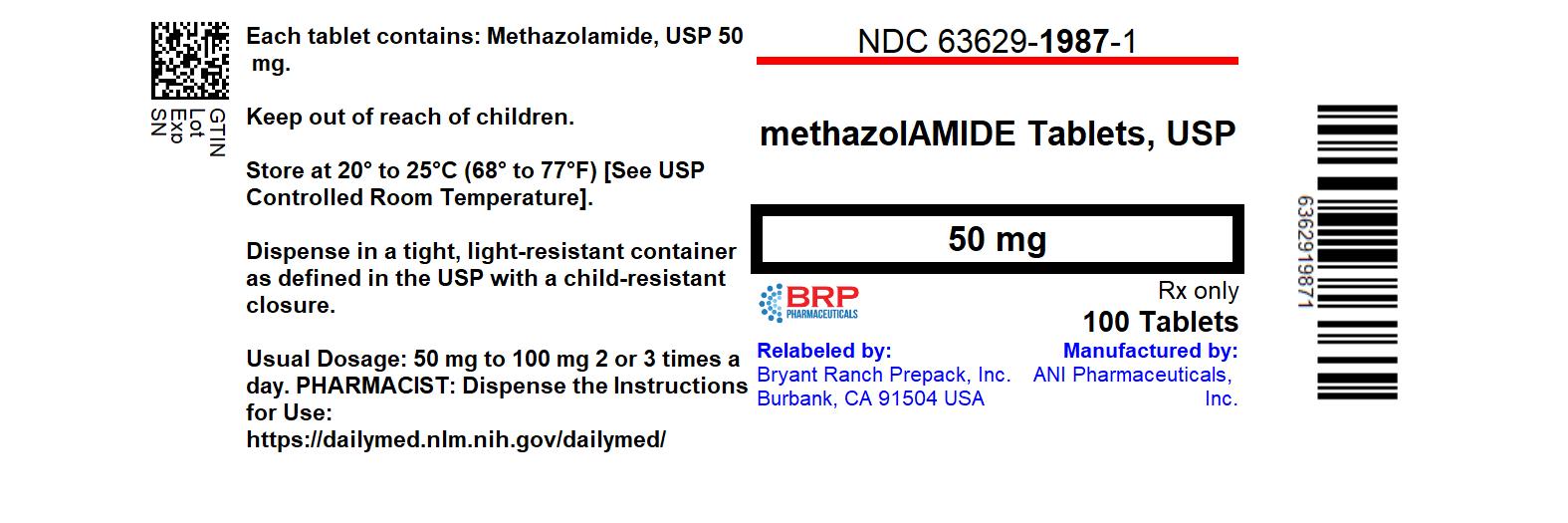
DOSAGE AND ADMINISTRATION: The effective therapeutic dose administered varies from 50 mg to 100 mg two or three times daily. The drug may be used concomitantly with miotic and osmotic agents.
Warnings
WARNINGS: Fatalities have occurred, although rarely, due to severe reactions to sulfonamides including Stevens-Johnson syndrome, toxic epidermal necrolysis, fulminant hepatic necrosis, agranulocytosis, aplastic anemia, and other blood dyscrasias. Hypersensitivity reactions may recur when a sulfonamide is readministered, irrespective of the route of administration. If hypersensitivity or other serious reactions occur, the use of this drug should be discontinued. Caution is advised for patients receiving high-dose aspirin and methazolamide concomitantly, as anorexia, tachypnea, lethargy, coma, and death have been reported with concomitant use of high-dose aspirin and carbonic anhydrase inhibitors.
Contraindications
CONTRAINDICATIONS Methazolamide tablets therapy is contraindicated in situations in which sodium and/or potassium serum levels are depressed, in cases of marked kidney or liver disease or dysfunction, in adrenal gland failure, and in hyperchloremic acidosis. In patients with cirrhosis, use may precipitate the development of hepatic encephalopathy. Long-term administration of methazolamide is contraindicated in patients with angle-closure glaucoma, since organic closure of the angle may occur in spite of lowered intraocular pressure.
Drug interactions
Drug Interactions: Methazolamide should be used with caution in patients on steroid therapy because of the potential for developing hypokalemia. Caution is advised for patients receiving high-dose aspirin and methazolamide concomitantly, as anorexia, tachypnea, lethargy, coma and death have been reported with concomitant use of high-dose aspirin and carbonic anhydrase inhibitors (see WARNINGS ).
Adverse reactions
ADVERSE REACTIONS Adverse reactions, occurring most often early in therapy, include paresthesias, particularly a “tingling” feeling in the extremities; hearing dysfunction or tinnitus; fatigue; malaise; loss of appetite; taste alteration; gastrointestinal disturbances such as nausea, vomiting, and diarrhea; polyuria; and occasional instances of drowsiness and confusion. Metabolic acidosis and electrolyte imbalance may occur. Transient myopia has been reported. This condition invariably subsides upon diminution or discontinuance of the medication. Other occasional adverse reactions include urticaria, melena, hematuria, glycosuria, hepatic insufficiency, flaccid paralysis, photosensitivity, convulsions, and, rarely, crystalluria and renal calculi. Also see PRECAUTIONS: Information for patients for possible reactions common to sulfonamide derivatives. Fatalities have occurred, although rarely, due to severe reactions to sulfonamides including Stevens-Johnson syndrome, toxic epidermal necrolysis, fulminant hepatic necrosis, agranulocytosis, aplastic anemia, and other blood dyscrasias (see WARNINGS ). To report SUSPECTED ADVERSE REACTIONS, contact Bausch & Lomb Incorporated at 1-800-553-5340 or FDA at 1-800-FDA-1088 or www.fda.gov/medwatch.
Mechanism of action
CLINICAL PHARMACOLOGY Methazolamide is a potent inhibitor of carbonic anhydrase. Methazolamide is well absorbed from the gastrointestinal tract. Peak plasma concentrations are observed 1 hour to 2 hours after dosing. In a multiple-dose, pharmacokinetic study, administration of methazolamide 25 mg twice daily, 50 mg twice daily, and 100 mg twice daily demonstrated a linear relationship between plasma methazolamide levels and methazolamide dose. Peak plasma concentrations (C max ) for the 25 mg, 50 mg and 100 mg twice daily regimens were 2.5 mcg/mL, 5.1 mcg/mL, and 10.7 mcg/mL, respectively. The area under the plasma concentration-time curves (AUC) was 1,130 mcg.min/mL, 2,571 mcg.min/mL, and 5,418 mcg.min/mL for the 25 mg, 50 mg, and 100 mg dosage regimens, respectively. Methazolamide is distributed throughout the body including the plasma, cerebrospinal fluid, aqueous humor of the eye, red blood cells, bile and extracellular fluid. The mean apparent volume of distribution (V area /F) ranges from 17 L to 23 L. Approximately 55% is bound to plasma proteins. The steady-state methazolamide red blood cell:plasma ratio varies with dose and was found to be 27:1, 16:1, and 10:1 following the administration of methazolamide 25 mg twice daily, 50 mg twice daily, and 100 mg twice daily, respectively. The mean steady-state plasma elimination half-life for methazolamide is approximately 14 hours. At steady-state, approximately 25% of the dose is recovered unchanged in the urine over the dosing interval. Renal clearance accounts for 20% to 25% of the total clearance of drug. After repeated twice daily to thrice daily dosing, methazolamide accumulates to steady-state concentrations in 7 days. Methazolamide’s inhibitory action on carbonic anhydrase decreases the secretion of aqueous humor and results in a decrease in intraocular pressure. The onset of the decrease in intraocular pressure generally occurs within 2 hours to 4 hours, has a peak effect in 6 hours to 8 hours and a total duration of 10 hours to 18 hours. Methazolamide is a sulfonamide derivative; however, it does not have any clinically significant antimicrobial properties. Although methazolamide achieves a high concentration in the cerebrospinal fluid, it is not considered an effective anticonvulsant. Methazolamide has a weak and transient diuretic effect; therefore, use results in an increase in urinary volume, with excretion of sodium, potassium, and chloride. The drug should not be used as a diuretic. Inhibition of renal bicarbonate reabsorption produces an alkaline urine. Plasma bicarbonate decreases, and a relative, transient metabolic acidosis may occur due to a disequilibrium in carbon dioxide transport in the red blood cell. Urinary citrate excretion is decreased by approximately 40% after doses of 100 mg every 8 hours. Uric acid output has been shown to decrease 36% in the first 24 hour period.
Available forms (2)
NDC examples
72603-16672603-16724208-02224208-02363629-198768094-80868094-90872162-175572162-17540574-07900574-079151407-026
Indicated ICD-10 codes
Treats these conditions
Source: openFDA + RxNorm · 2026
Look up another medication