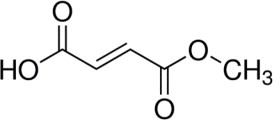
Monomethyl Fumarate
Managing this medication for someone you care for? Eleplan keeps diagnoses, medications and appointments in one plan.
Start free with EleplanMedication reference
Monomethyl Fumarate
ORAL
Monomethyl Fumarate. INDICATIONS AND USAGE BAFIERTAM is indicated for the treatment of relapsing forms of multiple sclerosis (MS), to include clinically isolated…
Brand names
BAFIERTAM
Active ingredients
MONOMETHYL FUMARATE
Indications
INDICATIONS AND USAGE BAFIERTAM is indicated for the treatment of relapsing forms of multiple sclerosis (MS), to include clinically isolated syndrome, relapsing-remitting disease, and active secondary progressive disease, in adults. BAFIERTAM is indicated for the treatment of relapsing forms of multiple sclerosis (MS), to include clinically isolated syndrome, relapsing-remitting disease, and active secondary progressive disease, in adults. ( 1 )
Dosage
DOSAGE AND ADMINISTRATION Blood tests are required prior to initiation of BAFIERTAM. ( 2.1 ) Starting dose: 95 mg twice a day, orally, for 7 days ( 2.2 ) Maintenance dose after 7 days: 190 mg (administered as two 95 mg capsules) twice a day, orally ( 2.2 ) Swallow BAFIERTAM capsules whole and intact. Do not crush, chew, or mix contents with food. ( 2.3 ) Take BAFIERTAM with or without food. ( 2.3 ) 2.1 Blood Tests Prior to Initiation of BAFIERTAM Obtain the following prior to treatment with BAFIERTAM: A complete blood cell count (CBC), including lymphocyte count [see Warnings and Precautions ( 5.4 )] . Serum aminotransferase, alkaline phosphatase, and total bilirubin levels [see Warnings and Precautions ( 5.5 )] . 2.2 Dosing Information The starting dosage for BAFIERTAM is 95 mg twice a day orally for 7 days. After 7 days, the dosage should be increased to the maintenance dosage of 190 mg (administered as two 95 mg capsules) twice a day orally. Temporary dosage reductions to 95 mg twice a day may be considered for individuals who do not tolerate the maintenance dosage. Within 4 weeks, the recommended dosage of 190 mg twice a day should be resumed. Discontinuation of BAFIERTAM should be considered for patients unable to tolerate return to the maintenance dosage. Administration of non-enteric coated aspirin (up to a dose of 325 mg) 30 minutes prior to BAFIERTAM dosing may reduce the incidence or severity of flushing [see Clinical Pharmacology ( 12.3 )] . 2.3 Administration Instructions Swallow BAFIERTAM capsules whole and intact. Do not crush, chew, or mix the contents with food. BAFIERTAM can be taken with or without food. 2.4 Blood Tests to Assess Safety After Initiation of BAFIERTAM Obtain a complete blood cell count (CBC), including lymphocyte count, 6 months after initiation of BAFIERTAM and then every 6 to 12 months thereafter, as clinically indicated [see Warnings and Precautions ( 5.3 )] . Obtain serum aminotransferase, alkaline phosphatase, and total bilirubin levels during treatment with BAFIERTAM, as clinically indicated [see Warnings and Precautions ( 5.4 )] .
Warnings
WARNINGS AND PRECAUTIONS Anaphylaxis and Angioedema: Discontinue and do not restart BAFIERTAM if these occur. ( 5.1 ) Progressive Multifocal Leukoencephalopathy (PML): Withhold BAFIERTAM at the first sign or symptom suggestive of PML. ( 5.2 ) Herpes Zoster and Other Serious Opportunistic Infections: Consider withholding BAFIERTAM in cases of serious infection until the infection has resolved. ( 5.3 ) Lymphopenia: Obtain a CBC including lymphocyte count before initiating BAFIERTAM, after 6 months, and every 6 to 12 months thereafter. Consider interruption of BAFIERTAM if lymphocyte counts <0.5 x 10 9 /L persist for more than six months. ( 5.4 ) Liver Injury: Obtain serum aminotransferase, alkaline phosphatase, and total bilirubin levels before initiating BAFIERTAM and during treatment, as clinically indicated. Discontinue BAFIERTAM if clinically significant liver injury induced by BAFIERTAM is suspected. ( 5.5 ) 5.1 Anaphylaxis and Angioedema BAFIERTAM can cause anaphylaxis and angioedema after the first dose or at any time during treatment. Signs and symptoms in patients taking dimethyl fumarate (the prodrug of BAFIERTAM) have included difficulty breathing, urticaria, and swelling of the throat and tongue. Patients should be instructed to discontinue BAFIERTAM and seek immediate medical care should they experience signs and symptoms of anaphylaxis or angioedema. 5.2 Progressive Multifocal Leukoencephalopathy Progressive multifocal leukoencephalopathy (PML) has occurred in patients with MS treated with dimethyl fumarate (the prodrug of BAFIERTAM). PML is an opportunistic viral infection of the brain caused by the JC virus (JCV) that typically only occurs in patients who are immunocompromised, and that usually leads to death or severe disability. A fatal case of PML occurred in a patient who received dimethyl fumarate for 4 years while enrolled in a clinical trial. During the clinical trial, the patient experienced prolonged lymphopenia (lymphocyte counts predominantly <0.5x10 9 /L for 3.5 years) while taking dimethyl fumarate [see Warnings and Precautions ( 5.4 )] . The patient had no other identified systemic medical conditions resulting in compromised immune system function and had not previously been treated with natalizumab, which has a known association with PML. The patient was also not taking any immunosuppressive or immunomodulatory medications concomitantly. PML has also occurred in patients taking dimethyl fumarate in the postmarketing setting in the presence of lymphopenia (<0.9x10 9 /L). While the role of lymphopenia in these cases is uncertain, the PML cases have occurred predominantly in patients with lymphocyte counts <0.8x10 9 /L persisting for more than 6 months. At the first sign or symptom suggestive of PML, withhold BAFIERTAM and perform an appropriate diagnostic evaluation. Typical symptoms associated with PML are diverse, progress over days to weeks, and include progressive weakness on one side of the body or clumsiness of limbs, disturbance of vision, and changes in thinking, memory, and orientation leading to confusion and personality changes. Magnetic resonance imaging (MRI) findings may be apparent before clinical signs or symptoms. Cases of PML, diagnosed based on MRI findings and the detection of JCV DNA in the cerebrospinal fluid in the absence of clinical signs or symptoms specific to PML, have been reported in patients treated with other MS medications associated with PML. Many of these patients subsequently became symptomatic with PML. Therefore, monitoring with MRI for signs that may be consistent with PML may be useful, and any suspicious findings should lead to further investigation to allow for an early diagnosis of PML, if present. Lower PML-related mortality and morbidity have been reported following discontinuation of another MS medication associated with PML in patients with PML who were initially asymptomatic compared to patients with PML who had characteristic clinical signs and symptoms at diagnosis. It is not known whether these differences are due to early detection and discontinuation of MS treatment or due to differences in disease in these patients. 5.3 Herpes Zoster and Other Serious Opportunistic Infections Serious cases of herpes zoster have occurred with dimethyl fumarate (the prodrug of BAFIERTAM), including disseminated herpes zoster, herpes zoster ophthalmicus, herpes zoster meningoencephalitis, and herpes zoster meningomyelitis. These events may occur at any time during treatment. Monitor patients on BAFIERTAM for signs and symptoms of herpes zoster. If herpes zoster occurs, appropriate treatment for herpes zoster should be administered. Other serious opportunistic infections have occurred with dimethyl fumarate, including cases of serious viral (herpes simplex virus, West Nile virus, cytomegalovirus), fungal (Candida and Aspergillus), and bacterial (Nocardia, Listeria monocytogenes, Mycobacterium tuberculosis) infections. These infections have been reported in patients with reduced absolute lymphocyte counts (ALC) as well as in patients with normal ALC. These infections have affected the brain, meninges, spinal cord, gastrointestinal tract, lungs, skin, eye, and ear. Patients with symptoms and signs consistent with any of these infections should undergo prompt diagnostic evaluation and receive appropriate treatment. Consider withholding BAFIERTAM treatment in patients with herpes zoster or other serious infections until the infection has resolved [see Adverse Reactions ( 6.2 )]. 5.4 Lymphopenia BAFIERTAM may decrease lymphocyte counts. In the MS placebo-controlled trials with dimethyl fumarate (the prodrug of BAFIERTAM), mean lymphocyte counts decreased by approximately 30% during the first year of treatment with dimethyl fumarate and then remained stable. Four weeks after stopping dimethyl fumarate, mean lymphocyte counts increased, but did not return to baseline. Six percent (6%) of dimethyl fumarate patients and <1% of placebo patients experienced lymphocyte counts <0.5x10 9 /L (lower limit of normal 0.91x10 9 /L). The incidence of infections (60% vs 58%) and serious infections (2% vs 2%) was similar in patients treated with dimethyl fumarate or placebo, respectively. There was no increased incidence of serious infections observed in patients with lymphocyte counts <0.8x10 9 /L or ≤0.5x10 9 /L in controlled trials, although one patient in an extension study developed PML in the setting of prolonged lymphopenia (lymphocyte counts predominantly <0.5x10 9 /L for 3.5 years) [see Warnings and Precautions ( 5.2 )] . In controlled and uncontrolled clinical trials with dimethyl fumarate, 2% of patients experienced prolonged, severe lymphopenia (defined as lymphocyte counts <0.5x10 9 /L for at least six months); in this group of patients, the majority of lymphocyte counts remained <0.5x10 9 /L with continued therapy. In these patients with prolonged, severe lymphopenia, the median time for lymphocyte counts to return to normal after discontinuing dimethyl fumarate was 96.0 weeks. In these controlled and uncontrolled clinical studies, among patients who did not experience prolonged, severe lymphopenia during treatment, the median times for lymphocyte counts to return to normal after discontinuing dimethyl fumarate were as follows: 4.3 weeks in patients with mild lymphopenia (lymphocyte count ≥0.8x10 9 /L) at discontinuation, 10.0 weeks in patients with moderate lymphopenia (lymphocyte count 0.5 to <0.8x10 9 /L) at discontinuation, and 16.7 weeks in patients with severe lymphopenia (lymphocyte count <0.5x10 9 /L) at discontinuation. Neither BAFIERTAM nor dimethyl fumarate have been studied in patients with preexisting low lymphocyte counts. Obtain a CBC, including lymphocyte count, before initiating treatment with BAFIERTAM, 6 months after starting treatment, and then every 6 to 12 months thereafter, and as clinically indicated. Consider interruption of BAFIERTAM in patients with lymphocyte counts les
Contraindications
CONTRAINDICATIONS BAFIERTAM is contraindicated in patients: with known hypersensitivity to monomethyl fumarate, dimethyl fumarate, diroximel fumarate, or to any of the excipients of BAFIERTAM. Reactions may include anaphylaxis or angioedema [see Warnings and Precautions ( 5.1 )]. taking dimethyl fumarate or diroximel fumarate [see Drug Interactions ( 7.1 )]. Known hypersensitivity to monomethyl fumarate, dimethyl fumarate, diroximel fumarate, or any of the excipients of BAFIERTAM Co-administration with dimethyl fumarate or diroximel fumarate ( 4 )
Drug interactions
DRUG INTERACTIONS 7.1 Concomitant Dimethyl Fumarate or Diroximel Fumarates Both dimethyl fumarate and diroximel fumarate are metabolized to monomethyl fumarate. Therefore, BAFIERTAM is contraindicated in patients currently taking dimethyl fumarate or diroximel fumarate. BAFIERTAM may be initiated the day following discontinuation of either of these drugs.
Adverse reactions
ADVERSE REACTIONS The following clinically significant adverse reactions are described elsewhere in the labeling: Anaphylaxis and Angioedema [see Warnings and Precautions ( 5.1 )] Progressive Multifocal Leukoencephalopathy [see Warnings and Precautions ( 5.2 ) ] Herpes Zoster and Other Serious Opportunistic Infections [see Warnings and Precautions ( 5.3 ) ] Lymphopenia [see Warnings and Precautions ( 5.4 )] Liver Injury [see Warnings and Precautions ( 5.5 )] Flushing [see Warnings and Precautions ( 5.6 )] Serious Gastrointestinal Reactions [see Warnings and Precautions ( 5.7 )] Most common adverse reactions (incidence for dimethyl fumarate [the prodrug of BAFIERTAM] ≥10% and ≥2% more than placebo) were flushing, abdominal pain, diarrhea, and nausea. ( 6.1 ) To report SUSPECTED ADVERSE REACTIONS, contact Banner Life Sciences at toll-free phone: 1-866-MMF- 95MG or FDA at 1-800-FDA-1088 or www.fda.gov/medwatch. 6.1 Clinical Trials Experience Because clinical trials are conducted under widely varying conditions, adverse reaction rates observed in the clinical trials of a drug cannot be directly compared to rates in the clinical trials of another drug and may not reflect the rates observed in practice. The data described in the following sections were obtained using dimethyl fumarate delayed-release capsules (the prodrug of BAFIERTAM). Adverse Reactions in Placebo-Controlled Trials with Dimethyl Fumarate In the two well-controlled studies demonstrating effectiveness, 1529 patients received dimethyl fumarate with an overall exposure of 2244 person-years [see Clinical Studies ( 14 )]. The adverse reactions presented in Table 1 below are based on safety information from 769 patients treated with dimethyl fumarate 240 mg twice a day and 771 placebo-treated patients. The most common adverse reactions (incidence ≥10% and ≥2% more than placebo) for dimethyl fumarate were flushing, abdominal pain, diarrhea, and nausea. Table 1: Adverse Reactions in Study 1 and 2 Reported for Dimethyl Fumarate at ≥ 2% Higher Incidence than Placebo Adverse Reaction Dimethyl Fumarate 240 mg Twice Daily N=769 % Placebo N=771 % Flushing 40 6 Abdominal pain 18 10 Diarrhea 14 11 Nausea 12 9 Vomiting 9 5 Pruritus 8 4 Rash 8 3 Albumin urine present 6 4 Erythema 5 1 Dyspepsia 5 3 Aspartate aminotransferase increased 4 2 Lymphopenia 2 <1 Gastrointestinal Dimethyl fumarate caused GI events (e.g., nausea, vomiting, diarrhea, abdominal pain, and dyspepsia). In clinical trials, the incidence of GI events was higher early in the course of treatment (primarily during the first month) and usually decreased over time in patients treated with dimethyl fumarate compared with placebo. Four percent (4%) of patients treated with dimethyl fumarate and less than 1% of patients on placebo discontinued due to gastrointestinal events. The incidence of serious GI events was 1% in clinical trial patients treated with dimethyl fumarate; these events, none of which were fatal, included vomiting (0.3%) and abdominal pain (0.3%). Hepatic Transaminases An increased incidence of elevations of hepatic transaminases in patients treated with dimethyl fumarate in clinical trials was seen primarily during the first six months of treatment, and most patients with elevations had levels < 3 times the upper limit of normal (ULN). Elevations of alanine aminotransferase and aspartate aminotransferase to ≥ 3 times the ULN occurred in a small number of patients treated with both dimethyl fumarate and in patients on placebo, and were balanced between the groups. There were no elevations in transaminases ≥ 3 times the ULN with concomitant elevations in total bilirubin > 2 times the ULN. Discontinuations due to elevated hepatic transaminases were < 1%, and were similar in patients treated with dimethyl fumarate or placebo. Eosinophilia A transient increase in mean eosinophil counts was seen during the first 2 months of therapy with dimethyl fumarate. Adverse Reactions in Studies with BAFIERTAM (Monomethyl Fumarate) In clinical studies, a total of 178 healthy subjects have received single doses of BAFIERTAM. The adverse reaction profile of BAFIERTAM was consistent with the experience in the placebo-controlled clinical trials with dimethyl fumarate. Taking BAFIERTAM without food may reduce the incidence of GI events. 6.2 Postmarketing Experience The following adverse reactions have been identified during post approval use of dimethyl fumarate (the prodrug of BAFIERTAM). Because these reactions are reported voluntarily from a population of uncertain size, it is not always possible to reliably estimate their frequency or establish a causal relationship to drug exposure. Gastrointestinal Disorders: Acute pancreatitis; Gastrointestinal perforation, ulceration, obstruction, and hemorrhage [see Warnings and Precautions ( 5.7 )] Hepatobiliary Disorders: Liver function abnormalities (elevations in transaminases ≥ 3 times ULN with concomitant elevations in total bilirubin > 2 times ULN) [see Warnings and Precautions ( 5.5 )] Infections and Infestations: Herpes zoster infection and other serious opportunistic infections [see Warnings and Precautions ( 5.3 )] Respiratory, Thoracic, and Mediastinal Disorders: Rhinorrhea Skin and Subcutaneous: Alopecia
Mechanism of action
Mechanism of Action The mechanism by which monomethyl fumarate (MMF) exerts its therapeutic effect in multiple sclerosis is unknown. MMF has been shown to activate the Nuclear factor (erythroid-derived 2) like 2 (Nrf2) pathway in vitro and in vivo in animals and humans. The Nrf2 pathway is involved in the cellular response to oxidative stress. MMF has been identified as a nicotinic acid receptor agonist in vitro .
NDC examples
69387-001
Indicated ICD-10 codes
Treats these conditions
Assistance programs
AABD Cash AssistanceACL Assistive TechnologyACL Assistive Technology State Grants for Protection and AdvocacyACL Centers for Independent LivingACL Independent Living State GrantsAdult Day CareAdult Day Care ServicesAdult Day HealthAdult Day Health CareAdult Day/Health Care CentersAdult Day ServiceAdult Day Services
Source: openFDA + RxNorm · 2026
Look up another medication