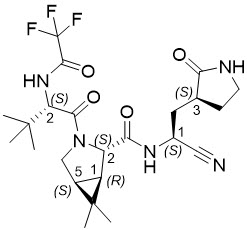
Nirmatrelvir and Ritonavir. INDICATIONS AND USAGE PAXLOVID is indicated for the treatment of mild-to-moderate coronavirus disease 2019 (COVID-19) in adults who are at high risk…
Boxed warning
WARNING: SIGNIFICANT DRUG INTERACTIONS WITH PAXLOVID • PAXLOVID includes ritonavir, a strong CYP3A inhibitor, which may lead to greater exposure of certain concomitant medications, resulting in potentially severe, life-threatening, or fatal events [see Contraindications (4) , Warnings and Precautions (5.1) , and Drug Interactions (7) ]. • Prior to prescribing PAXLOVID: 1) Review all medications taken by the patient to assess potential drug-drug interactions with a strong CYP3A inhibitor like PAXLOVID and 2) Determine if concomitant medications require a dose adjustment, interruption, and/or additional monitoring [see Drug Interactions (7) ]. • Consider the benefit of PAXLOVID treatment in reducing hospitalization and death, and whether the risk of potential drug-drug interactions for an individual patient can be appropriately managed [see Warnings and Precautions (5.1) , Drug Interactions (7) , and Clinical Studies (14) ]. WARNING: SIGNIFICANT DRUG INTERACTIONS WITH PAXLOVID See full prescribing information for complete boxed warning. • PAXLOVID includes ritonavir, a strong CYP3A inhibitor, which may lead to greater exposure of certain concomitant medications, resulting in potentially severe, life-threatening, or fatal events. ( 4 , 5.1 , 7 ) • Prior to prescribing PAXLOVID: 1) Review all medications taken by the patient to assess potential drug-drug interactions with a strong CYP3A inhibitor like PAXLOVID and 2) Determine if concomitant medications require a dose adjustment, interruption, and/or additional monitoring. ( 7 ) • Consider the benefit of PAXLOVID treatment in reducing hospitalization and death, and whether the risk of potential drug-drug interactions for an individual patient can be appropriately managed. ( 5.1 , 7 , 14 )
INDICATIONS AND USAGE PAXLOVID is indicated for the treatment of mild-to-moderate coronavirus disease 2019 (COVID-19) in adults who are at high risk for progression to severe COVID-19, including hospitalization or death. PAXLOVID which includes nirmatrelvir, a severe acute respiratory syndrome coronavirus 2 (SARS-CoV-2) main protease (M pro : also referred to as 3CL pro or nsp5 protease) inhibitor, and ritonavir, an HIV-1 protease inhibitor and CYP3A inhibitor, is indicated for the treatment of mild-to-moderate coronavirus disease 2019 (COVID-19) in adults who are at high risk for progression to severe COVID-19, including hospitalization or death. ( 1 ) Limitations of Use PAXLOVID is not approved for use as pre-exposure or post-exposure prophylaxis for prevention of COVID-19. ( 1 ) Limitations of Use PAXLOVID is not approved for use as pre-exposure or post-exposure prophylaxis for prevention of COVID-19 [see Clinical Studies (14.3) ] .
Dosage
DOSAGE AND ADMINISTRATION PAXLOVID is nirmatrelvir tablets co-packaged with ritonavir tablets. ( 2.1 ) Nirmatrelvir must be co-administered with ritonavir. ( 2.1 ) • Initiate PAXLOVID treatment as soon as possible after diagnosis of COVID-19 and within 5 days of symptom onset. ( 2.1 ) • Administer orally with or without food. ( 2.1 ) • Administer at approximately the same time each day. ( 2.2 , 2.3 ) • Dosage: 300 mg nirmatrelvir (two 150 mg tablets) with 100 mg ritonavir (one 100 mg tablet), with all 3 tablets taken together twice daily for 5 days. ( 2.2 ) • Dose Reduction for Renal Impairment ( 2.3 , 8.6 , 12.3 ) Abbreviation: eGFR=estimated glomerular filtration rate. Renal Function Days of Treatment Dose and Dose Frequency PAXLOVID should be administered at approximately the same time each day for 5 days. Moderate renal impairment (eGFR ≥30 to <60 mL/min) Days 1-5 150 mg nirmatrelvir (one 150 mg tablet) with 100 mg ritonavir (one 100 mg tablet) twice daily Severe renal impairment (eGFR <30 mL/min) including those requiring hemodialysis On days of hemodialysis, the PAXLOVID dose should be administered after hemodialysis. Day 1 300 mg nirmatrelvir (two 150 mg tablets) with 100 mg ritonavir (one 100 mg tablet) once Days 2-5 150 mg nirmatrelvir (one 150 mg tablet) with 100 mg ritonavir (one 100 mg tablet) once daily • PAXLOVID is not recommend in patients with severe hepatic impairment (Child-Pugh Class C). ( 2.4 , 8.7 ) 2.1 Important Dosage and Administration Information PAXLOVID is nirmatrelvir tablets co-packaged with ritonavir tablets. There are three different dose packs available: • PAXLOVID (nirmatrelvir; ritonavir) co-packaged for oral use 300 mg;100 mg [see Dosage and Administration (2.2) ] . • PAXLOVID (nirmatrelvir; ritonavir) co-packaged for oral use 150 mg;100 mg for patients with moderate renal impairment [see Dosage and Administration (2.3) ]. • PAXLOVID (nirmatrelvir; ritonavir) co-packaged for oral use 300 mg;100 mg (Day 1) and 150 mg;100 mg (Days 2-5) for patients with severe renal impairment [see Dosage and Administration (2.3) ]. Nirmatrelvir must be co-administered with ritonavir. Failure to correctly co-administer nirmatrelvir with ritonavir may result in plasma levels of nirmatrelvir that are insufficient to achieve the desired therapeutic effect. Prescriptions should specify the numeric dose of each active ingredient within PAXLOVID [see Dosage and Administration (2.2 , 2.3 )]. Completion of the full 5-day treatment course and continued isolation in accordance with public health recommendations are important to maximize viral clearance and minimize transmission of SARS-CoV-2. The 5-day treatment course of PAXLOVID should be initiated as soon as possible after a diagnosis of COVID-19 has been made, and within 5 days of symptom onset even if baseline COVID-19 symptoms are mild. Should a patient require hospitalization due to severe or critical COVID-19 after starting treatment with PAXLOVID, the patient should complete the full 5-day treatment course per the healthcare provider's discretion. If the patient misses a dose of PAXLOVID within 8 hours of the time it is usually taken, the patient should take it as soon as possible and resume the normal dosing schedule. If the patient misses a dose by more than 8 hours, the patient should not take the missed dose and instead take the next dose at the regularly scheduled time. The patient should not double the dose to make up for a missed dose. PAXLOVID (both nirmatrelvir and ritonavir tablets) can be taken with or without food [see Clinical Pharmacology (12.3) ] . The tablets should be swallowed whole and not chewed, broken, or crushed. 2.2 Recommended Dosage The recommended dosage for PAXLOVID is 300 mg nirmatrelvir (two 150 mg tablets) with 100 mg ritonavir (one 100 mg tablet) with all 3 tablets taken together orally twice daily in the morning and at bedtime for 5 days. 2.3 Dosage in Patients with Renal Impairment Prescriptions should specify the numeric dose of each active ingredient within PAXLOVID. Providers should counsel patients about renal dosing instructions [see Patient Counseling Information (17) ]. No dosage adjustment is recommended in patients with mild renal impairment [estimated glomerular filtration rate (eGFR) ≥60 to <90 mL/min]. In patients with moderate renal impairment (eGFR ≥30 to <60 mL/min) or with severe renal impairment (eGFR <30 mL/min) including those requiring hemodialysis, the dosage of PAXLOVID should be reduced as shown in Table 1. PAXLOVID should be administered at approximately the same time each day for 5 days. On days patients with severe renal impairment undergo hemodialysis, the PAXLOVID dose should be administered after hemodialysis [see Use in Specific Populations (8.6) , Clinical Pharmacology (12.3) , and How Supplied/Storage and Handling (16) ] . Table 1: Recommended Dose and Regimen for Patients with Renal Impairment Abbreviation: eGFR=estimated glomerular filtration rate. Renal Function Days of Treatment Dose and Dose Frequency PAXLOVID should be administered at approximately the same time each day for 5 days. Moderate renal impairment (eGFR ≥30 to <60 mL/min) Days 1-5 150 mg nirmatrelvir (one 150 mg tablet) with 100 mg ritonavir (one 100 mg tablet) twice daily Severe renal impairment (eGFR <30 mL/min) including those requiring hemodialysis On days of hemodialysis, the PAXLOVID dose should be administered after hemodialysis. Day 1 300 mg nirmatrelvir (two 150 mg tablets) with 100 mg ritonavir (one 100 mg tablet) once Days 2-5 150 mg nirmatrelvir (one 150 mg tablet) with 100 mg ritonavir (one 100 mg tablet) once daily 2.4 Use in Patients with Hepatic Impairment No dosage adjustment is needed in patients with mild (Child-Pugh Class A) or moderate (Child-Pugh Class B) hepatic impairment. No pharmacokinetic or safety data are available regarding the use of nirmatrelvir or ritonavir in subjects with severe (Child-Pugh Class C) hepatic impairment; therefore, PAXLOVID is not recommended for use in patients with severe hepatic impairment [see Use in Specific Populations (8.7) ] .
Warnings
WARNINGS AND PRECAUTIONS • The concomitant use of PAXLOVID and certain other drugs may result in potentially significant drug interactions. Consult the Full Prescribing Information prior to and during treatment for potential drug interactions. ( 5.1 , 7 ) • Hypersensitivity Reactions: Anaphylaxis, serious skin reactions (including toxic epidermal necrolysis and Stevens-Johnson syndrome), and other hypersensitivity reactions have been reported with PAXLOVID. If signs and symptoms of a clinically significant hypersensitivity reaction or anaphylaxis occur, immediately discontinue PAXLOVID and initiate appropriate medications and/or supportive care. ( 5.2 ) • Hepatotoxicity: Hepatic transaminase elevations, clinical hepatitis, and jaundice have occurred in patients receiving ritonavir. ( 5.3 ) • HIV-1 Drug Resistance: PAXLOVID use may lead to a risk of HIV-1 developing resistance to HIV protease inhibitors in individuals with uncontrolled or undiagnosed HIV-1 infection. ( 5.4 ) 5.1 Risk of Serious Adverse Reactions Due to Drug Interactions Initiation of PAXLOVID, which contains ritonavir, a strong CYP3A inhibitor, in patients receiving medications metabolized by CYP3A or initiation of medications metabolized by CYP3A in patients already receiving PAXLOVID, may increase plasma concentrations of medications metabolized by CYP3A. Medications that induce CYP3A may decrease concentrations of PAXLOVID. These interactions may lead to: • Clinically significant adverse reactions, potentially leading to severe, life-threatening, or fatal events from greater exposures of concomitant medications. • Loss of therapeutic effect of PAXLOVID and possible development of viral resistance. Severe, life-threatening, and/or fatal adverse reactions due to drug interactions have been reported in patients treated with PAXLOVID. The most commonly reported concomitant medications resulting in serious adverse reactions were calcineurin inhibitors (e.g., tacrolimus, cyclosporine), followed by calcium channel blockers. Prior to prescribing PAXLOVID, review all medications taken by the patient to assess potential drug-drug interactions and determine if concomitant medications require a dose adjustment, interruption, and/or additional monitoring (e.g., calcineurin inhibitors) [see Contraindications (4) and Drug Interactions (7) ] . See Table 2 for clinically significant drug interactions, including contraindicated drugs. Drugs listed in Table 2 are a guide and not considered a comprehensive list of all possible drugs that may interact with PAXLOVID. Consider the benefit of PAXLOVID treatment in reducing hospitalization and death, and whether the risk of potential drug-drug interactions for an individual patient can be appropriately managed [see Drug Interactions (7) and Clinical Studies (14) ] . 5.2 Hypersensitivity Reactions Anaphylaxis, serious skin reactions (including toxic epidermal necrolysis and Stevens-Johnson syndrome), and other hypersensitivity reactions have been reported with PAXLOVID [see Adverse Reactions (6.1) ]. If signs and symptoms of a clinically significant hypersensitivity reaction or anaphylaxis occur, immediately discontinue PAXLOVID and initiate appropriate medications and/or supportive care. 5.3 Hepatotoxicity Hepatic transaminase elevations, clinical hepatitis, and jaundice have occurred in patients receiving ritonavir. Therefore, caution should be exercised when administering PAXLOVID to patients with pre-existing liver diseases, liver enzyme abnormalities, or hepatitis. 5.4 Risk of HIV-1 Resistance Development Because nirmatrelvir is co-administered with ritonavir, there may be a risk of HIV-1 developing resistance to HIV protease inhibitors in individuals with uncontrolled or undiagnosed HIV-1 infection [see Contraindications (4) and Drug Interactions (7) ] .
Contraindications
CONTRAINDICATIONS PAXLOVID is contraindicated in patients with a history of clinically significant hypersensitivity reactions [e.g., toxic epidermal necrolysis (TEN) or Stevens-Johnson syndrome] to its active ingredients (nirmatrelvir or ritonavir) or any other components of the product. PAXLOVID is contraindicated with drugs that are primarily metabolized by CYP3A and for which elevated concentrations are associated with serious and/or life-threatening reactions and drugs that are strong CYP3A inducers where significantly reduced nirmatrelvir or ritonavir plasma concentrations may be associated with the potential for loss of virologic response and possible resistance. There are certain other drugs for which concomitant use with PAXLOVID should be avoided and/or dose adjustment, interruption, or therapeutic monitoring is recommended. Drugs listed in this section are a guide and not considered a comprehensive list of all drugs that may be contraindicated with PAXLOVID. The healthcare provider should consult other appropriate resources such as the prescribing information for the interacting drug for comprehensive information on dosing or monitoring with concomitant use of a strong CYP3A inhibitor like PAXLOVID [see Drug Interactions (7.3) ] : ➢ Drugs that are primarily metabolized by CYP3A for which elevated concentrations are associated with serious and/or life-threatening reactions [see Drug Interactions (7.3) ] : • Alpha 1-adrenoreceptor antagonist: alfuzosin • Antianginal: ranolazine • Antiarrhythmic: amiodarone, dronedarone, flecainide, propafenone, quinidine • Anti-gout: colchicine (in patients with renal and/or hepatic impairment [see Table 2 , Drug Interactions (7.3)] ) • Antipsychotics: lurasidone, pimozide • Benign prostatic hyperplasia agents: silodosin • Cardiovascular agents: eplerenone, ivabradine • Ergot derivatives: dihydroergotamine, ergotamine, methylergonovine • HMG-CoA reductase inhibitors: lovastatin, simvastatin (these drugs can be temporarily discontinued to allow PAXLOVID use [see Table 2 , Drug Interactions (7.3) ] ) • Immunosuppressants: voclosporin • Microsomal triglyceride transfer protein inhibitor: lomitapide • Migraine medications: eletriptan, ubrogepant • Mineralocorticoid receptor antagonists: finerenone • Non-opioid analgesic (selective blocker of Na v 1.8 sodium channels): suzetrigine • Opioid antagonists: naloxegol • PDE5 inhibitor: sildenafil (Revatio ® ) when used for pulmonary arterial hypertension (PAH) • Sedative/hypnotics: triazolam, oral midazolam • Serotonin receptor 1A agonist/serotonin receptor 2A antagonist: flibanserin • Vasopressin receptor antagonists: tolvaptan ➢ Drugs that are strong CYP3A inducers where significantly reduced nirmatrelvir or ritonavir plasma concentrations may be associated with the potential for loss of virologic response and possible resistance. PAXLOVID cannot be started immediately after discontinuation of any of the following medications due to the delayed offset of the recently discontinued CYP3A inducer [see Drug Interactions (7.3) ] : • Anticancer drugs: apalutamide, enzalutamide • Anticonvulsant: carbamazepine, phenobarbital, primidone, phenytoin • Antimycobacterials: rifampin, rifapentine • Cystic fibrosis transmembrane conductance regulator potentiators: lumacaftor/ivacaftor • Herbal products: St. John's Wort ( hypericum perforatum ) • History of clinically significant hypersensitivity reactions to the active ingredients (nirmatrelvir or ritonavir) or any other components. ( 4 ) • Co-administration with drugs highly dependent on CYP3A for clearance and for which elevated concentrations are associated with serious and/or life-threatening reactions. ( 4 , 7.3 ) • Co-administration with potent CYP3A inducers where significantly reduced nirmatrelvir or ritonavir plasma concentrations may be associated with the potential for loss of virologic response and possible resistance. ( 4 , 7.3 )
Drug interactions
DRUG INTERACTIONS Co-administration of PAXLOVID can alter the plasma concentrations of other drugs and other drugs may alter the plasma concentrations of PAXLOVID. Consider the potential for drug interactions prior to and during PAXLOVID therapy and review concomitant medications during PAXLOVID therapy. ( 4 , 5.1 , 7 , 12.3 ) 7.1 Potential for PAXLOVID to Affect Other Drugs PAXLOVID (nirmatrelvir co-packaged with ritonavir) is a strong inhibitor of CYP3A, and an inhibitor of CYP2D6, P-gp and OATP1B1. Co-administration of PAXLOVID with drugs that are primarily metabolized by CYP3A and CYP2D6 or are transported by P-gp or OATP1B1 may result in increased plasma concentrations of such drugs and increase the risk of adverse events. Co-administration of PAXLOVID with drugs highly dependent on CYP3A for clearance and for which elevated plasma concentrations are associated with serious and/or life-threatening events is contraindicated [see Contraindications (4) and Drug Interactions (7.3) Table 2 ] . Co-administration with other CYP3A substrates may require a dose adjustment or additional monitoring as shown in Table 2. 7.2 Potential for Other Drugs to Affect PAXLOVID Nirmatrelvir and ritonavir are CYP3A substrates; therefore, drugs that induce CYP3A may decrease nirmatrelvir and ritonavir plasma concentrations and reduce PAXLOVID therapeutic effect [see Contraindications (4) and Drug Interactions (7.3) Table 2 ] . 7.3 Established and Other Potentially Significant Drug Interactions Table 2 provides a listing of clinically significant drug interactions, including contraindicated drugs [see Contraindications (4) and Warnings and Precautions (5.1) ] . Drugs listed in Table 2 are a guide and not considered a comprehensive list of all possible drugs that may interact with PAXLOVID. The healthcare provider should consult other appropriate resources such as the prescribing information for the interacting drug for comprehensive information on dosing or monitoring with concomitant use of a strong CYP3A inhibitor such as ritonavir. Table 2: Established and Other Potentially Significant Drug Interactions Drug Class Drugs within Class Effect on Concentration Clinical Comments Alpha 1- adrenoreceptor antagonist alfuzosin ↑ alfuzosin Co-administration contraindicated due to potential hypotension [see Contraindications (4) ] . Alpha 1- adrenoreceptor antagonist tamsulosin ↑ tamsulosin Avoid concomitant use with PAXLOVID. Antianginal ranolazine ↑ ranolazine Co-administration contraindicated due to potential for serious and/or life-threatening reactions [see Contraindications (4) ] . Antiarrhythmics amiodarone, dronedarone, flecainide, propafenone, quinidine ↑ antiarrhythmic Co-administration contraindicated due to potential for cardiac arrhythmias [see Contraindications (4) ] . Antiarrhythmics lidocaine (systemic), disopyramide ↑ antiarrhythmic Caution is warranted and therapeutic concentration monitoring is recommended for antiarrhythmics if available. Anticancer drugs apalutamide, enzalutamide ↓ nirmatrelvir/ritonavir Co-administration contraindicated due to potential loss of virologic response and possible resistance [see Contraindications (4) ]. Anticancer drugs abemaciclib, ceritinib, dasatinib, encorafenib, ibrutinib, ivosidenib, neratinib, nilotinib, venetoclax, vinblastine, vincristine ↑ anticancer drugs Avoid co-administration of encorafenib or ivosidenib due to potential risk of serious adverse events such as QT interval prolongation. Avoid use of neratinib, venetoclax or ibrutinib. Co-administration of vincristine and vinblastine may lead to significant hematologic or gastrointestinal side effects. For further information, refer to the individual product prescribing information for anticancer drug. Anticoagulants warfarin ↑↓ warfarin Closely monitor international normalized ratio (INR) if co-administration with warfarin is necessary. rivaroxaban ↑ rivaroxaban Increased bleeding risk with rivaroxaban. Avoid concomitant use. dabigatran See Pharmacokinetics, Clinical Drug Interaction Studies (12.3) . ↑ dabigatran Increased bleeding risk with dabigatran. Depending on dabigatran indication and renal function, reduce dose of dabigatran or avoid concomitant use. Refer to the dabigatran prescribing information for further information. apixaban ↑ apixaban Combined P-gp and strong CYP3A inhibitors increase blood levels of apixaban and increase the risk of bleeding. Dosing recommendations for co-administration of apixaban with PAXLOVID depend on the apixaban dose. Refer to the apixaban prescribing information for more information. Anticonvulsants carbamazepine , phenobarbital, primidone, phenytoin ↓ nirmatrelvir/ritonavir Co-administration contraindicated due to potential loss of virologic response and possible resistance [see Contraindications (4) ] . Anticonvulsants clonazepam ↑ anticonvulsant A dose decrease may be needed for clonazepam when co-administered with PAXLOVID and clinical monitoring is recommended. Antidepressants bupropion ↓ bupropion and active metabolite hydroxy-bupropion Monitor for an adequate clinical response to bupropion. trazodone ↑ trazodone Adverse reactions of nausea, dizziness, hypotension, and syncope have been observed following co-administration of trazodone and ritonavir. A lower dose of trazodone should be considered. Refer to the trazadone prescribing information for further information. Antifungals voriconazole ↓ voriconazole Avoid concomitant use of voriconazole. ketoconazole, isavuconazonium sulfate, itraconazole ↑ ketoconazole ↑ isavuconazonium sulfate ↑ itraconazole Refer to the ketoconazole, isavuconazonium sulfate, and itraconazole prescribing information for further information. ↑ nirmatrelvir/ritonavir A nirmatrelvir/ritonavir dose reduction is not needed. Anti-gout colchicine ↑ colchicine Co-administration contraindicated due to potential for serious and/or life-threatening reactions in patients with renal and/or hepatic impairment [see Contraindications (4) ] . Anti-HIV protease inhibitors atazanavir, darunavir, tipranavir ↑ protease inhibitor For further information, refer to the respective protease inhibitors' prescribing information. Patients on ritonavir- or cobicistat-containing HIV regimens should continue their treatment as indicated. Monitor for increased PAXLOVID or protease inhibitor adverse events . Anti-HIV efavirenz, maraviroc, nevirapine, zidovudine, bictegravir/ emtricitabine/ tenofovir ↑ efavirenz ↑ maraviroc ↑ nevirapine ↓ zidovudine ↑ bictegravir ↔ emtricitabine ↑ tenofovir For further information, refer to the respective anti-HIV drugs prescribing information. Anti-infective clarithromycin, erythromycin ↑ clarithromycin ↑ erythromycin Refer to the respective prescribing information for anti-infective dose adjustment. Antimycobacterial rifampin, rifapentine ↓ nirmatrelvir/ritonavir Co-administration contraindicated due to potential loss of virologic response and possible resistance. Alternate antimycobacterial drugs such as rifabutin should be considered [see Contraindications (4) ] . Antimycobacterial bedaquiline ↑ bedaquiline Refer to the bedaquiline prescribing information for further information. rifabutin ↑ rifabutin Refer to the rifabutin prescribing information for further information on rifabutin dose reduction. Antipsychotics lurasidone, pimozide ↑ lurasidone ↑ pimozide Co-administration contraindicated due to serious and/or life-threatening reactions such as cardiac arrhythmias [see Contraindications (4) ] . Antipsychotics quetiapine ↑ quetiapine If co-administration is necessary, reduce quetiapine dose and monitor for quetiapine-associated adverse reactions. Refer to the quetiapine prescribing information for recommendations. clozapine ↑ clozapine If co-administration is necessary, consider reducing the clozapine dose and monitor for adverse reactions. Benign prostatic hyperplasia agents silodosin ↑ silodosin Co-administration contraindicated due to potential for postural hypotension [see Contraind
Adverse reactions
ADVERSE REACTIONS The following clinically significant adverse reactions are described elsewhere in the labeling: • Hypersensitivity reactions [see Warnings and Precautions (5.2) ] Most common adverse reactions (incidence ≥1% and greater incidence than in the placebo group) are dysgeusia and diarrhea. ( 6.1 ) To report SUSPECTED ADVERSE REACTIONS, contact Pfizer Inc. at 1-800-438-1985 or FDA at 1-800-FDA-1088 or www.fda.gov/medwatch . 6.1 Clinical Trials Experience Because clinical trials are conducted under widely varying conditions, adverse reaction rates observed in the clinical trials of a drug cannot be directly compared to rates in the clinical trials of another drug and may not reflect the rates observed in practice. The safety of PAXLOVID is based on two Phase 2/3 randomized, placebo-controlled trials in symptomatic adult subjects 18 years of age and older with a laboratory confirmed diagnosis of SARS-CoV-2 infection. Subjects in both studies received PAXLOVID (nirmatrelvir/ritonavir 300 mg/100 mg) or placebo every 12 hours for 5 days for the treatment of mild-to-moderate COVID-19 within 5 days of symptom onset [see Clinical Studies (14) ] : • Trial C4671005 (EPIC-HR) enrolled subjects who were at high risk for progression to severe disease. • Trial C4671002 (EPIC-SR) enrolled subjects who were at standard risk for progression to severe disease (previously unvaccinated subjects at standard risk or fully vaccinated subjects with at least 1 risk factor for progression to severe disease). Adverse reactions were those reported while subjects were on study medication and through 28 days after the last dose of study treatment. In Trial C4671005 (EPIC-HR), 1,038 subjects received PAXLOVID and 1,053 subjects received placebo. The most common adverse reactions (≥1% incidence in the PAXLOVID group and occurring at a greater frequency than in the placebo group) were dysgeusia (5% and <1%, respectively) and diarrhea (3% and 2%, respectively). Among vaccinated or unvaccinated subjects at standard risk or fully vaccinated subjects with at least 1 risk factor for progression to severe disease in Trial C4671002 (EPIC-SR), 540 subjects received PAXLOVID and 528 subjects received placebo. The adverse reactions observed were consistent with those observed in EPIC-HR. Trial C4671028 (EPIC-SRI) was a Phase 1, open-label trial that evaluated the effects of severe renal impairment on the pharmacokinetics, safety, and tolerability of PAXLOVID in non-hospitalized adult participants with COVID-19 and severe renal impairment. A total of 15 subjects with severe renal impairment were enrolled in this trial, with 12 subjects receiving intermittent hemodialysis and 3 subjects not on hemodialysis. Subjects received nirmatrelvir/ritonavir 300 mg/100 mg once on Day 1 followed by nirmatrelvir/ritonavir 150 mg/100 mg once daily from Days 2-5. The safety profile of PAXLOVID in subjects with severe renal impairment, including those requiring hemodialysis, was consistent with the safety profile observed in the Phase 2/3 randomized, placebo-controlled trials. Emergency Use Authorization Experience in Subjects with COVID-19 The following adverse reactions have been identified during use of PAXLOVID under Emergency Use Authorization. Immune System Disorders: Anaphylaxis, hypersensitivity reactions [see Warnings and Precautions (5.2) ] Skin and Subcutaneous Tissue Disorders: Toxic epidermal necrolysis, Stevens-Johnson syndrome [see Warnings and Precautions (5.2) ] Nervous System Disorders: Headache Vascular Disorders: Hypertension Gastrointestinal Disorders: Abdominal pain, nausea, vomiting General Disorders and Administration Site Conditions: Malaise
Mechanism of action
Mechanism of Action Nirmatrelvir is a severe acute respiratory syndrome coronavirus 2 (SARS-CoV-2) antiviral drug [see Microbiology (12.4) ]. Ritonavir is an HIV-1 protease inhibitor but is not active against SARS-CoV-2 M pro . Ritonavir inhibits the CYP3A-mediated metabolism of nirmatrelvir, resulting in increased plasma concentrations of nirmatrelvir.