Norepinephrine
Managing this medication for someone you care for? Eleplan keeps diagnoses, medications and appointments in one plan.
Start free with EleplanMedication reference
Norepinephrine
INTRAVENOUS
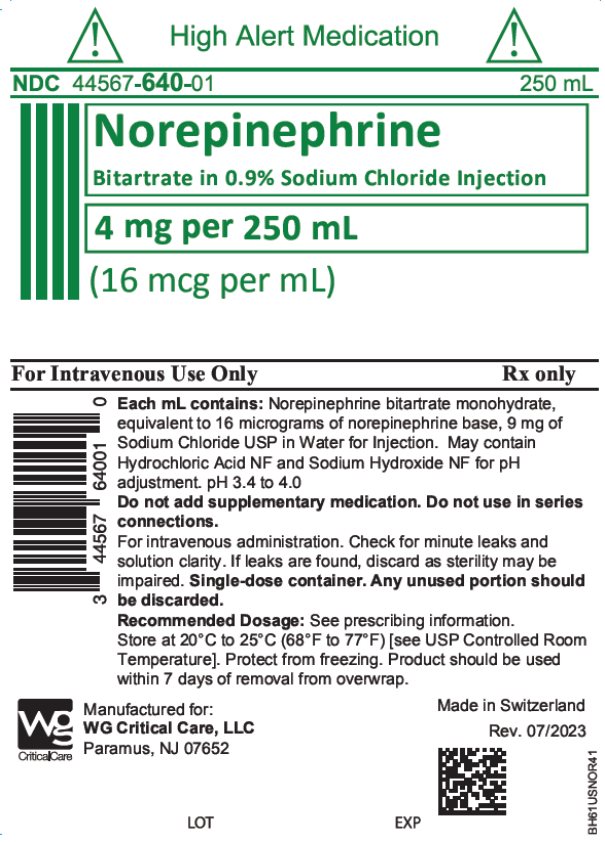
Norepinephrine. INDICATIONS AND USAGE Norepinephrine Bitartrate in Dextrose Injection or Norepinephrine Bitartrate in Sodium Chloride Injection is indicated to…
Brand names
NOREPINEPHRINE BITARTRATENorepinephrine BitartrateLEVOPHEDnorepinephrine bitartrateNorepinephrineNorepinephrine bitartrate
Active ingredients
NOREPINEPHRINE BITARTRATE
Indications
INDICATIONS AND USAGE Norepinephrine Bitartrate in Dextrose Injection or Norepinephrine Bitartrate in Sodium Chloride Injection is indicated to raise blood pressure in adult patients with severe, acute hypotension. Norepinephrine Bitartrate in Dextrose Injection or Norepinephrine Bitartrate in Sodium Chloride Injection is a catecholamine indicated for restoration of blood pressure in adult patients with acute hypotensive states. ( 1 )
Dosage
DOSAGE AND ADMINISTRATION Norepinephrine bitartrate injection is a concentrated, potent drug which must be diluted in dextrose containing solutions prior to infusion. An infusion of norepinephrine bitartrate injection should be given into a large vein ( see PRECAUTIONS ). Restoration of Blood Pressure in Acute Hypotensive States Blood volume depletion should always be corrected as fully as possible before any vasopressor is administered. When, as an emergency measure, intraaortic pressures must be maintained to prevent cerebral or coronary artery ischemia, norepinephrine bitartrate injection can be administered before and concurrently with blood volume replacement. Diluent: Norepinephrine bitartrate injection should be diluted in 5 percent dextrose injection or 5 percent dextrose and sodium chloride injections. These dextrose containing fluids are protection against significant loss of potency due to oxidation. Administration in saline solution alone is not recommended. Whole blood or plasma, if indicated to increase blood volume, should be administered separately (for example, by use of a Y-tube and individual containers if given simultaneously). Average Dosage: Add the content of the vial (4 mg/4 mL) of norepinephrine bitartrate injection to 1,000 mL of a 5 percent dextrose containing solution. Each mL of this dilution contains 4 mcg of the base of norepinephrine bitartrate. Give this solution by intravenous infusion. Insert a plastic intravenous catheter through a suitable bore needle well advanced centrally into the vein and securely fixed with adhesive tape, avoiding, if possible, a catheter tie-in technique as this promotes stasis. An IV drip chamber or other suitable metering device is essential to permit an accurate estimation of the rate of flow in drops per minute. After observing the response to an initial dose of 2 mL to 3 mL (from 8 mcg to 12 mcg of base) per minute, adjust the rate of flow to establish and maintain a low normal blood pressure (usually 80 mm Hg to 100 mm Hg systolic) sufficient to maintain the circulation to vital organs. In previously hypertensive patients, it is recommended that the blood pressure should be raised no higher than 40 mm Hg below the preexisting systolic pressure. The average maintenance dose ranges from 0.5 mL to 1 mL per minute (from 2 mcg to 4 mcg of base). High Dosage: Great individual variation occurs in the dose required to attain and maintain an adequate blood pressure. In all cases, dosage of norepinephrine bitartrate injection should be titrated according to the response of the patient. Occasionally much larger or even enormous daily doses (as high as 68 mg base or 17 vials) may be necessary if the patient remains hypotensive, but occult blood volume depletion should always be suspected and corrected when present. Central venous pressure monitoring is usually helpful in detecting and treating this situation. Fluid Intake: The degree of dilution depends on clinical fluid volume requirements. If large volumes of fluid (dextrose) are needed at a flow rate that would involve an excessive dose of the pressor agent per unit of time, a solution more dilute than 4 mcg per mL should be used. On the other hand, when large volumes of fluid are clinically undesirable, a concentration greater than 4 mcg per mL may be necessary. Duration of Therapy: The infusion should be continued until adequate blood pressure and tissue perfusion are maintained without therapy. Infusions of norepinephrine bitartrate injection should be reduced gradually, avoiding abrupt withdrawal. In some of the reported cases of vascular collapse due to acute myocardial infarction, treatment was required for up to six days. Adjunctive Treatment in Cardiac Arrest Infusions of norepinephrine bitartrate injection are usually administered intravenously during cardiac resuscitation to restore and maintain an adequate blood pressure after an effective heartbeat and ventilation have been established by other means. [Norepinephrine’s powerful beta-adrenergic stimulating action is also thought to increase the strength and effectiveness of systolic contractions once they occur.] Average Dosage: To maintain systemic blood pressure during the management of cardiac arrest, norepinephrine bitartrate injection is used in the same manner as described under Restoration of Blood Pressure in Acute Hypotensive States. Parenteral drug products should be inspected visually for particulate matter and discoloration prior to use, whenever solution and container permit. Do not use the solution if its color is pinkish or darker than slightly yellow or if it contains a precipitate. Avoid contact with iron salts, alkalis, or oxidizing agents.
Warnings
WARNINGS AND PRECAUTIONS • Tissue Ischemia : Infuse Norepinephrine Bitartrate in Dextrose Injection or Norepinephrine Bitartrate in Sodium Chloride Injection into a large vein. To prevent sloughing and necrosis in areas in with extravasation, infiltrate the area with an adrenergic blocking agent in saline. ( 5.1 ) • Hypotension After Abrupt Discontinuation: Gradually taper a norepinephrine infusion to prevent hypotension. ( 5.2 ) • Cardiac Arrhythmias: Norepinephrine Bitartrate in Dextrose Injection or Norepinephrine Bitartrate in Sodium Chloride Injection may cause arrhythmias. Monitor cardiac function in patients with underlying heart disease. ( 5.3 ) • Allergic Reactions with Sulfite : Norepinephrine Bitartrate in Sodium Chloride Injection contains sodium metabisulfite: Sulfite may cause allergic-type reactions. ( 5.4 ) 5.1 Tissue Ischemia Administration of Norepinephrine Bitartrate in Dextrose Injection or Norepinephrine Bitartrate in Sodium Chloride Injection to patients who are hypotensive from hypovolemia can result in severe peripheral and visceral vasoconstriction, decreased renal perfusion and reduced urine output, tissue hypoxia, lactic acidosis, and reduced systemic blood flow despite “normal” blood pressure. Address hypovolemia prior to initiating Norepinephrine Bitartrate in Dextrose Injection or Norepinephrine Bitartrate in Sodium Chloride Injection [see Dosage and Administration (2.1) ]. Avoid Norepinephrine Bitartrate in Dextrose Injection or Norepinephrine Bitartrate in Sodium Chloride Injection in patients with mesenteric or peripheral vascular thrombosis, as this may increase ischemia and extend the area of infarction. Gangrene of the extremities has occurred in patients with occlusive or thrombotic vascular disease or who received prolonged or high dose infusions. Monitor for changes to the skin of the extremities in susceptible patients. Extravasation of Norepinephrine Bitartrate in Dextrose Injection or Norepinephrine Bitartrate in Sodium Chloride Injection may cause necrosis and sloughing of surrounding tissue. To reduce the risk of extravasation, infuse into a large vein, check the infusion site frequently for free flow, and monitor for signs of extravasation [see Dosage and Administration (2.1) ]. Emergency Treatment of Extravasation To prevent sloughing and necrosis in areas in which extravasation has occurred, infiltrate the ischemic area as soon as possible, using a syringe with a fine hypodermic needle with 5 mg to 10 mg of phentolamine mesylate in 10 mL to 15 mL of 0.9% Sodium Chloride Injection in adults. Sympathetic blockade with phentolamine causes immediate and conspicuous local hyperemic changes if the area is infiltrated within 12 hours. 5.2 Hypotension after Abrupt Discontinuation Sudden cessation of the infusion rate may result in marked hypotension. When discontinuing the infusion, gradually reduce the Norepinephrine Bitartrate in Dextrose Injection or Norepinephrine Bitartrate in Sodium Chloride Injection infusion rate while expanding blood volume with intravenous fluids. 5.3 Cardiac Arrhythmias Norepinephrine Bitartrate in Dextrose Injection or Norepinephrine Bitartrate in Sodium Chloride Injection elevates intracellular calcium concentrations and may cause arrhythmias, particularly in the setting of hypoxia or hypercarbia. Perform continuous cardiac monitoring of patients with arrhythmias. 5.4 Allergic Reactions Associated with Sulfite This product contains sodium metabisulfite, a sulfite that may cause allergic-type reactions including anaphylactic symptoms and life-threatening or less severe asthmatic episodes in certain susceptible people. The overall prevalence of sulfite sensitivity in the general population is unknown and probably low. Sulfite sensitivity is seen more frequently in asthmatic than in non-asthmatic people.
Contraindications
CONTRAINDICATIONS Norepinephrine should not be given to patients who are hypotensive from blood volume deficits except as an emergency measure to maintain coronary and cerebral artery perfusion until blood volume replacement therapy can be completed. If norepinephrine bitartrate injection is continuously administered to maintain blood pressure in the absence of blood volume replacement, the following may occur: severe peripheral and visceral vasoconstriction, decreased renal perfusion and urine output, poor systemic blood flow despite “normal” blood pressure, tissue hypoxia, and lactate acidosis. Norepinephrine should also not be given to patients with mesenteric or peripheral vascular thrombosis (because of the risk of increasing ischemia and extending the area of infarction) unless, in the opinion of the attending physician, the administration of norepinephrine bitartrate injection is necessary as a life-saving procedure. Cyclopropane and halothane anesthetics increase cardiac autonomic irritability and therefore seem to sensitize the myocardium to the action of intravenously administered epinephrine or norepinephrine. Hence, the use of norepinephrine during cyclopropane and halothane anesthesia is generally considered contraindicated because of the risk of producing ventricular tachycardia or fibrillation. The same type of cardiac arrhythmias may result from the use of norepinephrine bitartrate injection in patients with profound hypoxia or hypercarbia.
Drug interactions
DRUG INTERACTIONS • Monoamine oxidase inhibitors (MAOI) or tricyclic antidepressants of the triptyline or imipramine types may result in hypertension. ( 7.1 , 7.2 ) • Antidiabetics: Norepinephrine can decrease insulin sensitivity and raise blood glucose ( 7.3 ) • Cyclopropane and halothane anesthetics increase cardiac autonomic irritability. ( 7.4 ) 7.1 MAO-Inhibiting Drugs Co-administration of Norepinephrine Bitartrate in Dextrose Injection or Norepinephrine Bitartrate in Sodium Chloride Injection with monoamine oxidase (MAO) inhibitors or other drugs with MAO-inhibiting properties (e.g., linezolid) can cause severe, prolonged hypertension. If administration of Norepinephrine Bitartrate in Dextrose Injection or Norepinephrine Bitartrate in Sodium Chloride Injection cannot be avoided in patients who recently have received any of these drugs and in whom, after discontinuation, MAO activity has not yet sufficiently recovered, monitor for hypertension. 7.2 Tricyclic Antidepressants Co-administration of Norepinephrine Bitartrate in Dextrose Injection or Norepinephrine Bitartrate in Sodium Chloride Injection with tricyclic antidepressants (including amitriptyline, nortriptyline, protriptyline, clomipramine, desipramine, imipramine) can cause severe, prolonged hypertension. If administration of Norepinephrine Bitartrate in Dextrose Injection or Norepinephrine Bitartrate in Sodium Chloride Injection cannot be avoided in these patients, monitor for hypertension. 7.3 Antidiabetics Norepinephrine Bitartrate in Dextrose Injection or Norepinephrine Bitartrate in Sodium Chloride Injection can decrease insulin sensitivity and raise blood glucose. Monitor glucose and consider dosage adjustment of antidiabetic drugs. 7.4 Halogenated Anesthetics Concomitant use of Norepinephrine Bitartrate in Dextrose Injection or Norepinephrine Bitartrate in Sodium Chloride Injection with halogenated anesthetics (e.g., cyclopropane, desflurane, enflurane, isoflurane, and sevoflurane) may lead to ventricular tachycardia or ventricular fibrillation. Monitor cardiac rhythm in patients receiving concomitant halogenated anesthetics.
Adverse reactions
ADVERSE REACTIONS The following reactions can occur: Body As A Whole: Ischemic injury due to potent vasoconstrictor action and tissue hypoxia. Cardiovascular System: Bradycardia, probably as a reflex result of a rise in blood pressure, arrhythmias. Nervous System: Anxiety, transient headache. Respiratory System: Respiratory difficulty. Skin and Appendages: Extravasation necrosis at injection site. Prolonged administration of any potent vasopressor may result in plasma volume depletion which should be continuously corrected by appropriate fluid and electrolyte replacement therapy. If plasma volumes are not corrected, hypotension may recur when norepinephrine is discontinued, or blood pressure may be maintained at the risk of severe peripheral and visceral vasoconstriction (e.g., decreased renal perfusion) with diminution in blood flow and tissue perfusion with subsequent tissue hypoxia and lactic acidosis and possible ischemic injury. Gangrene of extremities has been rarely reported. Overdoses or conventional doses in hypersensitive persons (e.g., hyperthyroid patients) cause severe hypertension with violent headache, photophobia, stabbing retrosternal pain, pallor, intense sweating, and vomiting. To report SUSPECTED ADVERSE REACTIONS, contact Amneal Biosciences at 1-855-266-3251 or FDA at 1-800-FDA-1088 or www.fda.gov/medwatch.
Mechanism of action
CLINICAL PHARMACOLOGY 12.1 Mechanism of Action Norepinephrine is a peripheral vasoconstrictor (alpha-adrenergic action) and an inotropic stimulator of the heart and dilator of coronary arteries (beta-adrenergic action). 12.2 Pharmacodynamics The primary pharmacodynamic effects of norepinephrine are cardiac stimulation and vasoconstriction. Cardiac output is generally unaffected, although it can be decreased, and total peripheral resistance is also elevated. The elevation in resistance and pressure result in reflex vagal activity, which slows the heart rate and increases stroke volume. The elevation in vascular tone or resistance reduces blood flow to the major abdominal organs as well as to skeletal muscle. Coronary blood flow is substantially increased secondary to the indirect effects of alpha stimulation. After intravenous administration, a pressor response occurs rapidly and reaches steady state within 5 minutes. The pharmacologic actions of norepinephrine are terminated primarily by uptake and metabolism in sympathetic nerve endings. The pressor action stops within 1- 2 minutes after the infusion is discontinued. 12.3 Pharmacokinetics Absorption Following initiation of intravenous infusion, the steady state plasma concentration is achieved in 5 min. Distribution Plasma protein binding of norepinephrine is approximately 25%. It is mainly bound to plasma albumin and to a smaller extent to prealbumin and alpha 1-acid glycoprotein. The volume of distribution is 8.8 L. Norepinephrine localizes mainly in sympathetic nervous tissue. It crosses the placenta but not the blood-brain barrier. Elimination The mean half-life of norepinephrine is approximately 2.4 min. The average metabolic clearance is 3.1 L/min. Metabolism Norepinephrine is metabolized in the liver and other tissues by a combination of reactions involving the enzymes catechol-O-methyltransferase (COMT) and MAO. The major metabolites are normetanephrine and 3-methoxyl-4-hydroxy mandelic acid (vanillylmandelic acid, VMA), both of which are inactive. Other inactive metabolites include 3-methoxy-4-hydroxyphenylglycol, 3,4-dihydroxymandelic acid, and 3,4- dihydroxyphenylglycol. Excretion Noradrenaline metabolites are excreted in urine primarily as sulphate conjugates and, to a lesser extent, as glucuronide conjugates. Only small quantities of norepinephrine are excreted unchanged.
Available forms (6)
NDC examples
70377-12151991-98370121-15760409-016165145-1330143-931872572-48172205-24147335-61583854-01771288-4390338-0040
Indicated ICD-10 codes
Treats these conditions
Source: openFDA + RxNorm · 2026
Look up another medication