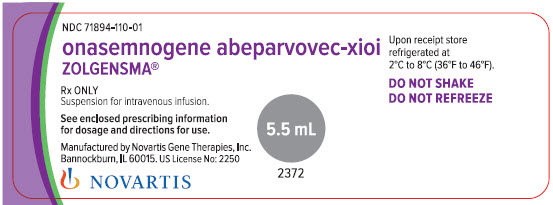
Onasemnogene Abeparvovec. INDICATIONS AND USAGE ZOLGENSMA is an adeno-associated virus (AAV) vector-based gene therapy indicated for the treatment of pediatric patients less…
Boxed warning
WARNING: SERIOUS LIVER INJURY and ACUTE LIVER FAILURE Cases of acute liver failure with fatal outcomes have been reported. Acute serious liver injury and elevated aminotransferases can also occur with ZOLGENSMA [see Warnings and Precautions ( 5.1 )]. Patients with preexisting liver impairment may be at higher risk [see Warnings and Precautions ( 5.1 )]. Prior to infusion, assess liver function of all patients by clinical examination and laboratory testing. Administer systemic corticosteroid to all patients before and after ZOLGENSMA infusion. Continue to monitor liver function for at least 3 months after infusion, and at other times as clinically indicated [see Dosage and Administration ( 2.1 , 2.3 )]. WARNING: SERIOUS LIVER INJURY and ACUTE LIVER FAILURE See full prescribing information for complete boxed warning. Cases of acute liver failure with fatal outcomes have been reported. Acute serious liver injury and elevated aminotransferases can also occur with ZOLGENSMA. ( 5.1 ) Patients with preexisting liver impairment may be at higher risk. ( 5.1 ) Prior to infusion, assess liver function of all patients by clinical examination and laboratory testing. Administer systemic corticosteroid to all patients before and after ZOLGENSMA infusion. Continue to monitor liver function for at least 3 months after infusion, and at other times as clinically indicated. ( 2.1 , 2.3 )
INDICATIONS AND USAGE ZOLGENSMA is an adeno-associated virus (AAV) vector-based gene therapy indicated for the treatment of pediatric patients less than 2 years of age with spinal muscular atrophy (SMA) with bi-allelic mutations in the survival motor neuron 1 (SMN1) gene. Limitations of Use The safety and effectiveness of repeat administration of ZOLGENSMA have not been evaluated [see Adverse Reactions ( 6.2 )] . The use of ZOLGENSMA in patients with advanced SMA (e.g., complete paralysis of limbs, permanent ventilator-dependence) has not been evaluated [see Clinical Studies ( 14 )] . ZOLGENSMA is an adeno-associated virus (AAV) vector-based gene therapy indicated for the treatment of pediatric patients less than 2 years of age with spinal muscular atrophy (SMA) with bi-allelic mutations in the survival motor neuron 1 ( SMN1) gene. ( 1 ) Limitations of Use The safety and effectiveness of repeat administration of ZOLGENSMA have not been evaluated. ( 1 , 6.2 ) The use of ZOLGENSMA in patients with advanced SMA (e.g., complete paralysis of limbs, permanent ventilator dependence) has not been evaluated. ( 1 , 14 )
Dosage
DOSAGE AND ADMINISTRATION For single-dose intrathecal injection only. ( 2 ) The recommended dose of ITVISMA is 1.2 × 10 14 vector genomes (vg). ( 2.2 ) Administer ITVISMA as an intrathecal bolus injection over approximately 1 to 2 minutes. ( 2.4 ) Postpone ITVISMA in patients with infections until the infection has resolved and the patient is clinically stable. ( 2.1 ) Starting one day prior to ITVISMA injection, administer systemic corticosteroids equivalent to oral prednisolone at 1 mg/kg of body weight per day for a total of 30 days. At the end of the 30-day period, check liver function by clinical examination and by laboratory testing. For patients with unremarkable findings, taper the corticosteroid dose gradually over the next 28 days. If liver function abnormalities persist, continue systemic corticosteroids (equivalent to oral prednisolone at 1 mg/kg/day) until findings become unremarkable, and then taper the corticosteroid dose gradually over the next 28 days or longer if needed. Do not stop systemic corticosteroids abruptly. ( 2.2 ) If at any time patients do not respond adequately to the equivalent of 1 mg/kg/day oral prednisolone, based on the patient’s clinical course, prompt consultation with a gastroenterologist or hepatologist and adjustment to the recommended corticosteroid regimen may be considered. ( 2.2 ) 2.1 Critical Dosing Information For single-dose intrathecal injection only. Patients previously treated with ZOLGENSMA (onasemnogene abeparvovec-xioi) should not be treated with ITVISMA [see Clinical Pharmacology (12.1)] . ITVISMA should only be administered intrathecally using a lumbar puncture by healthcare professionals (e.g., interventional radiologist or neurologist) experienced in performing lumbar punctures. Prior to ITVISMA injection: Due to the increased risk of serious systemic immune response, administer ITVISMA to patients who are clinically stable in their overall baseline health status (e.g., hydration and nutritional status, absence of infection, respiratory status) prior to administration. Postpone ITVISMA in patients with active or recent infections, until the infection has resolved, and the patient is clinically stable. Clinical signs or symptoms of infection should not be evident at the time of ITVISMA injection. Assess vaccination status. Vaccination status should be up-to-date prior to ITVISMA administration. Recommend seasonal prophylaxis against respiratory syncytial virus (RSV). Assess liver function (clinical examination and laboratory testing including aspartate aminotransferase (AST), alanine aminotransferase (ALT), albumin, prothrombin time, partial thromboplastin time (PTT), international normalized ratio (INR), and total bilirubin) [see Warnings and Precautions (5.1), Use in Specific Populations (8.6)] . Obtain creatinine and complete blood count (including hemoglobin and platelet count) [see Warnings and Precautions (5.2, 5.4)] . Perform baseline testing for the presence of anti-AAV9 antibodies. One day prior to ITVISMA injection, begin administration of systemic corticosteroids equivalent to oral prednisolone at 1 mg per kg of body weight per day (mg/kg/day) for a total of 30 days. Do not stop systemic corticosteroids abruptly. After the 30-day period, taper prednisolone (or equivalent) as needed according to the clinical status and liver function testing [see Warnings and Precautions (5.1, 5.2)] . See Table 1 for the recommended corticosteroid regimen. Do not re-administer ITVISMA. 2.2 Dose The recommended dose of ITVISMA is 1.2 × 10 14 vector genomes (vg). Table 1 includes the recommended corticosteroid regimen prior to and following ITVISMA injection. If at any time patients do not respond adequately to the equivalent of 1 mg/kg/day oral prednisolone, based on the patient’s clinical course, obtain prompt consultation with a gastroenterologist or hepatologist and consider adjustment to the recommended corticosteroid regimen, including increased dose, longer duration or prolongation of corticosteroid taper [see Warnings and Precautions (5.1)] . If oral corticosteroid therapy is not tolerated or not effective, consider intravenous corticosteroids, as clinically indicated. Table 1: Recommended Corticosteroid Regimen Pre- and Post- ITVISMA Injection Pre-Injection - 24 hours prior to ITVISMA injection Oral prednisolone 1 mg/kg/day (or equivalent) Post-Injection - 30 days (including the day of ITVISMA administration) Oral prednisolone 1 mg/kg/day (or equivalent) Followed by 28 days: For patients with unremarkable findings (normal clinical exam, total bilirubin, and ALT and AST levels below 2 × ULN) or For patients with liver function abnormalities at the end of the 30 day period: continue until the AST and ALT values are both below 2 × ULN and all other assessments return to normal range, and then taper the corticosteroid dose over the next 28 days or longer if needed . Systemic corticosteroids should be tapered gradually Taper prednisolone (or equivalent) Systemic corticosteroids (equivalent to oral prednisolone 1 mg/kg/day) Systemic corticosteroids should be tapered gradually 2.3 Preparation Required supplies and materials (not supplied) Needle for withdrawal Syringe Syringe cap Spinal needle The supplies and materials compatible with ITVISMA are listed in Table 2. Device components must be indicated for intrathecal or neuraxial use. Ensure all device components use the same connector type. Incompatible device connections may result in dose loss during administration. Table 2: Component Materials Compatible With ITVISMA a Not to be manufactured with Polyvinylchloride (PVC), Bisphenol-A (BPA), Bis(2- ethylhexyl) phthalate (DEHP) or Latex Component Material of Construction 18G to 19G Needle for withdrawal, maximum 1.5” long Stainless steel 5mL to 10mL Syringe a Polypropylene Syringe cap a Polypropylene or Polyethylene or Methacrylate-Acrylonitrile-Butadiene-Styrene 22G to 27G Spinal needle, maximum 150mm long Stainless steel Vial Preparation: ITVISMA should be prepared aseptically. Thaw ITVISMA in the refrigerator for approximately 4 hours, or at room temperature for approximately 1 hour. If thawed in the refrigerator, remove ITVISMA from refrigerator on day of dosing. Do not use ITVISMA unless thawed. Prior to intrathecal injection, ITVISMA should be brought to room temperature. When thawed, ITVISMA is a clear to slightly opaque, colorless to faint white liquid, free of particles. After withdrawal of ITVISMA from the vial, a visual inspection is required. DO NOT use if particulates, cloudiness, or discoloration are visible. DO NOT SHAKE. Immediately prior to dosing, draw the content from the vial into the syringe, remove air from syringe, confirm the dose volume of 3 mL in the syringe, cap syringe and deliver to patient injection location. Once dose is drawn into the syringe, it may be held in the refrigerator at 2°C to 8°C (36°F to 46°F) for up to 24 hours, including a 5-hour maximum time out-of-refrigeration allowance within the 24-hour period. Discard the vector-containing syringe if not injected within this time period. DO NOT REFREEZE. Procedural Preparation Instructions: Consider sedation if indicated by the patient’s clinical status. Consider imaging techniques to guide intrathecal injection of ITVISMA. Evaluate patient prior to and after intrathecal injection for conditions that may contraindicate lumbar puncture or increase procedural risk to prevent serious complications. 2.4 Administration Intrathecal Injection Instructions: Prior to administration, remove 3 mL of cerebrospinal fluid (CSF) using a lumbar puncture needle to create space for injection volume. Administer ITVISMA as an intrathecal bolus injection over approximately 1 to 2 minutes through the lumbar puncture needle. Place patient in Trendelenburg position (head down at 30 degrees for 15 minutes). Adjust patient positioning and duration based on the patient’s clinical status to enhance distribution. Follow standard post-lumbar
Warnings
WARNINGS AND PRECAUTIONS Systemic Immune Response: Administer ZOLGENSMA to patients who are clinically stable in their overall baseline health status (e.g., hydration and nutritional status, absence of infection) prior to infusion. ( 5.2 ) Thrombocytopenia: Monitor platelet counts before ZOLGENSMA infusion, and at least weekly for the first month and then every other week for the second and third month or until platelet counts return to baseline. ( 2.3 , 5.3 ) Thrombotic Microangiopathy (TMA): Prompt attention to signs and symptoms of TMA is advised, as TMA can result in life-threatening or fatal outcomes. If clinical signs, symptoms and/or laboratory findings occur, consult a pediatric hematologist and/or pediatric nephrologist immediately to manage as clinically indicated. ( 5.4 ) Elevated Troponin I: Increases in cardiac troponin I levels have occurred following ZOLGENSMA infusion. Consider cardiac evaluation after ZOLGENSMA infusion and consult a cardiologist as needed. ( 5.5 ) AAV Vector Integration and Risk of Tumorigenicity: There is a theoretical risk of tumorigenicity due to integration of AAV vector DNA into the genome. Report cases of tumors in patients who received ZOLGENSMA, to Novartis Gene Therapies, Inc. ( 5.6 , 17 ) Infusion-Related Reactions: Monitor patients during and after ZOLGENSMA infusion. Interrupt ZOLGENSMA infusion if infusion-related reaction occurs and administer supportive treatment as appropriate. Infusion of ZOLGENSMA may be resumed based on clinical assessment. ( 5.7 ) 5.1 Acute Serious Liver Injury, Acute Liver Failure or Elevated Aminotransferases Acute serious liver injury, acute liver failure and elevated aminotransferases can occur with ZOLGENSMA. Hepatotoxicity (which may be immune-mediated), generally manifested as elevated ALT and/or AST levels. Acute serious liver injury and acute liver failure, including fatal cases, have been reported with ZOLGENSMA use [see Adverse Reactions ( 6 )] . In order to mitigate potential aminotransferase elevations, administer systemic corticosteroid to all patients before and after ZOLGENSMA infusion. Immune-mediated hepatotoxicity may require adjustment of the corticosteroid treatment regimen, including longer duration, increased dose, or prolongation of the corticosteroid taper [see Dosage and Administration ( 2.1 )] . Patients with preexisting liver impairment or acute hepatic viral infection may be at higher risk of acute serious liver injury/acute liver failure. Patients with ALT, AST, or total bilirubin levels (except due to neonatal jaundice) > 2 × ULN have not been studied in clinical trials with ZOLGENSMA. Carefully consider the risks and benefits of ZOLGENSMA therapy in patients with preexisting liver impairment. Although in the clinical trials and in postmarketing experience, asymptomatic aminotransferase elevations were very commonly reported [see Adverse Reactions ( 6.1 )] , in the managed access program and in the postmarketing setting, cases of acute serious liver injury and acute liver failure, including a few cases with fatal outcomes, have been reported. Some patients have experienced elevations in ALT and AST > 20 × ULN, prolonged prothrombin time and have been symptomatic (e.g., vomiting, jaundice), which required the use of corticosteroids, sometimes with prolonged duration and/or a higher dose. If acute serious liver injury or acute liver failure is suspected, promptly consult a pediatric gastroenterologist or hepatologist. Prior to ZOLGENSMA infusion, assess liver function by clinical examination and laboratory testing (hepatic aminotransferases [AST and ALT], total bilirubin level, albumin, prothrombin time, PTT, and INR). Continue to monitor liver function (AST, ALT, total bilirubin, prothrombin time, INR) for at least 3 months after ZOLGENSMA infusion, and at other times as clinically indicated. Promptly assess and closely monitor patients with worsening liver function test results and/or signs or symptoms of acute illness (e.g., vomiting, deterioration in health). In case hepatic injury is suspected, further testing of albumin, PTT, and INR is recommended. Monitor liver function weekly for the first month after ZOLGENSMA infusion and during the corticosteroid taper period (28 days or longer if needed). If the patient is clinically stable with unremarkable findings at the end of the corticosteroid taper period, continue to monitor liver function every other week for another month [see Dosage and Administration ( 2.3 )] . 5.2 Systemic Immune Response Due to activation of humoral and cellular immunity following ZOLGENSMA infusion, patients with underlying active infection, either acute (e.g., respiratory, gastrointestinal) or chronic uncontrolled (e.g., chronic active hepatitis B), could be at an increased risk of serious systemic immune response, potentially resulting in more severe clinical courses of the infection. Serious systemic immune response can present with a variety of findings (e.g., high fever, hypotension, etc.). Patients with infection were excluded from participation in ZOLGENSMA clinical trials. Recommend increased vigilance in the prevention, monitoring, and management of infection before and after ZOLGENSMA infusion. To mitigate the risk of serious and life-threatening systemic immune response, administer ZOLGENSMA to patients who are clinically stable in their overall baseline health status (e.g., hydration and nutritional status, absence of infection) prior to infusion. Postpone ZOLGENSMA in patients with infections until the infection has resolved and the patient is clinically stable. Clinical signs or symptoms of infection should not be evident at the time of ZOLGENSMA infusion [see Dosage and Administration ( 2.1 )] . Recommend seasonal prophylaxis against influenza and respiratory syncytial virus (RSV) and vaccination status should be up-to-date prior to ZOLGENSMA administration. 5.3 Thrombocytopenia Transient decreases in platelet counts, some of which met the criteria for thrombocytopenia, were typically observed within the first two weeks after ZOLGENSMA infusion. Monitor platelet counts before ZOLGENSMA infusion and closely monitor platelet counts within the first two weeks following infusion and on a regular basis afterwards (at least weekly for the first month; every other week for the second and third months or until platelet counts return to baseline) [see Dosage and Administration (2.3) ]. 5.4 Thrombotic Microangiopathy Cases of thrombotic microangiopathy (TMA) were reported to occur generally within the first two weeks after ZOLGENSMA infusion in the post-marketing setting [see Adverse Reactions ( 6.3 )] . TMA is characterized by thrombocytopenia, microangiopathic hemolytic anemia, and acute kidney injury. Concurrent immune system activation (e.g., infections, vaccinations) was identified in some cases. Prompt attention to signs and symptoms of TMA is advised, as TMA can result in life-threatening or fatal outcomes. Monitor platelet counts closely within the first two weeks following infusion and on a regular basis afterwards [see Warnings and Precautions ( 5.3 )] , as well as signs and symptoms of TMA, such as hypertension, increased bruising, seizures, or decreased urine output. In case these signs and symptoms occur in the presence of thrombocytopenia, further diagnostic evaluation for hemolytic anemia and renal dysfunction should be promptly undertaken. If clinical signs, symptoms and/or laboratory findings consistent with TMA occur, consult a pediatric hematologist and/or pediatric nephrologist immediately to manage TMA as clinically indicated. 5.5 Elevated Troponin I Increases in cardiac troponin I levels (up to 0.176 mcg/L) have occurred following ZOLGENSMA infusion in clinical trials. Cardiac toxicity was observed in animal studies [see Nonclinical Toxicology ( 13.2 )] . Consider cardiac evaluation after ZOLGENSMA infusion and consult a cardiologist as needed. 5.6 AAV Vector Integration and Risk of Tumorigenici
Contraindications
CONTRAINDICATIONS None. None. ( 4 )
Drug interactions
DRUG INTERACTIONS Where feasible, adjust a patient’s vaccination schedule to accommodate concomitant corticosteroid administration prior to and following ZOLGENSMA infusion [see Dosage and Administration ( 2.1 )] . Certain vaccines, such as measles, mumps, and rubella (MMR) and varicella, are contraindicated for patients on a substantially immunosuppressive steroid dose (i.e., ≥ 2 weeks of daily receipt of 20 mg or 2 mg/kg body weight of prednisone or equivalent). Seasonal RSV prophylaxis is recommended (General Best Practice Guidelines for Immunization [ www.cdc.gov/vaccines/hcp/acip-recs/general-recs/downloads/general-recs.pdf ], eds2017). Where feasible, adjust a patient’s vaccination schedule to accommodate concomitant corticosteroid administration prior to and following ZOLGENSMA infusion. ( 7 )
Adverse reactions
ADVERSE REACTIONS The most common adverse reactions (incidence ≥ 5%) were elevated aminotransferases and vomiting. The most common adverse reactions (incidence ≥ 5%) were elevated aminotransferases and vomiting. ( 6 ) To report SUSPECTED ADVERSE REACTIONS, contact Novartis Gene Therapies at 1-833-828-3947 or FDA at 1-800-FDA-1088 or www.fda.gov/medwatch. 6.1 Clinical Trials Experience Because clinical trials are conducted under widely varying conditions, adverse reaction rates observed in the clinical trials of a drug cannot be directly compared to rates in the clinical trials of another product and may not reflect the rates observed in practice. The safety data described in this section reflect exposure to ZOLGENSMA in five clinical studies enrolling a total of 68 patients. This includes four prospective open-label clinical trials [NCT03306277 (Study 1), NCT02122952 (Study 2), NCT03505099, NCT04851873 (Study 3)], and one observational long-term follow-up study [NCT03421977]. The patient population in NCT03306277, NCT03505099, and NCT02122952 ranged in age from 0.3 months to 7.9 months at the time of infusion (median age, 3.3 months), with weight range from 3.0 kg to 8.4 kg (median weight, 5.5 kg) [see Clinical Studies ( 14 )] . In an open-label, post-authorization clinical study (Study 3, NCT04851873), safety of ZOLGENSMA was evaluated in 24 children, aged between 1.5 to 9.1 years (median age, 4.9 years), with weight range from ≥ 8.5 kg to ≤ 21 kg (median weight, 15.8 kg). Only one of the 24 patients was under the age of 2 years at the time of ZOLGENSMA administration. Patients in Study 3 had 2 to 4 copies of SMN2 . Before treatment with ZOLGENSMA, 21 patients discontinued their previous treatment with nusinersen or risdiplam. The types of adverse reactions observed in Study 3 were consistent with those of Studies 1 and 2. Liver enzyme increases in Study 3 occurred at a higher frequency compared with the previous 4 studies. AST or ALT elevations > 2 × ULN were observed in the majority of patients (23 out of 24 patients), including 21 patients with ALT elevations > 3 × ULN and 5 patients with ALT elevations > 20 × ULN. These patients were clinically asymptomatic and there were no elevations of bilirubin. The AST and ALT elevations were managed with the use of corticosteroids, typically with prolonged duration and/or given at a higher dose [see Warnings and Precautions ( 5.1 )] . Transient decreases in platelet counts, which met the criteria for thrombocytopenia were observed in 20 out of 24 patients. Four patients had platelet counts below 50,000 per µL [see Warnings and Precautions ( 5.3 )] . The most frequent adverse reactions (incidence ≥ 5%) and increases in alanine aminotransferase in the 4 studies (data cut-off date: September 27, 2018) are summarized in Table 2 . Table 2: Adverse Reactions and ALT Increases* Following Treatment With ZOLGENSMA Patients n = 44 (3.0-8.4 kg) Adverse reactions n (%) Abbreviations: ULN, upper limit of normal; ALT, alanine aminotransferase. *Laboratory finding. Elevated aminotransferases 12 (27%) ALT > 3 X ULN 7 (16%) ALT > 20 X ULN 4 (9%) Vomiting 3 (7%) One death occurred in a patient, who received ZOLGENSMA at the age of 5 months (6 kg), in a completed non-United States clinical trial (NCT03461289). The patient initially presented with respiratory insufficiency 12 days after ZOLGENSMA infusion and was found to have RSV and parainfluenza in respiratory secretions. The patient had episodes of serious hypotension, followed by seizures, and was found to have leukoencephalopathy (brain white matter defects) approximately 30 days after ZOLGENSMA infusion. The patient died after withdrawal of life support 52 days after ZOLGENSMA infusion. 6.2 Immunogenicity In ZOLGENSMA clinical trials, patients were required to have baseline anti-AAV9 antibody titers of ≤ 1:50, measured using an enzyme-linked immunosorbent assay (ELISA). Evidence of prior exposure to AAV9 was uncommon. The safety and efficacy of ZOLGENSMA in patients with anti-AAV9 antibody titers above 1:50 have not been evaluated. Perform baseline testing for the presence of anti-AAV9 antibodies prior to ZOLGENSMA infusion. Retesting may be performed if anti-AAV9 antibody titers are reported as > 1:50 [see Dosage and Administration ( 2.1 , 2.3 )] . Following ZOLGENSMA infusion, increases from baseline in anti-AAV9 antibody titers occurred in all patients. In Study 2, anti-AAV9 antibody titers reached at least 1:102,400 in every patient, and titers exceeded 1:819,200 in most patients. Re-administration of ZOLGENSMA in the presence of high anti-AAV9 antibody titer has not been evaluated. 6.3 Postmarketing Experience The following adverse reactions have been identified during post-approval use of ZOLGENSMA. Because these reactions are reported voluntarily, it is not always possible to reliably estimate their frequency or establish a causal relationship to drug exposure. Blood and Lymphatic System Disorders : thrombotic microangiopathy [see Warnings and Precautions ( 5.4 )] , thrombocytopenia [see Warnings and Precautions ( 5.3 )] Hepatobiliary Disorders : acute liver failure (fatal and non-fatal), acute liver injury [see Warnings and Precautions ( 5.1 )] General Disorders and Administration Site Conditions : pyrexia, infusion-related reactions [see Warnings and Precautions ( 5.7 )] Investigations : troponin increased [see Warnings and Precautions ( 5.5 )]
Mechanism of action
Mechanism of Action ITVISMA is a non-replicating recombinant AAV vector that utilizes AAV9 capsid to deliver a functional copy of human survival motor neuron 1 gene (SMN1) . The transgene DNA persists largely in episomal form in the nucleus of transduced cells. Expression of the transgene is driven by a constitutive promoter (cytomegalovirus enhanced chicken β actin hybrid), resulting in continuous and sustained SMN expression. SMA is caused by a bi-allelic mutation in the SMN1 gene, which results in insufficient SMN protein expression. By providing an alternative source of SMN protein expression in motor neurons, it is expected to promote the survival and function of transduced motor neurons.
A drug lookup is just the start. Eleplan keeps the whole care plan in one place.
Medications, diagnoses, documents, appointments, and the whole care team — organized and always in sync, with Ellie, your AI care assistant, on top of it. Free to start.