10 ML diltiazem hydrochloride 5 MG/ML Injection
Managing this medication for someone you care for? Eleplan keeps diagnoses, medications and appointments in one plan.
Start free with EleplanClinical drug
10 ML diltiazem hydrochloride 5 MG/ML Injection
5 MG/ML · Injection · injection
A form of diltiazem →
10 ML diltiazem hydrochloride 5 MG/ML Injection — Muscle relaxants. INDICATIONS AND USAGE Diltiazem Hydrochloride Extended-Release Tablets is a nondihydropyridine calcium channel blocker indicated for: • treatment of…
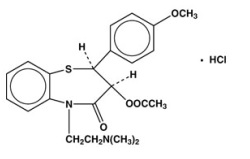
Active ingredient
Classification
Muscle relaxantsCalcium Channel Blocker
Drug interactions
Diltiazem has several significant drug interactions that can affect its efficacy and safety profile.
- moderatebeta-blockers — Increased levels of beta-blockers, potential for additive effects on AV conduction.
- moderatedigitalis — Increased plasma digoxin concentrations.
- moderatemidazolam — Increased sedation and prolonged effects of midazolam.
- moderatetriazolam — Increased sedation and prolonged effects of triazolam.
- moderatebuspirone — Enhanced effects and increased toxicity of buspirone.
- majorcarbamazepine — Elevated serum levels of carbamazepine, potential for toxicity.
- moderatecimetidine — Increased plasma levels of diltiazem.
- majorclonidine — Risk of sinus bradycardia and hospitalization.
- moderatecyclosporine — Reduced cyclosporine dose necessary to maintain trough concentrations.
- majorivabradine — Increased exposure to ivabradine, exacerbating bradycardia.
- moderatequinidine — Increased AUC and half-life of quinidine, potential for adverse effects.
- majorrifampin — Lowered diltiazem plasma concentrations to undetectable levels.
- moderatestatins — Increased risk of myopathy and rhabdomyolysis with statins metabolized by CYP3A4.
Indications
INDICATIONS AND USAGE Diltiazem Hydrochloride Extended-Release Tablets is a nondihydropyridine calcium channel blocker indicated for: • treatment of hypertension, to lower blood pressure. Lowering blood pressure reduces the risk of fatal and nonfatal cardiovascular events, primarily strokes and myocardial infarctions. It can be used alone or in combination with other antihypertensives. ( 1.1 ) • improving exercise tolerance in patients with chronic stable angina. ( 1.2 ) 1.1 Hypertension Diltiazem Hydrochloride Extended-Release Tablets are indicated for the treatment of hypertension, to lower blood pressure. Lowering blood pressure reduces the risk of fatal and nonfatal cardiovascular events, primarily strokes and myocardial infarctions. These benefits have been seen in controlled trials of antihypertensive drugs from a wide variety of pharmacologic classes including this drug. Control of high blood pressure should be part of comprehensive cardiovascular risk management, including, as appropriate, lipid control, diabetes management, antithrombotic therapy, smoking cessation, exercise, and limited sodium intake. Many patients will require more than one drug to achieve blood pressure goals. For specific advice on goals and management, see published guidelines, such as those of the National High Blood Pressure Education Program’s Joint National Committee on Prevention, Detection, Evaluation, and Treatment of High Blood Pressure (JNC). Numerous antihypertensive drugs, from a variety of pharmacologic classes and with different mechanisms of action, have been shown in randomized controlled trials to reduce cardiovascular morbidity and mortality, and it can be concluded that it is blood pressure reduction, and not some other pharmacologic property of the drugs, that is largely responsible for those benefits. The largest and most consistent cardiovascular outcome benefit has been a reduction in the risk of stroke, but reductions in myocardial infarction and cardiovascular mortality also have been seen regularly. Elevated systolic or diastolic pressure causes increased cardiovascular risk, and the absolute risk increase per mm Hg is greater at higher blood pressures, so that even modest reductions of severe hypertension can provide substantial benefit. Relative risk reduction from blood pressure reduction is similar across populations with varying absolute risk, so the absolute benefit is greater in patients who are at higher risk independent of their hypertension (for example, patients with diabetes or hyperlipidemia), and such patients would be expected to benefit from more aggressive treatment to a lower blood pressure goal. Some antihypertensive drugs have smaller blood pressure effects (as monotherapy) in black patients, and many antihypertensive drugs have additional approved indications and effects (e.g., on angina, heart failure, or diabetic kidney disease). These considerations may guide selection of therapy. Diltiazem Hydrochloride Extended-Release Tablets may be used alone or in combination with other antihypertensive medications. 1.2 Angina Diltiazem Hydrochloride Extended-Release Tablets are indicated to improve exercise tolerance in patients with chronic stable angina.
Dosage
DOSAGE AND ADMINISTRATION Direct Intravenous Single Injections (Bolus) The initial dose of diltiazem hydrochloride injection should be 0.25 mg/kg actual body weight as a bolus administered over 2 minutes (20 mg is a reasonable dose for the average patient). If response is inadequate, a second dose may be administered after 15 minutes. The second bolus dose of diltiazem hydrochloride injection should be 0.35 mg/kg actual body weight administered over 2 minutes (25 mg is a reasonable dose for the average patient). Subsequent intravenous bolus doses should be individualized for each patient. Patients with low body weights should be dosed on a mg/kg basis. Some patients may respond to an initial dose of 0.15 mg/kg, although duration of action may be shorter. Experience with this dose is limited. Continuous Intravenous Infusion For continued reduction of the heart rate (up to 24 hours) in patients with atrial fibrillation or atrial flutter, an intravenous infusion of diltiazem hydrochloride may be administered. Immediately following bolus administration of 20 mg (0.25 mg/kg) or 25 mg (0.35 mg/kg) diltiazem hydrochloride injection and reduction of heart rate, begin an intravenous infusion of diltiazem hydrochloride. The recommended initial infusion rate of diltiazem hydrochloride is 10 mg/h. Some patients may maintain response to an initial rate of 5 mg/h. The infusion rate may be increased in 5 mg/h increments up to 15 mg/h as needed, if further reduction in heart rate is required. The infusion may be maintained for up to 24 hours. Diltiazem shows dose-dependent, non-linear pharmacokinetics. Duration of infusion longer than 24 hours and infusion rates greater than 15 mg/h have not been studied. Therefore, infusion duration exceeding 24 hours and infusion rates exceeding 15 mg/h are not recommended. Dilution - To prepare diltiazem hydrochloride injection for continuous intravenous infusion, aseptically transfer the appropriate quantity (see chart) of diltiazem hydrochloride injection to the desired volume of either Normal Saline, D5W, or D5W/0.45% NaCl. Mix thoroughly. Use within 24 hours. Keep refrigerated until use. *5 mg/h may be appropriate for some patients. Diluent Volume Quantity of Diltiazem HCl Injection to Add Final Concentration Administration Dose * Infusion Rate 100 mL 125 mg (25 mL) Final Volume 125 mL 1 mg per mL 10 mg/h 15 mg/h 10 mL/h 15 mL/h 250 mL 250 mg (50 mL) Final Volume 300 mL 0.83 mg per mL 10 mg/h 15 mg/h 12 mL/h 18 mL/h 500 mL 250 mg (50 mL) Final Volume 550 mL 0.45 mg per mL 10 mg/h 15 mg/h 22 mL/h 33 mL/h Compatibility - Diltiazem hydrochloride injection was tested for compatibility with three commonly used intravenous fluids at a maximal concentration of 1 mg diltiazem hydrochloride per milliliter. Diltiazem hydrochloride injection was found to be physically compatible and chemically stable in the following parenteral solutions for at least 24 hours when stored in glass or polyvinylchloride (PVC) bags at controlled room temperature 15° to 30°C (59° to 86°F) or under refrigeration 2° to 8°C (36° to 46°F). dextrose (5%) injection sodium chloride (0.9%) injection dextrose (5%) and sodium chloride (0.45%) injection Physical Incompatibilities - Because of potential physical incompatibilities, it is recommended that diltiazem hydrochloride not be mixed with any other drugs in the same container. If possible, it is recommended that diltiazem hydrochloride not be co-infused in the same intravenous line. Physical incompatibilities (precipitate formation or cloudiness) were observed when diltiazem hydrochloride injection was infused in the same intravenous line with the following drugs: acetazolamide, acyclovir, aminophylline, ampicillin, ampicillin sodium/sulbactam sodium, cefamandole, cefoperazone, diazepam, furosemide, hydrocortisone sodium succinate, insulin (regular: 100 units/mL), methylprednisolone sodium succinate, mezlocillin, nafcillin, phenytoin, rifampin, and sodium bicarbonate. Parenteral drug products should be inspected visually for particulate matter and discoloration prior to administration whenever solution and container permit. Transition to Further Antiarrhythmic Therapy Transition to other antiarrhythmic agents following administration of diltiazem hydrochloride injection is generally safe. However, reference should be made to the respective agent manufacturer's package insert for information relative to dosage and administration. In controlled clinical trials, therapy with antiarrhythmic agents to maintain reduced heart rate in atrial fibrillation or atrial flutter or for prophylaxis of PSVT was generally started within 3 hours after bolus administration of diltiazem hydrochloride. These antiarrhythmic agents were intravenous or oral digoxin, Class 1 antiarrhythmics (e.g., quinidine, procainamide), calcium channel blockers, and oral beta-blockers. Experience in the use of antiarrhythmic agents following maintenance infusion of diltiazem hydrochloride injection is limited. Patients should be dosed on an individual basis and reference should be made to the respective manufacturer's package insert for information relative to dosage and administration.
Warnings
WARNINGS Cardiac Conduction Diltiazem prolongs AV nodal conduction and refractoriness that may rarely result in second- or third-degree AV block in sinus rhythm. Concomitant use of diltiazem with agents known to affect cardiac conduction may result in additive effects (see PRECAUTIONS, Drug Interactions ). If high-degree AV block occurs in sinus rhythm, intravenous diltiazem should be discontinued and appropriate supportive measures instituted (see OVERDOSAGE ). Congestive Heart Failure Although diltiazem has a negative inotropic effect in isolated animal tissue preparations, hemodynamic studies in humans with normal ventricular function and in patients with a compromised myocardium, such as severe CHF, acute MI, and hypertrophic cardiomyopathy, have not shown a reduction in cardiac index nor consistent negative effects on contractility (dp/dt). Administration of oral diltiazem in patients with acute myocardial infarction and pulmonary congestion documented by x-ray on admission is contraindicated. Experience with the use of diltiazem hydrochloride injection in patients with impaired ventricular function is limited. Caution should be exercised when using the drug in such patients. Hypotension Decreases in blood pressure associated with diltiazem hydrochloride injection therapy may occasionally result in symptomatic hypotension (3.2%). The use of intravenous diltiazem for control of ventricular response in patients with supraventricular arrhythmias should be undertaken with caution when the patient is compromised hemodynamically. In addition, caution should be used in patients taking other drugs that decrease peripheral resistance, intravascular volume, myocardial contractility or conduction. Acute Hepatic Injury In rare instances, significant elevations in enzymes such as alkaline phosphatase, LDH, SGOT, SGPT, and other phenomena consistent with acute hepatic injury have been noted following oral diltiazem. Therefore, the potential for acute hepatic injury exists following administration of intravenous diltiazem. Ventricular Premature Beats (VPBs) VPBs may be present on conversion of PSVT to sinus rhythm with diltiazem hydrochloride injection. These VPBs are transient, are typically considered to be benign, and appear to have no clinical significance. Similar ventricular complexes have been noted during cardioversion, other pharmacologic therapy, and during spontaneous conversion of PSVT to sinus rhythm.
Contraindications
CONTRAINDICATIONS Diltiazem hydrochloride injection is contraindicated in: Patients with sick sinus syndrome except in the presence of a functioning ventricular pacemaker. Patients with second- or third-degree AV block except in the presence of a functioning ventricular pacemaker. Patients with severe hypotension or cardiogenic shock. Patients who have demonstrated hypersensitivity to the drug. Intravenous diltiazem and intravenous beta-blockers should not be administered together or in close proximity (within a few hours). Patients with atrial fibrillation or atrial flutter associated with an accessory bypass tract such as in WPW syndrome or short PR syndrome. As with other agents which slow AV nodal conduction and do not prolong the refractoriness of the accessory pathway (e.g., verapamil, digoxin), in rare instances patients in atrial fibrillation or atrial flutter associated with an accessory bypass tract may experience a potentially life-threatening increase in heart rate accompanied by hypotension when treated with diltiazem hydrochloride injection. As such, the initial use of diltiazem hydrochloride injection should be, if possible, in a setting where monitoring and resuscitation capabilities, including DC cardioversion/defibrillation, are present (see OVERDOSAGE ). Once familiarity of the patient’s response is established, use in an office setting may be acceptable. Patients with ventricular tachycardia. Administration of other calcium channel blockers to patients with wide complex tachycardia (QRS ≥0.12 seconds) has resulted in hemodynamic deterioration and ventricular fibrillation. It is important that an accurate pretreatment diagnosis distinguish wide complex QRS tachycardia of superventricular origin from that of ventricular origin prior to administration of diltiazem hydrochloride injection.
Mechanism of action
CLINICAL PHARMACOLOGY The therapeutic effects of diltiazem hydrochloride extended-release capsules are believed to be related to its ability to inhibit the cellular influx of calcium ions during membrane depolarization of cardiac and vascular smooth muscle. Mechanisms of Action Hypertension : Diltiazem hydrochloride extended-release capsules produce its antihypertensive effect primarily by relaxation of vascular smooth muscle and the resultant decrease in peripheral vascular resistance. The magnitude of blood pressure reduction is related to the degree of hypertension; thus hypertensive individuals experience an antihypertensive effect, whereas there is only a modest fall in blood pressure in normotensives. Angina : Diltiazem hydrochloride extended-release capsules have been shown to produce increases in exercise tolerance, probably due to its ability to reduce myocardial oxygen demand. This is accomplished via reductions in heart rate and systemic blood pressure at submaximal and maximal workloads. Diltiazem has been shown to be a potent dilator of coronary arteries, both epicardial and subendocardial. Spontaneous and ergonovine-induced coronary artery spasms are inhibited by diltiazem. In animal models, diltiazem interferes with the slow inward (depolarizing) current in excitable tissue. It causes excitation-contraction uncoupling in various myocardial tissues without changes in the configuration of the action potential. Diltiazem produces relaxation of coronary vascular smooth muscle and dilation of both large and small coronary arteries at drug levels that cause little or no negative inotropic effect. The resultant increases in coronary blood flow (epicardial and subendocardial) occur in ischemic and nonischemic models and are accompanied by dose- dependent decreases in systemic blood pressure and decreases in peripheral resistance. Hemodynamic and Electrophysiologic Effects Like other calcium channel antagonists, diltiazem decreases sinoatrial and atrioventricular conduction in isolated tissues and has a negative inotropic effect in isolated preparations. In the intact animal, prolongation of the AH interval can be seen at higher doses. In man, diltiazem prevents spontaneous and ergonovine-provoked coronary artery spasm. It causes a decrease in peripheral vascular resistance and a modest fall in blood pressure in normotensive individuals and, in exercise tolerance studies in patients with ischemic heart disease, reduces the heart rate-blood pressure product for any given workload. Studies, primarily in patients with good ventricular function, have not revealed evidence of a negative inotropic effect; cardiac output, ejection fraction, and left ventricular end diastolic pressure have not been affected. Such data have no predictive value with respect to effects in patients with poor ventricular function, and increased heart failure has been reported in patients with preexisting impairment of ventricular function. There are few data on the interaction of diltiazem and beta-blockers in patients with poor ventricular function. Resting heart rate is usually slightly reduced by diltiazem. In hypertensive patients, diltiazem hydrochloride extended-release capsules produce antihypertensive effects both in the supine and standing positions. In a double-blind, parallel, dose-response study utilizing doses ranging from 90 to 540 mg once daily, diltiazem hydrochloride extended-release capsules lowered supine diastolic blood pressure in an apparent linear manner over the entire dose range studied. The changes in diastolic blood pressure, measured at trough, for placebo, 90 mg, 180 mg, 360 mg, and 540 mg were -2.9, -4.5, -6.1, -9.5, and -10.5 mm Hg, respectively. Postural hypotension is infrequently noted upon suddenly assuming an upright position. No reflex tachycardia is associated with the chronic antihypertensive effects. Diltiazem hydrochloride extended-release capsules decrease vascular resistance, increases cardiac output (by increasing stroke volume), and produces a slight decrease or no change in heart rate. During dynamic exercise, increases in diastolic pressure are inhibited, while maximum achievable systolic pressure is usually reduced. Chronic therapy with diltiazem hydrochloride extended-release capsules produces no change or an increase in plasma catecholamines. No increased activity of the renin-angiotensin-aldosterone axis has been observed. Diltiazem hydrochloride extended-release capsules reduce the renal and peripheral effects of angiotensin II. Hypertensive animal models respond to diltiazem with reductions in blood pressure and increased urinary output and natriuresis without a change in urinary sodium/potassium ratio. In a double-blind, parallel dose-response study of doses from 60 mg to 480 mg once daily, diltiazem hydrochloride extended-release capsules increased time to termination of exercise in a linear manner over the entire dose range studied. The improvement in time to termination of exercise utilizing a Bruce exercise protocol, measured at trough, for placebo, 60 mg, 120 mg, 240 mg, 360 mg, and 480 mg was 29, 40, 56, 51, 69, and 68 seconds, respectively. As doses of diltiazem hydrochloride extended-release capsules were increased, overall angina frequency was decreased. Diltiazem hydrochloride extended-release capsules, 180 mg once daily, or placebo was administered in a double-blind study to patients receiving concomitant treatment with long-acting nitrates and/or beta-blockers. A significant increase in time to termination of exercise and a significant decrease in overall angina frequency was observed. In this trial the overall frequency of adverse events in the diltiazem hydrochloride extended-release capsule treatment group was the same as the placebo group. Intravenous diltiazem in doses of 20 mg prolongs AH conduction time and AV node functional and effective refractory periods by approximately 20%. In a study involving single oral doses of 300 mg of diltiazem hydrochloride in six normal volunteers, the average maximum PR prolongation was 14% with no instances of greater than first-degree AV block. Diltiazem-associated prolongation of the AH interval is not more pronounced in patients with first-degree heart block. In patients with sick sinus syndrome, diltiazem significantly prolongs sinus cycle length (up to 50% in some cases). Chronic oral administration of diltiazem hydrochloride to patients in doses of up to 540 mg/day has resulted in small increases in PR interval and on occasion produces abnormal prolongation (see WARNINGS ). Pharmacokinetics and Metabolism Diltiazem is well absorbed from the gastrointestinal tract and is subject to an extensive first-pass effect, giving an absolute bioavailability (compared to intravenous administration) of about 40%. Diltiazem hydrochloride undergoes extensive metabolism in which only 2% to 4% of the unchanged drug appears in the urine. Drugs which induce or inhibit hepatic microsomal enzymes may alter diltiazem disposition. Total radioactivity measurement following short IV administration in healthy volunteers suggests the presence of other unidentified metabolites, which attain higher concentrations than those of diltiazem and are more slowly eliminated; half-life of total radioactivity is about 20 hours compared to 2 to 5 hours for diltiazem. In vitro binding studies show diltiazem hydrochloride is 70% to 80% bound to plasma proteins. Competitive in vitro ligand binding studies have also shown diltiazem hydrochloride binding is not altered by therapeutic concentrations of digoxin, hydrochlorothiazide, phenylbutazone, propranolol, salicylic acid, or warfarin. The plasma elimination half-life following single or multiple drug administration is approximately 3.0 to 4.5 hours. Desacetyl diltiazem is also present in the plasma at levels of 10% to 20% of the parent drug and is 25% to 50% as potent as a coronary vasodilator as diltiazem. Minimum therapeutic plasma diltiazem concent
Source: RxNorm + openFDA + RxClass + FAERS · 2026
Look up another medication