18 ML aprepitant 7.2 MG/ML Injection
Managing this medication for someone you care for? Eleplan keeps diagnoses, medications and appointments in one plan.
Start free with EleplanClinical drug
18 ML aprepitant 7.2 MG/ML Injection
7.2 MG/ML · Injection · injection
A form of aprepitant →
18 ML aprepitant 7.2 MG/ML Injection — Other antiemetics. INDICATIONS AND USAGE EMEND ® for oral suspension, in combination with other antiemetic agents, is indicated in patients 6 months of age and older…
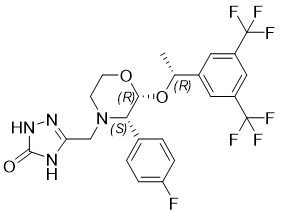
Active ingredient
Classification
Other antiemeticsSubstance P/Neurokinin-1 Receptor Antagonist
Drug interactions
Aprepitant interacts with several drugs, particularly those metabolized by CYP3A4 and CYP2C9, affecting their plasma concentrations and efficacy.
- majorpimozide — Increased pimozide exposure
- moderatebenzodiazepines — Increased exposure to midazolam or other benzodiazepines may increase the risk of adverse reactions
- moderatedexamethasone — Increased dexamethasone exposure
- moderatemethylprednisolone — Increased methylprednisolone exposure
- moderatechemotherapeutic agents (CYP3A4 substrates) — Increased exposure of chemotherapeutic agents may increase the risk of adverse reactions
- moderatewarfarin — Decreased warfarin exposure and decreased prothrombin time (INR)
- moderatehormonal contraceptives — Decreased hormonal exposure during and after aprepitant administration
- majorCYP3A4 inhibitors — Significantly increased exposure of aprepitant may increase the risk of adverse reactions
- majorCYP3A4 inducers — Substantially decreased exposure of aprepitant may decrease its efficacy
Real-world adverse events (FAERS)
Nausea2,186Fatigue1,854Pyrexia1,624Diarrhoea1,583Dyspnoea1,548Vomiting1,512Off Label Use1,388Alopecia1,304
Indications
INDICATIONS AND USAGE EMEND ® for oral suspension, in combination with other antiemetic agents, is indicated in patients 6 months of age and older for the prevention of: acute and delayed nausea and vomiting associated with initial and repeat courses of highly emetogenic cancer chemotherapy (HEC) including high-dose cisplatin. nausea and vomiting associated with initial and repeat courses of moderately emetogenic cancer chemotherapy (MEC). EMEND ® capsules, in combination with other antiemetic agents, is indicated in patients 12 years of age and older for the prevention of: acute and delayed nausea and vomiting associated with initial and repeat courses of highly emetogenic cancer chemotherapy (HEC) including high-dose cisplatin. nausea and vomiting associated with initial and repeat courses of moderately emetogenic cancer chemotherapy (MEC). EMEND ® is a substance P/neurokinin 1 (NK 1 ) receptor antagonist. EMEND for oral suspension is indicated in combination with other antiemetic agents, in patients 6 months of age and older for prevention of: acute and delayed nausea and vomiting associated with initial and repeat courses of highly emetogenic cancer chemotherapy (HEC) including high-dose cisplatin ( 1 ) nausea and vomiting associated with initial and repeat courses of moderately emetogenic cancer chemotherapy (MEC) ( 1 ) EMEND capsules is indicated in combination with other antiemetic agents, in patients 12 years of age and older for prevention of: acute and delayed nausea and vomiting associated with initial and repeat courses of highly emetogenic cancer chemotherapy (HEC) including high-dose cisplatin ( 1 ) nausea and vomiting associated with initial and repeat courses of moderately emetogenic cancer chemotherapy (MEC) ( 1 ) Limitations of Use ( 1 ) EMEND has not been studied for treatment of established nausea and vomiting. Chronic continuous administration of EMEND is not recommended. Limitations of Use EMEND has not been studied for the treatment of established nausea and vomiting. Chronic continuous administration of EMEND is not recommended because it has not been studied, and because the drug interaction profile may change during chronic continuous use.
Dosage
DOSAGE AND ADMINISTRATION Recommended Dosage ( 2.1 ) EMEND capsules in adults and pediatric patients 12 years of age and older: is 125 mg on Day 1 and 80 mg on Days 2 and 3. EMEND for oral suspension in pediatric patients 6 months to less than 12 years of age or pediatric and adult patients unable to swallow capsules: see dosing recommendations in Table 3 in the Full Prescribing Information. Administer EMEND 1 hour prior to chemotherapy on Days 1, 2, and 3. If no chemotherapy is given on Days 2 and 3, administer EMEND in morning. See Full Prescribing Information for recommended dosages of concomitant dexamethasone and 5-HT 3 antagonist for HEC and MEC. Preparation and Administration ( 2.2 , 2.3 ) EMEND capsules and EMEND for oral suspension can be administered with or without food. Swallow EMEND capsules whole. EMEND for oral suspension should be prepared by healthcare provider. Once prepared, it may be administered either by a healthcare provider, patient, or caregiver. For details on preparation see Full Prescribing Information. 2.1 Recommended Dosage Adults and Pediatric Patients 12 Years of Age and Older The recommended oral dosage of EMEND capsules, dexamethasone, and a 5-HT 3 antagonist in adults and pediatric patients 12 years of age and older who can swallow oral capsules, for the prevention of nausea and vomiting associated with administration of HEC or MEC is shown in Table 1 or Table 2, respectively. For patients who cannot swallow oral capsules, EMEND for oral suspension can be used instead of EMEND capsules as shown in Table 3. Table 1: Recommended Dosing for the Prevention of Nausea and Vomiting Associated with HEC Population Day 1 Day 2 Day 3 Day 4 EMEND capsules Administer EMEND capsules 1 hour prior to chemotherapy treatment on Days 1, 2, and 3. If no chemotherapy is given on Days 2 and 3, administer EMEND capsules in the morning. Adults and Pediatric Patients 12 Years and Older 125 mg orally 80 mg orally 80 mg orally none Dexamethasone Adults 12 mg orally 8 mg orally 8 mg orally 8 mg orally Pediatric Patients 12 Years and Older If a corticosteroid, such as dexamethasone, is co-administered, administer 50% of the recommended corticosteroid dose on Days 1 through 4 [see Clinical Studies (14.3) ] . Administer dexamethasone 30 minutes prior to chemotherapy treatment on Day 1 and in the morning on Days 2 through 4. A 50% dosage reduction of dexamethasone is recommended to account for a drug interaction with EMEND [see Clinical Pharmacology (12.3) ] . 5-HT 3 antagonist Adults and Pediatric Patients 12 Years and Older See selected 5-HT 3 antagonist prescribing information for the recommended dosage none none none Table 2: Recommended Dosing for the Prevention of Nausea and Vomiting Associated with MEC Population Day 1 Day 2 Day 3 EMEND capsules Administer EMEND capsules 1 hour prior to chemotherapy treatment on Days 1, 2, and 3. If no chemotherapy is given on Days 2 and 3, administer EMEND capsules in the morning. Adults and Pediatric Patients 12 Years and Older 125 mg orally 80 mg orally 80 mg orally Dexamethasone Adults 12 mg orally none none Pediatric Patients 12 Years and Older If a corticosteroid, such as dexamethasone, is co-administered, administer 50% of the recommended corticosteroid dose on Days 1 through 4 [see Clinical Studies (14.3) ] . Administer dexamethasone 30 minutes prior to chemotherapy treatment on Day 1. A 50% dosage reduction of dexamethasone is recommended to account for a drug interaction with EMEND [see Clinical Pharmacology (12.3) ] . 5-HT 3 antagonist Adults and Pediatric Patients 12 Years and Older See the selected 5-HT 3 antagonist prescribing information for recommended dosage none none Pediatric Patients 6 Months to less than 12 Years of Age or Pediatric and Adult Patients Unable to Swallow Capsules The recommended dose of EMEND for oral suspension to be administered with a 5-HT 3 antagonist, with or without a corticosteroid, for the prevention of nausea and vomiting associated with administration of HEC or MEC is specified in Table 3. Dosing of EMEND for oral suspension is based on weight, to a maximum of 125 mg on Day 1 and 80 mg on Days 2 and 3. Dosing in pediatric patients less than 6 kg is not recommended. Table 3: Recommended Dosing in Pediatric Patients 6 Months to Less than 12 Years of Age or Pediatric and Adult Patients Unable to Swallow Capsules Population Day 1 Day 2 Day 3 Day 4 EMEND for oral suspension After preparation, the final concentration of EMEND for oral suspension is 25 mg/mL [see Dosage and Administration (2.3) ] . Administer EMEND for oral suspension 1 hour prior to chemotherapy treatment on Days 1, 2, and 3. If no chemotherapy is given on Days 2 and 3, administer EMEND for oral suspension in the morning. Pediatric Patients 6 Months to Less than12 Years or Pediatric and Adult Patients Unable to Swallow Capsules 3 mg/kg orally Maximum dose 125 mg 2 mg/kg orally Maximum dose 80 mg 2 mg/kg orally Maximum dose 80 mg none Dexamethasone Adults Unable to Swallow Capsules See Table 1 or 2 See Table 1 or 2 See Table 1 or 2 See Table 1 or 2 Pediatric Patients 6 Months to Less than12 Years or Pediatric Patients Unable to Swallow Capsules If a corticosteroid, such as dexamethasone, is co-administered, administer 50% of the recommended corticosteroid dose on Days 1 through 4 [see Clinical Studies (14.3) ] . Administer dexamethasone 30 minutes prior to chemotherapy treatment on Day 1. A 50% dosage reduction of dexamethasone is recommended to account for a drug interaction with EMEND [see Clinical Pharmacology (12.3) ] . 5-HT 3 antagonist Pediatric Patients 6 Months to Less than12 Years or Pediatric and Adult Patients Unable to Swallow Capsules See selected 5-HT 3 antagonist prescribing information for the recommended dosage none none none 2.2 Preparation Instructions for EMEND for Oral Suspension -- for Healthcare Providers EMEND for oral suspension should be prepared by a healthcare provider. Once prepared, it may be administered either by a healthcare provider, patient, or caregiver. Before preparing EMEND: Do not open the pouch of EMEND until ready to prepare the medicine. Store the pouch at room temperature [between 68°F-77°F (20°C-25°C)]. Table 4: Instructions for Healthcare Providers on How to Prepare EMEND for Oral Suspension EMEND for oral suspension is packaged as a kit with one 1 mL oral dosing dispenser, one 5 mL oral dosing dispenser, one cap and one mixing cup. 1. Fill the mixing cup with room temperature drinking water. 2. Fill the 5 mL oral dosing dispenser with 4.6 mL of water from the mixing cup. Make sure no air is in the dispenser - if air is present, remove. 3. Discard all the unused water remaining in the mixing cup. 4. Add the 4.6 mL of water from the dispenser back into the mixing cup. 5. Each pouch of EMEND for oral suspension contains 125 mg of aprepitant which is to be suspended in 4.6 mL of water giving a final concentration of 25 mg/mL. Hold the EMEND for oral suspension pouch upright and shake the contents to the bottom before opening the pouch. 6. Pour the entire contents of the pouch into the 4.6 mL of water in the mixing cup and snap the lid shut. 7. Mix the EMEND suspension gently by swirling 20 times; then gently invert the mixing cup 5 times. To prevent foaming, do not shake the mixing cup. The mixture will be cloudy pink to light pink. 8. Check the EMEND mixture for any clumps or foaming: If any clumps are present, repeat Step 7 until there are no clumps. If there is any foam, wait for the foam to disappear before going on to Step 9. 9. Fill the dispenser with the prescribed dose shown above in Table 3. Choose the dispenser based on dose: Use 1 mL dispenser if dose is 1 mL or less. Use 5 mL dispenser if dose is more than 1 mL. Fill the dispenser with the prescribed dose from the cup. If the dose is less than 1 mL round to the nearest 0.1 mL. If the dose is more than 1 mL round to the nearest 0.2 mL. It is common to have medicine leftover in the cup. Make sure n
Warnings
WARNINGS AND PRECAUTIONS • CYP3A4 Interactions : Aprepitant is a substrate, weak-to-moderate inhibitor and inducer of CYP3A4; See Full Prescribing Information for recommendations regarding contraindications, risk of adverse reactions, and dosage adjustments of aprepitant and concomitant drugs. ( 4 , 5.1 , 7.1 , 7.2 ) • Warfarin (a CYP2C9 substrate) : Risk of decreased INR of prothrombin time; monitor INR in 2-week period, particularly at 7 to 10 days, following initiation of aprepitant. ( 5.2 , 7.1 ) • Hormonal Contraceptives : Efficacy of contraceptives may be reduced during administration of and for 28 days following the last dose of aprepitant. Use effective alternative or back-up methods of contraception. ( 5.3 , 7.1 , 8.3 ) 5.1 Clinically Significant CYP3A4 Aprepitant is a substrate, a weak-to-moderate (dose-dependent) inhibitor, and an inducer of CYP3A4. Use of aprepitant with other drugs that are CYP3A4 substrates, may result in increased plasma concentration of the concomitant drug. Use of pimozide with aprepitant is contraindicated due to the risk of significantly increased plasma concentrations of pimozide, potentially resulting in prolongation of the QT interval, a known adverse reaction of pimozide [see Contraindications ( 4 )] . Use of aprepitant with strong or moderate CYP3A4 inhibitors (e.g., ketoconazole, diltiazem) may increase plasma conentrations of aprepitant and result in an increased risk of adverse reactions related to aprepitant. Use of aprepitant with strong CYP3A4 inducers (e.g., rifampin) may result in a reduction in aprepitant plasma concentrations and decreased efficacy of aprepitant. See table 10 and 11 for a listing of potentially significant drug interactions [see Drug Interactions ( 7.1 , 7.2 )] . 5.2 Decrease in INR with Concomitant Warfarin Coadministration of aprepitant with warfarin, a CYP2C9 substrate, may result in a clinically significant decrease in International Normalized Ratio (INR) of prothrombin time [see Clinical Pharmacology ( 12.3 )] . Monitor the INR in patients on chronic warfarin therapy in the 2-week period, particularly at 7 to 10 days, following initiation of the 3-day regimen of aprepitant with each chemotherapy cycle, or following administration of a single 40-mg dose of aprepitant for the prevention of postoperative nausea and vomiting [see Drug Interactions ( 7.1 )]. 5.3 Risk of Reduced Efficacy of Hormonal Contraceptives Upon coadministration with aprepitant, the efficacy of hormonal contraceptives may be reduced during administration of and for 28 days following the last dose of aprepitant [see Clinical Pharmacology ( 12.3 )]. Advise patients to use effective alternative or back-up methods of contraception during treatment with aprepitant and for 1 month following the last dose of aprepitant [see Drug Interactions ( 7.1 ), Use in Specific Populations ( 8.3 )]. 5.1 Clinically Significant CYP3A4 Aprepitant is a substrate, a weak-to-moderate (dose-dependent) inhibitor, and an inducer of CYP3A4. Use of aprepitant with other drugs that are CYP3A4 substrates, may result in increased plasma concentration of the concomitant drug. Use of pimozide with aprepitant is contraindicated due to the risk of significantly increased plasma concentrations of pimozide, potentially resulting in prolongation of the QT interval, a known adverse reaction of pimozide [see Contraindications ( 4 )] . Use of aprepitant with strong or moderate CYP3A4 inhibitors (e.g., ketoconazole, diltiazem) may increase plasma conentrations of aprepitant and result in an increased risk of adverse reactions related to aprepitant. Use of aprepitant with strong CYP3A4 inducers (e.g., rifampin) may result in a reduction in aprepitant plasma concentrations and decreased efficacy of aprepitant. See table 10 and 11 for a listing of potentially significant drug interactions [see Drug Interactions ( 7.1 , 7.2 )] . 5.2 Decrease in INR with Concomitant Warfarin Coadministration of aprepitant with warfarin, a CYP2C9 substrate, may result in a clinically significant decrease in International Normalized Ratio (INR) of prothrombin time [see Clinical Pharmacology ( 12.3 )] . Monitor the INR in patients on chronic warfarin therapy in the 2-week period, particularly at 7 to 10 days, following initiation of the 3-day regimen of aprepitant with each chemotherapy cycle, or following administration of a single 40-mg dose of aprepitant for the prevention of postoperative nausea and vomiting [see Drug Interactions ( 7.1 )]. 5.3 Risk of Reduced Efficacy of Hormonal Contraceptives Upon coadministration with aprepitant, the efficacy of hormonal contraceptives may be reduced during administration of and for 28 days following the last dose of aprepitant [see Clinical Pharmacology ( 12.3 )]. Advise patients to use effective alternative or back-up methods of contraception during treatment with aprepitant and for 1 month following the last dose of aprepitant [see Drug Interactions ( 7.1 ), Use in Specific Populations ( 8.3 )].
Contraindications
CONTRAINDICATIONS CINVANTI is contraindicated in patients: who are hypersensitive to any component of the product [see Description (11) ] . Hypersensitivity reactions including anaphylaxis have been reported [see Warnings and Precautions (5.2) , Adverse Reactions (6.2) ] . taking pimozide. Inhibition of CYP3A4 by aprepitant could result in elevated plasma concentrations of pimozide, which is a CYP3A4 substrate, potentially causing serious or life-threatening reactions, such as QT prolongation, a known adverse reaction of pimozide [see Warnings and Precautions (5.1) ] . Known hypersensitivity to any component of this drug. ( 4 , 5.2 ) Concurrent use with pimozide. ( 4 )
Mechanism of action
MECHANISM OF ACTION Aprepitant is a selective high-affinity antagonist of human substance P/neurokinin 1 (NK 1 ) receptors. Aprepitant has little or no affinity for serotonin (5-HT 3 ), dopamine, and corticosteroid receptors, the targets of existing therapies for chemotherapy-induced nausea and vomiting (CINV) and postoperative nausea and vomiting (PONV). Aprepitant has been shown in animal models to inhibit emesis induced by cytotoxic chemotherapeutic agents, such as cisplatin, via central actions. Animal and human Positron Emission Tomography (PET) studies with aprepitant have shown that it crosses the blood brain barrier and occupies brain NK 1 receptors. Animal and human studies show that aprepitant augments the antiemetic activity of the 5-HT 3 -receptor antagonist ondansetron and the corticosteroid dexamethasone and inhibits both the acute and delayed phases of cisplatin-induced emesis.
Indicated ICD-10 codes
Source: RxNorm + openFDA + RxClass + FAERS · 2026
Look up another medication