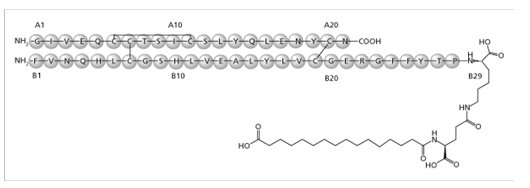
3 ML insulin degludec 100 UNT/ML Pen Injector — Insulins and analogues for injection, long-acting. INDICATIONS AND USAGE XULTOPHY 100/3.6 is a combination of insulin degludec and liraglutide and is indicated as an adjunct to diet and exercise to…
Boxed warning
WARNING: RISK OF THYROID C-CELL TUMORS • Liraglutide, one of the components of XULTOPHY 100/3.6, causes dose-dependent and treatment-duration-dependent thyroid C-cell tumors at clinically relevant exposures in both genders of rats and mice. It is unknown whether XULTOPHY 100/3.6 causes thyroid C-cell tumors, including medullary thyroid carcinoma (MTC), in humans, as the human relevance of liraglutide-induced rodent thyroid C-cell tumors has not been determined [see Warnings and Precautions ( 5.1 ), Nonclinical Toxicology ( 13 )] . • XULTOPHY 100/3.6 is contraindicated in patients with a personal or family history of MTC and in patients with Multiple Endocrine Neoplasia syndrome type 2 (MEN 2). Counsel patients regarding the potential risk for MTC with the use of XULTOPHY 100/3.6 and inform them of symptoms of thyroid tumors (e.g., a mass in the neck, dysphagia, dyspnea, persistent hoarseness). Routine monitoring of serum calcitonin or using thyroid ultrasound is of uncertain value for early detection of MTC in patients treated with XULTOPHY 100/3.6 [see Contraindications ( 4 ), Warnings and Precautions ( 5.1 )] . WARNING: RISK OF THYROID C-CELL TUMORS See full prescribing information for complete boxed warning. • Liraglutide, one of the components of XULTOPHY 100/3.6, causes thyroid C-cell tumors at clinically relevant exposures in both genders of rats and mice. It is unknown whether XULTOPHY 100/3.6 causes thyroid C-cell tumors, including medullary thyroid carcinoma (MTC), in humans, as the human relevance of liraglutide-induced rodent thyroid C-cell tumors has not been determined. ( 5.1 , 13.1 ) • XULTOPHY 100/3.6 is contraindicated in patients with a personal or family history of MTC or in patients with Multiple Endocrine Neoplasia syndrome type 2 (MEN 2). Counsel patients regarding the potential risk of MTC and the symptoms of thyroid tumors. ( 4 , 5.1 )
INDICATIONS AND USAGE XULTOPHY 100/3.6 is a combination of insulin degludec and liraglutide and is indicated as an adjunct to diet and exercise to improve glycemic control in adults with type 2 diabetes mellitus. Limitations of Use: • XULTOPHY 100/3.6 contains liraglutide. Coadministration with any other product containing liraglutide or another glucagon-like peptide-1 (GLP-1) receptor agonist is not recommended [see Warnings and Precautions ( 5.5 )]. • XULTOPHY 100/3.6 is not recommended for the treatment of diabetic ketoacidosis. • XULTOPHY 100/3.6 has not been studied in combination with prandial insulin. XULTOPHY 100/3.6 is a combination of insulin degludec, a long-acting human insulin analog, and liraglutide, a glucagon-like peptide-1 (GLP-1) receptor agonist, indicated as an adjunct to diet and exercise to improve glycemic control in adults with type 2 diabetes mellitus. Limitations of Use : ( 1 ) • Coadministration with any other product containing liraglutide or another GLP-1 receptor agonist is not recommended. • Not recommended for the treatment of diabetic ketoacidosis. • Has not been studied in combination with prandial insulin.
Dosage
DOSAGE AND ADMINISTRATION • Administer once-daily at same time each day with or without food. ( 2.1 ) • XULTOPHY 100/3.6 pen delivers doses from 10 to 50 units with each injection ( 2.1 , 2.2 ); each XULTOPHY 100/3.6 dosage unit contains 1 unit of insulin degludec and 0.036 mg of liraglutide. ( 2.1 ) • Maximum daily dosage is 50 units (50 units of insulin degludec and 1.8 mg of liraglutide). ( 2.1 ) • Recommended starting dosage in patients naïve to basal insulin or GLP-1 receptor agonist is 10 units (10 units of insulin degludec and 0.36 mg of liraglutide) injected subcutaneously once-daily. (2.2 ) • Discontinue therapy with liraglutide or basal insulin prior to initiation of XULTOPHY 100/3.6. ( 2.2 ) • Recommended starting dosage in patients currently on basal insulin or GLP-1 receptor agonist is 16 units (16 units of insulin degludec and 0.58 mg of liraglutide) injected subcutaneously once-daily. ( 2.2 ) • See Full Prescribing Information for titration recommendations. ( 2.3 ) • Inject XULTOPHY 100/3.6 subcutaneously into the thigh, upper arm, or abdomen. ( 2.5 ) • Rotate injection sites to reduce risk of lipodystrophy and localized cutaneous amyloidosis. ( 2.5 ) • Do not administer intravenously or by an infusion pump. ( 2.5 ) • Do not dilute or mix with any other insulin products or solutions. ( 2.5 ) 2.1 Important Dosage Information • XULTOPHY 100/3.6 is a combination of insulin degludec and liraglutide. • Administer XULTOPHY 100/3.6 by subcutaneous injection once-daily at the same time each day with or without food. • The XULTOPHY 100/3.6 pen delivers doses from 10 to 50 units with each injection. Table 1 presents the units of insulin degludec and the milligrams of liraglutide in each dosage of XULTOPHY 100/3.6 [see Dosage and Administration ( 2.2 )]. • The maximum dosage of XULTOPHY 100/3.6 is 50 units daily (50 units of insulin degludec and 1.8 mg of liraglutide) [see Warnings and Precautions ( 5.5 )] . 2.2 Recommended Starting Dosage In patients naïve to basal insulin or a GLP-1 receptor agonist • The recommended starting dosage of XULTOPHY 100/3.6 is 10 units (10 units of insulin degludec and 0.36 mg of liraglutide) injected subcutaneously once-daily (see Table 1 ). In patients currently on basal insulin or a GLP-1 receptor agonist • Discontinue therapy with basal insulin or GLP-1 receptor agonist prior to initiation of XULTOPHY 100/3.6. • The recommended starting dosage of XULTOPHY 100/3.6 is 16 units (16 units of insulin degludec and 0.58 mg of liraglutide) injected subcutaneously once-daily (see Table 1 ). Table 1. Units of Insulin Degludec and Milligrams of Liraglutide in Each Dosage of XULTOPHY 100/3.6 XULTOPHY 100/3.6 (dose counter display) * insulin degludec component dose liraglutide component dose Comment ▪▪ ─ --- --- Priming symbol 10 10 units 0.36 mg Recommended starting dose for patients naïve to basal insulin or GLP-1 receptor agonist 11 11 units 0.4 mg 12 12 units 0.43 mg 13 13 units 0.47 mg 14 14 units 0.5 mg 15 15 units 0.54 mg 16 16 units 0.58 mg Recommended starting dose for patients currently on basal insulin or GLP-1 receptor agonist 17 17 units 0.61 mg 18 18 units 0.65 mg 19 19 units 0.68 mg 20 20 units 0.72 mg 21 21 units 0.76 mg 22 22 units 0.79 mg 23 23 units 0.83 mg 24 24 units 0.86 mg 25 25 units 0.9 mg 26 26 units 0.94 mg 27 27 units 0.97 mg 28 28 units 1.01 mg 29 29 units 1.04 mg 30 30 units 1.08 mg 31 31 units 1.12 mg 32 32 units 1.15 mg 33 33 units 1.19 mg 34 34 units 1.22 mg 35 35 units 1.26 mg 36 36 units 1.3 mg 37 37 units 1.33 mg 38 38 units 1.37 mg 39 39 units 1.4 mg 40 40 units 1.44 mg 41 41 units 1.48 mg 42 42 units 1.51 mg 43 43 units 1.55 mg 44 44 units 1.58 mg 45 45 units 1.62 mg 46 46 units 1.66 mg 47 47 units 1.69 mg 48 48 units 1.73 mg 49 49 units 1.76 mg 50 50 units 1.8 mg Maximum daily dosage [see Warnings and Precautions (5.5)] * The dose counter on the XULTOPHY 100/3.6 pen displays numbers for the even units and displays lines for the odd units. 2.3 Titration of XULTOPHY 100/3.6 • After starting the recommended starting dosage of XULTOPHY 100/3.6 [see Dosage and Administration ( 2.2 )] , titrate the dosage upwards or downwards by two units (see Table 2 ) once weekly or twice weekly (every three to four days), based on the patient’s metabolic needs, blood glucose monitoring results, and glycemic control goal until the desired fasting plasma glucose is achieved. • To minimize the risk of hypoglycemia or hyperglycemia, additional titration may be needed with changes in physical activity, meal patterns (i.e., macronutrient content or timing of food intake), or renal or hepatic function; during acute illness; or when used with other medications [see Warnings and Precautions ( 5.4 ), Drug Interactions ( 7 )]. Table 2. Recommended Titration of XULTOPHY 100/3.6 (Once or Twice Weekly) Self-Monitored Fasting Plasma Glucose XULTOPHY 100/3.6 Dosage Adjustment Above target range + 2 units (2 units of insulin degludec and 0.072 mg of liraglutide) Within target range 0 units Below target range - 2 units (2 units of insulin degludec and 0.072 mg of liraglutide) 2.4 Recommendations Regarding Missed Doses • Instruct patients who miss a dose of XULTOPHY 100/3.6 to resume the once-daily dosage regimen as prescribed with the next scheduled dose. Do not administer an extra dose or increase the dose to make up for the missed dose. • If more than three days have elapsed since the last XULTOPHY 100/3.6 dose, reinitiate XULTOPHY 100/3.6 at the recommended starting dose to mitigate the risk of gastrointestinal adverse reactions associated with reinitiation of treatment [see Dosage and Administration ( 2.1 , 2.2 , 2.3 )] . 2.5 Important Administration Instructions • The XULTOPHY 100/3.6 pen is for single-patient-use only [see Warnings and Precautions ( 5.3 )]. • Train patients on proper use and injection technique before initiating XULTOPHY 100/3.6. • Always check the label on the XULTOPHY 100/3.6 pen before administration [see Warnings and Precautions ( 5.5 )]. • Inspect visually for particulate matter and discoloration prior to administration. Only use XULTOPHY 100/3.6 if the solution appears clear and colorless. • Inject XULTOPHY 100/3.6 subcutaneously into the thigh, upper arm, or abdomen. • Rotate injection sites within the same region from one injection to the next to reduce the risk of lipodystrophy and localized cutaneous amyloidosis. Do not inject into areas of lipodystrophy or localized cutaneous amyloidosis [see Warnings and Precautions ( 5.4 ), Adverse Reactions ( 6.1 , 6.3 )] . • During changes to a patient’s insulin regimen, increase the frequency of blood glucose monitoring [see Warnings and Precautions ( 5.4 )]. • Use XULTOPHY 100/3.6 with caution in patients with visual impairment who may rely on audible clicks to dial their dose. • The XULTOPHY 100/3.6 pen dials in one-unit increments. • Do not administer XULTOPHY 100/3.6 intravenously or in an insulin infusion pump. • Do not dilute or mix XULTOPHY 100/3.6 with any other insulin or solutions. • Do not split the dose of XULTOPHY 100/3.6.
Warnings
WARNINGS AND PRECAUTIONS • Acute Pancreatitis : Has been observed in patients treated with GLP-1 receptor agonists, including liraglutide. Discontinue if pancreatitis is suspected. ( 5.2 ) • Never share a XULTOPHY 100/3.6 pen between patients, even if the needle is changed. ( 5.3 ) • Hyperglycemia or hypoglycemia with changes in insulin regimen : Make changes to a patient’s insulin regimen (e.g., insulin strength, manufacturer, type, injection site or method of administration) under close medical supervision with increased frequency of blood glucose monitoring. ( 5.4 ) • Overdose due to medication errors : XULTOPHY 100/3.6 contains two drugs. Instruct patients to check label before injection since accidental mix-ups with insulin containing products can occur. Do not exceed the maximum dose or administer with other GLP-1 receptor agonists. ( 5.5 ) • Hypoglycemia: May be life-threatening. Increase monitoring with changes to : dosage, concomitant drugs, meal pattern, physical activity; and in patients with renal impairment or hepatic impairment or hypoglycemia unawareness. ( 5.6 ) • Acute Kidney Injury Due to Volume Depletion : Monitor renal function in patients reporting adverse reactions that could lead to volume depletion. ( 5.7 ) • Severe Gastrointestinal Adverse Reactions : Use has been associated with gastrointestinal adverse reactions, sometimes severe. XULTOPHY 100/3.6 is not recommended in patients with severe gastroparesis. ( 5.8 ) • Hypersensitivity Reactions : Severe, life-threatening, generalized allergy, including anaphylaxis, angioedema, bronchospasm, hypotension, and shock can occur. If a hypersensitivity reaction occurs, discontinue and treat per standard of care. ( 5.9 ) • Acute Gallbladder Disease : If cholelithiasis or cholecystitis are suspected, gallbladder studies are indicated. ( 5.10 ) • Hypokalemia : May be life-threatening. Monitor potassium levels in patients at risk for hypokalemia and treat if indicated. ( 5.11 ) • Fluid retention and congestive heart failure with use of thiazolidinediones (TZDs) : Observe for signs and symptoms of heart failure; consider dosage reduction or discontinuation if heart failure occurs. ( 5.12 ) • Pulmonary Aspiration During General Anesthesia or Deep Sedation : Has been reported in patients receiving GLP-1 receptor agonists undergoing elective surgeries or procedures. Instruct patients to inform healthcare providers of any planned surgeries or procedures. ( 5.13 ) 5.1 Risk of Thyroid C-cell Tumors Liraglutide, one of the components of XULTOPHY 100/3.6, causes dose-dependent and treatment-duration-dependent thyroid C-cell tumors (adenomas and/or carcinomas) at clinically relevant exposures in both genders of rats and mice [see Nonclinical Toxicology ( 13.1 )] . Malignant thyroid C-cell carcinomas were detected in rats and mice. It is unknown whether XULTOPHY 100/3.6 will cause thyroid C-cell tumors, including medullary thyroid carcinoma (MTC), in humans, as the human relevance of liraglutide-induced rodent thyroid C-cell tumors has not been determined. Cases of MTC in patients treated with liraglutide have been reported in the postmarketing period; the data in these reports are insufficient to establish or exclude a causal relationship between MTC and liraglutide use in humans. XULTOPHY 100/3.6 is contraindicated in patients with a personal or family history of MTC or in patients with MEN 2. Counsel patients regarding the potential risk for MTC with the use of XULTOPHY 100/3.6 and inform them of symptoms of thyroid tumors (e.g., a mass in the neck, dysphagia, dyspnea, persistent hoarseness). Routine monitoring of serum calcitonin or using thyroid ultrasound is of uncertain value for early detection of MTC in patients treated with XULTOPHY 100/3.6. Such monitoring may increase the risk of unnecessary procedures, due to low test specificity for serum calcitonin and a high background incidence of thyroid disease. Significantly elevated serum calcitonin may indicate MTC and patients with MTC usually have calcitonin values >50 ng/L. If serum calcitonin is measured and found to be elevated, the patient should be further evaluated. Patients with thyroid nodules noted on physical examination or neck imaging should also be further evaluated. 5.2 Acute Pancreatitis Acute pancreatitis, including fatal and non-fatal hemorrhagic or necrotizing pancreatitis, has been observed in patients treated with GLP-1 receptor agonists, including liraglutide, one of the components of XULTOPHY 100/3.6 [see Adverse Reactions ( 6 )]. After initiation of XULTOPHY 100/3.6, observe patients carefully for signs and symptoms of acute pancreatitis, which may include persistent or severe abdominal pain (sometimes radiating to the back) and which may or may not be accompanied by nausea or vomiting. If pancreatitis is suspected, discontinue XULTOPHY 100/3.6 and initiate appropriate management. 5.3 Never Share a XULTOPHY 100/3.6 Pen Between Patients XULTOPHY 100/3.6 pen must never be shared between patients, even if the needle is changed. Sharing of the pen poses a risk for transmission of blood-borne pathogens. 5.4 Hyperglycemia or Hypoglycemia with Changes in Insulin Regimen Changes in an insulin regimen (e.g., insulin strength, manufacturer, type, injection site or method of administration) may affect glycemic control and predispose to hypoglycemia [see Warnings and Precautions ( 5.6 )] or hyperglycemia. Repeated insulin injections into areas of lipodystrophy or localized cutaneous amyloidosis have been reported to result in hyperglycemia; and a sudden change in the injection site (to an unaffected area) has been reported to result in hypoglycemia [see Adverse Reactions ( 6.1 , 6.3 )]. Make any changes to a patient’s insulin regimen under close medical supervision with increased frequency of blood glucose monitoring. Advise patients who have repeatedly injected into areas of lipodystrophy or localized cutaneous amyloidosis to change the injection site to unaffected areas and closely monitor for hypoglycemia. Adjustments in concomitant oral anti-diabetic treatment may be needed. When initiating XULTOPHY 100/3.6, follow dosing recommendations [see Dosage and Administration ( 2.1 , 2.2 , 2.3 )] . 5.5 Overdose due to Medication Errors XULTOPHY 100/3.6 contains two drugs: insulin degludec and liraglutide. Administration of more than 50 units of XULTOPHY 100/3.6 daily can result in overdose of the liraglutide component. Do not exceed the 1.8 mg maximum recommended dose of liraglutide or use with other GLP-1 receptor agonists. Accidental mix-ups between insulin products have been reported. To avoid medication errors between XULTOPHY 100/3.6 (an insulin containing product) and other insulin products, instruct patients to always check the label before each injection. 5.6 Hypoglycemia Hypoglycemia is the most common adverse reaction of insulin containing products, including XULTOPHY 100/3.6 [see Adverse Reactions ( 6.1 )] . Severe hypoglycemia can cause seizures, may be life-threatening or cause death. Hypoglycemia can impair concentration ability and reaction time; this may place the patient and others at risk in situations where these abilities are important (e.g., driving or operating other machinery). XULTOPHY 100/3.6 (an insulin-containing product) or any insulin, should not be used during episodes of hypoglycemia [see C ontraindications ( 4 ) ] . Hypoglycemia can happen suddenly and symptoms may differ in each patient and change over time in the same patient. Symptomatic awareness of hypoglycemia may be less pronounced in patients with longstanding diabetes, in patients with diabetic neuropathy, in patients using drugs that block the sympathetic nervous system (e.g., beta-blockers) [see Drug Interactions ( 7.1 ) ] , or who experience recurrent hypoglycemia. The long-acting effect of insulin degludec may delay recovery from hypoglycemia compared to shorter acting insulins. Risk Factors for Hypoglycemia The risk of hypoglycemia genera
Contraindications
CONTRAINDICATIONS XULTOPHY 100/3.6 is contraindicated: • In patients with a personal or family history of medullary thyroid carcinoma (MTC) or in patients with Multiple Endocrine Neoplasia syndrome type 2 (MEN 2) [see Warnings and Precautions ( 5.1 )] . • During episodes of hypoglycemia [see Warnings and Precautions ( 5.6 )] . • In patients with hypersensitivity to insulin degludec, liraglutide, or any of the excipients in XULTOPHY 100/3.6. Serious hypersensitivity reactions including anaphylactic reactions and angioedema have been reported with liraglutide, one of the components of XULTOPHY 100/3.6 [see Warnings and Precautions ( 5.9 )]. • Patients with a personal or family history of medullary thyroid carcinoma or in patients with Multiple Endocrine Neoplasia syndrome type 2 ( 4 ) • During episodes of hypoglycemia ( 4 ) • Patients with a serious hypersensitivity reaction to insulin degludec, liraglutide, or any of the excipients in XULTOPHY 100/3.6 ( 4 )
Mechanism of action
Mechanism of Action The primary activity of insulin, including Insulin Degludec, is regulation of glucose metabolism. Insulin and its analogs lower blood glucose by stimulating peripheral glucose uptake, especially by skeletal muscle and fat, and by inhibiting hepatic glucose production. Insulin also inhibits lipolysis and proteolysis, and enhances protein synthesis. Insulin Degludec forms multi-hexamers when injected into the subcutaneous tissue resulting in a subcutaneous insulin degludec depot. The protracted time action profile of Insulin Degludec is predominantly due to delayed absorption of insulin degludec from the subcutaneous tissue to the systemic circulation and to a lesser extent due to binding of insulin-degludec to circulating albumin.
A drug lookup is just the start. Eleplan keeps the whole care plan in one place.
Medications, diagnoses, documents, appointments, and the whole care team — organized and always in sync, with Ellie, your AI care assistant, on top of it. Free to start.