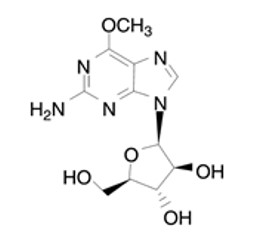
75 ML nelarabine 5 MG/ML Injection — Purine analogues. INDICATIONS AND USAGE Nelarabine Injection is indicated for the treatment of T-cell acute lymphoblastic leukemia (T-ALL) and T-cell lymphoblastic…
Boxed warning
WARNING: NEUROLOGIC ADVERSE REACTIONS See full prescribing information for complete boxed warning. Severe neurologic adverse reactions have been reported with the use of nelarabine injection. These adverse reactions have included altered mental states including severe somnolence, central nervous system effects including convulsions, and peripheral neuropathy ranging from numbness and paresthesias to motor weakness and paralysis. There have also been reports of adverse reactions associated with demyelination, and ascending peripheral neuropathies similar in appearance to Guillain-Barré syndrome. ( 5.1 ) Full recovery from these adverse reactions has not always occurred with cessation of therapy with nelarabine injection. Monitor frequently for signs and symptoms of neurologic toxicity. Discontinue nelarabine injection for neurologic adverse reactions of NCI Common Toxicity Criteria for Adverse Events (CTCAE) Grade 2 or greater. ( 5.1 ) WARNING: NEUROLOGIC ADVERSE REACTIONS Severe neurologic adverse reactions have been reported with the use of Nelarabine injection. These adverse reactions have included altered mental states including severe somnolence, central nervous system effects including convulsions, and peripheral neuropathy ranging from numbness and paresthesias to motor weakness and paralysis. There have also been reports of adverse reactions associated with demyelination, and ascending peripheral neuropathies similar in appearance to Guillain-Barré syndrome [see Warnings and Precautions ( 5.1 )] . Full recovery from these adverse reactions has not always occurred with cessation of therapy with nelarabine injection. Monitor frequently for signs and symptoms of neurologic toxicity during treatment with nelarabine injection. Discontinue nelarabine injection for neurologic adverse reactions of NCI Common Toxicity Criteria for Adverse Events (CTCAE) Grade 2 or greater [see Warnings and Precautions ( 5.1 )] .
Nelarabine should not be administered with adenosine deaminase inhibitors such as pentostatin.
majorpentostatin — not recommended to administer together
Indications
INDICATIONS AND USAGE Nelarabine Injection is indicated for the treatment of T-cell acute lymphoblastic leukemia (T-ALL) and T-cell lymphoblastic lymphoma (T-LBL) in adult and pediatric patients age 1 year and older whose disease has not responded to or has relapsed following treatment with at least 2 chemotherapy regimens. Nelarabine Injection is a nucleoside metabolic inhibitor indicated for the treatment of patients with T-cell acute lymphoblastic leukemia (T-ALL) and T-cell lymphoblastic lymphoma (T-LBL) in adult and pediatric patients age 1 year and older whose disease has not responded to or has relapsed following treatment with at least two chemotherapy regimens. ( 1 )
Dosage
DOSAGE AND ADMINISTRATION Adult Dose : 1,500 mg/m 2 administered by intravenous infusion over 2 hours on Days 1, 3, and 5 repeated every 21 days. ( 2.1 ) Pediatric Dose : 650 mg/m 2 administered by intravenous infusion over 1 hour daily for 5 consecutive days repeated every 21 days. ( 2.1 ) Discontinue treatment for neurologic reactions greater than or equal to Grade 2. ( 2.2 ) Dosage may be delayed for hematologic reactions. ( 2.2 ) Take measures to prevent hyperuricemia. ( 2.4 ) 2.1 Recommended Dosage This product is for intravenous use only. Adult Dosage : The recommended adult dose of nelarabine injection is 1,500 mg/m 2 administered by intravenous infusion over 2 hours on Days 1, 3, and 5 repeated every 21 days. Administer nelarabine injection undiluted. Pediatric Dosage : The recommended pediatric dose of nelarabine injection is 650 mg/m 2 administered by intravenous infusion over 1 hour daily for 5 consecutive days repeated every 21 days. Administer nelarabine injection undiluted. The recommended duration of treatment for adult and pediatric patients has not been clearly established. In clinical trials, treatment was generally continued until there was evidence of disease progression, the patient experienced unacceptable toxicity, the patient became a candidate for hematopoietic stem cell transplantation (HSCT), or the patient no longer continued to benefit from treatment. 2.2 Dosage Modification Discontinue nelarabine injection if the patient develops a neurologic adverse reaction of NCI CTCAE Grade 2 or greater. Dosage may be delayed for other toxicity, including hematologic toxicity [see Boxed Warning , Warnings and Precautions (5.1 , 5.2) ]. 2.3 Dosage in Special Populations Nelarabine injection has not been studied in patients with renal or hepatic dysfunction [see Use in Specific Populations (8.6 , 8.7 )] . No dose adjustment is recommended for patients with a creatinine clearance (CLCr) greater than or equal to 50 mL/min [see Clinical Pharmacology (12.3) ] . There are insufficient data to support a dose recommendation for patients with a CLCr less than 50 mL/min. 2.4 Prevention of Hyperuricemia Take precautions against hyperuricemia (e.g., hydration, urine alkalinization, and prophylaxis with allopurinol) [see Warnings and Precautions (5.4) ] . 2.5 Instructions for Handling, Preparation, and Administration Handling : Nelarabine injection is a hazardous drug. Caution should be used during handling and preparation. Use of gloves and other protective clothing to prevent skin contact is recommended. Proper aseptic technique should be used. Guidelines for proper handling and disposal of anticancer drugs have been published 1 . Preparation and Administration : Administer nelarabine injection undiluted. Transfer the appropriate dose of nelarabine injection into polyvinylchloride (PVC) infusion bags or glass containers and administer as a 2-hour infusion in adult patients and as a 1-hour infusion in pediatric patients. Prior to administration, inspect the drug product visually for particulate matter and discoloration. Stability: Nelarabine injection is stable in polyvinylchloride (PVC) infusion bags and glass containers for up to 8 hours at up to 30°C. Discard unused portion.
Warnings
WARNINGS AND PRECAUTIONS • Neurologic Adverse Reactions : Severe neurologic reactions have been reported. Monitor for signs and symptoms of neurologic toxicity. ( 5.1 ) • Hematologic Reactions : Complete blood counts including platelets should be monitored regularly. ( 5.2 ) • Embryo-Fetal Toxicity : Can cause fetal harm. Advise females of reproductive potential of the potential risk to the fetus and to use effective contraception; and advise males to use condoms. ( 5.3 , 8.1 , 8.3 ) • Effects on Ability to Drive and Use Machines : Somnolence may occur. Advise patients to refrain from these activities until somnolence has resolved. ( 5.6 ) 5.1 Neurologic Adverse Reactions Nervous system adverse reactions of any grade were reported for 223 (76%) adult patients across the Phase I and Phase II trials, and Grade 3 or higher (severe, life-threatening, or fatal) adverse reactions were reported for 55 (19%) patients following initiation of nelarabine therapy [ see Adverse Reactions ( 6.1 )]. Based on patients with complete data, the median time to onset of first event is 5 days from start of first infusion (range: 1 to 166), and the median duration is 6 days (range: 1 to 393 days). Nervous system adverse reactions of any grade were reported for 69 (42%) pediatric patients across the Phase I and Phase II trials, and Grade 3 or higher (severe, life-threatening, or fatal) adverse reactions were reported for 25 (15%) patients following initiation of nelarabine therapy [ see Adverse Reactions ( 6.1 ) ]. Based on patients with complete data, the median time to onset of first event is 8 days from start of first infusion (range: 1 to 269), and the median duration is 2 days (range: 1 to 82 days). Common signs and symptoms of nelarabine injection-related neurotoxicity include somnolence, headache, paresthesia and dysesthesia, dizziness, neuropathy (sensory and motor), cerebellar disturbances and tremor. Severe neurologic toxicity can manifest as coma, status epilepticus, craniospinal demyelination, or ascending neuropathy similar in presentation to Guillain-Barré syndrome. Full recovery from these adverse reactions has not always occurred with cessation of therapy with nelarabine injection. Patients treated previously or concurrently with intrathecal chemotherapy or previously with craniospinal irradiation may be at increased risk for neurologic adverse events. Monitor patients frequently for signs and symptoms of neurologic toxicity during and for at least 24 hours after completion of treatment with nelarabine injection. Discontinue nelarabine injection for neurologic adverse reactions of NCI CTCAE Grade 2 or greater and provide supportive care [ see Dosage and Administration ( 2.2 ), Adverse Reactions ( 6.1 )]. 5.2 Hematologic Adverse Reactions Leukopenia, thrombocytopenia, anemia, and neutropenia, including febrile neutropenia, have been associated with nelarabine injection therapy. Complete blood counts including platelets should be monitored regularly [ see Dosage and Administration ( 2.2 ), Adverse Reactions ( 6.1 ) ] . 5.3 Embryo-Fetal Toxicity Based on its mechanism of action and findings in animal studies, nelarabine can cause fetal harm when administered to a pregnant woman [ see Clinical Pharmacology ( 12.1 ) ] . In animal reproduction studies, intravenous administration of nelarabine to pregnant rabbits during the period of organogenesis resulted in teratogenicity at maternal doses below the recommended human adult dose of 1,500 mg/m 2 /day ( see Data ). Advise pregnant women of the potential risk to the fetus. Advise females of reproductive potential to use effective contraception during treatment with nelarabine injection. Advise males with female partners of reproductive potential to use condoms during treatment with nelarabine injection and for 3 months after the last dose [ see Use in Specific Populations ( 8.1 , 8.3 ), Nonclinical Toxicology ( 13.1 ) ] . 5.4 Tumor Lysis Syndrome Patients receiving nelarabine injection should receive intravenous hydration according to standard medical practice for the management of hyperuricemia in patients at risk for tumor lysis syndrome. Consideration should be given to the use of allopurinol in patients at risk of hyperuricemia [ see Dosage and Administration ( 2.4 ) ] . 5.5 Vaccinations Avoid the administration of live vaccines to immunocompromised patients. 5.6 Effects on Ability to Drive and Use Machines Patients treated with nelarabine injection may experience somnolence during and for several days after treatment [ see Adverse Reactions ( 6.1 ) ] . Advise patients to refrain from driving or engaging in hazardous occupations or activities until somnolence has resolved.
Contraindications
CONTRAINDICATIONS None. None. ( 4 )
Mechanism of action
Mechanism of Action Nelarabine is a prodrug of the deoxyguanosine analogue 9-β- D -arabinofuranosylguanine (ara-G), a nucleoside metabolic inhibitor. Nelarabine is demethylated by adenosine deaminase (ADA) to ara-G, mono-phosphorylated by deoxyguanosine kinase and deoxycytidine kinase, and subsequently converted to the active 5’-triphosphate, ara-GTP. Accumulation of ara-GTP in leukemic blasts allows for incorporation into deoxyribonucleic acid (DNA), leading to inhibition of DNA synthesis and cell death. Other mechanisms may contribute to the cytotoxic and systemic toxicity of nelarabine.
A drug lookup is just the start. Eleplan keeps the whole care plan in one place.
Medications, diagnoses, documents, appointments, and the whole care team — organized and always in sync, with Ellie, your AI care assistant, on top of it. Free to start.