benzgalantamine 15 MG Delayed Release Oral Tablet
Managing this medication for someone you care for? Eleplan keeps diagnoses, medications and appointments in one plan.
Start free with EleplanClinical drug
benzgalantamine 15 MG Delayed Release Oral Tablet
15 MG · Delayed Release Oral Tablet · oral
A form of benzgalantamine →
benzgalantamine 15 MG Delayed Release Oral Tablet — Anticholinesterases. INDICATIONS AND USAGE ZUNVEYL is indicated for the treatment of mild to moderate dementia of the Alzheimer's type in adults. ZUNVEYL is a…
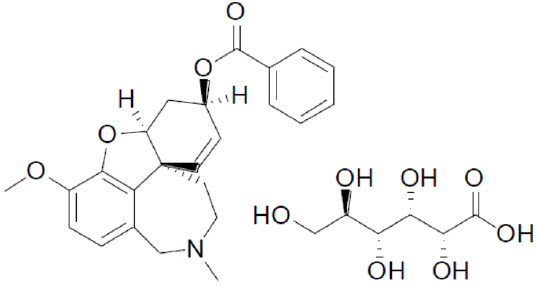
Active ingredient
Classification
Anticholinesterases
Drug interactions
Benzgalantamine may interact with certain medications, particularly anticholinergics and cholinesterase inhibitors.
- unknownanticholinergic medications — interfere with the activity of anticholinergic medications
- unknownsuccinylcholine — synergistic effect expected
- unknownother cholinesterase inhibitors — synergistic effect expected
- unknowncholinergic agonists — synergistic effect expected
Indications
INDICATIONS AND USAGE ZUNVEYL is indicated for the treatment of mild to moderate dementia of the Alzheimer's type in adults. ZUNVEYL is a cholinesterase inhibitor indicated for the treatment of mild to moderate dementia of the Alzheimer's type in adults ( 1 )
Dosage
DOSAGE AND ADMINISTRATION The recommended starting dosage is 5 mg orally twice daily with or without food; increase to initial maintenance dosage of 10 mg twice daily after a minimum of 4 weeks based on clinical response and tolerability. Dosage may be increased to the maximum recommended dosage of 15 mg twice a day after a minimum of 4 weeks at 10 mg twice daily. ( 2.1 ) Ensure adequate fluid intake during treatment. Swallow whole; do not split, crush or chew. ( 2.1 ) May be taken with or without food. ( 2.1 ) Should not be taken with alcohol. ( 2.1 ) Hepatic impairment: Should not exceed 10 mg twice daily for moderate hepatic impairment; use in patients with severe hepatic impairment is not recommended ( 2.2 ) Renal impairment: Should not exceed 10 mg twice daily for creatinine clearance 9 to 59 mL/min; use in patients with creatinine clearance less than 9 mL/min is not recommended. ( 2.3 ) 2.1 Recommended Dosage and Administration Dosage The recommended starting dosage is 5 mg twice a day (10 mg/day) by mouth. Increase to initial maintenance dosage of 10 mg twice daily (20 mg/day) after a minimum of 4 weeks, based on clinical response and tolerability. Dosage may be increased to the maximum recommended dosage of 15 mg twice a day (30 mg/day) after a minimum of 4 weeks at 10 mg twice daily. Administration ZUNVEYL can be taken with or without food. ZUNVEYL should not be taken with alcohol [see Clinical Pharmacology (12.3) ]. Swallow whole; do not split, crush or chew. Ensure adequate fluid intake during treatment. Interruption of Therapy If therapy has been interrupted for more than three days, the patient should be restarted at the lowest dosage and the dosage escalated to the current dose. 2.2 Recommended Dosage in Patients with Hepatic Impairment No dosage adjustment is recommended for patients with mild hepatic impairment (Child-Pugh score of 5-6). In patients with moderate hepatic impairment (Child-Pugh score of 7-9), the dosage should generally not exceed 10 mg twice daily (20 mg/day). The use of ZUNVEYL in patients with severe hepatic impairment (Child-Pugh score of 10-15) is not recommended [see Clinical Pharmacology (12.3) ] . 2.3 Recommended Dosage in Patients with Renal Impairment In patients with creatinine clearance of 9 to 59 mL/min, the dosage should generally not exceed 10 mg twice daily (20 mg/day). In patients with creatinine clearance less than 9 mL/min, the use of ZUNVEYL is not recommended [see Clinical Pharmacology (12.3) ] .
Warnings
WARNINGS AND PRECAUTIONS Serious skin reactions: Discontinue at first appearance of skin rash. ( 5.1 ) All patients should be considered at risk for adverse effects on cardiac conduction, including bradycardia and AV block, because of vagotonic effects on sinoatrial and atrioventricular nodes. ( 5.3 ) Active or occult gastrointestinal bleeding: Monitor, especially those with an increased risk for developing ulcers. ( 5.4 ) Cholinomimetics may cause bladder outflow obstruction. ( 5.5 ) Monitor for respiratory adverse events in patients with a history of severe asthma or obstructive pulmonary disease. ( 5.7 ) 5.1 Serious Skin Reactions Serious skin reactions (e.g., Stevens-Johnson syndrome and acute generalized exanthematous pustulosis) have been reported in patients receiving galantamine (the active metabolite of (ZUNVEYL) tablets. Inform patients and caregivers that the use of ZUNVEYL tablets should be discontinued at the first appearance of a skin rash, unless the rash is clearly not drug-related. If signs or symptoms suggest a serious skin reaction, use of this drug should not be resumed, and alternative therapy should be considered [see Contraindications (4) ]. 5.2 Anesthesia ZUNVEYL, as a cholinesterase inhibitor, is likely to increase the neuromuscular blocking effects of succinylcholine-type and similar neuromuscular blocking agents during anesthesia. 5.3 Cardiovascular Conditions Because of their pharmacological action, cholinesterase inhibitors, including ZUNVEYL, have vagotonic effects on the sinoatrial and atrioventricular nodes, leading to bradycardia and AV block. Bradycardia and all types of heart block have been reported in patients taking cholinesterase inhibitors, both with and without known underlying cardiac conduction abnormalities. Therefore, all patients should be considered at risk for adverse effects on cardiac conduction. Patients treated with galantamine up to 24 mg/day using the recommended dosing schedule showed a dose-related increase in risk of syncope (placebo 0.7% [2/286]; 4 mg twice daily 0.4% [3/692]; 8 mg twice daily 1.3% [7/552]; 12 mg twice daily 2.2% [6/273]). 5.4 Gastrointestinal Conditions Through their primary action, cholinomimetics, including ZUNVEYL, may be expected to increase gastric acid secretion because of increased cholinergic activity. Therefore, patients should be monitored closely for symptoms of active or occult gastrointestinal bleeding, especially those with an increased risk for developing ulcers (e.g., those with a history of ulcer disease or patients using concurrent nonsteroidal anti-inflammatory drugs [NSAIDs]). Clinical studies of galantamine have shown no increase, relative to placebo, in the incidence of either peptic ulcer disease or gastrointestinal bleeding. Galantamine, as a predictable consequence of its pharmacological properties, has been shown to produce nausea, vomiting, diarrhea, anorexia, and weight loss [see Adverse Reactions (6.1) ]. Monitor the patient's weight during therapy with ZUNVEYL. 5.5 Genitourinary Conditions Although this was not observed in clinical trials with galantamine, cholinomimetics, including ZUNVEYL, may cause bladder outflow obstruction. 5.6 Neurological Conditions Cholinesterase inhibitors are believed to have some potential to cause generalized convulsions [see Adverse Reactions (6.2) ]. Seizure activity may also be a manifestation of Alzheimer's disease. Patients with Alzheimer's disease should be monitored closely for seizures while taking ZUNVEYL. 5.7 Pulmonary Conditions Because of its cholinomimetic action, ZUNVEYL should be prescribed with care to patients with a history of severe asthma or obstructive pulmonary disease. Respiratory function should be monitored closely for the occurrence of respiratory adverse reactions.
Contraindications
CONTRAINDICATIONS ZUNVEYL is contraindicated in patients with known hypersensitivity to benzgalantamine, galantamine, or to any inactive ingredient in ZUNVEYL. Serious skin reactions have occurred [see Warnings and Precautions (5.1) and Adverse Reactions (6.2) ]. Known hypersensitivity to benzgalantamine, galantamine, or any inactive ingredients in ZUNVEYL ( 4 )
Mechanism of action
Mechanism of Action Although the etiology of cognitive impairment in Alzheimer's disease (AD) is not fully understood, it has been reported that acetylcholine-producing neurons degenerate in the brains of patients with Alzheimer's disease. The degree of this cholinergic loss has been correlated with degree of cognitive impairment and density of amyloid plaques (a neuropathological hallmark of Alzheimer's disease). ZUNVEYL is a prodrug of galantamine. Galantamine, a tertiary alkaloid, is a competitive and reversible inhibitor of acetylcholinesterase. While the precise mechanism of galantamine's action is unknown, it is postulated to exert its therapeutic effect by enhancing cholinergic function. This is accomplished by increasing the concentration of acetylcholine through reversible inhibition of its hydrolysis by cholinesterase. If this mechanism is correct, galantamine's effect may lessen as the disease process advances and fewer cholinergic neurons remain functionally intact. There is no evidence that galantamine alters the course of the underlying dementing process.
Indicated ICD-10 codes
Source: RxNorm + openFDA + RxClass + FAERS · 2026
Look up another medication