cefepime 500 MG Injection
Managing this medication for someone you care for? Eleplan keeps diagnoses, medications and appointments in one plan.
Start free with EleplanClinical drug
cefepime 500 MG Injection
500 MG · Injection · injection
A form of cefepime →
cefepime 500 MG Injection — Fourth-generation cephalosporins. INDICATIONS AND USAGE Cefepime for Injection and Dextrose Injection is a cephalosporin antibacterial indicated in the treatment of the following…
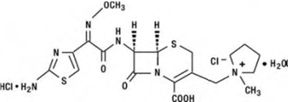
Active ingredient
Classification
Fourth-generation cephalosporinsCephalosporin Antibacterial
Drug interactions
Cefepime has known interactions with aminoglycosides and diuretics that may increase the risk of nephrotoxicity.
- moderateaminoglycosides — increased potential of nephrotoxicity and ototoxicity
- moderatediuretics — nephrotoxicity has been reported
Real-world adverse events (FAERS)
Drug Ineffective1,529Acute Kidney Injury1,247Off Label Use1,160Pyrexia1,067Febrile Neutropenia850Pneumonia791Sepsis606Hypotension585
Indications
INDICATIONS AND USAGE Cefepime for Injection and Dextrose Injection is a cephalosporin antibacterial indicated in the treatment of the following infections caused by susceptible strains of the designated microorganisms: Pneumonia ( 1.1 ) Empiric therapy for febrile neutropenic patients ( 1.2 ) Uncomplicated and complicated urinary tract infections ( 1.3 ) Uncomplicated skin and skin structure infections ( 1.4 ) Complicated intra-abdominal infections (used in combination with metronidazole) ( 1.5 ) To reduce the development of drug-resistant bacteria and maintain the effectiveness of Cefepime for Injection and Dextrose Injection and other antibacterial drugs, Cefepime for Injection and Dextrose Injection should be used only to treat or prevent infections that are proven or strongly suspected to be caused by bacteria. ( 1.6 ) 1.1 Pneumonia Cefepime for Injection and Dextrose Injection is indicated for the treatment of pneumonia (moderate to severe) caused by Streptococcus pneumoniae (including cases associated with concurrent bacteremia), Pseudomonas aeruginosa , Klebsiella pneumoniae , or Enterobacter species. 1.2 Empiric Therapy for Febrile Neutropenic Patients Cefepime for Injection and Dextrose Injection as monotherapy is indicated for empiric treatment of febrile neutropenic patients. In patients at high risk for severe infection (including patients with a history of recent bone marrow transplantation, with hypotension at presentation, with an underlying hematologic malignancy, or with severe or prolonged neutropenia), antimicrobial monotherapy may not be appropriate. Insufficient data exist to support the efficacy of cefepime monotherapy in such patients [see Clinical Studies (14.1) ]. 1.3 Uncomplicated and Complicated Urinary Tract Infections (including pyelonephritis) Cefepime for Injection and Dextrose Injection is indicated for uncomplicated and complicated urinary tract infections (including pyelonephritis) caused by Escherichia coli or Klebsiella pneumoniae when the infection is severe, or caused by Escherichia coli , Klebsiella pneumoniae , or Proteus mirabilis when the infection is mild to moderate, including cases associated with concurrent bacteremia with these microorganisms. 1.4 Uncomplicated Skin and Skin Structure Infections Cefepime for Injection and Dextrose Injection is indicated in the treatment of uncomplicated skin and skin structure infections caused by Staphylococcus aureus (methicillin-susceptible strains only) or Streptococcus pyogenes . 1.5 Complicated Intra-abdominal Infections Cefepime for Injection and Dextrose Injection is indicated for complicated intra-abdominal infections (used in combination with metronidazole) caused by Escherichia coli , viridans group streptococci, Pseudomonas aeruginosa , Klebsiella pneumoniae , Enterobacter species, or Bacteroides fragilis [ see Clinical Studies (14.2) ]. 1.6 Usage To reduce the development of drug-resistant bacteria and maintain the effectiveness of Cefepime for Injection and Dextrose Injection and other antibacterial drugs, Cefepime for Injection and Dextrose Injection should be used only to treat or prevent infections that are proven or strongly suspected to be caused by susceptible bacteria. When culture and susceptibility information are available, they should be considered in selecting or modifying antibacterial therapy. In the absence of such data, local epidemiology and susceptibility patterns may contribute to the empiric selection of therapy.
Dosage
DOSAGE AND ADMINISTRATION § For Pseudomonas aeruginosa , use 2 g IV every 8 hours. ( 2.1 ) *Or until resolution of neutropenia. ( 2.1 ) **Intramuscular route of administration is indicated only for mild to moderate, uncomplicated or complicated UTIs due to E. coli . ( 2.1 ) Recommended Dosage in Adults with Creatinine Clearance (CrCL) Greater Than 60 mL/min ( 2.1 ) Site and Type of Infection Dose Frequency Duration (days) Moderate to Severe Pneumonia § 1-2 g IV Every 8-12 hours 10 Empiric Therapy for Febrile Neutropenic Patients 2 g IV Every 8 hours 7* Mild to Moderate Uncomplicated or Complicated Urinary Tract Infections 0.5-1 g IV/IM** Every 12 hours 7-10 Severe Uncomplicated or Complicated Urinary Tract Infections 2 g IV Every 12 hours 10 Moderate to Severe Uncomplicated Skin and Skin Structure Infections 2 g IV Every 12 hours 10 Complicated Intra-abdominal Infections § (used in combination with metronidazole) 2 g IV Every 12 hours 7-10 Pediatric Patients (2 months to 16 years) Recommended dosage in pediatric with CrCL greater than 60 mL/min. ( 2.2 ) • The usual recommended dosage in pediatric patients is 50 mg per kg per dose administered every 12 hours (every 8 hours for febrile neutropenia). ( 2.2 ) • Patients with Renal Impairment: Adjust dose in patients with CrCL less than or equal to 60 mL/min. ( 2.3 ) 2.1 Dosage for Adults The recommended adult dosages and routes of administration are outlined in Table 1 below for patients with creatinine clearance greater than 60 mL/min. Administer Cefepime for Injection intravenously over approximately 30 minutes. Table 1: Recommended Dosage Schedule for Cefepime for Injection in Adult Patients with Creatinine Clearance (CrCL) Greater Than 60 mL/min *or until resolution of neutropenia. In patients whose fever resolves but who remain neutropenic for more than 7 days, the need for continued antimicrobial therapy should be re-evaluated frequently. **Intramuscular route of administration is indicated only for mild to moderate, uncomplicated or complicated UTIs due to E. coli . § For P. aeruginosa , use 2 g IV every 8 hours. Site and Type of Infection Dose Frequency Duration (days) Adults Intravenous (IV)/Intramuscular (IM) Moderate to Severe Pneumonia § 1 to 2 g IV Every 8 to 12 hours 10 Empiric therapy for febrile neutropenic patients 2 g IV Every 8 hours 7* Mild to Moderate Uncomplicated or Complicated Urinary Tract Infections, including pyelonephritis 0.5 to 1 g IV/IM** Every 12 hours 7 to 10 Severe Uncomplicated or Complicated Urinary Tract Infections, including pyelonephritis 2 g IV Every 12 hours 10 Moderate to Severe Uncomplicated Skin and Skin Structure Infections 2 g IV Every 12 hours 10 Complicated Intra-abdominal Infections § (used in combination with metronidazole) 2 g IV Every 8 to 12 hours 7 to 10 2.2 Pediatric Patients (2 months up to 16 years) The maximum dose for pediatric patients should not exceed the recommended adult dose. The usual recommended dosage in pediatric patients up to 40 kg in weight for durations as given above for adults is: •50 mg per kg per dose, administered every 12 hours for uncomplicated and complicated urinary tract infections (including pyelonephritis), uncomplicated skin and skin structure infections, and pneumonia (see below).•For moderate to severe pneumonia due to P. aeruginosa give 50 mg per kg per dose, every 8 hours.•50 mg per kg per dose, every 8 hours for febrile neutropenic patients. 2.3 Dosage Adjustments in Patients with Renal Impairment Adult Patients Adjust the dose of Cefepime for Injection in patients with creatinine clearance less than or equal to 60 mL/min to compensate for the slower rate of renal elimination. In these patients, the recommended initial dose of Cefepime for Injection should be the same as in patients with CrCL greater than 60 mL/min except in patients undergoing hemodialysis. The recommended doses of Cefepime for Injection in patients with renal impairment are presented in Table 2 . When only serum creatinine is available, the following formula (Cockcroft and Gault equation) 1 may be used to estimate creatinine clearance. The serum creatinine should represent a steady state of renal function: Males: Creatinine Clearance (mL/min) = Weight (kg) x (140 – age) 72 × serum creatinine (mg/dL) Females: 0.85 × above value Table 2: Recommended Dosing Schedule for Cefepime for Injection in Adult Patients With Creatinine Clearance Less Than or Equal to 60 mL/min Creatinine Clearance (mL/min) Recommended Maintenance Schedule Greater than 60 500 mg every 12 hours 1 g every 12 hours 2 g every 12 hours 2 g every 8 hours 30 to 60 500 mg every 24 hours 1 g every 24 hours 2 g every 24 hours 2 g every 12 hours 11 to 29 500 mg every 24 hours 500 mg every 24 hours 1 g every 24 hours 2 g every 24 hours Less than 11 250 mg every 24 hours 250 mg every 24 hours 500 mg every 24 hours 1 g every 24 hours Continuous Ambulatory Peritoneal Dialysis (CAPD) 500 mg every 48 hours 1 g every 48 hours 2 g every 48 hours 2 g every 48 hours Hemodialysis On hemodialysis days, cefepime should be administered following hemodialysis. Whenever possible, cefepime should be administered at the same time each day. 1 g on day 1, then 500 mg every 24 hours thereafter 1 g every 24 hours In patients undergoing Continuous Ambulatory Peritoneal Dialysis (CAPD), Cefepime for Injection may be administered at the recommended doses at a dosage interval of every 48 hours (see Table 2 ). In patients undergoing hemodialysis, approximately 68% of the total amount of cefepime present in the body at the start of dialysis will be removed during a 3-hour dialysis period. The dosage of Cefepime for Injection for hemodialysis patients is 1 g on Day 1 followed by 500 mg every 24 hours for the treatment of all infections except febrile neutropenia, which is 1 g every 24 hours. Cefepime for Injection should be administered at the same time each day and following the completion of hemodialysis on hemodialysis days (see Table 2 ). Pediatric Patients Data in pediatric patients with impaired renal function are not available; however, since cefepime pharmacokinetics are similar in adults and pediatric patients [ see Clinical Pharmacology (12.3) ], changes in the dosing regimen proportional to those in adults (see Tables 1 and 2 ) are recommended for pediatric patients. 2.4 Preparation of Cefepime for Injection for Intravenous Infusion •Constitute the 0.5 gram, 1 gram, or 2 grams vial, of Cefepime for Injection with the one of the following diluents: o Sterile Water for Injection o 0.9% Sodium Chloride Injection o 5% Dextrose Injection o 0.5% or 1% Lidocaine Hydrochloride Injection o Sterile Bacteriostatic Water for Injection with Parabens or Benzyl Alcohol •Dilute the reconstituted solution with one of the following compatible infusion solutions prior to intravenous infusion (Refer to Table 3 below for the amount of diluent to be added to each vial and the amount of the reconstituted solution to be withdrawn): o 0.9% Sodium Chloride Injection o 5% and 10% Dextrose Injection o M/6 Sodium Lactate Injection o 5% Dextrose and 0.9% sodium Chloride Injection o Lactated Rings and 5% Dextrose Injection o Normosol ® -R and Normosol ® -M in 5% Dextrose Injection •Parenteral drugs should be inspected visually for particulate matter before administration. If particulate matter is evident in reconstituted fluids, the drug solution should be discarded. •Administer the resulting intravenous infusion over approximately 30 minutes. •Intermittent intravenous infusion with a Y-type administration set can be accomplished with compatible solutions. However, during infusion of a solution containing cefepime, it is desirable to discontinue the other solution. 2.5 Preparation of Cefepime for Injection for Intramuscular Administration Constitute Cefepime for Injection vials 0.5 gram, 1 gram and 2 grams with one of the following diluents: Sterile Water for Injection, 0.9% Sodium Chloride, 5% Dextrose Injection, 0.5% or 1% Lidocain
Warnings
WARNINGS AND PRECAUTIONS Hypersensitivity reactions : Cross-hypersensitivity may occur in up to 10% of patients with a history of penicillin allergy. If an allergic reaction occurs, discontinue the drug. ( 5.1 ) Neurotoxicity : May occur especially in patients with renal impairment administered unadjusted doses. If neurotoxicity associated with Cefepime for Injection and Dextrose Injection occurs, discontinue the drug. ( 5.2 ) Clostridio ides difficile- associated diarrhea (CDAD): Evaluate if diarrhea occurs. ( 5.3 ) 5.1 Hypersensitivity Reactions Before therapy with Cefepime for Injection and Dextrose Injection is instituted, careful inquiry should be made to determine whether the patient has had previous immediate hypersensitivity reactions to cefepime, cephalosporins, penicillins, or other drugs. Exercise caution if this product is to be given to penicillin-sensitive patients because cross-hypersensitivity among beta-lactam antibacterials has been clearly documented and may occur in up to 10% of patients with a history of penicillin allergy. If an allergic reaction to Cefepime for Injection and Dextrose Injection occurs, discontinue the drug and institute appropriate supportive measures. 5.2 Neurotoxicity Serious adverse reactions have been reported including life-threatening or fatal occurrences of the following: encephalopathy (disturbance of consciousness including confusion, hallucinations, stupor, and coma), aphasia, myoclonus, seizures, and nonconvulsive status epilepticus [see Adverse Reactions (6.2) ] . Most cases occurred in patients with renal impairment who did not receive appropriate dosage adjustment. However, some cases of neurotoxicity occurred in patients receiving a dosage adjustment appropriate for their degree of renal impairment. In the majority of cases, symptoms of neurotoxicity were reversible and resolved after discontinuation of cefepime and/or after hemodialysis. If neurotoxicity associated with cefepime therapy occurs, discontinue cefepime and institute appropriate supportive measures. 5.3 Clostridioides difficile -Associated Diarrhea Clostridioides difficile -associated diarrhea (CDAD) has been reported with use of nearly all antibacterial agents, including cefepime, and may range in severity from mild diarrhea to fatal colitis. Treatment with antibacterial agents alters the normal flora of the colon leading to overgrowth of C. difficile . C. difficile produces toxins A and B, which contribute to the development of CDAD. Hypertoxin-producing strains of C. difficile cause increased morbidity and mortality, as these infections can be refractory to antimicrobial therapy and may require colectomy. CDAD must be considered in all patients who present with diarrhea following antibacterial drug use. Careful medical history is necessary since CDAD has been reported to occur over two months after the administration of antibacterial agents. If CDAD is suspected or confirmed, ongoing antibacterial use not directed against C. difficile may need to be discontinued. Appropriate fluid and electrolyte management, protein supplementation, antibacterial drug treatment of C. difficile , and surgical evaluation should be instituted as clinically indicated. 5.4 Risk of Development of Drug-resistant Bacteria Prescribing Cefepime for Injection and Dextrose Injection in the absence of proven or strongly suspected bacterial infection or a prophylactic indication is unlikely to provide benefit to the patient and increases the risk of the development of drug-resistant bacteria. As with other antimicrobials, prolonged use of Cefepime for Injection and Dextrose Injection may result in overgrowth of nonsusceptible microorganisms. Repeated evaluation of the patient's condition is essential. Should superinfection occur during therapy, appropriate measures should be taken. 5.5 Drug/Laboratory Test Interactions Urinary Glucose The administration of cefepime may result in a false-positive reaction with glucose in the urine when using glucose tests based on Benedict’s copper reduction reaction that determine the amount of reducing substances like glucose in the urine. It is recommended that glucose tests based on enzymatic glucose oxidase be used. Coombs’ Test Positive direct Coombs' tests have been reported during treatment with cefepime. In patients who develop hemolytic anemia, discontinue the drug and institute appropriate therapy. Positive Coombs' test may be observed in newborns whose mothers have received cephalosporin antibacterial drugs before parturition. Prothrombin Time Many cephalosporins, including cefepime, have been associated with a fall in prothrombin activity. Those at risk include patients with renal or hepatic impairment, or poor nutritional state, as well as patients receiving a protracted course of antimicrobial therapy. Prothrombin time should be monitored in patients at risk, and exogenous vitamin K administered as indicated. 5.6 Patients with a History of Gastrointestinal Disease Cefepime for Injection and Dextrose Injection should be prescribed with caution in individuals with a history of gastrointestinal disease, particularly colitis. 5.7 Possible Effects of Arginine on Glucose Metabolism Cefepime for Injection and Dextrose Injection contains arginine. Arginine has been shown to alter glucose metabolism and elevate serum potassium transiently when administered at 33 times the amount provided by the maximum recommended human dose of cefepime. The effect of lower doses is not presently known. 5.8 Patients with Overt or Known Subclinical Diabetes Mellitus or Carbohydrate Intolerance As with other dextrose-containing solutions, Cefepime for Injection and Dextrose Injection should be prescribed with caution in patients with overt or known subclinical diabetes mellitus or carbohydrate intolerance for any reason.
Contraindications
CONTRAINDICATIONS Patients with known immediate hypersensitivity reactions to cefepime or other cephalosporins, penicillins or other beta-lactam antibacterial drugs. ( 4 ) 4.1 Hypersensitivity to Cefepime or the Cephalosporin Class of Antibacterials, Penicillins, or Other Beta-lactam Antibacterials Cefepime for Injection and Dextrose Injection is contraindicated in patients who have shown immediate hypersensitivity reactions to cefepime or the cephalosporin class of antibacterial drugs, penicillins or other beta-lactam antibacterials. 4.2 Hypersensitivity to Corn Products Solutions containing dextrose may be contraindicated in patients with hypersensitivity to corn products.
Mechanism of action
Mechanism of Action Cefepime is a cephalosporin antibacterial drug [see Microbiology ( 12.4 )] .
Source: RxNorm + openFDA + RxClass + FAERS · 2026
Look up another medication