cenobamate 50 MG Oral Tablet
Managing this medication for someone you care for? Eleplan keeps diagnoses, medications and appointments in one plan.
Start free with EleplanClinical drug
cenobamate 50 MG Oral Tablet
50 MG · Oral Tablet · oral
A form of cenobamate →
cenobamate 50 MG Oral Tablet — Other antiepileptics. INDICATIONS AND USAGE XCOPRI is indicated for the treatment of partial-onset seizures in adult patients. XCOPRI is indicated for the treatment of…
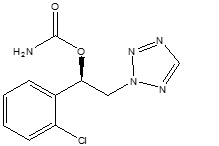
Active ingredient
Classification
Other antiepileptics
Drug interactions
Cenobamate (XCOPRI) has several drug interactions that may require dosage adjustments or alternative contraceptive methods.
- majorphenytoin — increased plasma concentrations
- majorphenobarbital — increased risk of adverse reactions
- majorclobazam — increased risk of adverse reactions
- moderatelamotrigine — reduced plasma concentrations
- moderatecarbamazepine — reduced plasma concentrations
- moderateCYP2B6 substrates — reduced efficacy
- moderateCYP3A substrates — reduced efficacy
- majorCYP2C19 substrates — increased risk of adverse reactions
- majororal contraceptives — reduced effectiveness
- majorCNS depressants — increased risk of neurological adverse reactions
- majoralcohol — increased risk of neurological adverse reactions
Indications
INDICATIONS AND USAGE XCOPRI is indicated for the treatment of partial-onset seizures in adult patients. XCOPRI is indicated for the treatment of partial-onset seizures in adult patients. ( 1 )
Dosage
DOSAGE AND ADMINISTRATION Prior to initiating XCOPRI, obtain serum transaminases (ALT and AST) and total bilirubin, if not recently available (i.e., within 3 months), to establish baseline liver function. ( 2.1 , 5.4 ) The recommended initial dosage of XCOPRI is 12.5 mg once daily, titrated to the recommended maintenance dosage of 200 mg once daily. The recommended titration schedule should not be exceeded. The maximum dosage is 400 mg once daily. ( 2.2 ) Hepatic impairment: For patients with mild or moderate hepatic impairment, the maximum recommended dosage is 200 mg once daily. ( 2.3 , 8.7 , 12.3 ) XCOPRI can be taken whole or the tablets can be crushed. The crushed tablet can be mixed with water and either administered by mouth as an oral suspension or administered via a nasogastric tube. ( 2.4 ) 2.1 Assessments Prior to Initiating XCOPRI Liver Function Tests Prior to initiating XCOPRI, obtain serum transaminases (ALT and AST) and total bilirubin, if not recently available (i.e., within 3 months), to establish baseline liver function [see Warnings and Precautions ( 5.4 )] . For patients with baseline hepatic impairment, dosage modifications are recommended [see Dosage and Administration ( 2.3 )] . 2.2 Recommended Dosage Monotherapy and Adjunctive Therapy XCOPRI is administered orally once daily with or without food. The recommended dosage and titration, which should not be exceeded because of the potential for serious adverse reactions [see Warnings and Precautions ( 5.2 )] , is included in Table 1 . Table 1: Recommended Dosage for Partial-Onset Seizures in Adults Initial Dosage Week 1 and 2 12.5 mg once daily Titration Regimen Week 3 and 4 25 mg once daily Week 5 and 6 50 mg once daily Week 7 and 8 100 mg once daily Week 9 and 10 150 mg once daily Maintenance Dosage Week 11 and thereafter 200 mg once daily Maximum Dosage If needed based on clinical response and tolerability, dose may be increased above 200 mg by increments of 50 mg once daily every two weeks to 400 mg. 400 mg once daily 2.3 Recommended Dosage in Patients with Hepatic Impairment For patients with mild to moderate (Child-Pugh Class A to B) hepatic impairment, the maximum recommended dosage is 200 mg once daily [see Use in Specific Populations ( 8.7 )] . XCOPRI is not recommended for use in patients with severe (Child-Pugh Class C) hepatic impairment [see Dosage and Administration ( 2.1 ) and see Clinical Pharmacology ( 12.3 )] . 2.4 Administration Instructions XCOPRI can be taken whole or the tablets can be crushed. The crushed tablet can be mixed with water and either administered by mouth as an oral suspension or administered via a nasogastric tube, as described below [see Clinical Pharmacology ( 12.3 )]. Administration of Crushed Tablets by Mouth as Oral Suspension Crush the appropriate number of tablet(s) for the prescribed dose. In a cup, combine the crushed tablet(s) and 25 mL of water. Swirl to suspend the crushed tablet(s). Drink the suspension immediately. Do not store the tablet-water mixture for later use. To ensure no tablet residue is left in the container, rinse the container with 25 mL of water and drink. Visually confirm that no particles are left in the container. If particles remain, repeat step 5. Administration of Crushed Tablets via Nasogastric (NG) Tube Crush the appropriate number of tablet(s) for the prescribed dose. In an appropriate container, combine the crushed tablet(s) and 25 mL of water. Swirl to suspend the crushed tablet(s). Ensuring no particles are left in the container, instill the suspension with a syringe into the NG tube. Refill the catheter-tip syringe again with 10 mL of water, swirl gently, and administer. Visually confirm that no particles are left in the syringe. If particles remain, repeat step 5. 2.5 Discontinuation of XCOPRI If XCOPRI is discontinued, the dosage should be gradually reduced over a period of at least 2 weeks, unless safety concerns require abrupt withdrawal [see Warnings and Precautions ( 5.1 , 5.6 )] .
Warnings
WARNINGS AND PRECAUTIONS Drug Reaction with Eosinophilia and Systemic Symptoms (DRESS)/Multi-Organ Hypersensitivity: Discontinue if no alternate etiology. ( 5.1 ) QT Shortening: Use caution when administering XCOPRI with other drugs that shorten the QT interval ( 5.2 ) Suicidal Behavior and Ideation: Monitor patients for suicidal behavior and ideation. ( 5.3 ) Liver Injury: Clinically significant liver injury has occurred. Obtain serum transaminases (ALT and AST) and total bilirubin before initiating XCOPRI, and during treatment if clinically indicated. Discontinue XCOPRI in patients with evidence of liver injury in the absence of an alternative etiology. ( 5.4 ) Neurological Adverse Reactions: Monitor for somnolence and fatigue and advise patients not to drive or operate machinery until they have gained sufficient experience on XCOPRI. Concomitant use with other CNS depressants or alcohol may have additive effects. ( 5.5 ) Withdrawal of Antiepileptic Drugs: XCOPRI should be gradually withdrawn to minimize the potential of increased seizure frequency. ( 5.6 ) 5.1 Drug Reaction with Eosinophilia and Systemic Symptoms (DRESS)/Multiorgan Hypersensitivity Drug Reaction with Eosinophilia and Systemic Symptoms (DRESS), also known as multiorgan hypersensitivity, has been reported in patients taking XCOPRI. DRESS has occurred, including one fatality, when XCOPRI was titrated rapidly (weekly or faster titration). No cases of DRESS were reported in an open-label safety study of 1339 partial-onset seizure patients when XCOPRI was initiated at 12.5 mg once daily and titrated every two weeks. This finding does not establish that the risk of DRESS is prevented by a slower titration; however, XCOPRI should be initiated at 12.5 mg once daily and titrated every two weeks [see Dosage and Administration ( 2.2 )] . DRESS typically, although not exclusively, presents with fever, rash, lymphadenopathy, and/or facial swelling, in association with other organ system involvement, such as hepatitis, nephritis, hematological abnormalities, myocarditis, or myositis sometimes resembling an acute viral infection. Eosinophilia is often present. This disorder is variable in its expression, and other organ systems not noted here may be involved. It is important to note that early manifestations of hypersensitivity, such as fever or lymphadenopathy, may be present even though rash is not evident. If such signs or symptoms are present, the patient should be evaluated immediately. XCOPRI should be discontinued immediately and not restarted if an alternative etiology for the signs or symptoms cannot be established [see Contraindications ( 4 )] . 5.2 QT Shortening In a placebo-controlled study of the QT interval, a higher percentage of subjects who took XCOPRI (31% at 200 mg and 66% at 500 mg) had a QT shortening of greater than 20 msec compared to placebo (6-17%). Reductions of the QTc interval below 300 msec were not observed [see Clinical Pharmacology ( 12.2 )] . Familial Short QT syndrome is associated with an increased risk of sudden death and ventricular arrhythmias, particularly ventricular fibrillation. Such events in this syndrome are believed to occur primarily when the corrected QT interval falls below 300 msec. Nonclinical data also indicate that QT shortening is associated with ventricular fibrillation. Patients with Familial Short QT syndrome should not be treated with XCOPRI [see Contraindications ( 4 )] . Caution should be used when administering XCOPRI and other drugs that shorten the QT interval as there may be a synergistic effect on the QT interval that would increase the QT shortening risk. 5.3 Suicidal Behavior and Ideation Antiepileptic drugs (AEDs), including XCOPRI, increase the risk of suicidal thoughts or behavior in patients taking these drugs for any indication. Patients treated with any AED for any indication should be monitored for the emergence or worsening of depression, suicidal thoughts or behavior, and/or any unusual changes in mood or behavior. Pooled analyses of 199 placebo-controlled clinical trials (mono- and adjunctive therapy) of 11 different AEDs showed that patients randomized to one of the AEDs had approximately twice the risk (adjusted Relative Risk 1.8, 95% CI:1.2, 2.7) of suicidal thinking or behavior compared to patients randomized to placebo. In these trials, which had a median treatment duration of 12 weeks, the estimated incidence rate of suicidal behavior or ideation among 27,863 AED-treated patients was 0.43%, compared to 0.24% among 16,029 placebo-treated patients, representing an increase of approximately one case of suicidal thinking or behavior for every 530 patients treated. There were four suicides in drug-treated patients in the trials and none in placebo-treated patients, but the number is too small to allow any conclusion about drug effect on suicide. The increased risk of suicidal thoughts or behavior with AEDs was observed as early as one week after starting drug treatment with AEDs and persisted for the duration of treatment assessed. Because most trials included in the analysis did not extend beyond 24 weeks, the risk of suicidal thoughts or behavior beyond 24 weeks could not be assessed. The risk of suicidal thoughts or behavior was generally consistent among drugs in the data analyzed. The finding of increased risk with AEDs of varying mechanisms of action and across a range of indications suggests that the risk applies to all AEDs used for any indication. The risk did not vary substantially by age (5-100 years) in the clinical trials analyzed. Table 3 shows absolute and relative risk by indication for all evaluated AEDs. Table 3: Risk of Suicidal Thoughts or Behaviors by Indication for Antiepileptic Drugs in the Pooled Analysis Indication Placebo Patients with Events Per 1000 Patients Drug Patients with Events Per 1000 Patients Relative Risk: Incidence of Events in Drug Patients/Incidence in Placebo Patients Risk Differences: Additional Drug Patients with Events Per 1000 Patients Epilepsy 1.0 3.4 3.5 2.4 Psychiatric 5.7 8.5 1.5 2.9 Other 1.0 1.8 1.9 0.9 Total 2.4 4.3 1.8 1.9 The relative risk for suicidal thoughts or behavior was higher in clinical trials in patients with epilepsy than in clinical trials in patients with psychiatric or other conditions, but the absolute risk differences were similar for epilepsy and psychiatric indications. Anyone considering prescribing XCOPRI or any other AED must balance this risk with the risk of untreated illness. Epilepsy and many other illnesses for which AEDs are prescribed are themselves associated with morbidity and mortality and an increased risk of suicidal thoughts and behavior. Should suicidal thoughts and behavior emerge during treatment, the prescriber needs to consider whether the emergence of these symptoms in any given patient may be related to the illness being treated. 5.4 Liver Injury Clinically significant liver injury has been reported in patients treated with XCOPRI in the postmarketing setting. Signs of liver injury, including markedly elevated serum hepatic transaminases with elevated total bilirubin, have been reported after administration. Acute liver failure requiring transplantation has been reported in the postmarketing setting. Elevations of serum hepatic transaminases occurred in patients receiving XCOPRI in clinical trials [see Adverse Reactions ( 6.1 )] . Obtain serum transaminases (ALT and AST) and total bilirubin, if not recently available (i.e., within 3 months), before initiation of XCOPRI to establish baseline liver function. Monitor for signs and symptoms of any hepatic injury during treatment [see Dosage and Administration ( 2.1 )] , and obtain serum ALT and AST and total bilirubin promptly in patients who develop clinical signs or symptoms suggestive of hepatic dysfunction (e.g., unexplained nausea, vomiting, right upper quadrant abdominal pain, fatigue, anorexia, jaundice, dark urine). Interrupt or discontinue treatment with XCOPRI in pati
Contraindications
CONTRAINDICATIONS XCOPRI is contraindicated in patients with: Hypersensitivity to cenobamate or any of the inactive ingredients in XCOPRI [see Warnings and Precautions ( 5.1 ) and Description ( 11 )] Familial Short QT syndrome [see Warnings and Precautions ( 5.2 )] Hypersensitivity to cenobamate or any of the inactive ingredients in XCOPRI. ( 4 ) Familial Short QT syndrome. ( 4 )
Mechanism of action
Mechanism of Action The precise mechanism by which cenobamate exerts its therapeutic effects in patients with partial-onset seizures is unknown. Cenobamate has been demonstrated to reduce repetitive neuronal firing by inhibiting voltage-gated sodium currents. It is also a positive allosteric modulator of the γ-aminobutyric acid (GABA A ) ion channel.
Indicated ICD-10 codes
Source: RxNorm + openFDA + RxClass + FAERS · 2026
Look up another medication