clobetasol propionate 0.5 MG/ML Topical Cream
Managing this medication for someone you care for? Eleplan keeps diagnoses, medications and appointments in one plan.
Start free with EleplanClinical drug
clobetasol propionate 0.5 MG/ML Topical Cream
0.5 MG/ML · Topical Cream · topical
A form of clobetasol →
clobetasol propionate 0.5 MG/ML Topical Cream — Corticosteroids, very potent (group IV). INDICATIONS AND USAGE Clobetasol Propionate Shampoo, 0.05% is a translucent, colorless viscous liquid, supplied in 4 fl. oz. (118 mL) bottles. NDC…
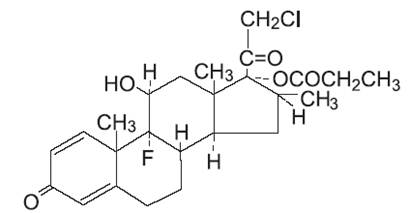
Boxed warning
Important : For use on skin only. Do not get clobetasol propionate lotion near or in your eyes, mouth or vagina.
Active ingredient
Classification
Corticosteroids, very potent (group IV)Corticosteroid
Indications
INDICATIONS AND USAGE Clobetasol Propionate Shampoo, 0.05% is a translucent, colorless viscous liquid, supplied in 4 fl. oz. (118 mL) bottles. NDC 63629-9461-01 Storage: Keep bottle tightly closed. Store at USP controlled room temperature 68° to 77°F (20° - 25°C), with excursions permitted between 59° and 86°F (15° - 30°C). Repackaged/Relabeled by: Bryant Ranch Prepack, Inc. Burbank, CA 91504 1.1 Indication Clobetasol Propionate Shampoo, 0.05% is a super-high potent topical corticosteroid formulation indicated for the treatment of moderate to severe forms of scalp psoriasis in subjects 18 years of age and older. Treatment should be limited to 4 consecutive weeks. The total dosage should not exceed 50 g (50 mL or 1.75 fl. oz.) per week. Patients should be instructed to use Clobetasol Propionate Shampoo, 0.05% for the minimum time period necessary to achieve the desired results [see Dosage and Administration (2)] . Use in patients younger than 18 years of age is not recommended due to numerically high rates of hypothalamic-pituitary-adrenal (HPA) axis suppression [see Warnings and Precautions (5.1) and Use in Specific Populations (8.4)] . 1.2 Limitations of Use Clobetasol Propionate Shampoo, 0.05% should not be used on the face, groin or axillae. Avoid any contact of the drug product with the eyes and lips. In case of contact, rinse thoroughly with water all parts of the body that came in contact with the shampoo. 1.1 Indication Clobetasol Propionate Shampoo, 0.05% is a super-high potent topical corticosteroid formulation indicated for the treatment of moderate to severe forms of scalp psoriasis in subjects 18 years of age and older. Treatment should be limited to 4 consecutive weeks. The total dosage should not exceed 50 g (50 mL or 1.75 fl. oz.) per week. Patients should be instructed to use Clobetasol Propionate Shampoo, 0.05% for the minimum time period necessary to achieve the desired results [see Dosage and Administration (2)] . Use in patients younger than 18 years of age is not recommended due to numerically high rates of hypothalamic-pituitary-adrenal (HPA) axis suppression [see Warnings and Precautions (5.1) and Use in Specific Populations (8.4)] . 1.2 Limitations of Use Clobetasol Propionate Shampoo, 0.05% should not be used on the face, groin or axillae. Avoid any contact of the drug product with the eyes and lips. In case of contact, rinse thoroughly with water all parts of the body that came in contact with the shampoo.
Dosage
DOSAGE AND ADMINISTRATION Clobetasol Propionate Shampoo, 0.05% is for topical use only, and not for ophthalmic, oral or intravaginal use. Clobetasol Propionate Shampoo, 0.05% should be applied onto dry (not wet) scalp once a day in a thin film to the affected areas only, and left in place for 15 minutes before lathering and rinsing. The total dosage should not exceed 50 g (50 mL or 1.75 fl. oz.) per week. Move the hair away from the scalp so that one of the affected areas is exposed. Position the bottle over the lesion. Apply a small amount of the shampoo directly onto the lesion, letting the product naturally flow from the bottle (gently squeeze the bottle), avoiding any contact of the product with the facial skin, eyes or lips. In case of contact, rinse thoroughly with water. Spread the product so that the entire lesion is covered with a thin uniform film. Massage gently into the lesion and repeat for additional lesion(s). Wash your hands after applying Clobetasol Propionate Shampoo, 0.05%. Leave the shampoo in place for 15 minutes, then add water, lather and rinse thoroughly all parts of the scalp and body that came in contact with the shampoo (e.g., hands, face, neck and shoulders). Avoid contact with eyes and lips. Minimize contact to non-affected areas of the body. Although no additional shampoo is necessary to cleanse your hair, you may use a non-medicated shampoo if desired. Treatment should be limited to 4 consecutive weeks. As with other corticosteroids, therapy should be discontinued when control is achieved. If complete disease control is not achieved after 4 weeks of treatment with Clobetasol Propionate Shampoo, 0.05%, treatment with a less potent topical steroid may be substituted. If no improvement is seen within 4 weeks, reassessment of the diagnosis may be necessary. Clobetasol Propionate Shampoo, 0.05% should not be used with occlusive dressings (shower cap or bathing cap) unless directed by a physician. • Not for oral, ophthalmic, or intravaginal use. ( 2 ) • Clobetasol Propionate Shampoo, 0.05% should be applied onto dry (not wet) scalp once a day in a thin film to the affected areas only, and left in place for 15 minutes before lathering and rinsing. Clobetasol Propionate Shampoo, 0.05% contains a super-high potent topical corticosteroid; therefore treatment should be limited to 4 weeks. ( 2 ) • As with other corticosteroids, therapy should be discontinued when control is achieved. ( 2 ) • Total dosage should not exceed 50 g (50 mL or 1.75 fl. oz.) per week. ( 2 ) • Clobetasol Propionate Shampoo, 0.05% should not be used with a shower cap or bathing cap. ( 2 )
Warnings
WARNINGS AND PRECAUTIONS Clobetasol propionate is a highly potent topical corticosteroid that has been shown to suppress the hypothalamic-pituitary-adrenal (HPA) axis at the lowest doses tested. ( 5.1 ) Cushing’s syndrome, hyperglycemia and unmasking of latent diabetes mellitus can also result from systemic absorption of topical corticosteroids. ( 5.1 ) Systemic absorption may require periodic evaluation for HPA axis suppression. Modify use if HPA axis suppression develops. ( 5.1 ) Children may be more susceptible to systemic toxicity from use of topical corticosteroids. ( 5.1 , 8.4 ) If irritation develops in the presence of dermatological infections, the use of an appropriate antifungal or antibacterial agent should be instituted. If a favorable response does not occur promptly, use of Clobetasol Propionate Shampoo, 0.05% should be discontinued until the infection has been adequately controlled. ( 5.3 ) Local adverse reactions with topical corticosteroids may occur more frequently with the use of occlusive dressings and higher potency corticosteroids, including clobetasol propionate. These reactions include: folliculitis, acneiform eruptions, hypopigmentation, perioral dermatitis, allergic contact dermatitis, secondary infection, striae and miliaria. ( 5.4 ) 5.1 Effects on the Endocrine System Clobetasol propionate is a highly potent topical corticosteroid that has been shown to suppress the HPA axis at the lowest doses tested. Systemic absorption of topical corticosteroids can produce reversible hypothalamic-pituitary-adrenal (HPA) axis suppression with the potential for clinical glucocorticosteroid insufficiency. This may occur during treatment or upon withdrawal of the topical corticosteroid. The effect of clobetasol propionate shampoo, 0.05% on HPA axis suppression was evaluated in one trial in adolescents 12 to 17 years of age. In this trial, 5 of 12 evaluable subjects developed suppression of their HPA axis following 4 weeks of treatment with clobetasol propionate shampoo, 0.05% applied once daily for 15 minutes to a dry scalp before lathering and rinsing. Because of the potential for systemic absorption, use of topical corticosteroids may require that patients be periodically evaluated for HPA axis suppression. Factors that predispose a patient using a topical corticosteroid to HPA axis suppression include the use of more potent steroids, use over large surface areas, use over prolonged periods, use under occlusion, use on an altered skin barrier, and use in patients with liver failure. An adrenocorticotropic hormone (ACTH) stimulation test may be helpful in evaluating patients for HPA axis suppression. If HPA axis suppression is documented, an attempt should be made to gradually withdraw the drug, to reduce the frequency of application, or to substitute a less potent steroid. Manifestations of adrenal insufficiency may require supplemental systemic corticosteroids. Recovery of HPA axis function is generally prompt and complete upon discontinuation of topical corticosteroids. Cushing’s syndrome, hyperglycemia, and unmasking of latent diabetes mellitus can also result from systemic absorption of topical corticosteroids. Use of more than one corticosteroid-containing product at the same time may increase the total systemic exposure. Pediatric patients may be more susceptible to systemic toxicity from equivalent doses due to their larger skin surface to body mass ratios [see Use in Specific Populations ( 8.4 )] . 5.2 Allergic Contact Dermatitis If irritation develops, Clobetasol Propionate Shampoo, 0.05% should be discontinued and appropriate therapy instituted. Allergic contact dermatitis with corticosteroids is usually diagnosed by observing a failure to heal rather than noting a clinical exacerbation. Clinical diagnosis of allergic contact dermatitis can be confirmed with patch testing. 5.3 Concomitant Skin Infections In the presence of dermatologic infections, the use of an appropriate antifungal or antibacterial agent should be instituted. If a favorable response does not occur promptly, use of Clobetasol Propionate Shampoo, 0.05% should be discontinued until the infection has been adequately controlled. 5.4 Local Adverse Reactions with Topical Corticosteroids Local adverse reactions may be more likely to occur with occlusive use, prolonged use or use of higher potency corticosteroids. Reactions may include atrophy, striae, telangiectasias, burning, itching, irritation, dryness, folliculitis, acneiform eruptions, hypopigmentation, perioral dermatitis, allergic contact dermatitis, secondary infection, and miliaria. Some local adverse reactions may be irreversible. Clobetasol propionate is not recommended in patients with acne vulgaris, rosacea or perioral dermatitis. 5.1 Effects on the Endocrine System Clobetasol propionate is a highly potent topical corticosteroid that has been shown to suppress the HPA axis at the lowest doses tested. Systemic absorption of topical corticosteroids can produce reversible hypothalamic-pituitary-adrenal (HPA) axis suppression with the potential for clinical glucocorticosteroid insufficiency. This may occur during treatment or upon withdrawal of the topical corticosteroid. The effect of clobetasol propionate shampoo, 0.05% on HPA axis suppression was evaluated in one trial in adolescents 12 to 17 years of age. In this trial, 5 of 12 evaluable subjects developed suppression of their HPA axis following 4 weeks of treatment with clobetasol propionate shampoo, 0.05% applied once daily for 15 minutes to a dry scalp before lathering and rinsing. Because of the potential for systemic absorption, use of topical corticosteroids may require that patients be periodically evaluated for HPA axis suppression. Factors that predispose a patient using a topical corticosteroid to HPA axis suppression include the use of more potent steroids, use over large surface areas, use over prolonged periods, use under occlusion, use on an altered skin barrier, and use in patients with liver failure. An adrenocorticotropic hormone (ACTH) stimulation test may be helpful in evaluating patients for HPA axis suppression. If HPA axis suppression is documented, an attempt should be made to gradually withdraw the drug, to reduce the frequency of application, or to substitute a less potent steroid. Manifestations of adrenal insufficiency may require supplemental systemic corticosteroids. Recovery of HPA axis function is generally prompt and complete upon discontinuation of topical corticosteroids. Cushing’s syndrome, hyperglycemia, and unmasking of latent diabetes mellitus can also result from systemic absorption of topical corticosteroids. Use of more than one corticosteroid-containing product at the same time may increase the total systemic exposure. Pediatric patients may be more susceptible to systemic toxicity from equivalent doses due to their larger skin surface to body mass ratios [see Use in Specific Populations ( 8.4 )] . 5.2 Allergic Contact Dermatitis If irritation develops, Clobetasol Propionate Shampoo, 0.05% should be discontinued and appropriate therapy instituted. Allergic contact dermatitis with corticosteroids is usually diagnosed by observing a failure to heal rather than noting a clinical exacerbation. Clinical diagnosis of allergic contact dermatitis can be confirmed with patch testing. 5.3 Concomitant Skin Infections In the presence of dermatologic infections, the use of an appropriate antifungal or antibacterial agent should be instituted. If a favorable response does not occur promptly, use of Clobetasol Propionate Shampoo, 0.05% should be discontinued until the infection has been adequately controlled. 5.4 Local Adverse Reactions with Topical Corticosteroids Local adverse reactions may be more likely to occur with occlusive use, prolonged use or use of higher potency corticosteroids. Reactions may include atrophy, striae, telangiectasias, burning, itching, irritation, dryness, folliculitis, acneiform eruptions, hypopig
Contraindications
CONTRAINDICATIONS BYQLOVI is contraindicated in most active viral diseases of the cornea and conjunctiva, including epithelial herpes simplex keratitis (dendritic keratitis), vaccinia, and varicella, and also in mycobacterial infection of the eye and fungal diseases of ocular structures. BYQLOVI is contraindicated in most active viral diseases of the cornea and conjunctiva, including epithelial herpes simplex keratitis (dendritic keratitis), vaccinia, and varicella, and also in mycobacterial infection of the eye and fungal diseases of ocular structures. ( 4 )
Mechanism of action
CLINICAL PHARMACOLOGY: The corticosteroids are a class of compounds comprising steroid hormones secreted by the adrenal cortex and their synthetic analogs. In pharmacologic doses, corticosteroids are used primarily for their anti-inflammatory and/or immunosuppressive effects. Topical corticosteroids such as clobetasol propionate are effective in the treatment of corticosteroid-responsive dermatoses primarily because of their anti-inflammatory, antipruritic, and vasoconstrictive actions. However, while the physiologic, pharmacologic, and clinical effects of the corticosteroids are well known, the exact mechanisms of their actions in each disease are uncertain. Clobetasol propionate, a corticosteroid, has been shown to have topical (dermatologic) and systemic pharmacologic and metabolic effects characteristic of this class of drugs. Pharmacokinetics: The extent of percutaneous absorption of topical corticosteroids, including clobetasol propionate, is determined by many factors, including the vehicle, the integrity of the epidermal barrier, and the use of occlusive dressings (see DOSAGE AND ADMINISTRATION ). As with all topical corticosteroids, clobetasol propionate can be absorbed from normal intact skin. Inflammation and/or other disease processes in the skin may increase percutaneous absorption. Occlusive dressings substantially increase the percutaneous absorption of topical corticosteroids (see DOSAGE AND ADMINISTRATION ). Once absorbed through the skin, topical corticosteroids enter pharmacokinetic pathways similarly to systemically administered corticosteroids. Corticosteroids are bound to plasma proteins in varying degrees. Corticosteroids are metabolized primarily in the liver and are then excreted by the kidneys. Some of the topical corticosteroids, including clobetasol propionate and its metabolites, are also excreted into the bile. Following repeated nonocclusive application in the treatment of scalp psoriasis, there is some evidence that clobetasol propionate topical solution, 0.05% has the potential to depress plasma cortisol levels in some patients. However, hypothalamic-pituitary-adrenal (HPA) axis effects produced by systemically absorbed clobetasol propionate have been shown to be transient and reversible upon completion of a 2-week course of treatment.
Indicated ICD-10 codes
Source: RxNorm + openFDA + RxClass + FAERS · 2026
Look up another medication