cysteamine 75 MG Delayed Release Oral Capsule
Managing this medication for someone you care for? Eleplan keeps diagnoses, medications and appointments in one plan.
Start free with EleplanClinical drug
cysteamine 75 MG Delayed Release Oral Capsule
75 MG · Delayed Release Oral Capsule · oral
A form of cysteamine →
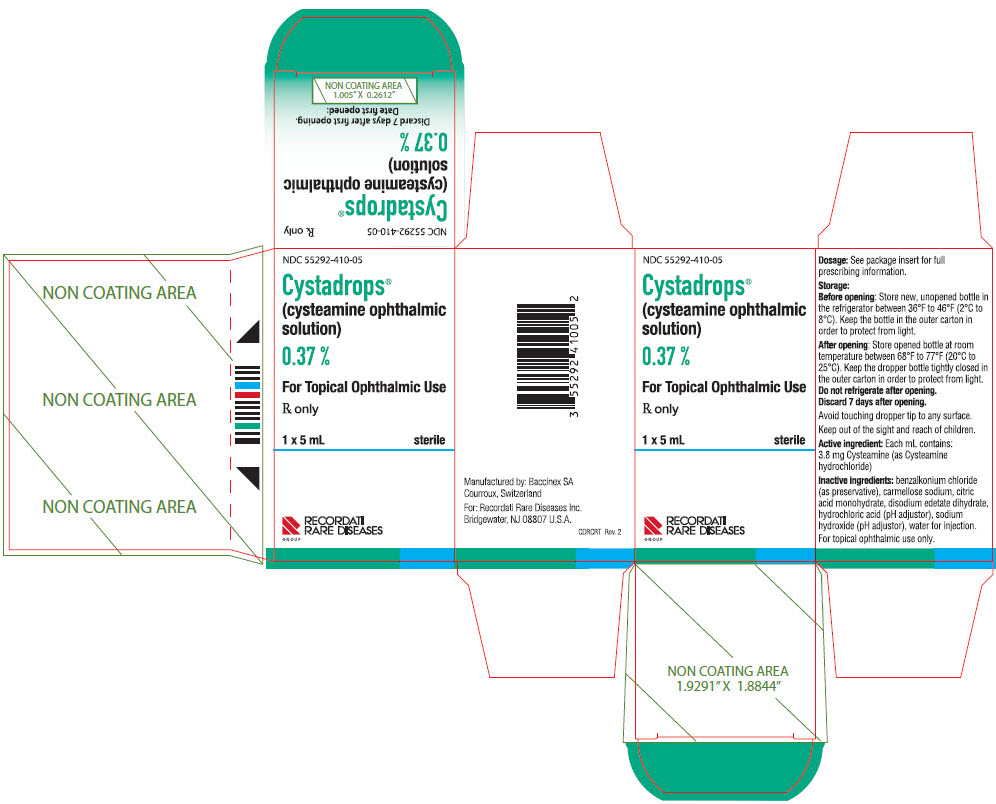
cysteamine 75 MG Delayed Release Oral Capsule — Amino acids and derivatives. INDICATIONS AND USAGE CYSTADROPS is a cystine-depleting agent indicated for the treatment of corneal cystine crystal deposits in adults and children…
Active ingredient
Classification
Amino acids and derivativesCystine Depleting Agent
Drug interactions
Cysteamine may interact with certain drugs and substances, affecting its pharmacokinetics and effectiveness.
- moderatedrugs that increase gastric pH — may alter the pharmacokinetics of cysteamine and increase WBC cystine concentration
- majoralcohol — may increase the rate of cysteamine release and adversely alter pharmacokinetic properties
Indications
INDICATIONS AND USAGE CYSTADROPS is a cystine-depleting agent indicated for the treatment of corneal cystine crystal deposits in adults and children with cystinosis. CYSTADROPS is a cystine-depleting agent indicated for the treatment of corneal cystine crystal deposits in adults and children with cystinosis. ( 1 )
Dosage
DOSAGE AND ADMINISTRATION Instill one drop of CYSTADROPS in each eye, 4 times a day during waking hours. ( 2.1 ) 2.1 Dosage Information Instill one drop of CYSTADROPS in each eye, 4 times a day during waking hours. Do not touch dropper tip to the eyelids, surrounding areas, or any surface, as this may contaminate the solution. In case of concomitant therapy with other topical ocular products, an interval of 10 minutes should be allowed between successive applications. Eye ointments should be administered last. If the patient misses an instillation, the patient should be told to administer a dose as soon as feasible and then continue the treatment with the next scheduled instillation. Discard bottle 7 days after first opening. 2.2 Preparation for Administration Patients should be advised to store new unopened CYSTADROPS bottles in the refrigerator in the original carton between 36°F to 46°F (2°C to 8°C). Each week, one new bottle should be removed from the refrigerator. Patients are to write the date the bottle was opened in the space on the carton. After first opening, store opened CYSTADROPS at room temperature between 68°F to 77°F (20°C to 25°C). Do not refrigerate after opening. Patients are to wash their hands carefully in order to avoid microbiological contamination of the content in the bottle. Remove the green protective cap (see Figure A ). Remove the metal seal (see Figure B ). Remove the gray stopper (see Figure C ) from the bottle. Do not touch the opening of the bottle after removing the gray stopper. Take the dropper out of its packaging, without touching the end intended to be attached to the bottle, attach it (see Figure D ) to the bottle and do not remove it. Patients should be advised not to lose the small white cap that comes on the top of the dropper (see Figure E ). Keep the small white cap tightly closed when not in use. Instill one drop of CYSTADROPS in each eye, 4 times a day during waking hours. At the end of 7 days, patients should discard the bottle. There may be medication left in the bottle; however, the bottle must be discarded by the patient because the medication is only stable for 7 days after first opening.
Warnings
WARNINGS AND PRECAUTIONS To minimize the risk of contamination, do not touch the dropper tip to any surface. Keep bottle tightly closed when not in use. ( 5.1 ) 5.1 Contamination of Tip and Solution To minimize contaminating the dropper tip and solution, care should be taken not to touch the eyelids or surrounding areas with the dropper tip of the bottle. Keep bottle tightly closed when not in use. 5.2 Benign Intracranial Hypertension There have been reports of benign intracranial hypertension (or pseudotumor cerebri) associated with oral cysteamine treatment that has resolved with the addition of diuretic therapy. There have also been reports associated with ophthalmic use of cysteamine; however, all of these patients were on concurrent oral cysteamine. 5.3 Contact Lens Use CYSTADROPS contains benzalkonium chloride, which may be absorbed by soft contact lenses. Contact with soft contact lenses should be avoided. Contact lenses should be removed prior to application of solution and may be reinserted 15 minutes following its administration [see Patient Counseling Information ( 17 )] .
Contraindications
CONTRAINDICATIONS None. None. ( 4 )
Mechanism of action
Mechanism of Action Cysteamine acts as a cystine-depleting agent by converting cystine to cysteine and cysteine-cysteamine mixed disulfides and reduces corneal cystine crystal accumulation.
Indicated ICD-10 codes
Source: RxNorm + openFDA + RxClass + FAERS · 2026
Look up another medication