daridorexant 50 MG Oral Tablet
Managing this medication for someone you care for? Eleplan keeps diagnoses, medications and appointments in one plan.
Start free with EleplanClinical drug
daridorexant 50 MG Oral Tablet
50 MG · Oral Tablet · oral
A form of daridorexant →
daridorexant 50 MG Oral Tablet — Orexin receptor antagonists. INDICATIONS AND USAGE QUVIVIQ is indicated for the treatment of adult patients with insomnia, characterized by difficulties with sleep onset and/or…
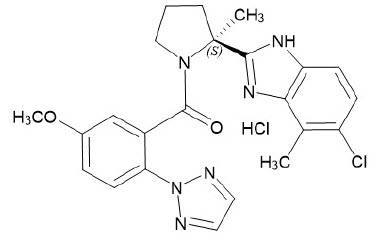
Active ingredient
Classification
Orexin receptor antagonistsOrexin Receptor Antagonist
Drug interactions
Daridorexant has several clinically significant drug interactions, particularly with CYP3A4 inhibitors and inducers, as well as with alcohol and CNS depressants.
- majorstrong CYP3A4 inhibitors — increases exposure to daridorexant, which may increase the risk of adverse reactions
- moderatemoderate CYP3A4 inhibitors — increases exposure to daridorexant
- majorstrong or moderate CYP3A4 inducers — decreases exposure to daridorexant, which may reduce efficacy
- majoralcohol — may lead to additive impairment of psychomotor performance and risk of CNS depression
- majorother CNS depressants — may lead to additive impairment of psychomotor performance and risk of CNS depression
- moderateCYP3A4 substrates — increases exposure to CYP3A4 substrates
- moderateP-gp substrates — increases exposure to P-gp substrates
Indications
INDICATIONS AND USAGE QUVIVIQ is indicated for the treatment of adult patients with insomnia, characterized by difficulties with sleep onset and/or sleep maintenance [see Clinical Studies (14.1) ] . QUVIVIQ is an orexin receptor antagonist indicated for the treatment of adult patients with insomnia, characterized by difficulties with sleep onset and/or sleep maintenance. ( 1 )
Dosage
DOSAGE AND ADMINISTRATION The recommended dosage is 25 mg to 50 mg once per night, taken orally within 30 minutes before going to bed, with at least 7 hours remaining prior to planned awakening. ( 2.1 ) Time to sleep onset may be delayed if taken with or soon after a meal. ( 2.1 ) Hepatic Impairment: ( 2.3 ) Moderate hepatic impairment: Maximum recommended dosage is 25 mg no more than once per night. Severe hepatic impairment: Not recommended. 2.1 Recommended Dosage The recommended dosage range is 25 mg to 50 mg of QUVIVIQ taken orally no more than once per night within 30 minutes of going to bed (with at least 7 hours remaining prior to planned awakening). Time to sleep onset may be delayed if taken with or soon after a meal [see Clinical Pharmacology (12.3) ] . 2.2 Dosage Recommendations for Concomitant Use with CYP3A4 Inhibitors or CYP3A4 Inducers Co-administration with Strong CYP3A4 Inhibitors Avoid concomitant use of QUVIVIQ with strong inhibitors of CYP3A4 [see Drug Interactions (7.1) , Clinical Pharmacology (12.3) ] . Co-administration with Moderate CYP3A4 Inhibitors The recommended dosage of QUVIVIQ is 25 mg no more than once per night when used with moderate inhibitors of CYP3A4 [see Drug Interactions (7.1) , Clinical Pharmacology (12.3) ] . Co-administration with Strong or Moderate CYP3A4 Inducers Avoid concomitant use of QUVIVIQ with strong or moderate CYP3A4 inducers [see Drug Interactions (7.1) ] . 2.3 Dosage Recommendations for Patients with Hepatic Impairment The maximum recommended dosage in patients with moderate hepatic impairment (Child-Pugh score 7–9) is 25 mg of QUVIVIQ no more than once per night [see Use in Specific Populations (8.6) , Clinical Pharmacology (12.3) ] . QUVIVIQ is not recommended in patients with severe hepatic impairment (Child-Pugh score ≥ 10) [see Use in Specific Populations (8.6) ] .
Warnings
WARNINGS AND PRECAUTIONS CNS-Depressant Effects and Daytime Impairment: Impairs alertness and motor coordination including morning impairment. Risk increases when used with other central nervous system (CNS) depressants. For patients taking QUVIVIQ, caution against next-day driving and other activities requiring complete mental alertness. ( 5.1 ) Worsening of Depression/Suicidal Ideation: Worsening of depression or suicidal thinking may occur. ( 5.2 ) Sleep Paralysis, Hypnagogic/Hypnopompic Hallucinations, and Cataplexy-like Symptoms: May occur with use of QUVIVIQ. ( 5.3 ) Complex Sleep Behaviors: Behaviors including sleepwalking, sleep driving, and engaging in other activities while not fully awake may occur. Discontinue immediately if complex sleep behavior occurs. ( 5.4 ) Compromised Respiratory Function: Effect on respiratory function should be considered. ( 5.5 , 8.7 ) Need to Evaluate for Co-morbid Diagnoses: Reevaluate if insomnia persists after 7 to 10 days. ( 5.6 ) 5.1 CNS-Depressant Effects and Daytime Impairment QUVIVIQ is a central nervous system (CNS) depressant that can impair daytime wakefulness even when used as prescribed. CNS-depressant effects may persist in some patients for up to several days after discontinuing QUVIVIQ. Prescribers should advise patients about the potential for next-day somnolence. Driving ability was impaired in some subjects taking QUVIVIQ 50 mg [see Clinical Studies (14.2) ] . The risk of daytime impairment is increased if QUVIVIQ is taken with less than a full night of sleep remaining or if a higher than recommended dose is taken [see Dosage and Administration (2.1) ] . If QUVIVIQ is taken in these circumstances, caution patients against driving and other activities requiring complete mental alertness. Co-administration with other CNS depressants (e.g., benzodiazepines, opioids, tricyclic antidepressants, alcohol) increases the risk of CNS depression, which can cause daytime impairment. Dosage adjustments of QUVIVIQ and of concomitant CNS depressants may be necessary when administered together because of potentially additive effects. The use of QUVIVIQ with other drugs to treat insomnia is not recommended . Advise patients not to consume alcohol in combination with QUVIVIQ because co-administration of QUVIVIQ with alcohol resulted in additive effects on psychomotor performance [see Drug Interactions (7.1) ]. Because QUVIVIQ can cause drowsiness, patients, particularly the elderly, are at a higher risk of falls. 5.2 Worsening of Depression/Suicidal Ideation Patients with psychiatric disorders, including insomnia, are at increased risk of suicide. In primarily depressed patients treated with hypnotics, worsening of depression and suicidal thoughts and actions (including completed suicides) have been reported. As with other hypnotics, QUVIVIQ should be administered with caution in patients exhibiting symptoms of depression. Monitoring of suicide risk and protective measures may be required. 5.3 Sleep Paralysis, Hypnagogic/Hypnopompic Hallucinations, and Cataplexy-like Symptoms Sleep paralysis, an inability to move or speak for up to several minutes during sleep-wake transitions, and hypnagogic/hypnopompic hallucinations, including vivid and disturbing perceptions, can occur with the use of QUVIVIQ [see Adverse Reactions (6.1) ] . Prescribers should explain the nature of these events to patients when prescribing QUVIVIQ. Symptoms similar to mild cataplexy have been reported with orexin receptor antagonists. Such symptoms can include periods of leg weakness lasting from seconds to a few minutes, can occur either at night or during the day, and may not be associated with an identified triggering event (e.g., laughter or surprise). 5.4 Complex Sleep Behaviors Complex sleep behaviors, including sleepwalking, sleep driving, and engaging in other activities while not fully awake (e.g., preparing and eating food, making phone calls, having sex), have been reported to occur with the use of hypnotics, including orexin receptor antagonists such as QUVIVIQ. These events can occur in hypnotic-naïve as well as in hypnotic-experienced persons. Patients usually do not remember these events. Complex sleep behaviors may occur following the first or any subsequent use of hypnotics, such as QUVIVIQ, with or without the concomitant use of alcohol and other CNS depressants [see Drug Interactions (7.1) ]. Discontinue QUVIVIQ immediately if a patient experiences a complex sleep behavior. 5.5 Patients with Compromised Respiratory Function QUVIVIQ has been studied in mild to severe OSA not using CPAP, and in patients with moderate COPD. The effects of QUVIVIQ on respiratory function should be considered if prescribed to patients with compromised respiratory function. QUVIVIQ has not been studied in patients with mild or severe COPD [see Use in Specific Populations (8.7) ]. 5.6 Need to Evaluate for Co-morbid Diagnoses Because sleep disturbances may be the presenting manifestation of a medical and/or psychiatric disorder, treatment of insomnia should be initiated only after careful evaluation of the patient. The failure of insomnia to remit after 7 to 10 days of treatment may indicate the presence of a primary psychiatric and/or medical illness that should be evaluated. Worsening of insomnia or the emergence of new cognitive or behavioral abnormalities may be the result of an unrecognized underlying psychiatric or medical disorder and can emerge during the course of treatment with sleep-promoting drugs such as QUVIVIQ.
Contraindications
CONTRAINDICATIONS QUVIVIQ is contraindicated: in patients with narcolepsy. in patients with a history of hypersensitivity to daridorexant or any components of QUVIVIQ. Angioedema with pharyngeal involvement has been reported [see Adverse Reactions (6.2) ] . Narcolepsy. ( 4 ) Known hypersensitivity to daridorexant or other components of QUVIVIQ. ( 4 )
Mechanism of action
Mechanism of Action The mechanism of action of daridorexant in the treatment of insomnia is presumed to be through antagonism of orexin receptors. The orexin neuropeptide signaling system plays a role in wakefulness. Blocking the binding of wake-promoting neuropeptides orexin A and orexin B to receptors OX1R and OX2R is thought to suppress wake drive.
Indicated ICD-10 codes
Source: RxNorm + openFDA + RxClass + FAERS · 2026
Look up another medication