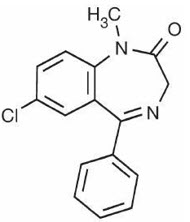
diazepam 2 MG/ML Oral Suspension — Benzodiazepine derivatives. INDICATIONS AND USAGE Diazepam is indicated for the management of anxiety disorders or for the short-term relief of the symptoms of anxiety. Anxiety…
Boxed warning
WARNING: RISKS FROM CONCOMITANT USE WITH OPIOIDS; ABUSE, MISUSE, AND ADDICTION; and DEPENDENCE AND WITHDRAWAL REACTIONS Concomitant use of benzodiazepines and opioids may result in profound sedation, respiratory depression, coma, and death. Reserve concomitant prescribing of these drugs for patients for whom alternative treatment options are inadequate. Limit dosages and durations to the minimum required. Follow patients for signs and symptoms of respiratory depression and sedation [see Warnings and Precautions (5.1) and Drug Interactions (7.1) ] . The use of benzodiazepines, including VALTOCO, exposes users to risks of abuse, misuse, and addiction, which can lead to overdose or death. Abuse and misuse of benzodiazepines commonly involve concomitant use of other medications, alcohol, and/or illicit substances, which is associated with an increased frequency of serious adverse outcomes. Before prescribing VALTOCO and throughout treatment, assess each patient's risk for abuse, misuse, and addiction [see Warnings and Precautions (5.2) ]. The continued use of benzodiazepines may lead to clinically significant physical dependence. The risks of dependence and withdrawal increase with longer treatment duration and higher daily dose. Although VALTOCO is indicated only for intermittent use [see Indications and Usage (1) and Dosage and Administration (2) ] , if used more frequently than recommended, abrupt discontinuation or rapid dosage reduction of VALTOCO may precipitate acute withdrawal reactions, which can be life-threatening. For patients using VALTOCO more frequently than recommended, to reduce the risk of withdrawal reactions, use a gradual taper to discontinue VALTOCO [see Warnings and Precautions (5.3) ]. WARNING: RISKS FROM CONCOMITANT USE WITH OPIOIDS; ABUSE, MISUSE, AND ADDICTION; and DEPENDENCE AND WITHDRAWAL REACTIONS See full prescribing information for complete boxed warning Concomitant use of benzodiazepines and opioids may result in profound sedation, respiratory depression, coma, and death. ( 5.1 , 7.1 ) The use of benzodiazepines, including VALTOCO, exposes users to risks of abuse, misuse, and addiction, which can lead to overdose or death. Before prescribing VALTOCO and throughout treatment, assess each patient's risk for abuse, misuse, and addiction. ( 5.2 ) Although VALTOCO is indicated only for intermittent use ( 1 , 2 ), if used more frequently than recommended, abrupt discontinuation or rapid dosage reduction of VALTOCO may precipitate acute withdrawal reactions, which can be life-threatening. For patients using VALTOCO more frequently than recommended, to reduce the risk of withdrawal reactions, use a gradual taper to discontinue VALTOCO. ( 5.3 )
Diazepam has several notable drug interactions that can affect its efficacy and safety.
majoropioids — increased risk of respiratory depression
majorcentrally acting agents — potential for enhanced sedation and respiratory depression
majoralcohol — enhancement of the sedative effect
minorantacids — lower peak concentrations of diazepam
moderateCYP3A and CYP2C19 inhibitors — increased and prolonged sedation
moderatephenytoin — decreased metabolic elimination of phenytoin
Indications
INDICATIONS AND USAGE Diazepam is indicated for the management of anxiety disorders or for the short-term relief of the symptoms of anxiety. Anxiety or tension associated with the stress of everyday life usually does not require treatment with an anxiolytic. In acute alcohol withdrawal, diazepam may be useful in the symptomatic relief of acute agitation, tremor, impending or acute delirium tremens and hallucinosis. As an adjunct prior to endoscopic procedures if apprehension, anxiety or acute stress reactions are present, and to diminish the patient's recall of the procedures. (See WARNINGS .) Diazepam is a useful adjunct for the relief of skeletal muscle spasm due to reflex spasm to local pathology (such as inflammation of the muscles or joints, or secondary to trauma); spasticity caused by upper motor neuron disorders (such as cerebral palsy and paraplegia); athetosis; stiff-man syndrome; and tetanus. Diazepam Injection is a useful adjunct in status epilepticus and severe recurrent convulsive seizures. Diazepam is a useful premedication (the intramuscular route is preferred) for relief of anxiety and tension in patients who are to undergo surgical procedures. Intravenously, prior to cardioversion for the relief of anxiety and tension and to diminish the patient's recall of the procedure.
Dosage
DOSAGE AND ADMINISTRATION Dosage should be individualized for maximum beneficial effect. The usual recommended dose in older children and adults ranges from 2 mg to 20 mg intramuscular or intravenous, depending on the indication and its severity. In some conditions, e.g., tetanus, larger doses may be required. (See dosage for specific indications.) In acute conditions the injection may be repeated within one hour although an interval of 3 to 4 hours is usually satisfactory. Lower doses (usually 2 mg to 5 mg) and slow increase in dosage should be used for elderly or debilitated patients and when other sedative drugs are administered (see WARNINGS and ADVERSE REACTIONS ). For dosage in infants above the age of 30 days and children, see the specific indications below. When intravenous use is indicated, facilities for respiratory assistance should be readily available. Intramuscular Diazepam Injection should be injected deeply into the muscle. Intravenous Use For the treatment of status epilepticus in children, the solution should be injected slowly, taking one minute for administration (See WARNINGS , particularly for use in children). For other indications, the solution should be injected slowly taking at least one minute for each 5 mg (1 mL) given. Do not use small veins, such as those on the dorsum of the hand or wrist. Extreme care should be taken to avoid intra-arterial administration or extravasation. Do not mix or dilute diazepam with other solutions or drugs in syringe or infusion container. If it is not feasible to administer diazepam directly intravenous, it may be injected slowly through the infusion tubing as close as possible to the vein insertion. INDICATION USUAL ADULT DOSAGE DOSAGE RANGE IN CHILDREN (Intravenous administration should be made slowly) Moderate Anxiety Disorders and Symptoms of Anxiety 2 mg to 5 mg, intramuscular or intravenous. Repeat in 3 to 4 hours, if necessary. Severe Anxiety Disorders and Symptoms of Anxiety 5 mg to 10 mg, intramuscular or intravenous. Repeat in 3 to 4 hours, if necessary. Acute Alcohol Withdrawal: As an aid in symptomatic relief of acute agitation, tremor, impending or acute delirium tremens, and hallucinosis. 10 mg, intramuscular or intravenous initially, then 5 mg to 10 mg in 3 to 4 hours, if necessary. Endoscopic Procedures: Adjunctively, if apprehension, anxiety or acute stress reaction are present prior to endoscopic procedures. Dosage of narcotics should be reduced by at least a third and in some cases may be omitted. See PRECAUTIONS for peroral procedures. Titrate intravenous dosage to desired sedative response, such as slurring of speech, with slow administration immediately prior to the procedure. Generally 10 mg or less is adequate, but up to 20 mg intravenous may be given, particularly when concomitant narcotics are omitted. If intravenous cannot be used, 5 mg to10 mg intramuscular approximately 30 minutes prior to the procedure. Muscle Spasm: Associated with local pathology, cerebral palsy, athetosis, stiff-man syndrome, or tetanus. 5 mg to 10 mg, intramuscular or intravenous initially, then 5 mg to 10 mg in 3 to 4 hours, if necessary. For tetanus, larger doses may be required. For tetanus in infants over 30 days of age, 1 mg to 2 mg intramuscular or intravenous, slowly, repeated every 3 to 4 hours as necessary. In children 5 years or older, 5 mg to 10 mg repeated every 3 to 4 hours may be required to control tetanus spasms. Respiratory assistance should be available. Status Epilepticus: In the convulsing patient, the intravenous route is by far preferred. This injection should be administered slowly. However, if intravenous administration is impossible, the intramuscular route may be used. 5 mg to 10 mg initially (intravenous preferred). This injection may be repeated if necessary at 10 to 15 minute intervals up to a maximum dose of 30 mg. If necessary, therapy with diazepam may be repeated in 2 to 4 hours; however, residual active metabolites may persist, and re-administration should be made with this consideration. Extreme caution must be exercised with individuals with chronic lung disease or unstable cardiovascular status. Children 3 months up to 17 years of age with status epilepticus: First dose: 0.2 mg/kg (maximum 8 mg) by slow intravenous push (one minute in duration). Second dose (if necessary; 5 minutes after the first dose): 0.1 mg/kg (maximum 4 mg) by slow intravenous push (one minute in duration). EEG monitoring of the seizure may be helpful. Preoperative Medication: To relieve anxiety and tension. (If atropine, scopolamine or other premedications are desired, they must be administered in separate syringes.) 10 mg, intramuscular (preferred route), before surgery. Cardioversion: To relieve anxiety and tension and to reduce recall of procedure. 5 mg to 15 mg, intravenous, within 5 to 10 minutes prior to the procedure. Once the acute symptomatology has been properly controlled with diazepam injection, the patient may be placed on oral therapy with diazepam if further treatment is required. Parenteral drug products should be inspected visually for particulate matter and discoloration prior to administration, whenever solution and container permit. NOTE: Solution may appear colorless to light yellow.
Warnings
WARNINGS AND PRECAUTIONS CNS Depression: Monitor for central nervous system (CNS) depression. May cause an increased CNS-depressant effect when used with alcohol or other CNS depressants. ( 5.4 , 7.2 ) Suicidal Behavior and Ideation: Monitor patients for suicidal ideation and behavior. ( 5.5 ) Glaucoma: VALTOCO can increase intraocular pressure in patients with glaucoma. VALTOCO may be used in patients with open-angle glaucoma only if they are receiving appropriate therapy. ( 4 , 5.6 ) Neonatal Sedation and Withdrawal Syndrome: VALTOCO use during pregnancy can result in neonatal sedation and/or neonatal withdrawal. ( 5.7 , 8.1 ) 5.1 Risk of Concomitant Use with Opioids Concomitant use of benzodiazepines, including VALTOCO, and opioids may result in profound sedation, respiratory depression, coma, and death [see Drug Interactions (7.1) ]. Because of these risks, reserve concomitant prescribing of benzodiazepines and opioids for patients for whom alternative treatment options are inadequate. Observational studies have demonstrated that concomitant use of opioid analgesics and benzodiazepines increases the risk of drug-related mortality compared to use of opioids alone. If a decision is made to prescribe VALTOCO concomitantly with opioids, prescribe the lowest effective dosages and minimum durations of concomitant use, and follow patients closely for signs and symptoms of respiratory depression and sedation. Advise both patients and caregivers about the risks of respiratory depression and sedation when VALTOCO is used with opioids. 5.2 Abuse, Misuse, and Addiction The use of benzodiazepines, including VALTOCO, exposes users to the risks of abuse, misuse, and addiction, which can lead to overdose or death. Abuse and misuse of benzodiazepines often (but not always) involve the use of doses greater than the maximum recommended dosage and commonly involve concomitant use of other medications, alcohol, and/or illicit substances, which is associated with an increased frequency of serious adverse outcomes, including respiratory depression, overdose, or death [see Drug Abuse and Dependence (9.2) ] . Before prescribing VALTOCO and throughout treatment, assess each patient's risk for abuse, misuse, and addiction. Use of VALTOCO, particularly in patients at elevated risk, necessitates counseling about the risks and proper use of VALTOCO along with monitoring for signs and symptoms of abuse, misuse, and addiction. Do not exceed the recommended dosing frequency; avoid or minimize concomitant use of CNS depressants and other substances associated with abuse, misuse, and addiction (e.g., opioid analgesics, stimulants); and advise patients on the proper disposal of unused drug. If a substance use disorder is suspected, evaluate the patient and institute (or refer them for) early treatment, as appropriate. 5.3 Dependence and Withdrawal Reactions After Use of VALTOCO More Frequently Than Recommended For patients using VALTOCO more frequently than recommended, to reduce the risk of withdrawal reactions, use a gradual taper to discontinue VALTOCO (a patient-specific plan should be used to taper the dose). Patients at an increased risk of withdrawal adverse reactions after benzodiazepine discontinuation or rapid dosage reduction include those who take higher dosages, and those who have had longer durations of use. Acute Withdrawal Reactions The continued use of benzodiazepines may lead to clinically significant physical dependence. Although VALTOCO is indicated only for intermittent use [see Indications and Usage (1) and Dosage and Administration (2) ] , if used more frequently than recommended, abrupt discontinuation or rapid dosage reduction of VALTOCO, or administration of flumazenil (a benzodiazepine antagonist) may precipitate acute withdrawal reactions, which can be life-threatening (e.g., seizures) [see Drug Abuse and Dependence (9.3) ]. Protracted Withdrawal Syndrome In some cases, benzodiazepine users have developed a protracted withdrawal syndrome with withdrawal symptoms lasting weeks to more than 12 months [see Drug Abuse and Dependence (9.3) ] . 5.4 CNS Depression Benzodiazepines, including VALTOCO, produce CNS depression. Caution patients against engaging in hazardous activities requiring mental alertness (e.g., operating machinery, driving a motor vehicle, or riding a bicycle) until the effects of the drug, such as drowsiness, have subsided, and as their medical condition permits. Although VALTOCO is indicated for use solely on an intermittent basis, the potential for synergistic CNS-depressant effects when used simultaneously with alcohol or other CNS depressants must be considered by the prescriber and appropriate recommendations made to the patient and/or caregiver. 5.5 Suicidal Behavior and Ideation Antiepileptic drugs (AEDs), including VALTOCO, increase the risk of suicidal thoughts or behavior in patients taking these drugs for any indication. Patients treated with any AED for any indication should be monitored for the emergence or worsening of depression, suicidal thoughts or behavior, and/or any unusual changes in mood or behavior. Pooled analyses of 199 placebo-controlled clinical trials (mono- and adjunctive therapy) of 11 different AEDs showed that patients randomized to one of the AEDs had approximately twice the risk (adjusted Relative Risk 1.8, 95% CI:1.2, 2.7) of suicidal thinking or behavior compared to patients randomized to placebo. In these trials, which had a median treatment duration of 12 weeks, the estimated incidence rate of suicidal behavior or ideation among 27,863 AED-treated patients was 0.43%, compared to 0.24% among 16,029 placebo-treated patients, representing an increase of approximately one case of suicidal thinking or behavior for every 530 patients treated. There were four suicides in drug-treated patients in the trials and none in placebo-treated patients, but the number is too small to allow any conclusion about drug effect on suicide. The increased risk of suicidal thoughts or behavior with AEDs was observed as early as one week after starting drug treatment with AEDs and persisted for the duration of treatment assessed. Because most trials included in the analysis did not extend beyond 24 weeks, the risk of suicidal thoughts or behavior beyond 24 weeks could not be assessed. The risk of suicidal thoughts or behavior was generally consistent among drugs in the data analyzed. The finding of increased risk with AEDs of varying mechanisms of action and across a range of indications suggests that the risk applies to all AEDs used for any indication. The risk did not vary substantially by age (5-100 years) in the clinical trials analyzed. Table 3 shows absolute and relative risk by indication for all evaluated AEDs. Table 3: Risk by Indication for Antiepileptic Drugs in the Pooled Analysis Indication Placebo Patients with Events/1000 Patients Drug Patients with Events per 1000 Patients Relative Risk: Incidence of Drug Events in Drug Patients /Incidence in Placebo Patients Risk Difference: Additional Drug Patients with Events per 1000 Patients Epilepsy 1.0 3.4 3.5 2.4 Psychiatric 5.7 8.5 1.5 2.9 Other 1.0 1.8 1.9 0.9 Total 2.4 4.3 1.8 1.9 The relative risk for suicidal thoughts or behavior was higher in clinical trials for epilepsy than in clinical trials for psychiatric or other conditions, but the absolute risk differences were similar for the epilepsy and psychiatric indications. Anyone considering prescribing VALTOCO or any other AED must balance the risk of suicidal thoughts or behaviors with the risk of untreated illness. Epilepsy and many other illnesses for which AEDs are prescribed are themselves associated with morbidity and mortality and an increased risk of suicidal thoughts and behavior. Should suicidal thoughts and behavior emerge during treatment, the prescriber needs to consider whether the emergence of these symptoms in any given patient may be related to the illness being treated. 5.6 Glaucoma Benzodiazepine
Contraindications
CONTRAINDICATIONS Diazepam tablets are contraindicated in patients with a known hypersensitivity to diazepam and, because of lack of sufficient clinical experience, in pediatric patients under 6 months of age. Diazepam tablets are also contraindicated in patients with myasthenia gravis, severe respiratory insufficiency, severe hepatic insufficiency, and sleep apnea syndrome. They may be used in patients with open-angle glaucoma who are receiving appropriate therapy, but are contraindicated in acute narrow-angle glaucoma.
Mechanism of action
CLINICAL PHARMACOLOGY Mechanism of Action Although the precise mechanism by which diazepam exerts its antiseizure effects is unknown, animal and in vitro studies suggest that diazepam acts to suppress seizures through an interaction with γ-aminobutyric acid (GABA) receptors of the A-type (GABA A ). GABA, the major inhibitory neurotransmitter in the central nervous system (CNS), acts at this receptor to open the membrane channel allowing chloride ions to flow into neurons. Entry of chloride ions causes an inhibitory potential that reduces the ability of neurons to depolarize to the threshold potential necessary to produce action potentials. Excessive depolarization of neurons is implicated in the generation and spread of seizures. It is believed that diazepam enhances the actions of GABA by causing GABA to bind more tightly to the GABA A receptor. Pharmacokinetics Pharmacokinetic information of diazepam following rectal administration was obtained from studies conducted in healthy adult subjects. No pharmacokinetic studies were conducted in pediatric patients. Therefore, information from the literature is used to define pharmacokinetic labeling in the pediatric population. Diazepam rectal gel is well absorbed following rectal administration, reaching peak plasma concentrations in 1.5 hours. The absolute bioavailability of diazepam rectal gel relative to Valium injectable is 90%. The volume of distribution of diazepam rectal gel is calculated to be approximately 1 L/kg. The mean elimination half-life of diazepam and desmethyldiazepam following administration of a 15 mg dose of diazepam rectal gel was found to be about 46 hours (CV=43%) and 71 hours (CV=37%), respectively. Both diazepam and its major active metabolite desmethyldiazepam bind extensively to plasma proteins (95-98%). FIGURE 1: Plasma Concentrations of Diazepam and Desmethyldiazepam Following Diazepam Rectal Gel or IV Diazepam figure1 Metabolism and Elimination: It has been reported in the literature that diazepam is extensively metabolized to one major active metabolite (desmethyldiazepam) and two minor active metabolites, 3-hydroxydiazepam (temazepam) and 3-hydroxy-N-diazepam (oxazepam) in plasma. At therapeutic doses, desmethyldiazepam is found in plasma at concentrations equivalent to those of diazepam while oxazepam and temazepam are not usually detectable. The metabolism of diazepam is primarily hepatic and involves demethylation (involving primarily CYP2C19 and CYP3A4) and 3-hydroxylation (involving primarily CYP3A4), followed by glucuronidation. The marked inter-individual variability in the clearance of diazepam reported in the literature is probably attributable to variability of CYP2C19 (which is known to exhibit genetic polymorphism; about 3-5% of Caucasians have little or no activity and are “poor metabolizers”) and CYP3A4. No inhibition was demonstrated in the presence of inhibitors selective for CYP2A6, CYP2C9, CYP2D6, CYP2E1, or CYP1A2, indicating that these enzymes are not significantly involved in metabolism of diazepam. Special Populations Hepatic Impairment: No pharmacokinetic studies were conducted with diazepam rectal gel in hepatically impaired subjects. Literature review indicates that following administration of 0.1 to 0.15 mg/kg of diazepam intravenously, the half-life of diazepam was prolonged by two to five-fold in subjects with alcoholic cirrhosis (n=24) compared to age-matched control subjects (n=37) with a corresponding decrease in clearance by half: however, the exact degree of hepatic impairment in these subjects was not characterized in this literature (see PRECAUTIONS ). Renal Impairment: The pharmacokinetics of diazepam have not been studied in renally impaired subjects (see PRECAUTIONS ). Pediatrics: No pharmacokinetic studies were conducted with diazepam rectal gel in the pediatric population. However, literature review indicates that following IV administration (0.33 mg/kg), diazepam has a longer half-life in neonates (birth up to one month; approximately 50-95 hours) and infants (one month up to two years; about 40-50 hours), whereas it has a shorter half-life in children (two to 12 years; approximately 15-21 hours) and adolescents (12 to 16 years; about 18-20 hours) (see PRECAUTIONS ). Elderly: A study of single dose IV administration of diazepam (0.1 mg/kg) indicates that the elimination half-life of diazepam increases linearly with age, ranging from about 15 hours at 18 years (healthy young adults) to about 100 hours at 95 years (healthy elderly) with a corresponding decrease in clearance of free diazepam (see PRECAUTIONS and DOSAGE AND ADMINISTRATION ). Effect of Gender, Race, and Cigarette Smoking: No targeted pharmacokinetic studies have been conducted to evaluate the effect of gender, race, and cigarette smoking on the pharmacokinetics of diazepam. However, covariate analysis of a population of treated patients following administration of diazepam rectal gel, indicated that neither gender nor cigarette smoking had any effect on the pharmacokinetics of diazepam. Clinical Studies The effectiveness of diazepam rectal gel has been established in two adequate and well controlled clinical studies in children and adults exhibiting the seizure pattern described below under INDICATIONS AND USAGE . A randomized, double-blind study compared sequential doses of diazepam rectal gel and placebo in 91 patients (47 children, 44 adults) exhibiting the appropriate seizure profile. The first dose was given at the onset of an identified episode. Children were dosed again four hours after the first dose and were observed for a total of 12 hours. Adults were dosed at four and 12 hours after the first dose and were observed for a total of 24 hours. Primary outcomes for this study were seizure frequency during the period of observation and a global assessment that took into account the severity and nature of the seizures as well as their frequency. The median seizure frequency for the diazepam rectal gel treated group was zero seizures per hour, compared to a median seizure frequency of 0.3 seizures per hour for the placebo group, a difference that was statistically significant (p <0.0001). All three categories of the global assessment (seizure frequency, seizure severity, and “overall”) were also found to be statistically significant in favor of diazepam rectal gel (p < 0.0001). The following histogram displays the results for the “overall” category of the global assessment. FIGURE 2: Caregiver Overall Global Assessment of the Efficacy of Diazepam Rectal Gel Patients treated with diazepam rectal gel experienced prolonged time-to-next-seizure compared to placebo (p = 0.0002) as shown in the following graph. FIGURE 3: Kaplan-Meier Survival Analysis of Time-to-Next-Seizure — First Study In addition, 62% of patients treated with diazepam rectal gel were seizure-free during the observation period compared to 20% of placebo patients. Analysis of response by gender and age revealed no substantial differences between treatment in either of these subgroups. Analysis of response by race was considered unreliable, due to the small percentage of non-Caucasians. A second double-blind study compared single doses of diazepam rectal gel and placebo in 114 patients (53 children, 61 adults). The dose was given at the onset of the identified episode and patients were observed for a total of 12 hours. The primary outcome in this study was seizure frequency. The median seizure frequency for the diazepam rectal gel-treated group was zero seizures per 12 hours, compared to a median seizure frequency of 2.0 seizures per 12 hours for the placebo group, a difference that was statistically significant (p < 0.03). Patients treated with diazepam rectal gel experienced prolonged time-to-next-seizure compared to placebo (p = 0.0072) as shown in the following graph. In addition, 55% of patients treated with diazepam rectal gel were seizure-free during the observation period compared to 34% of pat
A drug lookup is just the start. Eleplan keeps the whole care plan in one place.
Medications, diagnoses, documents, appointments, and the whole care team — organized and always in sync, with Ellie, your AI care assistant, on top of it. Free to start.