diazoxide 50 MG Oral Tablet
Managing this medication for someone you care for? Eleplan keeps diagnoses, medications and appointments in one plan.
Start free with EleplanClinical drug
diazoxide 50 MG Oral Tablet
50 MG · Oral Tablet · oral
A form of diazoxide →
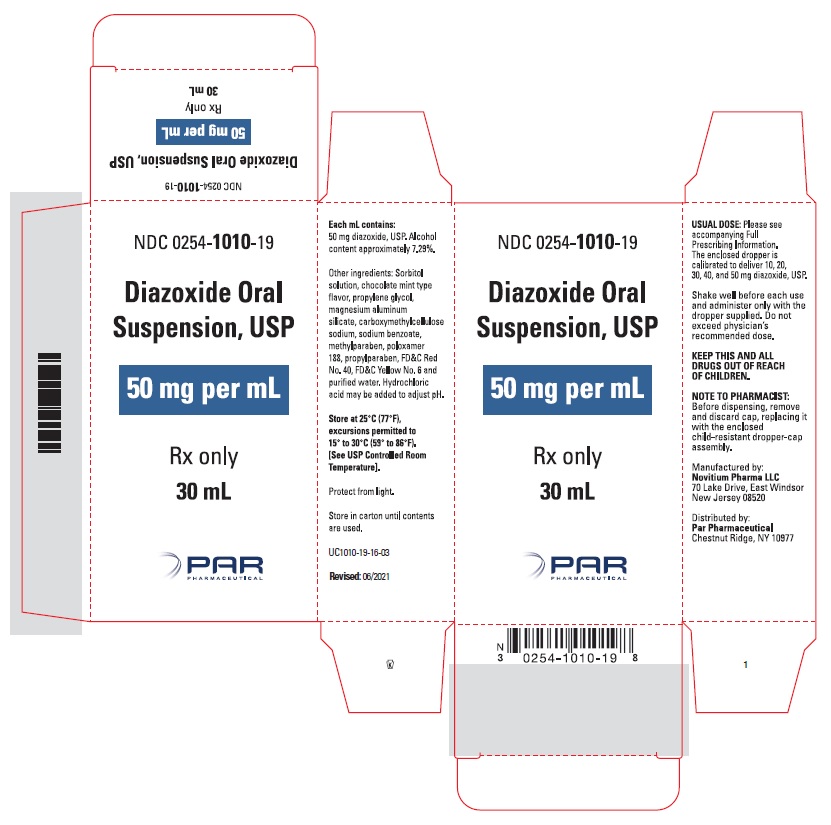
diazoxide 50 MG Oral Tablet — Thiazide derivatives. INDICATIONS & USAGE Diazoxide oral suspension is indicated for the management of hypoglycemia due to hyperinsulinism associated with the following…
Active ingredient
Classification
Thiazide derivatives
Drug interactions
The label outlines several clinically significant drug interactions with VYKAT XR, which contains diazoxide.
- majorstrong CYP1A2 inhibitors — increases exposure of diazoxide, which may increase the frequency and/or severity of adverse reactions from VYKAT XR
- moderateCYP1A2 substrates — increases exposure of these substrates, which may increase the frequency and/or severity of adverse reactions
- majorstrong CYP3A4 inhibitors — increases exposure of diazoxide, which may increase the frequency and/or severity of adverse reactions from VYKAT XR
- moderatedual strong CYP3A4 / moderate CYP1A2 inducers — may decrease exposure of VYKAT XR, potentially decreasing its efficacy
- unknowncoumarin or its derivatives — may require dosage modification due to potential displacement by diazoxide
- unknowndiphenylhydantoin — may require dosage modification due to potential displacement by diazoxide
- moderatethiazides or other diuretics — may potentiate hyperglycemic and hyperuricemic effects of diazoxide
Indications
INDICATIONS & USAGE Diazoxide oral suspension is indicated for the management of hypoglycemia due to hyperinsulinism associated with the following conditions: Adults: Inoperable islet cell adenoma or carcinoma, or extrapancreatic malignancy. Infants and children: Leucine sensitivity, islet cell hyperplasia, nesidioblastosis, extrapancreatic malignancy, islet cell adenoma, or adenomatosis. Diazoxide oral suspension may be used preoperatively as a temporary measure, and postoperatively, if hypoglycemia persists. Diazoxide oral suspension should be used only after a diagnosis of hypoglycemia due to one of the above conditions has been definitely established. When other specific medical therapy or surgical management either has been unsuccessful or is not feasible, treatment with diazoxide oral suspension should be considered.
Dosage
DOSAGE AND ADMINISTRATION Prior to initiation, test fasting plasma glucose and HbA1c; optimize blood glucose in patients who have hyperglycemia. ( 2.1 ) Do not substitute with diazoxide oral suspension. ( 2.1 ) Administer orally once daily. ( 2.2 ) Recommended starting dosage and titration schedule is based on patient’s body weight. ( 2.2 ) Weight Starting Dosage Titration Dosage Titration Dosage Target Maintenance Dose Weeks 1 and 2 Weeks 3 and 4 Weeks 5 and 6 20 to <30 kg 25 mg 50 mg 75 mg 100 mg 30 to <40 kg 75 mg 150 mg 150 mg 150 mg 40 to <65 kg 75 mg 150 mg 225 mg 225 mg 65 to <100 kg 150 mg 225 mg 300 mg 375 mg 100 to <135 kg 150 mg 300 mg 375 mg 450 mg ≥135 kg 150 mg 300 mg 450 mg 525 mg The maximum recommended dosage is 5.8 mg/kg/day or 525 mg per day. ( 2.2 ) Interrupt VYKAT XR or reduce dosage for clinically significant elevations in fasting glucose or HbA1c; consider dosage reduction or interruption for clinically significant fluid overload. ( 2.3 ) See full prescribing information for VYKAT XR dosage modifications due to drug interactions ( 2.4 ) Following dosage interruption or a missed dose of 7 days or more, re-titrate according to Table 1 or Table 2 . ( 2.5 ) 2.1 Important Recommendations Prior to VYKAT XR Initiation Laboratory Testing Prior to VYKAT XR Initiation Prior to initiating treatment with VYKAT XR, test fasting plasma glucose (FPG) and HbA1c and optimize blood glucose in patients who have hyperglycemia [see Warnings and Precautions (5.1) ] . For fasting glucose and HbA1c monitoring recommendations during VYKAT XR treatment and for dosage modifications based on results, see Dosage and Administration (2.3) . Important Information Regarding Substitution Do not substitute VYKAT XR with diazoxide oral suspension because the pharmacokinetic profiles are different [see Clinical Pharmacology (12.3) ] . 2.2 Dosage and Administration Recommendations Administer VYKAT XR orally with or without food once daily [see Clinical Pharmacology (12.3) ] . Swallow tablets whole. Do not split, crush, or chew the extended-release tablets because doing so may compromise the extended-release characteristics, efficacy, or safety of VYKAT XR. The recommended oral dosage of VYKAT XR is based on body weight. The recommended starting dosage and titration schedule of VYKAT XR are shown in Table 1 . Table 1: Recommended Starting Dosage and Titration Regimen in Adults and Pediatric Patients 4 Years of Age and Older Weight Recommended Once Daily Dosage Starting Dosage Titration Dosage Titration Dosage Target Maintenance Dose Weeks 1 and 2 Weeks 3 and 4 Weeks 5 and 6 20 kg to <30 kg 25 mg 50 mg 75 mg 100 mg 30 kg to <40 kg 75 mg 150 mg 150 mg 150 mg 40 kg to <65 kg 75 mg 150 mg 225 mg 225 mg 65 kg to <100 kg 150 mg 225 mg 300 mg 375 mg 100 kg to <135 kg 150 mg 300 mg 375 mg 450 mg ≥135 kg 150 mg 300 mg 450 mg 525 mg The maximum recommended dosage of VYKAT XR is 5.8 mg/kg/day or 525 mg per day. Dosages above 5.8 mg/kg/day or 525 mg per day have not been evaluated in patients with PWS. 2.3 Monitoring and Dosage Modifications Due to Adverse Reactions Elevations in Fasting Glucose or HbA1c After initiating treatment with VYKAT XR, monitor: Fasting glucose (FPG or fasting blood glucose) at least once every week for the first 2 weeks, then at least once every 4 weeks, and as clinically indicated. HbA1c every 3 months and as clinically indicated. Monitor fasting glucose more frequently during the first few weeks of VYKAT XR treatment in patients with risk factors for hyperglycemia. If clinically significant elevations in fasting glucose of HbA1c occur during treatment, temporarily interrupt VYKAT XR or reduce the dosage until glycemic parameters are appropriately managed. Consider initiation or adjustment of standard antidiabetic therapy(ies). If clinically significant glucose elevations are noted during titration, titrate over a longer duration and/or to a lower dosage [see Warnings and Precautions (5.1) ] . Fluid Overload Monitor for signs or symptoms of edema or fluid overload. Consider dosage reduction or temporary dosage interruption in the event of clinically significant fluid overload. If clinically significat fluid overload is noted during titration, titrate over a longer duration and/or to a lower dosage [see Warnings and Precautions (5.2) ] . Titration After Resolution of Fluid Overload or Elevation in Fasting Glucose or HbA1c If fluid overload or elevations in fasting glucose or HbA1c resolve after a dosage reduction: For patients weighing less than 30 kg, titrate the dosage in increments of no more than 25 mg every 2 weeks or titrate over longer duration to a maximum dosage of 5.8 mg/kg/day. For patients weighing greater than or equal to 30 kg, titrate the dosage in increments of no more than 75 mg every 2 weeks or titrate over longer duration to a maximum dosage of 5.8 mg/kg/day. For recommendations on resuming VYKAT XR after dosage interruption, see Dosage and Administration (2.5) . 2.4 Dosage Modifications for Concomitant Use with Strong CYP1A2 Inhibitors VYKAT XR dosage modifications for concomitant use with strong CYP1A2 inhibitors are shown in Table 2 [see Drug Interactions (7) ] . Table 2: VYKAT XR Dosage Modifications for Concomitant Use with Strong CYP1A2 Inhibitors Weight VYKAT XR Recommended Once Daily Dosage Starting Dosage Titration Dosage Titration Dosage Target Maintenance Dose Weeks 1 and 2 Weeks 3 and 4 Weeks 5 and 6 20 to <30 kg 25 mg 25 mg 50 mg 75 mg 30 to <40 kg 50 mg 100 mg 100 mg 100 mg 40 to <65 kg 50 mg 100 mg 150 mg 150 mg 65 to <100 kg 100 mg 150 mg 200 mg 250 mg 100 to <135 kg 100 mg 200 mg 250 mg 300 mg ≥135 kg 100 mg 200 mg 300 mg 325 mg Based on clinical response, VYKAT XR may be titrated to a maximum recommended dosage of 3.6 mg/kg/day. The VYKAT XR daily dosage should not exceed 325 mg per day. No dosage modification is recommended when VYKAT XR is concomitantly used with moderate CYP1A2 inhibitors. 2.5 Recommendations Regarding Dosage Interruption, Missed Dose, or Discontinuation of Treatment Following a dosage interruption or missed dose of: Less than 7 days, resume VYKAT XR at the previous dosage 7 days or more, re-titrate VYKAT XR according to Table 1 or 2 , as appropriate [see Dosage and Administration (2.2 , 2.4) ] Treatment with VYKAT XR can be discontinued without tapering.
Warnings
WARNINGS AND PRECAUTIONS Hyperglycemia : Hyperglycemia, including diabetic ketoacidosis, has been reported. During treatment, monitor fasting glucose and HbA1c. Monitor fasting glucose more frequently during first few weeks of treatment in patients with risk factors for hyperglycemia. ( 2.3 , 5.1 ) Risk of Fluid Overload : Edema, including severe reactions associated with fluid overload, has been reported. Monitor for signs or symptoms of edema or fluid overload. ( 2.3 , 5.2 ) 5.1 Hyperglycemia VYKAT XR increases blood glucose, due primarily to an inhibition of insulin release from the pancreas. Hyperglycemia, including severe adverse reactions associated with diabetic ketoacidosis, occurred in VYKAT XR-treated patients during clinical trials [see Adverse Reactions (6) ] . Precipitating conditions for diabetic ketoacidosis may include reduction in the dosages of concomitant antihyperglycemic medications, increase in the dosages of concomitant growth hormone, intercurrent illness, surgery, volume depletion or alcohol abuse. Signs and symptoms of ketoacidosis include nausea, vomiting, abdominal pain, generalized malaise and shortness of breath. Before initiating VYKAT XR, test fasting plasma glucose (FPG) and HbA1c; optimize blood glucose in patients who have hyperglycemia. After initiating treatment with VYKAT XR, regularly monitor fasting glucose (FPG or fasting blood glucose) and HbA1c [see Dosage and Administration (2.3) ] . Monitor fasting glucose more frequently for the first few weeks of treatment with VYKAT XR in patients with risk factors for hyperglycemia, such as obesity, elevated FPG, HbA1c at the upper limit of normal or above, concomitant use of growth hormone, or concomitant use of systemic corticosteroids. Advise patients of the signs and symptoms of hyperglycemia (e.g., excessive thirst, urinating more often than usual or higher amount of urine than usual, or increased appetite with weight loss). If a patient experiences hyperglycemia after initiating treatment with VYKAT XR, monitor fasting glucose as clinically indicated, and at least twice weekly until fasting glucose decreases to normal levels. Consider monitoring ketones in patients with worsening hyperglycemia. If hyperglycemia is treated with anti-hyperglycemic medication during VYKAT XR treatment, continue monitoring fasting glucose at least once a week for 8 weeks, followed by once every 2 weeks and as clinically indicated. Consider consultation with a healthcare provider with expertise in the treatment of hyperglycemia and counsel patients on lifestyle changes. Based on the severity of the hyperglycemia, VYKAT XR may require dosage interruption, reduction, or discontinuation in order to avoid progression to ketoacidosis [see Dosage and Administration (2.3) ] . 5.2 Risk of Fluid Overload Edema, including general, localized, and peripheral edema, occurred in 27% of VYKAT XR-treated patients versus 12% of placebo-treated patients in the placebo-controlled trial with treatment-naïve subjects (Study 1). Severe adverse reactions associated with fluid overload, including pulmonary edema, were reported in VYKAT XR-treated patients during clinical trials [see Adverse Reactions (6) ] . The antidiuretic property of diazoxide may lead to significant fluid retention, which may precipitate congestive heart failure in patients with compromised cardiac reserve. VYKAT XR has not been studied in patients with compromised cardiac reserve and should be used with caution in these patients. Monitor for signs or symptoms of edema or fluid overload and consider appropriate clinical management, which may include VYKAT XR dosage reduction or treatment interruption, if clinically significant [see Dosage and Administration (2.3) ] .
Contraindications
CONTRAINDICATIONS VYKAT XR is contraindicated in patients with known hypersensitivity to diazoxide, other components of VYKAT XR, or to thiazides. Erythema multiforme has been reported with VYKAT XR [see Adverse Reactions (6) ] . Known hypersensitivity to diazoxide, other components of VYKAT XR, or to thiazides. ( 4 )
Mechanism of action
CLINICAL PHARMACOLOGY Diazoxide produces a dose-related increase in blood glucose, due primarily to an inhibition of insulin release from the pancreas, and also to an extrapancreatic effect. The hyperglycemic effect of diazoxide begins within an hour and generally lasts no more than 8 hours in the presence of normal renal function. Diazoxide decreases the excretion of sodium and water, resulting in fluid retention which may be clinically significant. The hypotensive effect of diazoxide is usually not marked (see ADVERSE REACTIONS ). Other pharmacologic actions of diazoxide include increased pulse rate; increased serum uric acid levels due to decreased excretion; increased serum levels of free fatty acids’ decreased chloride excretion; decreased para-aminohippuric acid; (PAH) clearance with no appreciable effect on glomerular filtration rate. The concomitant administration of a benzothiazide diuretic may intensify the hyperglycemic and hyperuricemic effects of diazoxide. In the presence of hypokalemia, hyperglycemic effects are also potentiated. Diazoxide-induced hyperglycemia is reversed by the administration of insulin or tolbutamide. The inhibition of insulin release by diazoxide is antagonized by alpha-adrenergic blocking agents. Diazoxide is extensively bound (more than 90%) to serum proteins, and is excreted in the kidneys. The plasma half-life following intravenous administration is 28 ± 8.3 hours. Limited data on oral administration revealed a half-life of 24 and 36 hours in two adults. In four children aged 4 months to 6 years, the plasma half-life varied from 9.5 to 24 hours on long-term oral administration. The half-life may be prolonged following overdosage, and in patients with impaired renal function.
Indicated ICD-10 codes
Source: RxNorm + openFDA + RxClass + FAERS · 2026
Look up another medication