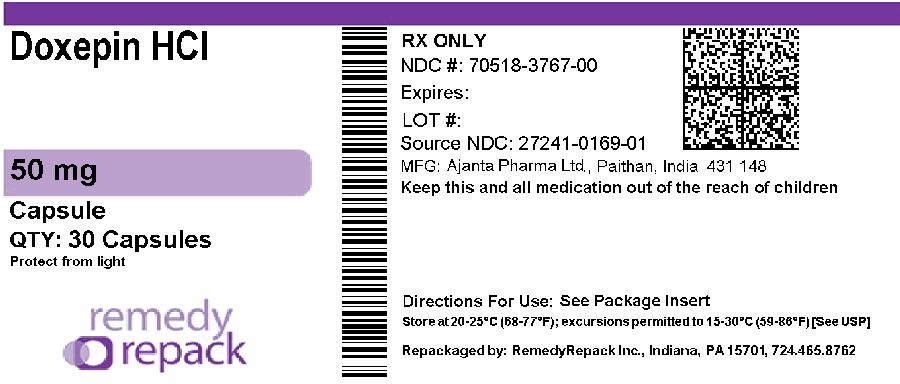
doxepin hydrochloride 50 MG/ML Topical Cream — Other antipruritics. INDICATIONS AND USAGE Doxepin Hydrochloride Capsules, USP are recommended for the treatment of: 1. Psychoneurotic patients with depression and/or…
Boxed warning
Suicidality and Antidepressant Drugs Antidepressants increased the risk compared to placebo of suicidal thinking and behavior (suicidality) in children, adolescents, and young adults in short-term studies of major depressive disorder (MDD) and other psychiatric disorders. Anyone considering the use of doxepin hydrochloride capsules or any other antidepressant in a child, adolescent, or young adult must balance this risk with the clinical need. Short-term studies did not show an increase in the risk of suicidality with antidepressants compared to placebo in adults beyond age 24; there was a reduction in risk with antidepressants compared to placebo in adults aged 65 and older. Depression and certain other psychiatric disorders are themselves associated with increases in the risk of suicide. Patients of all ages who are started on antidepressant therapy should be monitored appropriately and observed closely for clinical worsening, suicidality, or unusual changes in behavior. Families and caregivers should be advised of the need for close observation and communication with the prescriber. Doxepin hydrochloride capsule is not approved for use in pediatric patients. ( See Warnings: Clinical Worsening and Suicide Risk , Precautions: Information for Patients , and Precautions: Pediatric Use )
Doxepin has several notable drug interactions that can increase its effects or lead to adverse reactions.
majorMAO inhibitors — Doxepin should not be administered to patients on MAOIs within the past two weeks.
moderatecimetidine — Increases exposure to doxepin, doubling its levels.
moderatealcohol — Sedative effects may be increased with doxepin.
moderateCNS depressants and sedating antihistamines — Sedative effects may be increased with doxepin.
majortolazamide — A case of severe hypoglycemia has been reported.
Indications
INDICATIONS AND USAGE Doxepin Hydrochloride Capsules, USP are recommended for the treatment of: 1. Psychoneurotic patients with depression and/or anxiety. 2. Depression and/or anxiety associated with alcoholism (not to be taken concomitantly with alcohol). 3. Depression and/or anxiety associated with organic disease (the possibility of drug interaction should be considered if the patient is receiving other drugs concomitantly). 4. Psychotic depressive disorders with associated anxiety including involutional depression and manic-depressive disorders. The target symptoms of psychoneurosis that respond particularly well to doxepin hydrochloride capsules include anxiety, tension, depression, somatic symptoms and concerns, sleep disturbances, guilt, lack of energy, fear, apprehension and worry. Clinical experience has shown that doxepin hydrochloride capsules are safe and well tolerated even in the elderly patient. Owing to lack of clinical experience in the pediatric population, doxepin hydrochloride capsules are not recommended for use in children under 12 years of age.
Dosage
DOSAGE AND ADMINISTRATION • Prior to initiating treatment with doxepin hydrochloride capsules, screen patients for a personal or family history of bipolar disorder, mania, or hypomania. ( 2.1 ) • Recommended starting oral dosage is 25 mg three times daily or 75 mg once daily. ( 2.2 ) • Recommended target total dosage range is between 75 mg/day and 150 mg/day (may be given once daily or in divided doses). ( 2.2 ) • Maximum recommended dosage is 100 mg three times daily. ( 2.2 ) • Wait at least 14 days after discontinuation of a monoamine oxidase inhibitor (MAOI) before initiating therapy with doxepin hydrochloride capsules. ( 2.3 ) • See the Full Prescribing Information for dosage modifications intended to reduce the risk of anticholinergic effects, for strong CYP2D6 inhibitors, and in known CYP2D6 and CYP2C19 poor metabolizers. ( 2.4 , 2.5 , 2.6 ). • When discontinuing doxepin hydrochloride capsules, gradually reduce the dosage until discontinued. ( 2.7 ) 2.1 Screen for Bipolar Disorder Prior to Starting Doxepin Hydrochloride Capsules Prior to initiating treatment with doxepin hydrochloride capsules, screen patients for a personal or family history of bipolar disorder, mania, or hypomania [see Warnings and Precautions (5.5) ]. 2.2 Recommended Dosage The recommended starting oral dosage for doxepin hydrochloride capsules is 25 mg three times daily or 75 mg once daily. The recommended target total oral dosage range for doxepin hydrochloride capsules is between 75 mg/day and 150 mg/day (may be given once daily or in divided doses). The maximum recommended oral dosage for doxepin hydrochloride capsules is 100 mg three times daily. 2.3 Switching Patients to or from a Monoamine Oxidase Inhibitor Wait at least 14 days after discontinuation of a monoamine oxidase inhibitor (MAOI) before initiating therapy with doxepin hydrochloride capsules [see Contraindications (4) , Warnings and Precautions (5.2) , and Drug Interactions (7) ] . Wait at least 14 days after discontinuation of doxepin hydrochloride capsules before initiating therapy with an MAOI [see Contraindications (4) , Warnings and Precautions (5.2) , and Drug Interactions (7) ]. 2.4 Dosage Modifications Intended to Reduce the Risk of Anticholinergic Effects If anticholinergic effects (e.g., dry mouth, blurred vision, constipation) develop, reduce the doxepin hydrochloride capsules dosage [see Adverse Reactions (6.1) ] . 2.5 Dosage Modifications for Strong CYP2D6 Inhibitors Reduce the doxepin hydrochloride capsules dosage based on doxepin plasma concentrations when used concomitantly with strong CYP2D6 inhibitors [see Drug Interactions (7) ] . 2.6 Dosage Modifications in Known CYP2D6 and CYP2C19 Poor Metabolizers Reduce the doxepin hydrochloride capsules dosage based on doxepin plasma concentrations in patients who are known CYP2D6 and CYP2C19 poor metabolizers [see Use in Specific Populations (8.7) ] . 2.7 Discontinuation of Doxepin Hydrochloride Capsules Treatment When discontinuing doxepin hydrochloride capsules, gradually reduce the dosage until discontinued [see Adverse Reactions (6) ] .
Warnings
WARNINGS AND PRECAUTIONS • Suicidal Thoughts and Behaviors : Monitor for clinical worsening and suicide thoughts and behaviors. Consider changing the therapeutic regimen, including possibly discontinuing doxepin hydrochloride capsules, in patients who are experiencing emergent suicidal thoughts or behaviors. ( 5.1 ) • Serotonin Syndrome : Risk increases with concomitant use of other serotonergic drugs. Monitor all patients taking doxepin hydrochloride capsules for the emergence of serotonin syndrome. Discontinue doxepin hydrochloride capsules and any concomitant serotonergic agents immediately and initiate supportive treatment if serotonin syndrome occurs. ( 5.2 , 7 ) • Angle-Closure Glaucoma : Avoid use of doxepin hydrochloride capsules in patients with untreated anatomically narrow angles. ( 5.3 ) • Sedation and Driving Risks : Because doxepin hydrochloride capsules can cause sedation, warn patients against driving a car or operating dangerous machinery while taking doxepin hydrochloride capsules. ( 5.4 ) • Activation of Mania or Hypomania : Prior to initiating antidepressant therapy, screen for bipolar disorder. Doxepin hydrochloride capsules are not approved for use in treating bipolar depression. ( 5.5 ) 5.1 Suicidal Thoughts and Behaviors in Adolescents and Young Adults In pooled analyses of placebo-controlled trials of antidepressant drugs including tricyclic antidepressants and other antidepressant classes that included approximately 77,000 adult patients and 4,500 pediatric patients (doxepin hydrochloride capsules are not approved for use in pediatric patients), the incidence of suicidal thoughts and behaviors in antidepressant-treated patients age 24 years and younger was greater than in placebo-treated patients. There was considerable variation in risk of suicidal thoughts and behaviors among drugs, but there was an increased risk identified in young patients for most drugs studied. The drug-placebo differences in the number of cases of suicidal thoughts and behaviors per 1,000 patients treated are provided in Table 1. Table 1: Risk Differences of the Number of Patients of Suicidal Thoughts and Behaviors in the Pooled Placebo-Controlled Trials of Antidepressants in Pediatric and Adult Patients Age Range Drug-Placebo Difference in Number of Patients of Suicidal Thoughts or Behaviors per 1,000 Patients Treated Increases Compared to Placebo < 18 years old 14 additional patients 18-24 years old 5 additional patients Decreases Compared to Placebo 25-64 years old 1 fewer patient ≥ 65 years old 6 fewer patients It is unknown whether the risk of suicidal thoughts and behaviors in pediatric and young adults extends to longer-term use, i.e., beyond four months. However, there is substantial evidence from placebo-controlled maintenance trials in adults with MDD that antidepressants delay the recurrence of depression. Monitor all doxepin hydrochloride capsules-treated patients for clinical worsening and emergence of suicidal thoughts and behaviors, especially during the initial few months of doxepin hydrochloride capsules therapy, and at times of dosage changes. Counsel family members or caregivers of patients to monitor for changes in behavior and to alert the health care provider. Consider changing the therapeutic regimen, including possibly discontinuing doxepin hydrochloride capsules, in patients who are experiencing emergent suicidal thoughts or behaviors. 5.2 Serotonin Syndrome Tricyclic antidepressants, including doxepin hydrochloride capsules, can precipitate serotonin syndrome, a potentially life-threatening condition. This risk is increased with concomitant use of other serotonergic drugs (e.g., other tricyclic antidepressants, SSRIs, serotonin norepinephrine reuptake inhibitors, triptans, tetracyclic antidepressants, opioids), lithium, tryptophan, buspirone, and St. John’s Wort) and with drugs that impair metabolism of serotonin (e.g., MAOIs intended to treat psychiatric disorders and others, such as linezolid or intravenous methylene blue) [see Drug Interactions (7) ] . Serotonin syndrome symptoms may include mental status changes (e.g., confusion, agitation, hallucinations, delirium, and coma), autonomic instability (e.g., tachycardia, labile blood pressure, hyperthermia, diaphoresis, and flushing), neuromuscular abnormalities (e.g., tremor, rigidity, clonus, and hyperreflexia), seizures and gastrointestinal signs and symptoms (e.g., nausea, vomiting, diarrhea). Patients should be monitored for the emergence of serotonin syndrome. The concomitant use of doxepin hydrochloride capsules with MAOIs is contraindicated. The use of doxepin hydrochloride capsules within 14 days of discontinuing treatment with an MAOI intended to treat psychiatric disorders is contraindicated. Starting doxepin hydrochloride capsules in a patient who is being treated with an MAOI such as linezolid or intravenous methylene blue is contraindicated. No reports involved the administration of methylene blue by other routes (such as oral or local tissue injection). If it is necessary to initiate treatment with a MAOI such as linezolid or intravenous methylene blue in a patient taking doxepin hydrochloride capsules, discontinue doxepin hydrochloride capsules before initiating treatment with the MAOI [see Dosage and Administration (2.4) and Drug Interactions (7) ] . Monitor all patients taking doxepin hydrochloride capsules for the emergence of serotonin syndrome. Discontinue doxepin hydrochloride capsules treatment and any concomitant serotonergic agents immediately if the above symptoms occur, and initiate supportive symptomatic treatment. If concomitant use of doxepin hydrochloride capsules with other serotonergic drugs (besides MAOIs which are contraindicated) is clinically warranted, inform patients of the increased risk for serotonin syndrome and monitor for symptoms . 5.3 Angle-Closure Glaucoma The pupillary dilation that occurs following use of many antidepressant drugs including doxepin hydrochloride capsules may trigger an angle closure glaucoma attack in a patient with anatomically narrow angles who does not have a patent iridectomy. Patients may wish to be examined to determine whether they are susceptible to angle closure, and have a prophylactic procedure (e.g., iridectomy), if they are susceptible. Doxepin hydrochloride capsules are contraindicated in patients with glaucoma. Avoid use of doxepin hydrochloride capsules in patients with untreated anatomically narrow angles. 5.4 Sedation and Driving Risks Because doxepin hydrochloride capsules can cause sedation, warn patients of the risk of sedation and caution patients against driving a car or operating dangerous machinery while taking doxepin hydrochloride capsules. Also caution patients that their response to alcohol may be potentiated. Sedating drugs, including doxepin hydrochloride capsules, may cause oversedation in geriatric patients. 5.5 Activation of Mania or Hypomania In patients with bipolar disorder, treating MDD with doxepin hydrochloride capsules may precipitate a mixed/manic episode. Prior to initiating treatment with doxepin hydrochloride capsules, screen patients for any personal or family history of bipolar disorder, mania, or hypomania. doxepin hydrochloride capsules are not approved for use in treating bipolar depression . 5.6 Risk of Seizures Caution should be used when doxepin hydrochloride capsules are given to patients with a history of seizure disorder, because this drug may lower the seizure threshold. Patients with a history of seizures should be monitored during doxepin hydrochloride capsules use to identify recurrence of seizures or increase in frequency of seizures. 5.7 Psychosis In patients with schizophrenia, treatment with doxepin hydrochloride capsules for MDD may activate psychosis. If this occurs, stop doxepin hydrochloride capsules and consider alternative treatment options.
Contraindications
4. CONTRAINDICATIONS Hypersensitivity to doxepin hydrochloride, inactive ingredients, or other dibenzoxepines. ( 4.1 ) Co-administration with Monoamine Oxidase Inhibitors (MAOIs): Do not administer if patient is taking MAOIs or has used MAOIs within the past two weeks. ( 4.2 ) Untreated narrow angle glaucoma or severe urinary retention. ( 4.3 ) 4.1. Hypersensitivity Doxepin HCl Tablets is contraindicated in individuals who have shown hypersensitivity to doxepin HCl, any of its inactive ingredients, or other dibenzoxepines. 4.2. Co-administration with Monoamine Oxidase Inhibitors (MAOIs) Serious side effects and even death have been reported following the concomitant use of certain drugs with MAO inhibitors. Do not administer Doxepin HCl Tablets if patient is currently on MAOIs or has used MAOIs within the past two weeks. The exact length of time may vary depending on the particular MAOI dosage and duration of treatment. 4.3. Glaucoma and Urinary Retention Doxepin HCl Tablets is contraindicated in individuals with untreated narrow angle glaucoma or severe urinary retention.
Mechanism of action
CLINICAL PHARMACOLOGY 12.1 Mechanism of Action The mechanism of action of the doxepin hydrochloride in the treatment of MDD in adult patients is not well understood. 12.2 Pharmacodynamics The exposure-response relationship and time course of pharmacodynamic response for the safety and effectiveness of doxepin have not been fully characterized. 12.3 Pharmacokinetics Absorption In healthy volunteers, a single oral doxepin hydrochloride dose of 75 mg resulted in peak plasma doxepin concentrations that ranged from 8.8 ng/mL to 45.8 ng/mL (mean 26.1 ng/mL). Peak levels were reached between 2 and 4 hours (mean 2.9 hours) after doxepin hydrochloride administration. Peak levels for the primary active metabolite N-desmethyldoxepin (nordoxepin) ranged from 4.8 ng/mL to 14.5 ng/mL (mean 9.7 ng/mL) and were achieved between 2 and 10 hours after doxepin hydrochloride administration. Distribution The mean apparent volume of distribution for doxepin was approximately 20 L/kg. The protein binding for doxepin was approximately 76%. Elimination In healthy volunteers, the plasma elimination half-life of doxepin ranged from 8 to 24 hours (mean 17 hours). The half-life of nordoxepin ranged from 33 to 80 hours (mean 51 hours). The mean plasma clearance for doxepin was approximately 0.84 L/hour/kg. Metabolism After oral doxepin hydrochloride administration, approximately 55% to 87% of doxepin undergoes first-pass metabolism in the liver, forming the primary active metabolite nordoxepin. Metabolic pathways of doxepin include demethylation, N-oxidation, hydroxylation and glucuronide formation. Excretion Doxepin is excreted primarily in the urine, mainly as its metabolites, either free or in conjugate form. Specific Populations Patients with Hepatic Impairment : Specific clinical studies have not been performed to evaluate the pharmacokinetics of doxepin in patients with hepatic impairment. Patients with hepatic impairment may have a greater systemic doxepin exposure than those with normal liver function [see Use in Specific Populations (8.6)]. Patients with Renal Impairment : The extent of renal excretion of doxepin is unknown. Specific clinical studies have not been performed to evaluate the pharmacokinetics of doxepin in patients with renal impairment compared to those with normal renal function. Drug Interactions Studies Carbamazepine : After concomitant use of doxepin hydrochloride and carbamazepine, the combined exposure of doxepin and nordoxepin (12 hours after the last dose) was decreased by 55% compared to that after the use of doxepin hydrochloride alone [see Drug Interactions (7)]. Strong CYP2D6 Inhibitors : CYP2D6 contributes to the metabolism of doxepin and concomitant use of doxepin hydrochloride with strong CYP2D6 inhibitors may increase doxepin exposure [see Drug Interactions (7)]. Cimetidine : Cimetidine is a non-specific inhibitor of CYP1A2, 2C19, 2D6, and 3A4. When cimetidine 300 mg twice daily was administered concomitantly with a single 6 mg dose of another oral doxepin product, there was approximately a 2-fold increase in doxepin Cmax and AUC compared to doxepin without cimetidine [see Drug Interactions (7)]. CYP2D6 Substrates : Concomitant use of doxepin hydrochloride and other CYP2D6 substrates may have impact on the plasma doxepin concentrations. The clinical significance of this possible impact is unknown.
A drug lookup is just the start. Eleplan keeps the whole care plan in one place.
Medications, diagnoses, documents, appointments, and the whole care team — organized and always in sync, with Ellie, your AI care assistant, on top of it. Free to start.