doxycycline hyclate 100 MG Oral Tablet
Managing this medication for someone you care for? Eleplan keeps diagnoses, medications and appointments in one plan.
Start free with EleplanClinical drug
doxycycline hyclate 100 MG Oral Tablet
100 MG · Oral Tablet · oral
A form of doxycycline →
doxycycline hyclate 100 MG Oral Tablet — Antiinfectives and antiseptics for local oral treatment. INDICATIONS AND USAGE Doxycycline hyclate delayed-release tablets are a tetracycline-class drug indicated for: • Rickettsial infections ( 1.1 ) •…
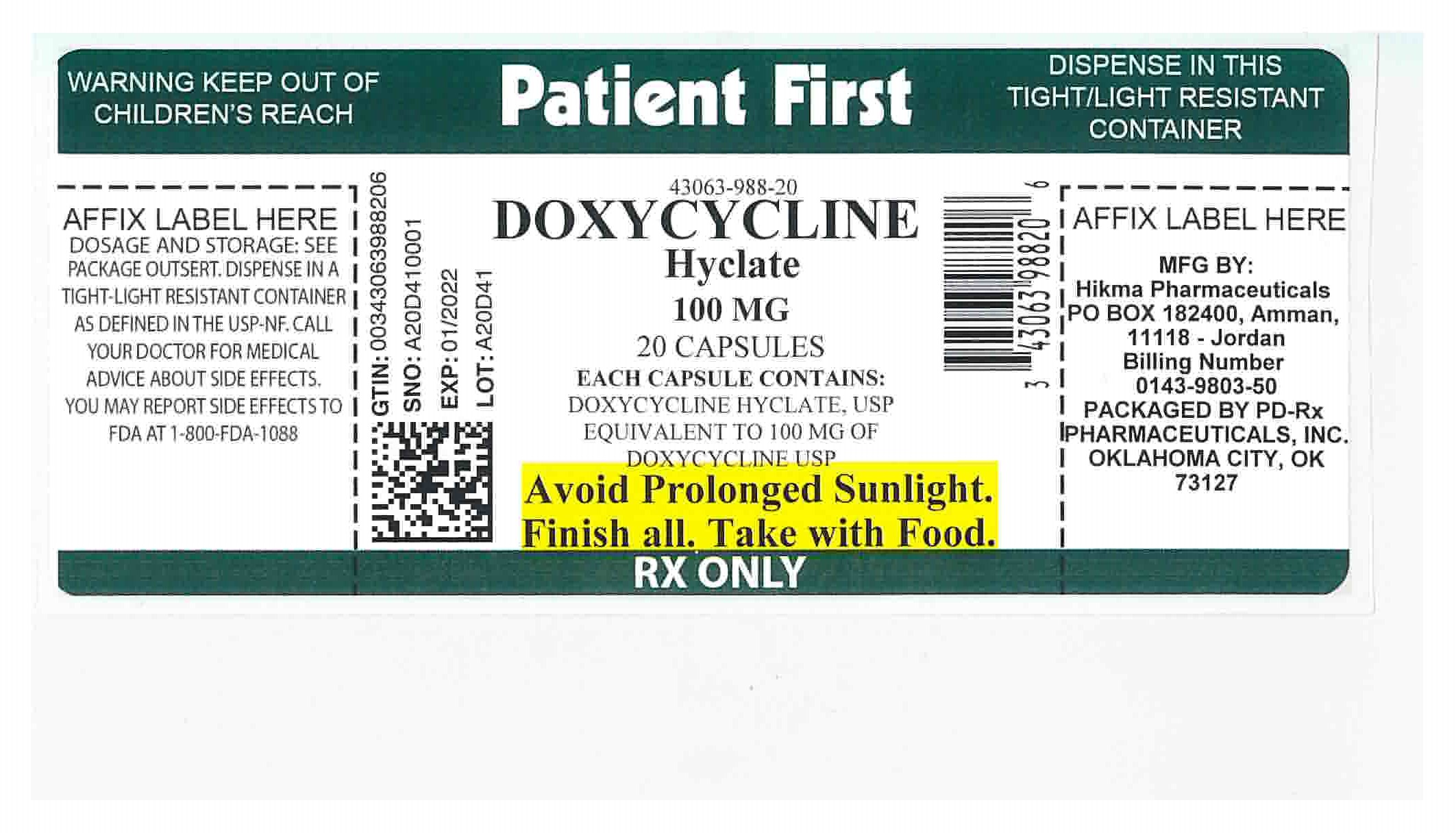
Active ingredient
Classification
Antiinfectives and antiseptics for local oral treatmentTetracycline-class Drug
Drug interactions
Doxycycline has several drug interactions that may affect its efficacy and safety.
- moderateanticoagulants — may require downward adjustment of dosage
- unknownpenicillin — may interfere with bactericidal action
- moderateantacids containing aluminum, calcium, or magnesium — absorption of doxycycline is impaired
- moderateiron-containing preparations — absorption of doxycycline is impaired
- moderatebismuth subsalicylate — absorption of doxycycline is impaired
- moderatebarbiturates — decrease the half-life of doxycycline
- moderatecarbamazepine — decrease the half-life of doxycycline
- moderatephenytoin — decrease the half-life of doxycycline
- majormethoxyflurane — may result in fatal renal toxicity
- moderateoral contraceptives — may render less effective
Indications
INDICATIONS AND USAGE Doxycycline hyclate delayed-release tablets are a tetracycline-class drug indicated for: • Rickettsial infections ( 1.1 ) • Sexually transmitted infections ( 1.2 ) • Respiratory tract infections ( 1.3 ) • Specific bacterial infections ( 1.4 ) • Ophthalmic infections ( 1.5 ) • Anthrax, including inhalational anthrax (post-exposure) ( 1.6 ) • Alternative treatment for selected infections when penicillin is contraindicated ( 1.7 ) • Adjunctive therapy in acute intestinal amebiasis and severe acne ( 1.8 ) • Prophylaxis of malaria ( 1.9 ) Usage To reduce the development of drug-resistant bacteria and maintain the effectiveness of doxycycline hyclate delayed-release tablets and other antibacterial drugs, doxycycline hyclate delayed-release tablets should be used only to treat or prevent infections that are proven or strongly suspected to be caused by bacteria. ( 1.10 ) 1.1 Rickettsial Infections Doxycycline hyclate delayed-release tablets are indicated for treatment of Rocky Mountain spotted fever, typhus fever and the typhus group, Q fever, rickettsialpox, and tick fevers caused by Rickettsiae . 1.2 Sexually Transmitted Infections Doxycycline hyclate delayed-release tablets are indicated for treatment of the following sexually transmitted infections: • Uncomplicated urethral, endocervical or rectal infections caused by Chlamydia trachomatis. • Nongonococcal urethritis caused by Ureaplasma urealyticum . • Lymphogranuloma venereum caused by Chlamydia trachomatis . • Granuloma inguinale caused by Klebsiella granulomatis . • Uncomplicated gonorrhea caused by Neisseria gonorrhoeae. • Chancroid caused by Haemophilus ducreyi . 1.3 Respiratory Tract Infections Doxycycline hyclate delayed-release tablets are indicated for treatment of the following respiratory infections: • Respiratory tract infections caused by Mycoplasma pneumoniae . • Psittacosis (ornithosis) caused by Chlamydophila psittaci . • Because many strains of the following groups of microorganisms have been shown to be resistant to doxycycline, culture and susceptibility testing are recommended. • Doxycycline is indicated for treatment of infections caused by the following micro-organisms, when bacteriological testing indicates appropriate susceptibility to the drug: - Respiratory tract infections caused by Haemophilus influenzae . - Respiratory tract infections caused by Klebsiella species. - Upper respiratory infections caused by Streptococcus pneumoniae . 1.4 Specific Bacterial Infections Doxycycline hyclate delayed-release tablets are indicated for treatment of the following specific bacterial infections: • Relapsing fever due to Borrelia recurrentis . • Plague due to Yersinia pestis . • Tularemia due to Francisella tularensis . • Cholera caused by Vibrio cholerae . • Campylobacter fetus infections caused by Campylobacter fetus . • Brucellosis due to Brucella species (in conjunction with streptomycin). • Bartonellosis due to Bartonella bacilliformis . Because many strains of the following groups of microorganisms have been shown to be resistant to doxycycline, culture and susceptibility testing are recommended. Doxycycline hyclate delayed-release tablets are indicated for treatment of infections caused by the following gram-negative microorganisms, when bacteriological testing indicates appropriate susceptibility to the drug: • Escherichia coli • Enterobacter aerogenes • Shigella species • Acinetobacter species • Urinary tract infections caused by Klebsiella species. 1.5 Ophthalmic Infections Doxycycline hyclate delayed-release tablets are indicated for treatment of the following ophthalmic infections: • Trachoma caused by Chlamydia trachomatis , although the infectious agent is not always eliminated as judged by immunofluorescence. • Inclusion conjunctivitis caused by Chlamydia trachomatis . 1.6 Anthrax, Including Inhalational Anthrax (Post-Exposure) Doxycycline hyclate delayed-release tablets are indicated for the treatment of Anthrax due to Bacillus anthracis , including inhalational anthrax (post-exposure): to reduce the incidence or progression of disease following exposure to aerosolized Bacillus anthracis . 1.7 Alternative Treatment for Selected Infections When Penicillin is Contraindicated Doxycycline hyclate delayed-release tablets are indicated as an alternative treatment for the following selected infections when penicillin is contraindicated: • Syphilis caused by Treponema pallidum . • Yaws caused by Treponema pallidum subspecies pertenue . • Vincent’s infection caused by Fusobacterium fusiforme. • Actinomycosis caused by Actinomyces israelii . • Infections caused by Clostridium species. 1.8 Adjunctive Therapy for Acute Intestinal Amebiasis and Severe Acne In acute intestinal amebiasis, doxycycline hyclate delayed-release tablets may be a useful adjunct to amebicides. In severe acne, doxycycline may be useful adjunctive therapy. 1.9 Prophylaxis of Malaria Doxycycline hyclate delayed-release tablets are indicated for the prophylaxis of malaria due to Plasmodium falciparum in short-term travelers (less than 4 months) to areas with chloroquine and/or pyrimethamine-sulfadoxine resistant strains [see Dosage and Administration ( 2.2 ) and Patient Counseling Information ( 17 )] . 1.10 Usage To reduce the development of drug-resistant bacteria and maintain the effectiveness of doxycycline hyclate delayed-release tablets and other antibacterial drugs, doxycycline hyclate delayed-release tablets should be used only to treat or prevent infections that are proven or strongly suspected to be caused by susceptible bacteria. When culture and susceptibility information are available, they should be considered in selecting or modifying antibacterial therapy. In the absence of such data, local epidemiology and susceptibility patterns may contribute to the empiric selection of therapy.
Dosage
DOSAGE AND ADMINISTRATION • Dosage in Adult Patients: o The usual dosage is 200 mg on the first day of treatment (administered 100 mg every 12 hours) followed by a maintenance dose of 100 mg daily. (2.1) o In the management of more severe infections (particularly chronic infections of the urinary tract), 100 mg every 12 hours is recommended. (2.1) • Dosage in Pediatric Patients: o For all pediatric patients weighing less than 45 kg with severe or life -threatening infections (e.g., anthrax, Rocky Mountain spotted fever), the recommended dose is 2.2 mg per kg of body weight administered every 12 hours. Pediatric patients weighing 45 kg or more should receive the adult dose. (2.1) o For pediatric patients with less severe disease (greater than 8 years of age and weighing less than 45 kg), the recommended dose is 4.4 mg per kg of body weight divided into two doses on the first day of treatment, followed by a maintenance dose of 2.2 mg per kg of body weight (given as a single daily dose or divided into two doses). For pediatric patients weighing over 45 kg, the usual adult dose should be used. (2.1) 2.1 Important Dosage and Administration Instructions • Doxycycline hyclate delayed-release tablet is not substitutable on a mg per mg basis with other oral doxycyclines. To avoid prescribing errors, do not substitute doxycycline hyclate delayed-release tablets for other oral doxycyclines on a mg per mg basis because of differing bioavailability. • Do not chew or crush tablets [see Dosage and Administration (2.4)]. • The recommended dosage, frequency of administration and weight-based dosage recommendations of doxycycline hyclate delayed-release tablet differ from that of the other tetracyclines [see Dosage and Administration (2.2, 2.3, 2.4)]. Exceeding the recommended dosage may result in an increased incidence of adverse reactions. • Administer doxycycline hyclate delayed-release tablet with an adequate amount of fluid to wash down the drug and reduce the risk of esophageal irritation and ulceration [see Adverse Reactions (6.1)]. • If gastric irritation occurs, doxycycline hyclate delayed-release tablet may be given with food or milk [see Clinical Pharmacology (12.3)]. 2.2 Switching from Doxycycline Hyclate Delayed-Release Tablets 50 mg, 75 mg, 80 mg, 100 mg, 150 mg and 200 mg to Doxycycline Hyclate Delayed-Release Tablets 60 mg and 120 mg When switching from doxycycline hyclate delayed-release tablets 50 mg, 75 mg, 80 mg, 100 mg, 150 mg and 200 mg to doxycycline hyclate delayed-release tablets 60 mg and 120 mg: • A 60 mg dose of doxycycline hyclate delayed-release tablets will replace a 50 mg dose of doxycycline hyclate delayed-release tablets • A 120 mg dose of doxycycline hyclate delayed-release tablets will replace a 100 mg dose of doxycycline hyclate delayed-release tablets 2.3 Dosage in Adult Patients • The usual dosage of doxycycline hyclate delayed-release tablet is 200 mg on the first day of treatment (administered 100 mg every 12 hours), followed by a maintenance dose of 100 mg daily. • The maintenance dose may be administered as a single dose or as 50 mg every 12 hours. • In the management of more severe infections (particularly chronic infections of the urinary tract), 100 mg every 12 hours is recommended. • For certain selected specific indications, the recommended duration or dosage and duration of doxycycline hyclate delayed-release tablets 60 mg and 120 mg in adult patients are as follows: 1. Streptococcal infections, therapy should be continued for 10 days. 2. Uncomplicated urethral, endocervical, or rectal infection caused by C. trachomatis: 100 mg, by mouth, twice-a-day for 7 days. 3. Uncomplicated gonococcal infections in adults (except anorectal infections in men): 100 mg, by mouth, twice-a-day for 7 days. As an alternate single visit dose, administer 300 mg followed in one hour by a second 300 mg dose. 4. Nongonococcal urethritis (NGU) caused by U. urealyticum: 100 mg, by mouth, twice-a-day for 7 days. 5. Syphilis – early: Patients who are allergic to penicillin should be treated with doxycycline 120 mg, by mouth, twice-a-day for 2 weeks. 6. Syphilis of more than one year’s duration: Patients who are allergic to penicillin should be treated with doxycycline 100 mg, by mouth, twice-a-day for 4 weeks. 7. Acute epididymo-orchitis caused by N. gonorrhoeae: 100 mg, by mouth, twice-a-day for at least 10 days. 8. Acute epididymo-orchitis caused by C. trachomatis: 100 mg, by mouth, twice-a-day for at least 10 days 2.4 Dosage in Pediatric Patients • For all pediatric patients weighing less than 45 kg with severe or life threatening infections (e.g., anthrax, Rocky Mountain spotted fever), the recommended dosage of doxycycline is 2.2 mg per kg of body weight administered every 12 hours. Pediatric patients weighing 45 kg or more should receive the adult dose [see Warnings and Precautions (5.1)]. • For pediatric patients with less severe disease (greater than 8 years of age and weighing less than 45 kg), the recommended dosage schedule of doxycycline is 4.4 mg per kg of body weight divided into two doses on the first day of treatment, followed by a maintenance dose of 2.2 mg per kg of body weight (given as a single daily dose or divided into twice daily doses). For pediatric patients weighing over 45 kg, the usual adult dose should be used. 2.5 Dosage for Prophylaxis of Malaria For adults, the recommended dose of doxycycline hyclate delayed-release tablet is 100 mg daily. For pediatric patients 8 years of age and older, the recommended dose is 2 mg/kg administered once daily up to the adult dose. Pediatric patients weighing 45 kg or more should receive the adult dose. Prophylaxis should begin 1 or 2 days before travel to the malarious area. Prophylaxis should be continued daily during travel in the malarious area and for 4 weeks after the traveler leaves the malarious area. 2.6 Dosage for Inhalational Anthrax (Post-Exposure) For adults the recommended dosage is 100 mg of doxycycline hyclate delayed-release tablet, by mouth, twice-a-day for 60 days. For pediatric patients weighing less than 45 kg, the recommended dosage of doxycycline hyclate delayed-release tablet is 2.2 mg/kg of body weight, by mouth, twice-a-day for 60 days. Pediatric patients weighing 45 kg or more should receive the adult dose. 2.7 Sprinkling the Tablet Over Applesauce Doxycycline hyclate delayed-release tablets may also be administered by carefully breaking up the tablet and sprinkling the tablet contents (delayed-release pellets) on a spoonful of applesauce. The delayed-release pellets must not be crushed or damaged when breaking up the tablet. Any loss of pellets in the transfer would prevent using the dose. The applesauce/doxycycline hyclate delayed-release tablets mixture should be swallowed immediately without chewing and may be followed by a glass of water if desired. The applesauce should not be hot, and it should be soft enough to be swallowed without chewing. In the event that a prepared dose of applesauce/doxycycline hyclate delayed-release mixture cannot be taken immediately, the mixture should be discarded and not stored for later use.
Warnings
WARNINGS AND PRECAUTIONS Click here to enter Warnings and Precautions • The use of doxycycline capsules during tooth development (the second and third trimesters of pregnancy, infancy and childhood up to the age of 8 years) may cause permanent discoloration of the teeth (yellow-gray-brown) and reversible inhibition of bone growth. ( 5.1 , 5.2 , 8.1 , 8.4 ) • Treatment with antibacterial agents alters the normal flora of the colon leading to overgrowth of Clostridium difficile . If C. difficile associated diarrhea occurs, discontinue doxycycline capsules. ( 5.3 ) • If renal impairment exists, doxycycline capsules doses may need to be adjusted to avoid excessive systemic accumulations of the drug and possible liver injury. ( 5.4 ) • Photosensitivity can occur with doxycycline capsules; Patients should minimize or avoid exposure to natural or artificial sunlight. ( 5.5 ) • Tetracyclines have been associated with the development of autoimmune syndromes; if symptoms develop, discontinue doxycycline capsules immediately. ( 5.6 ) • Doxycycline capsules may cause pseudotumor cerebri (benign intracranial hypertension). Discontinue doxycycline capsules if symptoms occur. ( 5.8 ) • Bacterial resistance to tetracyclines may develop in patients using doxycycline capsules. It should only be used as indicated. ( 5.9 ) 5. 1 Inhibition of Bone Growth During Fetal and Pediatric Development Doxycycline, like other tetracycline-class drugs, may cause inhibition of bone growth when administered during the second and third trimesters of pregnancy, infancy, and childhood. All tetracyclines form a stable calcium complex in any bone-forming tissue. A decrease in fibula growth rate has been observed in premature human infants given oral tetracycline in doses of 25 mg/kg every 6 hours. This reaction was shown to be reversible when the drug was discontinued. If doxycycline is used during the second or third trimester of pregnancy, advise the patient of the potential risk to the fetus [see Use in Specific Populations ( 8.1 )]. 5.2 Tooth Discoloration During Fetal and Pediatric Development The use of tetracycline class drugs orally during tooth development (last half of pregnancy, infancy, and childhood up to the age of 8 years) may cause permanent discoloration of the teeth (yellow-gray-brown). This adverse reaction is more common during long-term use of the drug but has been observed following repeated short-term courses. Enamel hypoplasia has also been reported. Use of tetracycline drugs is not recommended during tooth development [see Use in Specific Populations ( 8.1 )]. 5.3 Clostridium difficile Associated Diarrhea (CDAD) Clostridium difficile associated diarrhea (CDAD) has been reported with nearly all antibacterial agents, including doxycycline, and may range in severity from mild diarrhea to fatal colitis. Treatment with antibacterial agents alters the normal flora of the colon leading to overgrowth of C. difficile . C. difficile produces toxins A and B which contribute to the development of CDAD. Hypertoxin producing strains of C. difficile cause increased morbidity and mortality, as these infections can be refractory to antimicrobial therapy and may require colectomy. CDAD must be considered in all patients who present with diarrhea following antibiotic use. Careful medical history is necessary since CDAD has been reported to occur over two months after the administration of antibacterial agents. If CDAD is suspected or confirmed, ongoing antibiotic use not directed against C. difficile may need to be discontinued. Appropriate management should be instituted as clinically indicated. 5.4 Metabolic Effects The anti-anabolic action of the tetracyclines may cause an increase in BUN. While this is not a problem in those with normal renal function, in patients with significantly impaired function, higher serum levels of tetracycline-class antibiotics may lead to azotemia, hyperphosphatemia, and acidosis. If renal impairment exists, even usual oral or parenteral doses may lead to excessive systemic accumulations of the drug and possible liver toxicity. Under such conditions, lower than usual total doses are indicated, and if therapy is prolonged, serum level determinations of the drug may be advisable. 5.5 Photosensitivity Photosensitivity manifested by an exaggerated sunburn reaction has been observed in some individuals taking tetracyclines. Although this was not observed during the duration of the clinical studies with doxycycline capsules, patients should minimize or avoid exposure to natural or artificial sunlight (tanning beds or UVA/B treatment) while using doxycycline capsules. If patients need to be outdoors while using doxycycline capsules, they should wear loose-fitting clothes that protect skin from sun exposure and discuss other sun protection measures with their physician. 5.6 Autoimmune Syndromes Tetracyclines have been associated with the development of autoimmune syndromes. Symptoms may be manifested by fever, rash, arthralgia, and malaise. In symptomatic patients, liver function tests, ANA, CBC, and other appropriate tests should be performed to evaluate the patients. Use of all tetracycline-class drugs should be discontinued immediately. 5.7 Tissue Hyperpigmentation Tetracycline-class drugs are known to cause hyperpigmentation. Tetracycline therapy may induce hyperpigmentation in many organs, including nails, bone, skin, eyes, thyroid, visceral tissue, oral cavity (teeth, mucosa, alveolar bone), sclerae and heart valves. Skin and oral pigmentation has been reported to occur independently of time or amount of drug administration, whereas other pigmentation has been reported to occur upon prolonged administration. Skin pigmentation includes diffuse pigmentation as well as over sites of scars or injury. 5.8 Pseudotumor Cerebri Pseudotumor cerebri (benign intracranial hypertension) in adults has been associated with the use of tetracyclines. The usual clinical manifestations are headache and blurred vision. Bulging fontanels have been associated with the use of tetracyclines in infants. While both of these conditions and related symptoms usually resolve after discontinuation of the tetracycline, the possibility for permanent sequelae exists. Patients should be questioned for visual disturbances prior to initiation of treatment with tetracyclines and should be routinely checked for papilledema while on treatment. 5.9 Development of Drug Resistant Bacteria Bacterial resistance to tetracyclines may develop in patients using doxycycline capsules. Because of the potential for drug-resistant bacteria to develop during the use of doxycycline capsules, it should only be used as indicated. 5.10 Superinfection As with other antibiotic preparations, use of doxycycline capsules may result in overgrowth of non-susceptible microorganisms, including fungi. If superinfection occurs, doxycycline capsules should be discontinued and appropriate therapy instituted. Although not observed in clinical trials with doxycycline capsules, the use of tetracyclines may increase the incidence of vaginal candidiasis. Doxycycline capsules should be used with caution in patients with a history of or predisposition to Candida overgrowth. 5.11 Laboratory Monitoring Periodic laboratory evaluations of organ systems, including hematopoietic, renal and hepatic studies should be performed. Appropriate tests for autoimmune syndromes should be performed as indicated. 5.12 Fixed Drug Eruptions Fixed drug eruptions have occurred with doxycycline and have been associated with worsening severity upon subsequent administrations, including generalized bullous fixed drug eruption [see Adverse Reactions (6.2)]. If severe skin reactions occur, discontinue doxycycline capsules immediately and initiate appropriate therapy.
Contraindications
CONTRAINDICATIONS Doxycycline hyclate delayed-release tablet is contraindicated in persons who have shown hypersensitivity to any of the tetracyclines. Doxycycline hyclate delayed-release tablets are contraindicated in persons who have shown hypersensitivity to any of the tetracyclines. (4)
Mechanism of action
CLINICAL PHARMACOLOGY Tetracyclines are readily absorbed and are bound to plasma proteins in varying degrees. They are concentrated by the liver in the bile and excreted in the urine and feces at high concentrations in a biologically active form. Doxycycline is virtually completely absorbed after oral administration. Following a 200 mg dose of doxycycline monohydrate, 24 normal adult volunteers averaged the following serum concentration values: Time (hr): 0.5 1.0 1.5 2.0 3.0 4.0 8.0 12.0 24.0 48.0 72.0 Conc. 1.02 2.26 2.67 3.01 3.16 3.03 2.03 1.62 0.95 0.37 0.15 (mcg/mL) Average Observed Values Maximum Concentration 3.61 mcg/mL (± 0.9 sd) Time of Maximum Concentration 2.60 hr (± 1.10 sd) Elimination Rate Constant 0.049 per hr (± 0.030 sd) Half-Life 16.33 hr (± 4.53 sd) Excretion of doxycycline by the kidney is about 40%/72 hours in individuals with normal function (creatinine clearance about 75 mL/min). This percentage excretion may fall as low as 1 to 5%/72 hours in individuals with severe renal insufficiency (creatinine clearance below 10 mL/min). Studies have shown no significant difference in serum half-life of doxycycline (range 18 to 22 hours) in individuals with normal and severely impaired renal function. Hemodialysis does not alter serum half-life. Microbiology Mechanism of Action Doxycycline inhibits bacterial protein synthesis by binding to the 30S ribosomal subunit. Doxycycline has bacteriostatic activity against a broad range of Gram-positive and Gram-negative bacteria. Cross resistance with other tetracyclines is common. Doxycycline has been shown to be active against most isolates of the following microorganisms, both in vitro and in clinical infections as described in the INDICATIONS AND USAGE section of the package insert. Gram-Negative Bacteria Acinetobacter species Bartonella bacilliformis Brucella species Enterobacter aerogenes Escherichia coli Francisella tularensis Haemophilus ducreyi Haemophilus influenzae Klebsiella granulomatis Klebsiella species Neisseria gonorrhoeae Shigella species Vibrio cholerae Vibrio fetus Yersinia pestis Gram-Positive Bacteria Bacillus anthracis Streptococcus pneumoniae Anaerobes Clostridium species Fusobacterium fusiforme Propionibacterium acnes Other Bacteria Nocardiae and other aerobic Actinomyces species Borrelia recurrentis Chlamydophila psittaci Chlamydia trachomatis Mycoplasma pneumoniae Rickettsiae Treponema pallidum Treponema pallidum subspecies pertenue Ureaplasma urealyticum Parasites Balantidium coli Entamoeba species Plasmodium falciparum * * Doxycycline has been found to be active against the asexual erythrocytic forms of Plasmodium falciparum , but not against the gametocytes of P. falciparum . The precise mechanism of action of the drug is not known. Susceptibility Testing Methods When available, the clinical microbiology laboratory should provide the results of in vitro susceptibility test results for antimicrobial drugs used in resident hospitals to the physician as periodic reports that describe the susceptibility profile of nosocomial and community-acquired pathogens. These reports should aid the physician in selecting the most effective antimicrobial. Dilution techniques Quantitative methods are used to determine antimicrobial minimum inhibitory concentrations (MICs). These MICs provide estimates of the susceptibility of bacteria to antimicrobial compounds. The MICs should be determined using a standardized test method (broth and/or agar). 1,2,4,6,7 The MIC values should be interpreted according to criteria provided in Table 1. Diffusion techniques Quantitative methods that require measurement of zone diameters can also provide reproducible estimates of the susceptibility of bacteria to antimicrobial compounds. The zone size provides an estimate of the susceptibility of bacteria to antimicrobial compounds. The zone size should be determined using a standard test method. 1,3,4 This procedure uses paper disks impregnated with 30 mcg doxycycline to test the susceptibility of bacteria to doxycycline. The disk diffusion interpretive criteria are provided in Table 1. Anaerobic Techniques For anaerobic bacteria, the susceptibility to doxycycline can be determined by a standardized test method. 5 The MIC values obtained should be interpreted according to the criteria provided in Table 1. Table 1: Susceptibility Test Interpretive Criteria for Doxycycline and Tetracycline Bacteria Organisms susceptible to tetracycline are also considered susceptible to doxycycline. However, some organisms that are intermediate or resistant to tetracycline may be susceptible to doxycycline. Minimal Inhibitory Concentration (mcg/mL) Zone Diameter (mm) Agar Dilution (mcg/mL) S I R S I R S I R Acinetobacter spp. Doxycycline ≤4 8 ≥16 ≥13 10 to 12 ≤9 - - - Tetracycline ≤4 8 ≥16 ≥15 12 to 14 ≤11 - - - Anaerobes Tetracycline - - - - - - ≤4 8 ≥16 Bacillus anthracis The current absence of resistance isolates precludes defining any results other than “Susceptible”. If isolates yielding MIC results other than susceptible, they should be submitted to a reference laboratory for further testing. Doxycycline ≤1 - - - - - - - - Tetracycline ≤1 - - - - - - - - Brucella species Doxycycline ≤1 - - - - - - - - Tetracycline ≤1 - - - - - - - - Enterobacteriaceae Doxycycline ≤4 8 ≥16 ≥14 11 to 13 ≤10 - - - Tetracycline ≤4 8 ≥16 ≥15 12 to 14 ≤11 - - - Franciscella tularensis Doxycycline ≤4 - - - - - - - - Tetracycline ≤4 - - - - - - - - Haemophilus influenzae Tetracycline ≤2 4 ≥8 ≥29 26 to 28 ≤25 - - - Mycoplasma pneumoniae Tetracycline - - - - - - ≤2 - - Neisseria gonorrhoeae Gonococci with 30 mcg tetracycline disk zone diameters of <19 mm usually indicate a plasmid-mediated tetracycline resistant Neisseria gonorrhoeae isolate. Resistance in these strains should be confirmed by a dilution test (MIC ≥ 16 mcg/mL). Tetracycline - - - ≥38 31 to 37 ≤30 ≤0.25 0.5 to 1 ≥2 Norcardiae and other aerobic Actinomyces species Doxycycline ≤1 2 to 4 ≥8 - - - - - - Streptococcus pneumoniae Doxycycline ≤ 0.25 0.5 > 1 > 28 25 to 27 < 24 - - - Tetracycline <1 2 > 4 > 28 25 to 27 < 24 - - - Vibrio cholerae Doxycycline ≤4 8 ≥16 - - - - - - Tetracycline ≤4 8 ≥16 - - - - - - Yersinia pestis Doxycycline ≤4 8 ≥16 - - - - - - Tetracycline ≤4 8 ≥16 - - - - - - Ureaplasma urealyticum Tetracycline - - - - - - ≤1 - ≥2 A report of Susceptible (S) indicates that the antimicrobial is likely to inhibit growth of the pathogen if the antimicrobial compound reaches the concentrations at the infection site necessary to inhibit growth of the pathogen. A report of Intermediate (I) indicates that the result should be considered equivocal, and, if the bacteria is not fully susceptible to alternative, clinically feasible drugs, the test should be repeated. This category implies possible clinical applicability in body sites where the drug product is physiologically concentrated or in situations where high dosage of drug can be used. This category also provides a buffer zone that prevents small uncontrolled technical factors from causing major discrepancies in interpretation. A report of Resistant (R) indicates that the pathogen is not likely to inhibit growth of the pathogen if the antimicrobial compound reaches the concentrations usually achievable at the infection site; other therapy should be selected. Quality Control Standardized susceptibility test procedures require the use of laboratory controls to monitor and ensure the accuracy and precision of supplies and reagents used in the assay, and the techniques of the individuals performing the test. 1,2,3,4,5,6,7 Standard doxycycline and tetracycline powders should provide the following range of MIC values noted in Table 2. For the diffusion technique using the 30 mcg doxycycline disk the criteria in Table 2 should be achieved. Table 2: Acceptable Quality Control Ranges for Susceptibility Testing for Doxycycline and Tetracycline QC Strain Minimal Inhibitory Concentration (mcg/mL) Zone Diameter (mm) Agar Dilution (mcg/mL
Source: RxNorm + openFDA + RxClass + FAERS · 2026
Look up another medication