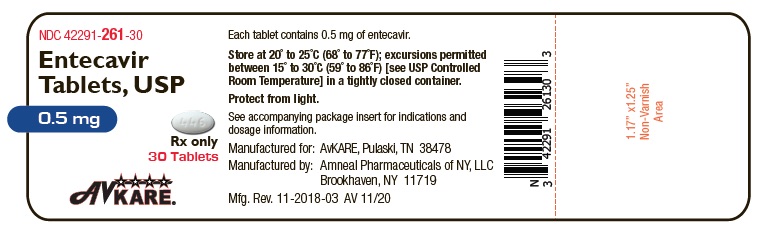
entecavir 0.5 MG Oral Tablet — Nucleoside and nucleotide reverse transcriptase inhibitors. INDICATIONS AND USAGE Entecavir tablets are indicated for the treatment of chronic hepatitis B virus infection in adults with evidence of active…
Boxed warning
These highlights do not include all the information needed to use ENTECAVIR TABLETS safely and effectively. See full prescribing information for ENTECAVIR TABLETS. Initial U.S. Approval: 2005 FULL PRESCRIBING INFORMATION WARNING: SEVERE ACUTE EXACERBATIONS OF HEPATITIS B, PATIENTS CO-INFECTED WITH HIV AND HBV, and LACTIC ACIDOSIS AND HEPATOMEGALY Severe acute exacerbations of hepatitis B have been reported in patients who have discontinued anti-hepatitis B therapy, including entecavir. Hepatic function should be monitored closely with both clinical and laboratory follow-up for at least several months in patients who discontinue anti-hepatitis B therapy. If appropriate, initiation of anti-hepatitis B therapy may be warranted [see Warnings and Precautions (5.1)]. Limited clinical experience suggests there is a potential for the development of resistance to HIV (human immunodeficiency virus) nucleoside reverse transcriptase inhibitors if entecavir tablets are used to treat chronic hepatitis B virus (HBV) infection in patients with HIV infection that is not being treated. Therapy with entecavir tablets are not recommended for HIV/HBV co-infected patients who are not also receiving highly active antiretroviral therapy (HAART) [see Warnings and Precautions (5.2)]. Lactic acidosis and severe hepatomegaly with steatosis, including fatal cases, have been reported with the use of nucleoside analogue inhibitors alone or in combination with antiretrovirals [see Warnings and Precautions (5.3)]. HIGHLIGHTS OF PRESCRIBING INFORMATION These highlights do not include all the information needed to use ENTECAVIR TABLETS safely and effectively. See full prescribing information for ENTECAVIR TABLETS. ENTECAVIR tablets, for oral use Initial U.S. Approval: 2005 WARNING: SEVERE ACUTE EXACERBATIONS OF HEPATITIS B, PATIENTS CO-INFECTED WITH HIV AND HBV, and LACTIC ACIDOSIS AND HEPATOMEGALY See full prescribing information for complete boxed warning. ● Severe acute exacerbations of hepatitis B have been reported in patients who have discontinued anti-hepatitis B therapy, including entecavir. Hepatic function should be monitored closely for at least several months after discontinuation. Initiation of anti-hepatitis B therapy may be warranted. (5.1) ● Entecavir tablets are not recommended for patients co-infected with human immunodeficiency virus (HIV) and hepatitis B virus (HBV) who are not also receiving highly active antiretroviral therapy (HAART), because of the potential for the development of resistance to HIV nucleoside reverse transcriptase inhibitors. (5.2) ● Lactic acidosis and severe hepatomegaly with steatosis, including fatal cases, have been reported with the use of nucleoside analogue inhibitors. (5.3)
Nucleoside and nucleotide reverse transcriptase inhibitorsHepatitis B Virus Nucleoside Analog Reverse Transcriptase Inhibitor
Drug interactions
Entecavir may interact with drugs that affect renal function or compete for active tubular secretion.
moderatedrugs that reduce renal function — may increase serum concentrations of entecavir or the co-administered drug
moderatedrugs that compete for active tubular secretion — may increase serum concentrations of entecavir or the co-administered drug
Indications
INDICATIONS AND USAGE Entecavir tablets are indicated for the treatment of chronic hepatitis B virus infection in adults with evidence of active viral replication and either evidence of persistent elevations in serum aminotransferases (ALT or AST) or histologically active disease. The following points should be considered when initiating therapy with entecavir tablets: In adult patients, this indication is based on clinical trial data in nucleoside-inhibitor-treatment-naïve and lamivudine-resistant subjects with HBeAg-positive and HBeAg-negative HBV infection and compensated liver disease and a more limited number of subjects with decompensated liver disease [see Clinical Studies (14.1) ] . Pediatric use information is approved for Bristol-Myers Squibb Company’s Baraclude ® (entecavir) tablets. However, due to Bristol-Myers Squibb Company’s marketing exclusivity rights, this drug product is not labeled with that information. Entecavir tablets are a Hepatitis B virus nucleoside analogue reverse transcriptase inhibitor indicated for the treatment of chronic hepatitis B virus infection in adults with evidence of active viral replication and either evidence of persistent elevations in serum aminotransferases (ALT or AST) or histologically active disease. (1)
Dosage
DOSAGE AND ADMINISTRATION 2.1 Timing of Administration 2.4 Renal Impairment 2.2 Recommended Dosage in Adults 2.5 Hepatic Impairment 2.3 Recommended Dosage in Pediatric Patients 2.6 Duration of Therapy ● Nucleoside-inhibitor-treatment-naïve with compensated liver disease (greater than or equal to 16 years old): 0.5 mg once daily. (2.2) ● Nucleoside-inhibitor-treatment-naïve and lamivudine-experienced pediatric patients at least 2 years of age and weighing at least 10 kg: dosing is based on weight. (2.3) ● Lamivudine-refractory or known lamivudine or telbivudine resistance substitutions (greater than or equal to 16 years old): 1 mg once daily. (2.2) ● Decompensated liver disease (adults): 1 mg once daily. (2.2) ● Renal impairment: Dosage adjustment is recommended if creatinine clearance is less than 50 mL/min. (2.4) ● Entecavir tablets should be administered on an empty stomach. (2.1) 2.1 Timing of Administration Entecavir tablets should be administered on an empty stomach (at least 2 hours after a meal and 2 hours before the next meal). 2.2 Recommended Dosage in Adults Compensated Liver Disease The recommended dose of entecavir tablets for chronic hepatitis B virus infection in nucleoside-inhibitor-treatment-naïve adults and adolescents 16 years of age and older is 0.5 mg once daily. The recommended dose of entecavir tablets in adults and adolescents (at least 16 years of age) with a history of hepatitis B viremia while receiving lamivudine or known lamivudine or telbivudine resistance substitutions rtM204I/V with or without rtL180M, rtL80I/V, or rtV173L is 1 mg once daily. Decompensated Liver Disease The recommended dose of entecavir tablets for chronic hepatitis B virus infection in adults with decompensated liver disease is 1 mg once daily. 2.3 Recommended Dosage in Pediatric Patients Table 1 describes the recommended dose of entecavir for pediatric patients 2 years of age or older and weighing at least 10 kg. The oral solution should be used for patients with body weight up to 30 kg. Table 1: Dosing Schedule for Peditric Patients Recommended Once-Daily Dose of Oral Solution (mL) Body Weight (kg) Treatment Naive Patients a Lamuvidine-Experienced Patients b 10 o 11 3 6 greater than 11 to 14 4 8 greater than 14 to 17 5 10 greater than 17 to 20 6 12 greater than 20 to 23 7 14 greater than 23 to 26 8 16 greater than 26 to 30 9 18 greater than 30 10 20 a Children with body weight greater than 30 kg should receive 10 mL (0.5 mg) of oral solution or one 0.5 mg tablet once daily. b Children with body weight greater than 30 kg should receive 20 mL (1 mg) of oral solution or one 1 mg tablet once daily. 2.4 Renal Impairment In adult subjects with renal impairment, the apparent oral clearance of entecavir decreased as creatinine clearance decreased [see Clinical Pharmacology (12.3)]. Dosage adjustment is recommended for patients with creatinine clearance less than 50 mL/min, including patients on hemodialysis or continuous ambulatory peritoneal dialysis (CAPD), as shown in Table 2. The once-daily dosing regimens are preferred. Table 2: Recommended Dosage of Entecavir Tablets in Adult Patients with Renal Impairment Creatinine Clearance (mL/min) Usual Dose (0.5 mg) Lamividune-Refractory or Decompensated Liver Disease (1 mg) 50 or greater 0.5 mg once daily 1 mg once daily 30 to less than 50 0.25 mg once dailya OR 0.5 mg every 48 hours 0.5 mg once daily OR 1 mg every 48 hours 10 to less than 30 0.15 mg once dailya OR 0.5 mg every 72 hours 0.3 mg once dailya OR 1 mg every 72 hours Less than 10 Hemodialysisb or CAPD 0.05 mg once dailya OR 0.5 mg every 7 days 0.1 mg once dailya OR 1 mg every 7 day a For doses less than 0.5 mg, entecavir oral solution is recommended. b If administered on a hemodialysis day, administer entecavir tablets after the hemodialysis session. Although there are insufficient data to recommend a specific dose adjustment of entecavir in pediatric patients with renal impairment, a reduction in the dose or an increase in the dosing interval similar to adjustments for adults should be considered. 2.5 Hepatic Impairment No dosage adjustment is necessary for patients with hepatic impairment. 2.6 Duration of Therapy The optimal duration of treatment with entecavir tablets for patients with chronic hepatitis B virus infection and the relationship between treatment and long-term outcomes such as cirrhosis and hepatocellular carcinoma are unknown.
Warnings
WARNINGS AND PRECAUTIONS Severe acute exacerbations of hepatitis B virus infection after discontinuation: Monitor hepatic function closely for at least several months. (5.1 , 6.1) Co-infection with HIV: Entecavir is not recommended unless the patient is also receiving HAART. (5.2) Lactic acidosis and severe hepatomegaly with steatosis: If suspected, treatment should be suspended. (5.3) 5.1 Severe Acute Exacerbations of Hepatitis B Severe acute exacerbations of hepatitis B have been reported in patients who have discontinued anti-hepatitis B therapy, including entecavir [see Adverse Reactions (6.1) ] . Hepatic function should be monitored closely with both clinical and laboratory follow-up for at least several months in patients who discontinue anti-hepatitis B therapy. If appropriate, initiation of anti-hepatitis B therapy may be warranted. 5.2 Patients Co-infected with HIV and HBV Entecavir has not been evaluated in HIV/HBV co-infected patients who were not simultaneously receiving effective HIV treatment. Limited clinical experience suggests there is a potential for the development of resistance to HIV nucleoside reverse transcriptase inhibitors if entecavir is used to treat chronic hepatitis B virus infection in patients with HIV infection that is not being treated [see Microbiology (12.4) ] . Therefore, therapy with entecavir is not recommended for HIV/HBV co-infected patients who are not also receiving HAART. Before initiating entecavir therapy, HIV antibody testing should be offered to all patients. Entecavir has not been studied as a treatment for HIV infection and is not recommended for this use. 5.3 Lactic Acidosis and Severe Hepatomegaly with Steatosis Lactic acidosis and severe hepatomegaly with steatosis, including fatal cases, have been reported with the use of nucleoside analogue inhibitors, including entecavir, alone or in combination with antiretrovirals. A majority of these cases have been in women. Obesity and prolonged nucleoside inhibitor exposure may be risk factors. Particular caution should be exercised when administering nucleoside analogue inhibitors to any patient with known risk factors for liver disease; however, cases have also been reported in patients with no known risk factors. Lactic acidosis with entecavir use has been reported, often in association with hepatic decompensation, other serious medical conditions, or drug exposures. Patients with decompensated liver disease may be at higher risk for lactic acidosis. Treatment with entecavir should be suspended in any patient who develops clinical or laboratory findings suggestive of lactic acidosis or pronounced hepatotoxicity (which may include hepatomegaly and steatosis even in the absence of marked transaminase elevations). 5.1 Severe Acute Exacerbations of Hepatitis B Severe acute exacerbations of hepatitis B have been reported in patients who have discontinued anti-hepatitis B therapy, including entecavir [see Adverse Reactions (6.1) ] . Hepatic function should be monitored closely with both clinical and laboratory follow-up for at least several months in patients who discontinue anti-hepatitis B therapy. If appropriate, initiation of anti-hepatitis B therapy may be warranted. 5.2 Patients Co-infected with HIV and HBV Entecavir has not been evaluated in HIV/HBV co-infected patients who were not simultaneously receiving effective HIV treatment. Limited clinical experience suggests there is a potential for the development of resistance to HIV nucleoside reverse transcriptase inhibitors if entecavir is used to treat chronic hepatitis B virus infection in patients with HIV infection that is not being treated [see Microbiology (12.4) ] . Therefore, therapy with entecavir is not recommended for HIV/HBV co-infected patients who are not also receiving HAART. Before initiating entecavir therapy, HIV antibody testing should be offered to all patients. Entecavir has not been studied as a treatment for HIV infection and is not recommended for this use. 5.3 Lactic Acidosis and Severe Hepatomegaly with Steatosis Lactic acidosis and severe hepatomegaly with steatosis, including fatal cases, have been reported with the use of nucleoside analogue inhibitors, including entecavir, alone or in combination with antiretrovirals. A majority of these cases have been in women. Obesity and prolonged nucleoside inhibitor exposure may be risk factors. Particular caution should be exercised when administering nucleoside analogue inhibitors to any patient with known risk factors for liver disease; however, cases have also been reported in patients with no known risk factors. Lactic acidosis with entecavir use has been reported, often in association with hepatic decompensation, other serious medical conditions, or drug exposures. Patients with decompensated liver disease may be at higher risk for lactic acidosis. Treatment with entecavir should be suspended in any patient who develops clinical or laboratory findings suggestive of lactic acidosis or pronounced hepatotoxicity (which may include hepatomegaly and steatosis even in the absence of marked transaminase elevations).
Contraindications
CONTRAINDICATIONS None. • None. (4)
Mechanism of action
CLINICAL PHARMACOLOGY 12.1 Mechanism of Action Entecavir is an antiviral drug against hepatitis B virus [see Micribiology (12.4) ]. 12.3 Pharmacokinetics The single- and multiple-dose pharmacokinetics of entecavir were evaluated in healthy subjects and subjects with chronic hepatitis B virus infection. Absorption Following oral administration in healthy subjects, entecavir peak plasma concentrations occurred between 0.5 and 1.5 hours. Following multiple daily doses ranging from 0.1 to 1 mg, C max and area under the concentration-time curve (AUC) at steady state increased in proportion to dose. Steady state was achieved after 6 to 10 days of once-daily administration with approximately 2-fold accumulation. For a 0.5 mg oral dose, Cmax at steady state was 4.2 ng/mL and trough plasma concentration (C trough ) was 0.3 ng/mL. For a 1 mg oral dose, Cmax was 8.2 ng/mL and C trough was 0.5 ng/mL. In healthy subjects, the bioavailability of the tablet was 100% relative to the oral solution. The oral solution and tablet may be used interchangeably. Effects of food on oral absorption : Oral administration of 0.5 mg of entecavir with a standard high-fat meal (945 kcal, 54.6 g fat) or a light meal (379 kcal, 8.2 g fat) resulted in a delay in absorption (1–1.5 hours fed vs. 0.75 hours fasted), a decrease in Cmax of 44%–46%, and a decrease in AUC of 18%–20% [see Dosage and Administration (2) ]. Distribution Based on the pharmacokinetic profile of entecavir after oral dosing, the estimated apparent volume of distribution is in excess of total body water, suggesting that entecavir is extensively distributed into tissues. Binding of entecavir to human serum proteins in vitro was approximately 13%. Metabolism and Elimination Following administration of 14C-entecavir in humans and rats, no oxidative or acetylated metabolites were observed. Minor amounts of phase II metabolites (glucuronide and sulfate conjugates) were observed. Entecavir is not a substrate, inhibitor, or inducer of the cytochrome P450 (CYP450) enzyme system. See Drug Interactions, below. After reaching peak concentration, entecavir plasma concentrations decreased in a bi-exponential manner with a terminal elimination half-life of approximately 128–149 hours. The observed drug accumulation index is approximately 2-fold with once-daily dosing, suggesting an effective accumulation half-life of approximately 24 hours. Entecavir is predominantly eliminated by the kidney with urinary recovery of unchanged drug at steady state ranging from 62% to 73% of the administered dose. Renal clearance is independent of dose and ranges from 360 to 471 mL/min suggesting that entecavir undergoes both glomerular filtration and net tubular secretion [see Drug Interactions (7) ]. Special Populations Gender: There are no significant gender differences in entecavir pharmacokinetics. Race: There are no significant racial differences in entecavir pharmacokinetics. Elderly: The effect of age on the pharmacokinetics of entecavir was evaluated following administration of a single 1 mg oral dose in healthy young and elderly volunteers. Entecavir AUC was 29.3% greater in elderly subjects compared to young subjects. The disparity in exposure between elderly and young subjects was most likely attributable to differences in renal function. Dosage adjustment of entecavir should be based on the renal function of the patient, rather than age [see Dosage and Administration (2.4) ]. Pediatrics: The steady-state pharmacokinetics of entecavir were evaluated in nucleosideinhibitor-naïve and lamivudine-experienced HBeAg-positive pediatric subjects 2 to less than 18 years of age with compensated liver disease. Results are shown in Table 7. Entecavirexposure among nucleoside-inhibitor-naïve subjects was similar to the exposure achieved in adults receiving once-daily doses of 0.5 mg. Entecavir exposure among lamivudine- experienced subjects was similar to the exposure achieved in adults receiving once-daily doses of 1 mg. Table 7: Pharmacokinetic Parameters in Pediatric Subjects Nucleoside-Inhibitor-Naïve a Lamivudine-Experienced b n=24 n=19 C max (ng/mL) 6.31 14.48 (CV%) (30) (31) AUC (0-24) (ng•h/mL) 18.33 38.58 (CV%) (27) (26) C min (ng/mL) 0.28 0.47 (CV%) (22) (23) a Subjects received once-daily doses of 0.015 mg/kg up to a maximum of 0.5 mg. b Subjects received once-daily doses of 0.030 mg/kg up to a maximum of 1 mg. Renal impairment: The pharmacokinetics of entecavir following a single 1 mg dose were studied in subjects (without chronic hepatitis B virus infection) with selected degrees of renal impairment, including subjects whose renal impairment was managed by hemodialysis or continuous ambulatory peritoneal dialysis (CAPD). Results are shown in Table 8 [see Dosage and Administration (2.4) ]. Table 8: Pharmacokinetic Parameters in Subjects with Selected Degrees of Renal Function Renal Function Group Baseline Creatinine Clearance (mL/min) Unimpaired Mild Moderate Severe Severe Managed with Hemodialysis a Severe Managed with CAPD >80 >50-≤80 30-50 <30 n=6 n=6 n=6 n=6 n=6 n=4 C max (ng/mL) 8.1 10.4 10.5 15.3 15.4 16.6 (CV%) (30.7) (37.2) (22.7) (33.8) (56.4) (29.7) AUC (0-T) (ng•h/mL) 27.9 51.5 69.5 145.7 233.9 221.8 (CV) (25.6) (22.8) (22.7) (31.5) (28.4) (11.6) CLR (mL/min) 383.2 197.9 135.6 40.3 NA NA (SD) (101.8) (78.1) (31.6) (10.1) CLT/F (mL/min) 588.1 309.2 226.3 100.6 50.6 35.7 (SD) (153.7) (62.6) (60.1) (29.1) (16.5) (19.6) a Dosed immediately following hemodialysis. CLR = renal clearance; CLT/F = apparent oral clearance. Following a single 1 mg dose of entecavir administered 2 hours before the hemodialysis session, hemodialysis removed approximately 13% of the entecavir dose over 4 hours. CAPD removed approximately 0.3% of the dose over 7 days [see Dosage and Administration (2.4 )]. Hepatic impairment : The pharmacokinetics of entecavir following a single 1 mg dose were studied in adult subjects (without chronic hepatitis B virus infection) with moderate or severe hepatic impairment (Child-Turcotte-Pugh Class B or C). The pharmacokinetics of entecavir were similar between hepatically impaired and healthy control subjects; therefore, no dosage adjustment of entecavir is recommended for patients with hepatic impairment. The pharmacokinetics of entecavir have not been studied in pediatric subjects with hepatic impairment. Post-liver transplant : Limited data are available on the safety and efficacy of entecavir in liver transplant recipients. In a small pilot study of entecavir use in HBV-infected liver transplant recipients on a stable dose of cyclosporine A (n=5) or tacrolimus (n=4), entecavir exposure was approximately 2-fold the exposure in healthy subjects with normal renal function. Altered renal function contributed to the increase in entecavir exposure in these subjects. The potential for pharmacokinetic interactions between entecavir and cyclosporine A or tacrolimus was not formally evaluated [see Use in Specific Populations (8.8) ]. Drug Interactions The metabolism of entecavir was evaluated in in vitro and in vivo studies. Entecavir is not a substrate, inhibitor, or inducer of the cytochrome P450 (CYP450) enzyme system. At concentrations up to approximately 10,000-fold higher than those obtained in humans, entecavir inhibited none of the major human CYP450 enzymes 1A2, 2C9, 2C19, 2D6, 3A4, 2B6, and 2E1. At concentrations up to approximately 340-fold higher than those observed in humans, entecavir did not induce the human CYP450 enzymes 1A2, 2C9, 2C19, 3A4, 3A5, and 2B6. The pharmacokinetics of entecavir are unlikely to be affected by coadministration with agents that are either metabolized by, inhibit, or induce the CYP450 system. Likewise, the pharmacokinetics of known CYP substrates are unlikely to be affected by coadministration of entecavir. The steady-state pharmacokinetics of entecavir and coadministered drug were not altered in interaction studies of entecavir with lamivudine, adefovir dipivoxil, and tenofovir disopr
A drug lookup is just the start. Eleplan keeps the whole care plan in one place.
Medications, diagnoses, documents, appointments, and the whole care team — organized and always in sync, with Ellie, your AI care assistant, on top of it. Free to start.