ergocalciferol 1.25 MG Oral Capsule
Managing this medication for someone you care for? Eleplan keeps diagnoses, medications and appointments in one plan.
Start free with EleplanClinical drug
ergocalciferol 1.25 MG Oral Capsule
1.25 MG · Oral Capsule · oral
A form of ergocalciferol →
ergocalciferol 1.25 MG Oral Capsule — Vitamin D and analogues. INDICATIONS AND USAGE Ergocalciferol Capsules, USP are indicated for use in the treatment of hypoparathyroidism, refractory rickets, also known as…
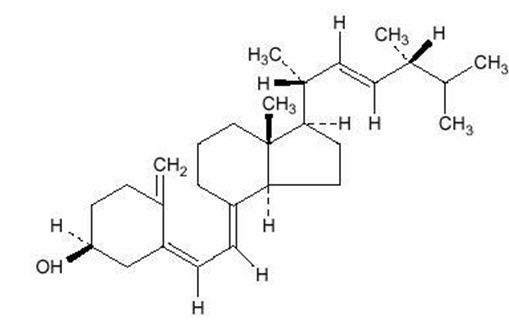
Active ingredient
Classification
Vitamin D and analoguesProvitamin D2 Compound
Drug interactions
Ergocalciferol has known interactions with mineral oil and thiazide diuretics.
- moderatemineral oil — interferes with the absorption of ergocalciferol
- majorthiazide diuretics — may cause hypercalcemia in hypoparathyroid patients
Indications
INDICATIONS AND USAGE Ergocalciferol Capsules, USP are indicated for use in the treatment of hypoparathyroidism, refractory rickets, also known as vitamin D resistant rickets, and familial hypophosphatemia.
Dosage
DOSAGE AND ADMINISTRATION THE RANGE BETWEEN THERAPEUTIC AND TOXIC DOSES IS NARROW. Vitamin D Resistant Rickets: 12,000 to 500,000 USP units daily. Hypoparathyroidism: 50,000 to 200,000 USP units daily concomitantly with calcium lactate 4 g, six times per day. DOSAGE MUST BE INDIVIDUALIZED UNDER CLOSE MEDICAL SUPERVISION. Calcium intake should be adequate. Blood calcium and phosphorous determinations must be made every 2 weeks or more frequently if necessary. X-rays of the bones should be taken every month until condition is corrected and stabilized.
Warnings
WARNINGS Hypersensitivity to vitamin D may be one etiologic factor in infants with idiopathic hypercalcemia. In these cases vitamin D must be strictly restricted. Keep out of the reach of children.
Contraindications
CONTRAINDICATIONS Ergocalciferol Capsules, USP are contraindicated in patients with hypercalcemia, malabsorption syndrome, abnormal sensitivity to the toxic effects of vitamin D, and hypervitaminosis D.
Mechanism of action
CLINICAL PHARMACOLOGY The in vivo synthesis of the major biologically active metabolites of vitamin D occurs in two steps. The first hydroxylation of ergocalciferol takes place in the liver (to 25-hydroxyvitamin D) and the second in the kidneys (to 1,25-dihydroxy- vitamin D). Vitamin D metabolites promote the active absorption of calcium and phosphorus by the small intestine, thus elevating serum calcium and phosphate levels sufficiently to permit bone mineralization. Vitamin D metabolites also mobilize calcium and phosphate from bone and probably increase the reabsorption of calcium and perhaps also of phosphate by the renal tubules. There is a time lag of 10 to 24 hours between the administration of vitamin D and the initiation of its action in the body due to the necessity of synthesis of the active metabolites in the liver and kidneys. Parathyroid hormone is responsible for the regulation of this metabolism in the kidneys.
Source: RxNorm + openFDA + RxClass + FAERS · 2026
Look up another medication