ethambutol hydrochloride 100 MG Oral Tablet
Managing this medication for someone you care for? Eleplan keeps diagnoses, medications and appointments in one plan.
Start free with EleplanClinical drug
ethambutol hydrochloride 100 MG Oral Tablet
100 MG · Oral Tablet · oral
A form of ethambutol →
ethambutol hydrochloride 100 MG Oral Tablet — Other drugs for treatment of tuberculosis. INDICATIONS AND USAGE Ethambutol Hydrochloride Tablets, USP are indicated for the treatment of pulmonary tuberculosis. It should not be used as the…
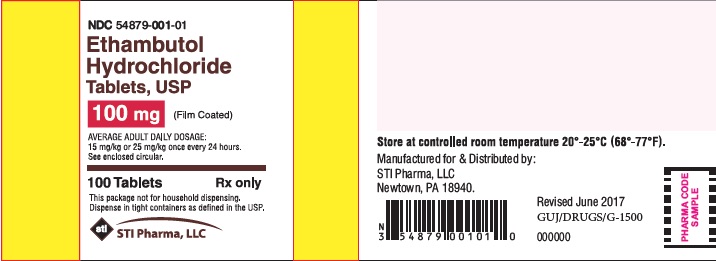
Active ingredient
Classification
Other drugs for treatment of tuberculosisAntimycobacterial
Drug interactions
Ethambutol may have reduced absorption when taken with aluminum hydroxide containing antacids.
- majoraluminum hydroxide containing antacids — reduction of mean serum concentrations and urinary excretion of ethambutol
Indications
INDICATIONS AND USAGE Ethambutol Hydrochloride Tablets, USP are indicated for the treatment of pulmonary tuberculosis. It should not be used as the sole antituberculous drug, but should be used in conjunction with at least one other antituberculous drug. Selection of the companion drug should be based on clinical experience, considerations of comparative safety, and appropriate in vitro susceptibility studies. In patients who have not received previous antituberculous therapy, i.e., initial treatment, the most frequently used regimens have been the following: Ethambutol hydrochloride, USP plus isoniazid Ethambutol hydrochloride, USP plus isoniazid plus streptomycin In patients who have received previous antituberculous therapy, mycobacterial resistance to other drugs used in initial therapy is frequent. Consequently, in such retreatment patients, ethambutol hydrochloride should be combined with at least one of the second line drugs not previously administered to the patient and to which bacterial susceptibility has been indicated by appropriate in vitro studies. Antituberculous drugs used with ethambutol hydrochloride have included cycloserine, ethionamide, pyrazinamide, viomycin and other drugs. Isoniazid, aminosalicylic acid, and streptomycin have also been used in multiple drug regimens. Alternating drug regimens have also been utilized.
Dosage
DOSAGE and ADMINISTRATION ETHAMBUTOL HCl should not be used alone, in initial treatment or in tretreatment. ETHAMBUTOL HCl should be administered on a once every 24-hour basis only. Absorption is not significantly altered by administration with food. Therapy, in general, should be continued until bacteriological conversion has become permanent and maximal clinical improvement has occurred. ETHAMBUTOL HCl is not recommended for use in pediatric patients under thirteen years of age since safe conditions for use have not been established. Initial Treatment: In patients who have not received previous antituberculous therapy, administer ETHAMBUTOL HCl 15 mg/kg (7 mg/lb) of body weight, as a single oral dose once every 24 hours. In the more recent studies, isoniazid has been administered concurrently in a single, daily, oral dose. Retreatment: In patients who have received previous antituberculous therapy, administer ETHAMBUTOL HCl 25 mg/kg (11 mg/lb) of body weight, as a single oral dose once every 24 hours. Concurrently administer at least one other antituberculous drug to which the organisms have been demonstrated to be susceptible by appropriate in vitro tests. Suitable drugs usually consist of those not previously used in the treatment of the patient. After 60 days of ETHAMBUTOL HCl administration, decrease the dose to 15 mg/kg (7mg/lb) of body weight, and administer as a single oral dose once every 24 hours. During the period when a patient is on a daily dose of 25 mg/kg, monthly eye examinations are advised. See Table for easy selection of proper weight-dose tablet(s). Weight-Dose Table 15 mg/kg (7 mg/lb) Schedule Weight Range Pounds Kilograms Dose In mg Under 85 lbs Under 37 Kg…………. ……………….500 85 – 94.5 37 – 43 ................. ……………….600 95 – 109.5 43 – 50 ................. ……………….700 110– 124.5 50 – 57 ................. ……………….800 125– 139.5 57 – 64 ................. ……………….900 140– 154.5 64 – 71 ................. ……………..1000 155– 169.5 71 – 79 ................. ……………..1100 170 – 184.5 79 – 84 ................. ……………..1200 185– 199.5 84 – 90 ................. ……………..1300 200– 214.5 90 – 97 ................. ……………..1400 215 and Over Over 97 ................ ……………..1500 25 mg/kg (11 mg/lb) Schedule Under 85 lbs. Under 38 Kg............... ……………..900 85 – 92.5 38 – 42................. ……………..1000 93 – 101.5 42 – 45.5............... ……………..1100 102– 109.5 45.5 – 50............... ……………..1200 110 – 118.5 50 – 54................. ……………..1300 119 – 128.5 54 – 58................. ……………..1400 129 – 136.5 58 – 62................. ……………..1500 137 – 146.5 62 – 67................. ……………..1600 147 – 155.5 67 – 71................. ……………..1700 156 – 164.5 71 – 75................. ……………..1800 165– 173.5 75 – 79................. ……………..1900 174– 182.5 79 – 83................. ……………..2000 183– 191.5 83 – 87................. ……………..2100 192– 199.5 87 – 91................. ……………..2200 200– 209.5 91 – 95................. ……………..2300 210– 218.5 95 – 99................. ……………..2400 219 and Over Over 99................. ……………..2500
Warnings
WARNINGS Ethambutol hydrochloride may produce decreases in visual acuity which appear to be due to optic neuritis. This effect may be related to dose and duration of treatment. This effect is generally reversible when administration of the drug is discontinued promptly. However, irreversible blindness has been reported. (See PRECAUTIONS and ADVERSE REACTIONS ). Liver toxicities including fatalities have been reported (See ADVERSE REACTIONS ). Baseline and periodic assessment of hepatic function should be performed.
Contraindications
CONTRAINDICATIONS Ethambutol hydrochloride is contraindicated in patients who are known to be hypersensitive to this drug. It is also contraindicated in patients with known optic neuritis unless clinical judgment determines that it may be used. Ethambutol hydrochloride is contraindicated in patients who are unable to appreciate and report visual side effects or changes in vision (e.g., young children, unconscious patients).
Mechanism of action
CLINICAL PHARMACOLOGY Ethambutol hydrochloride following a single oral dose of 25 mg/kg of body weight, attains a peak of 2 to 5 mcg/mL in serum 2 to 4 hours after administration. When the drug is administered daily for longer periods of time at this dose, serum levels are similar. The serum level of ethambutol hydrochloride falls to undetectable levels by 24 hours after the last dose except in some patients with abnormal renal function. The intercellular concentrations of erythrocytes reach peak values approximately twice those of plasma and maintain this ratio throughout the 24 hours. During the 24-hour period following oral administration of ethambutol hydrochloride approximately 50 percent of the initial dose is excreted unchanged in the urine, while an additional 8 to 15 percent appears in the form of metabolites. The main path of metabolism appears to be an initial oxidation of the alcohol to an aldehydic intermediate, followed by conversion to a dicarboxylic acid. From 20 to 22 percent of the initial dose is excreted in the feces as unchanged drug. No drug accumulation has been observed with consecutive single daily doses of 25 mg/kg in patients with normal kidney function, although marked accumulation has been demonstrated in patients with renal insufficiency. Ethambutol hydrochloride diffuses into actively growing Mycobacterium cells such as tubercle bacilli. Ethambutol hydrochloride appears to inhibit the synthesis of one or more metabolites, thus causing impairment of cell metabolism, arrest of multiplication, and cell death. No cross resistance with other available antimycobacterial agents has been demonstrated. Ethambutol hydrochloride has been shown to be effective against strains of Mycobacterium tuberculosis but does not seem to be active against fungi, viruses, or other bacteria. Mycobacterium tuberculosis strains previously unexposed to ethambutol hydrochloride have been uniformly sensitive to concentrations of 8 or less mcg/mL, depending on the nature of the culture media. When ethambutol hydrochloride has been used alone for treatment of tuberculosis, tubercle bacilli from these patients have developed resistance to ethambutol hydrochloride by in vitro susceptibility tests; the development of resistance has been unpredictable and appears to occur in a step-like manner. No cross resistance between ethambutol hydrochloride and other antituberculous drugs has been reported. Ethambutol hydrochloride has reduced the incidence of the emergence of mycobacterial resistance to isoniazid when both drugs have been used concurrently. An agar diffusion microbiologic assay, based upon inhibition of Mycobacterium smegmatis (ATCC 607) may be used to determine concentrations of ethambutol hydrochloride in serum and urine. ANIMAL PHPARMACOLOGY Toxicological studies in dogs on high prolonged doses produced evidence of myocardial damage and failure, and depigmentation of the tapetum lucidum of the eyes, the significance of which is not known. Degenerative changes in the central nervous system, apparently not dose-related, have also been noted in dogs receiving ethambutol hydrochloride over a prolonged period. In the rhesus monkey, neurological signs appeared after treatment with high doses given daily over a period of several months. These were correlated with specific serum levels of ethambutol and with definite neuroanatomical changes in the central nervous system. Focal interstitial carditis was also noted in monkeys which received ethambutol hydrochloride in high doses for a prolonged period.
Indicated ICD-10 codes
Source: RxNorm + openFDA + RxClass + FAERS · 2026
Look up another medication