fluvastatin 40 MG Oral Capsule
Managing this medication for someone you care for? Eleplan keeps diagnoses, medications and appointments in one plan.
Start free with EleplanClinical drug
fluvastatin 40 MG Oral Capsule
40 MG · Oral Capsule · oral
A form of fluvastatin →
fluvastatin 40 MG Oral Capsule — HMG CoA reductase inhibitors. INDICATIONS AND USAGE Therapy with lipid-altering agents should be only one component of multiple risk factor intervention in individuals at…
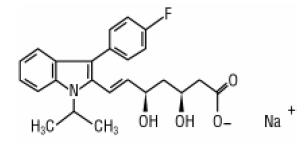
Active ingredient
Classification
HMG CoA reductase inhibitorsHMG-CoA Reductase Inhibitor
Drug interactions
Fluvastatin has several drug interactions that may increase exposure or risk of adverse effects, necessitating monitoring or dosage adjustments.
- majorCyclosporine — Increased fluvastatin exposure
- majorFluconazole — Increased fluvastatin exposure
- majorGemfibrozil — Increased risk of myopathy/rhabdomyolysis
- majorFibrates — Increased risk of myopathy
- majorNiacin — Increased risk of skeletal muscle effects
- moderateGlyburide — Increased glyburide exposures
- moderatePhenytoin — Increased phenytoin exposures
- majorWarfarin — Increased prothrombin times
- majorColchicine — Risk of myopathy, including rhabdomyolysis
Indications
INDICATIONS AND USAGE Therapy with lipid-altering agents should be only one component of multiple risk factor intervention in individuals at significantly increased risk for atherosclerotic vascular disease due to hypercholesterolemia. Drug therapy is indicated as an adjunct to diet when the response to a diet restricted in saturated fat and cholesterol and other non-pharmacologic measures alone has been inadequate. Fluvastatin capsules are an HMG-CoA reductase inhibitor (statin) indicated as an adjunctive therapy to diet to: Reduce elevated TC, LDL-C, Apo B, and TG, and to increase HDL-C in adult patients with primary hypercholesterolemia and mixed dyslipidemia ( 1.1 ) Reduce elevated TC, LDL-C, and Apo B levels in boys and post-menarchal girls, 10 to 16 years of age, with heterozygous familial hypercholesterolemia after failing an adequate trial of diet therapy ( 1.1 ) Reduce the risk of undergoing revascularization procedures in patients with clinically evident CHD ( 1.2 ) Slow the progression of atherosclerosis in patients with CHD ( 1.2 ) Limitations of Use: Fluvastatin capsules have not been studied in conditions where the major abnormality is elevation of chylomicrons, VLDL, or IDL (i.e., hyperlipoproteinemia Types I, III, IV, or V). ( 1.3 ) 1.1 Hypercholesterolemia (Heterozygous Familial and Nonfamilial) and Mixed Dyslipidemia Fluvastatin capsules are indicated as an adjunct to diet to reduce elevated total cholesterol (Total-C), low-density lipoprotein cholesterol (LDL-C), triglyceride (TG) and apolipoprotein B (Apo B) levels, and to increase high-density lipoprotein cholesterol (HDL-C) in patients with primary hypercholesterolemia and mixed dyslipidemia (Fredrickson Type IIa and IIb). as an adjunct to diet to reduce Total-C, LDL-C, and Apo B levels in adolescent boys and adolescent girls who are at least one year post-menarche, 10 to 16 years of age, with heterozygous familial hypercholesterolemia and the following findings are present: LDL-C remains ≥ 190 mg/dL or LDL-C remains ≥ 160 mg/dL and: there is a positive family history of premature cardiovascular disease or two or more other cardiovascular disease risk factors are present The NCEP classification of cholesterol levels in pediatric patients with a familial history of hypercholesterolemia or premature CVD is summarized below. Category Total-C (mg/dL) LDL-C (mg/dL) Acceptable < 170 < 110 Borderline 170 to 199 110 to 129 High ≥ 200 ≥ 130 Children treated with fluvastatin in adolescence should be re-evaluated in adulthood and appropriate changes made to their cholesterol-lowering regimen to achieve adult treatment goals. 1.2 Secondary Prevention of Cardiovascular Disease In patients with clinically evident CHD, fluvastatin capsules are indicated to: reduce the risk of undergoing coronary revascularization procedures slow the progression of coronary atherosclerosis 1.3 Limitations of Use Fluvastatin capsules have not been studied in conditions where the major abnormality is elevation of chylomicrons, VLDL, or IDL (i.e., hyperlipoproteinemia Types I, III, IV, or V).
Dosage
DOSAGE AND ADMINISTRATION Dose range: 20 mg to 80 mg/day ( 2.1 ) Fluvastatin capsules can be taken with or without food. ( 2.1 ) Do not open fluvastatin capsules prior to administration ( 2.1 ) Adults: the recommended starting dose is 40 mg to 80 mg (administered as one fluvastatin capsule, 40 mg twice daily) ( 2.2 ) Do not take two fluvastatin capsules, 40 mg at one time Children with heterozygous familial hypercholesterolemia (ages 10 to 16, inclusive): the recommended starting dose is fluvastatin capsule, 20 mg once daily ( 2.3 ) 2.1 General Dosing Information Dose range: 20 mg to 80 mg/day. Fluvastatin capsules can be administered orally as a single dose, with or without food. Do not open fluvastatin capsules prior to administration. Do not take two fluvastatin capsules, 40 mg at one time. Since the maximal effect of a given dose is seen within 4 weeks, periodic lipid determinations should be performed at this time and dosage adjusted according to the patient’s response to therapy and established treatment guidelines. For patients requiring LDL-C reduction to a goal of ≥ 25%, the recommended starting dose is 40 mg as one capsule in the evening, or 80 mg in divided doses of the 40 mg capsule given twice daily. For patients requiring LDL-C reduction to a goal of < 25% a starting dose of 20 mg may be used. 2.2 Adult Patients With Hypercholesterolemia (Heterozygous Familial and Nonfamilial) and Mixed Dyslipidemia Adult patients can be started on fluvastatin capsules. The recommended starting dose for fluvastatin capsules is one 40 mg capsule in the evening, or one fluvastatin capsule, 40 mg twice daily. Do not take two fluvastatin capsules, 40 mg at one time. 2.3 Pediatric Patients (10 to 16 Years of Age) With Heterozygous Familial Hypercholesterolemia The recommended starting dose is one fluvastatin capsule, 20 mg. Dose adjustments, up to a maximum daily dose administered as fluvastatin capsules, 40 mg twice daily should be made at 6 week intervals. Doses should be individualized according to the goal of therapy [ see NCEP Pediatric Panel Guidelines and CLINICAL STUDIES ( 14 ) ] 1 . 1 National Cholesterol Education Program (NCEP): Highlights of the Report of the Expert Panel on Blood Cholesterol Levels in Children and Adolescents. Pediatrics. 89(3):495-501. 1992. 2.4 Use With Cyclosporine Do not exceed a dose of 20 mg b.i.d. fluvastatin capsules in patients taking cyclosporine [ see Drug Interactions ( 7.1 ) ]. 2.5 Use With Fluconazole Do not exceed a dose of 20 mg b.i.d. fluvastatin capsules in patients taking fluconazole [ see Drug Interactions ( 7.2 ) ].
Warnings
WARNINGS AND PRECAUTIONS Skeletal muscle effects (e.g., myopathy and rhabdomyolysis): Risks increase with advanced age (≥ 65), uncontrolled hypothyroidism, renal impairment, and combination use with cyclosporine,or gemfibrozil. Advise patients to promptly report to their physician unexplained and/or persistent muscle pain, tenderness, or weakness and discontinue fluvastatin if myopathy is diagnosed or suspected. ( 5.1 , 8.5 , 8.7 ) Patients should be advised to report promptly any symptoms of myopathy. Fluvastatin capsules therapy should be discontinued if myopathy is diagnosed or suspected ( 5.1 ) Immune-Mediated Necrotizing Myopathy (IMNM): There have been rare reports of IMNM, an autoimmune myopathy, associated with statin use. IMNM is characterized by: proximal muscle weakness and elevated serum creatine kinase, which persist despite discontinuation of statin treatment; positive anti-HMG CoA reductase antibody; muscle biopsy showing necrotizing myopathy; and improvement with immunosuppressive agents. ( 5.2 ) Liver enzyme abnormalities: Persistent elevations in hepatic transaminases can occur. Check liver enzyme tests before initiating therapy and as clinically indicated thereafter ( 5.3 ) 5.1 Skeletal Muscle Rhabdomyolysis with acute renal failure secondary to myoglobinuria have been reported with fluvastatin capsules and other drugs in this class. Fluvastatin capsules should be prescribed with caution in patients with predisposing factors for myopathy. These factors include advanced age (> 65 years), renal impairment, and inadequately treated hypothyroidism. The risk of myopathy and/or rhabdomyolysis with statins is increased with concurrent therapy with cyclosporine, erythromycin, fibrates or niacin. Myopathy was not observed in a clinical trial in 74 patients involving patients who were treated with fluvastatin sodium together with niacin. Isolated cases of myopathy have been reported during postmarketing experience with concomitant administration of fluvastatin sodium and colchicine. No information is available on the pharmacokinetic interaction between fluvastatin sodium and colchicine. Uncomplicated myalgia has also been reported in fluvastatin sodium-treated patients [see Adverse Reactions ( 6 )] . In clinical trials, uncomplicated myalgia has been observed infrequently in patients treated with fluvastatin sodium at rates indistinguishable from placebo. Myopathy, defined as muscle aching or muscle weakness in conjunction with increases in CPK values to greater than 10 times the upper limit of normal, was < 0.1% in fluvastatin clinical trials. Myopathy should be considered in any patient with diffuse myalgias, muscle tenderness or weakness, and/or marked elevation of CPK. All patients should be advised to promptly report to their physician unexplained muscle pain, tenderness, or weakness, particularly if accompanied by malaise or fever or if muscle signs and symptoms persist after discontinuing fluvastatin. Fluvastatin sodium therapy should be discontinued if markedly elevated CPK levels occur or myopathy is diagnosed or suspected. Fluvastatin sodium therapy should also be temporarily withheld in any patient experiencing an acute or serious condition predisposing to the development of renal failure secondary to rhabdomyolysis, e.g., sepsis; hypotension; major surgery; trauma; severe metabolic, endocrine, or electrolyte disorders; or uncontrolled epilepsy. 5.2 Immune-Mediated Necrotizing Myopathy There have been rare reports of immune-mediated necrotizing myopathy (IMNM), an autoimmune myopathy, associated with statin use. IMNM is characterized by: proximal muscle weakness and elevated serum creatine kinase, which persist despite discontinuation of statin treatment; positive anti-HMG CoA reductase antibody; muscle biopsy showing necrotizing myopathy; and improvement with immunosuppressive agents. Additional neuromuscular and serologic testing may be necessary. Treatment with immunosuppressive agents may be required. Consider risk of IMNM carefully prior to initiation of a different statin. If therapy is initiated with a different statin, monitor for signs and symptoms of IMNM. 5.3 Liver Enzymes Increases in serum transaminases (aspartate aminotransferase [AST]/serum glutamic-oxaloacetic transaminase, or alanine aminotransferase [ALT]/serum glutamic-pyruvic transaminase) have been reported with HMG-CoA reductase inhibitors, including fluvastatin sodium. In most cases, the elevations were transient and resolved or improved on continued therapy or after a brief interruption in therapy. Approximately 1.1% of patients treated with fluvastatin capsules in worldwide trials developed dose-related, persistent elevations of serum transaminase levels to more than 3 times the upper limit of normal. Fourteen of these patients (0.6%) were discontinued from therapy. In all clinical trials, a total of 33/2969 patients (1.1%) had persistent transaminase elevations with an average fluvastatin sodium exposure of approximately 71.2 weeks; 19 of these patients (0.6%) were discontinued. The majority of patients with these abnormal biochemical findings were asymptomatic. In a pooled analysis of all placebo-controlled studies in which fluvastatin capsules were used, persistent transaminase elevations (> 3 times the upper limit of normal [ULN] on two consecutive weekly measurements) occurred in 0.2%, 1.5%, and 2.7% of patients treated with daily doses of 20, 40, and 80 mg (titrated to 40 mg twice daily) fluvastatin capsules, respectively. Ninety-one percent of the cases of persistent liver function test abnormalities (20 of 22 patients) occurred within 12 weeks of therapy and in all patients with persistent liver function test abnormalities there was an abnormal liver function test present at baseline or by Week 8. In the pooled analysis of the 24 week controlled trials, persistent transaminase elevation occurred in 1.8% and 4.9% of patients treated with fluvastatin capsules, 40 mg and fluvastatin capsules, 40 mg twice daily, respectively. It is recommended that liver enzyme tests be performed prior to the initiation of fluvastatin sodium, and if signs or symptoms of liver injury occur. There have been rare postmarketing reports of fatal and non-fatal hepatic failure in patients taking statins, including fluvastatin. If serious liver injury with clinical symptoms and/or hyperbilirubinemia or jaundice occurs during treatment with fluvastatin sodium, promptly interrupt therapy. If an alternate etiology is not found do not restart fluvastatin sodium. In very rare cases, possibly drug-related hepatitis was observed that resolved upon discontinuation of treatment. 1 Active liver disease or unexplained serum transaminase elevations are contraindications to the use of fluvastatin sodium [see Contraindications ( 4 ) and Warnings and Precautions ( 5.3 )] . Caution should be exercised when fluvastatin sodium is administered to patients with a history of liver disease or heavy alcohol ingestion [see Clinical Pharmacology ( 12.3 )] . Such patients should be closely monitored. 5.4 Endocrine Effects Increases in HbA1c and fasting serum glucose levels have been reported with HMG-CoA reductase inhibitors, including fluvastatin sodium. Statins interfere with cholesterol synthesis and lower circulating cholesterol levels and, as such, might theoretically blunt adrenal or gonadal steroid hormone production. Fluvastatin sodium exhibited no effect upon non-stimulated cortisol levels and demonstrated no effect upon thyroid metabolism as assessed by measurement of thyroid stimulating hormone (TSH). Small declines in total serum testosterone have been noted in treated groups, but no commensurate elevation in LH occurred, suggesting that the observation was not due to a direct effect upon testosterone production. No effect upon FSH in males was noted. Due to the limited number of premenopausal females studied to date, no conclusions regarding the effect of fluvastatin sodium upon female s
Contraindications
CONTRAINDICATIONS Hypersensitivity to any component of this medication ( 4 ) Active liver disease or unexplained, persistent elevations in serum transaminases ( 4 , 5.3 ) Women who are pregnant or may become pregnant ( 4 , 8.1 ) Nursing mothers ( 4 , 8.3 ) 4.1 Hypersensitivity to any Component of This Medication Fluvastatin capsules are contraindicated in patients with hypersensitivity to any component of this medication. 4.2 Active Liver Disease Fluvastatin capsules are contraindicated in patients with active liver disease or unexplained, persistent elevations in serum transaminases [ see Warnings and Precautions ( 5.3 ) ]. 4.3 Pregnancy Fluvastatin capsules are contraindicated in women who are pregnant or may become pregnant. Serum cholesterol and triglycerides increase during normal pregnancy, and cholesterol or cholesterol derivatives are essential for fetal development. Fluvastatin capsules may cause fetal harm when administered to pregnant women. Atherosclerosis is a chronic process and the discontinuation of lipid-lowering drugs during pregnancy should have little impact on the outcome of long-term therapy of primary hypercholesterolemia. Fluvastatin capsules should be administered to women of childbearing age only when such patients are highly unlikely to conceive and have been informed of the potential hazards. If the patient becomes pregnant while taking this drug, fluvastatin capsules should be discontinued and the patient should be apprised of the potential hazard to the fetus [ see Use in Specific Populations ( 8.1 ) ]. 4.4 Nursing Mothers Fluvastatin is secreted into the breast milk of animals and because HMG-CoA reductase inhibitors have the potential to cause serious adverse reactions in nursing infants, women who require treatment with fluvastatin capsules should be advised not to breastfeed their infants [ see Use in Specific Populations ( 8.3 ) ].
Mechanism of action
Mechanism of Action Fluvastatin sodium is a competitive inhibitor of HMG-CoA reductase, the rate limiting enzyme that converts 3-hydroxy-3-methylglutaryl-coenzyme A (HMG-CoA) to mevalonate, a precursor of sterols, including cholesterol. The inhibition of cholesterol biosynthesis reduces the cholesterol in hepatic cells, which stimulates the synthesis of LDL receptors and thereby increases the uptake of LDL particles. The end result of these biochemical processes is a reduction of the plasma cholesterol concentration.
Source: RxNorm + openFDA + RxClass + FAERS · 2026
Look up another medication