follitropin alfa 300 UNT/ML Injectable Solution
Managing this medication for someone you care for? Eleplan keeps diagnoses, medications and appointments in one plan.
Start free with EleplanClinical drug
follitropin alfa 300 UNT/ML Injectable Solution
300 UNT/ML · Injectable Solution · injection
A form of follitropin alfa →
follitropin alfa 300 UNT/ML Injectable Solution — Gonadotropins. INDICATIONS AND USAGE GONAL-f is indicated for: GONAL-f is a gonadotropin indicated for: Women: Induction of ovulation and pregnancy in…
Active ingredient
Classification
Gonadotropins
Indications
INDICATIONS AND USAGE GONAL-f is indicated for: GONAL-f is a gonadotropin indicated for: Women: Induction of ovulation and pregnancy in oligo-anovulatory infertile women for whom the cause of infertility is functional and not due to primary ovarian failure. ( 1.1 ) Development of multiple follicles in ovulatory infertile women as part of Assisted Reproductive Technology (ART) cycles. ( 1.2 ) Men: Induction of spermatogenesis in infertile men with primary and secondary hypogonadotropic hypogonadism for whom the cause of infertility is not due to primary testicular failure. ( 1.3 ) 1.1 Induction of ovulation and pregnancy in oligo-anovulatory infertile women for whom the cause of infertility is functional and not due to primary ovarian failure. 1.2 Development of multiple follicles in ovulatory infertile women as part of an assisted reproductive technology (ART) cycle. 1.3 Induction of spermatogenesis in infertile men with primary and secondary hypogonadotropic hypogonadism for whom the cause of infertility is not due to primary testicular failure.
Dosage
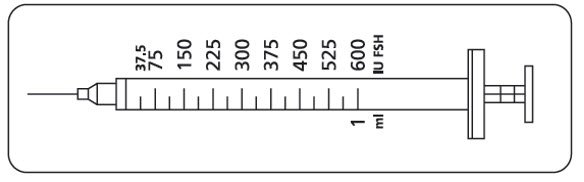
DOSAGE AND ADMINISTRATION Induction of Ovulation ( 2.3 ) Initial starting dose of the first cycle - 75 International Units of GONAL-f per day for 14 days, administered subcutaneously Individualize doses after 14 days Do not administer doses greater than 300 International Units per day Development of Multiple Follicles in Assisted Reproductive Technology (ART) ( 2.3 ) Initial starting dose of the first cycle - 150 International Units per day, administered subcutaneously Dosage adjustments after 3 to 5 days and by 75 to 150 International Units at each adjustment Do not administer doses greater than 450 International Units per day Males with Hypogonadotropic Hypogonadism and Azoospermia ( 2.4 ) Use in conjunction with hCG. Prior to concomitant therapy with GONAL-f and hCG, pretreat with 1,000 to 2,250 USP units of hCG alone two to three times per week to achieve normal serum testosterone levels, which may take 3 to 6 months. After normalization of serum testosterone, administer 150 International Units of GONAL-f subcutaneously three times a week and 1,000 USP units of hCG (or the dose required to maintain serum testosterone levels within the normal range) three times a week. 2.1 Important Dosage and Administration Information Only physicians who are experienced in infertility treatment, should treat women with GONAL-f. GONAL-f is a gonadotropin product capable of causing in women, Ovarian Hyperstimulation Syndrome (OHSS) with or without pulmonary or vascular complications [see Warnings and Precautions (5.2 , 5.3) ] and multiple births [see Warnings and Precautions (5.6) ] . Gonadotropin therapy requires the availability of appropriate monitoring facilities [see Warnings and Precautions (5.11) ] . Use the lowest effective dose of GONAL-f. Give careful attention to the diagnosis of infertility and the selection of candidates for GONAL-f therapy [see Dosage and Administration (2.3 , 2.4) ] . 2.2 Preparation of GONAL-f and Selection of Injection Site Store lyophilized multiple-dose vials refrigerated or at room temperature (2°-25°C /36°-77°F) and protected from light. Prior to administration, parenteral drug products should be inspected visually for particulate matter and discoloration, whenever solution and container permit. Instruct women and men to use the accompanying syringes, calibrated in International Units FSH for administration. The 27-gauge injection syringe (see figure below) has unit dose markings from 37.5 International Units to 600 International Units FSH for use with GONAL-f Multi-Dose. Instruct women and men to take a specific dose of GONAL-f Multi-Dose. Show women and men how to locate the syringe marking that corresponds to the prescribed dose. Each GONAL‑f Multi‑Dose Vial delivers 450 International Units or 1050 International Units of follitropin alfa, respectively Multi-Dose 450 International Units Vial: Dissolve the contents of one Multi-Dose vial (450 International Units) with 1 mL Bacteriostatic Water for Injection (0.9% benzyl alcohol), USP. Resulting concentration will be 600 International Units/mL. Following reconstitution as directed, product will deliver the equivalent of six 75 International Units doses. Multi-Dose 1050 International Units Vial: Dissolve the contents of one Multi-Dose vial (1050 International Units) with 2 mL Bacteriostatic Water for Injection (0.9% benzyl alcohol), USP. Resulting concentration will be 600 International Units/mL. Following reconstitution as directed, product will deliver the equivalent of fourteen 75 International Units doses. Discard unused reconstituted solution after 28 days. Administer GONAL-f subcutaneously in the abdomen, upper arm, or upper leg as described in Patient Information and Instructions for Use. Figure 2.3 Dosing for Ovulation Induction Prior to initiation of treatment with GONAL-f: Perform a complete gynecologic and endocrinologic evaluation Exclude primary ovarian failure Exclude the possibility of pregnancy Demonstrate tubal patency Evaluate the fertility status of the male partner The dosing scheme is stepwise and is individualized for each woman [see Clinical Studies (14.1) ]. Administer a starting dose of 75 International Units of GONAL-f subcutaneously daily for 14 days in the first cycle of use. In subsequent cycles of treatment, determine the starting dose (and dosage adjustments) of GONAL-f based on the woman's history of the ovarian response to GONAL-f. If indicated by the ovarian response after the initial 14 days, make an incremental adjustment in dose of up to 37.5 International Units. If indicated by the ovarian response, make additional incremental adjustments in the dose, up to 37.5 International Units, every 7 days. Continue treatment until follicular growth and/or serum estradiol levels indicate an adequate ovarian response. Consider the following when planning the woman's individualized dose: Use the lowest dose of GONAL-f consistent with the expectation of good results. Use appropriate GONAL-f dose adjustment(s) to prevent multiple follicular growth and cycle cancellation. The maximum, individualized, daily dose of GONAL-f is 300 International Units per day. In general, do not exceed 35 days of treatment, unless an estradiol rise indicates imminent follicular development. When pre-ovulatory conditions are reached, administer human chorionic gonadotropin (hCG) to induce final oocyte maturation and ovulation. Human chorionic gonadotropin, hCG, (5,000 USP units) should be given 1 day after the last dose of GONAL-f. Encourage the woman and her partner to have intercourse daily, beginning on the day prior to the administration of hCG and until ovulation becomes apparent. Withhold hCG in cases where the ovarian monitoring suggests an increased risk of ovarian hyperstimulation syndrome (OHSS) on the last day of GONAL-f therapy (for example estradiol greater than 2,000 pg per mL) [see Warnings and Precautions (5.2 , 5.3 , 5.5 , 5.11) ]. Discourage intercourse when the risk for OHSS is increased [see Warnings and Precautions (5.2 , 5.5) ]. Schedule a follow-up visit in the luteal phase. Individualize the initial dose administered in subsequent cycles based on the woman's response in the preceding cycle. As in the initial cycle, do not administer doses larger than 300 International Units of FSH per day. Administer 5,000 USP units of hCG 1 day after the last dose of GONAL-f to complete follicular development and induce ovulation. Follow the above recommendations to minimize the chance of development of OHSS. 2.4 Dosing for Multiple Follicle Development as part of an Assisted Reproductive Technology (ART) Cycle Prior to initiation of treatment with GONAL-f: Perform a complete gynecologic and endocrinologic evaluation, and diagnose the cause of infertility Exclude the possibility of pregnancy Evaluate the fertility status of the male partner The dosing scheme follows a stepwise approach and is individualized for each woman. Beginning on cycle day 2 or 3, administer subcutaneously a starting dose of 150 International Units of GONAL-f daily until sufficient follicular development, as determined by ultrasound in combination with measurement of serum estradiol levels, is attained. In most cases, therapy should not exceed ten days. In women whose endogenous gonadotropin levels are suppressed, initiate GONAL-f administration at a dose of 225 International Units per day. Adjust the dose after 5 days based on the woman's ovarian response, as determined by ultrasound evaluation of follicular growth and serum estradiol levels. Do not make additional dosage adjustments more frequently than every 3-5 days or by more than 75-150 International Units at each adjustment. Continue treatment until adequate follicular development is evident, and then administer hCG (5,000 to 10,000 USP units) to induce final follicular maturation in preparation for oocyte retrieval. Withhold hCG administration in cases where the ovarian monitoring suggests an increased risk of OHSS on the last day of GO
Warnings
WARNINGS AND PRECAUTIONS Hypersensitivity Reactions and Anaphylaxis: If occurs, initiate appropriate therapy including supportive measures, and discontinue GONAL-f ( 5.1 ) Ovarian Hyperstimulation Syndrome: If serious, stop gonadotropins, including hCG, and determine if the woman needs to be hospitalized. Treatment is primarily symptomatic and consists of bed rest, fluid and electrolyte management, and analgesics ( 5.2 ) Pulmonary and Vascular Complications: In women with recognized risk factors, the benefits of induction of ovulation and ART need to be weighed against the risks. During or after use of GONAL-f, monitor for venous or arterial thromboembolic events ( 5.3 ) Ovarian Torsion: Early diagnosis and immediate detorsion limit damage to the ovary due to reduced blood supply ( 5.4 ) Abnormal Ovarian Enlargement: If the ovaries are abnormally enlarged on the last day of GONAL-f therapy, inform women not to administer hCG and to avoid intercourse ( 5.5 ) Multi-fetal Gestation and Births: The rate of multiple births is dependent on the number of embryos transferred. Advise the woman and her partner of the potential risk of multi-fetal gestation and birth before beginning therapy with GONAL-f ( 5.6 ) Embryofetal Toxicity: Inform women that the incidence of congenital malformations (birth defects) after some Assisted Reproductive Technology (ART) [specifically in vitro fertilization (IVF) or intracytoplasmic sperm injection (ICSI)] may be slightly higher than after spontaneous conception. There is no evidence that the use of gonadotropins during IVF or ICSI is associated with an increased risk of congenital malformations ( 5.7 ) Ectopic Pregnancy: Advise women who become pregnant following ART and have: abdominal/pelvic pain (particularly on one side); shoulder, neck or rectal pain; and nausea and vomiting to seek immediate medical attention. Confirm the presence of an intrauterine pregnancy early by β-hCG testing and transvaginal ultrasound ( 5.8 ) Spontaneous Abortion: The risk of spontaneous abortion (miscarriage) is increased with gonadotropin products, however, causality has not been established ( 5.9 ) Ovarian Neoplasm: Both benign and malignant ovarian neoplasms are reported in women who have had multiple drug therapy for controlled ovarian stimulation, however, causality has not been established ( 5.10 ) 5.1 Hypersensitivity Reactions and Anaphylaxis In the post-marketing experience, serious systemic hypersensitivity reactions, including anaphylaxis, have been reported with use of GONAL-f and GONAL-f RFF. Symptoms have included dyspnea, facial edema, pruritus, and urticaria. If an anaphylactic or other serious allergic reaction occurs, initiate appropriate therapy including supportive measures if cardiovascular instability and/or respiratory compromise occur, and discontinue further use. 5.2 Ovarian Hyperstimulation Syndrome (OHSS) Ovarian Hyperstimulation Syndrome (OHSS) is a medical entity distinct from uncomplicated ovarian enlargement and may progress rapidly to become a serious medical event. OHSS is characterized by a dramatic increase in vascular permeability, which can result in a rapid accumulation of fluid in the peritoneal cavity, thorax, and potentially, the pericardium. The early warning signs of development of OHSS are severe pelvic pain, nausea, vomiting, and weight gain. Abdominal pain, abdominal distension, gastrointestinal symptoms including nausea, vomiting and diarrhea, severe ovarian enlargement [see Warnings and Precautions (5.6) ] , weight gain, dyspnea, and oliguria have been reported with OHSS. Clinical evaluation may reveal hypovolemia, hemoconcentration, electrolyte imbalances, ascites, hemoperitoneum, pleural effusions, hydrothorax, acute pulmonary distress, and thromboembolic reactions [see Warnings and Precautions (5.4) ] . Transient liver function test abnormalities suggestive of hepatic dysfunction with or without morphologic changes on liver biopsy, have been reported in association with OHSS. OHSS occurs after gonadotropin treatment has been discontinued and it can develop rapidly, reaching its maximum about seven to ten days following treatment. Usually, OHSS resolves spontaneously with the onset of menses. If there is evidence that OHSS may be developing prior to hCG administration [see Dosage and Administration (2.2 , 2.3) ] , withhold hCG. Cases of OHSS are more common, more severe, and more protracted if pregnancy occurs; therefore, assess women for the development of OHSS for at least two weeks after hCG administration. If serious OHSS occurs, stop gonadotropins, including GONAL-f and hCG, and consider whether the woman needs to be hospitalized. Treatment is primarily symptomatic and overall consists of bed rest, fluid and electrolyte management, and analgesics (if needed). Because the use of diuretics can accentuate the diminished intravascular volume, avoid diuretics except in the late phase of resolution as described below. The management of OHSS is divided into three phases as follows: Acute Phase : Management is directed at preventing hemoconcentration due to loss of intravascular volume to the third space and minimizing the risk of thromboembolic phenomena and kidney damage. Thoroughly assess daily or more often, based on the clinical need, fluid intake and output, weight, hematocrit, serum and urinary electrolytes, urine specific gravity, BUN and creatinine, total proteins with albumin: globulin ratio, coagulation studies, electrocardiogram to monitor for hyperkalemia, and abdominal girth. Treatment, consisting of limited intravenous fluids, electrolytes, human serum albumin, is intended to normalize electrolytes while maintaining an acceptable but somewhat reduced intravascular volume. Full correction of the intravascular volume deficit may lead to an unacceptable increase in the amount of third space fluid accumulation. Chronic Phase : After the acute phase is successfully managed as above, excessive fluid accumulation in the third space should be limited by instituting severe potassium, sodium, and fluid restriction. Resolution Phase : As third space fluid returns to the intravascular compartment, a fall in hematocrit and increasing urinary output are observed in the absence of any increase in intake. Peripheral and/or pulmonary edema may result if the kidneys are unable to excrete third space fluid as rapidly as it is mobilized. Diuretics may be indicated during the resolution phase, if necessary, to combat pulmonary edema. Do not remove ascitic, pleural, and pericardial fluid, unless there is the necessity to relieve symptoms such as pulmonary distress or cardiac tamponade. OHSS increases the risk of injury to the ovary. Avoid pelvic examination or intercourse, as these may cause rupture of an ovarian cyst, which may result in hemoperitoneum. If bleeding occurs and requires surgical intervention, control the bleeding and retain as much ovarian tissue as possible. A physician experienced in the management of this syndrome, or who is experienced in the management of fluid and electrolyte imbalances should be consulted. 5.3 Pulmonary and Vascular Complications Serious pulmonary conditions (for example, atelectasis, acute respiratory distress syndrome and exacerbation of asthma) have been reported in women treated with gonadotropins, including GONAL-f. In addition, thromboembolic events both in association with, and separate from OHSS have been reported in women treated with gonadotropins, including GONAL-f. Intravascular thrombosis and embolism, which may originate in venous or arterial vessels, can result in reduced blood flow to critical organs or the extremities. Women with generally recognized risk factors for thrombosis, such as personal or family history, severe obesity, or thrombophilia, may have an increased risk of venous or arterial thromboembolic events, during or following treatment with gonadotropins. Sequelae of such reactions have included venous thrombophlebitis, pulmonary emb
Contraindications
CONTRAINDICATIONS GONAL-f is contraindicated in women and men who exhibit: Prior hypersensitivity to recombinant FSH products or one of their excipients. Reactions have included anaphylaxis [see Warning and Precautions (5.1) ] High levels of FSH indicating primary gonadal failure The presence of uncontrolled non-gonadal endocrinopathies (for example, thyroid, adrenal, or pituitary disorders) Sex hormone dependent tumors of the reproductive tract and accessory organs Tumors of pituitary gland or hypothalamus GONAL-f is also contraindicated in women who exhibit: Abnormal uterine bleeding of undetermined origin Ovarian cyst or enlargement of undetermined origin GONAL-f is contraindicated in women and men who exhibit ( 4 ): Prior hypersensitivity to recombinant FSH products or one of their excipients High levels of FSH indicating primary gonadal failure Uncontrolled non-gonadal endocrinopathies Sex hormone dependent tumors of the reproductive tract and accessory organs Tumors of pituitary gland or hypothalamus GONAL-f is also contraindicated in women who exhibit ( 4 ): Abnormal uterine bleeding of undetermined origin Ovarian cyst or enlargement of undetermined origin
Mechanism of action
Mechanism of Action GONAL-f stimulates ovarian follicular growth in women who do not have primary ovarian failure. In order to bring about final maturation of the follicle and ovulation in the absence of an endogenous LH surge, human chorionic gonadotropin (hCG) must be given, following the administration of GONAL-f, when monitoring of the patient indicates that sufficient follicular development is achieved. GONAL-f stimulates spermatogenesis in men with hypogonadotropic hypogonadism when administered with hCG.
Source: RxNorm + openFDA + RxClass + FAERS · 2026
Look up another medication