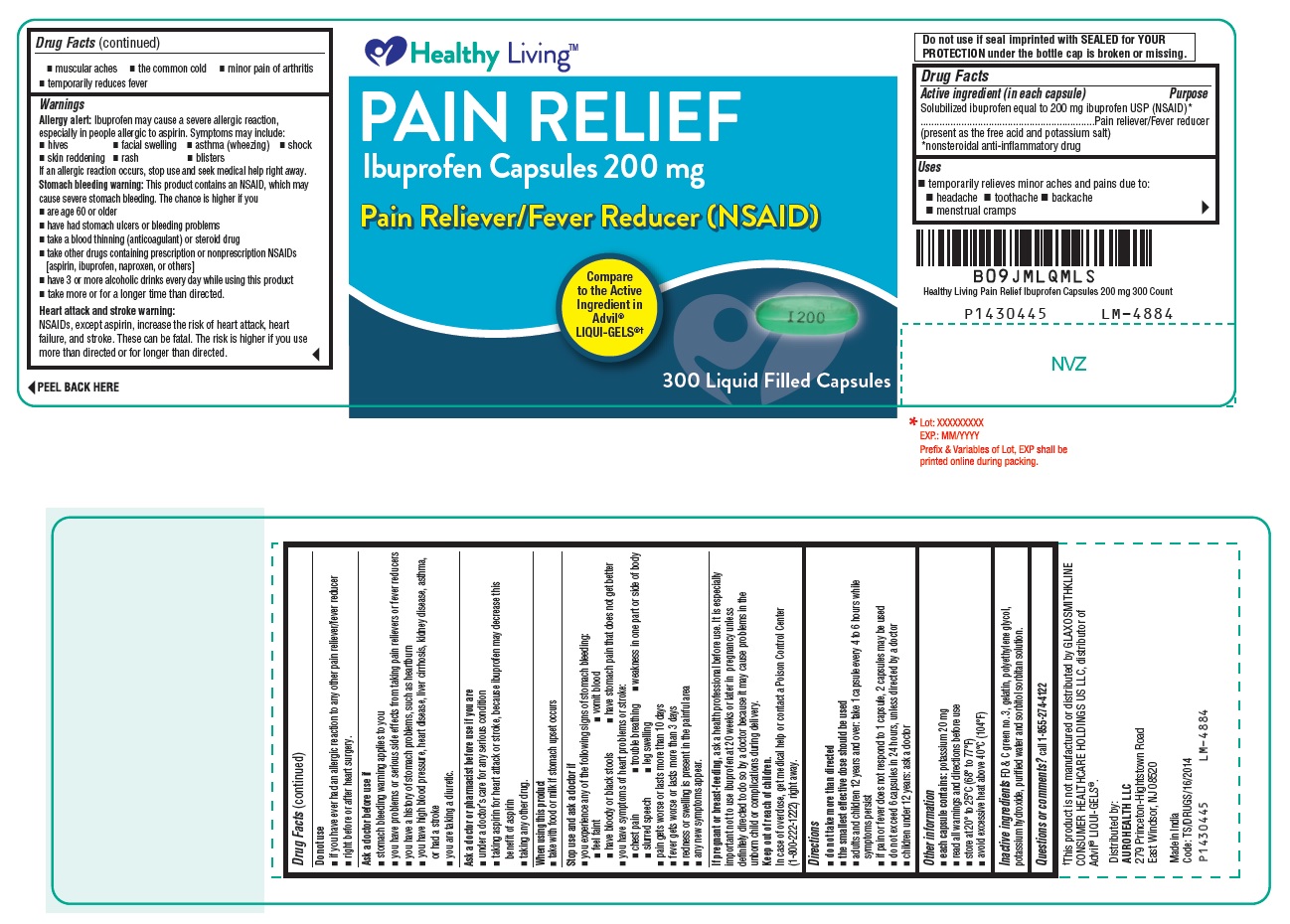
ibuprofen 0.1 MG/MG Topical Gel — Other cardiac preparations. INDICATIONS AND USAGE Ibuprofen Lysine Injection is indicated to close a clinically significant patent ductus arteriosus (PDA) in premature infants…
Boxed warning
WARNING: RISK OF SERIOUS CARDIOVASCULAR AND GASTROINTESTINAL EVENTS WARNING: RISK OF SERIOUS CARDIOVASCULAR AND GASTROINTESTINAL EVENTS See full prescribing information for complete boxed warning Non-steroidal anti-inflammatory drugs (NSAIDs) cause an increased risk of serious cardiovascular thrombotic events, including myocardial infarction and stroke, which can be fatal. This risk may occur early in treatment and may increase with duration of use. ( 5.1 ) CALDOLOR is contraindicated in the setting of coronary artery bypass graft (CABG) surgery. ( 4 , 5.1 ) NSAIDs cause an increased risk of serious gastrointestinal (GI) adverse events including bleeding, ulceration, and perforation of the stomach or intestines, which can be fatal. These events can occur at any time during use and without warning symptoms. Elderly patients and patients with a prior history of peptic ulcer disease and/or GI bleeding are at greater risk for serious GI events. ( 5.2 ) Cardiovascular Thrombotic Events Non-steroidal anti-inflammatory drugs (NSAIDs) cause an increased risk of serious cardiovascular thrombotic events, including myocardial infarction and stroke, which can be fatal. This risk may occur early in treatment and may increase with duration of use. [see Warnings and Precautions ( 5.1 )] . CALDOLOR is contraindicated in the setting of coronary artery bypass graft (CABG) surgery [see Contraindications ( 4 ) and Warnings and Precautions ( 5.1 )] . Gastrointestinal Bleeding, Ulceration and Perforation NSAIDs cause an increased risk of serious gastrointestinal (GI) adverse events including bleeding, ulceration, and perforation of the stomach or intestines, which can be fatal. These events can occur at any time during use and without warning symptoms. Elderly patients and patients with a prior history of peptic ulcer disease and/or GI bleeding are at greater risk for serious GI events [see Warnings and Precautions ( 5.2 )] .
Other cardiac preparationsNonsteroidal Anti-inflammatory Drug
Drug interactions
Ibuprofen should be used with caution in patients with preexisting asthma, especially those with aspirin-sensitive asthma due to potential cross-reactivity.
majoraspirin — severe bronchospasm
majorNSAIDs — bronchospasm
Real-world adverse events (FAERS)
Drug Ineffective27,091Pain19,276Fatigue18,497Nausea17,968Headache16,343Arthralgia13,263Dyspnoea12,938Vomiting12,848
Indications
INDICATIONS AND USAGE Ibuprofen Lysine Injection is indicated to close a clinically significant patent ductus arteriosus (PDA) in premature infants weighing between 500 and 1500 g, who are no more than 32 weeks gestational age when usual medical management (e.g., fluid restriction, diuretics, respiratory support, etc.) is ineffective. The clinical trial was conducted among infants with an asymptomatic PDA. However, the consequences beyond 8 weeks after treatment have not been evaluated; therefore, treatment should be reserved for infants with clear evidence of a clinically significant PDA. Ibuprofen Lysine Injection is a nonsteroidal anti-inflammatory drug indicated to close a clinically significant patent ductus arteriosus (PDA) in premature infants weighing between 500 and 1500 g, who are no more than 32 weeks gestational age when usual medical management is ineffective. The clinical trial was conducted among infants with an asymptomatic PDA. However, the consequences beyond 8 weeks after treatment have not been evaluated; therefore, treatment should be reserved for infants with clear evidence of a clinically significant PDA. (1)
Dosage
DOSAGE AND ADMINISTRATION Use the lowest effective dosage for shortest duration consistent with individual patient treatment goals. ( 2.1 ) CALDOLOR Injection vials must be diluted before administration. ( 2.1 ) CALDOLOR Injection bags are ready to use. ( 2.1 ) Adult Pain: 400 mg to 800 mg intravenously over 30 minutes every 6 hours as necessary. ( 2.2 ) Adult Fever: 400 mg intravenously over 30 minutes, followed by 400 mg every 4 to 6 hours or 100-200 mg every 4 hours as necessary. ( 2.2 ) Pediatric (pain and fever) ages 12 to 17 years of age: 400 mg intravenously over 10 minutes every 4 to 6 hours as necessary. ( 2.3 ) Pediatric (pain and fever) aged 6 months to less than 12 years of age: 10 mg/kg intravenously over 10 minutes up to a maximum single dose of 400 mg every 4 to 6 hours as necessary. ( 2.3 ) Pediatric (pain and fever) aged 3 months to less than 6 months: 10 mg/kg intravenously over 10 minutes up to a maximum single dose of 100 mg. ( 2.3 ) 2.1 Important Dosage and Administration Instructions Use the lowest effective dosage for the shortest duration consistent with individual patient treatment goals [ see Warnings and Precautions ( 5 ) ]. After observing the response to initial therapy with CALDOLOR, the dose and frequency should be adjusted to suit an individual patient's needs. Do not exceed 3200 mg total daily dose in adults. Do not exceed 40 mg/kg or 2,400 mg, whichever is less, total daily dose in pediatric patients 6 months to 17 years of age. The dosage is limited to a single dose not to exceed 10 mg/kg or 100 mg, whichever is less, in pediatric patients 3 months to less than 6 months of age. To reduce the risk of renal adverse reactions, patients must be well hydrated prior to administration of CALDOLOR. CALDOLOR injection 800 mg/8 mL (100 mg/mL) vials MUST BE DILUTED prior to administration. Dilute to a final concentration of 4 mg/mL or less. Appropriate diluents include 0.9% Sodium Chloride Injection USP (normal saline), 5% Dextrose Injection USP (D5W), or Lactated Ringers Solution. 100 mg dose: Dilute 1 mL of CALDOLOR in at least 100 mL of diluent 200 mg dose: Dilute 2 mL of CALDOLOR in at least 100 mL of diluent 400 mg dose: Dilute 4 mL of CALDOLOR in at least 100 mL of diluent 800 mg dose: Dilute 8 mL of CALDOLOR in at least 200 mL of diluent CALDOLOR injection 800 mg/200 mL (4 mg/mL) polypropylene flexible bags are ready to use, intended for 800 mg doses only. For weight-based dosing at 10 mg/kg ensure that the concentration of CALDOLOR is 4 mg/mL or less. Visually inspect parenteral drug products for particulate matter and discoloration prior to administration, whenever solution and container permit. If visibly opaque particles, discoloration or other foreign particulates are observed, the solution should not be used. Diluted solutions are stable for up to 24 hours at ambient temperature (approximately 20° C to 25° C) and room lighting. 2.2 Adults For Analgesia (pain) : The dose is 400 mg to 800 mg intravenously every 6 hours as necessary. Infusion time must be at least 30 minutes. Maximum daily dose is 3,200 mg. For Fever : The dose is 400 mg intravenously, followed by 400 mg every 4 to 6 hours or 100 mg to 200 mg every 4 hours as necessary. Infusion time must be at least 30 minutes. Maximum daily dose is 3,200 mg. 2.3 Pediatric Patients For Analgesia (pain) and Fever: Ages 12 to 17 years The dose is 400 mg intravenously every 4 to 6 hours as necessary. Infusion time must be at least 10 minutes. Maximum daily dose is 40 mg/kg or 2,400 mg, whichever is less. Ages 6 months to less than 12 years The dose is 10 mg/kg intravenously up to a maximum single dose of 400 mg every 4 to 6 hours as necessary. Infusion time must be at least 10 minutes. Maximum daily dose is 40 mg/kg or 2,400 mg, whichever is less. Pediatric Dosing as Necessary for Fever and Pain * Maximum daily dose is 40 mg/kg or 2,400 mg, whichever is less. Age Group Dose Dosing Interval Min infusion time Max daily dose 6 months to less than 12 years 10 mg/kg up to 400 mg max Every 4 to 6 hours as necessary 10 minutes *40 mg/kg or 2,400 mg 12 to 17 years 400 mg Every 4 to 6 hours as necessary 10 minutes *40 mg/kg or 2,400 mg Ages 3 months to less than 6 months The dose is a single dose at 10 mg/kg intravenously up to a maximum single dose of 100 mg. Infusion time must be at least 10 minutes.
Warnings
WARNINGS Cardiovascular Effects Cardiovascular Thrombotic Events Clinical trials of several COX-2 selective and nonselective NSAIDs of up to three years duration have shown an increased risk of serious cardiovascular (CV) thrombotic events, including myocardial infarction (MI) and stroke, which can be fatal. Based on available data, it is unclear that the risk for CV thrombotic events is similar for all NSAIDs. The relative increase in serious CV thrombotic events over baseline conferred by NSAID use appears to be similar in those with and without known CV disease or risk factors for CV disease. However, patients with known CV disease or risk factors had a higher absolute incidence of excess serious CV thrombotic events, due to their increased baseline rate. Some observational studies found that this increased risk of serious CV thrombotic events began as early as the first weeks of treatment. The increase in CV thrombotic risk has been observed most consistently at higher doses. To minimize the potential risk for an adverse CV event in NSAID-treated patients, use the lowest effective dose for the shortest duration possible. Physicians and patients should remain alert for the development of such events, throughout the entire treatment course, even in the absence of previous CV symptoms. Patients should be informed about the symptoms of serious CV events and the steps to take if they occur. There is no consistent evidence that concurrent use of aspirin mitigates the increased risk of serious CV thrombotic events associated with NSAID use. The concurrent use of aspirin and an NSAID, such as ibuprofen, increases the risk of serious gastrointestinal (GI) events [ see Warnings ]. Status Post Coronary Artery Bypass Graft (CABG) Surgery Two large, controlled clinical trials of a COX-2 selective NSAID for the treatment of pain in the first 10 to 14 days following CABG surgery found an increased incidence of myocardial infarction and stroke. NSAIDs are contraindicated in the setting of CABG [ see Contraindications ]. Post-MI Patients Observational studies conducted in the Danish National Registry have demonstrated that patients treated with NSAIDs in the post-MI period were at increased risk of reinfarction, CV-related death, and all-cause mortality beginning in the first week of treatment. In this same cohort, the incidence of death in the first year post MI was 20 per 100 person years in NSAID-treated patients compared to 12 per 100 person years in non-NSAID exposed patients. Although the absolute rate of death declined somewhat after the first year post-MI, the increased relative risk of death in NSAID users persisted over at least the next four years of follow-up. Avoid the use of ibuprofen tablets in patients with a recent MI unless the benefits are expected to outweigh the risk of recurrent CV thrombotic events. If ibuprofen tablets are used in patients with a recent MI, monitor patients for signs of cardiac ischemia. Hypertension NSAIDs including ibuprofen tablets, can lead to onset of new hypertension or worsening of pre-existing hypertension, either of which may contribute to the increased incidence of CV events. Patients taking thiazides or loop diuretics may have impaired response to these therapies when taking NSAIDs. NSAIDs, including ibuprofen tablets, should be used with caution in patients with hypertension. Blood pressure (BP) should be monitored closely during the initiation of NSAID treatment and throughout the course of therapy. Heart Failure and Edema The Coxib and traditional NSAID Trialists’ Collaboration meta-analysis of randomized controlled trials demonstrated an approximately two-fold increase in hospitalizations for heart failure in COX-2 selective-treated patients and nonselective NSAID-treated patients compared to placebo-treated patients. In a Danish National Registry study of patients with heart failure, NSAID use increased the risk of MI, hospitalization for heart failure, and death. Additionally, fluid retention and edema have been observed in some patients treated with NSAIDs. Use of ibuprofen may blunt the CV effects of several therapeutic agents used to treat these medical conditions [e.g., diuretics, ACE inhibitors, or angiotensin receptor blockers (ARBs)] [see Drug Interactions ]. Avoid the use of ibuprofen tablets in patients with severe heart failure unless the benefits are expected to outweigh the risk of worsening heart failure. If ibuprofen tablets are used in patients with severe heart failure, monitor patients for signs of worsening heart failure. Gastrointestinal Effects - Risk of Ulceration, Bleeding, and Perforation NSAIDs, including ibuprofen tablets, can cause serious gastrointestinal (GI) adverse events including inflammation, bleeding, ulceration, and perforation of the stomach, small intestine, or large intestine, which can be fatal. These serious adverse events can occur at any time, with or without warning symptoms, in patients treated with NSAIDs. Only one in five patients, who develop a serious upper GI adverse event on NSAID therapy, is symptomatic. Upper GI ulcers, gross bleeding, or perforation caused by NSAIDs occur in approximately 1% of patients treated for 3 to 6 months, and in about 2 to 4% of patients treated for one year. These trends continue with longer duration of use, increasing the likelihood of developing a serious GI event at some time during the course of therapy. However, even short-term therapy is not without risk. NSAIDs should be prescribed with extreme caution in those with a prior history of ulcer disease or gastrointestinal bleeding. Patients with a prior history of peptic ulcer disease and/or gastrointestinal bleeding who use NSAIDs have a greater than 10-fold increased risk for developing a GI bleed compared to patients treated with neither of these risk factors. Other factors that increase the risk of GI bleeding in patients treated with NSAIDs include concomitant use of oral corticosteroids or anticoagulants, longer duration of NSAID therapy, smoking, use of alcohol, older age, and poor general health status. Most spontaneous reports of fatal GI events are in elderly or debilitated patients and therefore, special care should be taken in treating this population. To minimize the potential risk for an adverse GI event in patients treated with an NSAID, the lowest effective dose should be used for the shortest possible duration. Patients and physicians should remain alert for signs and symptoms of GI ulcerations and bleeding during NSAID therapy and promptly initiate additional evaluation and treatment if a serious GI event is suspected. This should include discontinuation of the NSAID until a serious GI adverse event is ruled out. For high-risk patients, alternate therapies that do not involve NSAIDs should be considered. Renal Effects Long-term administration of NSAIDs has resulted in renal papillary necrosis and other renal injury. Renal toxicity has also been seen in patients in whom renal prostaglandins have a compensatory role in the maintenance of renal perfusion. In these patients, administration of a NSAID may cause a dose-dependent reduction in prostaglandin formation and, secondarily, in renal blood flow, which may precipitate overt renal decompensation. Patients at greatest risk of this reaction are those with impaired renal function, heart failure, liver dysfunction, those taking diuretics and ACE inhibitors, and the elderly. Discontinuation of NSAID therapy is usually followed by recovery to the pretreatment state. Advanced Renal Disease No information is available from controlled clinical studies regarding the use of ibuprofen tablets in patients with advanced renal disease. Therefore, treatment with ibuprofen tablets is not recommended in these patients with advanced renal disease. If ibuprofen tablet therapy must be initiated, close monitoring of the patients renal function is advisable. Anaphylactoid Reactions As with other NSAIDs, anaphylactoid reactions m
Contraindications
CONTRAINDICATIONS Ibuprofen Lysine Injection is contraindicated in: Preterm infants with proven or suspected infection that is untreated; Preterm infants with congenital heart disease in whom patency of the PDA is necessary for satisfactory pulmonary or systemic blood flow (e.g., pulmonary atresia, severe tetralogy of Fallot, severe coarctation of the aorta); Preterm infants who are bleeding, especially those with active intracranial hemorrhage or gastrointestinal bleeding; Preterm infants with thrombocytopenia; Preterm infants with coagulation defects; Preterm infants with or who are suspected of having necrotizing enterocolitis; Preterm infants with significant impairment of renal function. Ibuprofen Lysine Injection is contraindicated in preterm infants: With proven or suspected infection that is untreated (4) With congenital heart disease in whom patency of the PDA is necessary for satisfactory pulmonary or systemic blood flow (4) With impaired renal function (4) With thrombocytopenia, coagulation defects or who are bleeding (4) With or who are suspected of having necrotizing enterocolitis (4)
Mechanism of action
CLINICAL PHARMACOLOGY Pharmacodynamics - Ibuprofen is a nonsteroidal anti-inflammatory drug (NSAID) that possesses anti-inflammatory, analgesic and antipyretic activity. Its mode of action, like that of other NSAIDs, is not completely understood, but may be related to prostaglandin synthetase inhibition. After absorption of the racemic ibuprofen, the [-]R-enantiomer undergoes interconversion to the [+]S-form. The biological activities of ibuprofen are associated with the [+]S-enantiomer. Pharmacokinetics - Ibuprofen is a racemic mixture of [-]R- and [+]S-isomers. In vivo and in vitro studies indicate that the [+]S-isomer is responsible for clinical activity. The [-]R-form, while thought to be pharmacologically inactive, is slowly and incompletely (~60%) interconverted into the active [+]S species in adults. The degree of interconversion in children is unknown, but is thought to be similar. The [-]R-isomer serves as a circulating reservoir to maintain levels of active drug. Ibuprofen is well absorbed orally, with less than 1% being excreted in the urine unchanged. It has a biphasic elimination time curve with a plasma half-life of approximately 2 hours. Studies in febrile children have established the dose-proportionality of 5 and 10 mg/kg doses of ibuprofen. Studies in adults have established the dose-proportionality of ibuprofen as a single oral dose from 50 to 600 mg for total drug and up to 1200 mg for free drug. Absorption - In vivo studies indicate that ibuprofen is well absorbed orally from the suspension formulation, with peak plasma levels usually occurring within 1 to 2 hours (see Table 1). Table 1 Pharmacokinetic Parameters of Ibuprofen Oral Suspension [Mean values (% coefficient of variation)] Dose 200 mg (2.8 mg/kg) in Adults 10 mg/kg in Febrile Children Formulation Suspension Suspension Number of Patients 24 18 AUC inf (µg•h/mL) 64 (27%) 155 (24%) C max (µg/mL) 19 (22%) 55 (23%) T max (h) 0.79 (69%) 0.97 (57%) Cl/F (mL/h/kg) 45.6 (22%) 68.6 (22%) Legend: AUC inf = Area-under-the-curve to infinity T max = Time-to-peak plasma concentration C max = Peak plasma concentration Cl/F = Clearance divided by fraction at drug absorbed Antacids - A bioavailability study in adults has shown that there was no interference with the absorption of ibuprofen when given in conjunction with an antacid containing both aluminum hydroxide and magnesium hydroxide. H-2 Antagonists - In studies with human volunteers, coadministration of cimetidine or ranitidine with ibuprofen had no substantive effect on ibuprofen serum concentrations. Food Effects - Absorption is most rapid when ibuprofen is given under fasting conditions. Administration of ibuprofen oral suspension with food affects the rate but not the extent of absorption. When taken with food, T max is delayed by approximately 30 to 60 minutes, and peak levels are reduced by approximately 30 to 50%. Distribution - Ibuprofen, like most drugs of its class, is highly protein bound (>99% bound at 20 μg/mL). Protein binding is saturable and at concentrations >20 μg/mL binding is non-linear. Based on oral dosing data there is an age- or fever-related change in volume of distribution for ibuprofen. Febrile children <11 years old have a volume of approximately 0.2 L/kg while adults have a volume of approximately 0.12 L/kg. The clinical significance of these findings is unknown. Metabolism - Following oral administration, the majority of the dose was recovered in the urine within 24 hours as the hydroxy-(25%) and carboxypropyl-(37%) phenylpropionic acid metabolites. The percentages of free and conjugated ibuprofen found in the urine were approximately 1% and 14%, respectively. The remainder of the drug was found in the stool as both metabolites and unabsorbed drug. Elimination - Ibuprofen is rapidly metabolized and eliminated in the urine. The excretion of ibuprofen is virtually complete 24 hours after the last dose. It has a biphasic plasma elimination time curve with a half-life of approximately 2.0 hours. There is no difference in the observed terminal elimination rate or half-life between children and adults, however, there is an age- or fever-related change in total clearance. This suggests that the observed change in clearance is due to changes in the volume of distribution of ibuprofen (see Table 1 for Cl/F values). Clinical Studies - Controlled clinical trials comparing doses of 5 and 10 mg/kg ibuprofen oral suspension and 10-15 mg/kg of acetaminophen elixir have been conducted in children 6 months to 12 years of age with fever primarily due to viral illnesses. In these studies there were no differences between treatments in fever reduction for the first hour and maximum fever reduction occurred between 2 and 4 hours. Response after 1 hour was dependent on both the level of temperature elevation as well as the treatment. In children with baseline temperatures at or below 102.5ºF both ibuprofen doses and acetaminophen were equally effective in their maximum effect. In children with temperatures above 102.5ºF, the ibuprofen 10 mg/kg dose was more effective. By 6 hours, children treated with ibuprofen 5 mg/kg tended to have recurrence of fever, whereas children treated with ibuprofen 10 mg/kg still had significant fever reduction at 8 hours. In control groups treated with 10 mg/kg acetaminophen, fever reduction resembled that seen in children treated with 5 mg/kg of ibuprofen, with the exception that temperature elevation tended to return 1-2 hours earlier. In patients with primary dysmenorrhea, ibuprofen has been shown to reduce elevated levels of prostaglandin activity in the menstrual fluid and to reduce testing and active intrauterine pressure, as well as the frequency of uterine contractions. The probable mechanism of action is to inhibit prostaglandin synthesis rather than simply to provide analgesia. Pharmacodynamics In a healthy volunteer study, ibuprofen 400 mg given once daily, administered 2 hours prior to immediate-release aspirin (81 mg) for 6 days, showed an interaction with the antiplatelet activity of aspirin as measured by % serum thromboxane B2 (TxB2) inhibition at 24 hours following the day-6 aspirin dose [53%]. An interaction was still observed, but minimized, when ibuprofen 400 mg given once-daily was administered as early as 8 hours prior to the immediate-release aspirin dose [90.7%]. However, there was no interaction with the antiplatelet activity of aspirin when ibuprofen 400 mg, given once daily, was administered 2 hours after (but not concomitantly, 15 min, or 30 min after) the immediate-release aspirin dose [99.2%]. In another study, where immediate-release aspirin 81 mg was administered once daily with ibuprofen 400 mg given three times daily (1, 7, and 13 hours post-aspirin dose) for 10 consecutive days, the mean % serum thromboxane B2 (TxB2) inhibition suggested no interaction with the antiplatelet activity of aspirin [98.3%]. However, there were individual subjects with serum TxB2 inhibition below 95%, with the lowest being 90.2%. When a similarly designed study was conducted with enteric-coated aspirin, where healthy subjects were administered enteric-coated aspirin 81 mg once daily for 6 days and ibuprofen 400 mg three times daily (2, 7 and 12 h post-aspirin dose) for 6 days, there was an interaction with the antiplatelet activity at 24 hours following the day-6 aspirin dose [67%]. [ See Precautions/Drug Interactions ].
A drug lookup is just the start. Eleplan keeps the whole care plan in one place.
Medications, diagnoses, documents, appointments, and the whole care team — organized and always in sync, with Ellie, your AI care assistant, on top of it. Free to start.