leucovorin 10 MG Oral Tablet
Managing this medication for someone you care for? Eleplan keeps diagnoses, medications and appointments in one plan.
Start free with EleplanClinical drug
leucovorin 10 MG Oral Tablet
10 MG · Oral Tablet · oral
A form of leucovorin →
leucovorin 10 MG Oral Tablet — Detoxifying agents for antineoplastic treatment. INDICATIONS AND USAGE Leucovorin calcium tablets are a folate analog indicated: To reduce the toxicity of: Methotrexate in adult patients with…
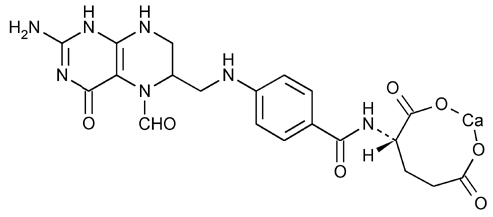
Active ingredient
Classification
Detoxifying agents for antineoplastic treatmentFolate Analog
Drug interactions
Leucovorin has several interactions with other drugs that may affect their efficacy and toxicity.
- majorphenobarbital — may counteract the antiepileptic effect and increase seizure frequency
- majorphenytoin — may counteract the antiepileptic effect and increase seizure frequency
- majorprimidone — may counteract the antiepileptic effect and increase seizure frequency
- majormethotrexate — may reduce the efficacy of intrathecally administered methotrexate
- major5-fluorouracil — may enhance toxicity
Real-world adverse events (FAERS)
Diarrhoea1,748Nausea1,342Vomiting1,101Neutropenia1,066Pyrexia981Off Label Use911Fatigue858Disease Progression750
Indications
INDICATIONS AND USAGE Leucovorin calcium tablets are a folate analog indicated: To reduce the toxicity of: Methotrexate in adult patients with impaired methotrexate elimination, and Folic acid antagonists or dihydrofolate reductase (DHFR) inhibitors following an overdose in adult patients. ( 1.1 ) For the treatment of cerebral folate transport deficiency in adult and pediatric patients who have a confirmed variant in the folate receptor 1 gene (FOLR1-CFTD). ( 1.2 ) Limitations of Use Leucovorin calcium tablets are not recommended for use in patients with a deficiency of methenyltetrahydrofolate synthetase (MTHFS) because MTHFS is a primary enzyme in the metabolism of leucovorin to 5-methenyltetrahydrofolate. ( 1.2 ) Limitations of Use Leucovorin calcium tablets are not indicated for the treatment of pernicious anemia or other megaloblastic anemias, due to the lack of vitamin B12, because of the risk of progression of neurologic manifestations despite hematologic remission. ( 1.3 ) 1.1 Reduction of Toxicity of Folic Acid Antagonists or Dihydrofolate Reductase Inhibitors Leucovorin calcium tablets are indicated to reduce the toxicity of: Methotrexate in adult patients with impaired methotrexate elimination, and Folic acid antagonists or dihydrofolate reductase (DHFR) inhibitors following an overdose in adult patients. 1.2 Cerebral Folate Transport Deficiency with Folate Receptor 1 Genetic Variant Leucovorin calcium tablets are indicated for the treatment of cerebral folate transport deficiency in adult and pediatric patients who have a confirmed variant in the folate receptor 1 gene (FOLR1-CFTD). Limitations of Use Leucovorin calcium tablets are not recommended for use in patients with a deficiency of methenyltetrahydrofolate synthetase (MTHFS) because MTHFS is a primary enzyme in the metabolism of leucovorin to 5-methenyltetrahydrofolate (5-MTHF) [see Clinical Pharmacology (12.3) ] . 1.3 Limitations of Use Leucovorin calcium tablets are not indicated for the treatment of pernicious anemia or other megaloblastic anemias, due to the lack of vitamin B12, because of the risk of progression of neurologic manifestations despite hematologic remission.
Dosage
DOSAGE AND ADMINISTRATION Advanced Colorectal Cancer Either of the following two regimens is recommended: Leucovorin calcium for injection is administered at 200 mg/m 2 by slow intravenous injection over a minimum of 3 minutes, followed by 5-fluorouracil at 370 mg/m 2 by intravenous injection. Leucovorin calcium for injection is administered at 20 mg/m 2 by intravenous injection followed by 5-fluorouracil at 425 mg/m 2 by intravenous injection. 5-Fluorouracil and leucovorin calcium for injection should be administered separately to avoid the formation of a precipitate. Treatment is repeated daily for five days. This five-day treatment course may be repeated at 4 week (28-day) intervals, for 2 courses and then repeated at 4-5 week (28-35 day) intervals provided that the patient has completely recovered from the toxic effects of the prior treatment course. In subsequent treatment courses, the dosage of 5-fluorouracil should be adjusted based on patient tolerance of the prior treatment course. The daily dosage of 5-fluorouracil should be reduced by 20% for patients who experienced moderate hematologic or gastrointestinal toxicity in the prior treatment course, and by 30% for patients who experienced severe toxicity (see PRECAUTIONS: Laboratory Tests ). For patients who experienced no toxicity in the prior treatment course, 5-fluorouracil dosages may be increased by 10%. Leucovorin calcium for injection dosages are not adjusted for toxicity. Leucovorin Rescue After High-Dose Methotrexate Therapy The recommendations for leucovorin rescue are based on a methotrexate dose of 12-15 grams/m 2 administered by intravenous infusion over 4 hours (see methotrexate package insert for full prescribing information). Leucovorin rescue at a dose of 15 mg (approximately 10 mg/m 2 ) every 6 hours for 10 doses starts 24 hours after the beginning of the methotrexate infusion. In the presence of gastrointestinal toxicity, nausea or vomiting, leucovorin calcium for injection should be administered parenterally. Do not administer leucovorin calcium for injection intrathecally. Serum creatinine and methotrexate levels should be determined at least once daily. Leucovorin calcium for injection administration, hydration, and urinary alkalization (pH of 7.0 or greater) should be continued until the methotrexate level is below 5x10 -8 M (0.05 micromolar). The leucovorin calcium for injection dose should be adjusted or leucovorin rescue extended based on the following guidelines: GUIDELINES FOR LEUCOVORIN CALCIUM FOR INJECTION DOSAGE AND ADMINISTRATION DO NOT ADMINISTER LEUCOVORIN CALCIUM FOR INJECTION INTRATHECALLY Clinical Situation Laboratory Findings Leucovorin Calcium for Injection Dosage and Duration Normal Methotrexate Elimination Serum methotrexate level approximately 10 micromolar at 24 hours after administration, 1 micromolar at 48 hours, and less than 0.2 micromolar at 72 hours. 15 mg PO, IM, or IV q 6 hours for 60 hours (10 doses starting at 24 hours after start of methotrexate infusion). Delayed Late Methotrexate Elimination Serum methotrexate level remaining above 0.2 micromolar at 72 hours, and more than 0.05 micromolar at 96 hours after administration. Continue 15 mg PO, IM, or IV q 6 hours, until methotrexate level is less than 0.05 micromolar. Delayed Early Methotrexate Elimination and/or Evidence of Acute Renal Injury Serum methotrexate level of 50 micromolar or more at 24 hours, or 5 micromolar or more at 48 hours after administration, OR; a 100% or greater increase in serum creatinine level at 24 hours after methotrexate administration (eg, an increase from 0.5 mg/dL to a level of 1 mg/dL or more) 150 mg IV q 3 hours, until methotrexate level is less than 1 micromolar; then 15 mg IV q 3 hours until methotrexate level is less than 0.05 micromolar. Patients who experience delayed early methotrexate elimination are likely to develop reversible renal failure. In addition to appropriate leucovorin calcium for injection therapy, these patients require continuing hydration and urinary alkalinization, and close monitoring of fluid and electrolyte status, until the serum methotrexate level has fallen to below 0.05 micromolar and the renal failure has resolved. Some patients will have abnormalities in methotrexate elimination or renal function following methotrexate administration, which are significant but less severe than the abnormalities described in the table above. These abnormalities may or may not be associated with significant clinical toxicity. If significant clinical toxicity is observed, leucovorin rescue should be extended for an additional 24 hours (total of 14 doses over 84 hours) in subsequent courses of therapy. The possibility that the patient is taking other medications which interact with methotrexate (eg, medications which may interfere with methotrexate elimination or binding to serum albumin) should always be reconsidered when laboratory abnormalities or clinical toxicities are observed. Impaired Methotrexate Elimination or Inadvertent Overdosage Leucovorin rescue should begin as soon as possible after an inadvertent overdosage and within 24 hours of methotrexate administration when there is delayed excretion (see WARNINGS ). Leucovorin calcium for injection 10 mg/m 2 should be administered IV, IM, or PO every 6 hours until the serum methotrexate level is less than 10 -8 M. In the presence of gastrointestinal toxicity, nausea, or vomiting, leucovorin calcium for injection should be administered parenterally. Do not administer leucovorin calcium for injection intrathecally. Serum creatinine and methotrexate levels should be determined at 24 hour intervals. If the 24 hour serum creatinine has increased 50% over baseline or if the 24 hour methotrexate level is greater than 5 x 10 -6 M or the 48 hour level is greater than 9 x 10 -7 M, the dose of leucovorin calcium for injection should be increased to 100 mg/m 2 IV every 3 hours until the methotrexate level is less than 10 -8 M. Hydration (3 L/d) and urinary alkalinization with sodium bicarbonate solution should be employed concomitantly. The bicarbonate dose should be adjusted to maintain the urine pH at 7.0 or greater. Megaloblastic Anemia Due to Folic Acid Deficiency Up to 1 mg daily. There is no evidence that doses greater than 1 mg/day have greater efficacy than those of 1 mg; additionally, loss of folate in urine becomes roughly logarithmic as the amount administered exceeds 1 mg. Each 50 mg, 100 mg, 200 mg, and 500 mg vial of leucovorin calcium for injection when reconstituted with 5 mL, 10 mL, 20 mL, and 50 mL, respectively, of sterile diluent yields a leucovorin concentration of 10 mg per mL. Each 350 mg vial of leucovorin calcium for injection when reconstituted with 17.5 mL of sterile diluent yields a leucovorin concentration of 20 mg per mL. Leucovorin calcium for injection contains no preservative. Reconstitute the lyophilized vial products with Bacteriostatic Water for Injection, USP (benzyl alcohol preserved), or Sterile Water for Injection, USP. When reconstituted with Bacteriostatic Water for Injection, USP, the resulting solution must be used within 7 days. If the product is reconstituted with Sterile Water for Injection, USP, use immediately and discard any unused portion. Because of the benzyl alcohol contained in Bacteriostatic Water for Injection, USP, when doses greater than 10 mg/m 2 are administered leucovorin calcium for injection should be reconstituted with Sterile Water for Injection, USP, and used immediately. (See WARNINGS .) Because of the calcium content of the leucovorin calcium for injection solution, no more than 160 mg of leucovorin should be injected intravenously per minute (16 mL of a 10 mg per mL, or 8 mL of a 20 mg per mL solution per minute). Parenteral products should be inspected visually for particulate matter and discoloration prior to administration, whenever solution and container permit. Leucovorin calcium for injection should not be mixed in the same
Warnings
WARNINGS In the treatment of accidental overdosages of folic acid antagonists, intravenous leucovorin calcium should be administered as promptly as possible. As the time interval between antifolate administration (e.g., methotrexate) and leucovorin rescue increases, leucovorin calcium's effectiveness in counteracting toxicity decreases. In the treatment of accidental overdosages of intrathecally administered folic acid antagonists, do not administer leucovorin calcium intrathecally. LEUCOVORIN CALCIUM MAY BE HARMFUL OR FATAL IF GIVEN INTRATHECALLY. Monitoring of the serum methotrexate concentration is essential in determining the optimal dose and duration of treatment with leucovorin calcium. Delayed methotrexate excretion may be caused by a third space fluid accumulation (ie, ascites, pleural effusion), renal insufficiency, or inadequate hydration. Under such circumstances, higher doses of leucovorin calcium or prolonged administration may be indicated. Doses higher than those recommended for oral use must be given intravenously. Because of the benzyl alcohol contained in certain diluents used for reconstituting Leucovorin Calcium for Injection, when doses greater than 10 mg/m 2 are administered, leucovorin calcium for injection should be reconstituted with Sterile Water for Injection, USP, and used immediately. (See DOSAGE AND ADMINISTRATION .) Because of the calcium content of the leucovorin calcium solution, no more than 160 mg of leucovorin should be injected intravenously per minute (16 mL of a 10 mg per mL, or 8 mL of a 20 mg per mL solution per minute). Leucovorin calcium enhances the toxicity of 5-fluorouracil. When these drugs are administered concurrently in the palliative therapy of advanced colorectal cancer, the dosage of 5-fluorouracil must be lower than usually administered. Although the toxicities observed in patients treated with the combination of leucovorin calcium plus 5-fluorouracil are qualitatively similar to those observed in patients treated with 5-fluorouracil alone, gastrointestinal toxicities (particularly stomatitis and diarrhea) are observed more commonly and may be more severe and of prolonged duration in patients treated with the combination. In the first Mayo/NCCTG controlled trial, toxicity, primarily gastrointestinal, resulted in 7% of patients requiring hospitalization when treated with 5-fluorouracil alone or 5-fluorouracil in combination with 200 mg/m 2 of leucovorin calcium and 20% when treated with 5-fluorouracil in combination with 20 mg/m 2 of leucovorin calcium. In the second Mayo/NCCTG trial, hospitalizations related to treatment toxicity also appeared to occur more often in patients treated with the low dose leucovorin calcium/5-fluorouracil combination than in patients treated with the high dose combination — 11% versus 3%. Therapy with leucovorin calcium and 5-fluorouracil must not be initiated or continued in patients who have symptoms of gastrointestinal toxicity of any severity, until those symptoms have completely resolved. Patients with diarrhea must be monitored with particular care until the diarrhea has resolved, as rapid clinical deterioration leading to death can occur. In an additional study utilizing higher weekly doses of 5-fluorouracil and leucovorin calcium, elderly and/or debilitated patients were found to be at greater risk for severe gastrointestinal toxicity. Seizures and/or syncope have been reported rarely in cancer patients receiving leucovorin calcium, usually in association with fluoropyrimidine administration, and most commonly in those with CNS metastases or other predisposing factors, however, a causal relationship has not been established. The concomitant use of leucovorin calcium with trimethoprim-sulfamethoxazole for the acute treatment of Pneumocystis carinii pneumonia in patients with HIV infection was associated with increased rates of treatment failure and morbidity in a placebo-controlled study.
Contraindications
CONTRAINDICATIONS Leucovorin calcium tablets are contraindicated in patients with a history of hypersensitivity reaction depending on indication as described below, to leucovorin (folinic acid), levoleucovorin, folic acid, or any component of leucovorin calcium tablets [see Description ( 11 )]: Folic acid antagonist or DHFR inhibitor toxicity: history of severe hypersensitivity reaction FOLR1-CFTD: history of any hypersensitivity reaction Reactions have included anaphylactic reactions [see Warnings and Precautions ( 5.1 )] . History of hypersensitivity reaction, depending on indication, to leucovorin (folinic acid), levoleucovorin, folic acid, or any component of leucovorin calcium tablets: folic acid antagonist or DHFR inhibitor toxicity: history of a severe hypersensitivity reaction FOLR1-CFTD: history of any hypersensitivity reaction. ( 4 , 5.1 )
Mechanism of action
CLINICAL PHARMACOLOGY Leucovorin is a mixture of the diastereoisomers of the 5-formyl derivative of tetrahydrofolic acid (THF). The biologically active compound of the mixture is the (-)- l -isomer, known as Citrovorum factor, or (-)-folinic acid. Leucovorin does not require reduction by the enzyme dihydrofolate reductase in order to participate in reactions utilizing folates as a source of “one-carbon” moieties. l -Leucovorin ( l -5-formyltetrahydrofolate) is rapidly metabolized (via 5,10-methenyltetrahydrofolate then 5,10-methylenetetrahydrofolate) to l -5-methyltetrahydrofolate. l -5-Methyltetrahydrofolate can in turn be metabolized via other pathways back to 5,10-methylenetetrahydrofolate, which is converted to 5-methyltetrahydrofolate by an irreversible, enzyme catalyzed reduction using the cofactors FADH 2 and NADPH. Administration of leucovorin calcium can counteract the therapeutic and toxic effects of folic acid antagonists such as methotrexate, which act by inhibiting dihydrofolate reductase. In contrast, leucovorin calcium can enhance the therapeutic and toxic effects of fluoropyrimidines used in cancer therapy, such as 5-fluorouracil. Concurrent administration of leucovorin calcium does not appear to alter the plasma pharmacokinetics of 5-fluorouracil. 5-Fluorouracil is metabolized to fluorodeoxyuridylic acid, which binds to and inhibits the enzyme thymidylate synthase (an enzyme important in DNA repair and replication). Leucovorin is readily converted to another reduced folate, 5,10-methylenetetrahydrofolate, which acts to stabilize the binding of fluorodeoxyuridylic acid to thymidylate synthase and thereby enhances the inhibition of this enzyme. The pharmacokinetics after intravenous, intramuscular, and oral administration of a 25 mg dose of leucovorin calcium were studied in male volunteers. After intravenous administration, serum total reduced folates (as measured by Lactobacillus casei assay) reached a mean peak of 1259 ng/mL (range 897 – 1625). The mean time to peak was 10 minutes. This initial rise in total reduced folates was primarily due to the parent compound 5-formyl-THF (measured by Streptococcus faecalis assay) which rose to 1206 ng/mL at 10 minutes. A sharp drop in parent compound followed and coincided with the appearance of the active metabolite 5-methyl-THF which became the predominant circulating form of the drug. The mean peak of 5-methyl-THF was 258 ng/mL and occurred at 1.3 hours. The terminal half-life for total reduced folates was 6.2 hours. The area under the concentration versus time curves (AUCs) for l -leucovorin, d -leucovorin and 5-methyltetrahydrofolate were 28.4 ± 3.5, 956 ± 97 and 129 ± 12 (mg/min/L ± S.E.). When a higher dose of d,l -leucovorin (200 mg/m 2 ) was used, similar results were obtained. The d -isomer persisted in plasma at concentrations greatly exceeding those of the l -isomer. After intramuscular injection, the mean peak of serum total reduced folates was 436 ng/mL (range 240-725) and occurred at 52 minutes. Similar to IV administration, the initial sharp rise was due to the parent compound. The mean peak of 5-formyl-THF was 360 ng/mL and occurred at 28 minutes. The level of the metabolite 5-methyl-THF increased subsequently over time until at 1.5 hours it represented 50% of the circulating total folates. The mean peak of 5-methyl-THF was 226 ng/mL at 2.8 hours. The terminal half-life of total reduced folates was 6.2 hours. There was no difference of statistical significance between IM and IV administration in the AUC for total reduced folates, 5-formyl-THF, or 5-methyl-THF. After oral administration of leucovorin calcium reconstituted with aromatic elixir, the mean peak concentration of serum total reduced folates was 393 ng/mL (range 160-550). The mean time to peak was 2.3 hours and the terminal half-life was 5.7 hours. The major component was the metabolite 5-methyltetrahydrofolate to which leucovorin is primarily converted in the intestinal mucosa. The mean peak of 5-methyl-THF was 367 ng/mL at 2.4 hours. The peak level of the parent compound was 51 ng/mL at 1.2 hours. The AUC of total reduced folates after oral administration of the 25 mg dose was 92% of the AUC after intravenous administration. Following oral administration, leucovorin calcium is rapidly absorbed and expands the serum pool of reduced folates. At a dose of 25 mg, almost 100% of the l -isomer but only 20% of the d -isomer is absorbed. Oral absorption of leucovorin calcium is saturable at doses above 25 mg. The apparent bioavailability of leucovorin was 97% for 25 mg, 75% for 50 mg, and 37% for 100 mg. In a randomized clinical study conducted by the Mayo Clinic and the North Central Cancer Treatment Group (Mayo/NCCTG) in patients with advanced metastatic colorectal cancer three treatment regimens were compared: Leucovorin calcium (LV) 200 mg/m 2 and 5-fluorouracil (5-FU) 370 mg/m 2 versus LV 20 mg/m 2 and 5-FU 425 mg/m 2 versus 5-FU 500 mg/m 2 . All drugs were administered by slow intravenous infusion daily for 5 days repeated every 28-35 days. Response rates were 26% (p = 0.04 versus 5-FU alone), 43% (p = 0.001 versus 5-FU alone) and 10% for the high dose leucovorin calcium, low dose leucovorin calcium and 5-FU alone groups respectively. Respective median survival times were 12.2 months (p = 0.037), 12 months (p = 0.050), and 7.7 months. The low dose LV regimen gave a statistically significant improvement in weight gain of more than 5%, relief of symptoms, and improvement in performance status. The high dose LV regimen gave a statistically significant improvement in performance status and trended toward improvement in weight gain and in relief of symptoms but these were not statistically significant. In a second Mayo/NCCTG randomized clinical study the 5-FU alone arm was replaced by a regimen of sequentially administered methotrexate (MTX), 5-FU, and LV. Response rates with LV 200 mg/m 2 and 5-FU 370 mg/m 2 versus LV 20 mg/m 2 and 5-FU 425 mg/m 2 versus sequential MTX and 5-FU and LV were respectively 31% (p = < 0.01), 42% (p = < 0.01), and 14%. Respective median survival times were 12.7 months (p = < 0.04), 12.7 months (p = < 0.01), and 8.4 months. No statistically significant difference in weight gain of more than 5% or in improvement in performance status was seen between the treatment arms. The pharmacokinetics of 200 mg doses of leucovorin calcium administered intravenously and orally (reconstituted powder, not tablets) have been evaluated in healthy male subjects. The serum clearance corrected for bioavailability, terminal half-life, and apparent volume of distribution of total folate were not significantly different between the routes of administration. The oral bioavailability of the 200 mg dose was 31%. Eighty-three percent of the biologically active IV dose was recovered in the urine within 24 hours, 31% as 5-methyltetrahydrofolate. Twenty percent of the same oral dose was excreted in 24 hours, 16% as 5-methyltetrahydrofolate.
Indicated ICD-10 codes
Source: RxNorm + openFDA + RxClass + FAERS · 2026
Look up another medication